Class 12 Humanities . Sociology . Social Change And Development In India . Mass Media and Communications
Chapter 7: Mass Media and Communications
Ch 7
Sociology
Class 12 Humanities
Introduction
Meaning and Forms of Mass Media
Mass media — Communication forms that reach very large audiences.
- Forms: Television, newspapers, films, magazines, radio, advertisements, video games and CDs.
- Mass communication: Another term for communication through mass media.
- Reach: These media address audiences comprising very large numbers of people.
- Expansion: Mass communication has expanded greatly in recent years, including through mobile phones and the Internet.
Mass Media in Everyday Life
- Daily routines: People use radio, television, newspapers and mobile phones for news, entertainment and communication.
- Work and services: Mobile phones help service providers stay reachable by customers.
- Social connections: Migrant workers and Indians living abroad use phones and the Internet to keep in touch with family and friends.
- Public information: Exam results and other information can be accessed through the Internet and mobile phones.
- Shared conversations: Media content, such as sports and films, can become a topic of everyday interaction.
Media and Society: A Two-Way Relationship
Dialectical relationship — A two-way relationship in which mass media and society influence each other.
- Society shapes media: Economic, political and socio-cultural contexts influence media structures and content.
- Media shape society: Mass media can have far-reaching effects on social life and communication.
- Sociological focus: Studying media means examining both its social context and its influence on society.
| Period | Key influence on media |
|---|---|
| First decades after independence | The state and its vision of development strongly influenced the media. |
| Post-1990 period of globalisation | The market gained a key role in shaping media. |
Organisation and Access
- Formal organisation: Unlike other forms of communication, mass communication requires a structured organisation to manage large-scale capital, production and operations.
- Institutional role: The state and/or the market play major roles in the structure and functioning of mass media.
- Scale: Mass media operate through large organisations, major investments and large workforces.
- Unequal access: Different social groups do not have equal ability to use mass media; this inequality is linked to the digital divide.
- Mass communication
- Communication through media that reach very large audiences.
- Dialectical relationship
- The two-way influence between mass media and society.
- Digital divide
- Unequal ability of different sections of society to access and use digital media.
Quick recap
- Mass media include print, broadcast and digital forms that reach very large audiences.
- Media are embedded in everyday routines, work, social relationships and access to information.
- Society shapes media, while media also influence society: the relationship is dialectical.
- The state strongly influenced media in the first decades after independence; the market became more influential after 1990.
- Mass communication requires formal organisation, substantial capital, production and management.
- Access to mass media is unequal, reflecting the digital divide.
The Beginnings of Modern Mass Media
The Growth of Print Media
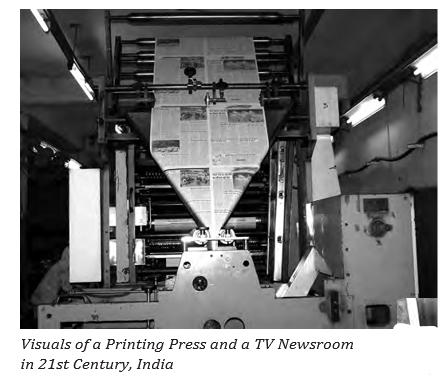
Modern mass media institution — The printing press was the first modern institution for communicating information to large audiences.
How print reached a mass audience
- Modern printing: Although some societies had older traditions of print, modern book-printing technology first developed in Europe through Johann Gutenberg.
- Early books: Initial printing was mainly restricted to religious books and literate elites.
- Industrial growth: The print industry expanded with the Industrial Revolution.
- Wider readership: By the mid-19th century, improved technology and transport, together with rising literacy, helped newspapers reach mass audiences.
- Shared news: People in different parts of a country could read or hear the same news.
Print, Nationalism and the Imagined Community
Imagined community — Benedict Anderson’s term for a nation whose members feel connected even if they do not know or meet one another.
Print and a shared sense of belonging
- Newspapers circulate similar news across distant places.
- Readers recognise shared concerns and experiences.
- People develop a shared sense of belonging or “we feeling”.
- This common identity can help the growth of nationalism.
The press and Indian nationalism
- Public debate: Nineteenth-century social reformers used newspapers and journals to write and debate.
- Anti-colonial opinion: The nationalist press voiced opposition to colonial policies and helped channel public opinion.
- Censorship: The colonial government clamped down on the nationalist press, including during the Ilbert Bill agitation of 1883.
- Nationalist papers: Kesari (Marathi), Mathrubhumi (Malayalam) and Amrita Bazar Patrika (English) faced colonial displeasure but continued to advocate nationalism and demand an end to colonial rule.
Mass Media under British Rule
| Medium | Control and reach |
|---|---|
| Radio | Wholly state-owned; national views could not be freely expressed. |
| Newspapers and films | Autonomous from the state, but strictly monitored by the colonial government. |
| Newspapers and magazines | English and vernacular publications had limited circulation because the literate public was small. |
Influence beyond circulation
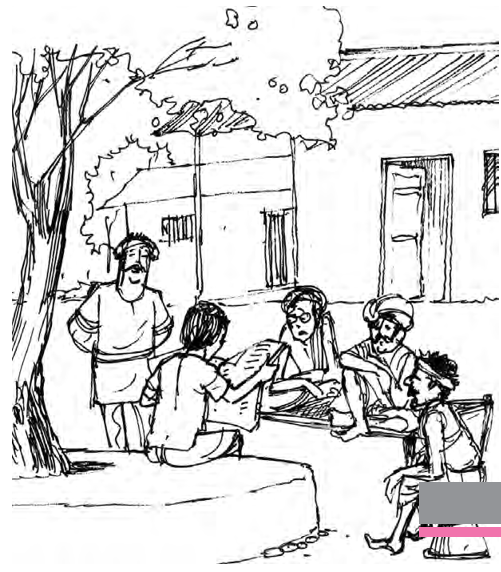
- Word of mouth: News was read and passed on through markets, trading centres, courts and towns.
- Influence: Newspapers reached and influenced more people than circulation figures alone suggested.
- Diverse views: Print media carried varied ideas of a “free India”; these differences continued into independent India.
Important Publications and Dates
Development of print and newspapers
- 1440Johann Gutenberg developed modern printing technology in Europe.
- 1821Raja Rammohun Roy’s Bengali Sambad-Kaumudi began publication with a distinct nationalist and democratic approach.
- 1822Roy’s Persian Mirat-Ul-Akbar began publication; Fardoonji Murzban started the Gujarati daily Bombay Samachar in Bombay.
- 1858Ishwar Chandra Vidyasagar started the Bengali paper Shome Prakash.
- 1861The Times of India was founded in Bombay.
- 1865The Pioneer was founded in Allahabad.
- 1868The Madras Mail was founded.
- 1875The Statesman was founded in Calcutta.
- 1876The Civil and Military Gazette was founded in Lahore.
- 1883The colonial government imposed censorship during the Ilbert Bill agitation.
- Mass media
- Media that communicate information to large audiences.
- Nationalism
- A shared sense of belonging to a nation.
- Imagined community
- A nation whose members feel connected without necessarily meeting or knowing one another.
- Vernacular press
- Newspapers and publications in local languages.
- Censorship
- Government restriction or control of what the press may publish.
How did print media help the growth of nationalism?
Why could newspapers influence more people than their circulation figures suggest?
How were the main media controlled under British rule?
Quick recap
- The printing press was the first modern mass media institution; Gutenberg developed modern printing technology in Europe in 1440.
- Industrial growth, technological change, transport and rising literacy helped newspapers reach mass audiences by the mid-19th century.
- Shared news helped people develop a “we feeling” and a sense of national belonging; Benedict Anderson called this an imagined community.
- The nationalist press spread anti-colonial opinion and faced colonial monitoring and censorship.
- Limited literacy restricted circulation, but word of mouth extended newspapers’ influence.
- Under British rule, radio was state-owned, while newspapers and films were monitored; print carried diverse ideas of a free India.
Mass Media in Independent India
The Approach
- Democratic role: In independent India, the media was expected to act as a watchdog of democracy and support national development.
- Social change: Media was encouraged to challenge oppressive practices and promote a rational, scientific outlook.
Radio
- Radio broadcasting: Radio developed into a major medium of communication, reaching audiences across India.
- Public service: It served varied audiences and helped connect people across the country.
AIR: Development, Entertainment and News
Radio Broadcasting Milestones
- 1920sAmateur ‘ham’ clubs in Kolkata and Chennai began radio broadcasting.
- 1940sRadio matured into a public broadcasting system and was used for Allied propaganda during World War II.
- 1947At independence, AIR had six stations and India had about 280,000 radio sets for 350 million people.
- 1950There were 5,46,200 radio licences across India.
- 1957AIR acquired Vividh Bharati, which developed into a popular entertainment and revenue-generating channel.
- 1960sThe transistor revolution made radios more affordable and portable.
- 1962The war with China prompted AIR to launch a ‘talks’ unit with a daily programme.
- 1967 onwardAIR began a sustained campaign about high-yielding crop varieties, continuing for over 10 years.
- August 1971During the Bangladesh crisis, AIR introduced hourly news from 6 a.m. to midnight.
- 1991The assassination of Rajiv Gandhi prompted AIR to introduce round-the-clock news bulletins.
- 2000Around 110 million households listened to radio in 24 languages and 146 dialects.
How Crises Expanded AIR’s Services
- 1962 war with China → AIR launched a daily ‘talks’ programme.
- Bangladesh crisis in 1971 → AIR began hourly news from 6 a.m. to midnight.
- Rajiv Gandhi’s assassination in 1991 → AIR introduced round-the-clock news bulletins.
- Watchdog of democracy
- A media role of scrutinising public affairs and supporting democratic accountability.
- All India Radio (AIR)
- India’s public broadcasting service, with national, regional and local services.
- Vividh Bharati
- An AIR entertainment channel known especially for Hindi film songs.
- Transistor revolution
- The spread of cheaper, portable, battery-operated radios in the 1960s.
What roles was the media expected to play in independent India?
How did AIR support agricultural development during the Green Revolution?
How did technology help make radio more accessible?
Quick recap
- Nehru saw the media as a democratic watchdog and a means to promote development and social reform.
- AIR expanded from six metropolitan stations at independence into a national, regional and local broadcasting system.
- The transistor revolution made radio more affordable and portable.
- AIR shared agricultural information and farmers’ experiences during the Green Revolution.
- Vividh Bharati combined popular entertainment with sponsored programmes and advertising.
- Wars and national crises led AIR to expand talks and news services.
Television
Television: Early Development
Television — A form of mass communication that broadcasts programmes to large audiences through organised networks.
Early Television in India
- 1959Experimental television programming began in India to promote rural development.
- By 1975Doordarshan stations operated in Delhi, Mumbai, Srinagar and Amritsar.
- August 1975–July 1976SITE broadcast instructional programmes directly to rural communities in six states.
- Within a year of 1975Stations were added in Kolkata, Chennai and Jalandhar.
Early Television: Reach and Programmes
- SITE: The Satellite Instructional Television Experiment reached rural viewers through 2,400 television sets, broadcasting four hours daily.
- Local programming: Each centre offered its own mix of news, children’s and women’s programmes, farmers’ programmes and entertainment.
Commercialisation and the Expanding Audience
Shift Towards Commercial Television
- Programmes were allowed to carry sponsor advertisements.
- The target audience shifted towards urban consumers.
- Entertainment programming grew, and advertising became an important source of revenue.
- Colour broadcasting and expansion of the national network accelerated television’s commercialisation.
Commercial Television and Popular Programmes
- 1982Colour broadcasting began during the Asian Games in Delhi.
- 1984–85The number of television transmitters increased across India, extending coverage to a large share of the population; Hum Log was broadcast.
- 1986–87Buniyaad was broadcast.
- 1987–88Ramayana was broadcast and attracted substantial advertising revenue.
- 1988–90Mahabharata was broadcast and attracted substantial advertising revenue.
Hum Log: Entertainment-Education
A Landmark Soap Opera
- Format: Hum Log was India’s first long-running soap opera; 156 Hindi episodes aired over 17 months in 1984–85.
- Purpose: It used entertainment-education, embedding lessons on gender equality, small family size and national integration in a drama.
- Epilogue: Actor Ashok Kumar summarised the lesson after each 22-minute episode, linking the story to viewers’ everyday lives.
- Audience response: Viewers identified strongly with favourite characters, sometimes adjusting routines to watch or speaking to characters through the TV.
- Reach: Ratings were 65–90% in North India and 20–45% in South India; about 50 million people watched an average broadcast.
- Letters: The programme received over 400,000 viewer letters, too many for Doordarshan officials to open individually.
- Entertainment-education
- Using an entertaining story to communicate educational or social messages.
- Parasocial interaction
- A viewer’s sense of a personal relationship with a media character, despite no direct relationship.
- Commercialisation
- The growing influence of advertising and commercial interests on media programming.
Television Advertising and Consumer Culture
- Advertisements carried alongside Hum Log promoted Maggi 2-Minute noodles.
- The new product was rapidly accepted by the public.
- Advertisers sought television airtime, strengthening Doordarshan’s commercialisation.
Television’s Scale and Social Context
Television Market
- Market size: TRAI’s 2015–16 Annual Report identified India as the world’s second-largest television market after China.
- Households: Industry estimates for March 2016 reported about 284.1 million households, of which around 181.1 million had television sets.
- Services: Viewers received cable TV, DTH and IPTV, alongside Doordarshan’s terrestrial television network.
Print Media, Democracy and Changing Media Roles
Print Media and Nation-Building
- After Independence: Print media continued to support nation-building by taking up developmental issues and giving voice to a wide range of people.
- Emergency: Media censorship during the Emergency, declared in 1975, was a major challenge; democracy was restored in 1977.
- Changing role: Media content and style vary with economic, political and socio-cultural contexts. At different times, the state or the market has greater influence.
- Democratic debate: The shift between state influence and market influence raises questions about the role media should play in a modern democracy.
Mass Media: Organisation and Context
- Formal organisation: Mass media requires a structured organisation to manage large-scale capital, production and management demands.
- Social institution: Like other social institutions, mass media’s structure and content change with economic, political and socio-cultural contexts.
- Influence: The state has a greater role at some times; at others, market forces have more influence.
| Point | Calling | Profession |
|---|---|---|
| Main ideal | Patriotic and social-reform commitment; journalism was often underpaid. | Journalism developed into paid work and a business enterprise, while retaining public-service aims. |
| Illustration | The freedom struggle and movements for social change attracted idealistic talent. | The Hindu gradually changed from a societal and public-service mission into a business framed by those aims. |
How did television programming and its audience change as Indian television became commercialised?
What made Hum Log an example of entertainment-education?
How can mass media’s role change over time?
Quick recap
- Indian television began experimentally in 1959 to support rural development; SITE later broadcast instructional programmes to rural communities.
- Colour broadcasting, network growth and advertising shifted programming towards entertainment and urban consumers.
- Hum Log combined social messages with drama and generated strong audience engagement and substantial advertising interest.
- By 2015–16, India was the world’s second-largest television market, with cable, DTH, IPTV and terrestrial services.
- Print media contributed to nation-building, but censorship during the Emergency declared in 1975 challenged media freedom; democracy returned in 1977.
- Mass media needs formal organisation for large-scale capital, production and management, and its role changes with state and market influence.
Globalisation and the Media
Globalisation and the Changing Media Industry
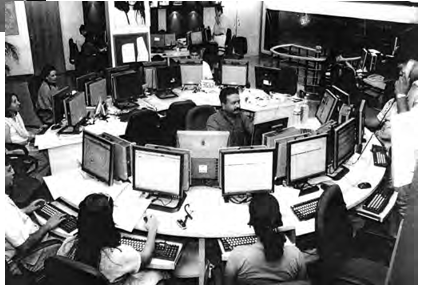
- Global markets: In recent decades, media industries have shifted from nationally regulated markets towards a fluid global market.
- Technological change: New technologies have brought together forms of media that once operated separately.
Globalisation and Music
How digital music challenges traditional distribution
- Internet enables direct digital marketing and downloads.
- Listeners need not buy physical recordings from local stores.
- Traditional production and distribution networks face disruption.
Print Media: Growth and Changing Readership
| Newspaper/group | Strategy or example |
|---|---|
| Hindustan | Its Delhi edition grew from 64,000 copies in 2003 to 425,000 in 2005; many Delhi residents had migrated from Uttar Pradesh and Bihar. |
| Malayala Manorama and Eenadu | Expanded local coverage through district and, where needed, block editions. |
| Dina Thanthi | Used simplified, colloquial Tamil. |
| Dainik Bhaskar group | Used consumer-contact programmes, door-to-door surveys and research. |
| Measure | Key figures |
|---|---|
| Languages recording the highest growth | Hindi, Telugu and Kannada. |
| All print publications, 2006–2016 | Average daily circulation rose from 39.1 million to 62.8 million copies: an increase of 23.7 million and a CAGR of 4.87%. |
| Regional growth, 2006–2016 | North: 7.83%; South: 4.95%; West: 2.81%; East: 2.63%. |
| Leading Hindi dailies, July–December 2016 | Dainik Jagran: 3.92 million average qualifying sales; Dainik Bhaskar: 3.81 million. |
| Readership in 2019 | Indian-language dailies grew from 191 million readers to 425 million; English dailies remained around 31 million. |
| Top 10 dailies in the 'ten million club' | Six were Hindi, one Tamil, two Malayalam and one English. |
| Point | English-language newspapers | Indian-language newspapers |
|---|---|---|
| Reach | Often called national dailies; circulate across regions. | Expanded strongly within states and the rural hinterland. |
| Readership trend | Readership stagnated at around 31 million in 2019. | Readership rose substantially, particularly in the Hindi belt. |
| Competition response | Reduced prices and published from multiple centres. | Used local editions to meet regional and rural readers’ needs. |
The Eenadu example
- Founder and launch: Ramoji Rao, who had successfully organised a chit-fund, launched Eenadu in 1974.
- Rural connection: The paper associated itself with causes such as the anti-arrack movement in the mid-1980s.
- District editions: It launched district dailies in 1989, featuring local news and classified advertisements.
- Expansion: By 1998, Eenadu was published from 10 towns in Andhra Pradesh and represented 70% of audited Telugu daily circulation.
Technology and Newspaper Production
| Technology | Use |
|---|---|
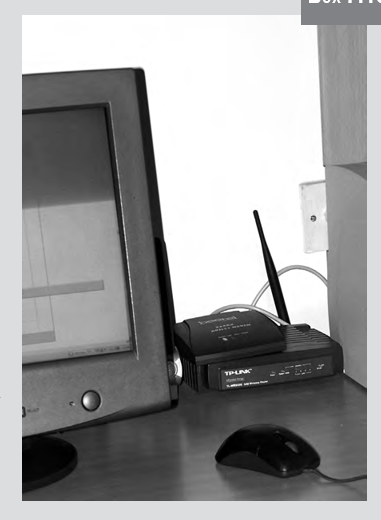
| LANs | Connected personal computers for sharing and processing news. |
| Newsmaker and customised software | Supported the automated preparation of newspaper pages. |
| Modems and digital cameras | Enabled reporters and photographers to transmit news and images to central desks. |
Amar Ujala example
- Network: The Meerut-based newspaper used nearly 100 reporters and staffers and a similar number of photographers.
- Transmission: Reporters used computers and modems; photographers sent digital images to the central desk.
- Reach: The network supplied news to 13 editions across Uttar Pradesh and Uttarakhand.
Newspapers as Consumer Products
- Media convergence
- The blending of media forms that once operated separately, enabled by new technologies.
- District edition
- A newspaper edition focused on news and advertisements from a particular district.
- Infotainment
- A combination of information and entertainment.
Why did Indian-language newspapers grow despite television and the Internet?
How did technology change newspaper production?
What is infotainment, and why do newspapers use it?
Quick recap
- Globalisation has shifted media towards global markets and convergence between formerly separate sectors.
- Music crosses language barriers, while digital downloads challenge traditional production and distribution networks.
- Indian-language newspapers expanded through literacy, migration, local coverage, accessible language and marketing.
- Hindi, Telugu and Kannada recorded the highest growth; newspaper circulation rose substantially from 2006 to 2016, with the north recording the fastest regional growth.
- Computer networks and digital reporting tools made newspaper production faster and enabled many local editions.
- Competition for readers has increased advertising dependence, segmented content and infotainment.
Changing Media Landscapes
Television: Growth and Expansion
Television and Cable Growth
- 1980sDoordarshan expanded, while cable television began mushrooming in major cities.
- 1984Mumbai and Ahmedabad entrepreneurs wired apartment buildings for cable; there were about 100 cable operators.
- 1988The number of cable operators rose to about 1,200.
- 1991India had one state-controlled TV channel, Doordarshan. The Gulf War popularised CNN, and Hong Kong’s Whampoa Hutchinson Group launched Star-TV.
- 1992Zee TV began beaming Hindi entertainment programmes to Indian cable viewers; cable operators numbered about 15,000.
- 1998India had almost 70 television channels.
- 1999The number of cable operators reached about 60,000.
- 2000About 40 private cable and satellite channels were available, including regional-language channels.
- 2002An average of 134 million people watched satellite TV weekly; 40 million homes had access.
- 2005Weekly satellite-TV viewership reached 190 million, and 61 million homes had access.
- 2020About 900 private television networks were broadcasting; Doordarshan broadcast over 35 channels.
Cable Television and New Viewing Choices
From One Channel to Many
- VCRs: Video cassette recorders expanded entertainment choices beyond Doordarshan’s single-channel programming.
- Viewing: People watched films at home and in community video parlours; the content was mainly domestic and imported films.
- Cable growth: Cable operators wired apartment buildings to provide several films a day, and their numbers grew from about 100 in 1984 to 60,000 in 1999.
Transnational Channels and Localisation
| Point | Transnational approach | Localised approach |
|---|---|---|
| Channels and content | Star TV, MTV, Channel [V] and Sony brought international programming. | Networks added Hindi and regional-language programmes and channels. |
| Audience strategy | Early foreign programming raised concerns about its effect on young people and Indian cultural identity. | Channels used familiar languages and cultural references to connect with India's diverse audiences. |
| Examples | Sony initially broadcast 10 Hindi films a week, then reduced them as it developed its own Hindi content. | MTV India included Hindi programming; STAR Plus became a Hindi channel, and Star Sports and ESPN offered Hindi commentary or audio. |
STAR Plus Localisation
- October 1996STAR Plus, initially an English-language entertainment channel from Hong Kong, began Hindi programming from 7 to 9 PM.
- February 1999STAR Plus became an entirely Hindi channel; its English serials moved to STAR World.
How Channels Localised
- Regional networks: Channels such as Sun-TV, Eenadu-TV, Udaya-TV, Raj-TV and Asianet focused on regional-language audiences; Zee also launched networks in languages such as Marathi and Bengali.
- Regional languages: Larger broadcasters introduced channels in Bengali, Punjabi, Marathi and Gujarati.
- STAR slogan: The Hinglish slogan “Aapki Boli. Aapka Plus Point” promoted STAR Plus’s shift to Hindi.
- Dubbing: STAR and Sony dubbed US programmes for younger viewers, who could adapt to a foreign setting with a different language.
Television, News and Public Life
News and Public Debate
- 24×7 broadcasting: Most television channels broadcast throughout the day.
- News style: Television news is often lively and informal, making events feel more immediate, democratic and intimate.
- Public sphere: Television has widened its reach and fostered public debate.
- Concern: The expansion of news and entertainment raises the question of whether serious political and economic issues receive enough attention.
Prince Rescue Coverage: Media Attention and Private Life
- A five-year-old boy, Prince, fell into a 55-foot borewell shaft in Haryana.
- During the 50-hour rescue, a CCTV camera recorded him in the shaft.
- Two news channels suspended other programmes and broadcast continuous footage, interviews and appeals for SMS messages.
- The coverage drew large public attention, prayers across religious communities and support at the site.
- The episode showed television’s ability to create national concern and mobilise people, but also raised concerns about intrusion into personal lives.
Television Entertainment and Celebrity Culture
Genres and Their Effects
- Channel variety: Television offers Hindi, English and regional news, reality and talk shows, Bollywood programmes, family soaps, interactive shows, game shows and comedy shows.
- Reality shows: Kaun Banega Crorepati, Indian Idol and Bigg Boss became popular; many such formats were modelled on Western programmes.
- Celebrity culture: Entertainment television created household-name stars, while their private lives and on-set rivalries became gossip-magazine and newspaper content.
- Satellite television
- Television broadcasting delivered through satellite signals, enabling channels to reach wide areas.
- Cable television
- Television services that distribute channels to viewers through cable connections.
- Localisation
- Adapting media content to local audiences, especially through familiar languages and regional programming.
- Transnational television
- Television networks and content that cross national boundaries.
How did private satellite television transform the Indian television landscape?
What is localisation in television? Give examples.
Quick recap
- India’s television system grew from one state-controlled channel in 1991 to a large private and regional broadcasting sector.
- VCRs and cable services gave viewers alternatives to Doordarshan’s single-channel programming.
- Transnational broadcasters adapted content through Hindi programming, dubbing and regional-language channels.
- Television news can make events immediate, foster public debate and mobilise collective attention.
- Intensive coverage can also intrude into people’s private lives.
- Entertainment channels popularised varied formats and helped create celebrity culture.
Radio
Radio's Reach and Private FM
Radio in India
- AIR's reach: In 2000, All India Radio (AIR) could be heard in two-thirds of Indian households, across 24 languages and 146 dialects, using about 120 million radio sets.
- Private FM: Privately owned FM stations began in 2002 and strengthened radio entertainment.
- Programming limits: Private FM channels are not permitted to broadcast political news bulletins; many focus on particular kinds of popular music to attract and retain audiences.
- Ownership: Popular channels often belong to large media groups: Radio Mirchi to the Times of India group, Red FM to Living Media and Radio City to the Star Network.
- Public broadcasting gap: Independent public broadcasters such as National Public Radio in the USA and the BBC in the UK are absent from India's broadcasting landscape.
| Point | Private FM in India | Independent public broadcasting |
|---|---|---|
| Main role | Often entertainment and popular music | Public broadcasting, as in NPR (USA) and BBC (UK) |
| Political news | Private FM channels cannot broadcast political news bulletins | The text presents these broadcasters as independent public-service examples |
| Indian presence | Many popular stations are linked to media conglomerates | Such independent broadcasters are missing from India's broadcasting landscape |
Radio as a Medium of Communication
Radio in Popular Culture
- Film examples: *Rang de Basanti* and *Lage Raho Munna Bhai* show radio as an active means of reaching and influencing people.
- Rang de Basanti: The youth capture All India Radio to communicate their message to the public.
- Lage Raho Munna Bhai: A radio jockey addresses listeners with “Good Morning Mumbai!”; the hero also uses the station in an attempt to save a girl's life.

Local Radio and Community Needs
Growth Potential
- Local demand: Demand for local news is growing, and the increasing number of FM listeners reflects a wider shift from national networks towards local radio.
- Future growth: Further privatisation and the development of community-owned stations could expand radio broadcasting.
- Local relevance: Community radio can serve local cultures and provide information that large networks may not prioritise.
Soap opera — A continuing, serialised story whose individual plots or characters may change, but which has no planned ending until it is taken off the air.
How Soap Operas Work
- Continuity: Soap operas presume a past history that regular viewers know.
- Familiarity: Viewers become familiar with characters' personalities and life experiences as the story continues.
Raghav FM Mansoorpur 1: A Village Radio Station
Local Radio in Bihar
- Origins: Raghav Mahato began as a mechanic in 1997 and later developed a low-cost, homemade FM station with his friend Sambhu, operating from a small repair shop in Bihar.
- Low-cost technology: A transmission kit costing Rs. 50 connected a homemade cassette player to an antenna on a nearby hospital; battery-powered equipment suited areas with unreliable electricity.
- Local programming: The station played Bhojpuri, Bollywood and devotional songs, and broadcast public-interest messages about HIV and polio, local news, missing children and shop openings.
- Community connection: Women listened in large numbers; devotional songs were played at dawn and dusk for women and older listeners. Requests came through handwritten messages and phone calls.
- Informal audience participation: Without a phone-in facility, listeners sent requests via couriers or through a neighbouring public telephone office.
- Legal and social tension: Raghav did not know that an FM station required a government licence. He stopped broadcasting after being told it was illegal, but villagers urged him to resume.
- Significance: The station earned no income and remained a labour of love, yet gained local popularity by reflecting community interests and culture.
Why the Village Station Mattered
- Limited electricity and reliance on cheap battery-powered radios -> radio remained an accessible source of entertainment.
- Local music and information needs -> Raghav created inexpensive, locally produced programming.
- Community-specific songs, news and public messages -> villagers valued the station and asked it to resume after it shut down.
Mass Media in Contemporary Society
Key Perspective
- Importance: Mass media is part of both personal and public life in contemporary society.
- Study of media: Understanding media includes its links with the state and the market, its organisation and management, and its relationship with audiences.
- Balanced view: Media operates within constraints while also shaping people's lives in many ways.
- AIR
- All India Radio, a national radio broadcaster with wide linguistic and household reach.
- FM radio
- Radio broadcasting used by private stations for popular programming and entertainment.
- Community-owned radio
- Local broadcasting intended to respond to the needs and culture of a community.
- Soap opera
- A continuing serialised story built around familiar characters and an ongoing history.
How did private FM stations in India attract audiences, and what limitation did they face?
What does Raghav FM show about the role of local radio?
Quick recap
- In 2000, AIR reached two-thirds of Indian households in 24 languages and 146 dialects.
- Private FM stations began in 2002, emphasising entertainment and popular music; political news bulletins were not permitted.
- Radio can communicate public messages, as illustrated by the films *Rang de Basanti* and *Lage Raho Munna Bhai*.
- Growing demand for local information supports the potential of community-owned radio.
- Raghav FM shows how inexpensive, locally relevant programming can earn strong community support.
- Mass media must be understood through its links to the state, the market, its organisation and its audiences.
Sociology — ALL CHAPTERS
1
INTRODUCING INDIAN SOCIETY
2
THE DEMOGRAPHIC STRUCTURE OF THE INDIAN SOCIETY
3
SOCIAL INSTITUTIONS CONTINUITY AND CHANGE
4
THE MARKET AS SOCIAL INSTITUTIONS
5
PATTERNS OF SOCIAL INEQUALITY AND EXCLUSION
6
THE CHALLENGES OF CULTURAL DIVERSITY
7
SUGGESTIONS FOR PROJECT WORK
1
Structural Change
2
Cultural Change
3
The Constitution and Social Change
4
Change and Development in Rural Society
5
Patterns of Industrialisation and Urbanisation
6
Globalisation and Social Change
7
Mass Media and Communications
8
Social Movements