Class 12 Humanities . Sociology . Indian Society . The Challenges of Cultural Diversity
Chapter 6: THE CHALLENGES OF CULTURAL DIVERSITY
Ch 6
Sociology
Class 12 Humanities
The Importance of Community Identity
Cultural Diversity as a Challenge
Cultural diversity — The presence of different cultural communities, identified by markers such as language, religion, sect, race or caste, within a larger society.
Why diversity can create challenges
- Diversity and inequality: Diversity highlights differences; it does not itself mean unequal treatment.
- Social institutions: Institutions can build collective identity and cohesion, but can also produce inequality and exclusion.
- Strong identities: Cultural identities can evoke intense feelings and mobilise large numbers of people.
- Competing interests: Cultural differences may overlap with social and economic inequalities, making remedies contentious.
- Scarce resources: Competition over resources such as river water, jobs and government funds can heighten conflict.
How diversity-related tensions develop
- Communities compete or conflict within a larger society
- Some communities face social or economic inequality
- Measures to address injustice may prompt opposition from others
- Scarce resources intensify the competition and tension
The Importance of Community Identity
Community identity — A sense of who we are, grounded in belonging to communities such as family, kinship, caste, ethnicity, language, region or religion.
Identity and socialisation
- Need for identity: People use a stable sense of self to understand who they are, how they differ from others and what they hope to become.
- Socialisation: Families and communities teach people how to live in society and provide cultural values and language, including the mother tongue.
- Ongoing process: Socialisation involves dialogue, negotiation and sometimes struggle with significant others, such as parents, family and community.
- Community's role: Community ties help people interpret the world and anchor their self-identity.
Ascriptive identity — An identity assigned through birth and belonging, rather than earned through personal achievement or choice.
| Point | Ascriptive community membership | Acquired membership |
|---|---|---|
| Basis | Birth and belonging; no personal choice is required | Qualifications, competence or performance |
| Examples | Family, religious or regional community | Profession or sports team |
| Membership | Often unconditional and difficult to shed; others may still use its markers | Depends on meeting entry requirements or maintaining ability |
Emotional power and universality
- Emotional attachment: Accidental yet unconditional and hard-to-escape belonging can create deep security and loyalty.
- Threats: People may react strongly, sometimes violently, when they believe their community identity is under threat.
- Potentially universal: Everyone can have identities linked to family, language, faith or homeland, though individuals may vary in commitment.
- Conflict: Each side may exaggerate its own virtues and the other side's faults, seeing the opposing community as an enemy.
- Mirror images: Opponents can form matching but reversed accounts of who is the aggressor and who is right.
Communities, Nations and Nation-States
Nation — A large-scale community whose members share a desire to belong to the same political collectivity.
State — A set of political and legal institutions claiming authority over a territory and its population; Max Weber described it as claiming a monopoly of legitimate force in that territory.
Nations and their varied foundations
- Possible commonalities: Nations may share religion, language, ethnicity, history or regional culture.
- No single defining feature: Some nations lack a common language or religion; shared language or religion across countries does not automatically create one nation.
- Community and nation: An ethnic, religious or regional community may become a nation, but no type of community is guaranteed to do so.
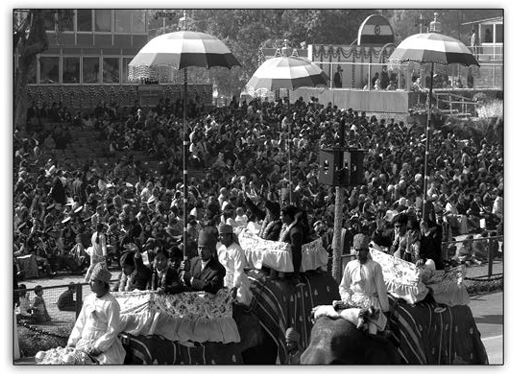
Nation-state — A nation linked to a state of its own; the state is the clearest practical distinction between a nation and other communities.
Nation-state relationships
- Modern pattern: A one-nation/one-state relationship has become common, but it is not historically necessary.
- Multiple nations in one state: The Soviet Union recognised more than 100 internal nationalities.
- A nation across states: More Jamaicans live outside Jamaica than within it.
- Dual citizenship: Some laws permit citizenship in two states; Jewish Americans may hold citizenship in both Israel and the USA and serve in either country's armed forces without losing the other citizenship.
- No fixed link: A community may or may not form a nation, and a nation may extend beyond one state's borders.
Legitimacy and cultural diversity
- Modern legitimacy: Democracy and nationalism are major sources of political legitimacy; the nation is widely treated as the proper basis for a state.
- People and nation: The people are treated as the ultimate source of a nation's legitimacy, so states need national legitimacy as well.
- No predetermined policy: There is no inevitable answer to how a state should treat the diverse communities that make up its nation.
- Plural nation-states: India shows that a strong nation-state can exist without making all community identities culturally uniform.
| Point | Assimilation | Integration |
|---|---|---|
| Approach | Persuades, encourages or forces citizens to adopt a uniform culture, usually based on the dominant group | Restricts public culture to a common national pattern while relegating other cultures to private life |
| Expected change | Non-dominant groups are expected to give up their own cultural values | Cultural differences may remain in private, but are removed from public and political life |
| Shared risk | The dominant group's culture may be treated as the only legitimate national culture | The dominant group's culture may be treated as the only legitimate national culture |
Common state strategies for a single national identity
- Power: Centralise decision-making where the dominant group is the majority and reduce minority or local autonomy.
- Law: Impose one legal and judicial system based on dominant-group traditions; abolish alternatives used by other groups.
- Language: Make the dominant group's language the sole official national language and require it in public institutions.
- Institutions: Promote the dominant language and culture through state media and education.
- Symbols: Use national holidays, street names and public symbols to celebrate the dominant group's history, heroes and culture.
- Resources: Take lands, forests and fisheries from minorities or Indigenous peoples and designate them national resources.
Why suppressing diversity can backfire
- States fear that community identities may weaken unity
- Assimilation or integration policies suppress, ignore or marginalise cultural differences
- Minority and subordinated communities may feel alienated
- Suppression can intensify the very community identities it seeks to weaken
- Recognising or allowing diversity can support both practical stability and fair treatment
- Cultural diversity
- The presence of multiple cultural communities within a society.
- Community identity
- A person's sense of belonging and self-understanding through community ties.
- Ascriptive identity
- An identity assigned by birth rather than gained through achievement or choice.
- Nation
- A large community seeking membership in the same political collectivity.
- State
- Political-legal institutions claiming authority over a territory and its people.
- Nation-state
- A nation linked to a state of its own.
Why can community identities make conflicts difficult to resolve?
How do assimilation and integration differ?
Why may suppressing cultural diversity be counterproductive?
Quick recap
- Cultural diversity means differences among communities; it does not automatically mean inequality.
- Community identity is learned through socialisation and is often ascriptive, emotionally powerful and hard to shed.
- Nations are political communities, but no single cultural feature defines every nation.
- A nation-state links a nation to a state, though one state can contain many nations and a nation can cross borders.
- Assimilation demands cultural uniformity; integration confines cultural differences largely to private life.
- Suppressing diversity can alienate minorities and strengthen community identities; accommodating diversity can support unity and fairness.
Cultural Diversity and India as a Nation-state
India’s Cultural Diversity
- Diversity: India’s people belong to many linguistic, religious, cultural and social communities.
- Scale: The country includes hundreds of languages and dialects, with 22 languages recognised in the Constitution’s Eighth Schedule.
India’s Approach to Community Identities
- Recognition: Independent India rejected forced cultural assimilation and constitutionally recognises diverse communities.
- Public life: Religion and language are not confined to the private sphere; minority rights receive constitutional protection.
The State-Nation
- State-nation: A multicultural state in which different national, religious, linguistic or ethnic identities coexist within one political system.
- Multiple identities: Citizens can identify with both the country and their cultural communities without being required to adopt one uniform identity.
Achievements and Continuing Challenges
How Inclusive Policies Support Democracy
- Cultural recognition and institutional accommodation
- Multiple, complementary identities and a sense of inclusion
- Greater trust in common institutions
- Participation in and support for democratic politics
- Stronger social harmony and political stability
- Cultural recognition
- State acknowledgement of the identities and claims of diverse cultural groups.
- Institutional accommodation
- Arrangements that allow different groups to participate and coexist within shared institutions.
- Multiple and complementary identities
- Identifying with the country as well as with cultural communities, without treating these loyalties as incompatible.
Why is India described as a state-nation rather than as an assimilationist or strict integrationist state?
How can a state-nation build national unity while preserving cultural diversity?
Quick recap
- India’s diversity includes about 1,632 languages and dialects and many religious communities.
- The 2011 Census recorded a population of about 1.21 billion; 22 languages have Eighth Schedule recognition.
- Independent India rejected assimilation and constitutionally recognises community identities and minority religions.
- A state-nation accommodates multiple identities while sustaining common institutions and democratic politics.
- Pluralism, inclusion and democratic conflict resolution strengthen trust, social harmony and political stability.
- Imposing a singular identity threatens minority rights and India’s constitutional commitment to diversity.
Regionalism in the Indian Context
Regionalism and its roots
Regionalism in India — Regional sentiments are rooted in diverse identities concentrated in particular regions and can be intensified by a sense of regional deprivation.
- Identity and place: Languages, cultures, tribal identities and religions may be geographically concentrated in particular regions.
- Deprivation: Perceived neglect or disadvantage can fuel regional demands.
- Accommodation: Indian federalism provides ways to recognise and address regional sentiments.
From colonial provinces to linguistic States
The colonial arrangement
- After Independence: India initially retained large, multi-ethnic and multilingual provinces inherited from British rule.
- Presidencies: Madras, Bombay and Calcutta were major colonial provinces and political-administrative units.
- Reorganisation: Popular agitations soon led to the reorganisation of these units into ethno-linguistic States within the Indian Union.
The movement for linguistic States
- 1920sThe Indian National Congress reorganised its provincial units along linguistic lines; Gandhi and other leaders promised language-based provinces after independence.
- 1947After Independence, Congress leaders hesitated to redraw boundaries by language, fearing that strong linguistic loyalties could lead to further division.
- October 1953Potti Sriramulu died after a fast unto death; the resulting protests led to the creation of Andhra Pradesh.
- November 1, 1956The States Reorganisation Commission (SRC) recommendations were implemented, formally approving the principle of linguistic States.
Why linguistic States were accepted
- Initial concern: Jawaharlal Nehru, Vallabhbhai Patel and C. Rajagopalachari feared language-based provinces could encourage further partition after the division of 1947.
- Popular pressure: Congress workers and movements among Marathi and Kannada speakers demanded linguistic boundaries; Telugu speakers led the most militant protests.
- Potti Sriramulu: His death during a fast and the protests that followed brought about Andhra Pradesh and helped prompt the SRC.
- Outcome: Linguistic States accommodated language communities and helped strengthen Indian unity rather than undermine it.
| Point | India | Examples of denial or conflict |
|---|---|---|
| Approach | Linguistic States recognised regional language aspirations within the Indian Union. | In 1956, Ceylon (later Sri Lanka) made Sinhala its sole official language despite Tamil protests. |
| Consequences | People could identify as both members of a linguistic community and Indian. | Sri Lanka’s civil war, ongoing since 1983, was partly rooted in the denial of minority linguistic rights; Pakistan was divided in 1971 after Bengali sentiments in its eastern wing were disregarded by the western wing. |
Regional identity and the creation of States
- Ethnonational identity: Language combined with regional and tribal identity has been a particularly powerful basis for ethnonational identity in India.
- Not only language: Not every linguistic community received a State, and language was not the main factor in every State’s formation.
- States formed in 2000: Chhattisgarh, Uttaranchal and Jharkhand emerged through a combination of tribal identity, language, regional deprivation and ecological factors.
- Federal units: The lecture text gives the count as 28 States and 8 Union territories; Union territories are centrally administered.
| Basis | Example or role |
|---|---|
| Language | A major principle behind linguistic State reorganisation. |
| Tribal identity, language, regional deprivation and ecology | Combined factors behind the creation of Chhattisgarh, Uttaranchal and Jharkhand in 2000. |
- Capital S: “State” refers to a federal unit within India; lowercase “state” refers to the broader conceptual category.
- Unity through accommodation: Recognising regional aspirations within the Union can support national unity.
Institutions that accommodate regional sentiments
- Constitutional powers: The Constitution defines the powers of the Centre and States, supporting States as relatively autonomous units within the federation.
- Division of subjects: Some areas are the exclusive responsibility of the State, some of the Centre, while the Concurrent List allows both to operate.
- Rajya Sabha: State legislatures determine the composition of the upper house of Parliament.
- Finance Commission: Set up every five years to decide how tax revenues are shared between the Centre and States.
- Other forums: The GST Council includes State members; up to 2017, each Five Year Plan included State Plans prepared by State Planning Commissions.
Religion-related issues and identities
| Set | Main question |
|---|---|
| Secularism–communalism | How should the State relate to religion and to political groups that use religion as their primary identity? |
| Minority–majority | How should the State treat communities that differ in number and/or social, economic or political power? |
How did linguistic States help strengthen Indian unity?
Name the two broad sets of religion-related issues discussed in the lecture.
Quick recap
- Regionalism is rooted in concentrated linguistic, cultural, tribal and religious identities, and may be fuelled by regional deprivation.
- The SRC recommendations were implemented on November 1, 1956, formally approving linguistic States.
- Linguistic States accommodated regional aspirations and helped strengthen Indian unity.
- Chhattisgarh, Uttaranchal and Jharkhand were created in 2000 through several factors, including tribal identity, deprivation and ecology.
- Constitutional powers, the Concurrent List, the Rajya Sabha, the Finance Commission and the GST Council provide federal mechanisms for accommodation.
- Religion-related issues are grouped into secularism–communalism and minority–majority questions.
Minority Rights and Nation Building
Inclusive Nationalism and Minority Protection
Indian nationalism
- Inclusive and democratic: Its dominant vision recognised India’s diversity and sought to end discrimination and exclusion.
- The people: National belonging was not restricted to one religion, ethnicity, race or caste.
- Humanist influence: Gandhi and Rabindranath Tagore criticised the hatred, superiority and exclusion promoted by narrow nationalism.
- Constitutional protection: Inclusive ideals need constitutional safeguards because a dominant group may treat its own culture, language or religion as identical with the nation.
Why protect minority rights?
- National strength: A strong, democratic nation must protect the rights of all groups, especially minorities.
- Tagore’s warning: Exclusive nationalism can cultivate hostility towards other groups and a false sense of superiority; this harms both those targeted and the society that promotes it.
- Ambedkar’s argument: Unprotected minorities can become a source of serious conflict, threatening the state. India’s minorities had accepted majority rule, making safeguards especially important.
- Nation-building principle: Recognising differences helps build unity; forcibly imposing a language or religion weakens national unity.
Meaning and Types of Minority
Minority group (sociological sense) — A relatively small and disadvantaged group whose members share a sense of solidarity and belonging.
Sociological meaning
- More than numbers: A group is not a sociological minority merely because it has few members; disadvantage and collective identity also matter.
- Disadvantage: The term usually implies relative disadvantage. Very wealthy people may be called a “privileged minority” only with a qualification.
- Collectivity: Members share solidarity, togetherness and belonging; prejudice and discrimination can strengthen these ties.
- Not sociological minorities: Left-handed people or people born on 29 February may be statistically few, but do not necessarily form a collective group.

Different forms of disadvantage
- Anomalous cases: A minority may be disadvantaged in one area but not another.
- Economic and cultural status: Parsis or Sikhs may be relatively well-off economically yet culturally disadvantaged because they are small in number compared with the Hindu majority.
- Need for protection: Religious and cultural minorities require safeguards against the effects of the majority’s demographic dominance.
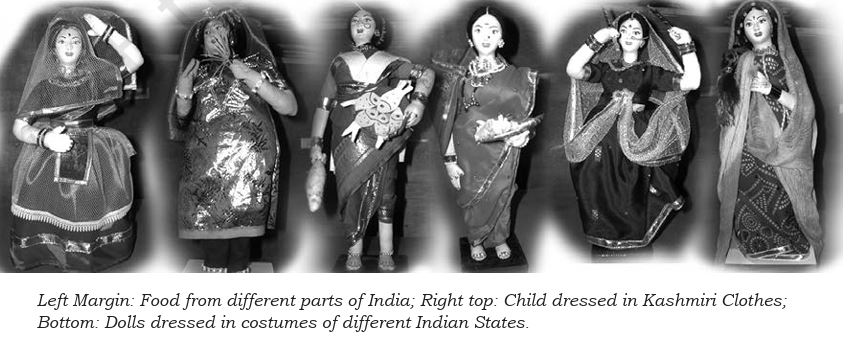
Religious Minorities in India
| Group | Population and share | Distribution and concentrations |
|---|---|---|
| Hindus | About 966 million; 80% | The overwhelming majority; population is internally diverse and divided by caste. |
| Muslims | 172 million; 14.2% | Largest religious minority; present throughout India, a majority in Jammu and Kashmir, with sizeable pockets in West Bengal, Uttar Pradesh, Kerala, Andhra Pradesh, Karnataka and Rajasthan. |
| Christians | 27.8 million; about 2.3% | Scattered across India, with sizeable pockets in the North East and southern states. Majority in Nagaland (88%), Mizoram (87%) and Meghalaya (74%); sizeable shares in Goa (25%) and Kerala (18.4%). |
| Sikhs | 21 million; 1.7% | Scattered across India; a majority in Punjab (58%). |
| Buddhists | 8 million; 0.7% | Highest shares in Sikkim (27%) and Arunachal Pradesh (12%); among larger states, Maharashtra has the highest share (6%). |
| Jains | 4.5 million; 0.4% | Highest concentrations in Maharashtra (1.3%), Delhi and Gujarat (nearly 1% each). |
| Other Religions and Persuasions | Under 8 million; 0.7% | Comprises several smaller religious groups. |
Interpreting population figures
- Relative size: Hindus numbered about four times the combined population of all other minority religions and about six times the Muslim population.
- Important qualification: Religious communities are not necessarily homogeneous; Hindus and other major religious groups are also divided by caste, though to differing degrees.
Census reference
- 2011Census figures cited for the size and distribution of India’s religious communities.
Unity in Diversity and National Unity
India’s plural national identity
- Anti-colonial struggle: Indian nationalists recognised the need to respect India’s diversity during the long struggle against British colonialism.
- Unity in diversity: This phrase expresses the unity of a society made up of diverse groups.
- Constitutional expression: Debates on minority and cultural rights in the Indian National Congress found expression in the Constitution.
- Conditions for unity: The Constitution’s makers believed that a united nation requires freedom for all people to practise religion and develop their culture and language.
Non-recognition of cultural and linguistic rights
- Failure to recognise a group’s cultural or linguistic rights
- The group experiences exclusion or imposed identities
- Resentment and conflict grow
- National unity is weakened
Examples of threats to unity
- Bangladesh: The Pakistani state’s unwillingness to recognise the cultural and linguistic rights of people in Bangladesh was a key issue in Bangladesh’s formation.
- Sri Lanka: Imposing Sinhalese as the national language was among the contentious issues behind ethnic conflict.
- India: Forcibly imposing a language or religion on any group weakens unity, which depends on recognising differences.
Constitutional Safeguards
| Provision | Right or protection |
|---|---|
| Article 29(1) | Any section of citizens residing in the territory of India or any part of it, with a distinct language, script or culture, has the right to conserve it. |
| Article 29(2) | No citizen may be denied admission to a State-maintained or State-aided educational institution solely on grounds of religion, race, caste, language or any of them. |
| Article 30(1) | Religious and linguistic minorities have the right to establish and administer educational institutions of their choice. |
| Article 30(2) | The State may not discriminate in granting aid to an educational institution because it is managed by a religious or linguistic minority. |
Minorities exist in every nation-state
- No complete homogeneity: Nation-states contain dominant groups, but no country consists exclusively of one homogeneous cultural group.
- Changing populations: Modern capitalism, colonialism and large-scale migration have increased plurality, even in relatively homogeneous countries such as Iceland, Sweden and South Korea.
- Many forms: Minorities may be religious, ethnic, linguistic or racial; even the smallest state has minorities.
- Inclusive nationalism
- A national vision that recognises diversity and seeks equal, non-discriminatory belonging.
- Minority group
- A relatively small and disadvantaged group with a shared collective identity.
- Collectivity
- A group whose members share solidarity and a feeling of belonging.
- Unity in diversity
- National unity built through recognition and respect for social differences.
Why is a minority not defined only by its numerical size?
What rights do Articles 29 and 30 provide?
How can denying cultural or linguistic rights weaken national unity?
Quick recap
- Sociological minority status involves relative disadvantage and collective identity, not numbers alone.
- Minorities may face cultural disadvantage even when they are economically well-off.
- Indian nationalism and the Constitution aim to build unity by recognising diversity and protecting minority rights.
- Article 29(1) gives any section of citizens residing in India or any part of it with a distinct language, script or culture the right to conserve it.
- Imposing a language or religion can cause conflict and weaken national unity.
- Every nation-state contains minorities; complete cultural homogeneity does not exist.
Communalism, Secularism and the Nation-state
Communalism
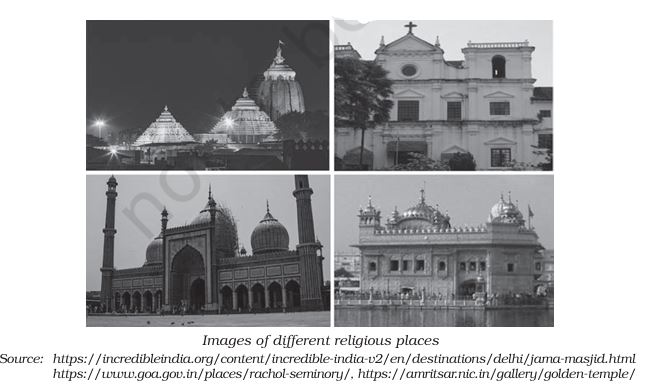
How Communalism Shapes Identity
- Communalism: An aggressive political ideology that makes religious identity the basis of political belonging.
- Identity: It treats each religious community as uniform and claims that religion overrides differences such as class, caste, occupation and political belief.
Communalism and India’s History
Syncretism — The blending or intermixing of cultural or religious traditions.
Pluralism and Syncretic Traditions
- Pluralism: India’s history includes both conflict and examples of interreligious coexistence.
- Bhakti and Sufi movements: their devotional songs and poetry express syncretic traditions.
- Kabir: his poetry brings together Hindu and Muslim devotional ideas and is remembered as a symbol of pluralism.
- Communalism
- Aggressive political ideology based on religious identity.
- Chauvinism
- Belief that one’s own group is superior or uniquely legitimate.
- Religious pluralism
- Coexistence of different religious traditions.
- Syncretism
- Blending or intermixing of traditions.
How is communalism different from personal religious faith?
Why is it inaccurate to blame colonialism for all communal conflict in India?
Quick recap
- Communalism is aggressive politics based on religious identity, not simply religious faith.
- It treats religion as more important than class, caste, occupation or political belief.
- It turns diverse religious communities into supposedly uniform groups and casts others as opponents.
- Colonial policies contributed to some conflicts, but conflict existed both before and after colonial rule.
- India’s history includes pluralism and syncretism as well as communal tension.
- Bhakti and Sufi poetry, including Kabir’s work, reflects syncretic traditions.
Secularism & State and Civil Society
Secularism
Secularism — A principle governing how religion and public or political authority relate; its meaning differs across contexts.
| Point | Western context | Indian context |
|---|---|---|
| Main meaning | Separation of religious authority (church) from political authority (state). | The state does not favour one religion over others; this is commonly contrasted with communalism. |
| Religion in public life | Secularisation describes religion's progressive retreat from public life and its shift towards voluntary personal practice. | Equal respect for religions is emphasised; secularism does not necessarily mean hostility to religion or strict separation. |
| Related ideas | Associated with modernity and the rise of science and rationality as alternatives to religious explanations. | The state may recognise and respect different religions, such as by declaring public holidays for their festivals. |
Minority protection and secularism
- Political systems may place minorities at a disadvantage compared with the majority.
- The state provides minorities with special consideration and protection.
- Opponents may call this favouritism or 'appeasement', alleging political motives.
- Supporters argue that without protection, majority values and norms may be imposed on minorities.
The State and Its Limits
Why the state needs public oversight
- Role: The state is a crucial institution for managing cultural diversity and claims to represent the nation.
- Insulation: State structures—such as the legislature, bureaucracy, judiciary, armed forces and police—may become detached from the people.
- Authoritarianism: An insulated state can become authoritarian when people have no voice and those in power are not accountable.
- Civil liberties: Authoritarian states may restrict or abolish freedoms of speech, press and political activity, along with protection from misuse of authority and the right to due process.
- Other failures: Corruption, inefficiency or lack of resources can make state institutions unable or unwilling to meet people's needs.
- Response: Non-state actors can monitor the state, protest injustices and supplement its work.
Authoritarian state — A state in which people lack a meaningful voice and those in power are not accountable to anyone.
Civil Society
Civil society — The non-state, non-market part of public life where people voluntarily organise to pursue shared interests and take up social issues.
Main features
- Sphere: It lies outside the private domain of the family and beyond both the state and the market.
- Participation: It is a sphere of active citizenship where people raise issues, influence the state, make demands and pursue collective interests.
- Forms: It includes voluntary associations such as political parties, media institutions, trade unions, NGOs, religious organisations and other collective groups.
- Criteria: An organisation belongs to civil society if it is not state-controlled and is not purely commercial or profit-making.
| Area | Examples |
|---|---|
| Rights and justice | Tribal land rights; campaigns against rape and violence against women; land distribution to Dalits. |
| Livelihoods and housing | Fishermen's struggles against mechanised fishing; rehabilitation of hawkers and pavement dwellers; campaigns for housing rights and against slum demolitions. |
| Development and governance | Rehabilitation of people displaced by dams and other projects; devolution in urban governance. |
| Public services | Primary education reform and campaigns to improve access to services. |
| Public accountability | Civil liberties organisations monitor the state and press it to obey the law; media, especially visual and electronic media, also play an active role. |
How civil society works
- Activities: Organisations advocate, lobby national and international agencies, and participate in social movements.
- Importance: They can draw attention to injustice, represent collective demands and help ensure that the state remains accountable to the people.
The Right to Information
From local campaign to national law
- A rural Rajasthan agitation demanded information about government funds spent on village development.
- The effort grew into a nationwide campaign, despite resistance from the bureaucracy.
- The campaign pushed the government and Parliament to recognise citizens' right to access government records.
- The Right to Information Act made disclosure a legal route for holding the state accountable.
Key dates
- 1923The Official Secrets Act and other laws had restricted information disclosure in India.
- 15 June 2005Parliament passed the Right to Information Act 2005 (Act No. 22/2005).
- 13 October 2005The Right to Information Act came into force, overriding the earlier restrictions on disclosure.
What the RTI Act provides
- Access: Any person may request information from a public authority, which is expected to reply promptly or within 30 days.
- Inspection and copies: Citizens may inspect documents, works and records, take copies, and obtain certified samples of materials.
- Formats: Information may be obtained as printouts, on disks or tapes, as video cassettes, or in other electronic forms.
- Proactive disclosure: Public authorities must computerise records for wider dissemination and proactively publish specified information, reducing the need for formal requests.
- Secularisation
- The progressive retreat of religion from public life, with religious practice becoming more voluntary and personal.
- Civil liberties
- Basic freedoms and legal protections, including freedom of speech and press and the right to due process.
- Public authority
- A government body or instrumentality of the state from which information can be requested under the RTI Act.
What are the different senses in which secularism is understood in India?
What is civil society, and how does it help make the state accountable?
State two important provisions of the Right to Information Act.
Quick recap
- Western secularism stresses separation of religious and political authority; Indian secularism stresses equal respect for all religions.
- Minority protection can be criticised as favouritism, but supporters see it as necessary to prevent majority dominance.
- An insulated or ineffective state can restrict civil liberties or fail to meet people's needs.
- Civil society consists of voluntary organisations outside the state and market that pursue public concerns.
- Civil society organisations advocate, participate in movements, monitor the state and press for accountability.
- The RTI Act 2005 gives citizens access to public records and requires proactive disclosure by public authorities.
Sociology — ALL CHAPTERS
1
INTRODUCING INDIAN SOCIETY
2
THE DEMOGRAPHIC STRUCTURE OF THE INDIAN SOCIETY
3
SOCIAL INSTITUTIONS CONTINUITY AND CHANGE
4
THE MARKET AS SOCIAL INSTITUTIONS
5
PATTERNS OF SOCIAL INEQUALITY AND EXCLUSION
6
THE CHALLENGES OF CULTURAL DIVERSITY
7
SUGGESTIONS FOR PROJECT WORK
1
Structural Change
2
Cultural Change
3
The Constitution and Social Change
4
Change and Development in Rural Society
5
Patterns of Industrialisation and Urbanisation
6
Globalisation and Social Change
7
Mass Media and Communications
8
Social Movements