Class 12 Humanities . Sociology . Social Change And Development In India . Patterns of Industrialisation and Urbanisation
Chapter 5: Patterns of Industrialisation and Urbanisation
Ch 5
Sociology
Class 12 Humanities
Images of Industrial Society
Work, Industry and Urban Life
Mumbai as an industrial city
- Film industry: Bollywood is a workplace as well as a source of entertainment; dancers, stunt artists and extras are among its workers.
- Workers’ organisation: Junior artists have an association that seeks eight-hour shifts, fair wages and safe working conditions.
- Production and marketing: Films and related products reach audiences through distributors, cinema owners and shops selling music and videos.
- Unequal urban life: Film stars and mill owners may live in Juhu, while extras and textile workers may live in Girangaon; income also shapes food and leisure.
- Shared city life: Residents may watch the same films and cricket, face the same air pollution and hope for their children’s success.
Work and social patterns
- Work and identity: A person’s job, workplace and working conditions are important parts of their social position and identity.
- Social institutions: Caste, kinship, gender and region influence how work is organised and how goods are marketed.
- Social patterns: Who produces what, who works where and who sells to whom are shaped by society—not simply by individual choices.
- Two-way relationship: Technology and available work can change social relations, while social relations also shape how people adopt new work and products.
| Point | Example | Sociological insight |
|---|---|---|
| Gender and occupations | Women are more commonly associated with nursing and teaching than engineering. | Ideas that women are naturally suited to caring work can shape occupational choices and opportunities. |
| Work and gender assumptions | Nursing can be physically harder than designing a bridge, despite engineering often being seen as tough or masculine. | Occupational status and gender stereotypes do not necessarily reflect the actual demands of a job. |
| Marketing and culture | Some Indian coffee advertisements show two cups, while American ones show one. | Marketing reflects cultural patterns: coffee may be presented in India as a social occasion rather than an individual activity. |
Industrial Society
Classic sociological views
- Key thinkers: Karl Marx, Max Weber and Emile Durkheim examined social changes associated with industrialisation.
- Urbanisation: Industrialisation is linked with the growth of cities and modern workplaces.
- Changing relationships: Familiar, face-to-face ties in rural work give way to more anonymous, professional relationships in factories and other workplaces.
Division of labour — The organisation of production into specialised tasks, so that each worker may make only one small part of a product.
Effects of industrial work
- Limited view of production: Workers may not see the finished product.
- Repetitive work: Specialised tasks can become monotonous and exhausting.
- Employment and insecurity: Even difficult work may be preferred to unemployment, while workers’ survival can depend on whether technology still requires human labour.
Alienation — For Marx, alienation is a condition in which people do not enjoy their work and perform it mainly to survive.
| Point | Social equality | Economic inequality |
|---|---|---|
| Meaning | Reduced importance of social distinctions in some settings. | Unequal distribution of income and access to well-paid work. |
| Industrial example | Caste distinctions may matter less on trains, buses or in cyber cafés. | Income inequality can grow even as some social distinctions weaken. |
| Continuing overlap | Older discrimination can persist in factories and workplaces. | Upper-caste men may dominate well-paid professions such as medicine, law and journalism; women may earn less than men for similar work. |
Convergence thesis — Modernisation theorist Clark Kerr argued that industrialised societies increasingly share features, so 21st-century India may resemble China or the United States more than 19th-century India.
Technology and culture
- Convergence does not mean sameness: Industrial societies may share features, but this does not automatically erase culture, language or tradition.
- Culture shapes adaptation: Social customs can influence how people use new technologies and respond to products.
- Industrialisation
- The growth of industry, machinery and factory-based production.
- Division of labour
- Breaking production into specialised tasks performed by different workers.
- Alienation
- Marx’s term for work experienced as unwanted and done mainly for survival.
- Social inequality
- Unequal social status or treatment, including discrimination based on social identities.
- Income inequality
- Unequal distribution of earnings and access to economic resources.
- Convergence thesis
- The view that industrialised societies increasingly develop similar features.
What did Marx mean by alienation in industrial work?
How can industrialisation reduce some inequalities while increasing others?
What does Clark Kerr’s convergence thesis suggest?
Quick recap
- Work reflects society: Jobs, workplaces and marketing are shaped by institutions such as caste, kinship, gender and region.
- Industrialisation changes relationships: Urban and professional ties can replace familiar, face-to-face rural relationships.
- Division of labour can make work specialised, repetitive and disconnected from the finished product.
- Alienation: Marx used this term for work done without enjoyment, chiefly to survive.
- Inequality is complex: Some social distinctions may weaken while discrimination and income inequality persist or grow.
- Convergence thesis: Industrial societies may share features, but culture continues to shape how people adapt.
Industrialisation in India
The Specificity of Indian Industrialisation
| Industry | Share of employment |
|---|---|
| Agriculture | 42.5% |
| Mining and quarrying | 0.4% |
| Manufacturing | 12.1% |
| Trade, hotels and restaurants | 12.6% |
| Transport, storage and communication | 5.9% |
| Community, social and personal services | 13.8% |
| Point | Developed countries | India |
|---|---|---|
| Sectoral employment | Most workers are in services, then industry; fewer than 10% are in agriculture. | A large share works in the primary sector, especially agriculture. |
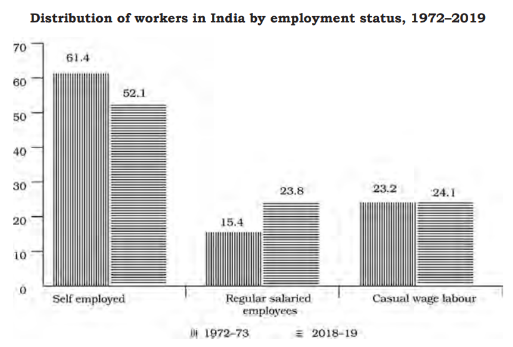
| Employment status | The majority are formally employed. | Over 52% are self-employed; about 24% have regular salaried jobs and about 24% do casual labour. |
Organised and Unorganised Work
- Organised (formal) sector
- Under one definition, units employing ten or more people throughout the year and registered with the government.
- Unorganised (informal) sector
- Work outside the organised sector; it includes most work in agriculture, industry and services in India.
- Regular salaried employment
- Employment that provides a regular salary; secure jobs may also include benefits.
- Casual labour
- Work without the security of regular salaried employment.
Formal-sector definition and scale
- Definition: The organised-sector definition cited here covers units with ten or more workers employed throughout the year.
- Registration: Such units must be registered with the government, with the aim of ensuring proper wages or salaries, pensions and other benefits.
- India’s employment structure: Over 90% of work—in agriculture, industry and services—is in the unorganised or informal sector.
- Important qualification: There is debate over how the organised and unorganised sectors should be defined.
Social Implications of a Small Organised Sector
| Point | Organised sector | Unorganised sector |
|---|---|---|
| Workplace and contact | Large firms may bring together people from different regions and backgrounds. | Most work occurs in small workplaces, so workers have fewer chances to meet people from different backgrounds through work. |
| Employment relations | Defined rules, more transparent recruitment and mechanisms for complaints and redressal. | Personal relations with an employer can affect pay or continued employment. |
| Security and benefits | A small minority of workers have secure jobs with benefits. | Most workers lack access to secure jobs and benefits. |
| Collective representation | Unions are a feature of the organised sector. | Few workers are union members, limiting collective action for fair wages and safe conditions. |
Security, government employment and social boundaries
- Secure jobs: Very few people have jobs with security and benefits; about two-thirds of those who do work for the government.
- Old-age support: People without secure employment may have to depend on their children in old age.
- Government jobs: Their security and benefits help explain why many people compete strongly for government employment.
- Social integration: Government employment can bring together people across caste, religion and regional boundaries.
Bhilai example and debate
- Bhilai Steel Plant: One sociologist argued that its public-sector workforce, drawn from across India, helped explain the absence of communal riots in Bhilai.
- Interpretation: This argument is contested; the example illustrates a proposed link between shared workplaces and social cohesion, not an unquestioned explanation.
Informal employment and workers’ conditions
- Few informal workers belong to unions.
- Workers have less experience of organising collectively.
- It is harder to press together for proper wages and safe working conditions.
- Although government laws monitor conditions, enforcement in practice may leave workers dependent on employers or contractors.
What is the main concern raised by India’s sectoral employment pattern?
State one definition of the organised sector and its scale in India.
How does informal work affect workers’ ability to improve wages and conditions?
Quick recap
- India’s employment structure differs from that of developed countries, with many workers in the primary sector.
- In 2018–19, agriculture employed 42.5% of workers, while services contributed more than half of economic growth.
- Over 52% of Indian workers were self-employed; about 24% had regular salaried jobs and about 24% did casual labour.
- Over 90% of work in India is in the unorganised sector, where employment is often less secure and more dependent on personal relations.
- Government jobs provide security and can bring people across social and regional boundaries together.
- Limited union membership and weak enforcement in practice restrict informal workers’ ability to secure better wages and conditions.
Globalisation, Liberalisation and Changes in Indian Industry
Liberalisation and Indian Industry
- Liberalisation: Since the 1990s, the government has encouraged private and foreign investment in sectors such as telecom, civil aviation and power, and removed industrial licensing requirements.
- Changing ownership: Indian companies have been acquired by multinationals, while some Indian companies have expanded internationally.
Retail, Disinvestment and Privatisation
- Retail: Liberalisation has opened retail to larger businesses, raising questions about the future of neighbourhood shops and small-town retailers.
- Disinvestment: The government has been selling its share in public sector companies; workers have feared job losses as a result.
- Privatisation: Modern Foods, the first company to be privatised, made 60% of its workers retire within five years.
Outsourcing and Changing Work
Employment Patterns and Inequality
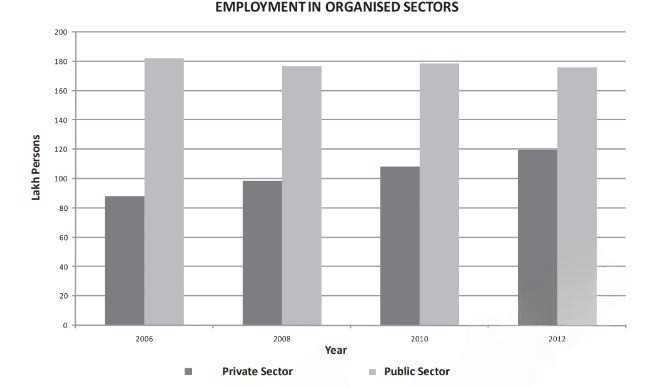
- Employment structure: India remains largely agricultural, while services are growing; only a small proportion of workers have regular salaried jobs.
- Job security: Contract work and casual employment are increasing, while secure government employment is declining.
- Inequality: Liberalisation and privatisation are associated with rising income inequality, even as the urban middle class grows.
Industrial Land Acquisition and Displacement
Land Acquisition: Effects on Local Communities
- Government acquires land for industry.
- Industries may cause major pollution without necessarily providing jobs to nearby residents.
- Farmers and other residents are displaced, often receiving compensation they consider too low.
- Adivasis constitute approximately 40% of those displaced.
- Displaced people fear being forced into casual labour and living or working on the footpaths of large cities.
Competing Interests
- Industry and development: Land is acquired to establish industries.
- Local communities: Farmers and adivasis may lose land and livelihoods, while facing low compensation, pollution and insecure work.
- Liberalisation
- Reducing government controls and encouraging private and foreign investment.
- Disinvestment
- Sale of the government’s share in a public sector company.
- Privatisation
- Transfer of ownership or control of a public enterprise to private ownership.
- Outsourcing
- Contracting work to smaller firms or workers outside a company.
What is disinvestment, and why can it worry public sector workers?
How can outsourcing affect workers?
What are some effects of industrial land acquisition on local communities?
Quick recap
- Since the 1990s, liberalisation has encouraged private and foreign investment and reduced industrial licensing controls.
- Disinvestment and privatisation can lead to job insecurity, as the Modern Foods example illustrates.
- Outsourcing and contracting can mean fewer permanent jobs, low wages and poor conditions.
- Services and the urban middle class are growing, but secure jobs remain limited and public employment is declining.
- Land acquisition for industry can cause pollution and displacement without guaranteeing local employment.
- Adivasis make up approximately 40% of those displaced, and affected communities protest low compensation and loss of livelihoods.
How People Find Jobs
Ways of Finding Work
Personal contacts and self-employment
- Advertisements and employment exchanges account for only a small share of job placements.
- Personal contacts are important for self-employed workers, including plumbers, electricians, carpenters, private tutors, architects and freelance photographers.
- Reputation helps attract customers: workers hope their work itself will serve as an advertisement.
- Mobile phones help service workers reach and serve a wider circle of customers.
Employment Opportunities and Factory Recruitment
| Component | Meaning |
|---|---|
| Job in an organisation | Work as a casual wage labourer or as a regular salaried employee. |
| Self-employment | A person works independently, often relying on customers and personal contacts. |
Recruitment in Factories
- Jobbers were important in the past for recruiting factory workers. In Kanpur's textile mills, they were called mistris and were workers themselves.
- Mistris often came from the same regions and communities as the workers they recruited. The owners' backing gave them authority, while community ties also let them pressure workers.
- Recruitment today relies less on jobbers; both factory management and trade unions may recruit workers.
- Family expectations can include passing a job on to one's children.
Badli worker — A worker hired to substitute for a regular permanent worker who is absent, for example, on leave.
Contract Work in the Organised Sector
- Long service, limited security: Many badli workers may work for the same company for years but lack the status and security of permanent workers.
- Contract work can therefore exist even within the organised sector.
Government Employment Schemes
- Schemes: The Government of India has introduced MUDRA, Aatmanirbhar Bharat and Make in India to encourage employment and self-employment.
- Intended reach: These efforts aim to support all sections, including marginalised groups such as SCs, STs and other backward classes.
- Economic potential: Creating opportunities can help make use of India's demographic dividend.
Contractors and Casual Industrial Labour
How Contractor Hiring Works
- Where it is common: Contractors often hire casual labour for construction sites, brickyards and similar workplaces.
- Recruitment: A contractor goes to villages to find people willing to work and may lend them money for expenses, including travel to the worksite.
- Advance wage: The loan is treated as an advance; workers work without receiving wages until it has been repaid.
- Family migration: Sometimes entire families move for work, and children help their parents.
| Point | Agricultural labour tied to a landlord | Casual industrial labour through a contractor |
|---|---|---|
| Debt | Labourers could be tied to their landlord through debt. | Workers may remain in debt after taking an advance. |
| Obligations and choice | Debt tied labourers to the landlord. | Workers are not bound by the same social obligations to the contractor; they can break the contract and seek another employer. |
| Freedom | Greater dependence on the landlord. | Despite debt, workers can be more free in an industrial society. |
What were mistris, and how did their role in factory recruitment change?
Why can casual industrial workers be more free than debt-tied agricultural labourers?
Quick recap
- Personal contacts are central to many self-employed workers' search for customers; advertisements and employment exchanges place only a small percentage of workers.
- Factory recruitment once relied more on jobbers or mistris; management and unions now also recruit.
- Badli workers substitute for permanent employees but may lack permanent status and security even after years of work.
- Employment opportunities include organisational jobs—casual or salaried—and self-employment.
- MUDRA, Aatmanirbhar Bharat and Make in India aim to promote employment and self-employment, including among marginalised groups.
- Contractor advances can leave workers unpaid until a loan is repaid, but casual industrial workers may still leave and seek another employer.
How is work carried out?
Managing Work and Raising Output
Work settings and production
- Range of work: In India, work takes place in settings from large, automated companies to small, home-based production.
- Manager’s role: Control workers and organise work to obtain more production.
- Two routes: Extend working hours, or increase the amount produced in a given time.
- Machinery: Can raise output but may replace workers; those who remain often have to work at machine speed.
Mechanisation, Work Pace and Employment
Mechanisation — The use of machines to carry out or speed up production tasks.
Effects on workers
- Employment: As industries become more mechanised, fewer workers may be needed.
- Work pace: Remaining workers often have to keep up with the speed of machinery.
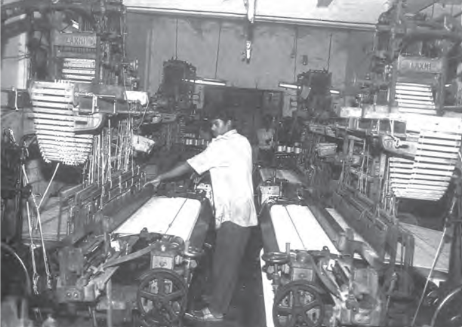
- Textile mills: Workers could feel like extensions of machines, needing constant attention and coordinated movement.
- Marx and Gandhi: Both saw mechanisation as a danger to employment.
Maruti Udyog Ltd.: production and pressure
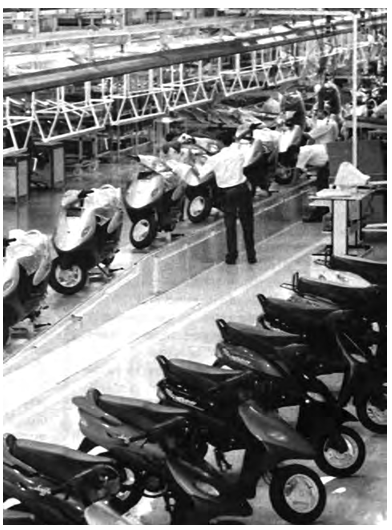
- Production pace: Two cars rolled off the assembly line every minute.
- Rest: Workers had 45 minutes in total—two 7.5-minute tea breaks and a 30-minute lunch break.
- Consequences: Most workers were exhausted by age 40 and took voluntary retirement; permanent jobs declined as production rose.
- Outsourcing: Cleaning, security and parts manufacture were given to outside firms.
- Just-in-time supply: Nearby suppliers sent parts every two hours; late supplies delayed targets, while arriving parts made workers rush to keep pace.
Outsourcing — Having services or production tasks carried out by outside firms or suppliers.
Just-in-time supply — Parts are delivered close to when they are needed, instead of being stored in large quantities.
Outsourcing and just-in-time production
- Outside firms provide services and parts → company costs fall.
- Parts arrive only when needed → workers must meet the production line’s pace.
- A late or missing delivery → targets are delayed; workers face pressure to catch up.
Skills, Deskilling and Machinery
| Point | Farmer | Software professional |
|---|---|---|
| Knowledge used | Understands crops, weather, soil and seeds; may know how to grow hundreds of crops. | Uses specialised knowledge in software work. |
| Main idea | Skilled through practical and environmental knowledge. | Skilled through technical and professional knowledge. |
Deskilling — A reduction in the skills workers need when machinery takes over parts of their work.
Harry Braverman’s argument
- Argument: Machinery can deskill workers by taking over tasks that once required specialised abilities.
- Example: Computers now perform much of the drawing work once done by skilled architects and engineers.
Gandhi’s View of Machinery
Machinery, employment and exploitation
- Gandhi’s distinction: He objected to the craze for labour-saving machinery, not to machinery itself.
- Concern: Labour-saving for a few can leave many people unemployed and concentrate wealth in a few hands.
- Alternative: Wider use of the spinning wheel could provide work, address unemployment and resist exploitation of the poor by the rich and of one nation by another.
References to Gandhi’s ideas
- 1924In Hind Swaraj, Gandhi criticised the craze for labour-saving machinery and its unemployment and wealth-concentration effects.
- 1934Gandhi presented the spinning wheel as a way to address unemployment and oppose exploitation.
Work in the IT Sector and Social Life
IT work, labour control and social change
- Expected character of work: Software professionals are generally middle class and well educated; their work is often expected to be self-motivated and creative.
- Taylorist processes: Despite this expectation, IT work can still be organised through Taylorist labour processes and management control.
- Changing schedules: In Bengaluru, Hyderabad and Gurugram, extended IT and call-centre hours have led shops and restaurants to stay open later.
- Family life: When both parents work, children may be placed in crèches or cared for by grandparents; this can bring joint-family support back into daily life.
Taylorist labour process — A way of organising work around management control and the pursuit of greater efficiency and output.
‘Time slavery’ in IT
- Long days: A workday may last 10–12 hours; employees may stay overnight at the office to meet deadlines.
- Time-zone demands: Calls with U.S. clients often happen in the evening in India, when the U.S. workday begins.
- Project pressures: Project costs and timelines may underestimate the work needed; estimates use mandays based on an eight-hour workday, so engineers put in extra hours and days to meet deadlines.
- Flexi-time: Though presented as choice over working hours, in practice it can mean staying until the task is finished.
- Workplace pressure: Employees may stay late even without urgent work because of peer pressure or to appear hardworking to managers.
- Mechanisation
- Using machines in production, often increasing output while reducing the number of workers needed.
- Outsourcing
- Using outside firms or suppliers for services or production tasks.
- Just-in-time supply
- Delivering parts close to the time they are needed in production.
- Deskilling
- Reducing the skills required from workers as machinery takes over tasks.
- Flexi-time
- A system offering some choice over working hours that may still require workers to stay until tasks are finished.
- Taylorist labour process
- A work system focused on management control and increased efficiency.
What are the two main ways managers can increase workers’ output?
How can just-in-time production affect workers?
What did Gandhi propose as an alternative to harmful labour-saving machinery?
Quick recap
- Work in India ranges from large, automated companies to small, home-based production.
- Managers raise output by extending working hours or increasing production within the same time.
- Mechanisation can raise output while reducing jobs and making workers follow machine pace; Marx and Gandhi saw employment risks.
- Outsourcing and just-in-time supply can cut company costs but intensify workers’ pressure.
- IT work may be expected to be creative and self-motivated, yet it can also involve Taylorist control and long hours, including extra hours caused by underestimated mandays.
- Farmers and software professionals have different forms of skill; machinery may deskill some kinds of work.
- Gandhi criticised the craze for labour-saving machinery and promoted the spinning wheel as a way to provide work and resist exploitation.
Working conditions
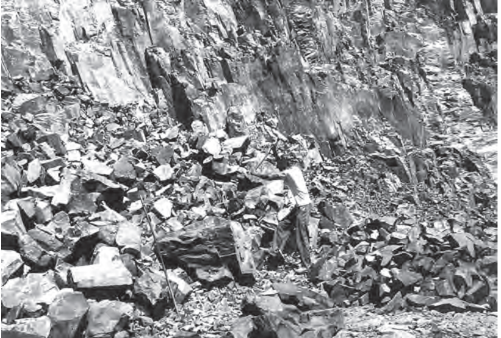
Working Conditions in Mining
Working conditions — The conditions in which people work, including hours, pay, safety and access to benefits.
Mining: Regulation, Risks and Accountability
- Scale: Coal mines alone employ about 5.5 lakh workers.
- Law: The Mines Act, 1952, set a maximum weekly working time, required overtime pay for extra hours and prescribed safety rules. It is now included in the Occupational Safety, Health and Working Condition Code, 2020.
- Uneven enforcement: Large companies may follow regulations, but smaller mines and quarries often do not.
- Sub-contracting: Contractors may fail to keep proper worker registers, avoiding responsibility for accidents and benefits.
- Land restoration: Companies are supposed to fill open mine holes and restore the land after mining, but often fail to do so.
- Underground hazards: Flooding, fires, roof or side collapses, harmful gases and ventilation failures threaten workers.
- Health effects: Mine workers may develop breathing problems and diseases such as tuberculosis and silicosis.
- Overground hazards: Workers face heat, rain, blasting injuries and falling objects.
- Accident rate: Mining accidents in India are very high compared with those in other countries.
Migrant Workers
- Fish processing: Coastal plants employ many single young women who migrate from Tamil Nadu, Karnataka and Kerala.
- Living conditions: Workers may share cramped rooms, with one shift sometimes making way for the next.
- Gender and work: Young women may be regarded as submissive workers.
- Social isolation: Many men also migrate alone, leaving their families in villages. Migrants often spend their limited free time and money with other migrant workers.
- Mixed effect: Migrant work can increase loneliness and vulnerability, while giving some young women greater independence and economic autonomy.
Home-Based Work
Home-based work — Paid production carried out at home, often using materials supplied and finished goods collected by an agent.
Features
- Products: Lace, zari or brocade, carpets, bidis and agarbattis are among the goods made at home.
- Workers: Women and children do much of this work.
- Payment: Workers are commonly paid a piece rate, based on the number of items produced.
- Agent's role: An agent supplies raw materials and collects finished products.
Bidi Production and Distribution
- Villagers collect tendu leaves and sell them to the forest department or a private contractor; the leaves ultimately reach the forest department.
- One person can collect about 100 bundles a day, with 50 leaves in each bundle.
- The government auctions the leaves to bidi factory owners, who pass them to contractors.
- Contractors supply tendu leaves and tobacco to home-based workers.
- Mostly women roll bidis: they dampen and cut the leaves, fill them evenly with tobacco and tie them with thread.
- The contractor collects the bidis and sells them to the manufacturer, who roasts and brands them.
- A distributor supplies packed bidis to wholesalers, who sell them to local pan shops.
Strikes and Unions
Strike — A stoppage of work in which workers do not go to work, often to press demands.
| Action | Who stops work or access? | Meaning |
|---|---|---|
| Strike | Workers | Workers do not go to work, usually to press demands. |
| Lockout | Management | Management shuts the workplace gates and prevents workers from entering. |
Why Strikes Are Difficult
- Substitute labour: Managers may try to keep work going by using replacement workers.
- Loss of wages: Workers may struggle to support themselves while the strike continues.
Bombay Textile Strike
- Leadership and scale: The 1982 strike was led by trade union leader Dr. Datta Samant and affected nearly a quarter of a million workers and their families.
- Demands: Workers sought better wages and the right to form their own union.
- Duration and return: The strike lasted nearly two years; workers gradually returned because they were desperate for income.
- Consequences: Nearly one lakh workers lost their jobs. Some returned to their villages or took casual work; others moved to powerloom centres such as Bhiwandi, Malegaon and Icchalkaranji.
- Mill owners: They did not invest in machinery and modernisation. Later efforts to sell mill land for luxury housing became part of a struggle over Mumbai’s future between workers, owners and real-estate interests.
Strike: Causes and Consequences
- Harsh conditions and demands for better wages and union rights
- Workers organise a strike and stop work
- Loss of wages makes it difficult to sustain the strike
- Workers return, lose jobs, or move to other places and kinds of work
- The future use of mill land becomes contested between workers, owners and real-estate interests
Key Dates
- 1952The Mines Act set rules on working hours, overtime and mine safety.
- 1982The Bombay Textile strike began under Dr. Datta Samant’s leadership.
- 2020The Mines Act was included in the Occupational Safety, Health and Working Condition Code.
- Sub-contracting
- Hiring workers through contractors rather than employing them directly.
- Piece rate
- Payment calculated according to the number of items a worker produces.
- Strike
- A work stoppage by workers, usually to press demands.
- Lockout
- An action by management that prevents workers from entering the workplace.
How can sub-contracting make mine workers more vulnerable?
What were the main demands and consequences of the 1982 Bombay Textile strike?
Quick recap
- Mining laws regulate weekly hours, overtime and safety, but enforcement is uneven.
- Mine workers face serious hazards and illnesses; India's mining accident rate is high compared with other countries.
- Migrant work may offer economic autonomy while also increasing loneliness and vulnerability.
- Home-based work is often done by women and children, with payment commonly based on output.
- Bidi production links tendu-leaf collectors, government auctions, contractors, home workers, manufacturers and sellers.
- A strike stops work by workers; a lockout bars workers from the workplace.
- The 1982 Bombay Textile strike brought job losses, migration and conflict over the future use of mill land.
Sociology — ALL CHAPTERS
1
INTRODUCING INDIAN SOCIETY
2
THE DEMOGRAPHIC STRUCTURE OF THE INDIAN SOCIETY
3
SOCIAL INSTITUTIONS CONTINUITY AND CHANGE
4
THE MARKET AS SOCIAL INSTITUTIONS
5
PATTERNS OF SOCIAL INEQUALITY AND EXCLUSION
6
THE CHALLENGES OF CULTURAL DIVERSITY
7
SUGGESTIONS FOR PROJECT WORK
1
Structural Change
2
Cultural Change
3
The Constitution and Social Change
4
Change and Development in Rural Society
5
Patterns of Industrialisation and Urbanisation
6
Globalisation and Social Change
7
Mass Media and Communications
8
Social Movements