Class 6 . Science . Curiosity . Diversity in the Living World
Chapter 2: DIVERSITY IN THE LIVING WORLD
Ch 2
Science
Class 6
Diversity in the Plants and Animals
Variety in Our Surroundings
Noticing diversity
- Diversity can be noticed by observing differences in plants and animals around us.
- Plants vary in size, stem type, leaf shape and arrangement, and flower colour, shape and scent.
- Animals differ in where they live, what they eat, and how they move.
- Sounds also show variety; different birds have distinctive chirps and calls.
- Observation includes looking carefully and listening, while avoiding disturbance to living things.
Differences Among Plants
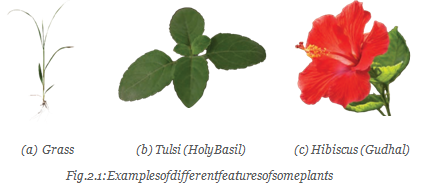
| Plant | Stem | Leaves | Flowers / other features |
|---|---|---|---|
| Common grass | Soft and thin | Single leaves grow alternately at different points on the stem | Green leaves |
| Tulsi | Hard and thin | Leaves grow in opposite pairs | Pinkish-purple flowers |
| Hibiscus | Hard | Leaves are broad with serrated edges | Large, showy flowers |
| Neem | Hard and thick | Leaves have smooth surfaces | Small, white flowers |
Plant features to compare
- Size and stems may differ: plants can be tall or short, with hard or soft stems.
- Leaves vary in shape and in how they are arranged on stems or branches.
- Flowers can differ in colour, shape and scent.
Differences Among Animals
| Animal | Where it lives | Food | Movement / other features |
|---|---|---|---|
| Crow | Tree | Insects | Flies and walks; may carry a twig in its beak |
| Ant | Nest in soil and burrows | Leaves, seeds and insects | Has six legs |
| Cow | Farm or shed | Grasses and leaves | Walks on four legs |
| Fish | Water | Aquatic plants and small animals | Swims using its fins |
| Frog | Land and water | Insects | Hops and swims using its legs |
Animal variety
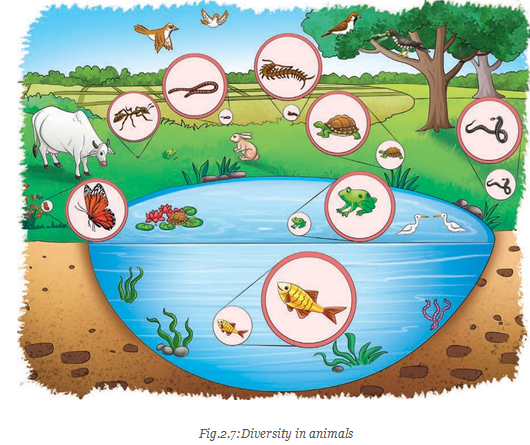
- Habitats vary: some animals live on land, some on trees, some in water, and some in more than one environment.
- Food and movement also vary among animals.
- Body features, such as the ant’s six legs, are another way animals differ.
Biodiversity and Interdependence
Biodiversity — The variety of plants and animals found in a particular region.
Why biodiversity matters
- Different roles are played by the members of a region’s biodiversity.
- Trees provide food and shelter for birds and other animals.
- Animals can help spread seeds after eating fruits.
- Interdependence means plants and animals rely on one another in different ways.
Examples of interdependence
- Trees provide food and shelter → birds and other animals use them.
- Animals eat fruits → seeds may be carried and spread to new places.
What is biodiversity?
Give two examples showing how plants and animals depend on each other.
Quick recap
- Plants differ in size, stems, leaves, leaf arrangement and flowers.
- Animals vary in habitats, food, movement and body features.
- Different bird chirps are one example of variety in nature.
- Biodiversity is the variety of plants and animals in a region.
- Plants and animals depend on one another and play different roles.
How to Group Plants Part 1
Grouping Living Things
Grouping — Grouping means arranging plants or animals by shared features so their similarities and differences are easier to study.
Possible bases for grouping
- Plants can be grouped by height, stem features, leaves, flowers, and other shared features.
- Animals can be grouped by what they eat, where they live, their colour, or how they move.
- Different bases may be chosen because people notice different common features.

- Importance: Grouping makes living things easier to understand and study by comparing their similarities and differences.
Grouping Plants by Height and Stem
Plant features that vary
- Stems differ in height, thickness, colour, and hardness or softness.
- Leaves differ in shape, colour, size, and arrangement.
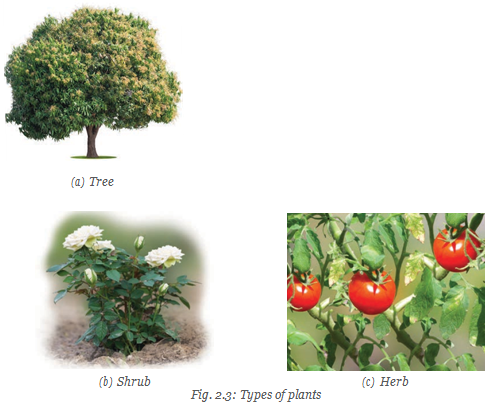
- Grouping plants as herbs, shrubs, and trees uses their height and stem characteristics.
| Plant group | Height and stem | Branching | Example |
|---|---|---|---|
| Herb | Usually short; stem soft, green, and tender | Generally branches close to the ground | Tomato |
| Shrub | Medium-sized; stems hard, woody, and thinner than a tree’s | Several stems branch close to the ground | Rose |
| Tree | Tall; stem thick, hard, brown, and woody | Branches usually begin higher up on the stem | Mango |
Other plant growth forms
- Climbers have weak stems and need support to climb and grow.
- Creepers have stems that grow along the ground.
Grouping Plants by Leaf Venation
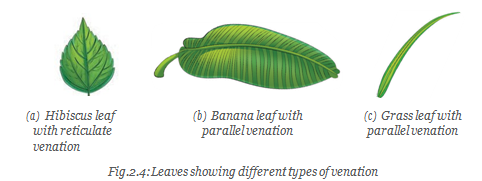
Venation — Venation is the pattern formed by veins in a leaf.
| Point | Reticulate venation | Parallel venation |
|---|---|---|
| Pattern | Veins form a net-like pattern, often on both sides of a thick middle vein. | Veins run parallel to one another. |
| Examples | Hibiscus | Banana and grasses |
How are herbs, shrubs, and trees distinguished?
What are the two patterns of leaf venation described here?
Quick recap
- Grouping uses shared features to make living things easier to study.
- Plants and animals can be grouped using different features.
- Herbs have soft green stems; shrubs have woody stems branching near the ground; trees have thick woody stems with higher branches.
- Climbers need support; creepers grow along the ground.
- Venation is the pattern of veins in a leaf.
- Reticulate venation is net-like; parallel venation has veins running alongside one another.
How to Group Plants Part 2
Root Types
Relationship Between Leaf Venation and Roots
These are general patterns used to group plants: say “usually” rather than treating the relationship as an exception-free rule.
Cotyledons and Plant Groups
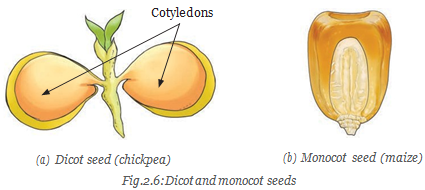
How are cotyledons, venation and roots related in dicots and monocots?
Quick recap
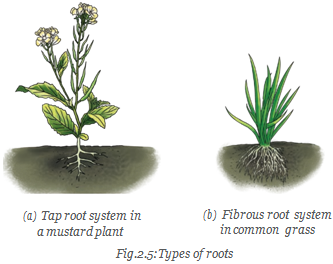
- A taproot has one main root with smaller side roots; fibrous roots form a bunch of thin roots.
- Reticulate venation is generally associated with taproots.
- Parallel venation is generally associated with fibrous roots.
- Dicot seeds have two cotyledons; monocot seeds have one.
- Dicots usually have reticulate venation and taproots; monocots usually have parallel venation and fibrous roots.
How to Group Animals ?
Ways to Group Animals
Grouping animals — Grouping animals means organising them according to shared features so their diversity is easier to understand.
Features used for grouping
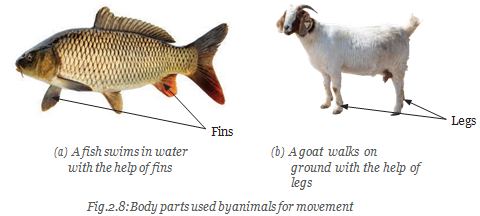
- Movement: Animals may fly, run, crawl, walk, hop or jump.
- Body parts: Different animals use legs, wings, fins or other body parts to move.
- Other features: Shape, size, structure and colour can also be used to group animals.
- Purpose: Grouping helps us understand the variety of animals.
| Animal | Movement | Body parts used |
|---|---|---|
| Ant | Walks and crawls | Legs |
| Goat | Walks and jumps | Legs |
| Pigeon | Flies | Wings |
| Housefly | Walks and flies | Legs and wings |
| Fish | Fins | Fins |
Grouping Animals by Movement
- Identify how animals move and which body parts they use.
- Compare animals by their movements and movement-related body parts.
- Group animals that share these features.
- Animals can be grouped by movement and by features such as shape, size, structure and colour.
- The body parts used for movement differ among animals.
Quick recap
- Animals show great variety in their features and movements.
- Animals may fly, run, crawl, walk, hop or jump.
- Legs, wings, fins and other body parts help animals move.
- Movement and the body parts used for it can be bases for grouping animals.
- Shape, size, structure and colour are other features that can be used for grouping.
- Grouping helps us understand animal diversity.
Plants and Animals in Different Surroundings Part 1
How surroundings affect animals
Adaptation — A feature that helps a plant or animal survive in its surroundings.
Movement and surroundings
- Movement: Animals move in ways suited to the places where they live.
- Fish: A streamlined body and fins help it move through water.
- Goat: Legs help it walk on land; animals also differ in size and shape.
| Surrounding | Example |
|---|---|
| Desert | Camel |
| Mountains | Deodar tree |
| Ocean | Fish |
| Forest | Lion |
Plant adaptations to regional conditions
Desert plants
- Desert conditions: Water is scarce; hot deserts can be very hot by day and very cold at night.
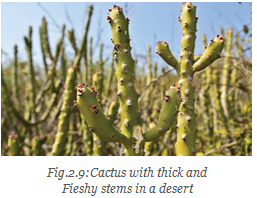
- Cactus: Its thick, fleshy stem stores water and helps it tolerate hot, dry conditions.
Mountain trees
- Snowy conditions: Some mountain trees grow in regions with frequent snowfall.
- Deodar: Its conical shape and flexible, sloping branches allow snow to slide off easily.
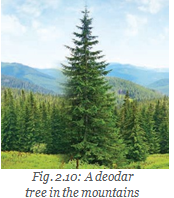
- Biodiversity varies from region to region because living things face different environmental conditions.
Hot-desert and cold-desert camels
| Feature | Hot-desert camel | Cold-desert camel |
|---|---|---|
| Region | Hot desert of Rajasthan | Cold desert of Ladakh |
| Humps | One hump; stores food for times of scarcity | Two humps; they shrink in late winter as the camel uses the stored food when food is scarce |
| Legs and hooves | Long legs and wide hooves help it walk on sand without sinking | Shorter legs and height help it walk in mountainous terrain |
| Hair | No special long-hair feature noted here | Long hair from head to neck helps it survive cold winters |
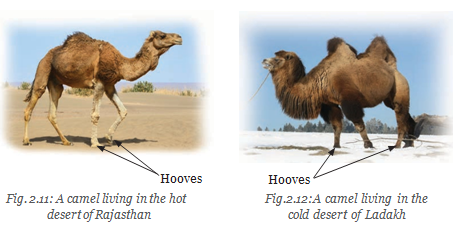
How camels conserve water
- Water loss: Camels produce small amounts of urine, have dry dung and do not sweat.
- Survival: These features reduce water loss, allowing camels to live for many days without drinking.
How do cactus and deodar trees survive in their surroundings?
Give two adaptations of a camel that help it survive in a hot desert.
Quick recap
- Animals' movement and body features suit their surroundings.
- A cactus stores water in its thick, fleshy stem.
- Deodar trees have conical shapes and sloping branches that help snow slide off.
- Hot- and cold-desert camels differ in humps, legs, and hair.
- Cold-desert camels' two humps shrink in late winter as stored food is used.
- Camels conserve water by producing little urine, having dry dung, and not sweating.
- Biodiversity differs between regions because their environmental conditions differ.
Plants and Animals in Different Surroundings Part 2
Adaptations to Different Surroundings
Adaptation — A special feature that helps a plant or animal survive in its particular surroundings.
Examples of adaptations
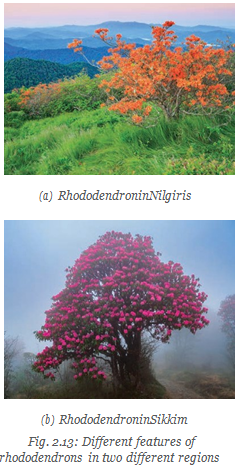
- Rhododendrons: In the Nilgiri Shola forests, they are shorter with smaller leaves, helping them withstand strong mountain winds.
- Regional differences: Rhododendrons in Sikkim’s mountains may grow taller, showing that the same kind of plant can have different features in different regions.
- Mountain plants: The shape of the deodar tree and the height of rhododendrons help them survive in mountainous regions.
- Fish: A streamlined body helps fish move through water more easily.
Habitats and Their Importance
Habitat — The place where a plant or animal lives.
Why habitats matter
- Provides essentials: A habitat supplies food, water, air, shelter and other needs for survival.
- Shared homes: Many kinds of plants and animals can live in the same habitat.
- Biodiversity: A habitat helps shape the variety of living things found in a region.
- Examples: Sea turtles live in the sea or ocean; camels live in hot or cold deserts; rhododendrons live in mountains.
Studying and Conserving Birds
- Salim Ali (1896–1987): Observed bird diversity across India and documented birds, their travel routes and habitats.
- Conservation work: He identified regions rich in bird diversity and took steps to conserve them, including Keoladeo National Park in Bharatpur, Rajasthan, and Ranganathittu Bird Sanctuary in Mandya, Karnataka.
- Books and recognition: He wrote a landmark 10-book series on birds of the Indian Subcontinent, was known as the “Birdman of India,” and received the Padma Vibhushan in 1976.
Types of Habitats
| Group | Where organisms live | Examples / notes |
|---|---|---|
| Terrestrial | On land | Forests, deserts, grasslands and mountains |
| Aquatic | In water | Ponds, lakes, rivers and oceans |
| Amphibians | On land as well as in water | Frogs |
Habitat Damage and Biodiversity Loss
Effects of habitat damage
- Habitat damage
- Loss of homes, food and other resources
- Decline or disappearance of plant and animal populations
- Loss of biodiversity
Species affected in India
- Declining populations: Bengal tiger, cheetah and Great Indian Bustard populations have declined because human activities have caused loss of natural habitats.
- Protected areas: Habitats of the Great Indian Bustard have been declared protected areas in Gujarat, Rajasthan and Maharashtra.
Conservation projects
- 1973Project Tiger was started to protect the declining Bengal tiger population.
- 2022The Cheetah Reintroduction Project was started to restore the cheetah population.
Sacred Groves: Community Protection of Biodiversity
Sacred groves — Undisturbed patches of forest, protected by local communities.
Why sacred groves are important
- Found across India: Sacred groves vary in size and are home to many kinds of plants and animals, including medicinal plants.
- Community protection: Local people do not allow animals to be harmed, trees to be cut or the area to be disturbed.
- Biodiversity: Sacred groves are community-protected treasures that help conserve biodiversity.
- Protecting habitats helps protect the plants and animals that depend on them.
- Habitat loss can lead to biodiversity loss.
What is a habitat, and why is it important?
How does habitat damage affect biodiversity?
What are sacred groves, and how do they conserve biodiversity?
Quick recap
- Adaptations help organisms survive in their surroundings; the same plant may have different features in different regions.
- Habitats provide organisms with necessities and help shape regional biodiversity.
- Land habitats are terrestrial, water habitats are aquatic, and amphibians live on land and in water.
- Habitat damage removes resources and can cause biodiversity loss.
- Project Tiger began in 1973; the Cheetah Reintroduction Project began in 2022.
- Sacred groves are community-protected forests that conserve plants, animals and biodiversity.
Keywords and Summary
Keywords
Important words
- Living-world terms: adaptation, amphibians, aquatic, biodiversity, habitat, terrestrial.
- Plant terms: cotyledon, monocot plants, dicot plants, herbs, shrubs, tree, taproot, fibrous root, parallel venation, reticulate venation, sacred groves.
- Ways of learning: analyse, compare, create, explore, group, observe, record, relate.
Biodiversity and grouping
Biodiversity — The variety of plants and animals found in the living world or in a particular region.
Grouping — Arranging things into groups according to features they have in common.
Why and how living things are grouped
- Basis: Similarities and differences help us group plants and animals.
- Plants: Features of roots, stems, leaves and flowers can be compared.
- Animals: Different types of movement can also provide a basis for grouping.
Grouping plants
| Group | Basis for grouping |
|---|---|
| Herbs | Height and features of the stem |
| Shrubs | Height, stem type and branching pattern |
| Trees | Height, stem type and branching pattern |
| Feature | Monocots | Dicots |
|---|---|---|
| Seed | One cotyledon | Two cotyledons |
| Leaf venation | Generally parallel | Generally reticulate |
| Roots | Generally fibrous roots | Generally taproots |
Habitats, adaptations and biodiversity
Habitat — The place where a plant or animal lives.
Adaptation — A special feature that helps a plant or animal survive in a particular region.
| Group | Habitat |
|---|---|
| Terrestrial | Lives on land |
| Aquatic | Lives in water |
Environmental conditions and protection
- Regional differences: Environmental conditions differ between regions, so their biodiversity also varies.
- Habitat damage: When habitats are damaged, plants and animals lose homes, food and other resources.
- Protection: Protecting biodiversity helps plants and animals survive and thrive.
Habitat damage and biodiversity loss
- Habitat damage
- Plants and animals lose homes, food and other resources
- Their ability to survive is threatened
- Biodiversity declines
What is grouping?
State the usual differences between monocots and dicots.
How can habitat damage affect biodiversity?
Quick recap
- Biodiversity is the variety of plants and animals.
- Grouping uses shared features; plants and animals can be grouped in different ways.
- Herbs, shrubs and trees are grouped using height, stem type and branching.
- Monocots have one cotyledon; dicots have two.
- Monocots generally have parallel venation and fibrous roots; dicots generally have reticulate venation and taproots.
- Habitats are living places, and adaptations help organisms survive there.
- Habitat damage can reduce biodiversity, so living things and their habitats need protection.
Science — ALL CHAPTERS
1
THE WONDERFUL WORLD OF SCIENCE
2
DIVERSITY IN THE LIVING WORLD
3
MINDFUL EATING: A PATH TO A HEALTHY BODY
4
EXPLORING MAGNETS
5
MEASUREMENT OF LENGTH AND MOTION
6
MATERIALS AROUND US
7
TEMPERATURE AND ITS MEASUREMENT
8
A JOURNEY THROUGH STATES OF WATER
9
METHODS OF SEPARATION IN EVERYDAY LIFE
10
LIVING CREATURES: EXPLORING THEIR CHARACTERISTICS
11
NATURE’S TREASURES
12
BEYOND EARTH