Class 6 . Science . Curiosity . Exploring Magnets
Chapter 4: EXPLORING MAGNETS
Ch 4
Science
Class 6
Introduction : the Magnets
Magnetic Compasses
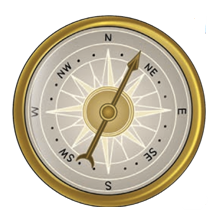
Magnetic compass — A device travellers use to find directions.
Why sailors used compasses
- At night: Sailors used stars to find directions.
- Overcast skies: When clouds hid the stars, a magnetic compass could help travellers find directions.
Natural and Artificial Magnets
| Type | Origin or making | Examples and uses |
|---|---|---|
| Natural magnets | Occur naturally; lodestones are an example. | Used by sailors in ancient times. |
| Artificial magnets | Made by people; magnets can be made from pieces of iron. | Found in school laboratories, pencil boxes, stickers and toys. |
Magnets in everyday objects
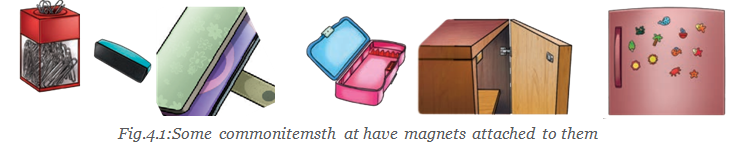
- Examples: Pencil boxes and purses may use magnets to stay closed.
- School item: A duster with a magnet may be attached to a writing board.
- Materials: Modern magnets are made from different materials.
Shapes of Magnets
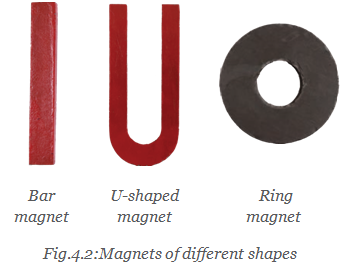
- Different shapes: Magnets are made in a variety of shapes, including bar, U-shaped and ring magnets.
Quick recap
- A magnetic compass is used to find directions, including when stars are hidden by clouds.
- Lodestones are naturally occurring magnets.
- Magnets made by people are called artificial magnets.
- Magnets are used in items such as pencil boxes, purses and board dusters.
- Magnets can have different shapes, including bar, U-shaped and ring.
Magnetic and Non-magnetic Materials
Materials and Their Attraction to Magnets
- Magnetic materials: Materials attracted to a magnet, such as iron, nickel, and cobalt.
- Non-magnetic materials: Materials not attracted to a magnet, such as wood, rubber, plastic, and glass.
- Testing materials: Bring a magnet near an object and observe whether it is attracted.
- Alloys: Some combinations of magnetic metals with other metals are also attracted to magnets.
Quick recap
- Magnetic materials are attracted to magnets.
- Iron, nickel and cobalt are magnetic metals.
- Some combinations of metals are also attracted to magnets.
- Non-magnetic materials are not attracted to magnets.
- Wood, rubber, plastic and glass are examples of non-magnetic materials.
Poles of Magnet and Finding Directions
Poles of a Magnet
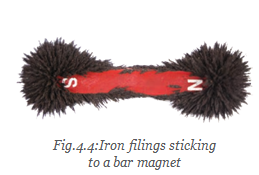
A broken magnet does not have an isolated North or South pole: every piece still has both poles.
Finding Directions with a Magnet
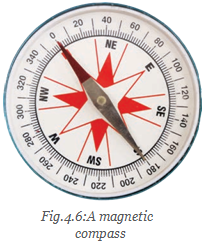
Magnetic compass — A magnetic compass is a direction-finding device with a magnetised needle that can rotate freely and indicates north–south.
Using a Compass
- Needle: The compass needle is balanced on a pin so it can rotate freely; its north-pointing end is usually painted red.
- Dial: Direction markings are placed below the needle.
- To find directions: Let the needle settle, then gently turn the compass box until the dial’s north and south markings align with the needle. Read the directions from the dial.
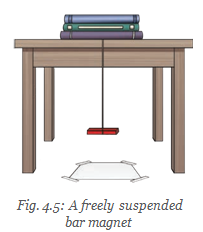
How can a freely suspended magnet help identify a magnet?
Why does a freely suspended magnet point north–south?
Quick recap
- A magnet attracts the most iron filings near its two poles.
- Every magnet has North and South poles; a single pole cannot exist.
- A freely suspended magnet settles along the north–south direction.
- Earth behaves like a giant magnet and causes this alignment.
- A compass needle aligns north–south; its dial helps identify directions.
- An ordinary iron bar does not consistently settle along north–south.
Attraction and Repulsion Between Magnets
How Magnetic Poles Interact
Magnetic attraction and repulsion — Magnets attract or repel one another depending on which poles face each other.
| Pole pair | What happens |
|---|---|
| Like poles: North–North or South–South | Repel each other |
| Unlike poles: North–South | Attract each other |
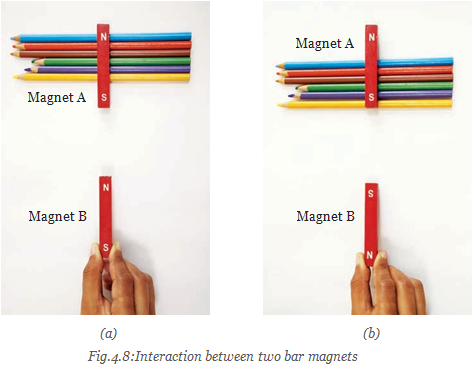
Using Repulsion to Identify a Magnet
Magnet and Iron Bar
- Iron bar: Both ends are attracted by either the North or the South pole of a magnet.
- Repulsion: Only a magnet can repel another magnet; an iron bar is attracted to either pole.
- Identification: Repulsion is a reliable way to identify a magnet; attraction alone does not prove that an object is a magnet.
A Compass Needle Acts Like a Magnet
Compass needle — A compass needle is a small magnet that deflects when another magnet is brought near it.
| Pole brought near | Compass needle response |
|---|---|
| North pole | Moves away (repulsion) |
| South pole | Moves closer (attraction) |
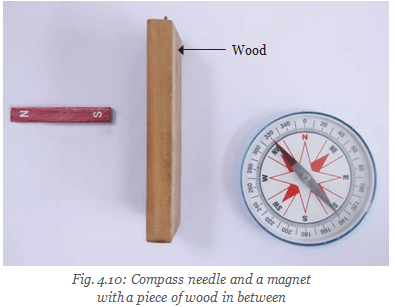
Magnetic Effect Through Materials
Magnetic effect through non-magnetic materials — A magnet can affect a compass needle even when a non-magnetic material is placed between them.
| Material between magnet and compass | Effect on needle deflection |
|---|---|
| Wood | No appreciable change |
| Cardboard | No appreciable change |
| Thin plastic | No appreciable change |
| Thin glass | No appreciable change |
How can repulsion help distinguish a magnet from an iron bar?
What happens when the North pole of a bar magnet is brought near the North pole of a compass needle?
Quick recap
- Unlike poles attract; like poles repel.
- Repulsion is the sure test for identifying a magnet.
- An iron bar is attracted by both poles of a magnet.
- A compass needle is a magnet and deflects near another magnet.
- Wood, cardboard, thin plastic and thin glass do not appreciably change the needle's deflection.
Fun with Magnets and How to Keep the Magnets Safe?
Fun with Magnets
Magnetic force without contact — A magnet can attract or move some objects without touching them.
Examples
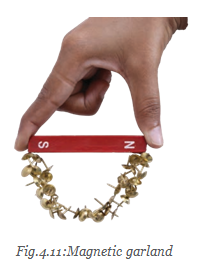
- Magnetic garland: Magnetic objects can stick to a magnet to form a chain.
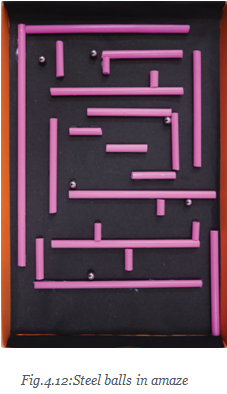
- Through a barrier: A magnet can move steel balls through a cardboard maze tray.
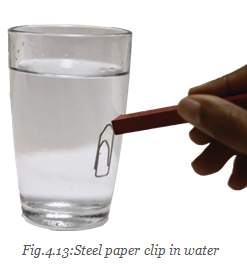
- Through water and glass: A magnet can attract a steel paper clip without getting wet.
Magnet-Car Setup
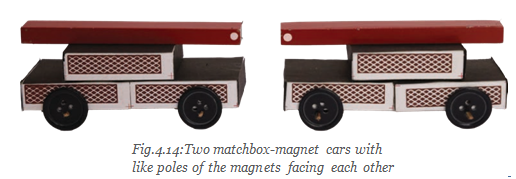
- Setup: Two matchbox cars have magnets arranged with like poles facing each other.
- Result: The cars will repel each other and move away from each other.
Recognising Magnet Poles
- Labels: Some magnets have their poles marked N and S.
- Other markings: North may be indicated by a white dot or red paint; South may be painted blue.
Keeping Magnets Safe
Care and Storage
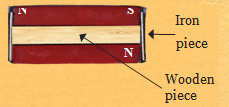
- Store bar magnets in pairs: Keep them with unlike poles on the same side.
- Place between and across: Keep a piece of wood between the magnets and soft-iron pieces across their ends.
- Avoid damage: Do not heat, drop or hammer magnets.
- Protect devices: Do not keep magnets near mobile phones or remote controls.
How can a magnet move an object without touching it?
How should bar magnets be stored safely?
Quick recap
- Magnets can attract and move some objects without touching them.
- Magnetic force can act through cardboard, water and glass.
- Some magnets mark poles with N and S; North may also have a white dot or red paint, and South may be blue.
- Store bar magnets in pairs with unlike poles on the same side, wood between them and soft iron across their ends.
- Do not heat, drop or hammer magnets, or keep them near phones and remote controls.
Keywords and Summary
Keywords
| Magnet-related keywords | Investigation words |
|---|---|
| Attraction | Conclude |
| Bar magnet | Construct |
| Magnetic compass | Experiment |
| Magnetic materials | Explore |
| Non-magnetic materials | Investigate |
| North pole of a magnet | Observe |
| Repulsion | Predict |
| Ring magnet | Record |
| South pole of a magnet | |
| U-shaped magnet |
Main Ideas
Magnetic materials — Materials that are attracted towards a magnet.
Non-magnetic materials — Materials that are not attracted towards a magnet.
Poles of a Magnet
- Two poles: Every magnet has a North pole and a South pole.
- Poles occur in pairs: A single North pole or a single South pole cannot exist on its own.
Direction and Compass
- Freely suspended magnet: It comes to rest along the north–south direction.
- Magnetic compass: Its needle indicates the north–south direction.
| Pole combination | What happens |
|---|---|
| Like poles: North–North or South–South | Repel each other |
| Unlike poles: North–South | Attract each other |
Quick recap
- Every magnet has North and South poles, which always occur as a pair.
- Magnetic materials are attracted to magnets; non-magnetic materials are not.
- A freely suspended magnet rests in the north–south direction.
- A magnetic compass needle indicates the north–south direction.
- Like poles repel; unlike poles attract.
Science — ALL CHAPTERS
1
THE WONDERFUL WORLD OF SCIENCE
2
DIVERSITY IN THE LIVING WORLD
3
MINDFUL EATING: A PATH TO A HEALTHY BODY
4
EXPLORING MAGNETS
5
MEASUREMENT OF LENGTH AND MOTION
6
MATERIALS AROUND US
7
TEMPERATURE AND ITS MEASUREMENT
8
A JOURNEY THROUGH STATES OF WATER
9
METHODS OF SEPARATION IN EVERYDAY LIFE
10
LIVING CREATURES: EXPLORING THEIR CHARACTERISTICS
11
NATURE’S TREASURES
12
BEYOND EARTH