Class 7 . Science . Curiosity . Adolescence a Stage of Growth and Change
Chapter 6: Adolescence: A Stage of Growth and Change
Ch 6
Science
Class 7
Introduction
Growth and Maturity in Living Things
- Growth: Living things change in size and develop as they grow.
- Maturity: Plants and animals need to mature before they can reproduce.
- Life cycle: Mature plants produce seeds, while animals produce young ones in different ways.
Human Life Stages and Adolescence
Do not treat ages 10–12 as the full duration of adolescence: they mark the approximate age when other noticeable changes begin; adolescence typically lasts from ages 10–19.
Quick recap
- Living things grow and reach maturity before they can reproduce.
- Plants develop from seeds into mature plants that can produce new seeds.
- Human life stages are infancy, childhood, adolescence, adulthood and old age.
- Adolescence typically occurs between ages 10 and 19 and involves rapid growth and development.
- Around ages 10–12, changes beyond height and weight begin to become noticeable.
- Adolescence includes physical, emotional and behavioural changes, some visible and some internal.
Growing With Age: The Teenage Years
Adolescence
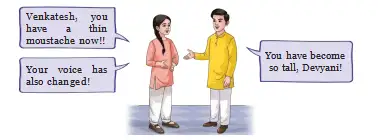
Changes in Body Structure, Weight and Strength
- Height and weight: Until around 10–12 years, many changes are mainly increases in height and weight.
- Strength: The body develops as adolescents grow, and strength may increase.
Changes in Voice
- Boys: Growth of the voice box can make the voice hoarse; the enlarged voice box may appear as a bump called the Adam’s apple.
- Girls: The voice box also grows, but usually less, so voice changes are slight.
- Variation: The timing and extent of voice changes differ among individuals.
Appearance of Hair
- Body hair: Hair grows in the armpits and pubic region in both boys and girls.
- Facial hair: Boys often develop moustaches and beards as they approach adulthood.
- Variation: Some boys develop chest or back hair, while others have little; timing and amount vary normally.
Changes in Facial Skin
- The timing, nature and extent of adolescent changes differ from person to person; these variations are normal.
- Adolescence proceeds at each person’s own pace, and its duration also varies.
Secondary Sexual Characteristics and Puberty
Puberty — The stage when an adolescent undergoes external and internal changes, developing towards an adult capable of reproduction.
What are secondary sexual characteristics? Give examples.
Quick recap
- Adolescence is the stage between childhood and adulthood, usually from around age 10 up to 19.
- Height, weight, strength and body structure may change during adolescence.
- Voice-box growth can change the voice; its bump may be visible as the Adam’s apple.
- Hair growth and acne are common changes, and their timing and extent vary.
- Secondary sexual characteristics help distinguish males from females but do not directly take part in reproduction.
- Puberty is the stage of external and internal changes towards reproductive adulthood.
Changes that Indicate Reproductive Capability
Internal Changes During Adolescence
- Reproductive organs: Parts of the body involved in reproduction gradually mature during adolescence.
- Natural development: These internal changes occur in both boys and girls as the body develops towards adulthood.
The Menstrual Cycle
- Cycle: The menstrual cycle usually recurs every 28–30 days, though healthy cycles may range from 21–35 days.
- Menstruation: The phase with blood discharge generally lasts three to seven days; some girls may feel lower-abdominal discomfort.
- End: Menstruation usually stops naturally between ages 45 and 55.
Myths and Taboos About Menstruation
What is menstruation, and how long may it last?
Why should menstruation-related myths and taboos be challenged?
Quick recap
- Reproductive parts gradually mature during adolescence in both boys and girls.
- The menstrual cycle generally recurs every 28–30 days; healthy cycles may range from 21–35 days.
- Menstruation is the blood-discharge phase and may last 3–7 days.
- Some girls may have lower-abdominal pain or discomfort during menstruation.
- Menstruation usually stops naturally between ages 45 and 55.
- Menstruation is natural; myths such as physical isolation have no scientific basis.
Emotional and Behavioural Changes in Adolescents
Emotions and Behaviour During Adolescence
Emotional and behavioural changes — Changes in feelings and actions that occur during adolescence, alongside physical changes and changes related to reproductive capability.
How emotions can shape behaviour
- Stronger emotions: Adolescents may experience stronger emotions than they did in childhood.
- Effects: Emotions can influence behaviour, choices, and responses to situations.
- New interests: Adolescents may develop a deeper interest in new areas.
- Social action: Some may join initiatives that support people in need or disadvantaged groups.
- Thoughtful choices: Recognising how emotions affect actions can help adolescents respond more thoughtfully.
| Emotional change | Possible effect or response | Ways to support positive growth |
|---|---|---|
| Mood swings | Engaging in varied activities such as music, dance, or sports | Explore oneself and take part in activities that may encourage creativity and innovation |
| Strong emotions | Increased sensitivity | Develop compassion and become involved in social work |
How can understanding emotions help adolescents?
Quick recap
- Adolescence involves emotional and behavioural changes as well as physical changes.
- Emotions may be stronger during adolescence than during childhood.
- Mood swings may lead adolescents to engage in varied activities.
- Self-exploration and creative activities can support positive growth.
- Strong emotions may increase sensitivity and encourage compassion.
- Understanding emotions can support thoughtful choices and responses.
Making Adolescence a Joyful Experience Part-1
Positive choices during adolescence
- Good habits and thoughtful decisions can positively affect an adolescent’s overall well-being.
- Small actions can help make adolescence a healthier and more joyful experience.
Meeting Nutritional Needs
Nutritious diet — A nutritious diet provides nutrients needed for adolescents’ growth, development and well-being.
Nutrients and their roles
- Proteins and carbohydrates are needed for proper growth and to perform well during activities such as playing.
- Proteins help with proper growth, strength and energy.
- Fats, vitamins and minerals are also needed in adequate amounts for growth and development.
- Calcium helps support optimal bone growth.
- Iron helps in the formation of blood.
| Food sources | Nutrients | Main function |
|---|---|---|
| Milk, millets, curd, cheese and paneer | Calcium, proteins and fats | Help support optimal bone growth |
| Iron-rich foods such as leafy greens and pulses help in the formation of haemoglobin. | Proteins | Support proper growth, strength and energy |
| Spinach, kidney beans, raisins and figs | Iron | Helps in the formation of blood |
Iron and vitamin B12
- Deficiency: A lack of iron or vitamin B12 may cause blood-related health problems; adolescent girls may be especially affected.
- Vitamin B12: The human body cannot make it, so it must be obtained from food.
- Scientist: Dorothy Hodgkin studied the structure of vitamin B12. In 1964, she became the third woman to win the Nobel Prize in Chemistry.
Personal Hygiene
Personal hygiene — Keeping the body clean helps protect health and reduce the risk of infections.
Everyday and menstrual hygiene
- Body hygiene: Keeping the armpits and pubic region clean helps protect against infections.
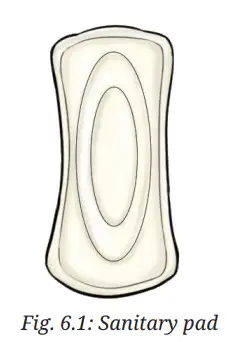
- Menstrual products: Sanitary pads and reusable cloth pads can help maintain menstrual hygiene and comfort.
- Disposal: Wrap used sanitary pads in newspaper and put them in a dustbin to support community health and environmental cleanliness.
- Environment: Biodegradable sanitary pads are also available.
- Facilities and awareness: Schools and public places should have the facilities needed for menstrual hygiene, and communities should reduce stigma around sanitary pads.
| Initiative | Purpose and support |
|---|---|
| Menstrual Hygiene Scheme (MHS) | Provides sanitary pads free or at reduced prices to adolescent girls in rural areas and conducts menstrual health awareness programmes. |
| Rashtriya Kishor Swasthya Karyakram (RKSK) | Supports adolescents’ overall health, including menstrual health and hygiene; encourages older students to educate younger peers. |
| Suvidha Sanitary Napkin Initiative | Makes affordable biodegradable sanitary pads available through Jan Aushadhi Kendras. |
| State-level initiatives | Examples include Karnataka’s Shuchi Scheme and free sanitary napkin schemes in Tamil Nadu and Odisha, including distribution in government schools. |
Name the nutrients needed during adolescence and state the roles described in this lecture.
How can menstrual hygiene be supported at home and in the community?
Quick recap
- Adolescents need a nutritious diet for growth, development and well-being.
- Proteins and carbohydrates support growth and performance during play; proteins also support strength and energy.
- Calcium supports bone growth, while iron helps form blood; iron or vitamin B12 deficiency may cause blood-related health problems.
- Vitamin B12 must come from food; Dorothy Hodgkin studied its structure and won the Nobel Prize in Chemistry in 1964.
- Keeping the body clean, especially the armpits and pubic region, helps protect against infections.
- Menstrual hygiene includes using suitable products and disposing of used pads properly; biodegradable pads are available.
- MHS, RKSK, Suvidha and state initiatives support menstrual health and access to products.
Making Adolescence a Joyful Experience Part-2
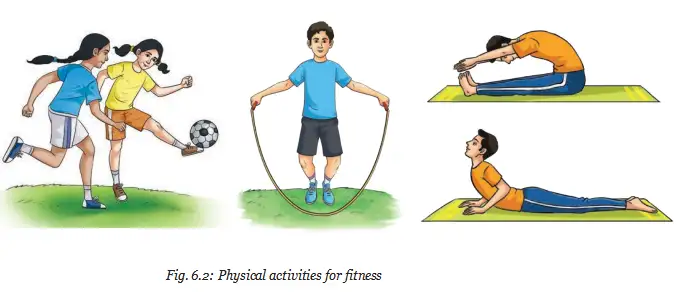
- Regular physical activity: Exercise, games and sports help keep the body and mind fit and healthy.
- Benefits: Physical activity builds stamina and can boost mood.
Balanced Social Life
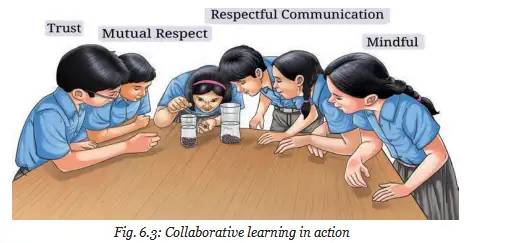
- Respectful interaction: Be polite and considerate to help create a safe, supportive environment.
- Thoughtful behaviour: Adolescence brings new experiences and emotions; act responsibly with others in person and online.
- Peer influence: Adolescents may feel attracted to peers or imitate their behaviour, so make choices thoughtfully.
- Responsible technology use: Use online platforms to connect and share in ways that support everyone’s well-being; seek guidance from elders or teachers when needed.
Cyberbullying and Online Safety
Cyberbullying — Using digital devices or online platforms to harass someone, such as by sending misleading messages, spreading false rumours, or sharing personal information without consent.
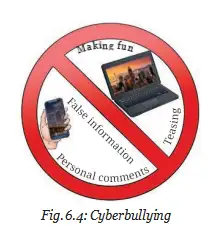
| Dos | Don’ts |
|---|---|
| Be respectful and kind. | Do not share personal photos with strangers or virtual friends. |
| Think before posting. | — |
| Protect your privacy. | — |
- If bullied: Do not feel scared or helpless; respond wisely and seek help from parents or teachers.
- Online caution: Be careful before uploading pictures or sharing personal information, especially with strangers.
Avoiding Harmful Substances: Learn to Say No
Substance Use and Its Risks
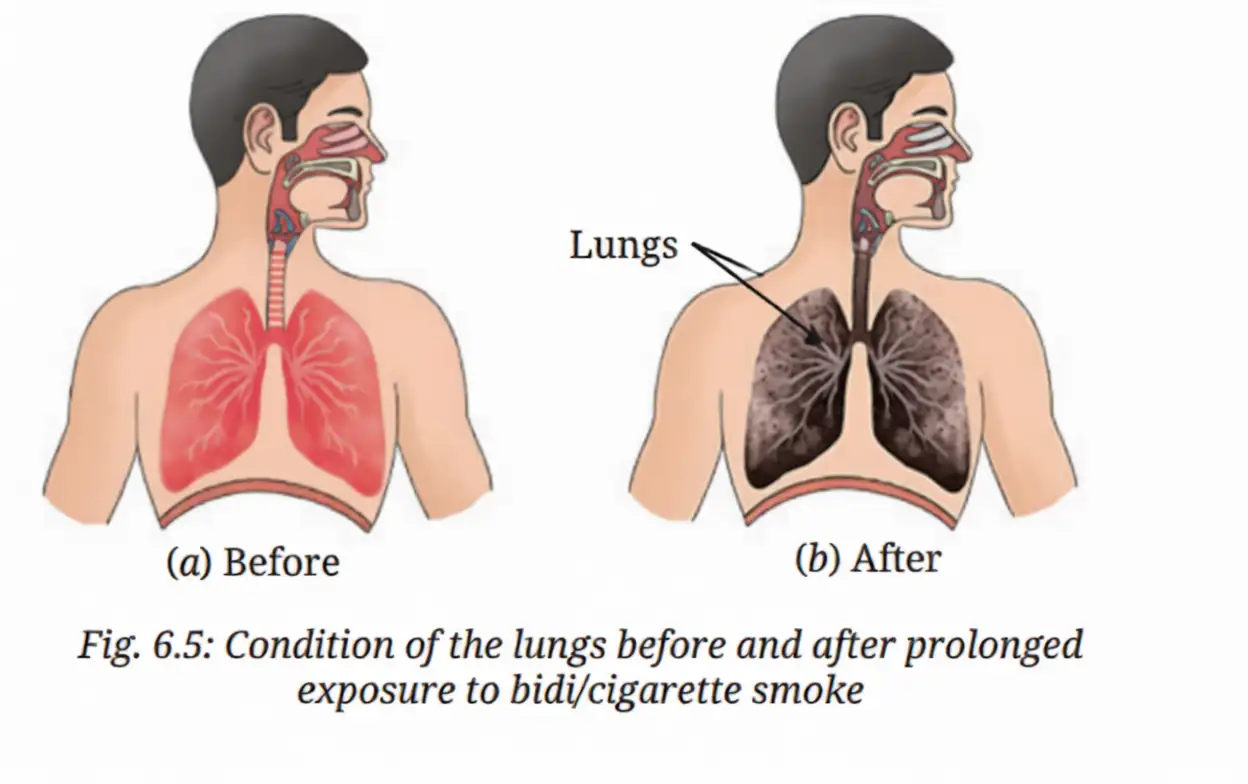
- Harmful substances: These include tobacco, gutka, cigarettes, beedi, alcohol and illegal drugs.
- Risk of influence: Curiosity, excitement or pressure from peers may lead adolescents to try these substances.
- Addiction: Addictive substances can create a strong urge to use them repeatedly; use may become regular over time.
- Substance abuse: The regular use of harmful substances.
- Health effects: Depending on the substance, use can harm physical and mental health and cause breathing difficulties, memory loss or lung damage.
- Prevention: Avoid these substances completely and say “NO” firmly and confidently the first time and every time.
Getting Support for Addiction
- Recognise the problem and seek support from family and friends.
- Talk to a trusted person, such as a parent or teacher.
- Use counselling and medical advice when helpful.
Nasha Mukt Bharat Abhiyaan
- Launched by: The Ministry of Social Justice and Empowerment, Government of India.
- Aim: Spread awareness about preventing substance abuse through the active participation of youth, women and the community.
- Special focus: Preventing substance abuse among children at an early age.
- National De-addiction Helpline: Call 14446 for help with drug addiction.
What is cyberbullying, and what should you do if it happens to you?
What is substance abuse, and how can adolescents avoid it?
What is the purpose of Nasha Mukt Bharat Abhiyaan?
Quick recap
- Regular exercise and sports support fitness, stamina and mood.
- Interact respectfully and use social media thoughtfully and responsibly.
- Cyberbullying is online harassment; seek adult help and protect your privacy.
- Addictive substances can cause serious health problems and may lead to regular use and substance abuse.
- Avoid harmful substances, say no confidently, and seek trusted support if needed.
- Nasha Mukt Bharat Abhiyaan promotes substance-abuse prevention; helpline: 14446.
The ‘Why’ Question for Adolescence
Hormones and Adolescent Changes
Hormones — Hormones are chemicals produced in the body that regulate growth, development and other body functions.
- Adolescent changes: Hormones are mainly responsible for changes such as menstruation and other signs of puberty.
- Production and release: Hormones are made in different parts of the body and released at the appropriate time in response to signals from the brain.
- Roles: Hormones help regulate growth and development and support proper body functioning; some also affect mood and behaviour.
How hormone release is regulated
- Signals from the brain → hormones are released at the appropriate time → growth, development and puberty-related changes are regulated.
Making Healthy Choices
- Stay informed: Understanding adolescent changes helps you respond to them responsibly.
- Seek support: Ask for support and guidance when needed.
- Choose well: Healthy decisions help build a strong foundation for the future.
Quick recap
- Hormones are body chemicals that regulate growth, development and other functions.
- Hormones mainly cause menstruation and other signs of puberty.
- The brain signals when hormones should be released.
- Some hormones can affect mood and behaviour.
- Stay informed, seek guidance when needed and make healthy decisions.
Summary
Adolescence and Puberty
- Adolescence: The transition from childhood to adulthood generally begins around age 10 and lasts until about 19.
- Puberty: The body undergoes external and internal changes and develops the ability to reproduce.
Sexual Characteristics and Menstruation
- Secondary sexual characteristics: Features that distinguish males and females but are not directly involved in reproduction.
- Menstruation: Blood discharge usually occurs every 28–30 days and lasts three to seven days.
- Reproductive years: Menstruation begins at puberty and generally ends between ages 45 and 55.
Staying Healthy During Adolescence
- Healthy diet: A balanced, nutritious diet supports growth and development.
- Hygiene: Keep the body clean, especially the armpits and pubic region; practise menstrual hygiene and dispose of used pads properly.
- Activity: Regular exercise and sports support fitness, stamina, and a positive mood.
Hormones and Guidance
- Hormones: These are chemicals produced in the body that regulate growth and development.
- Signals: Hormones are released at the appropriate time in response to signals from the brain.
- Effects: Some hormones influence mood and behaviour as well as body changes.
- Guidance: Staying informed and seeking support helps adolescents make healthy decisions.
Quick recap
- Adolescence generally lasts from about age 10 to 19 and involves physical, biological and emotional changes.
- Puberty is the stage when body changes lead towards reproductive capability.
- Secondary sexual characteristics distinguish males from females but are not directly involved in reproduction.
- Menstruation generally occurs every 28–30 days, begins at puberty and usually ends between ages 45 and 55.
- A balanced diet, hygiene, exercise, awareness and guidance support adolescent health.
- Hormones control many adolescent changes; tobacco, alcohol and drugs can harm the body and mind.
Science — ALL CHAPTERS
1
The Ever-Evolving World of Science
2
Exploring Substances: Acidic, Basic, and Neutral
3
Electricity: Circuits and their Components
4
The World of Metals and Non-metals
5
Changes Around Us: Physical and Chemical
6
Adolescence: A Stage of Growth and Change
7
Heat Transfer in Nature
8
Measurement of Time and Motion
9
Life Processes in Animals
10
Life Processes in Plants
11
Light: Shadows and Reflections
12
Earth, Moon, and the Sun