Class 7 . Science . Curiosity . Exploring Substances Acidic Basic and Neutral
Chapter 2: Exploring Substances: Acidic, Basic, and Neutral
Ch 2
Science
Class 7
Nature - Our Science Laboratory
Observing Changes in Substances
- Science fair: On 28 February, the school celebrated National Science Day with a science fair.
- Colour change: Words appeared on white paper when a volunteer sprayed it with a liquid.
- Exploration: The fair introduced activities showing colour changes when different substances are mixed.
Quick recap
- National Science Day is celebrated on 28 February.
- A sprayed liquid made words appear on white paper.
- Mixing substances can cause colour changes.
- Observing changes helps guide scientific exploration.
Litmus as an Indicator
Litmus and Its Colour Changes
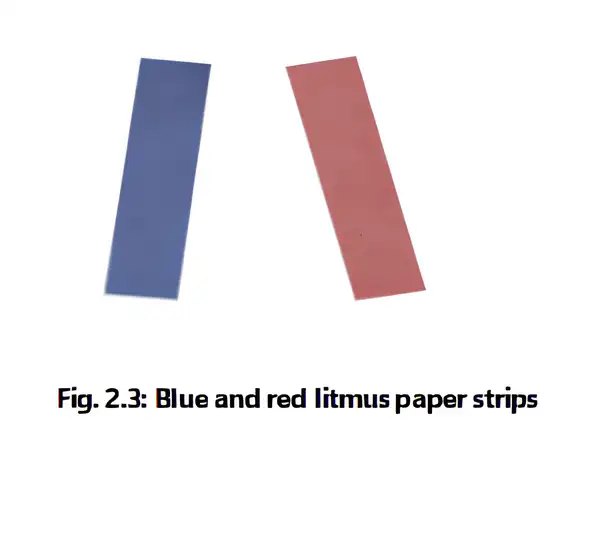
| Nature | Litmus colour change | Examples |
|---|---|---|
| Acidic | Blue litmus turns red. | Lemon juice, amla juice, tamarind water, vinegar |
| Basic | Red litmus turns blue. | Soap solution, baking soda solution, lime water, washing powder solution |
| Neutral | Neither red nor blue litmus changes colour. | Tap water, sugar solution, salt solution |
Lime Water
- Lime water: It is a solution of calcium hydroxide in water.
- Preparation: Mix lime (chuna, or calcium oxide) with water, let it stand for about an hour, then filter the liquid.
Other Clues to Acidic and Basic Nature
A bitter taste does not prove that a substance is basic: bitter gourd (karela) is bitter but is not basic.
Never taste an unknown substance to identify it; use an indicator such as litmus.
Quick recap
- Litmus is a natural indicator obtained from lichens.
- Acids turn blue litmus red; bases turn red litmus blue.
- Neutral substances do not change either colour of litmus.
- Examples: lemon juice is acidic, soap solution is basic, and sugar solution is neutral.
- Acids tend to taste sour; bases are generally slippery and bitter, but bitterness alone does not show that a substance is basic.
- Lime water is calcium hydroxide dissolved in water; never taste unknown substances.
Red Rose as an Indicator
Red Rose Extract as an Acid–Base Indicator
Relation to Litmus Tests
- Acidic samples that turn the extract red also turn blue litmus red.
- Basic samples that turn the extract green also turn red litmus blue.
- Neutral samples do not change the extract or red and blue litmus papers.
Other Natural Indicators
- Examples include beetroot, purple cabbage, turmeric, Indian blackberry (jamun), and red hibiscus (gudhal) flowers.
Hydrangea and Soil Nature
What colour does red rose extract show in acidic and basic solutions?
Quick recap
- Red rose extract is a natural acid–base indicator.
- Acids turn the extract red; bases turn it green.
- Neutral samples do not change the extract’s colour.
- Its colour changes correspond to the usual litmus tests.
- Beetroot, purple cabbage, turmeric, jamun, and red hibiscus can also act as natural indicators.
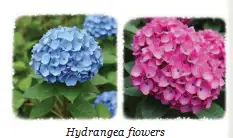
- Hydrangeas are blue in acidic soil and pink or red in basic soil.
Turmeric as an Indicator
Turmeric Paper
Olfactory Indicators
Can turmeric paper distinguish an acidic substance from a neutral one?
Which solution could be used to write a message on dried turmeric-coated paper?
Quick recap
- Turmeric paper is a natural indicator for basic substances.
- Basic substances change the colour of turmeric paper.
- Turmeric paper cannot distinguish acidic substances from neutral ones.
- Olfactory indicators are substances whose odour changes in acidic or basic media.
- Onion strips can be tested with acidic tamarind water and basic baking soda solution; no test result is specified here.
What Happens When Acidic Substances Mix with Basic Substances?
Acids and Bases Can Neutralise Each Other
- Neutralisation: When an acid and a base are mixed in sufficient quantities, they neutralise each other.
- Result: The resulting solution is neither acidic nor basic.
- Products: Neutralisation forms salt and water and releases heat.
- Equation: Acid + Base → Salt + Water + Heat.
Quick recap
- Lemon juice is acidic and turns blue litmus red.
- Lime water is basic and neutralises the acid when enough is added.
- The solution eventually changes from red to blue as the acid is neutralised.
- Neutralisation forms salt and water and releases heat.
- Adding more acid to a basic solution can make it acidic again.
Neutralisation in Daily Life
Neutralisation
- Neutralisation: An acid and a base react to reduce each other’s effects, forming salt and water and releasing heat.
- Daily life: Neutralisation can help address problems involving soil and waste by treating excess acidity or basicity.
Ant Bites
Cause and remedy
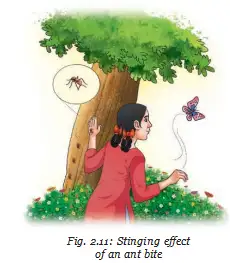
- Cause: A red ant injects acidic formic acid into the skin, causing redness and stinging pain.
- Remedy: Moist baking soda is basic; applying it can neutralise the acid and relieve the pain.
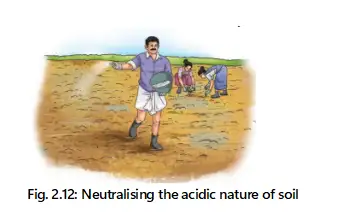
Treating Soil
Chemical fertilisers — Substances added to soil to help plants grow better.
Soil condition and treatment
- Too acidic: Excessive use of chemical fertilisers can make soil acidic and hinder plant growth; add lime, which is basic.
- Too basic: Add organic matter such as manure or composted leaves. It releases acids that reduce the soil’s basic nature.
- Neutral soil: Poor plant health can still be due to a deficiency of nutrients in the soil.
Treating Acidic Factory Waste
Protecting lake life
- Acidic factory waste released into a lake may harm aquatic life and contribute to declining fish numbers.
- Add a basic substance to the waste to neutralise it before releasing it into the lake.
The Hidden Message
Possible explanation
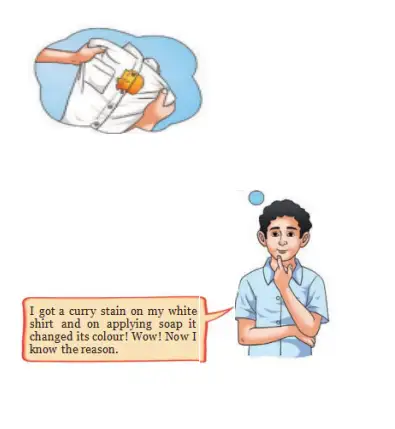
- Possibility: The paper may have been written on with soap solution and sprayed with turmeric solution.
- Note: The text raises this as a possible explanation for the message appearing; it does not confirm it.
How can an ant bite be treated using neutralisation?
What should be added to acidic or basic soil?
Quick recap
- Neutralisation reduces or cancels the effects of an acid and a base reacting.
- Moist baking soda, a base, can neutralise acidic formic acid from an ant bite.
- Excessive chemical fertiliser use can make soil acidic; lime is added to treat it.
- Organic matter releases acids that reduce the basic nature of soil.
- Poor plant health in neutral soil may result from nutrient deficiency.
- Acidic factory waste should be neutralised with a base before it is released into a lake.
- Soap solution and turmeric solution are suggested as a possible hidden-message explanation.
Summary
Acidic, Basic, and Neutral Substances
Acid-base indicator — A substance that shows different colours in acidic and basic solutions.
Neutralisation
What happens when an acid reacts with a base?
How do red rose extract and turmeric respond to acidic and basic solutions?
Quick recap
- Substances may be acidic, basic, or neutral.
- Indicator extracts can help identify whether a solution is acidic or basic.
- Acids turn blue litmus red; bases turn red litmus blue.
- Red rose extract turns red in acid and green in base.
- Turmeric turns red in base and stays unchanged in acidic and neutral solutions.
- Neutralisation forms salt and water and releases heat; it can be useful in everyday and environmental problems.
Science — ALL CHAPTERS
1
The Ever-Evolving World of Science
2
Exploring Substances: Acidic, Basic, and Neutral
3
Electricity: Circuits and their Components
4
The World of Metals and Non-metals
5
Changes Around Us: Physical and Chemical
6
Adolescence: A Stage of Growth and Change
7
Heat Transfer in Nature
8
Measurement of Time and Motion
9
Life Processes in Animals
10
Life Processes in Plants
11
Light: Shadows and Reflections
12
Earth, Moon, and the Sun