NEET UG . NEET Botany . Botany . Biotechnology and Its Applications
Chapter 13: Biotechnology and its Applications
Ch 13
NEET Botany
NEET UG
Biotechnological Applications in Agriculture
Biotechnology: Scope and Research Areas
- Biotechnology: Uses organisms or their components to produce useful products on an industrial scale.
- Research areas: Improving biological catalysts, optimising conditions for their activity and developing downstream processing to purify products.
Biotechnological Applications in Agriculture
- Approaches: Food production can be increased through agrochemical-based, organic or genetically engineered crop-based agriculture.
- Need for improvement: The Green Revolution tripled food production, but population growth and limits of conventional breeding created a need for further crop improvement.
Plant Tissue Culture
| Type | Explant or basis | Key point |
|---|---|---|
| Single-cell culture | A single cell | Mitosis produces clones; this is also called cell cloning. |
| Shoot and root culture | Root or stem part | Regulated by cytokinin–auxin ratio; excess auxin favours roots, while excess cytokinin favours shoots in callus. |
| Somatic embryo culture | Embryo developed from a somatic cell | The somatic embryo is cultured. |
| Meristem culture | Apical or axillary shoot meristem; shoot tips or nodal segments | Used to produce virus-free plants, conserve germplasm and rapidly multiply clones. |
| Other cultures | Anther, ovule or ovary | These are also used in plant tissue culture. |
Meristem Culture: Applications
- Virus-free plants: Apical and axillary meristems can be used to obtain healthy plants even when the parent plant is virus-infected.
- Examples: Meristem culture has been used in potato and sugarcane, among others.
Micropropagation
- Micropropagation: Rapid vegetative multiplication of plants in vitro using small explants under controlled conditions.
- Somaclones: The plantlets produced are genetically identical; the method enables fast, year-round multiplication of crops such as tomato, banana and apple.
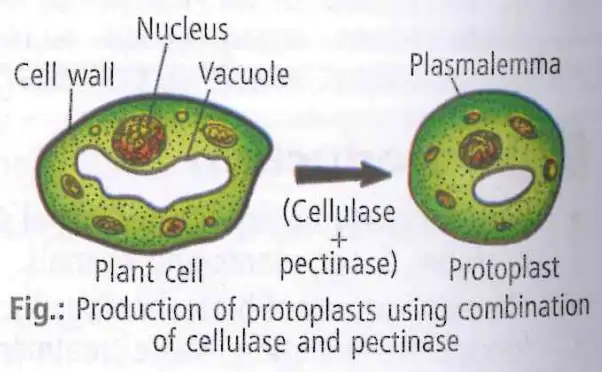
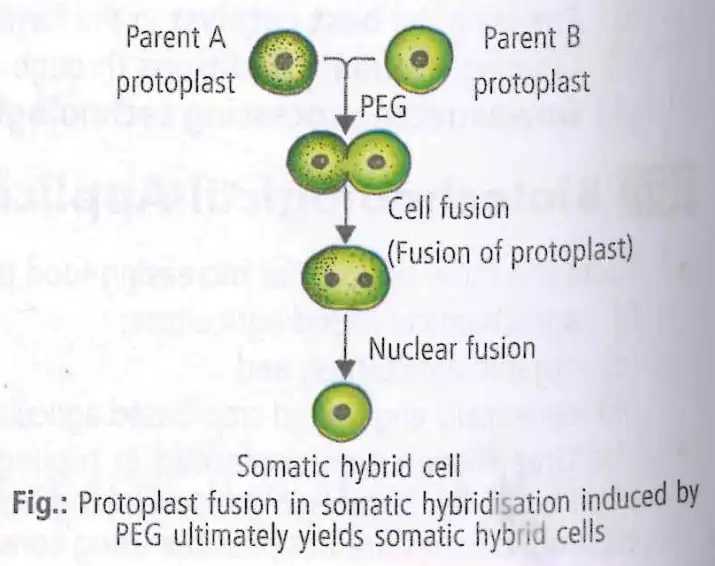
Somatic Hybridisation
Genetically Modified Organisms
- GMOs: Organisms whose genetic material has been modified; transgenic crops carry and express one or more useful foreign genes.
- Crop benefits: Genetic modification can improve stress and pest resistance, reduce post-harvest losses and increase nutritional value, as in vitamin A-enriched golden rice.
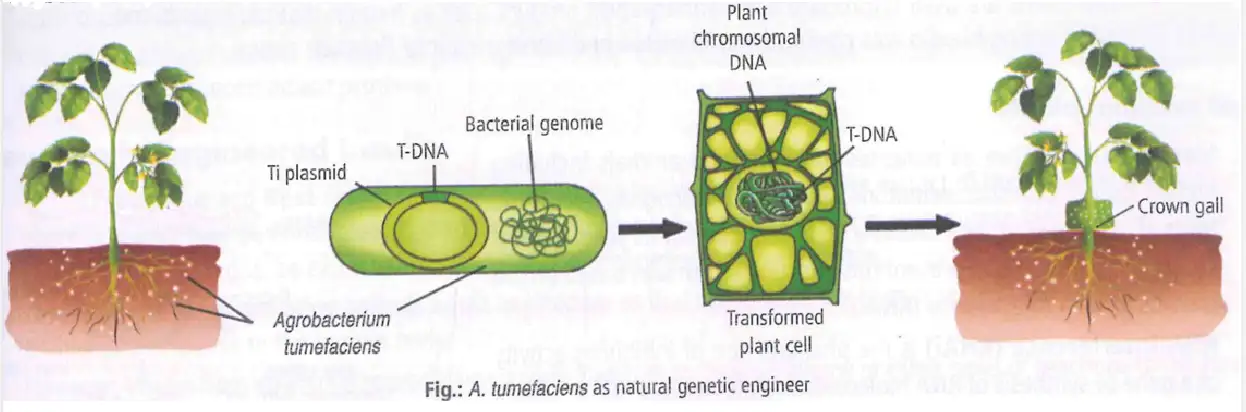
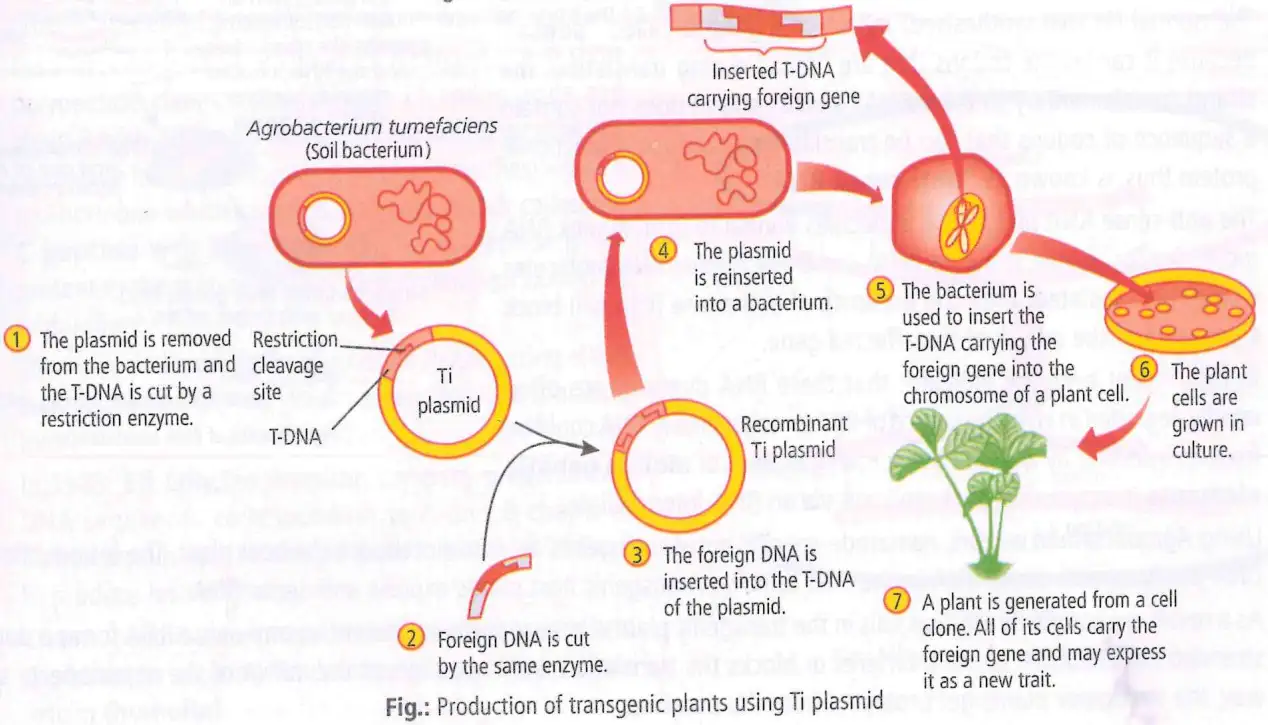
Production of Transgenic Plants
Insect Resistance: Bt Crops
- India’s first transgenic crop: Bt cotton.
- First transgenic plant: Tobacco with a gene conferring resistance to the weedicide glyphosate.
GM Plants as Biopharmaceutical Producers
- Hirudin: A blood-clot-preventing biopharmaceutical produced using GM plants; its chemically synthesised gene was transferred to Brassica napus.
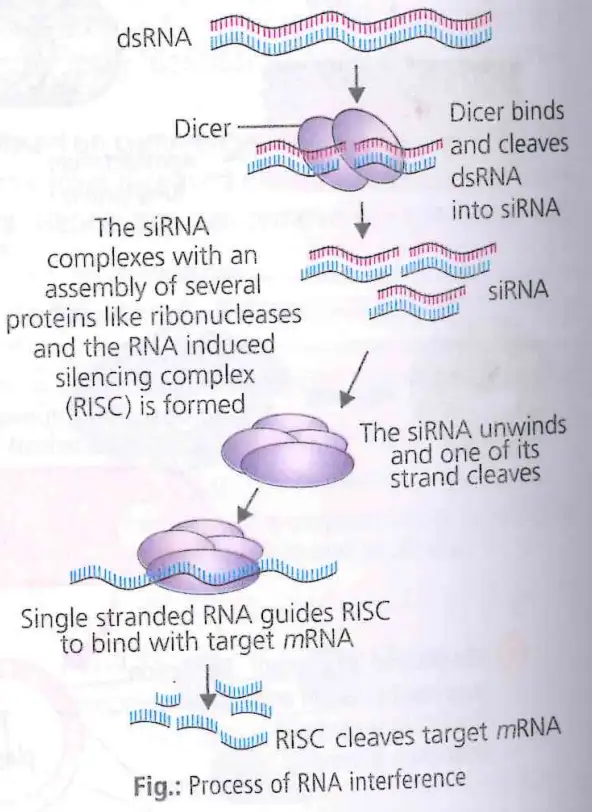
Pest Resistance: RNA Interference
Flavr Savr Tomato
- Flavr Savr tomato: Blocking the tomato gene for polygalacturonase slows pectin breakdown and fruit softening, helping the tomatoes stay fresh and retain their flavour longer.
Benefits and Risks of Transgenic Plants
Explain how Bt toxin kills a susceptible insect.
Give two benefits and two risks of genetically modified plants.
Quick recap
- Plant tissue culture uses sterile nutrient media; totipotency enables regeneration of a whole plant from a cell or explant.
- Callus culture uses solid medium with auxin and cytokinin; suspension culture uses liquid medium with 2,4-D.
- Micropropagation rapidly produces genetically identical somaclones and can recover virus-free plants from meristems.
- Somatic hybridisation fuses protoplasts from different plants; pomato is a potato–tomato hybrid.
- GM crops can improve stress tolerance, pest resistance, mineral use and food quality; the Ti plasmid is a common plant gene-transfer vector.
- Bt protoxin is activated in the insect gut; RNAi silences target mRNA through complementary RNA pairing.
- Transgenic plants can reduce crop losses but may pose biological and ecological risks.
Biotechnological Applications in Medicine
Recombinant Therapeutics
Recombinant therapeutics — Therapeutic drugs produced using recombinant DNA technology.
- Benefits: Recombinant DNA technology enables large-scale production of safe, effective therapeutic drugs.
- Immune response: Recombinant therapeutics generally avoid the unwanted immune responses associated with similar products from non-human sources.
- Availability: About 30 recombinant therapeutics have been approved for human use worldwide; 12 are marketed in India.
- Production hosts: *E. coli* was initially used for ease of cloning; yeast is increasingly becoming the preferred host for recombinant proteins.
Genetically Engineered Insulin
- Early insulin: In 1921, Banting and Best, with MacLeod, prepared insulin extract from dog pancreatic islets and showed it could treat diabetes.
- Animal insulin: Insulin from slaughtered pigs and cattle was effective, but some patients developed allergies or other reactions to this foreign protein.
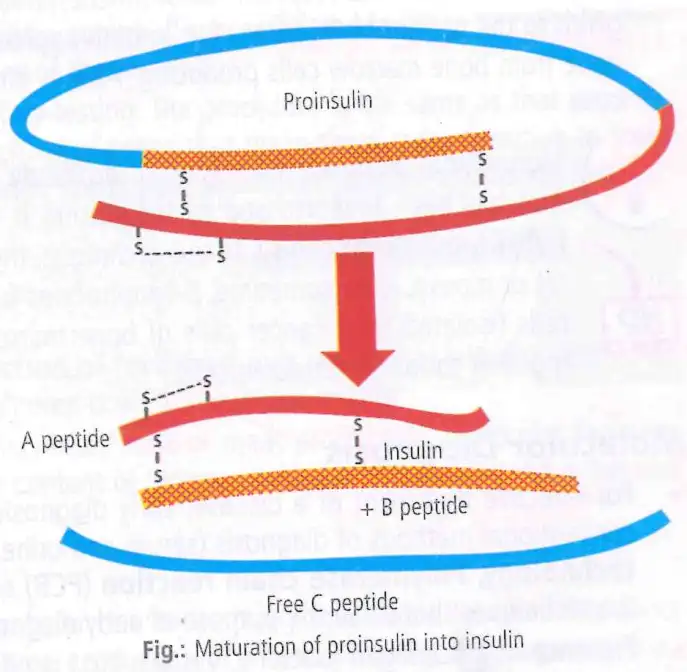
- Mature insulin: Human insulin has 51 amino acids in two chains: A has 21 and B has 30; disulphide bridges link the chains.
- Proinsulin: Human insulin is first made as a pro-hormone containing a 33-amino-acid C-peptide, which is removed during maturation.
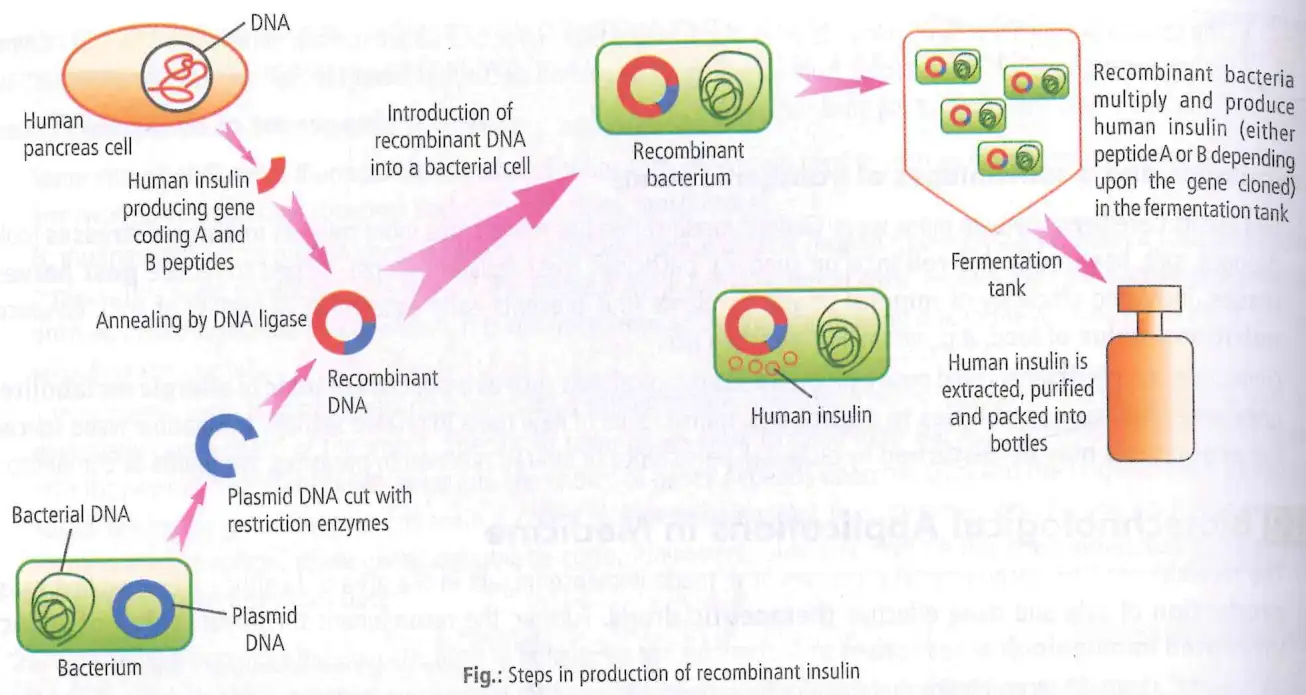
- Production challenge: Recombinant methods had to produce insulin in its mature form, with A and B chains linked by disulphide bonds.
- Humulin: In 1983, Eli Lilly made DNA sequences for the A and B chains, introduced them separately into *E. coli* plasmids, then combined the extracted chains to form human insulin.
Gene Therapy
Gene therapy — A set of methods that inserts genes into a person’s cells or tissues to treat disease.
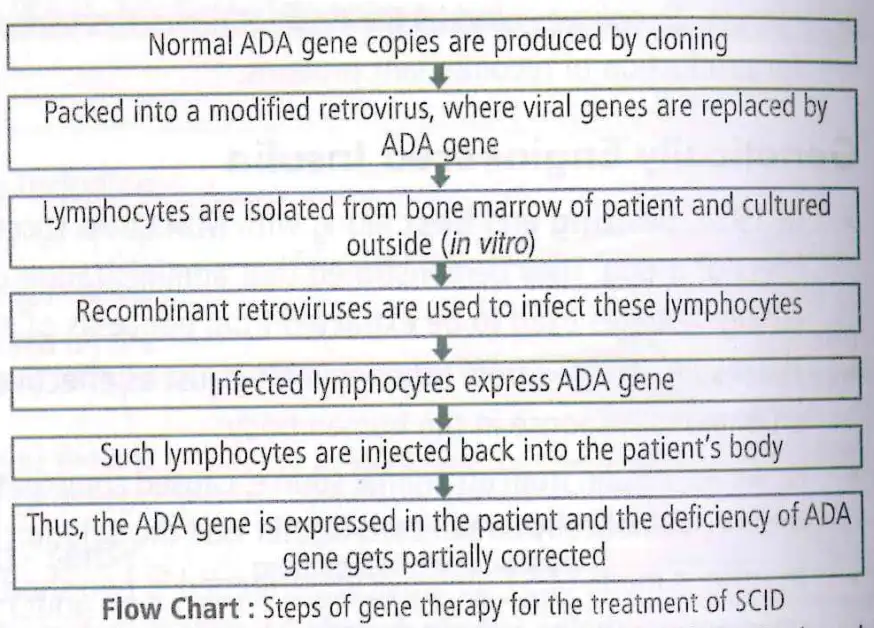
- Purpose: A normal gene is delivered to compensate for or take over the function of a defective gene.
- First clinical use: In 1990, gene therapy was given to a four-year-old girl with adenosine deaminase (ADA) deficiency.
- ADA and SCID: ADA is essential for immune-system function; a defect in its gene can cause severe combined immunodeficiency (SCID).
- Existing treatments: Bone marrow transplantation may cure some children; others receive functional ADA by enzyme replacement injections. Neither approach completely cures all patients.
- Potential permanent cure: Introducing an isolated, functional ADA gene from bone marrow cells into cells at an early embryonic stage may provide a permanent cure.
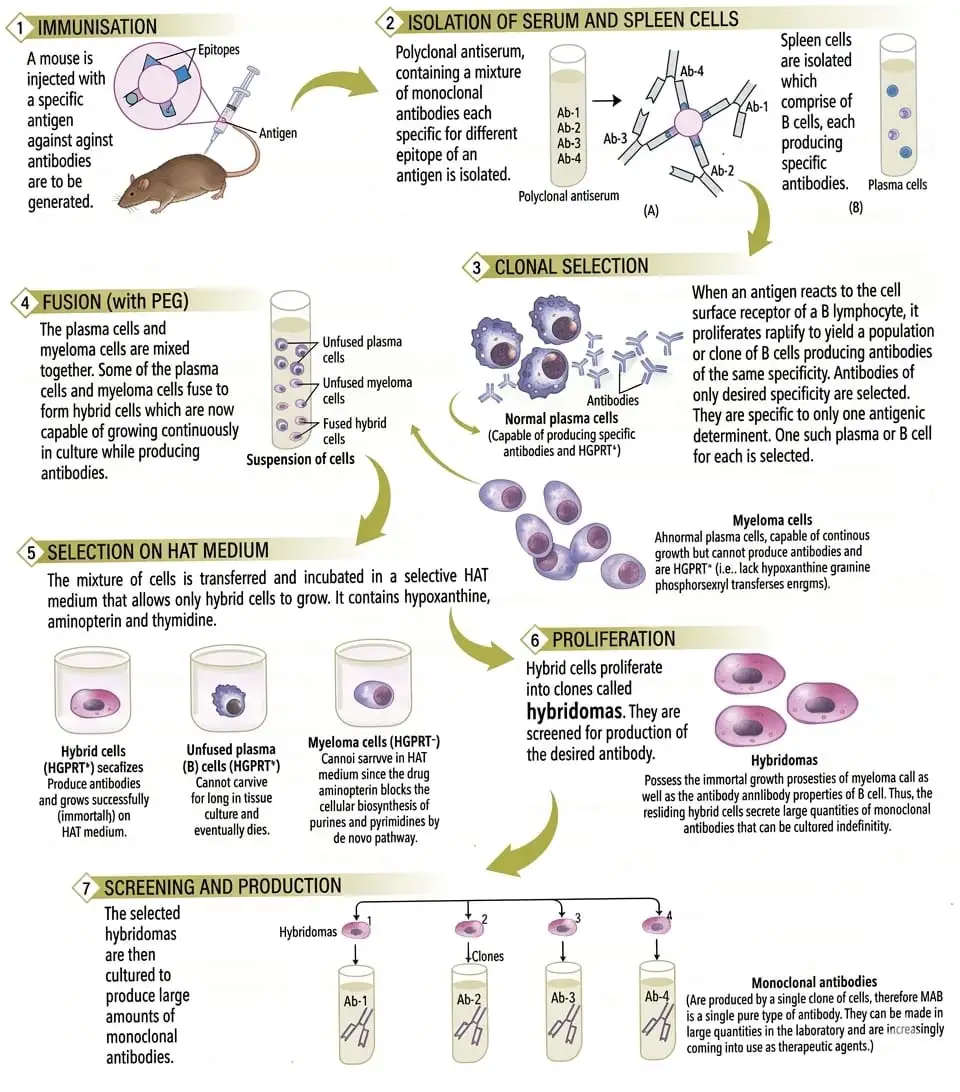
Monoclonal Antibodies and Hybridoma Technology
Monoclonal antibody — A specific antibody produced by an immortalised, antigen-activated B-cell clone.
- Hybridoma: A hybrid cell formed by fusing an antibody-producing B-lymphocyte with a myeloma (cancerous plasma) cell.
- Method: The required antigen is injected into a rat or mouse; antibody-producing B-cells are isolated from its spleen and fused with myeloma cells.
- Result: Hybridoma cells combine antibody production with the ability to multiply, allowing production of specific monoclonal antibodies.
- Development: Köhler and Milstein devised hybridoma technology in 1975 because direct biochemical purification of monoclonal antibodies from polyclonal antibodies is not feasible.
Molecular Diagnosis
Molecular diagnosis — Early detection and identification of disease using molecular or immune-based techniques.
- Why early diagnosis matters: It supports effective treatment and understanding of disease pathophysiology; conventional serum or urine tests may not detect disease early.
- Main techniques: Recombinant DNA technology, polymerase chain reaction (PCR), and enzyme-linked immunosorbent assay (ELISA).
- PCR: Amplifies pathogen nucleic acid, allowing detection when bacteria or viruses are present at very low concentrations, before symptoms appear.
- PCR applications: Detection of HIV in suspected AIDS patients, mutations in suspected cancer patients, and other genetic disorders.
- DNA/RNA probe: A radioactive, single-stranded DNA or RNA probe binds to its complementary sequence in a cell clone; autoradiography detects the hybridised probe.
- Mutation detection with a probe: A clone carrying a mutated gene may not appear on the photographic film because the probe cannot complementarily bind to the mutated sequence.
- ELISA: Based on antigen–antibody interaction; infection is detected by identifying pathogen antigens (such as proteins or glycoproteins) or antibodies made against the pathogen.
How was recombinant human insulin produced?
What is the role of hybridoma technology?
How can PCR and ELISA aid early diagnosis?
Quick recap
- Recombinant DNA technology enables large-scale production of therapeutic drugs; yeast is increasingly preferred over *E. coli* for recombinant proteins.
- Mature insulin contains A and B chains joined by disulphide bridges; the proinsulin C-peptide is removed.
- Recombinant human insulin was produced by Eli Lilly in 1983 using separate insulin-chain sequences in *E. coli*.
- Gene therapy compensates for a defective gene; ADA deficiency can cause SCID.
- Hybridoma technology fuses antibody-producing B-cells with myeloma cells to produce monoclonal antibodies.
- PCR, DNA/RNA probes, and ELISA support molecular diagnosis, including detection before symptoms appear.
Transgenic Animals
Meaning of Transgenic Animals
Transgenic animal — An animal whose genome contains one or more genes introduced by transfection.
Key terms
- Transgene: A gene introduced into an animal by transfection.
- Transfection: Introduction of a DNA segment, naked or carried in a vector, into an animal cell.
- Terminology: The corresponding process is called transformation in organisms other than animals.
Why Transgenic Animals Are Produced
| Purpose | Use and important examples |
|---|---|
| Normal physiology and development | Study gene regulation and how genes affect body functions and development; growth factors such as insulin-like growth factor are examples. |
| Disease study | Model human diseases to understand gene contributions and investigate treatments; examples include cancer, cystic fibrosis, rheumatoid arthritis and Alzheimer’s disease. |
| Biological products | Produce useful human proteins, such as -1-antitrypsin for treating emphysema. Similar efforts target phenylketonuria (PKU) and cystic fibrosis. |
| Vaccine safety testing | Transgenic mice are used to test vaccines, including the polio vaccine; if reliable, they may replace monkeys for testing vaccine batches. |
| Chemical toxicity or safety testing | Make animals more sensitive to toxic substances than non-transgenic animals, expose them to the substances and study the effects. |
Example of a biological product
- 1997Rosie, the first transgenic cow, produced milk containing human α-lactalbumin at 2.4 grams per litre; it was more nutritionally balanced for human babies than natural cow’s milk.
Examples of Transgenic Animals
- Animal models: Transgenic mice are widely used to study gene transfer, development and human diseases.
- Molecular farming: Transgenic rabbits can produce recoverable quantities of useful human proteins, including interleukin 2 and tissue plasminogen activator.
Transgenic Cattle
Cattle transfection and production goals
- Technique: The only successful transfection technique in cattle is microinjection of fertilised ova.
- Ova source: Fertilised ova may be recovered surgically or obtained from ovaries of slaughtered cows and cultured in vitro.
- Production goals: Increase milk or meat production; use cattle for molecular farming; improve the properties and proportions of casein in milk.
- Other goals: Regulate lactose and butter-fat content in milk and improve resistance to viral and bacterial pathogens.
Transgenic Mice
Why mice are preferred
- Reproduction: Short oestrous cycle, gestation period and generation time; several offspring are produced per pregnancy in a litter.
- Embryo work: In vitro fertilisation is convenient, and embryos can be cultured in vitro for at least a period of time.
- Research resources: Embryonic stem (ES) cell lines can be produced and maintained, and diverse genetic stocks are available.
- Significance: These features helped gene-transfer and transgenic-production techniques develop using mice as models.
Transgenic Rabbits
Rabbit gene farming
- Molecular farming: Rabbits can produce recoverable quantities of pharmaceutically or biologically important proteins encoded by transgenes.
- Transferred human genes: Examples encode interleukin-2, growth hormone, tissue plasminogen activator and -1-antitrypsin.
Supermouse and Superbug
- Supermouse: The first transgenic animal was a mouse carrying a growth-hormone gene; its enlarged size gave it the name “supermouse.”
- Superbug: Genetically engineered *Pseudomonas putida* carrying plasmids from different strains can clean oil spills, so it is called an “oil-eating bug.”
List the five main uses of transgenic animals.
Why are mice preferred for gene-transfer studies?
Quick recap
- Transgenic animals carry introduced genes called transgenes; their introduction into animal cells is transfection.
- Their uses include studying physiology and disease, making biological products, testing vaccine safety and carrying out chemical toxicity or safety testing.
- Cattle transfection uses microinjection of fertilised ova; cattle are developed for improved production, milk properties and pathogen resistance.
- Mice are useful models because of their reproductive features, embryo-culture options, ES-cell lines and genetic diversity.
- Transgenic rabbits can produce proteins such as interleukin-2, growth hormone, tissue plasminogen activator and α-1-antitrypsin.
- The growth-hormone transgenic mouse was called a supermouse; engineered *Pseudomonas putida* used to clean oil spills is called a superbug.
Ethical Issues
Bioethics and Ethical Concerns
Bioethics — Rules of conduct used to regulate human activities in relation to the biological world.
Major bioethical concerns
- Species integrity: Moving a transgene from one species to another may violate the integrity of species.
- Environmental risk: Biotechnology may create unforeseen risks to the environment and biodiversity.
- Humanness: Transferring human genes to animals, or animal genes to humans, may dilute the concept of humanness.
- Animal welfare: Animals used to produce pharmaceutical proteins may be treated as factories and may suffer greatly.
- Exploitation: Using living beings solely for human benefit may be disrespectful to them.
- Biological damage: Scientists cannot rule out other forms of biological harm or the accidental creation of new infectious agents.
GEAC — The Genetic Engineering Approval Committee is an Indian Government organisation that evaluates the validity of GM research and the safety of introducing GM organisms for public use.
Biopatents
Patent — A government-granted right that allows an inventor to prevent others from using an invention commercially.
Biopatent — A patent granted for a biological entity or a product derived from it.
| Common name | Scientific name |
|---|---|
| Black pepper | Piper nigrum |
| Basmati rice | Oryza sativa |
| Indian mustard | Brassica campestris |
| Pomegranate | Punica granatum |
| Turmeric | Curcuma domestica |
| Neem | Azadirachta indica |
Biopiracy
Biopiracy — Unauthorised exploitation or patenting of another country’s biological resources or traditional knowledge by organisations or multinational companies.
Examples and safeguards
- Basmati patent: In 1997, a US patent granted through the US Patent and Trademark Office covered the basmati rice germplasm indigenous to India.
- Rice diversity: India has an estimated 200,000 rice varieties.
- Legal safeguard: The Indian Parliament cleared the second amendment of the Indian Patents Bill to prevent unauthorised exploitation of bioresources and traditional knowledge.
Biowar
Biowar — The use of highly infectious pathogens, their spores, or toxins as biological weapons against an enemy country’s humans, crops, or animals.
Agents, delivery, and defence
- Agents: Potential agents include viruses, bacteria, fungi, spores, and toxins; examples are listed below.
- Delivery: Agents are kept active or virulent in special containers and may be delivered by missile or aircraft, commonly as sprays or powders.
- Impact: Bioweapons are almost invisible and low-cost, and can cause more casualties than conventional or chemical weapons.
| Agent | Type |
|---|---|
| Bacillus anthracis | Bacterium |
| Vibrio cholerae | Bacterium |
| Smallpox virus | Virus |
| Pasteurella / Yersinia pestis | Bacteria |
| Botulinum toxin | Toxin |
| Defence |
|---|
| Gas mask or respirator |
| Protective shelter |
| Vaccination |
| Antibiotics |
| Decontamination |
| Sensitive detection systems |
Quick recap
- Bioethics guides responsible conduct in human activities involving the biological world.
- Key concerns include species integrity, environmental harm, humanness, animal suffering, and biological risks.
- GEAC evaluates GM research and the safety of introducing GM organisms for public use in India.
- Biopatents cover biological entities or products; examples include patents on neem, turmeric, and basmati rice.
- Biopiracy is unauthorised exploitation or patenting of another country’s bioresources or traditional knowledge.
- Biowar uses infectious agents or toxins; defences include protective equipment, vaccination, antibiotics, and decontamination.
NEET Botany — ALL CHAPTERS
1
The Living World
2
Plant Kingdom
3
Morphology of Flowering Plants
4
Anatomy of Flowering Plants
5
The Unit of Life
6
Photosynthesis in Higher Plants
7
Respiration in Plants
8
Plant Growth and Development
9
Sexual Reproduction in Flowering Plants
10
Principles of Inheritance and Variation
11
Molecular Basis of Inheritance
12
Biotechnology :Principles and Processes
13
Biotechnology and its Applications