Class 12 Humanities . Geography . Fundamentals Of Human Geography . Human Geography Nature and Scope
Chapter 1: Human Geography Nature And Scope
Ch 1
Geography
Class 12 Humanities
Introduction
Geography and Human Geography
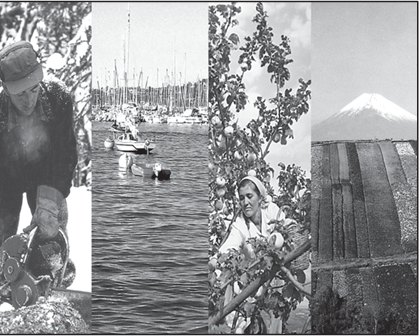
- Spatial distribution
- The arrangement or spread of phenomena across places.
- Synthesis
- Bringing different kinds of knowledge and relationships together to form an integrated understanding.
- Nomothetic
- An approach that seeks general laws or theories.
- Idiographic
- An approach focused on description of particular places or cases.
Nature and Human Beings: An Integrated View
| Debate | Approach A | Approach B |
|---|---|---|
| Purpose | Law-making or theorising (nomothetic) | Describing particular cases (idiographic) |
| Organisation | Regional study | Systematic study |
| Interpretation | Theoretical approach | Historical-institutional approach |
Geographical Metaphors
- Earth features are often described using human-body terms: the face of the Earth, eye of a storm, mouth of a river, snout of a glacier, neck of an isthmus and profile of soil.
- Places and states have been described as organisms; German geographers used the metaphor of the state or country as a living organism.
- Transport networks such as roads, railways and waterways are often called the arteries of circulation.
Definitions of Human Geography
Why should human and physical geography be studied holistically?
Quick recap
- Geography is integrative, empirical and practical, studying phenomena across space and time.
- Human geography examines relationships between people, societies and Earth’s surface.
- Its scope includes human spatial distributions and social and economic differences between places.
- Geographical debates contrasted law-making with description, regional with systematic study, and theoretical with historical-institutional interpretation.
- Nature and humans are interconnected and should be understood holistically.
- Ratzel emphasised synthesis, Semple dynamism, and Vidal de la Blache interrelationships.
Nature Of Human Geography
Human Geography and Its Environment
- Focus: Human geography studies relationships between human societies and the earth’s surface.
- Scope: It examines the spatial distribution of human phenomena and social and economic differences between places.
Technology and Human–Nature Interaction
- Technology: Human beings use technology to interact with and make use of the physical environment.
- Knowledge: Understanding natural laws supports technological development and shapes how people live.
Naturalisation of Humans and Environmental Determinism
Naturalised human — A human living in close dependence on nature, adapting to its forces and often revering it.
Possibilism and Humanisation of Nature
Humanisation of nature — The process by which human activities modify nature and leave their imprints on it.
Neodeterminism: A Middle Path
- Middle path: Neodeterminism rejects both complete control by nature and unlimited human freedom.
- Stop-and-go: People may pursue development within environmental limits, like traffic moving when the signal permits.
- Balance: Development should avoid environmental damage and its consequences.
Schools of Thought in Human Geography
How does neodeterminism differ from environmental determinism and possibilism?
Quick recap
- Human geography studies the interaction between the physical and human-created sociocultural environments.
- Technology reflects cultural development and shapes how people respond to nature.
- Naturalised humans adapt to and depend directly on nature; nature is revered as “Mother Nature.”
- Possibilism sees nature as a source of opportunities, while human activities create cultural landscapes and humanise nature.
- Neodeterminism supports development within environmental limits rather than absolute dependence or unlimited freedom.
- Welfare, radical and behavioural approaches focus respectively on well-being, inequality and lived perceptions of space.
Field And Sub Field Of Human Geography
Nature of Human Geography
- Focus: Human geography explains relationships between human life and the spaces in which it occurs.
- Interdisciplinary nature: It draws on related social sciences to understand human phenomena on the earth’s surface.
Broad Stages and Thrust of Human Geography
- Evolution: Human geography has changed as societies and geographical ideas have developed.
- Thrust: Its central concern is to understand how people and societies shape, use and experience space.
Fields, Sub-fields and Their Interfaces
- Interdisciplinary
- Drawing on connections with other fields of knowledge.
- Areal differentiation
- The study of how and why regions differ from one another.
- Spatial organisation
- The study of patterns in the locations and arrangement of human activities.
- Psephology
- The study of elections.
Why is human geography interdisciplinary?
What prompted the emergence of humanistic, radical and behavioural geography in the 1970s?
Quick recap
- Human geography studies human life in relation to the spaces where it occurs and is interdisciplinary.
- Early approaches moved from exploration and regional description towards studying regional differences and spatial patterns.
- The quantitative revolution used computers and statistical tools to identify mappable patterns in human activities.
- Humanistic, radical and behavioural schools arose in the 1970s; post-modernism stressed local contexts in the 1990s.
- Human geography’s fields and sub-fields connect with disciplines such as sociology, economics, political science and history.
Geography — ALL CHAPTERS
1
Human Geography Nature And Scope
2
The World Population Distribution, Density And Growth
3
Human Development
4
Primary Activities
5
Secondary Activities
6
Tertiary And Quaternary Activities
7
Transport And Communication
8
International Trade
1
UNIT -I POPULATION DISTRIBUTION ,DENSITY, GROWTH AND COMPOSITION
2
UNIT -II HUMAN SETTLEMENTS
3
UNIT- III LAND RESOURCES AND AGRICULTURE
4
UNIT -III WATER RESOURCES
5
UNIT - III MINERAL AND ENERGY RESOURCES
6
UNIT -III PLANNING AND SUSTAINABLE DEVELOPMENT IN INDIAN CONTEXT
7
UNIT -IV TRANSPORT AND COMMUNICATION
8
UNIT -IV INTERNATIONAL TRADE
9
UNIT - V GEOGRAPHICAL PERSPECTIVE ON SELECTED ISSUES AND PROBLEMS