Class 12 Humanities . Geography . Fundamentals Of Human Geography . Secondary Activities
Chapter 5: Secondary Activities
Ch 5
Geography
Class 12 Humanities
Introduction And Manufacturing Characteristics
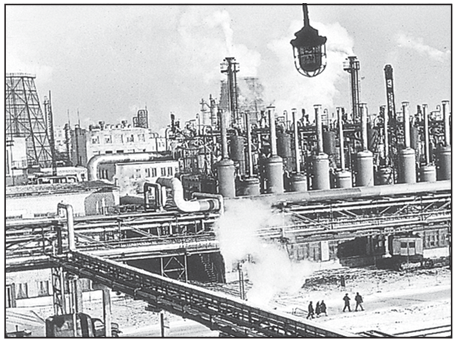
Secondary activities — Economic activities that add value to natural resources by transforming raw materials; they include manufacturing, processing and construction.
Value Addition
- Transformation: Processing makes raw materials more useful and valuable.
- Examples: Cotton becomes yarn for making clothes; iron ore is converted into steel for machines and tools.
- Sources: Materials may come from farms, forests, mines or the sea.
Manufacturing and Industry
Manufacturing — The process of transforming raw materials into finished goods of higher value for sale in local or distant markets.
Range and Common Features
- Range: Manufacturing spans handicrafts, steel-making, plastic-toy production and the assembly of computers or spacecraft.
- Common features: Power, specialised labour, standardised products and, particularly in modern manufacturing, factory production.
- Methods: Manufacturing may use advanced machinery or relatively simple methods; not all manufacturing is highly mechanised.
- Meaning: Although the word originally meant making by hand, manufacturing now includes goods made by machines.
Industry — A geographically located manufacturing unit operating under a management system and maintaining accounts and records.
Using the Terms Clearly
- Broad usage: Steel industry and chemical industry usually refer to manufacturing processes and factories.
- Not always manufacturing: Entertainment and tourism industries include activities that may not take place in factories.
- Clear expression: The term manufacturing industry makes clear that the activity involves manufacturing.
Characteristics of Modern Large-Scale Manufacturing
| Point | Craft production | Mass production |
|---|---|---|
| Output | A few pieces, often made to order | Large quantities of standardised products or parts |
| Work | Production is individually tailored | Each worker repeatedly performs a specialised task |
| Cost | Costs are high | Standardised large-scale output supports lower costs |
| Characteristic | Meaning and importance |
|---|---|
| Specialisation of skills and methods | Mass production divides work into repeated, specialised tasks to produce standardised goods. |
| Mechanisation and automation | Mechanisation uses gadgets or machines to perform tasks. Automation is its advanced stage, requiring no human thinking during the manufacturing process. |
| Technological innovation | Research and development support quality control, reduce waste and inefficiency, and help combat pollution. |
| Organisation and division of labour | Complex technology and specialised jobs increase output with less effort and lower costs; large-scale production requires substantial capital and large organisations with executive bureaucracy. |
| Uneven geographic distribution | Major manufacturing concentrations occupy less than 10% of the world's land area. |
Geographic Concentration
- Economic power: Major manufacturing centres have become centres of economic and political power.
- Land use: Manufacturing sites are more concentrated in smaller areas than agriculture because industrial processes are more intensive.
- Area comparison: About of the American Corn Belt may contain four large farms employing 10–20 workers and supporting 50–100 people; the same area could contain several integrated factories employing thousands.
Industrial Location Factors
Why Location Matters
- Aim: Industries seek to maximise profits by reducing costs.
- Location principle: Industries tend to locate where production costs are lowest.
- Combined influence: Industrial location is shaped by several factors operating together.
| Factor | Why it matters and examples |
|---|---|
| Market | A market requires both demand and purchasing power. Europe, North America, Japan, Australia and densely populated South and South-East Asia provide large markets; aircraft and arms industries can serve global markets. |
| Raw materials | Cheap, bulky or weight-losing materials favour locations near their sources; steel, sugar and cement are examples. Perishable inputs also favour nearby processing, as in agro-processing and dairy. |
| Labour supply | Some manufacturing requires skilled labour, though mechanisation, automation and flexible processes have reduced dependence on labour. |
| Energy | Power-intensive industries, such as aluminium production, tend to locate near energy sources. Coal was an earlier major source; hydroelectricity and petroleum are also important. |
| Transport and communication | Efficient, low-cost transport moves inputs to factories and goods to markets. Strong systems helped attract industry to Western Europe and eastern North America; communication supports information exchange and management. |
| Government policy | Regional policies may locate industries in selected areas to promote balanced economic development. |
| Agglomeration economies | Industries may gain savings from locating near a leading industry and other industries, benefiting from their links. |
Transport and Industrial Development
- Improved transport
- More efficient movement of raw materials and finished goods
- Integrated economic development
- Greater regional specialisation in manufacturing
Footloose Industries
Footloose industries — Industries that can locate in a wide variety of places because they are not tied to a specific raw-material source.
Key Features
- Inputs: Depend mainly on component parts that can be obtained from many places.
- Scale: Usually produce in small quantities and employ a small workforce.
- Environment: Generally non-polluting.
- Location priority: Good access to a road network is especially important.
- Value addition
- Increasing the usefulness and value of a resource by processing it into a product.
- Mechanisation
- Using machines or devices to perform production tasks.
- Automation
- An advanced stage of mechanisation in which production proceeds without human thinking during the process.
- Agglomeration economies
- Cost savings gained when industries locate near one another and benefit from their links.
- Footloose industry
- An industry not tied to a particular raw-material location and able to operate in many places.
State the main characteristics of modern large-scale manufacturing.
Name the main factors influencing industrial location.
What are footloose industries, and what is their main location requirement?
Quick recap
- Secondary activities add value to natural resources through manufacturing, processing and construction.
- Manufacturing transforms raw materials into higher-value finished goods using methods ranging from handicrafts to advanced factory production.
- Modern large-scale manufacturing features specialised labour, mechanisation, innovation, complex organisation and geographic concentration.
- Industries seek low-cost locations influenced by markets, raw materials, labour, energy, transport and communication, government policy, and agglomeration economies.
- Footloose industries can locate widely and generally prioritise good road access over proximity to a specific raw material.
Classification Of Manufacturing Industries
Classification of manufacturing industries — Manufacturing industries are grouped by their size, inputs or raw materials, outputs or products, and ownership.
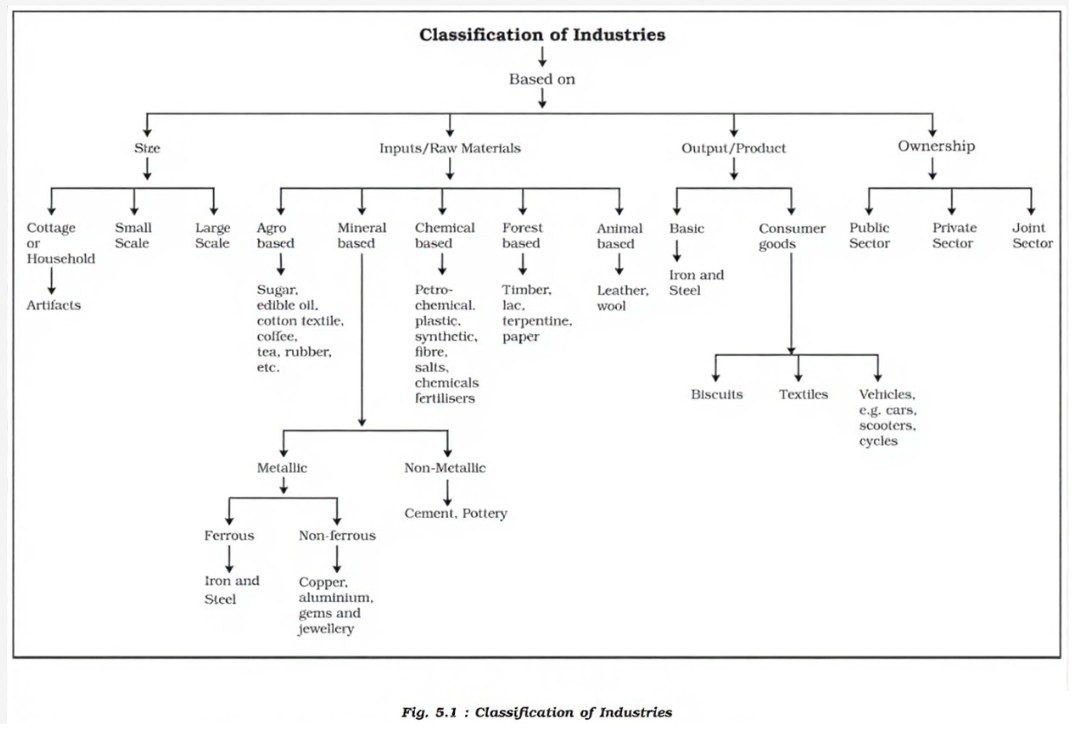
Industries Based on Size
How size is determined
- Measures: Capital invested, number of workers, and volume of production determine an industry's size.
- Size classes: Household or cottage, small-scale, and large-scale manufacturing.
Household or Cottage Manufacturing
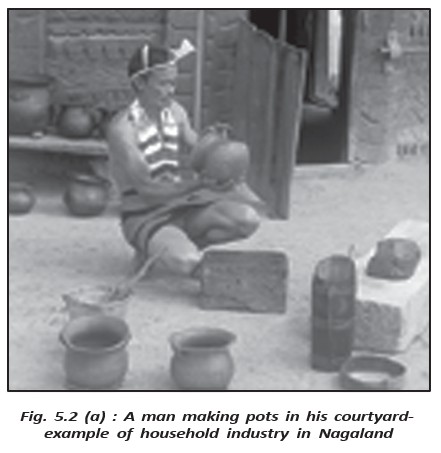
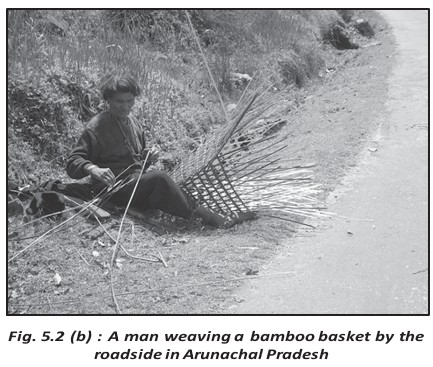
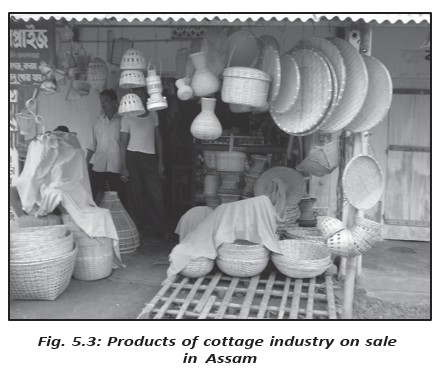
Household or cottage industry — The smallest manufacturing unit, usually operated by artisans at home with family help or part-time labour.
Features and products
- Resources and tools: Uses local raw materials and simple, often locally made tools; capital and transport have little influence.
- Workplace: Production takes place in the home or its courtyard.
- Use and sale: Goods may be used by the household, sold in nearby village markets, or exchanged through barter.
- Products: Food, fabrics, mats, containers, tools, furniture, shoes, leather goods, pottery, bricks, jewellery, and bamboo or wood crafts.
Small-Scale Manufacturing
Small-scale manufacturing — Manufacturing carried out in a workshop outside the producer’s home, using local materials, simple power-driven machines, and semi-skilled workers.
Role and examples
- Employment: Labour-intensive small-scale production creates jobs and raises local purchasing power.
- Countries: India, China, Indonesia, and Brazil have developed this sector to provide employment for their populations.
| Point | Household/Cottage | Small-scale |
|---|---|---|
| Workplace | Home or courtyard | Workshop outside the home |
| Tools and labour | Simple, often locally devised tools; family or part-time labour | Simple power-driven machines; semi-skilled labour |
| Typical role | Household use, local sale, or barter | Employment and stronger local purchasing power |
Large-Scale Manufacturing
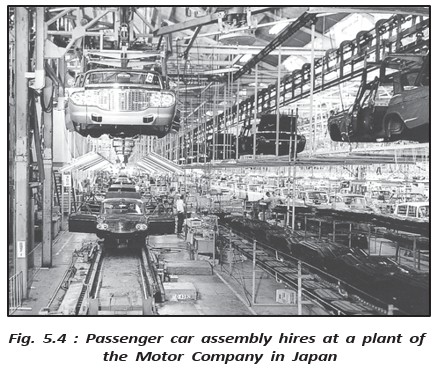
Large-scale manufacturing — Mass production for large markets, requiring substantial capital, energy, raw materials, specialised workers, and advanced technology.
Development and spread
- Production system: Uses assembly-line methods for mass production.
- Origins: Developed during the last 200 years in the United Kingdom, north-eastern U.S.A., and Europe.
- Diffusion: Later spread to almost all parts of the world.
| Type | Distribution | Key feature |
|---|---|---|
| Traditional large-scale industrial regions | Clustered in a few more developed countries | Established industrial concentration |
| High-technology large-scale industrial regions | Have diffused to less developed countries | Based on high technology |
- Cottage industry
- Smallest manufacturing unit, usually based in the home and using simple tools.
- Small-scale manufacturing
- Workshop-based production using local materials, simple powered machines, and semi-skilled labour.
- Large-scale manufacturing
- Capital- and technology-intensive mass production for large markets.
- Industrial region
- An area where industries are clustered or concentrated.
Quick recap
- Manufacturing industries may be classified by size, inputs/raw materials, outputs/products, and ownership.
- Industry size depends on capital invested, number of workers, and production volume.
- Cottage industries use local materials and simple tools, usually working from home.
- Small-scale manufacturing takes place in workshops and supports employment and local purchasing power.
- Large-scale manufacturing uses advanced technology, major resources, and assembly-line mass production.
- Traditional large-scale industrial regions cluster in more developed countries; high-technology regions have spread to less developed countries.
Industries Based On Inputs /Raw Materials And Out Put/Product
Industries based on raw materials — Industries classified according to the type of raw material they use.
| Industry type | Raw material / examples |
|---|---|
| Agro-based | Farm and field products; food processing, sugar, pickles, fruit juices, tea, coffee, cocoa, spices, oils and fats, cotton, jute, silk and rubber. |
| Mineral-based | Metallic and non-metallic minerals; iron and steel, aluminium, copper, jewellery, cement and pottery. |
| Chemical-based | Natural chemical minerals and materials from wood or coal; petrochemicals, synthetic fibres and plastics. |
| Forest-based | Forest products; timber for furniture, wood, bamboo and grass for paper, and lac. |
| Animal-based | Animal products; leather, wool and ivory from elephant tusks. |
Agro-based industries
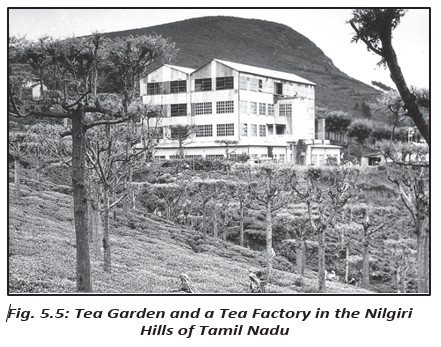
Agro-processing — Processing farm and field raw materials into finished products for rural and urban markets.
Food processing and agri-business
- Agro-processing products: Include food products, sugar, pickles, fruit juices, tea, coffee, cocoa, spices, oils and fats, textiles (cotton, jute and silk), and rubber.
- Food processing: Includes canning, cream production, fruit processing and confectionery.
- Traditional preservation: Drying, fermenting and pickling were known in ancient times but had limited use for pre-Industrial Revolution demands.
- Agri-business: Commercial farming on an industrial scale, often financed by businesses whose main interests lie outside agriculture; large corporate tea plantations are an example.
- Agro-factories: Agri-business farms are generally large, mechanised, highly structured and reliant on chemicals.
Mineral-based industries
| Mineral type | Meaning / examples |
|---|---|
| Ferrous metallic | Contains iron; used by iron and steel industries. |
| Non-ferrous metallic | Does not contain iron; examples include aluminium and copper, as used in industries such as jewellery-making. |
| Non-metallic | Used by industries such as cement and pottery. |
Chemical-based industries
- Natural minerals: Mineral oil (petroleum) is used in petrochemical industries; salts, sulphur and potash are also natural mineral inputs.
- Other sources: Some chemical industries use raw materials obtained from wood and coal.
- Examples: Synthetic fibre and plastic industries are chemical-based.
Forest-based industries
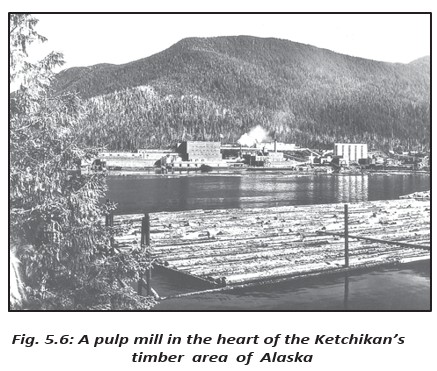
- Forest raw materials: Forests provide major and minor products for industrial use.
- Uses: Timber is used in furniture; wood, bamboo and grass in paper-making; and lac in lac industries.
Animal-based industries
- Animal products: Leather is used by leather industries, and wool by woollen-textile industries.
- Ivory: Obtained from elephant tusks.
Industries based on output/product
Basic industry — An industry whose products are used as raw materials to manufacture other goods.
Consumer goods (non-basic) industry — An industry that produces goods consumed directly by consumers.
| Point | Basic industry | Consumer goods industry |
|---|---|---|
| Use of output | Used as an input to make other goods. | Consumed directly by consumers. |
| Examples | Iron and steel used to make machines and tools. | Bread, biscuits, tea, soap, toiletries, writing paper and televisions. |
Example of links between industries
- Iron and steel industry → machines for the textile industry → clothes for consumers.
How are industries classified on the basis of raw materials?
Distinguish between basic and consumer goods industries, giving an example of each.
Quick recap
- Industries are classified by raw material as agro-, mineral-, chemical-, forest- or animal-based.
- Agro-processing turns farm and field materials into finished products for rural and urban markets.
- Agro-based products include textiles made from cotton, jute and silk; agri-business is large-scale, mechanised commercial farming.
- Mineral-based industries use ferrous, non-ferrous or non-metallic minerals.
- Forest and animal products supply materials such as timber, bamboo, leather and wool.
- Basic industries make inputs for other goods; consumer goods industries make products for direct use.
Industries Based On Ownership
Industries by Ownership
| Type | Ownership and management | Economic context |
|---|---|---|
| Public sector | Owned and managed by governments; in India, these include Public Sector Undertakings (PSUs). | Common in socialist countries; mixed economies have both public and private enterprises. |
| Private sector | Owned by individual investors and managed by private organisations. | Industries are generally privately owned in capitalist countries. |
| Joint sector | Managed by joint stock companies, or established and managed jointly by public and private sectors. | Combines public and private participation in an industry. |
High-Technology Industries
High-tech industry — The latest generation of manufacturing, using intensive research and development (R&D) to produce goods of an advanced scientific and engineering character.
Key Features and Examples
- Workforce: White-collar professional and highly skilled specialists form a large share of workers and greatly outnumber blue-collar production workers.
- Technology: Examples include assembly-line robotics, computer-aided design (CAD) and manufacturing, and electronic controls in smelting and refining.
- Products: Constant development of new chemical and pharmaceutical products is another high-tech activity.
- Landscape: High-tech areas often have modern, low-rise, dispersed office–plant–laboratory buildings rather than massive factories and storage areas.
- Business parks: Planned parks for high-tech start-ups are increasingly included in regional and local development schemes.
Technopoly — A regionally concentrated, self-sustaining and highly specialised cluster of high-tech industries.
Examples of Technopolies
- Silicon Valley: Near San Francisco.
- Silicon Forest: Near Seattle.
Manufacturing and the World Economy
- Importance: Manufacturing makes a significant contribution to the world economy.
- Major industries: Iron and steel, textiles, automobiles, petrochemicals and electronics are among the world's most important manufacturing industries.
Quick recap
- Public sector industries are government-owned and managed; private sector industries belong to individual investors and are privately managed.
- Joint sector industries are managed by joint stock companies or established and managed by public and private sectors together.
- High-tech manufacturing uses intensive R&D to make products with advanced scientific and engineering features.
- High-tech industries use skilled professional workers and technologies such as robotics, CAD and electronic process controls.
- A technopoly is a specialised, self-sustaining regional concentration of high-tech industries; examples include Silicon Valley and Silicon Forest.
- Iron and steel, textiles, automobiles, petrochemicals and electronics are major manufacturing industries that contribute significantly to the world economy.
Geography — ALL CHAPTERS
1
Human Geography Nature And Scope
2
The World Population Distribution, Density And Growth
3
Human Development
4
Primary Activities
5
Secondary Activities
6
Tertiary And Quaternary Activities
7
Transport And Communication
8
International Trade
1
UNIT -I POPULATION DISTRIBUTION ,DENSITY, GROWTH AND COMPOSITION
2
UNIT -II HUMAN SETTLEMENTS
3
UNIT- III LAND RESOURCES AND AGRICULTURE
4
UNIT -III WATER RESOURCES
5
UNIT - III MINERAL AND ENERGY RESOURCES
6
UNIT -III PLANNING AND SUSTAINABLE DEVELOPMENT IN INDIAN CONTEXT
7
UNIT -IV TRANSPORT AND COMMUNICATION
8
UNIT -IV INTERNATIONAL TRADE
9
UNIT - V GEOGRAPHICAL PERSPECTIVE ON SELECTED ISSUES AND PROBLEMS