Class 12 Humanities . Geography . Fundamentals Of Human Geography . Primary Activities
Chapter 4: Primary Activities
Ch 4
Geography
Class 12 Humanities
Hunting And Gathering
Economic activities — Human activities that generate income.
Primary activities — Activities directly dependent on the environment, using resources such as land, water, vegetation, building materials and minerals.
Primary Activities in Context
- Economic sectors: Income-generating activities are grouped as primary, secondary, tertiary and quaternary.
- Examples: Primary activities include hunting and gathering, pastoralism, fishing, forestry, agriculture, mining and quarrying.
- Red-collar workers: People engaged in primary activities are called red-collar workers because their work is often outdoors.
Hunting as a Subsistence Activity
Hunting and gathering — The oldest known economic activities, in which people obtain necessities by hunting wild animals and collecting useful plants.
- Early subsistence: People relied on their immediate environment for hunted animals and edible plants gathered from nearby forests.
- Where hunting was practised: Primitive societies depended on wild animals; people in very cold and extremely hot climates survived through hunting.
- Coastal communities: People in coastal areas still catch fish, although fishing has been modernised by technological progress.
- Tools and limits: Early hunters used stones, twigs and arrows, so the number of animals killed was limited.
- Poaching: Illegal hunting has caused some species to become endangered or extinct.
Why has hunting been banned in India?
Gathering: Conditions and Regions
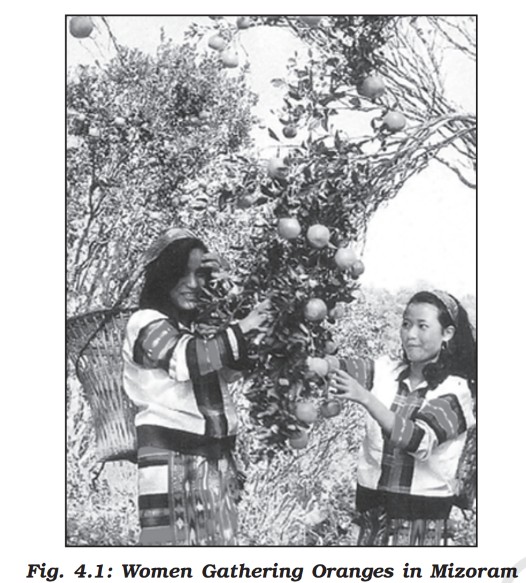
- Purpose: In harsh climates, people—often primitive societies—collect plants and animals for food, shelter and clothing.
- Technology and output: Gathering requires little capital and uses very basic technology; yield per person is low, with little or no surplus.
| Zone | Examples |
|---|---|
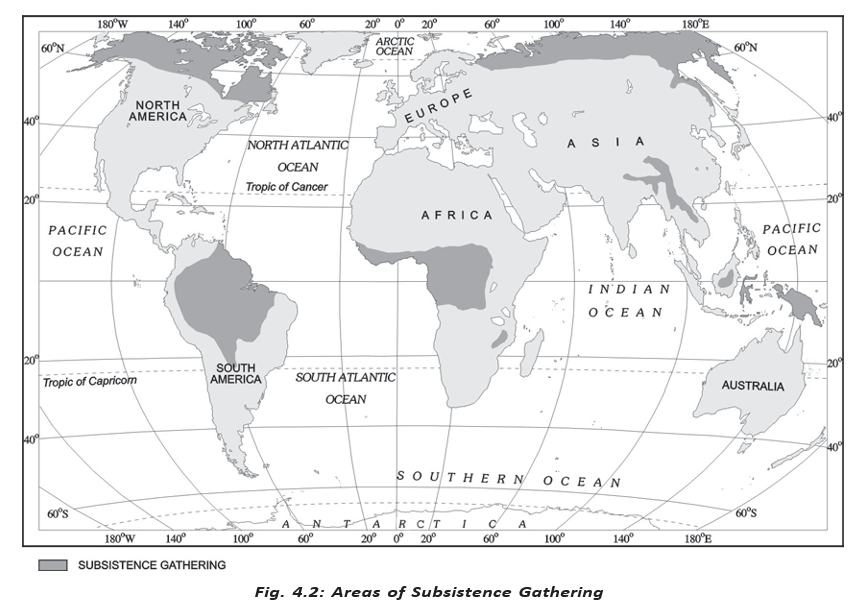
| High latitude | Northern Canada, northern Eurasia and southern Chile |
| Low latitude | Amazon Basin, tropical Africa, northern fringe of Australia and interior parts of Southeast Asia |
Commercial Gathering
Commercial gathering — Collecting valuable natural products, sometimes with simple processing, for sale in markets.
| Plant part | Products or uses |
|---|---|
| Bark | Quinine, tannin extract and cork |
| Leaves | Beverages, drugs, cosmetics, fibres, thatch and fabrics |
| Nuts | Food and oils |
| Tree trunks | Rubber, balata, gums and resins |
- Limited global importance: Products from gathering often cannot compete in world markets.
- Synthetic substitutes: Synthetic products, often better in quality and lower in price, have replaced many products traditionally supplied by gatherers in tropical forests.
- Subsistence
- Obtaining resources mainly to meet basic needs, with little or no surplus.
- Poaching
- Illegal hunting of wild animals.
- Commercial gathering
- Collecting and processing natural products for sale in markets.
Quick recap
- Primary activities directly use environmental resources; they include hunting and gathering.
- Early hunting depended on nearby wild animals and primitive tools, which limited the number killed.
- Gathering in harsh environments uses little capital and basic technology, with low yields and little or no surplus.
- Subsistence gathering occurs in high-latitude areas and selected low-latitude tropical regions.
- Commercial gatherers sell valuable natural products, but synthetic substitutes and global competition limit this activity.
Pastoralism
Pastoralism
Pastoralism — The raising of domesticated animals for human needs, at subsistence or commercial levels.
Animal Rearing
- Origins: Domestication developed as people sought alternatives to unsustainable hunting.
- Regional choices: Communities selected animals suited to local climates and geographical conditions.
- Practice: Geography and technological development influence whether animal rearing is subsistence-based or commercial.
Nomadic Herding
Nomadic herding — A primitive subsistence activity in which herders move with livestock to find pasture and water.
How Nomadic Herding Works
- Dependence: Animals provide food, clothing, shelter, tools and transport.
- Movement: Herders follow the quantity and quality of pasture and the availability of water.
- Territory: Each nomadic community traditionally occupies a well-defined area.
| Region | Important livestock |
|---|---|
| Tropical Africa | Cattle |
| Sahara and Asiatic deserts | Sheep, goats and camels |
| Tibet and Andes | Yaks and llamas |
| Arctic and sub-Arctic regions | Reindeer |
Major Regions of Nomadic Herding
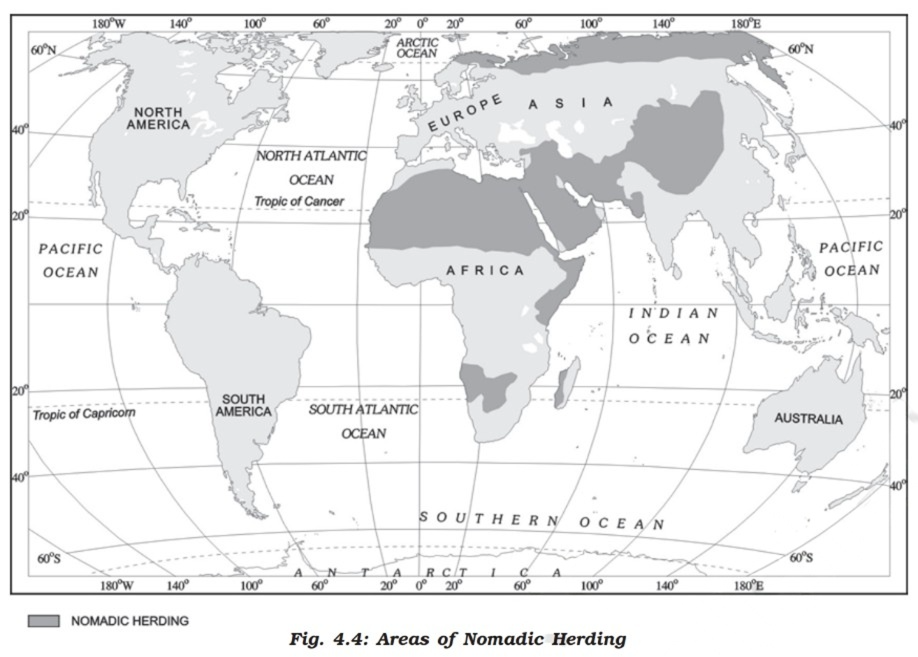
- Core region: From the Atlantic shores of North Africa eastward across the Arabian Peninsula to Mongolia and Central China.
- Second region: The tundra region of Eurasia.
- Southern Hemisphere: Smaller areas occur in South-west Africa and Madagascar.
Transhumance — Seasonal migration from plains to mountain pastures in summer and back to the plains in winter.
Seasonal Movement
- Movement patterns: Pasture-seeking may cover vast horizontal distances or move vertically between elevations.
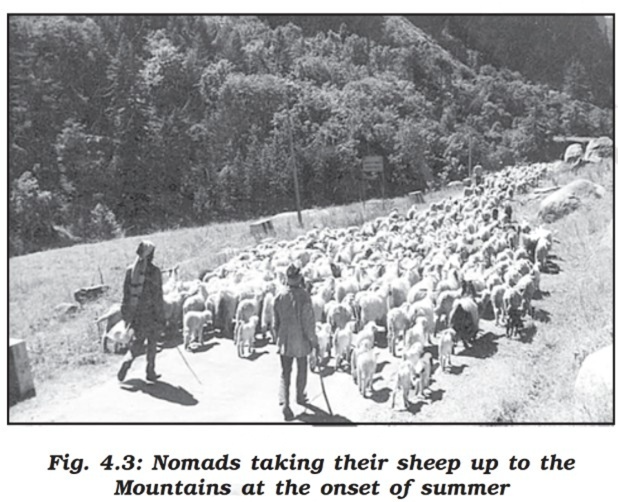
- Mountain regions: Herders travel from plains to mountain pastures in summer and return to the plains in winter.
- Himalayas: Gujjars, Bakarwals, Gaddis and Bhotiyas practise seasonal migration.
- Tundra: Herders move south to north in summer and north to south in winter.
Decline of Nomadic Herding
- Political boundaries are imposed and countries introduce new settlement plans.
- These changes restrict traditional movement and grazing areas.
- The number of pastoral nomads falls, and the areas they use shrink.
Commercial Livestock Rearing
Commercial livestock rearing — An organised, capital-intensive form of animal rearing practised on permanent ranches.
Ranching Features
- Cultural association: Commercial livestock ranching is essentially associated with Western cultures.
- Ranches: Large permanent ranches are divided into fenced parcels to regulate grazing; animals move to another parcel when the grass is grazed.
- Carrying capacity: The number of animals kept is matched to the pasture’s capacity.
- Specialisation: Usually, only one type of animal is raised; common animals include sheep, cattle, goats and horses.
- Products: Meat, wool, hides and skin are scientifically processed, packed and exported to world markets.
- Animal care: Ranching emphasises breeding, genetic improvement, disease control and health care.
| Point | Nomadic herding | Commercial livestock rearing |
|---|---|---|
| Purpose | Subsistence; animals meet many everyday needs | Commercial production for markets and export |
| Movement and land | Herders move in search of pasture and water | Permanent, fenced ranches with managed grazing |
| Organisation | Traditional community territories | Organised, capital-intensive and scientifically managed |
| Livestock | Varies according to region | Usually one animal type per ranch |
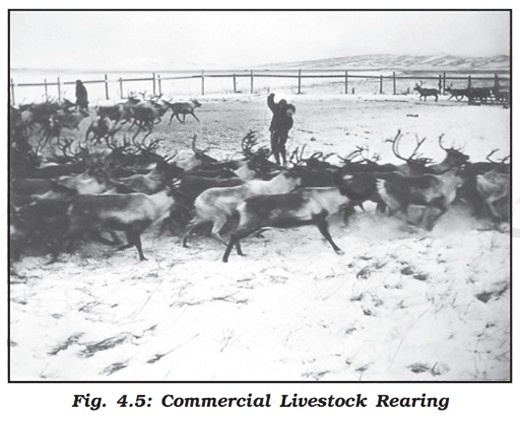
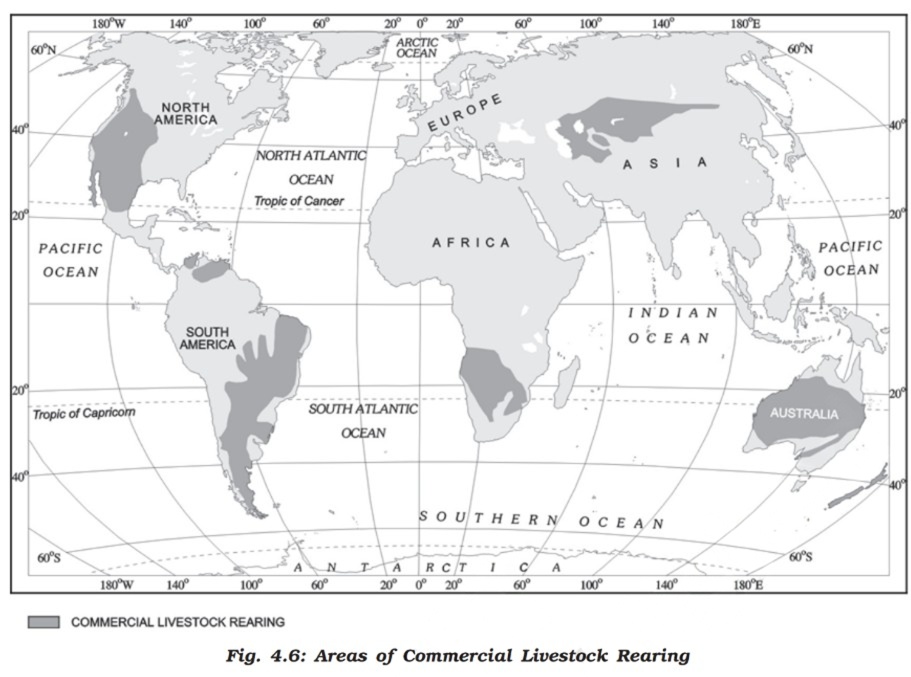
Major Countries for Commercial Livestock Rearing
- Important countries: New Zealand, Australia, Argentina, Uruguay and the United States of America.
- Pastoralism
- Animal rearing for human needs, at subsistence or commercial levels.
- Nomadic herding
- Subsistence livestock rearing in which herders move in search of pasture and water.
- Transhumance
- Seasonal movement between plains and mountain pastures.
- Carrying capacity
- The number of animals a pasture can support.
Quick recap
- Pastoralism includes subsistence herding and commercial animal rearing.
- Nomadic herders move with livestock according to pasture and water and traditionally occupy defined territories.
- Livestock varies by region, from cattle in tropical Africa to reindeer in Arctic and sub-Arctic areas.
- Transhumance is seasonal migration between plains and mountain pastures; tundra herders move north–south with the seasons.
- Imposed political boundaries and new settlement plans reduce nomadic numbers and grazing areas.
- Commercial ranching, associated with Western cultures, uses fenced parcels and matches herd size to carrying capacity.
- Commercial ranches specialise in livestock and scientific animal care, processing products for export.
Agriculture
Agricultural system — A system of farming shaped by combinations of physical and socio-economic conditions, including the crops grown and livestock raised.
Subsistence Agriculture
Subsistence agriculture — Farming in which all or nearly all products grown are consumed locally.
| Type | Main features |
|---|---|
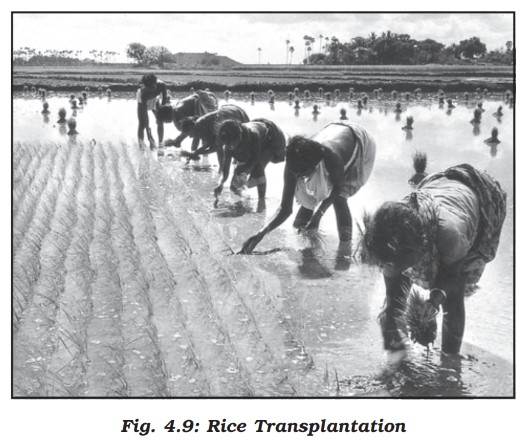
| Primitive subsistence agriculture | Small forest clearings, primitive tools and shifting cultivation. |
| Intensive subsistence agriculture | Intensive use of land and labour, common in densely populated monsoon Asia. |
Primitive Subsistence Agriculture
Shifting cultivation
- Where: Practised by many tropical tribes, especially in Africa, South and Central America, and Southeast Asia.
- Clearing: Vegetation is cut and burned; the ashes add nutrients and improve soil fertility.
- Farming: Small patches are cultivated with simple tools such as sticks and hoes.
- Shifting: After about 3–5 years, declining soil fertility leads farmers to clear and cultivate another patch; they may later return to the earlier site.
- Problem: Repeated loss of fertility in different parcels makes the shifting-cultivation cycle shorter.
Slash-and-burn cycle
- Forest vegetation is cleared and burned.
- Ashes add fertility to the soil.
- A small patch is cultivated for about 3–5 years.
- Soil fertility declines, so cultivation shifts to another patch.
| Name | Region |
|---|---|
| Jhuming | Northeastern states of India |
| Milpa | Central America and Mexico |
| Ladang | Indonesia and Malaysia |
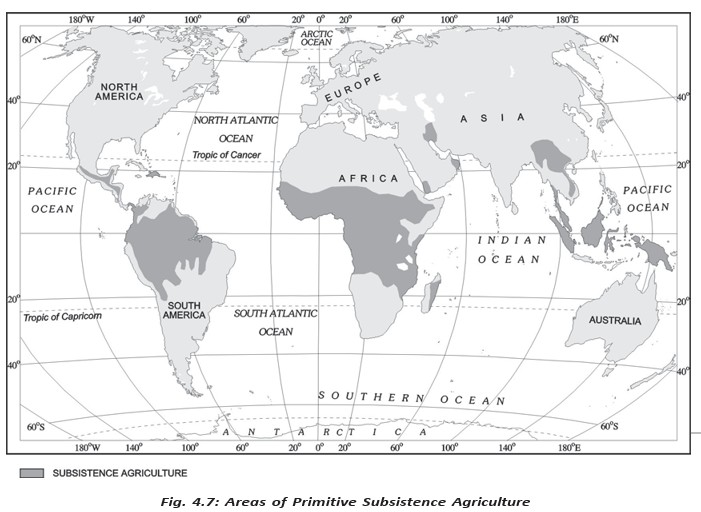
Intensive Subsistence Agriculture
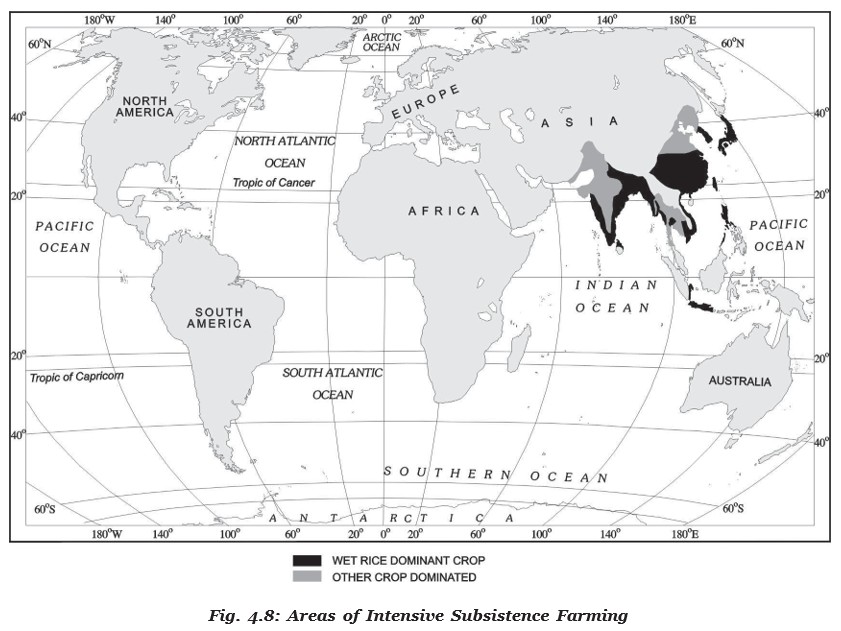
- Location: Common in densely populated regions of monsoon Asia.
- Land and labour: Small holdings and family labour lead to intensive use of land; machinery is limited and most work is manual.
- Soil fertility: Farmyard manure is used to maintain soil fertility.
| Point | Wet-paddy dominated | Other-crop dominated |
|---|---|---|
| Main crops | Rice is dominant. | Wheat, soybean, barley and sorghum; in India, wheat and millets are important. |
| Regions/examples | Densely populated monsoon Asia. | Wheat, soybean, barley and sorghum in northern China, Manchuria, North Korea and northern Japan; wheat in western Indo-Gangetic plains and millets in dry western and southern India. |
| Why this pattern? | Suitable for areas where wet paddy can be grown. | Relief, climate, soil and other geographical conditions may make paddy impractical. |
| Distinctive feature | High yield per unit area, but low productivity per worker. | Irrigation is often used; most other characteristics resemble wet-paddy farming. |
Plantation Agriculture
Plantation agriculture — A profit-oriented, large-scale farming system introduced by Europeans in tropical colonies, usually specialising in a single crop.
Features and crops
- Scale and investment: Large estates require substantial capital, managerial and technical support, and scientific cultivation methods.
- Workforce and markets: Cheap labour and transport links connect estates to factories and export markets.
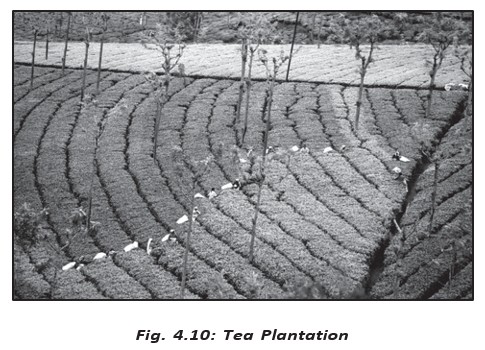
- Specialisation: Plantations focus on one crop, such as tea, coffee, cocoa, rubber, cotton, oil palm, sugarcane, bananas or pineapples.
| Colonial power / group | Plantation crop and region |
|---|---|
| French | Cocoa and coffee in West Africa |
| British | Tea in India and Sri Lanka; rubber in Malaysia; sugarcane and bananas in the West Indies |
| Spanish and Americans | Coconut and sugarcane in the Philippines |
| Dutch | Sugarcane in Indonesia |
| Europeans | Some coffee fazendas (large plantations) in Brazil |
Plantations today
- Ownership: Most plantations are now owned by the governments or nationals of the countries where they are located.
- Tea: Hill slopes are used for tea plantations because the geographical conditions are favourable.
- Slash-and-burn agriculture
- Shifting cultivation in which vegetation is burned and the ashes help fertilise the soil.
- Farmyard manure
- Manure used to maintain soil fertility in intensive subsistence farming.
- Fazenda
- A large plantation, especially a coffee plantation in Brazil.
Why is shifting cultivation also called slash-and-burn agriculture?
State two features of wet-paddy intensive subsistence agriculture.
List the main characteristics of plantation agriculture.
Quick recap
- Subsistence agriculture produces mainly for local consumption and includes primitive and intensive forms.
- Primitive shifting cultivation uses small clearings, burning and simple tools; soil decline prompts movement after about 3–5 years.
- Shifting cultivation has regional names including Jhuming, Milpa and Ladang.
- Intensive subsistence farming is common in densely populated monsoon Asia and may be dominated by wet paddy or other crops.
- Wet-paddy farming has high yield per area but low productivity per worker; farming other crops often involves irrigation.
- Plantation agriculture is large-scale, commercially oriented and crop-specialised; ownership today is mostly governmental or national.
Extensive Commercial Grain Cultivation
Extensive Commercial Grain Cultivation
- Location: Practised in the semi-arid interiors of the mid-latitudes.
- Crops: Wheat is the principal crop; corn, barley, oats and rye are also grown.
- Farm size: Farms are very large, so cultivation from ploughing to harvesting is mechanised.
- Productivity: Yield per acre is low, but yield per worker is high.
- Regions: Major areas include the Eurasian Steppes, North American Prairies, Pampas, Velds, Australian Downs and Canterbury Plains.
Quick recap
- Extensive commercial grain farms are large, mechanised and concentrated in semi-arid mid-latitude interiors.
- Wheat is the principal grain crop; yield per acre is low, but mechanisation raises output per person.
- Mixed farming combines crops and livestock, using crop rotation and intercropping to help maintain soil fertility.
- Dairy farming requires high capital investment and year-round intensive animal care, and is mainly near urban and industrial markets.
- The leading commercial dairy regions are North-western Europe, Canada, and South-eastern Australia, New Zealand and Tasmania.
- Mediterranean agriculture specialises in citrus fruits, grapes, olives and figs, with winter produce meeting demand in European and North American markets.
Market Gardening And Horticulture
Market gardening and horticulture — Specialised cultivation of high-value vegetables, fruits and flowers solely for urban markets.
Main features
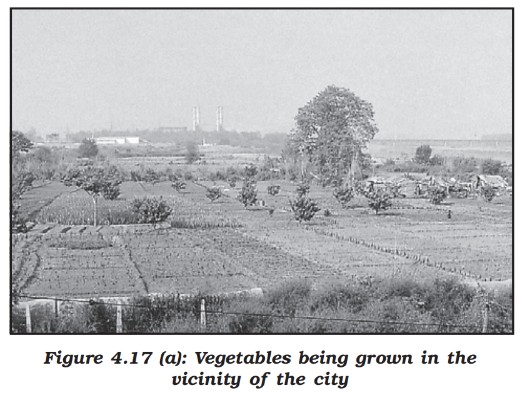
- Farm size and location: Farms are small and located where good transport links connect them to urban centres with high-income consumers.
- Inputs: Production is labour- and capital-intensive, using irrigation, HYV seeds, fertilisers, insecticides and greenhouses.
- Cold regions: Artificial heating may be used to grow crops.
- Major regions: Densely populated industrial districts of north-western Europe, north-eastern USA and the Mediterranean.
- Example: The Netherlands specialises in flowers and horticultural crops, especially tulips, which are flown to major European cities.
Truck Farming
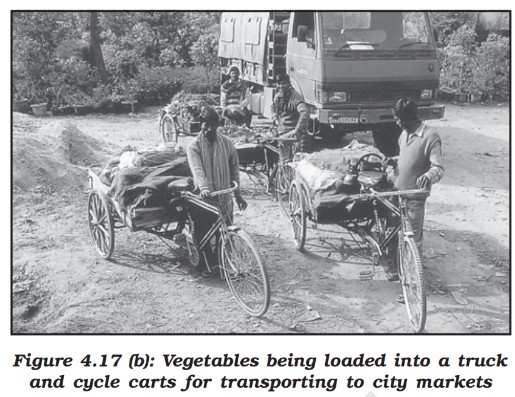
Truck farming — A form of market gardening in which farmers specialise in growing vegetables.
- Market distance: The distance from the market is limited by how far a truck can travel overnight; this gives the farming type its name.
Factory Farming
Factory farming — Intensive livestock rearing in stalls and pens, using manufactured feed and close supervision.
Features and location
- Livestock: Poultry and cattle are particularly reared in stalls and pens, with disease prevention carefully supervised.
- Investment: Requires substantial capital for buildings, machinery, veterinary care, heating and lighting.
- Breeding: Breed selection and scientific breeding are important features.
- Location: A modern development in the industrial regions of Western Europe and North America.
Farming Organisation
Farming organisation — The way farming is arranged, influenced by how farms are owned and by government policies supporting their operation.
Co-operative Farming
Co-operative farming — Farmers voluntarily pool resources through a co-operative society to make farming more efficient and profitable, while individual farms remain intact.
Role and spread
- Support provided: Co-operatives help obtain farming inputs, sell produce on favourable terms and process quality products at lower cost.
- Origins and spread: The movement began over a century ago and has succeeded in Denmark, the Netherlands, Belgium, Sweden and Italy.
- Denmark: The movement is especially strong; practically every farmer is a co-operative member.
Collective Farming
Collective farming — A system based on social ownership of the means of production and collective labour.
Kolkhoz model
- Origin and purpose: Introduced in the former Soviet Union to address inefficiencies in earlier agriculture and increase production towards self-sufficiency.
- Shared resources: Farmers pooled land, livestock and labour.
- Household plots: Farmers could retain very small plots to grow crops for their daily needs.
| Point | Co-operative farming | Collective farming |
|---|---|---|
| Ownership and organisation | Individual farms remain intact; farmers voluntarily pool resources. | Production means are socially owned and labour is collective. |
| Resources | Co-operation supports obtaining inputs, marketing and processing. | Land, livestock and labour are pooled. |
| Example or model | Successful in several western European countries, especially Denmark. | Kolkhoz model in the former Soviet Union. |
- Market gardening and horticulture
- High-value crop cultivation solely for urban markets.
- Truck farming
- Vegetable specialisation whose market distance is limited by overnight truck travel.
- Factory farming
- Capital-intensive livestock rearing in controlled stalls or pens.
- Kolkhoz
- The collective farming model introduced in the former Soviet Union.
What are the main features of market gardening and horticulture?
How does co-operative farming differ from collective farming?
Quick recap
- Market gardening and horticulture produce high-value crops solely for urban consumers.
- Small farms are located with good transport links to urban centres; the system uses intensive labour, capital and modern inputs.
- Truck farming specialises in vegetables; overnight truck travel limits its market distance.
- Factory farming uses intensive livestock rearing, manufactured feed, disease supervision and scientific breeding.
- Co-operative farming pools resources while keeping individual farms intact.
- Collective farming pools land, livestock and labour under social ownership; the Kolkhoz model allowed small plots for household needs.
Mining
Mining and Its Development
Factors Affecting Mining Profitability
- Physical factors: Profitability depends on the deposit’s size, grade and mode of occurrence.
- Economic factors: Demand for the mineral, available technology, infrastructure capital, labour costs and transport costs affect profitability.
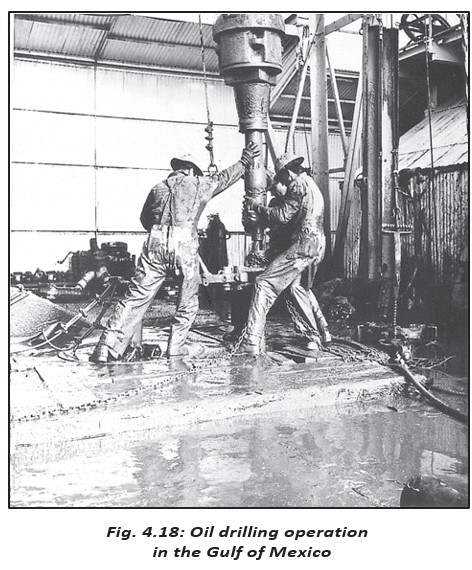
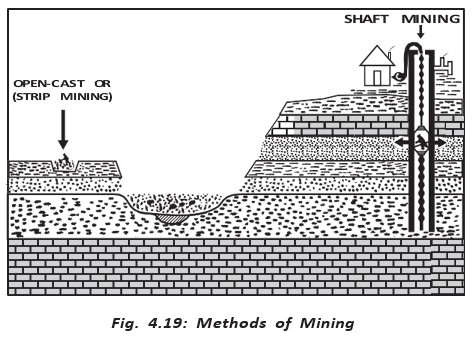
Methods of Mining
| Point | Surface mining (open-cast) | Underground mining (shaft method) |
|---|---|---|
| Deposit location | Minerals occur close to the surface. | Ore lies deep below the surface. |
| Method | Minerals are extracted from near the surface. | Vertical shafts lead to underground galleries that extend towards the minerals; ore is carried to the surface through these passages. |
| Cost and output | Easiest and cheapest method; safety and equipment overheads are relatively low, and output is large and rapid. | Requires specially designed equipment and safety systems. |
| Safety | Relatively low overheads for safety precautions. | Risky: poisonous gases, fires, floods and cave-ins can cause fatal accidents. |
Underground Mining: Equipment and Hazards
- Equipment: Lifts, drills, haulage vehicles and ventilation systems support the movement and safety of people and materials.
- Hazards: Poisonous gases, fires, floods and cave-ins may lead to fatal accidents.
Changing Importance of Countries in Mining
- Developed economies: They are retreating from mining, processing and refining because labour costs are high.
- Developing economies: Countries with large labour forces are becoming more important as they seek higher living standards.
- Mineral earnings: Minerals account for over half of earnings in several African countries and a few countries in South America and Asia.
Quick recap
- Mineral use is reflected in the Copper, Bronze and Iron Ages; modern mining expanded with the Industrial Revolution.
- Mining profitability depends on deposit characteristics and economic conditions.
- Surface mining is suitable for near-surface minerals and is relatively cheap, with large, rapid output.
- Underground mining reaches deep ore through shafts and galleries, but involves specialized equipment and serious hazards.
- High labour costs are causing developed economies to retreat from mining, processing and refining.
- Developing countries are becoming more important, and several countries in Africa and a few in South America and Asia earn over 50% of their earnings from minerals.
Geography — ALL CHAPTERS
1
Human Geography Nature And Scope
2
The World Population Distribution, Density And Growth
3
Human Development
4
Primary Activities
5
Secondary Activities
6
Tertiary And Quaternary Activities
7
Transport And Communication
8
International Trade
1
UNIT -I POPULATION DISTRIBUTION ,DENSITY, GROWTH AND COMPOSITION
2
UNIT -II HUMAN SETTLEMENTS
3
UNIT- III LAND RESOURCES AND AGRICULTURE
4
UNIT -III WATER RESOURCES
5
UNIT - III MINERAL AND ENERGY RESOURCES
6
UNIT -III PLANNING AND SUSTAINABLE DEVELOPMENT IN INDIAN CONTEXT
7
UNIT -IV TRANSPORT AND COMMUNICATION
8
UNIT -IV INTERNATIONAL TRADE
9
UNIT - V GEOGRAPHICAL PERSPECTIVE ON SELECTED ISSUES AND PROBLEMS