Section B
[1 Mark]
-
(A) I, II and III are correct
-
(B) I, II and IV are correct
-
(C) I, III and IV are correct
-
(D) I, III and IV are correct
Explanation: The correct options are I, II and IV are correct. Magadha was indeed the most powerful mahajanapada as mentioned in the context, and its capital was Rajgaha. Moreover, the region was rich in natural resources, particularly due to its productive agriculture and iron mines. The statement that Magadha was in a semi-arid area is incorrect, hence option III is not correct.
[1 Mark]
-
(A) IV, III, I, II
-
(B) III, II, I, IV
-
(C) II, I, IV, III
-
(D) I, III, IV, II
Explanation: Mahapadma Nanda (II) – c. 345–321 BCE, founder of Nanda dynasty
Asoka (I) – c. 268–232 BCE, Mauryan emperor, spread of Buddhism
Samudragupta (IV) – c. 335–375 CE, Gupta emperor, military conquests
Harshavardhana (III) – c. 606–647 CE, ruler of Kannauj
[1 Mark]
-
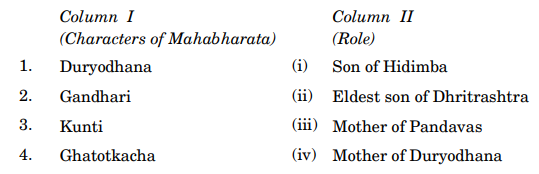
(A) 1-(ii), 2-(iv), 3-(iii), 4-(i)
-
(B) 1-(ii), 2-(i), 3-(iv), 4-(iii)
-
(C) 1-(iv), 2-(iii), 3-(ii), 4-(i)
-
(D) 1-(ii), 2-(i), 3-(iii), 4-(iv)
Explanation: The correct option is determined by matching the items in Column I with their respective pairs in Column II. Each pairing must logically correspond based on provided information or definitions.
[1 Mark]
-
(A) Gothic school of art
-
(B) Amravati school of art
-
(C) Gandhara school of art
-
(D) Mathura school of art
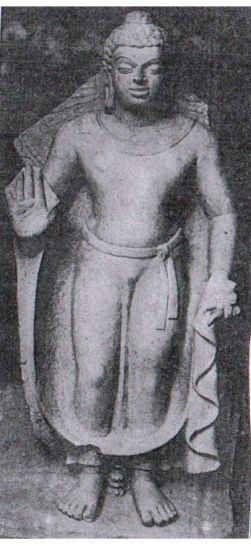
Explanation: The correct answer is 'Mathura school of art'. The relevant context mentions an image of the Buddha from Mathura, c. first century CE, highlighting that early Indian sculptures of Buddha were notably influenced by different artistic styles, including the Mathura school that is recognized for its distinctive representations of Buddhist figures during that time.
[1 Mark]
-
(A) Kalpsutta
-
(B) Sutta Pitaka
-
(C) Uttaradhyayana Sutta
-
(D) Rigveda
Explanation: The correct answer is 'Sutta Pitaka'. This is because the Sutta Pitaka is specifically mentioned in the context as the primary text where the teachings of the Buddha were reconstructed from stories. The other options do not pertain to the compilation of Buddha's teachings.
[1 Mark]
-
(A) Lothal
-
(B) Kalibangan
-
(C) Manda
-
(D) Rakhigarhi
Explanation: The correct answer is Kalibangan. The provided context specifies that Kalibangan is associated with early Harappan levels and is explicitly stated to be located in Rajasthan.
[1 Mark]
-
(A) I and IV are correct
-
(B) I, II and III are correct
-
(C) I and II are correct
-
(D) I, II and IV are correct
Explanation: The correct option is 'I, II and IV are correct'. Cunningham was indeed the first Director-General of the Archaeological Survey of India (ASI) and began archaeological excavations in the mid-19th century. Additionally, he used accounts left by Chinese Buddhist pilgrims to locate early settlements. While he brought a systematic approach to archaeology, the phrase 'military precision' may not be explicitly stated in the context, thus option III cannot be conclusively confirmed as correct.
[1 Mark]
-
(A) Assertion (A) is correct, but Reason (R) is incorrect.
-
(B) Both Assertion (A) and Reason (R) are correct and Reason (R) is the correct explanation of the Assertion (A).
-
(C) Assertion (A) is incorrect, but Reason (R) is correct.
-
(D) Both Assertion (A) and Reason (R) are correct, but Reason (R) is not the correct explanation of the Assertion (A).
Explanation: Both Assertion (A) and Reason (R) are correct and Reason (R) is the correct explanation of the Assertion (A) because the context states that Ibn Battuta found Indian agriculture productive due to the fertility of the soil, which indeed allowed farmers to cultivate two crops a year.
[1 Mark]
-
(A) Alexander Greenlaw
-
(B) John Marshall
-
(C) Colin Mackenzie
-
(D) R.E.M. Wheeler
Explanation: The correct answer is Colin Mackenzie, as he is identified in the context as a famous engineer, surveyor, and cartographer who was appointed the first Surveyor General of India in 1815.
[1 Mark]
Explanation: The correct answer is 'To mitigate the risk of loan default.' Lenders require collateral as a security measure to protect against the possibility that the borrower may default on the loan, ensuring they have a way to recover their money.
[1 Mark]
-
(A) Ahoms
-
(B) Lohanis
-
(C) Koch
-
(D) Mundas
Explanation: The correct answer is Lohanis. According to the provided context, the Lohanis were specifically mentioned as being engaged in overland trade between India and Afghanistan, as well as trade within the towns and villages of Punjab during the Mughal period.
[1 Mark]
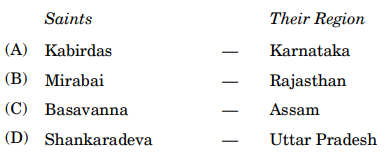
Explanation: The correct answer is 'To mitigate the risk of loan default.' Lenders require collateral to secure the loan amount, which reduces their risk in case the borrower fails to repay, ensuring they can recover some losses.
[1 Mark]
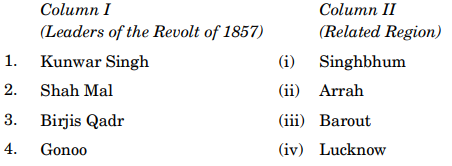
-
(A) 1-(i), 2-(ii), 3-(iii), 4-(iv)
-
(B) 1-(iii), 2-(ii), 3-(iv), 4-(i)
-
(C) 1-(iv), 2-(ii), 3-(iii), 4-(i)
-
(D) 1-(ii), 2-(iii), 3-(iv), 4-(i)
Explanation: The correct option is 1-(ii), 2-(iii), 3-(iv), 4-(i) because it correctly pairs each item in Column I with its corresponding item in Column II, based on the provided context.
[1 Mark]
-
(A) D.N. Jha
-
(B) V.S. Sukthankar
-
(C) Irawati Karve
-
(D) Ram Karan Sharma
Explanation: The correct answer is V.S. Sukthankar, who led the ambitious project of preparing a critical edition of the Mahabharata beginning in 1919. His team of scholars worked on collecting manuscripts and comparing verses, making significant contributions to understanding this complex text.
[1 Mark]
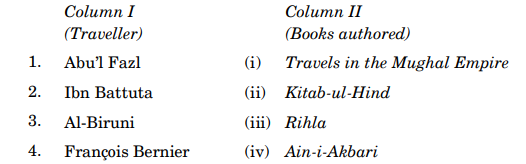
-
(A) 1-(i), 2-(iii), 3-(ii), 4-(iv)
-
(B) 1-(iii), 2-(ii), 3-(i), 4-(iv)
-
(C) 1-(ii), 2-(i), 3-(iv), 4-(iii)
-
(D) 1-(iv), 2-(iii), 3-(ii), 4-(i)
Explanation: The correct option is 1-(iv), 2-(iii), 3-(ii), 4-(i) This grouping correctly aligns the items in Column I with their corresponding items in Column II based on the relationships and context provided.
[1 Mark]
-
(A) Polaj
-
(B) Banjar
-
(C) Chachar
-
(D) Parauti
Explanation: The correct answer is 'Polaj'. According to the provided context, Polaj refers to land that is cultivated every year for each crop in succession and is never allowed to lie fallow, which aligns perfectly with the description in the question.
[1 Mark]
-
(A) Poona
-
(B) Bhagalpur
-
(C) Barrackpore
-
(D) Awadh
Explanation: The correct option is Poona. The context specifies that the movement began at Supa, a large village in the Poona district, where ryots gathered and attacked shopkeepers and sahukars, demanding their account books and debt bonds.
[1 Mark]
-
(A) Bipin Chandra Pal
-
(B) Bal Gangadhar Tilak
-
(C) Gopal Krishan Gokhale
-
(D) Lala Lajpat Rai
Explanation: Gopal Krishan Gokhale was a prominent leader of the Moderate group within the Indian National Congress. He is recognized for his approach of reform and dialogue, contrasting with the more militant methods of leaders like Bal Gangadhar Tilak and Bipin Chandra Pal, known collectively as 'Lal, Bal, and Pal'. Gokhale's emphasis on constitutional methods and gradual reforms distinguished him as a Moderate.
[1 Mark]
-
(A) ‘Independent’ governments were proclaimed in Satara and Medinipur.
-
(B) Quit India Movement was a mass movement.
-
(C) Thousands of Indians took part in this movement.
-
(D) A series of ‘Praja Mandals’ were established in princely states.
Explanation: This is not correct. The proclamation of parallel or “independent” governments (like Prati Sarkar) happened in some regions, but Satara and Medinipur were not the main examples associated with this.
[1 Mark]
-
(A) Sarojini Naidu
-
(B) Subhadra Kumari Chauhan
-
(C) Suryakant Tripathi Nirala
-
(D) Harivansh Rai Bachchan
Explanation: The correct answer is Subhadra Kumari Chauhan. These lines depict the valiant nature of Rani Lakshmi Bai, highlighting her bravery in resisting injustice and alien rule, as celebrated in her heroic poetry.
[1 Mark]
-
(A) Vallabh Bhai Patel
-
(B) Vallabh Bhai Patel
-
(C) Rajendra Prasad
-
(D) Jawaharlal Nehru
Explanation: Jawaharlal Nehru introduced the ‘Objectives Resolution’ in the Constituent Assembly on 13th December, 1946, as stated in the context. This resolution outlined the fundamental ideals of the Constitution of Independent India.
[1 Mark]
-
(A) I, III and IV
-
(B) II, III and IV
-
(C) I, II and III
-
(D) I, II and IV
Explanation: The correct options are I, III and IV. The Constituent Assembly discussions emphasized the need for a strong central government to ensure peace, mobilize economic resources, and defend the country against foreign aggression, as highlighted in the context provided.
Section C
[3 Marks]
Answer: The Harappans employed several methods of irrigation to support agriculture in their semi-arid environment. Notably, archaeological evidence from Shortughai in Afghanistan suggests they constructed canals for irrigation. These canals effectively redirected river water to fields, facilitating crop growth. Additionally, in regions like Punjab and Sind, it is believed that they utilized wells to draw water for irrigation. Furthermore, at Dholavira in Gujarat, sophisticated water reservoirs have been discovered, indicating another irrigation technique. These reservoirs likely stored rainwater and were critical for irrigation during dry periods.
Key Points: Canals found in Shortughai; Wells used for irrigation in Punjab and Sind; Water reservoirs at Dholavira; Importance of irrigation in semi-arid areas; Support of agricultural activities through these methods.
[3 Marks]
Answer: Burials in the Harappan civilization provide essential insights into the social and economic structures of the society. Differences in burial practices, such as the type of pit used or the presence of bricks, indicate a possible stratification of social classes. The presence of pottery and ornaments in graves suggests that certain individuals were accorded more status, potentially indicating wealth or higher social rank. Moreover, the inclusion of jewelry in both male and female burials points to shared cultural practices possibly associated with economic roles. Archaeologists also discovered that some graves were richer than others, allowing researchers to infer differences in wealth and status. Collectively, these burial practices reveal significant information about social hierarchy and economic disparities among the Harappan people.
Key Points: Differences in burial pits indicate social stratification; Presence of pottery and ornaments signifies status; Jewelry in burials reflects cultural practices; Variation in grave richness suggests wealth differences.
[3 Marks]
Answer: Historians have utilized several sources to reconstruct the history of the Mauryan Empire. Archaeological finds, especially sculptures, provide invaluable insights into their culture and artistry. Additionally, the writings of Megasthenes, a Greek ambassador to Chandragupta Maurya, offer contemporary accounts of the empire's governance and society, despite surviving in fragments. The emergence of the Mauryan Empire significantly shaped early Indian history, marked by both advanced administration and cultural achievements reflected in inscriptions and archaeological discoveries. Notably, Asoka's inscriptions convey a distinct message emphasizing humility and moral governance, setting him apart from other rulers. Overall, these combined sources paint a comprehensive picture of the Mauryan Empire's grandeur and legacy.
Key Points: Archaeological findings, Megasthenes' accounts, Asoka's inscriptions, the impact of Mauryan Empire on Indian history, cultural achievements
[3 Marks]
Answer: Ibn Battuta offered a vivid portrayal of Indian cities in the 14th century, highlighting their vibrancy and prosperity. He noted the dense populations and flourishing marketplaces filled with diverse goods, indicative of a bustling economy. In his account, he described Delhi as a vast urban center, the largest city in India, showcasing its significance. He also mentioned Daulatabad, which rivaled Delhi in size and prominence. Despite occasional disruptions from wars, the cities thrived as centers of culture and trade, demonstrating the dynamic spirit of the times.
Key Points: Cities were prosperous and densely populated; vibrant markets with diverse goods; Delhi as the largest city; Daulatabad rivaled Delhi in size; cities faced occasional disruption from wars; part of a global network; rich description in Rihla.
[3 Marks]
Answer: The Mughals organized their land revenue system through a structured administrative framework essential for managing agricultural output. The system involved two main stages: assessment and collection. Initially, officials, notably the diwan, assessed the agricultural lands to determine the revenue burden, known as jama. This was essential since the Mughal state aimed for efficient revenue collection while ensuring control over agricultural production. Revenue was often collected in cash, reflecting a developed trade system, and was viewed as the sovereign's rightful claim for protection offered to subjects. Local power dynamics facilitated village governance, with influential individuals managing affairs and distributing justice.
Key Points: Mughal land revenue system; role of diwan; revenue assessment (jama) and collection (hasil); emphasis on agricultural control; cash-based transactions; local governance by powerful individuals
[3 Marks]
Answer: Mahatma Gandhi, a prominent figure in India's struggle for independence, played a crucial role as a social reformer. He focused on significant social issues, including the abolition of untouchability and the promotion of khadi. His work aimed to uplift the marginalized and poor, particularly peasants, by advocating for their rights and dignity against oppressive systems. Gandhi’s simple lifestyle and commitment to non-violence resonated with many, fostering a sense of unity and empowerment among Indians. His efforts to engage with the masses transformed the Indian nationalist movement by encouraging widespread participation from various social classes, particularly the underprivileged. Thus, his impact as a social reformer was profound, as he worked towards social equity while leading the country towards independence.
Key Points: Abolition of untouchability-Promotion of khadi-Engagement with peasants and the poor-Transformation of nationalist movement-Widespread participation for social equity
[3 Marks]
Answer: The national movement in India between 1905 and 1907 was marked by significant events, especially the Swadeshi movement, which aimed to promote indigenous industries and boycotting British goods. Sparked by the partition of Bengal in 1905, this movement united Indians across various demographics, including the burgeoning middle class. It also saw mass activism, where students resisted British-imposed education, and lawyers boycotted courts. Key figures like Bal Gangadhar Tilak and Bipin Chandra Pal led these efforts, emphasizing the need for self-reliance and national pride. This period laid the groundwork for larger movements in subsequent years, with a notable increase in political awareness among the populace.
Key Points: Swadeshi movement; response to Bengal partition; promotion of indigenous industries; student activism and lawyer boycotts; unification of various social classes; involvement of leaders like Tilak and Pal; rise of political consciousness among Indians
[3 Marks]
Answer: Govind Ballabh Pant described a loyal citizen as someone who prioritizes the welfare of the state above individual or community interests. He emphasized the importance of self-discipline in a democratic society, where citizens should act for the collective good rather than personal gain. There should be no divided loyalty; all citizens must identify as equal members of one state. Pant also highlighted the need for empathy, particularly towards minorities, ensuring their spiritual and material needs are met. Overall, loyalty to the state and recognition of fellow citizens' rights and aspirations are crucial for a harmonious democracy.
Key Points: Self-discipline - Prioritize state over individual/community - No divided loyalty - Equality of all citizens - Empathy towards minorities - Spiritual and material satisfaction
Section D
[8 Marks]
Answer: The Great Stupa at Sanchi is one of the most significant Buddhist monuments in India, showcasing unique architectural and artistic features. It is a large hemispherical dome, symbolizing the universe, with a central pillar called the 'harmika,' representing the connection between the earthly and divine. The four ornate gateways, known as toranas, depict various stories from the life of Buddha and Jataka tales, reflecting intricate carvings and Buddhist iconography. Additionally, the overall layout of the stupa, including the circumambulatory path, invites devotees to engage in meditation and prayer.
The preservation of Sanchi is largely credited to the rulers of Bhopal, particularly Shahjehan Begum, who recognized the site's historical significance. In the 19th century, her administration took crucial steps to protect and restore the structure from potential decay. They actively resisted attempts by foreign entities to export parts of the stupa, such as the eastern gateway, and instead aimed to maintain it as a national heritage site. The Archaeological Survey of India further supported these efforts, ensuring that Sanchi remains a cherished symbol of Buddhist culture and architecture. The combined dedication of local rulers and archaeological initiatives has preserved Sanchi, making it an essential point of interest for both spiritual pilgrims and historians alike.
Key Points: Main features: hemispherical dome; central pillar (harmika); ornate gateways (toranas) with carvings; circumambulatory path. Role of Bhopal rulers: Shahjehan Begum's preservation efforts; resistance against exportation of structures; collaboration with Archaeological Survey of India for restoration.
[8 Marks]
Answer: The Buddha, born Siddhartha Gautama, propagated several key teachings, most notably the Four Noble Truths and the Eightfold Path. The Four Noble Truths outline the reality of suffering, its origin, cessation, and the path to liberation. The Eightfold Path provides practical steps for ethical and mindful living, emphasizing right understanding, intention, speech, action, livelihood, effort, mindfulness, and concentration. Buddhism grew rapidly as it provided clarity and solace to many individuals disillusioned by the rigid and often corrupt practices of existing religions. Furthermore, in a time of significant social upheaval and change, the Buddha's emphasis on personal experience, compassion, and community resonated with a diverse populace. His teachings, recorded and disseminated through texts like the Sutta Pitaka, attracted followers across varied regions, facilitating Buddhism's expansion throughout Asia, which further solidified its place as a major world religion.
Key Points: Four Noble Truths-Eightfold Path-reaction to social upheaval and religious dissatisfaction-Buddha's emphasis on personal experience and compassion-dissemination through texts like the Sutta Pitaka
[8 Marks]
Answer: The Alvars and Nayanars were pivotal figures in the Bhakti movement in Tamil Nadu, advocating devotion to Vishnu and Shiva, respectively. They composed devotional hymns in Tamil, elevating local languages as mediums for spiritual expression. Their ideas challenged the prevailing caste system and the hegemony of Brahmanas, attracting followers from diverse social backgrounds, including those regarded as untouchable. Their influence prompted rulers to seek alliances with them, recognizing their power to sway public sentiment, legitimizing their own rule by associating with these revered figures. By identifying and venerating specific shrines as sacred, they helped establish a connective tissue between the divine and the political sphere, transforming temples into centers of both spiritual and social authority. Ultimately, the relationship between the Alvars, Nayanars, and the state was symbiotic; the rulers gained popular support, while the saints received patronage for their movements, reshaping Tamil culture and spirituality.
Key Points: Alvars and Nayanars as Bhakti movement leaders; hymns in Tamil promoted local language; challenge to caste system; diverse social backgrounds of followers; rulers sought alliances for popular support; identification of identified shrines; temples as centers of spiritual authority; symbiotic relationship with the state.
[8 Marks]
Answer: The growth of Sufism can largely be attributed to the disillusionment with the materialism of the Caliphate, as many early Muslims sought a more spiritual and ascetic approach to faith in response to the thriving wealth and luxury of their leaders. Sufis aimed to delve deeper into the inner meanings of Islamic teachings rather than relying solely on the dogmatic interpretations by theologians. This rise was accompanied by the development of structured communities around khanqahs, where Sufis taught their doctrines and practices. Sufi relationships with state authorities were complex; while the Chishti tradition emphasized austerity and a distance from worldly politics, Sufis were not entirely estranged from the state. They accepted donations from political elites and held influence over the populace, often having their tombs built near royal sites as a symbol of respect. However, there were instances of conflict arising from the Sufis’ spiritual authority challenging the political power of the Sultans, indicating a nuanced interplay between spirituality and governance.
Key Points: Reaction to materialism; Spirituality versus dogmatism; Formation of Sufi communities; Acceptance of donations; Mutual respect; Instances of conflict
[8 Marks]
Answer: The implementation of the Permanent Settlement in Bengal was influenced by several interrelated factors. Firstly, the economic crisis of the 1770s created a dire situation, marked by recurrent famines and declining agricultural productivity. The British officials aimed to stabilize the revenue system by fixing revenue demands, thereby attracting individuals who could ensure payment. The settlement was ultimately made with zamindars, who were classified as landholders responsible for paying fixed taxes in perpetuity. This approach was also a result of the British strategy to address administrative inefficiencies and conflicts that arose from fluctuating revenue streams. The consequences of this settlement were far-reaching: it led to a transfer of land ownership, with over 75% of zamindaris changing hands soon after. Additionally, while it provided a temporary revenue boost for the British, it often resulted in the exploitation of the peasants. The zamindars, granted significant power, frequently placed heavy tax burdens on farmers to maintain their own wealth, which contributed to the agrarian distress in Bengal. Ultimately, the Permanent Settlement reshaped the socio-economic fabric of Bengal, but also laid the foundation for future agricultural turmoil.
Key Points: Economic crisis of the 1770s; Aim to stabilize revenue system; Fixing revenue demands; Engagement with zamindars; Consequences of land ownership transfer; Exploitation of peasants; Agrarian distress in Bengal
[8 Marks]
Answer: The rise of the jotedars in North Bengal during the late 18th century marked a significant shift in local power dynamics. As rich peasants, jotedars acquired vast areas of land, sometimes reaching several thousand acres. Their dominance was facilitated by the decline of zamindars, whose estates were often auctioned due to revenue failures. Jotedars not only controlled local trade but also engaged in moneylending, thereby embedding themselves at the heart of economic activity. Unlike zamindars, who were often detached and resided in urban areas, jotedars lived within the villages, exerting direct control over peasant communities. Francis Buchanan’s observations highlight how jotedars resisted zamindar authority and established their own power structures. This local influence enabled them to emerge as crucial figures in village governance. Additionally, they played an essential role in the socio-economic landscapes of their regions, which rendered them indispensable to both the villagers and the economic framework. Their control over land and resources allowed them to undermine existing power hierarchies, reinforcing the argument of their ascendancy in North Bengal. Overall, the jotedars' rise was a necessary response to the failing management of the zamindars, indicating a critical evolution in rural power structures.
Key Points: Rise of jotedars in North Bengal; Acquisition of land and control of trade; Jotedars vs. zamindars dynamics; Local influence and governance; Economic role as moneylenders; Resistance to zamindar authority; Importance of jotedars in rural society.