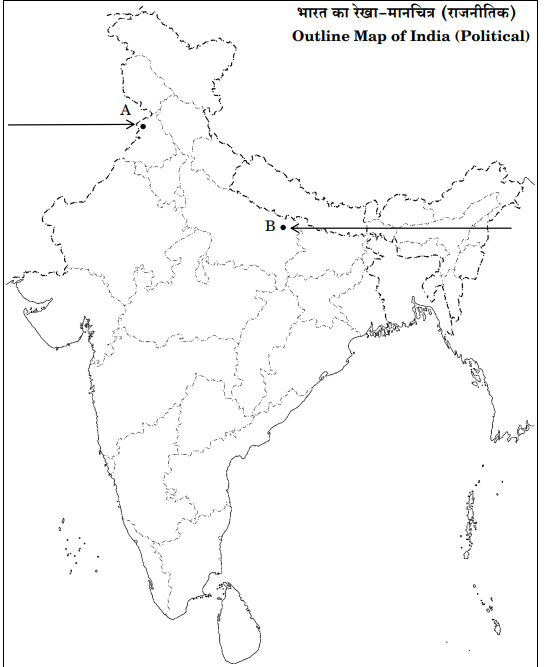
Section B
[1 Mark]
-
(A) Surplus Production
-
(B) Shifting Cultivation
-
(C) Nomadic Lifestyle
-
(D) Plantation Farming
Explanation: The presence of granaries indicates Surplus Production, as granaries are used to store excess grain produced beyond immediate consumption needs. This suggests that the Harappans practiced agriculture that resulted in surplus, allowing for long-term storage and management of resources, which aligns with the context that Indian agriculture was very productive due to fertile soil and seasonal crop cycles.
[1 Mark]
-
(A) The Shungas and the Kanvas were the immediate successors of the Mauryas.
-
(B) The Shungas and the Kanvas ruled after the Gupta rulers.
-
(C) The Shungas supported Buddhism and the Kanvas supported Hinduism.
-
(D) The Shungas succeeded the Mauryas and the Kanvas succeeded the Gupta rulers.
Explanation: The correct answer is 'The Shungas and the Kanvas were the immediate successors of the Mauryas.' This is confirmed in the context, which clearly states that the Shungas and Kanvas succeeded the Mauryas and were indeed their immediate successors.
[1 Mark]
-
(A) (A) is false, but (R) is true.
-
(B) Both (A) and (R) are true, but (R) is not the correct explanation of (A).
-
(C) (A) is true, but (R) is false.
-
(D) Both (A) and (R) are true and (R) is the correct explanation of (A).
Explanation: Both (A) and (R) are true, but (R) is not the correct explanation of (A). Shahjehan Begum did indeed play a significant role in the preservation of Sanchi, making her a noted patron of art and architecture. However, while the Sanchi Stupa is an important example of early Buddhist architecture, this fact does not directly explain her contributions or role as a patron.
[1 Mark]
-
(A) To administer justice to people
-
(B) To oversee military operations
-
(C) To manage trade and commerce
-
(D) To promote the principles of Dhamma
Explanation: The correct option is 'To promote the principles of Dhamma.' The context states that special officers, known as Dhamma Mahamattas, were appointed by Ashoka to spread the message of Dhamma, which was fundamental to his reign and aimed at ensuring the well-being of the people.
[1 Mark]
-
(A) I, II and III are correct.
-
(B) I, II and IV are correct
-
(C) II, III and IV are correct.
-
(D) I, III and IV are correct
Explanation: The correct option is 'I, II and IV are correct.' Ancient Parthian gold coins discovered in north India suggest extensive trade networks. Hoards of Roman coins found in South India indicate that trade extended beyond political boundaries. Ancient Gupta rulers are known for issuing silver coins that facilitated long-distance trade, thus confirming all three statements are accurate.
[1 Mark]
-
(A) Moksha
-
(B) Ahimsa
-
(C) Dharma
-
(D) Karma
Explanation: The correct option is 'Karma'. In Jaina philosophy, it is stated that the cycle of birth and rebirth is shaped through karma, meaning that an individual's actions directly influence their future births. The process of asceticism and penance is required to free oneself from the cycle of karma.
[1 Mark]
-
(A) Bhaskaravarman
-
(B) Vikramaditya II
-
(C) Gotami-puta Siri-Satakani
-
(D) Rudradaman
Explanation: The correct answer is Gotami-puta Siri-Satakani. According to the context provided, he is identified as the best-known ruler of the Satavahana dynasty and is noted to claim to be a Brahmana, suggesting his affiliation with the Brahmanical tradition. Additionally, the suffix 'puta' indicates he is the son of Gotami, aligning with the information given in the question.
[1 Mark]
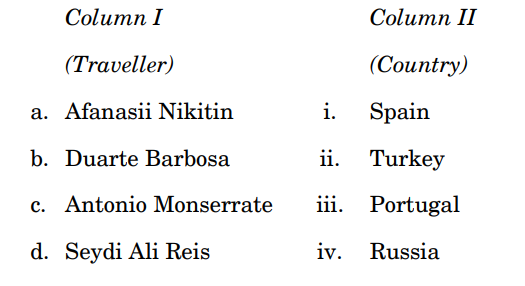
-
(A) a-iii, b-iv, c-ii, d-i
-
(B) a-iv, b-iii, c-i, d-ii
-
(C) a-i, b-iii, c-ii, d-iv
-
(D) a-ii, b-iii, c-i, d-iv
Explanation: The correct option is a-iv, b-iii, c-i, d-ii. This is derived from the context provided, which describes the different functions and responsibilities assigned to the Union and State governments. Each item in Column I aligns with its appropriate designation or function in Column II, indicating the hierarchical relationship of subjects between the two levels of government.
[1 Mark]
-
(A) Khwaja Qutbuddin Bakhtiyar Kaki – Delhi
-
(B) Shaikh Nasiruddin Chiragh-i-Dehli – Jaipur
-
(C) Shaikh Nizamuddin Auliya – Ajmer
-
(D) Shaikh Muinuddin Sijzi – Agra
Explanation: The correct option is 'Khwaja Qutbuddin Bakhtiyar Kaki – Delhi'. He is famously associated with Delhi as he was one of the prominent Sufi saints of the city. The other pairs are incorrectly matched: Shaikh Muinuddin Sijzi is related to Ajmer, Shaikh Nizamuddin Auliya is associated with Delhi but not Ajmer, and Shaikh Nasiruddin Chiragh-i-Dehli is associated with Delhi, not Jaipur.
[1 Mark]
-
(A) The Virupaksha Temple
-
(B) The Vitthala Temple
-
(C) The Brihadiswara Temple
-
(D) The Hazara Rama Temple
Explanation: The correct option is 'The Virupaksha Temple' because the context states that much of the initial information for the survey of Hampi was based on the memories of priests of the Virupaksha temple, alongside the shrine of Pampadevi.
[1 Mark]
-
(A) Fiscal records
-
(B) Poetic descriptions
-
(C) Architectural designs
-
(D) Traveller’s accounts
Explanation: The correct option is 'Fiscal records' because the Ain-i-Akbari meticulously recorded arrangements made by the state for cultivation, revenue collection, and the administration of the provinces, providing intricate quantitative information that reflects the administrative structure of the Mughal Empire.
[1 Mark]
-
(A) Independent from Imperial Court
-
(B) Constantly evolving
-
(C) Egalitarian
-
(D) Socio-economic disparities
Explanation: The correct option is 'Socio-economic disparities'. This is because Marx described how surplus was appropriated by the state and led to a society of subjugation and poverty, highlighting the socio-economic disparities among the people, particularly between the aristocracy and the rural communities, despite the initial portrayal of rural society being made up of egalitarian village communities.
[1 Mark]
-
(A) They are known as the very first temples in India.
-
(B) They served as forts during festivals.
-
(C) They were constructed with the help of the Pandya rulers
-
(D) They mark the peak of Chola patronage in architecture.
Explanation: They mark the peak of Chola patronage in architecture. The context highlights that the construction of magnificent Shiva temples, including those at Thanjavur under the Chola rulers, represented a significant architectural advancement and a means for rulers to assert their divine legitimacy and power, making it a pivotal period in ancient Indian history.
[1 Mark]
-
(A) Decline of Vijayanagara – Increased military control of Mackenzie
-
(B) Battle of Talikota – Expansion of Hampi over Orissa
-
(C) Defeat of Sultan of Bijapur – Start of Aravidu dynasty
-
(D) Founding of Nagalapuram – Township named after King’s mother
Explanation: The correct match is 'Founding of Nagalapuram – Township named after King’s mother.' This is confirmed in the context, which states that a suburban township near Vijayanagara was founded by a king and named Nagalapuram after his mother.
[1 Mark]
-
(A) For simplifying revenue collection
-
(B) For bringing decentralized control
-
(C) For maximising their revenue
-
(D) For empowering the zamindars
Explanation: The British preferred the Ryotwari system for simplifying revenue collection, as this system involved settling revenue directly with the individual ryots rather than through intermediaries like zamindars. This direct interaction allowed for better assessment of the ryot's capacity to pay and also made revenue collection more efficient, as evidenced by the complications that arose with the Permanent Settlement in Bengal.
[1 Mark]
-
(A) III, II, IV, I
-
(B) III, I, II, IV
-
(C) III, IV, II, I
-
(D) III, IV, I, II
Explanation: The correct chronological order is: III (Champaran Satyagraha - 1917), IV (Jallianwala Bagh Massacre - 1919), II (Peasant Movement in Bardoli - 1928), I (Second Round Table Conference - 1931). This sequence correctly represents the timeline of these significant events in the Indian National Movement.
[1 Mark]
-
(A) Major recruiting ground for the Bengal Army
-
(B) Base for British military leaders
-
(C) Known for strong resistance to British rule
-
(D) Centre for British military training
Explanation: The correct option is 'Major recruiting ground for the Bengal Army.' Awadh was a significant area where many sepoys were recruited into the Bengal Army. The social structure of Awadh, with many individuals from upper castes, contributed to a strong soldier population that formed the backbone of the military forces during this period, thus leading to its designation as the 'Nursery of the Bengal Army.'
[1 Mark]
-
(A) Flag Committee – Bhimrao Ambedkar
-
(B) States Committee – J.B. Kripalani
-
(C) Steering Committee – Jawaharlal Nehru
-
(D) Advisory Committee – Sardar Vallabhbhai Patel
Explanation: The correct answer is 'Steering Committee – Jawaharlal Nehru'. Jawaharlal Nehru was an important figure in the Constituent Assembly and was involved in significant resolutions, including the 'Objectives Resolution'. The other pairs do not accurately match the presidents with their respective committees based on historical records.
[1 Mark]
-
(A) Bipin Chandra Pal
-
(B) Gopal Krishna Gokhale
-
(C) Bal Gangadhar Tilak
-
(D) Lala Lajpat Rai
Explanation: The correct answer is Gopal Krishna Gokhale. He was Gandhiji's acknowledged political mentor, and it was on his advice that Gandhiji spent time traveling around British India to better understand the land and its people.
[1 Mark]
-
(A) Awadh
-
(B) kanpur
-
(C) Gwalior
-
(D) Lucknow
Explanation: The correct option is 'Awadh' because in the context provided, it mentions that Birjis Qadr was hailed as the leader by the people in Lucknow, which is part of Awadh, following the displacement of Nawab Wajid Ali Shah. This aligns with the description of leadership in that region during the Revolt of 1857.
[1 Mark]
-
(A) Both Assertion (A) and Reason (R) are true and Reason (R) is the correct explanation of the Assertion (A).
-
(B) Assertion (A) is true, but Reason (R) is false
-
(C) Both Assertion (A) and Reason (R) are true, but Reason (R) is not the correct explanation of the Assertion (A).
-
(D) Assertion (A) is false, but Reason (R) is true
Explanation: Both Assertion (A) and Reason (R) are true and Reason (R) is the correct explanation of the Assertion (A). The American Civil War indeed disrupted cotton supplies from the U.S., leading to a panic in Britain, as they heavily relied on American cotton. This situation resulted in a surge in demand for Indian cotton, corroborating Reason (R).
[1 Mark]
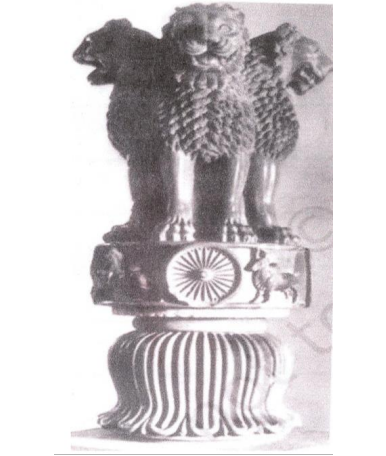
-
(A) Ashoka’s Lion Capital
-
(B) Cholas’ Lion Capital
-
(C) Guptas’ Lion Capital
-
(D) Shungas’ Lion Capital
Explanation: The correct answer is 'Ashoka’s Lion Capital' because the lion capital is a well-known symbol associated with Emperor Ashoka, who ruled in the 3rd century BCE. The context provided references 'Fig. 2.3: The lion capital,' indicating that this is likely the specific artefact being referred to in the question.
Section C
[3 Marks]
Answer: During the Mahabharata Period, marriage was not merely a personal union but a reflection of the complex social systems of ancient India. The Dharmasutras recognized eight forms of marriage, with the first four deemed 'good.' For instance, Kshatriya kings often practiced polyandry, exemplified by Draupadi's marriage to the five Pandavas. This arrangement supported political alliances and maintained power within the royal family. However, the remaining four forms, viewed as 'bad,' like swayamvara, often breached Brahmanical norms. This diversity in marriage practices highlights societal stratification, where marriage alliances were employed to navigate the rigid varna system, preserving community ties.
Key Points: Eight forms of marriage recognized in Dharmasutras - Good vs. Bad marriages - Draupadi's marriage as polyandry - Political alliances in marriage - Critique of Brahmanical norms - Endogamy vs. exogamy - Social stratification reflected in marriage practices
[3 Marks]
Answer: During the Mahabharata Period, familial relations were crucial in shaping the social systems of India. The epic narrates the intense conflict between the Kauravas and Pandavas, who were cousins belonging to the same royal family of the Kurus. This rivalry exemplifies how kinship ties influenced power dynamics, often leading to tension within ruling lineages. The Mahabharata depicts the importance of family loyalty, as seen when Bhishma, the Kuru elder, supported the Kauravas in their pursuit of power. Furthermore, familial alliances through marriages among kinfolk strengthened social cohesion, yet also established hierarchies. The emphasis on birth status reinforced social stratification, which became evident as characters like Karna faced discrimination despite his valor. These intertwined familial relationships laid the foundation for both governance and social challenges, ultimately reflecting the complex nature of Indian society during this time.
Key Points: Kauravas vs Pandavas feud; importance of family loyalty; marriages among kin and social cohesion; birth status reinforcing social stratification; examples from the Mahabharata; impact on governance and social challenges.
[3 Marks]
Answer: Puranic Hinduism significantly influenced the evolution of both Vaishnavism and Shaivism by emphasizing the worship of personal deities. In Vaishnavism, Vishnu's numerous avatars, particularly Krishna and Rama, became central to the devotional practices, fostering a deep emotional bond of love and bhakti between devotees and the deity. Similarly, Shaivism elevated Shiva as a principal figure, encouraging a personal and devotional approach to worship. Moreover, Puranic texts promoted inclusivity by diminishing caste distinctions in religious practices, enhancing the appeal of these traditions across diverse societal strata, thus facilitating their widespread acceptance and integration into the broader Hindu framework.
Key Points: Emphasis on personal deities; Development of bhakti as a way of worship; Elevation of Vishnu and Shiva within Puranic texts; Inclusive practices diminishing caste distinctions; Integration into broader Hinduism.
[3 Marks]
Answer: Panchayats were fundamental to the functioning of rural society during the Mughal era, acting as important local governance bodies. They facilitated decision-making, ensuring justice and mediation in conflicts between peasants and the state or zamindars. Acting as courts of appeal, panchayats helped maintain social order and fairness. Their involvement in revenue disputes often led to compromises that protected the interests of lower-caste peasants against oppressive demands. Overall, panchayats played a vital role in sustaining agrarian relationships and rural stability.
Key Points: Panchayats as local governance-Conflict resolution between peasants and zamindars-Mediation in revenue disputes-Facilitating social order and justice-Protection of peasant interests
[3 Marks]
Answer: Forest-dwelling communities in the Mughal Empire exhibited substantial political independence due to their marginalization from direct state control. The Mughal state sought elephants from these forests to bolster its military, introducing a form of economic dependence on forest products. However, as seen by Babur's accounts, the forests served as refuges for dissenters, highlighting a relationship of avoidance rather than direct governance. Bernier’s depiction of Mughal rule reinforces this, portraying the forests as subversive spaces representing both resilience against taxation and a unique autonomy among tribal communities. Consequently, while these communities interacted with the Mughals, they often prioritized their traditional practices and autonomy over direct state imposition.
Key Points: Political independence of forest communities-Dependence on Mughal state for resources-Elephant supply and economic relations-Description of forests as refuges for rebels-Babur's views on forest defense-Bernier's portrayal of Mughal cities and their relationship to the forest
[3 Marks]
Answer: The jotedars played a crucial role in the Permanent Settlement system established by the British in Bengal. Unlike zamindars, who primarily lived in urban settings, jotedars were local agrarian elites directly involved in village life. They managed agricultural production through sharecroppers and collected revenue from them. Their intimate understanding of local conditions allowed them to exert significant control and influence over poor cultivators. Additionally, during instances of zamindar revenue defaults, jotedars often acquired land, thus enhancing their power and status within the village structure. Their authority emerged as essential for maintaining agricultural productivity and revenue generation under the British colonial system, particularly in North Bengal, where they became pivotal economic and social leaders.
Key Points: jotedars as village elites - comparison with zamindars - role in agricultural production - control over sharecroppers - acquisition of land during zamindar defaults - significance in revenue collection - influence in North Bengal - local power dynamics
[3 Marks]
Answer: Indian imagery has played a significant role in preserving Rani Laxmibai’s contribution during the Revolt of 1857. Popular prints often depict her adorned in battle armor, wielding a sword, and riding a horse, symbolizing her fierce resistance against colonial rule. This visual representation has transformed her into a legendary warrior, emphasizing her masculinity and courage. Poems and stories celebrate her valor, with lines like 'Khoob lari mardani woh to Jhansi wali rani thi' illustrating her heroic status. Such imagery and narratives ensure that her legacy as a symbol of resistance and empowerment continues to inspire generations.
Key Points: Depicted in battle armor; Symbol of resistance; Represented as a masculine warrior; Celebrated in poems; Legacy of empowerment; Inspiring future generations
[3 Marks]
Answer: Mirabai’s poetry is a profound reflection of devotion, characterized by intense feelings of love and surrender to God. Her verses often express a longing for divine union, portraying God not just as a deity but as a beloved. In her compositions, we find the theme of personal sacrifice, where she speaks of relinquishing worldly ties for spiritual fulfillment. Mirabai’s defiance against societal norms, especially regarding caste, emphasizes her unwavering faith. Her use of Islamic concepts connects to a universal theme of love and devotion, bridging religious boundaries. Overall, her poetry serves as a powerful testament to her deep emotional connection with the divine.
Key Points: Intense feelings of love and surrender to God- Longing for divine union as a beloved- Personal sacrifice and relinquishing worldly ties- Defiance against societal norms and caste- Connection to Islamic concepts of love- Universal theme of devotion.
Section D
[8 Marks]
Answer: The archaeological findings at Harappa and Mohenjodaro provide significant insights into the urban planning of the Indus Valley Civilization, emphasizing their advanced societal structure. Central to this urban planning was the grid layout of the cities, characterized by well-planned streets intersecting at right angles, indicative of a high level of organization. For instance, Mohenjodaro featured a sophisticated drainage system, with covered drains along the major streets, showcasing an emphasis on hygiene and public health. Furthermore, the uniformity in brick size across different sites points to standardized construction techniques. The presence of large public baths, such as the Great Bath of Mohenjodaro, suggests communal activities and rituals, further reflecting the urban lifestyle. These archaeological discoveries highlight a civilization that prioritized order, functionality, and social cohesion through its meticulously planned urban centers.
Key Points: Grid layout of cities, Well-planned streets, Advanced drainage system, Standardized construction techniques, Presence of public baths, Focus on hygiene and public health, Indicators of societal organization and communal activities
[8 Marks]
Answer: The roles and methodologies of archaeologists have significantly enhanced our understanding of the Harappan Civilization through systematic excavation, analysis of artifacts, and interdisciplinary collaboration. Archaeologists have meticulously uncovered material remains such as houses, pottery, seals, and tools, which provide insights into the daily lives and social structures of Harappan people. For instance, the discovery of the Harappan seals allowed for understanding trade relations and cultural exchanges with neighboring civilizations like Mesopotamia. Moreover, since the 1980s, a collaborative approach involving local and international archaeologists at sites like Harappa and Mohenjodaro has led to more comprehensive interpretations of the civilization's development, cosmology, and eventual decline. These investigations have spurred hypotheses about environmental factors and societal changes responsible for the civilization’s collapse, showcasing a dynamic methodological evolution in archaeology.
Key Points: Systematic excavation and analysis of artifacts; Example of Harappan seals and trade relations; Interdisciplinary collaboration since the 1980s; Insights into daily lives and social structures; Investigations of environmental factors influencing civilizational decline.
[8 Marks]
Answer: The Virupaksha Temple stands as a remarkable architectural and cultural landmark of the Vijayanagara Empire due to its historical significance and intricate design. Built over centuries, its origins date back to the 9th-10th centuries, with substantial expansions occurring during the Vijayanagara period. The temple showcases a fusion of various architectural styles and features grand halls, pavilions, and several shrines. Notably, the unique chariot-shaped shrine within the complex exemplifies the ingenuity of temple architecture. Furthermore, this sacred site was integral to the kings who ruled in the name of the god Virupaksha, reinforcing their divine legitimacy. The temple complex not only reflects religious devotion but also serves as a testament to the artistic and cultural achievements of the empire. It played a pivotal role in shaping the imperial identity of Vijayanagara, merging local traditions with broader influences. Additionally, its strategic location, linked to the mythological significance of the Virupaksha and Pampadevi, underscores its cultural importance, attracting both pilgrims and scholars alike, thus solidifying its status as a vital part of India's heritage.
Key Points: Historical significance; Architectural features (halls, chariot shrine); Cultural importance (kings ruled on behalf of Virupaksha); Fusion of styles; Strategic location and religious devotion
[8 Marks]
Answer: The Royal Centre in Vijayanagara is notable for its unique architectural features that reflect a blend of various cultural influences, making it a vital cultural landmark. One significant feature is the gopuram, or monumental entrance tower, which is emblematic of South Indian temple architecture, showcasing intricate carvings and grandeur. The fortified walls and gateways illustrate the strategic military architecture of the time. Additionally, the use of aqueducts highlights advanced engineering techniques for water supply. Structures such as the iconic Vittala Temple, designed to resemble a chariot, showcase the artistic prowess of the Vijayanagara architects. These elements combined demonstrate the cultural dynamism and imperial ambitions of the Vijayanagara rulers, making the Royal Centre a prominent representation of the period's architectural heritage.
Key Points: Gopuram as a cultural symbol; Fortified walls and strategic architecture; Aqueducts indicating advanced engineering; Vittala Temple's chariot design; Blend of various cultural influences
[8 Marks]
Answer: Understanding Gandhiji's contributions to the Indian National Movement requires a diverse range of sources. Primary among these are his own writings, which provide insight into his philosophy, strategies, and vision for India. Contemporary newspapers, both in English and various Indian languages, serve as invaluable resources, documenting public sentiment and reactions to Gandhi's initiatives. Academic analyses further contextualize his influence within the broader nationalist movement, including the roles of other leaders, social changes, and the reactions of colonial authorities. Oral histories, too, capture the lives of ordinary Indians and their interactions with Gandhi, adding depth to our understanding. It is essential to critically assess all sources for bias, as contemporary accounts could reflect the interests of specific groups. Hence, a holistic study of Gandhi necessitates synthesizing these varied sources, offering a comprehensive picture of his lasting impact on Indian society and the freedom struggle.
Key Points: Gandhi's writings; contemporary newspapers' accounts; academic perspectives; oral histories; critical assessment of sources; overall synthesis for comprehensive understanding
[8 Marks]
Answer: Gandhiji's leadership in the Salt March of 1930 marked a pivotal moment in the struggle against British colonial rule in India. By challenging the salt monopoly, he addressed a universally relevant issue, highlighting how colonial laws directly affected the daily lives of ordinary citizens. The march directly engaged over 60,000 people, fostering a sense of unity and collective action against oppression. Moreover, this act of civil disobedience demonstrated Gandhiji’s innovative tactics, as he transformed a modest household item into a powerful symbol of resistance. The subsequent arrest of many protestors, including Gandhi himself, drew international attention to India's plight under British rule, emphasizing the courage and resilience of Indian society. This event laid the groundwork for future movements and became a significant moment of national pride, reflecting the capacity of peaceful protest to challenge unjust authority.
Key Points: Gandhi challenged British salt monopoly; targeted widely relatable issue; mobilized masses for collective action; symbolized resistance through civil disobedience; drew international attention to Indian struggle; showcased innovative non-violent tactics; united diverse sections of society against colonial rule.