Class 12 PCB . Biology . Biology . Evolution
Chapter 6: Evolution
Ch 6
Biology
Class 12 PCB
Origin Of Life
Life in the Context of the Universe
- Universe: The Big Bang theory describes its origin and expansion; the universe is about 20 billion years old.
- Earth: Earth formed about 4.5 billion years ago in the Milky Way, and its early atmosphere lacked free oxygen.
Ideas About the Origin of Life
- Panspermia: Some scientists propose that life or its spores came to Earth from outer space.
- Spontaneous generation: Pasteur’s experiments showed that life arises from pre-existing life, disproving the idea that it comes from rotting matter.
- Oparin and Haldane: They proposed that the first life arose from non-living organic molecules.
Chemical Evolution
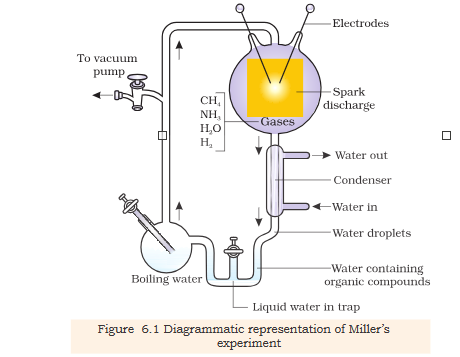
From Non-Cellular Forms to Cells
- Non-cellular forms: Giant molecules such as RNA, proteins and polysaccharides may have appeared about 3 billion years ago.
- First cells: The first cellular life forms probably appeared about 2 billion years ago and were likely single-celled.
- Early habitat: Life forms remained in water; the origin of the first self-replicating living system is still unresolved.
Evolution of Life Forms: Special Creation and Change
- Special creation: This view held that all species were created as they are, diversity never changed, and Earth was about 4,000 years old.
- Evidence of change: Extinctions and the appearance of new forms show that life has changed over geological time.
- Common ancestry: Living forms share ancestors from different periods in Earth’s history, which is billions of years long.
Darwin and Natural Selection
- Natural selection: Population variation + environmental conditions + unequal reproductive success → evolution.
- Origin of life: Chemical evolution describes organic molecules forming from inorganic substances before life appeared.
Quick recap
- Earth formed about 4.5 billion years ago; life appeared about 4 billion years ago.
- Panspermia proposes an extraterrestrial origin; Pasteur’s findings rejected spontaneous generation and supported life arising from pre-existing life.
- Oparin and Haldane proposed chemical evolution from inorganic substances to organic molecules.
- Miller’s 1953 experiment produced amino acids under simulated early-Earth conditions.
- Non-cellular forms may have preceded the first cells, which probably appeared around 2 billion years ago.
- Darwin’s natural selection links population variation and environmental conditions to differences in reproductive success; Wallace reached similar conclusions.
What Are The Evidences For Evolution?
Palaeontological Evidence
- Fossils: Fossils are preserved remains of hard parts of organisms found in rocks.
- Rock layers: Fossils in sedimentary layers reveal the geological periods in which organisms lived.
- Evidence of change: Different life forms occur in different time periods; some are extinct, while others resemble organisms living today.
Embryological Evidence
- Haeckel’s proposal: Similarities in vertebrate embryos were suggested as evidence for evolution; embryos show vestigial gill slits behind the head.
- Von Baer’s finding: He rejected Haeckel’s interpretation, observing that embryos do not pass through the adult stages of other animals.
Comparative Anatomy and Morphology
Analogous structures — Structures with different anatomical origins that perform similar functions, arising through convergent evolution.
Biochemical Evidence
- Molecular similarities: similarities in proteins and genes that perform particular functions across diverse organisms point to shared ancestry.
- Connection: biochemical similarities support common ancestry just as structural similarities do.
Artificial Selection and Natural Selection
- Artificial selection: Humans selectively breed plants and animals for desired traits, producing distinct breeds such as dog varieties.
- Comparison: The creation of new breeds over hundreds of years illustrates how selection can change populations over time.
Industrial Melanism
Natural Selection in Moths
- Background changes → camouflage advantage shifts between moth variants.
- Better-camouflaged moths are less likely to be eaten → they survive and reproduce more.
- Their proportion in the population increases; other variants are not necessarily eliminated.
Rapid Evolution and Human Influence
- Human influence: Herbicides, pesticides and antibiotics select for resistant plants, pests and microbes.
- Rapid change: Resistance can become evident within months or years because resistant organisms survive and reproduce.
- Chance: Evolution is not predetermined; it involves chance events and mutations in populations.
Adaptive Radiation
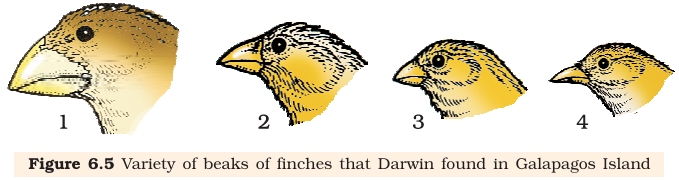
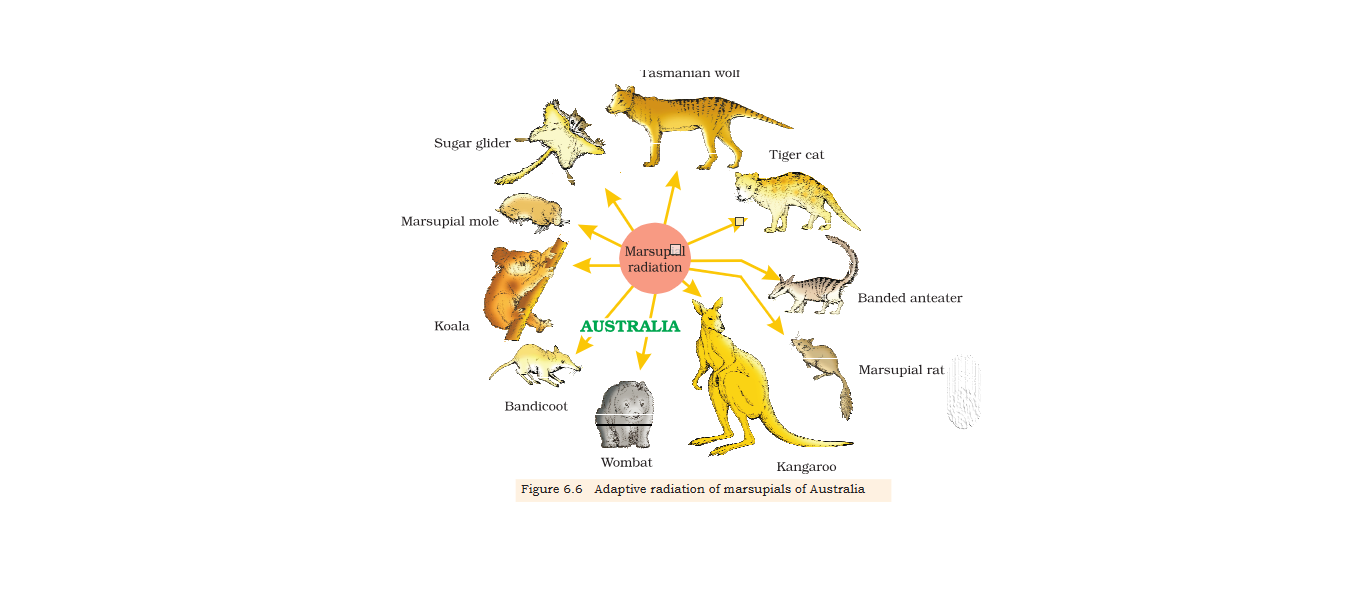
Convergent Evolution in Adaptive Radiations
How do homologous and analogous structures differ?
Explain industrial melanism using the peppered moth example.
What is adaptive radiation? Give two examples.
Quick recap
- Fossils in different-aged rock layers show that life forms changed over geological time.
- Embryonic, anatomical and biochemical similarities can provide evidence of shared ancestry.
- Homologous structures have a shared anatomical plan; analogous structures have similar functions but different structures.
- Natural selection changes which variants are common when environmental conditions affect survival and reproduction.
- Human activities can select resistant organisms rapidly; evolution is stochastic, not predetermined.
- Adaptive radiation diversifies an ancestral lineage, while convergent evolution produces similar adaptations in separate lineages.
Biological Evolution
Darwinian Evolution by Natural Selection
How selection changes a population
- Variation: Individuals in a population differ, and many of these differences are inherited.
- Selection: When conditions change, individuals with useful inherited traits are more likely to survive and reproduce.
- Population change: Their traits become more common over generations, so the population may eventually appear as a new form or species.
- Example: In a bacterial population, a change in food source favours bacteria able to use it; these multiply and may outgrow other variants.
Darwin, Lamarck and the Basis of Selection
Why natural selection occurs
- Resources are limited while populations tend to remain relatively stable, apart from seasonal changes.
- More offspring could be produced if all individuals reproduced maximally, so organisms compete for resources.
- Individuals vary, and many variations are inherited.
- Better-adapted individuals survive and reproduce more, leaving more offspring.
- Over generations, population characteristics change, and new forms may arise.
Evolution — Evolution may describe the process producing change in the living world, or the resulting changes in life through natural selection.
Mechanism of Evolution
| Point | Darwin | Hugo de Vries |
|---|---|---|
| Source of evolutionary change | Small, heritable variations | Mutations causing large differences |
| Nature of change | Gradual | Sudden, large change |
| Direction | Variations described as directional | Mutations are random and directionless |
| Speciation | Accumulation of changes over time | A large mutation may cause speciation in a single step; called saltation |
Hardy–Weinberg Principle
For two alleles, . The frequencies of , and are given by the terms in the expansion.
| Genotype | Frequency |
|---|---|
Reading changes in allele frequency
- Departure from expectation: A difference between measured and expected frequencies indicates the extent and direction of evolutionary change.
- Equilibrium disturbance: A change in allele frequencies means Hardy–Weinberg equilibrium has been disturbed and evolution is occurring.
| Factor | Effect |
|---|---|
| Gene migration / gene flow | Migration changes allele frequencies in both the population individuals leave and the population they enter; repeated migration produces gene flow. |
| Genetic drift | Allele frequencies change by chance, especially in a new population sample. |
| Mutation | Creates new genetic variants that may alter allele frequencies. |
| Genetic recombination | Rearranges genetic variation, including during gamete formation. |
| Natural selection | Heritable variations that improve survival and reproduction become more common. |
Founder effect — A distinct change in allele frequency can occur when a small, drifted group establishes a new population; the founding individuals carry a limited sample of the original variation.
Selection, mutation and speciation
- Pre-existing variation: Selection can favour advantageous mutations already present in a population, producing new phenotypes.
- Speciation: If population differences accumulate over generations, a new species may arise.
- Combined effect: Mutation, recombination, gene flow and drift change genetic frequencies; natural selection can then increase reproductive success of better-adapted forms.
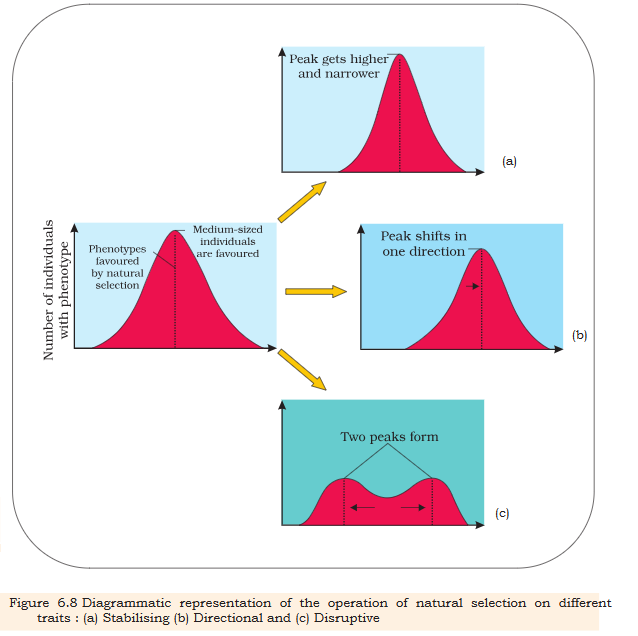
| Pattern | Population effect |
|---|---|
| Stabilising selection | More individuals acquire the mean character value. |
| Directional selection | More individuals acquire a character value away from the mean. |
| Disruptive selection | More individuals acquire character values at both extremes. |
What is the Hardy–Weinberg principle?
Name the five factors that disturb Hardy–Weinberg equilibrium.
How do stabilising, directional and disruptive selection differ?
Quick recap
- Natural selection favours inherited variations that improve survival and reproduction.
- Darwinian evolution involves branching descent and natural selection; Lamarck's giraffe explanation relied on acquired traits.
- Evolutionary variation can arise through mutation, recombination, gene flow and genetic drift.
- Hardy–Weinberg equilibrium means stable allele frequencies; for two alleles, and .
- Equilibrium is disturbed by gene flow, drift, mutation, recombination and natural selection.
- Selection patterns are stabilising, directional and disruptive.
A Brief Account Of Evolution
Early Life and the Evolution of Major Groups
Life on Land and the Reptile Era
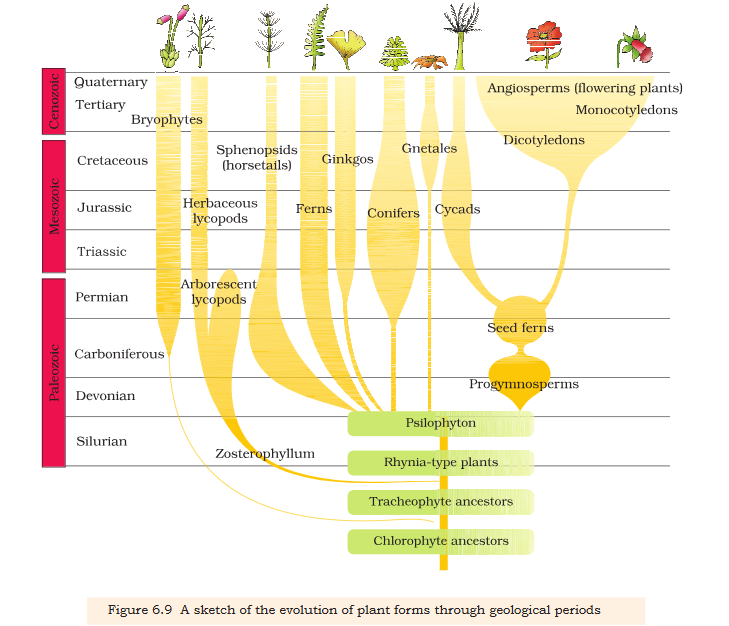
- Land invasion: Plants spread on land before animals invaded it.
- Lobefins: Strong-finned fish gave rise to early amphibians, which lived on land and in water. They are regarded as ancestors of modern frogs and salamanders; no specimens of these early forms remain.
- Coelacanth: A living Coelacanth was caught in South Africa in 1938, although the fish had been thought extinct.
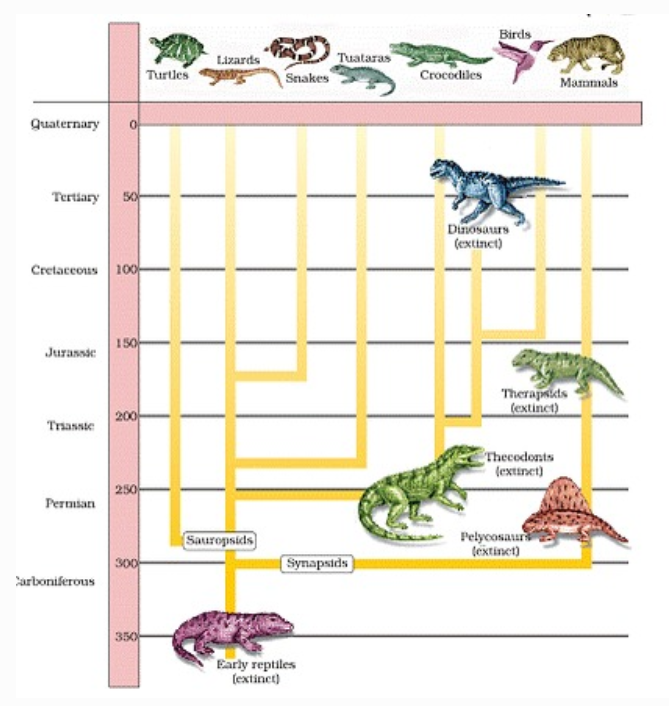
- Reptiles: Amphibians gave rise to reptiles. Reptiles laid thick-shelled eggs that did not dry out in sunlight, unlike amphibian eggs.
- Reptile dominance: Reptiles of many shapes and sizes dominated for roughly the next 200 million years. Their living descendants include turtles, tortoises and crocodiles.
- Ancient plants: Giant ferns (pteridophytes) grew during this period; their remains gradually contributed to coal deposits.
- Dinosaurs: Land reptiles included dinosaurs. Tyrannosaurus rex reached about 20 feet in height and had large, dagger-like teeth.
- Dinosaur extinction: Dinosaurs disappeared about 65 mya. Climate change and evolution into birds have been suggested, but the actual cause is uncertain; small reptiles survived.
Mammals and Continental Drift
- Early mammals: The earliest mammals were shrew-like and small. They were viviparous, protecting their developing young inside the mother’s body.
- Survival advantage: Mammals were better able to sense and avoid danger. After reptiles declined, mammals diversified and became dominant.
- South American mammals: South America had mammals resembling horses, hippopotamuses, bears and rabbits.
- Continental drift: When South America joined North America, North American fauna displaced many South American mammals.
- Australian marsupials: Pouched mammals survived in Australia because competition from other mammals was limited.
- Aquatic mammals: Whales, dolphins, seals and sea cows live wholly in water.
- Further examples: The evolution of horses, elephants and dogs are notable examples; the evolution of humans is especially significant for language and self-consciousness.
Origin and Evolution of Humans
Stages in Human Evolution
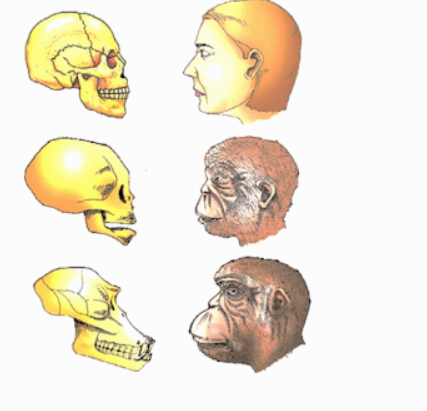
- About 15 myaDryopithecus and Ramapithecus existed; Dryopithecus was more ape-like and Ramapithecus more human-like.
- About 3–4 myaMan-like primates in eastern Africa probably walked upright and were no taller than about 4 feet.
- About 2 myaAustralopithecines probably lived in East African grasslands; stone weapons suggest hunting, though fruit was a main food.
- About 2 myaHomo habilis, an early human-like hominid, had a brain capacity of about 650–800 cc and probably did not eat meat.
- About 1.5 myaHomo erectus fossils found in Java indicated a larger brain, about 900 cc; this species probably ate meat.
- 100,000–40,000 years agoNeanderthals lived in the Near East and Central Asia, used animal hides and buried their dead.
- 75,000–10,000 years agoModern Homo sapiens arose during the Ice Age; Homo sapiens originated in Africa, spread across continents and developed distinct races.
- About 18,000 years agoPrehistoric cave art developed; examples are found at Bhimbetka rock shelter in Raisen district, Madhya Pradesh.
- About 10,000 years agoAgriculture began and human settlements developed.
Evidence and Traits of Human Evolution
- Fossil evidence: Man-like bones discovered in Ethiopia and Tanzania support the presence of early hominids in eastern Africa.
- Homo habilis: Its name is associated with the early human-like hominid described in the fossil record; its brain capacity was 650–800 cc.
- Homo erectus: Java fossils discovered in 1891 revealed this later stage, dated to about 1.5 mya; brain capacity was about 900 cc.
- Neanderthals: Their brain size was about 1,400 cc. They used hides for protection and buried their dead.
- Modern humans: Homo sapiens spread from Africa; human evolution is closely linked with the development of the brain and language.
Evolution: Key Ideas and Evidence
What features distinguished early reptiles from amphibians?
Give two characteristics of Neanderthals.
Quick recap
- The first cellular life appeared about 2,000 mya; life later diversified from single-celled organisms into multicellular forms.
- Plants invaded land before animals; amphibians arose from lobefins, followed by reptiles and the age of dinosaurs.
- Mammals diversified after reptiles declined, while continental drift shaped the distribution of mammals.
- Human evolution includes early primates, hominids, Homo habilis, Homo erectus, Neanderthals and modern Homo sapiens.
- Fossils, comparative anatomy and comparative biochemistry support evolution; homology reflects branching descent.
- Variation, natural selection, habitat fragmentation and genetic drift can contribute to evolutionary change.
Biology — ALL CHAPTERS
1
Sexual Reproduction In Flowering Plants
2
Human Reproduction
3
Reproductive Health
4
Principles Of Inheritance And Variation
5
Molecular Basis Of Inheritance
6
Evolution
7
Human Health And Disease
8
Microbes In Human Welfare
9
Biotechnology : Principles And Processes
10
Biotechnology And Its Applications
11
Organisms And Populations
12
Ecosystem
13
Biodiversity And Conservation