Class 12 PCB . Biology . Biology . Human Health and Disease
Chapter 7: Human Health And Disease
Ch 7
Biology
Class 12 PCB
Common Diseases In Humans
Health and Disease
Health — A state of complete physical, mental and social well-being; it is more than simply being free of disease.
Factors affecting health
- Genetic disorders: A person may be born with, or inherit from parents, certain deficiencies or defects.
- Infections: Disease-causing organisms can enter the body and disrupt its normal functions.
- Lifestyle: Food and water, rest, exercise, and personal habits affect health.
- Mental state: The mind can influence immunity through the nervous and endocrine systems.
Why health matters and how to maintain it
- Benefits: Good health supports work efficiency and productivity, economic prosperity and longer life; it also reduces infant and maternal mortality.
- Daily care: A balanced diet, personal hygiene and regular exercise help maintain health; yoga supports physical and mental well-being.
- Public health: Disease awareness, immunisation, safe waste disposal, vector control, and clean food and water help prevent disease.
Disease — A condition in which the functioning of one or more organs or body systems is adversely affected, producing signs and symptoms.
| Type | Key feature | Examples / note |
|---|---|---|
| Infectious | Can be transmitted from one person to another; caused by pathogens. | Some, such as AIDS, can be fatal. |
| Non-infectious | Not described as easily transmitted between people. | Cancer is a major cause of death; drug and alcohol abuse also harm health. |
Pathogens and Common Diseases
Pathogen — A disease-causing organism; pathogens include bacteria, viruses, fungi, protozoans and helminths.
How pathogens cause disease
- Entry and spread: Pathogens enter the body, multiply and interfere with vital activities, causing structural or functional damage.
- Host adaptation: They must survive the conditions of the host. For example, gut pathogens need to withstand stomach acidity and digestive enzymes.
- Parasites: Many parasites are pathogens because living in or on a host harms it.
| Disease | Pathogen | Main site / spread |
|---|---|---|
| Typhoid | Bacterium Salmonella typhi | Contaminated food or water; enters the small intestine and can spread to other organs through blood. |
| Pneumonia | Bacteria Streptococcus pneumoniae or Haemophilus influenzae | Infection of lung alveoli; spread through inhaled droplets or shared glasses and utensils. |
| Common cold | Rhinoviruses | Infect the nose and respiratory passage, not the lungs; spread by droplets and contaminated objects. |
| Malaria | Protozoans of the genus Plasmodium | Introduced by the bite of an infected female Anopheles mosquito. |
Typhoid
- Symptoms: Sustained high fever of 39–40°C, weakness, stomach pain, constipation, headache and loss of appetite.
- Severe cases: Intestinal perforation and death may occur.
- Diagnosis: Typhoid can be confirmed by the Widal test.
- Carrier example: Typhoid Mary (Mary Mallon), a cook and carrier, spread the infection for years through food she prepared.
Pneumonia
- Effect: Infection fills the lung alveoli (air sacs) with fluid, making respiration difficult.
- Symptoms: Fever, chills, cough and headache; severe cases may cause bluish or grey lips and fingernails.
- Spread: An uninfected person can acquire it by inhaling droplets or aerosols, or by sharing glasses and utensils with an infected person.
Other bacterial diseases
- Examples: Dysentery, plague and diphtheria are other bacterial diseases in humans.
Common cold
- Symptoms: Nasal congestion and discharge, sore throat, hoarseness, cough, headache and tiredness; symptoms usually last 3–7 days.
- Spread: Droplets from an infected person's coughs or sneezes may be inhaled; infection can also spread through contaminated objects such as cups, books, doorknobs and keyboards.
- Key distinction: Rhinoviruses affect the nose and respiratory passage, but not the lungs.
Malaria and the Plasmodium life cycle
- Species: Plasmodium vivax, P. malariae and P. falciparum cause different forms of malaria.
- Most dangerous form: Malignant malaria, caused by P. falciparum, is the most serious and can be fatal.
- Infective stage for humans: Sporozoites enter the body through the bite of an infected female Anopheles mosquito.
- Symptoms: Rupture of infected red blood cells releases haemozoin, a toxic substance linked to recurring chills and high fever every 3–4 days.
- Two hosts: Plasmodium completes its life cycle in humans and mosquitoes; the female Anopheles is also the transmitting vector.
Malaria transmission cycle
- Infected female Anopheles bites a human and injects sporozoites.
- Parasites multiply first in liver cells, then attack red blood cells.
- Red blood cells rupture, releasing haemozoin and causing recurring chills and fever.
- A mosquito bites an infected person and takes up parasites.
- Parasites develop in the mosquito into sporozoites, which collect in its salivary glands and can infect another human.
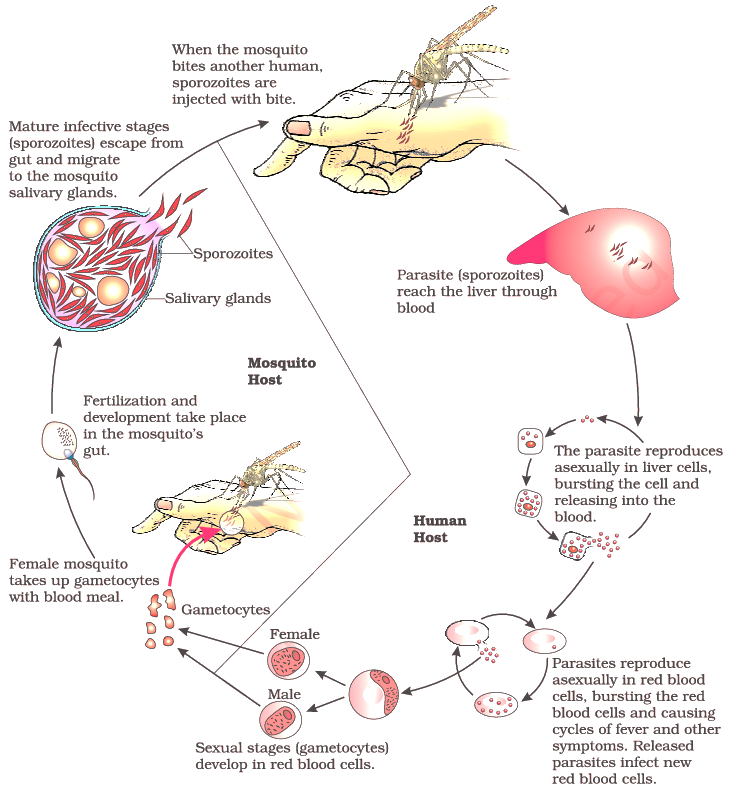
Control of infectious diseases
- Vaccination: Immunisation programmes eradicated smallpox and have controlled diseases such as polio, diphtheria, pneumonia and tetanus to a large extent.
- New vaccines: Biotechnology is helping develop newer and safer vaccines.
- Treatment: Antibiotics and other drugs have made many infectious diseases treatable.
How does malaria cause recurring chills and fever?
State two routes by which pneumonia can spread.
Quick recap
- Health means complete physical, mental and social well-being; genes, infection, lifestyle and mental state can affect it.
- Infectious diseases are transmissible; pathogens include bacteria, viruses, fungi, protozoans and helminths.
- Typhoid is caused by Salmonella typhi and confirmed by the Widal test; severe cases may lead to intestinal perforation.
- Pneumonia affects alveoli, while rhinoviruses cause a 3–7-day common cold affecting the upper respiratory passage.
- Plasmodium passes between humans and female Anopheles mosquitoes; haemozoin release accompanies periodic malaria fever.
- Vaccination, hygiene, vector control, safe food and water, and appropriate drugs help control infectious disease.
Immunity
Immunity — The ability of the body, through its immune system, to defend itself against disease-causing organisms and other foreign agents.
Two types of immunity
- Innate immunity is present from birth and provides non-specific defence.
- Acquired immunity develops against particular pathogens and has memory.
Innate Immunity
Innate immunity — A non-specific defence present at birth that protects the body using barriers against foreign agents.
| Barrier | Defence | Examples |
|---|---|---|
| Physical | Blocks entry or traps microbes | Skin; mucus lining the respiratory, gastrointestinal and urogenital tracts |
| Physiological | Prevents microbial growth | Stomach acid, saliva and tears |
| Cellular | Cells engulf and destroy microbes | Neutrophils (PMNLs), monocytes, natural killer cells and tissue macrophages |
| Cytokine | Protects nearby cells against viral infection | Interferons released by virus-infected cells |
Acquired Immunity
Acquired immunity — Pathogen-specific immunity that develops after exposure and can remember a previous encounter.
| Point | Primary response | Secondary response |
|---|---|---|
| Trigger | First encounter with a pathogen | Subsequent encounter with the same pathogen |
| Intensity | Low | Highly intensified |
| Reason | No prior immune memory | Memory of the first encounter enables a rapid, strong response; also called the anamnestic response |
Lymphocytes and immune responses
- B-lymphocytes produce antibodies—proteins that act against pathogens.
- T-lymphocytes do not secrete antibodies; they help B cells produce them and mediate cell-mediated immunity.
- Humoral response is antibody-mediated; it is called humoral because antibodies circulate in body fluids such as blood.
- Cell-mediated immunity (CMI) is carried out by T-lymphocytes.
Antibody structure and types
- Structure: Each antibody has four peptide chains: two short light chains and two longer heavy chains.
- Representation: An antibody is represented as .
- Types: IgA, IgM, IgE and IgG are examples of antibody classes.
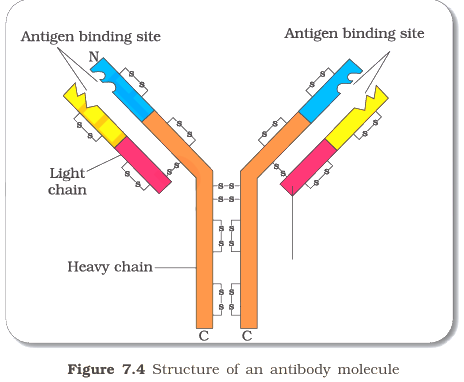
Transplant rejection
- Self and non-self: The immune system can distinguish the body’s own cells from foreign cells.
- Graft rejection: T-cell-mediated immunity can recognise a transplanted organ as non-self and reject it.
- Compatibility: Tissue matching and blood-group matching are essential before transplantation; immunosuppressant drugs are needed lifelong even after matching.
Active and Passive Immunity
| Point | Active immunity | Passive immunity |
|---|---|---|
| How it develops | The host encounters antigens and produces antibodies | Ready-made antibodies are given directly |
| Onset | Slow; takes time to reach full effect | Provides immediate protection |
| Examples | Natural infection or deliberate immunisation with microbes | Maternal antibodies through placenta; IgA in colostrum |
Maternal passive immunity
- Colostrum: The yellowish milk produced in the first days of lactation is rich in IgA antibodies that protect the newborn.
- Placenta: Some maternal antibodies pass to the foetus during pregnancy.
Vaccination and Immunisation
How vaccination builds protection
- A vaccine introduces pathogen antigenic proteins or an inactivated/weakened pathogen.
- The immune system produces antibodies and memory B- and T-cells.
- On later exposure, memory cells recognise the pathogen and trigger a rapid, strong response that can overwhelm it.
Important immunisation examples
- Tetanus: When a quick response is required, preformed antibodies or antitoxin (antibodies against the toxin) may be injected; this is passive immunisation.
- Snakebite: Treatment may include preformed antibodies against snake venom.
- Recombinant vaccines: Recombinant DNA technology enables antigenic pathogen polypeptides to be produced in bacteria or yeast.
- Example: The hepatitis B vaccine can be produced using yeast, supporting large-scale production and wider availability.
Vaccination usually induces active immunity because the vaccinated person makes antibodies and memory cells. Injecting ready-made antibodies is passive immunisation.
Allergies
Allergy — An exaggerated immune response to certain antigens present in the environment.
Allergens, symptoms and treatment
- Allergens: Substances that trigger allergy; examples include dust mites, pollen and animal dander.
- Antibody: Allergic responses involve IgE antibodies.
- Mechanism: Mast cells release chemicals such as histamine and serotonin.
- Symptoms: Sneezing, watery eyes, a runny nose and difficulty breathing.
- Diagnosis and relief: Small doses of possible allergens can help identify the cause; antihistamines, adrenaline and steroids can reduce symptoms quickly.
- Environmental link: The lecture notes that modern lifestyles and protected early environments may be associated with greater sensitivity to allergens, including allergies and asthma in children.
Autoimmunity
Autoimmune disease — A disease in which the immune system attacks the body’s own cells, causing damage.
Key point and example
- Cause: Genetic and other unknown factors can disrupt the ability to distinguish self from non-self.
- Example: Rheumatoid arthritis is an autoimmune disease.
Immune System in the Body
Components and functions
- Components: Lymphoid organs, tissues, cells and soluble molecules such as antibodies.
- Core abilities: Recognises foreign antigens, responds to them and remembers them.
- Other roles: Involved in allergic reactions, autoimmune diseases and organ-transplant rejection.
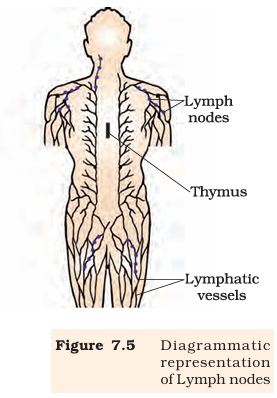
Lymphoid organs — Organs where lymphocytes originate, mature and/or multiply.
| Type | Organs and role |
|---|---|
| Primary | Bone marrow and thymus; immature lymphocytes differentiate into antigen-sensitive lymphocytes. |
| Secondary | Spleen, lymph nodes, tonsils, Peyer’s patches of the small intestine and appendix; sites where lymphocytes meet antigens and proliferate into effector cells. |
| Organ or tissue | Key features and function |
|---|---|
| Bone marrow | Main lymphoid organ; produces all blood cells, including lymphocytes, and provides a micro-environment for T-lymphocyte development and maturation. |
| Thymus | Lobed organ near the heart, beneath the breastbone; supports T-lymphocyte development and maturation. Large at birth, it shrinks with age and is very small by puberty. |
| Spleen | Large, bean-shaped organ rich in lymphocytes and phagocytes; filters blood, traps blood-borne microbes and stores many erythrocytes. |
| Lymph nodes | Small solid structures along lymphatic vessels; trap microbes and antigens in lymph or tissue fluid, activating lymphocytes and initiating an immune response. |
| MALT | Mucosa-associated lymphoid tissue in the lining of the respiratory, digestive and urogenital tracts; makes up about 50 per cent of the body’s lymphoid tissue. |
What distinguishes innate immunity from acquired immunity?
How do active and passive immunity differ?
Name the primary and secondary lymphoid organs.
Quick recap
- Innate immunity is non-specific and uses physical, physiological, cellular and cytokine barriers.
- Acquired immunity is pathogen-specific and uses memory to produce a stronger secondary response.
- B cells produce antibodies; T cells help B cells and mediate cell-mediated immunity.
- Active immunity involves the host making antibodies; passive immunity supplies ready-made antibodies.
- Vaccines generate immune memory; preformed antibodies provide passive immunisation.
- Allergy is an exaggerated IgE-associated response; autoimmunity is an attack on self-cells.
- Primary lymphoid organs are bone marrow and thymus; secondary organs are sites of antigen interaction and lymphocyte activation.
Aids
Meaning, Cause and Course
Transmission and Risk
- Higher-risk groups: People with multiple sexual partners, intravenous drug users, people needing repeated blood transfusions, and children born to an infected mother.
- Not spread by: Mere touch or ordinary physical contact. HIV spreads through infected body fluids.
- Social care: People living with HIV/AIDS should not be isolated; they need help and sympathy from family and society.
HIV Replication and Effects on Immunity
Diagnosis and Treatment of AIDS
- Diagnosis: ELISA (enzyme-linked immunosorbent assay) is a widely used diagnostic test for AIDS.
- Treatment: Antiretroviral drugs are only partially effective; they can prolong the patient's life but cannot prevent death, which the text states is inevitable.
AIDS Prevention and Social Response
- Prevention: Ensure safe blood supplies, use disposable needles and syringes, promote condom use, control drug abuse, and encourage safe sex and HIV check-ups in susceptible groups.
- Awareness: Education and collective action by society and the medical community help prevent HIV transmission.
Cancer: Uncontrolled Cell Growth
- Cancer: It develops when normal control of cell growth and differentiation breaks down; cancer cells lose contact inhibition and divide uncontrollably.
- Tumours: Benign tumours remain localised, whereas malignant tumours invade and damage nearby tissues.
- Metastasis: Malignant cells can spread through the blood and form new tumours at distant sites.
Causes of Cancer
- Carcinogens: Physical, chemical or biological agents can transform normal cells into cancerous cells.
- Radiation and chemicals: X-rays, gamma rays and UV radiation can damage DNA; chemicals in tobacco smoke are a major cause of lung cancer.
- Oncogenic viruses and genes: Some viruses carry viral oncogenes; activation of cellular proto-oncogenes can also lead to cancer.
Cancer Detection and Diagnosis
- Biopsy: Suspected tissue is examined microscopically after staining; blood and bone marrow tests help detect leukaemias.
- Imaging: Radiography, CT scans and MRI help detect cancers in internal organs.
- Other methods: Antibodies against cancer-specific antigens and molecular tests for inherited susceptibility can aid diagnosis.
Cancer Treatment
How does HIV weaken the immune system?
What is metastasis?
Name the main methods used to detect cancer.
Quick recap
- AIDS is caused by HIV, an enveloped retrovirus with an RNA genome; symptoms usually appear after a 5–10-year delay.
- HIV spreads through infected body fluids, not by ordinary touch or physical contact.
- HIV replication reduces helper T-cell numbers, weakening immunity and enabling opportunistic infections.
- AIDS has no cure; prevention includes safe blood, disposable needles and syringes, safer sex, and public education.
- Cancer involves loss of growth regulation and contact inhibition; malignant tumours can invade tissues and metastasise.
- Cancer detection uses tissue, blood, imaging, antibody or molecular tests; treatment may combine surgery, radiotherapy, chemotherapy and immunotherapy.
Drugs And Alcohol Abuse
Commonly Abused Drugs
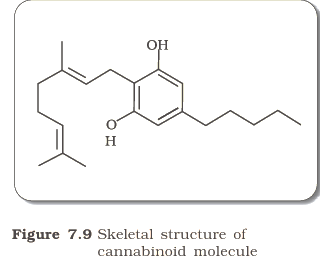
Cannabinoids and Cocaine
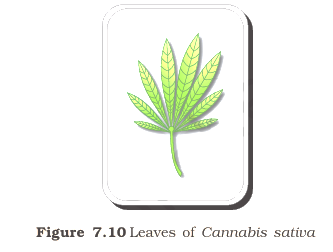
Coca Alkaloids and Other Hallucinogens
- Cocaine: Also called coke or crack; it is obtained from the coca plant *Erythroxylum coca*, native to South America.
- Action: Cocaine interferes with dopamine transport and strongly stimulates the central nervous system.
- Effects and use: Usually snorted; it can cause euphoria and increased energy. Excessive doses may cause hallucinations.
- Other hallucinogenic plants: *Atropa belladonna* and *Datura* have hallucinogenic properties.
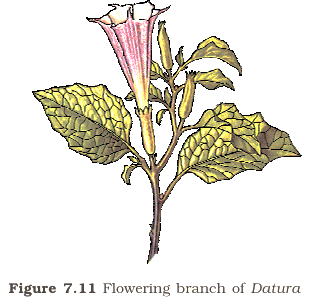
Medicinal Drugs and Drug Abuse
- Medicinal drugs sometimes abused: Barbiturates, amphetamines and benzodiazepines may be prescribed for conditions such as depression and insomnia, but can be misused.
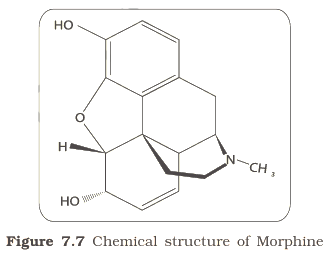
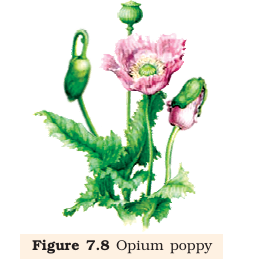
- Morphine: A powerful sedative and painkiller that is useful for patients after surgery.
- Traditional use: Hallucinogenic plants, fruits and seeds have long been used in folk medicine and religious ceremonies; use outside medical purposes or in harmful amounts can constitute abuse.
- Smoking as a risk: Smoking may pave the way to harder drugs.
- Prevention and support: Education and guidance help young people avoid harmful habits; addiction calls for counselling and medical help.
Tobacco and Its Harmful Effects
- Nicotine: It stimulates the adrenal glands to release adrenaline and noradrenaline, raising blood pressure and heart rate.
- Smoking: It increases the risk of cancers of the lung, urinary bladder and throat, as well as bronchitis, emphysema and coronary heart disease.
- Oxygen deficiency: Carbon monoxide from smoking reduces haem-bound oxygen in the blood; tobacco chewing increases the risk of oral cancer.
Adolescence and Drug or Alcohol Abuse
How Experimentation Can Escalate
- Curiosity, peer pressure or stress
- First use or experimentation
- Repeated use for perceived benefits or escape
- Addiction and possible dependence
Addiction and Dependence
| Point | Addiction | Dependence |
|---|---|---|
| Main feature | Psychological attachment to the effects of a substance | Body’s need for regular use, shown by withdrawal when use stops |
| When use stops | Continued use is driven by craving for perceived effects | Withdrawal symptoms may appear, such as anxiety, shakiness, nausea and sweating |
How do heroin, cannabinoids and cocaine differ in source and major effect?
State the main causes that may lead adolescents to drug or alcohol use.
Differentiate addiction from dependence.
Quick recap
- Commonly abused drugs include opioids, cannabinoids and coca alkaloids.
- Heroin depresses body functions; cannabinoids affect the cardiovascular system; cocaine strongly stimulates the central nervous system.
- Nicotine raises heart rate and blood pressure, while tobacco use is linked to serious cancers and other diseases.
- Adolescent drug use may begin through curiosity, stress, peer pressure, family difficulties or social influences.
- Repeated use can increase tolerance, reinforce addiction and lead to dependence.
- Withdrawal can be severe; counselling and medical support may be needed to overcome addiction.
Biology — ALL CHAPTERS
1
Sexual Reproduction In Flowering Plants
2
Human Reproduction
3
Reproductive Health
4
Principles Of Inheritance And Variation
5
Molecular Basis Of Inheritance
6
Evolution
7
Human Health And Disease
8
Microbes In Human Welfare
9
Biotechnology : Principles And Processes
10
Biotechnology And Its Applications
11
Organisms And Populations
12
Ecosystem
13
Biodiversity And Conservation