Class 9 . Science . Exploration . Exploration Entering the World of Secondary Science
Chapter 1: Exploration: Entering the World of Secondary Science
Ch 1
Science
Class 9
Exploration: Entering the World of Secondary Science Part 1
Science as Careful Exploration
- Secondary science explores not only what we know, but how we know it: observations lead to measurements, patterns to symbols and equations, and models represent complex systems.
- Scientific ideas are tested and may be revised or discarded when evidence requires it.
- Magnifying glass represents careful observation; compass represents purposeful exploration—choosing questions and models while recognising their limits.
Scientific Models
Scientific model — A simplified representation of a real system that focuses on the features important to a particular question.
- Simplification requires assumptions and deliberately leaving out details that do not matter to the question.
- Purposeful omissions are not mistakes: they make a system manageable while still helping answer the question.
- Examples: a car as a point in physics; atoms and molecules as spheres and bonds in chemistry; cells as labelled diagrams in biology; Earth as a layered sphere in earth science.
- Falling object: neglecting air resistance helps isolate gravity. Heart: ignoring individual cells helps study the organ as a functioning system.
Examples of Choosing Model Details
- Meghnad Saha: To explain why star colour is linked to temperature, he modelled stellar matter as hot gas and focused on temperature, pressure and ion formation, leaving out many complex processes.
- Cricket shot: To predict whether a hit ball clears the boundary before landing, include the ball’s mass and its speed and direction.
- Cricket shot: Bat brand, ball colour and grass amount do not affect that prediction. Air resistance, spin and seam stitching have smaller effects that a simple model may omit.
- Model improvement: Adding more details can make a model more accurate.
Leaving out a detail is not automatically an error: it is appropriate when that detail is irrelevant or has a small effect on the question being studied.
Scientific Language, Symbols and Mathematics
- Precise terms: Everyday words such as force, work, cell and reaction have specific scientific meanings, helping ideas to be communicated clearly and without ambiguity.
- Shared language: Agreed terms, symbols and units let scientists describe observations, compare results and build on one another’s work.
- Quantity symbols: Mass, velocity, force and electric current are commonly represented by , , and , each with a defined unit.
- Mathematics: Equations compactly express relationships between quantities; they help scientists reason and test relationships, not just calculate answers.
- Using equations: First understand the situation and identify relevant quantities, then use the mathematical relationship. Applications include motion, reaction rates, population growth and energy changes.
A Scientific Symbol
- Speed of light: It is denoted by , from the Latin *celeritas*, meaning “speed”; scientific symbols may reflect historical or international conventions rather than convenient abbreviations.
- Exact value: The speed of light is defined as .
Standard Units and Reliable Measurements
- Standard units: Internationally agreed units make measurements comparable across places and support fairness in trade and everyday life.
- SI units: Using standard units consistently reduces conversion mistakes.
Fuel Miscalculation from a Unit Mix-up
- An aircraft needed of fuel.
- Ground crew used fuel density in pounds per litre instead of kilograms per litre.
- The conversion mix-up left the aircraft about litres short of fuel.
- The aircraft glided to an emergency landing; it was damaged, but there were no casualties.
- Consistent use of SI units helps avoid such errors.

Why does science use models?
How can standard units help prevent measurement errors?
Quick recap
- Science uses careful observation, measurement, models and testing to build and revise ideas.
- Models simplify real systems for a specific question; omitted details are deliberate, not necessarily mistakes.
- Model choices depend on the question, and adding relevant details can improve accuracy.
- Scientific language uses precise terms, symbols, units and mathematics to communicate relationships clearly.
- Speed of light is denoted by and defined as .
- Standard units make measurements comparable and help prevent costly conversion errors.
Exploration: Entering the World of Secondary Science Part 2
Laws, Theories and Principles
| Idea | What it does | Example |
|---|---|---|
| Law | Describes a regular pattern observed in nature, using words or mathematical relationships. | Newton’s laws of motion help explain the jerk felt when a bus stops suddenly. |
| Theory | Explains why patterns occur, using evidence gathered and tested over time. | Atomic theory explains how molecules are formed. |
| Principle | A broad idea used to understand or reason about a situation. | Conservation of energy can be applied when climbing stairs. |
How scientific ideas develop
- Theory is not a guess: It is an evidence-based explanation that has been carefully tested and critically examined.
- Open to revision: Scientific ideas can be improved or changed when new evidence or more precise measurements become available.
- Reliability: Science grows more reliable by testing ideas against evidence and allowing them to be corrected.
Scientific Predictions
Scientific prediction — A reasoned expectation about what will happen, based on evidence, tested ideas and careful thinking.
Why predictions matter
- Use: Established laws, theories and models help predict what may happen in new or different conditions, even before an experiment is possible.
- Examples: Ideas about motion predict a kicked football’s travel; chemical knowledge estimates carbon dioxide produced or bread softness; biological principles predict breathing changes while running.
- Prediction matches observation: Confidence in the science behind the prediction increases.
- Prediction differs from observation: Scientists re-examine their assumptions, models and measurements; this can lead to further exploration.
Making a prediction scientifically testable
- Example claim: “It will rain this afternoon because the clouds look dark” is not enough by itself to test the prediction scientifically.
- Ask for evidence: Compare sky conditions during previous rain with today’s conditions; measure humidity, wind speed and direction, and temperature changes.
- Useful questions: Look for measurable data and past patterns rather than relying only on a simple yes/no answer or appearance.
Limits and Correction in Science
Weather forecasts and uncertainty
- Changing factors: Weather depends on temperature, pressure, humidity and wind, all of which can change.
- Why forecasts can fail: Small differences in conditions can grow over time and produce very different outcomes.
- Forecast range: Forecasts are generally more reliable for the next few hours or days than further into the future.
Science learns from limits
- Limits: Even successful theories may not work in every new condition or when measurements become more precise.
- Evidence decides: When predictions fail, scientists reconsider ideas based on evidence—not opinion or belief.
- No final theory: No scientific theory is beyond question; openness to correction is a strength that deepens understanding.
Checking Claims Scientifically
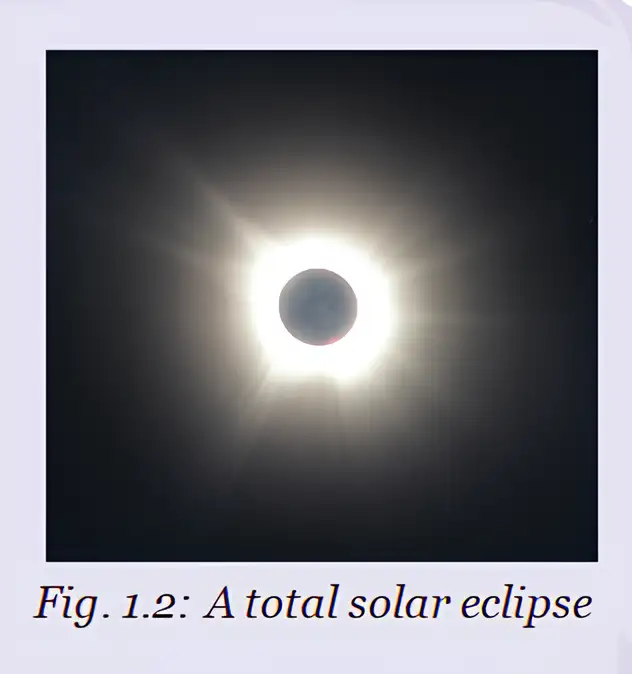
Claim: Food becomes harmful during an eclipse
- Check the mechanism: An eclipse is a play of shadows; ask what physical change it causes and whether temperature changes significantly.
- Test the claim: Consider whether food becomes harmful simply by being left in a shadow.
- Conclusion: No physical, chemical or biological mechanism supports the claim that food becomes harmful during an eclipse.
What is the difference between a scientific law and a scientific theory?
Why are scientific predictions not considered guesses?
Why can weather forecasts become less reliable further into the future?
Quick recap
- A law describes a regular pattern, a theory explains it, and a principle guides understanding in a situation.
- Scientific theories are tested explanations, not guesses, and remain open to revision.
- Scientific predictions use evidence and established ideas; matching observations builds confidence.
- A mismatch between prediction and observation prompts scientists to recheck assumptions, models and measurements.
- Weather forecasts become less certain over time because conditions change and small differences can grow.
- The claim that food becomes harmful during an eclipse lacks a supporting physical, chemical or biological mechanism.
Exploration: Entering the World of Secondary Science Part 3
Estimation as a Scientific Skill
- Estimation: Understand the situation and identify the quantities that matter before making a rough estimate.
- Purpose: Approximate answers can show whether a result is reasonable, help detect errors, and build scientific intuition.
Estimating a Family’s Rice Requirement
- Daily need: Estimate a family’s rice requirement by considering the number of people and their daily calorie needs.
- Method: Use the calories provided by a known quantity of uncooked rice to estimate how much rice is needed for a month; the aim is a sensible range, not an exact value.
Estimating Daily Air Intake
Rough estimates need not match exactly: L is reasonably close to L. Blowing balloons continuously is not equivalent to restful breathing and would quickly cause fatigue.
Science Connects Across Disciplines
- Connected disciplines: Real-world problems often require ideas from several branches of science, as well as mathematics, technology, arts, and social sciences.
- Purpose: Physics, chemistry, biology, and earth science are useful ways to organise knowledge, but the natural world does not have strict boundaries between them.
How Masks Work: Connected Science
- Physics: Particle motion and electrostatic attraction help explain how masks capture particles.
- Chemistry and biology: Polymer-fibre properties and the size and behaviour of viruses affect filtration.
- Mathematics: Models help analyse airflow and estimate a mask’s filtration efficiency.
Scientific Thinking and Its Value
How can an estimate be checked for reasonableness?
Which fields contribute to understanding how masks work?
Quick recap
- Estimation uses sensible approximations to check whether an answer is reasonable.
- A rice estimate relates family energy needs to the energy supplied by rice.
- About breaths per day at litre each gives roughly litres of air.
- An independent balloon estimate of about litres is reasonably close to the daily air estimate.
- Real-world problems connect scientific disciplines with one another and with fields such as mathematics and technology.
- Scientific thinking grows through curiosity, questioning, collaboration, evidence-sharing, and learning from mistakes.
Science — ALL CHAPTERS
1
Exploration: Entering the World of Secondary Science
2
Cell: The Building Block of Life
3
Tissues in Action
4
Describing Motion Around Us
5
Exploring Mixtures and their Separation
6
How Forces Affect Motion
7
Work, Energy, and Simple Machines
8
Journey Inside the Atom
9
Atomic Foundations of Matter
10
Sound Waves: Characteristics and Applications
11
Reproduction: How Life Continues
12
Patterns in Life: Diversity and Classification
13
Earth as a System: Energy, Matter, and Life