Class 9 . Science . Exploration . Exploring Mixtures and Their Separation
Chapter 5: Exploring Mixtures and their Separation
Ch 5
Science
Class 9
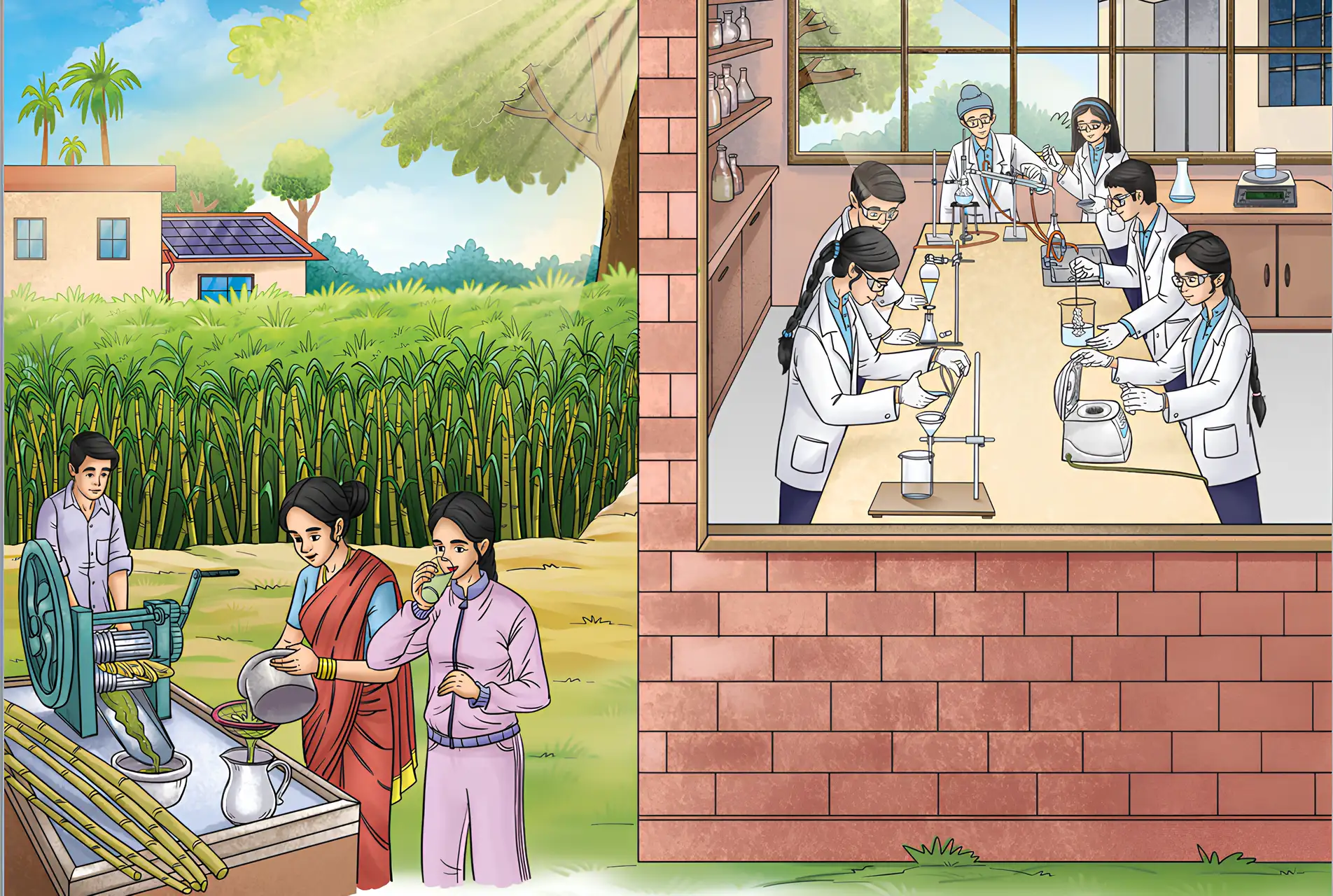
How Can We Classify Mixtures
Why Mixture Separation Matters
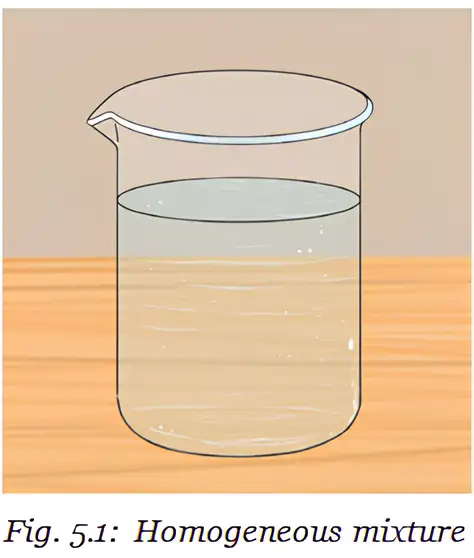
Homogeneous Mixtures
Homogeneous mixture — A mixture with a uniform composition throughout; it is also called a solution.
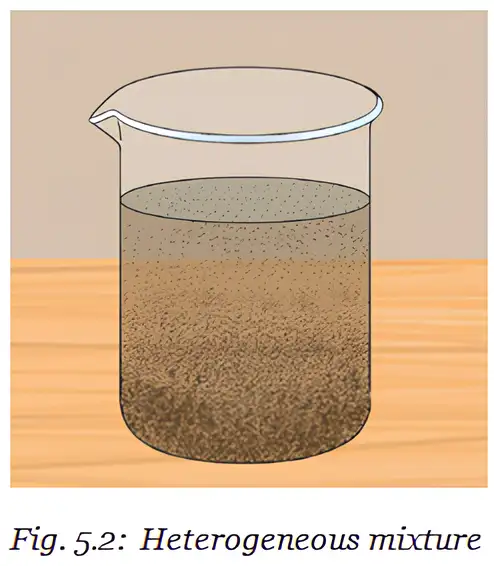
Heterogeneous Mixtures
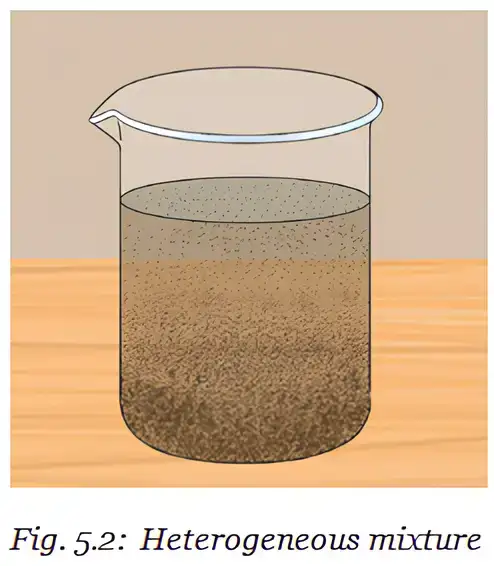
Heterogeneous mixture — A mixture whose composition is not uniform throughout.
Quick recap
- Mixture separation is useful in everyday life and science, including sugar production and disease detection.
- Homogeneous mixtures have a uniform composition and are also called solutions.
- Examples of homogeneous mixtures include sugar water, vinegar and soda.
- Solutions always remain homogeneous.
- Heterogeneous mixtures have a non-uniform composition; sand and water is an example.
Solutions
Solution and concentration
Parts of a solution
- Solute is the substance that gets dissolved; solvent is the substance that dissolves it.
- Example: In sugar water, sugar is the solute and water is the solvent.
- Proportion matters: ORS and pesticide sprays require specified amounts of ingredients; too little pesticide may not protect crops, while too much can harm crops, soil and the environment.
Concentration of a solution — The amount of solute dissolved in a given amount of solvent or solution.
Why concentration matters
- Fixed proportions: A correct ORS recipe depends on using the specified quantities of salt, sugar and water; not every sugary drink is ORS.
- Everyday use: Correct concentrations matter in medicines, agriculture, food, cosmetics and laboratory work.
Percentage expressions of concentration
Choosing a percentage method
- Mass by mass: Use when the solute and total solution are measured by mass.
- Mass by volume: Use when solute mass and solution volume are measured; common in medicines and laboratories.
- Volume by volume: Use when two miscible liquids are mixed, such as in perfumes, cosmetics and vinegar.
Gives the grams of solute in every of solution. Used for homogeneous mixtures and also for products such as milk powder, spice mixtures and packaged foods.
Mass by mass example
- Given: salt is dissolved in water, so solution mass is .
- Calculation: .
Gives the grams of solute in every of solution.
Mass by volume examples
- Glucose solution: glucose in solution is .
- Saline: A sodium chloride solution contains salt in solution; this concentration is used for saline drips.
Gives the millilitres of liquid solute in every of solution.
Volume by volume example
- Pesticide spray: pesticide in solution gives .
Units and notation
- Industry notation: Weight by weight, written , is commonly used; weight and mass are used interchangeably, so and have the same numerical value.
- Read the denominator carefully: Mass by mass uses total solution mass; mass by volume and volume by volume use total solution volume.
Solubility and saturated solutions
Solubility — The maximum amount of solute that dissolves in a fixed quantity of solvent, usually or , at a given temperature.
Saturated solution — A solution that cannot dissolve any more solute at a given temperature.
| Substance | Usual effect of increasing temperature |
|---|---|
| Solid solute in a liquid | Solubility generally increases. |
| Gas dissolved in a liquid | Solubility generally decreases. |
Solubility curves
- Meaning: A solubility curve is a graph of a substance’s solubility against temperature.
- Axes: Temperature in is shown on the -axis; solubility, commonly in grams per water, is shown on the -axis.
- Reading the graph: At a chosen temperature, compare the curves’ heights to see which solute is more soluble; a stronger upward rise indicates a greater increase in solubility as temperature rises.
Why solubility matters
- Separation: Differences in solubility can be used to separate substances in mixtures.
- Temperature matters: Solubility must be stated at a particular temperature because it can change when temperature changes.
Do not use the mass of solvent as the denominator in mass by mass percentage: use the total mass of the solution.
What does each percentage method measure?
How does temperature usually affect the solubility of solids and gases in liquids?
Quick recap
- A solution is a homogeneous mixture of solute and solvent; the amount of solute determines its concentration.
- Mass by mass percentage is mass of solute divided by total solution mass, multiplied by .
- Mass by volume percentage is solute mass per solution volume; volume by volume percentage is solute volume per solution volume.
- Solubility is the maximum amount that dissolves in a fixed quantity of solvent at a stated temperature.
- A saturated solution cannot dissolve more solute at that temperature.
- Solids generally become more soluble with rising temperature, while gases in liquids generally become less soluble.
Methods of Separation of Homogeneous Mixtures part 1
Crystallization
Crystal — A solid whose particles are arranged in a regular geometric pattern.
How crystals form
- Cooling a saturated solution: When solubility decreases as temperature falls, the excess dissolved solid separates out, often as crystals.
- Example: For compound B, only 241 g remains dissolved per 100 g water at 40 °C; from 287 g initially, 46 g separates.
- Examples: Rock salt, candy sugar (mishri), snowflakes and window frost are crystals.
Crystallization — The process of forming crystals from a saturated solution.
Uses and principle
- Purification: Crystallization separates a desired pure solid from unwanted impurities.
- Separation of solids: It can separate two solids that are soluble in the same solvent when one is present in a small quantity.
- Principle: Purification depends on differences in a substance’s solubility at different temperatures.
- Sulfuric acid: It is needed for crystallizing only some salts; for copper sulfate, a drop helps prevent unwanted reactions.
Purifying a solid by crystallization
- Prepare a hot, saturated solution of the solid.
- Filter the hot solution to remove insoluble impurities.
- Cool the filtrate slowly and without disturbance to form crystals.
- Filter the crystals, rinse with cold water and dry them.
| Condition | Slow cooling | Rapid cooling |
|---|---|---|
| Crystal formation | Larger, well-shaped crystals form. | Smaller, less well-formed crystals form. |
Obtaining Salt Crystals
Salt from seawater
- Process: Seawater is concentrated to form a saturated solution, from which salt crystals are obtained.
- Evaporation: It can leave the solute behind, but the solvent disappears rather than being recovered.
| Point | Panga salt | Karkatch salt |
|---|---|---|
| Method | Obtained by boiling concentrated sea brines. | Obtained by evaporating seawater. |
| Crystal sizes | These methods produced salt crystals of different sizes. | These methods produced salt crystals of different sizes. |
Natural crystals
- Mawsmai Cave: Located in Sohra (Cherrapunji), it is known for fascinating natural formations.
- Quartz: A naturally occurring crystal; crystal formations can also be found in caves, mines and within the Earth's crust.
Recovering solvents and separating miscible liquids
- Solvent recovery: Evaporation leaves the solute behind but does not collect the solvent.
- Miscible liquids: Acetone and water mix with each other; their separation and recovery are raised as a question for another method.
What is crystallization, and what is its principle for purifying solids?
How much compound B separates when its solution cools from 60 °C to 40 °C?
Quick recap
- Crystallization forms crystals from a saturated solution and can purify solids.
- Purification depends on solubility differences at different temperatures.
- Hot filtration removes insoluble impurities; slow cooling forms larger, better-shaped crystals.
- Evaporating seawater produces salt crystals but does not recover the solvent.
- Panga salt comes from boiling concentrated brine; karkatch salt comes from evaporating seawater.
- Mawsmai Cave is known for natural formations, and quartz is a naturally occurring crystal.
Methods of Separation of Homogeneous Mixtures part 2
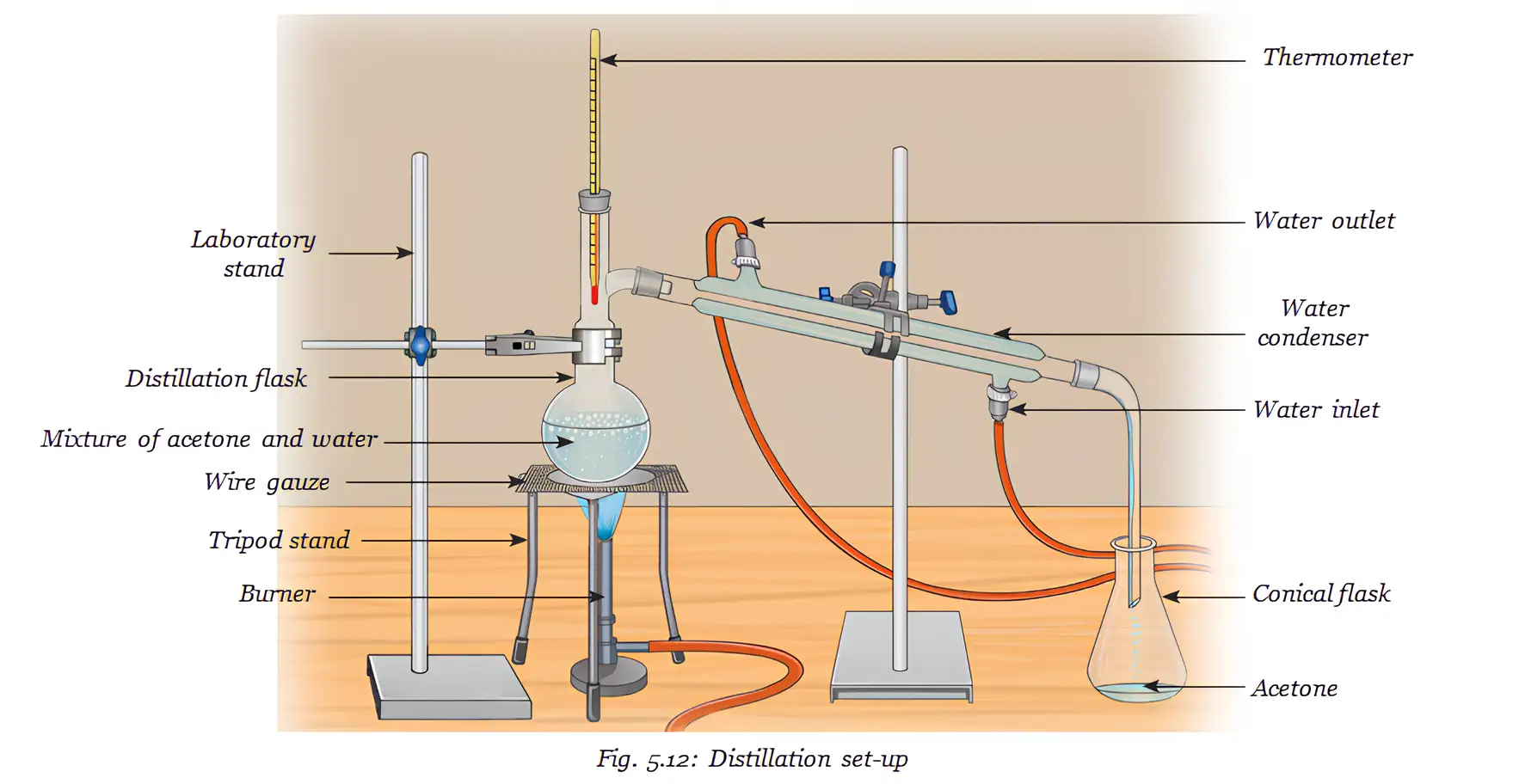
Distillation
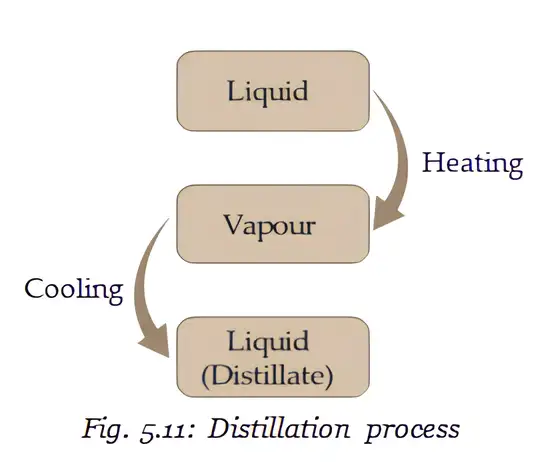
Example: Acetone and water
- Boiling points: Acetone boils at about 56 °C, while water boils at 100 °C.
- Separation: Acetone vaporises and is collected first because its boiling point is lower; water largely remains in the flask.
India’s Scientific Contributions
Fractional Distillation
Paper Chromatography
Can distillation separate two liquids that have the same boiling point?
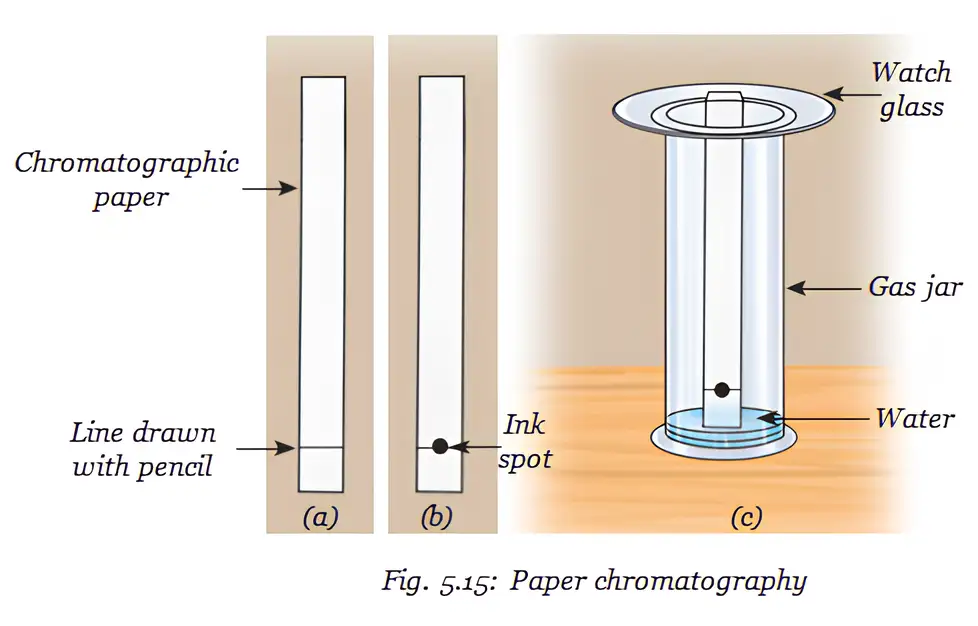
What must be true of the solvent level at the start of paper chromatography?
Can salt be recovered from salt solution by evaporation or distillation?
Quick recap
- Distillation separates liquids or recovers a solvent by vaporising and condensing it.
- Simple distillation is suited to liquids with boiling points differing by about 25 °C or more.
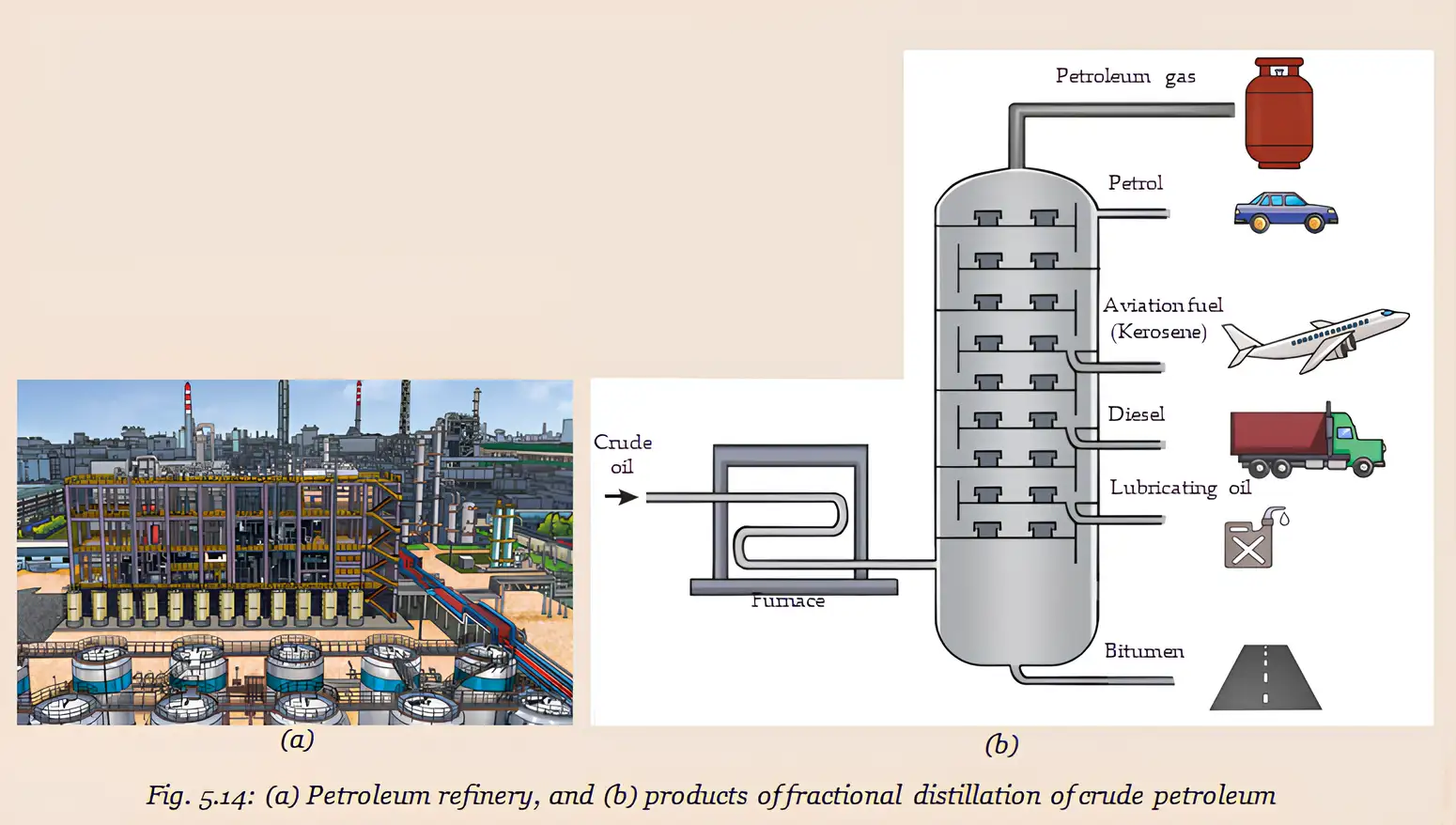
- Fractional distillation separates components with smaller boiling-point differences, including crude-oil fractions.
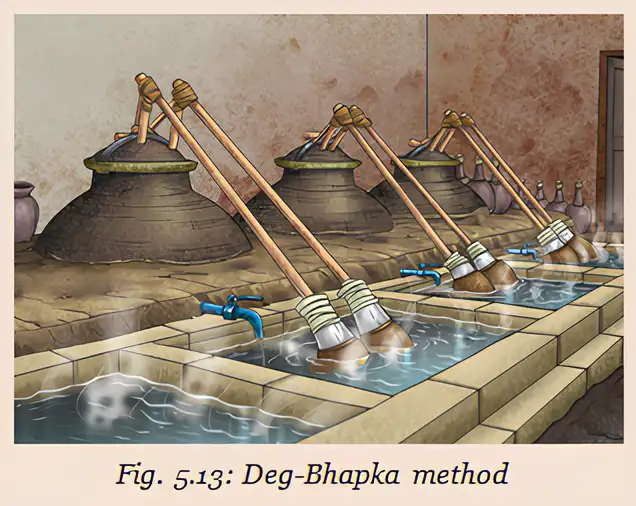
- Kannauj’s traditional Deg-Bhapka method distils natural fragrances such as Mitti ka Ittar.
- Paper chromatography separates mixture components because they travel at different rates through paper with a solvent.
How Can We Separate the Components of Heterogeneous Mixtures part 1
Separating Two Immiscible Liquids
Heterogeneous mixture — A non-uniform mixture in which the components are not evenly distributed.
Immiscible liquids — Liquids that do not mix with each other and form separate layers.
Key points
- Examples: Oil and water do not mix; sand and water, and iron filings and sulfur, are also heterogeneous mixtures.
- Layer formation: Immiscibility causes separate layers; density determines which liquid is on top.
- Mustard oil and water: Water forms the lower layer, while mustard oil forms the upper layer.
- Separating funnel: Drain the lower layer through the stopcock first, then collect the upper liquid separately.
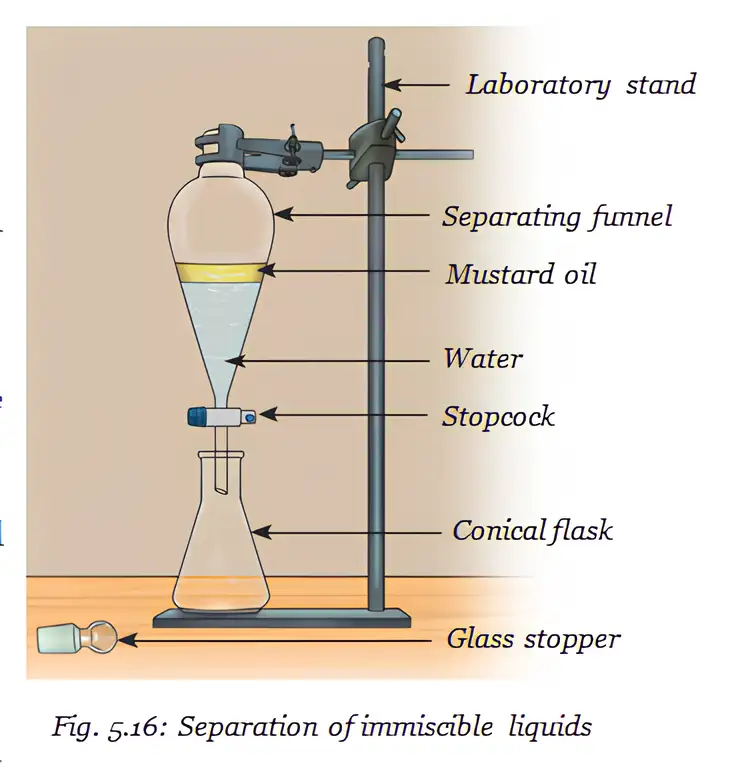
Heterogeneous Mixtures Involving Gases
Gas mixtures and solid–solid mixtures
- Most gas mixtures: Gas particles move freely in all directions and mix uniformly, so most mixtures of gases are homogeneous.
- Homogeneous example: Hydrogen and oxygen form a gas mixture used as rocket fuel.
- Heterogeneous examples: Smoke contains solid particles in air; fog contains tiny liquid water droplets in air; dust in air is also heterogeneous.
- Solid–solid mixtures: Most are heterogeneous; a property of one solid can help separate it, such as using a magnet to remove iron nails from sawdust.
Sublimation
Sublimation — The direct change of a solid into vapour without passing through the liquid state.
Key points
- Separation principle: Heating a mixture separates a sublimable solid from a solid that does not sublime.
- Camphor and sand: When heated below its melting point, camphor changes directly into vapour; sand does not sublime and remains behind.
- Deposition: On cooling, vapour changes directly back into a solid without becoming liquid.
- Other examples: Naphthalene also sublimes; solid carbon dioxide, or dry ice, sublimes and is used for ice-cream storage.
| Point | Sublimation | Evaporation |
|---|---|---|
| Starting state | Solid | Liquid |
| Change | Solid changes directly to vapour | Liquid changes to vapour |
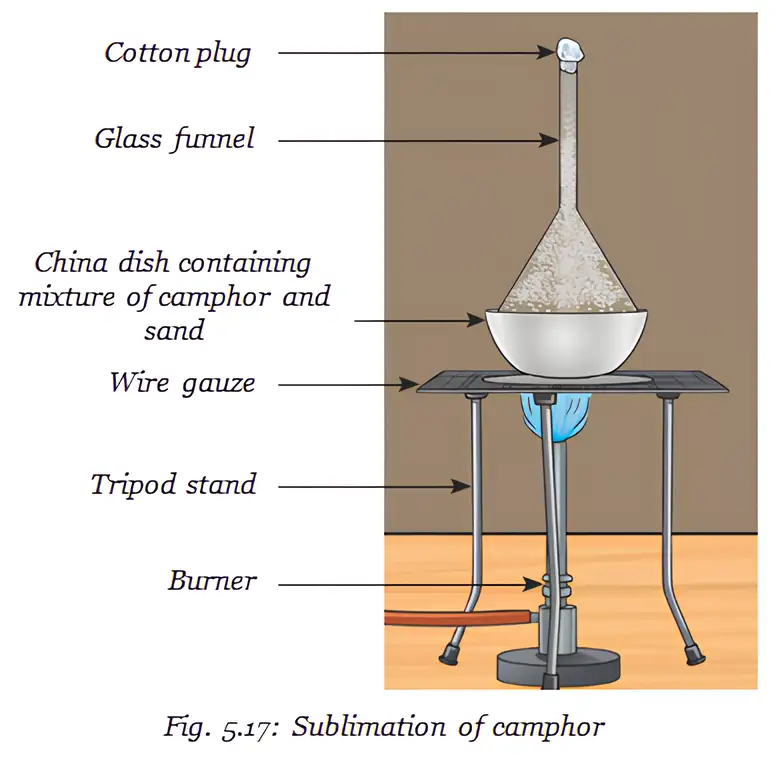
Alloys
Alloy — A homogeneous mixture of two or more metals, or of a metal and a non-metal.
Formation, properties and examples
- Formation: Metals do not dissolve into each other at room temperature; when melted at high temperatures, they can mix and solidify into a new material on cooling.
- Separation: Physical methods cannot separate the components of an alloy.
- Purpose: Alloys are made to produce materials that are stronger, more rigid or more resistant to corrosion.
- Brass: About 80% copper and 20% zinc; bronze: about 80% copper and 20% tin.
- Stainless steel: Usually iron with carbon (about 0.03–0.8%), chromium (16–18%), nickel (10.0–14.0%) and molybdenum (2.0–3.0%).
Why do immiscible liquids form separate layers in a separating funnel?
How does sublimation differ from evaporation?
Quick recap
- Heterogeneous mixtures are non-uniform; immiscible liquids form separate layers.
- A separating funnel drains the denser lower liquid first.
- Most gas mixtures are homogeneous, but smoke, fog and dust in air are heterogeneous.
- Sublimation changes a solid directly into vapour; deposition changes vapour directly into solid.
- Camphor sublimes below its melting point and can be separated from sand.
- Alloys are homogeneous mixtures that cannot be separated by physical methods.
How Can We Separate the Components of Heterogeneous Mixtures part 2
Suspensions
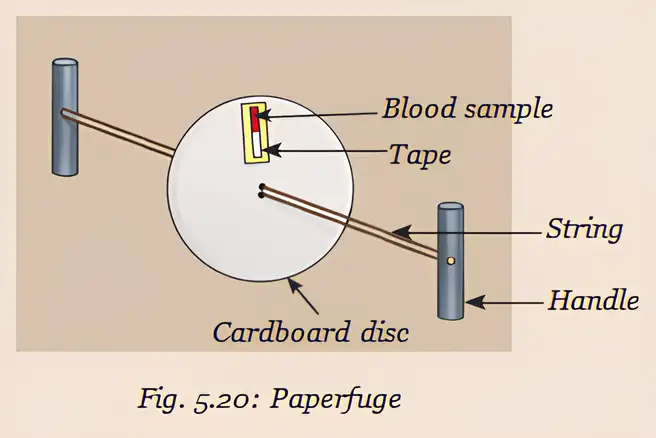
Centrifugation
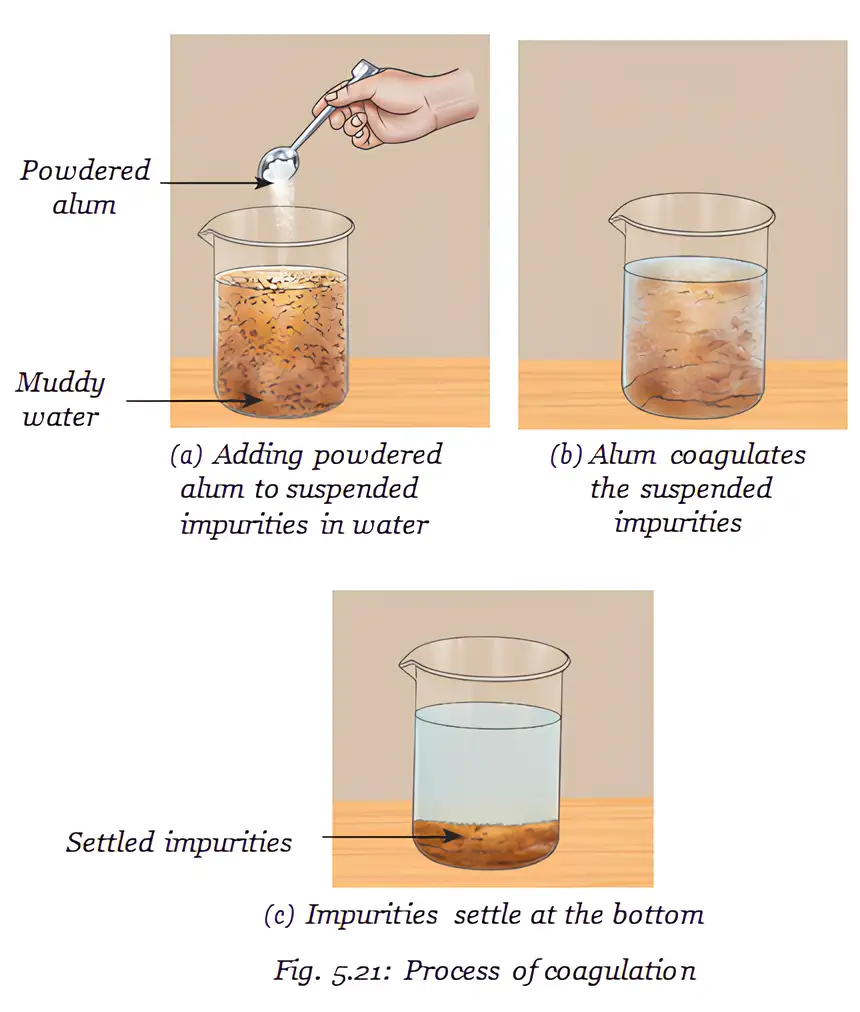
Coagulation
Coagulation of muddy water
- Add alum (coagulant) to muddy water.
- Fine suspended impurities clump into larger particles.
- Clumps settle to the bottom by gravity.
- Remove the settled impurities by decantation or filtration.
Colloids
Blood components and donation
- Components: Centrifugation separates blood into plasma, platelets, white blood cells, and red blood cells.
- Use: Separated components are stored in blood banks for transfusions when needed.
- Donation: The body naturally replaces donated blood within a few weeks.
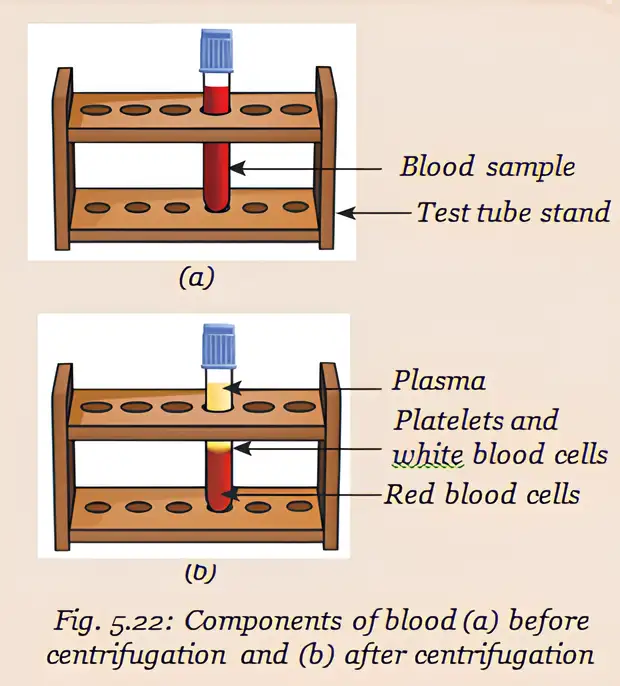
Do not classify blood as a true solution or suspension: it is a colloid, although centrifugation can separate its components.
How does centrifugation separate a mixture?
What is coagulation? Give one example.
Quick recap
- Suspension particles are visible, larger than solution particles, and may settle over time.
- Centrifugation separates heavier particles from lighter liquid by rapid spinning.
- A paperfuge is a hand-powered, low-cost centrifuge that can work without electricity.
- Coagulation makes fine particles clump; the clumps settle and can be removed.
- Colloids have particles of 1–1000 nm that remain dispersed without settling.
- Blood is a colloid and can be centrifuged into plasma, platelets, and blood cells.
Tyndall Effect
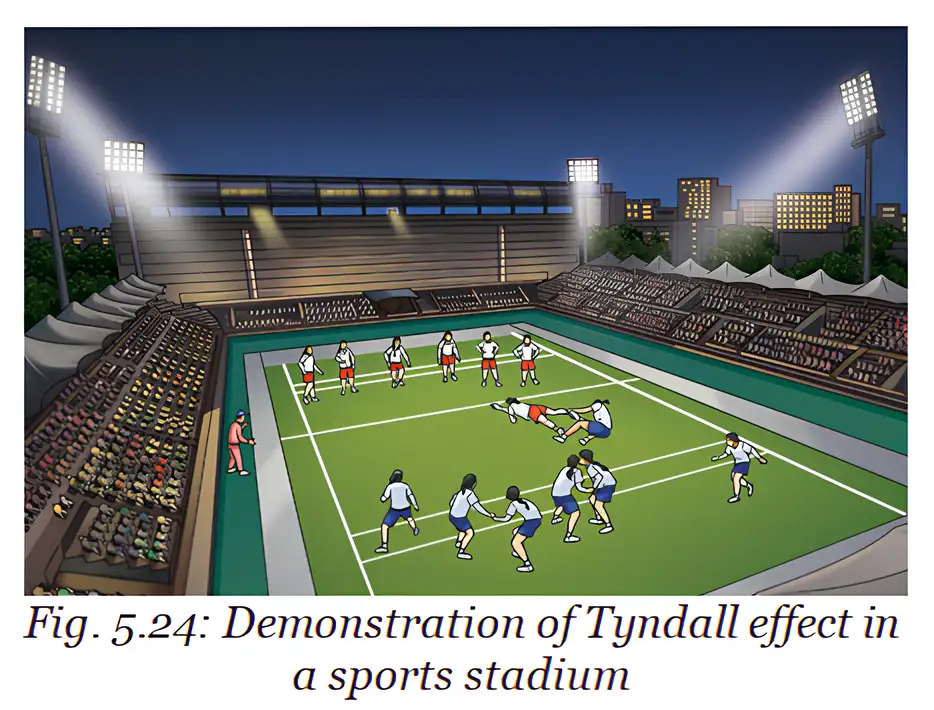
Tyndall Effect
Tyndall effect — The scattering of light by particles, which makes the path of a light beam visible.
How it appears
- Where it occurs: Light is scattered by particles in colloids and suspensions, but not by transparent solutions.
- Visible beam: Scattering makes the path of a beam visible; it can occur in dusty or smoky air and in stadium floodlights.
- Name: The effect is named after John Tyndall, who first explained the scattering of light by particles.
Colloid Components
Dispersed phase — The solute-like component made up of dispersed particles in a colloid.
Dispersion medium — The component in which the dispersed phase is suspended.
Emulsions
Emulsion — A colloid in which both the dispersed phase and the dispersion medium are liquids.
| Type | Dispersed phase | Dispersion medium | Examples |
|---|---|---|---|
| Oil-in-water | Oil | Water | Milk; vanishing creams |
| Water-in-oil | Water | Oil | Butter; body lotions; cold cream |
Emulsion stability and uses
- Emulsifying agents: These stabilise emulsions; proteins in milk and butter act as emulsifying agents.
- Medicines: Some medicines are made as emulsions so they disperse in water, are more palatable and feel less greasy.
Examples and Applications
Light scattering in everyday settings
- Clouds: Tiny water droplets or ice crystals floating in air form a colloidal mixture and scatter light.
- Hazy air: Smoke and dust particles scatter light, making cities with polluted air look hazy.
Separation in everyday life
- Methods depend on properties: Mixtures can be separated using differences in particle size, density and solubility.
- Living bodies: Kidneys remove waste from blood.
- Sewage treatment: Sedimentation, coagulation and filtration help clean sewage water; the treated water can be reused for toilet flushing or watering plants.
- Environmental need: Separating plastic waste from oceans and rivers and improving recycling help protect the environment.
What is the Tyndall effect, and where can it be observed?
Why do clouds show the Tyndall effect?
Quick recap
- The Tyndall effect is the scattering of light by particles, making a beam’s path visible.
- Colloids and suspensions scatter light; transparent solutions do not.
- A colloid consists of a dispersed phase suspended in a dispersion medium.
- Emulsions are liquid-in-liquid colloids; oil-in-water and water-in-oil types are identified by the dispersed phase.
- Emulsifying agents stabilise emulsions; proteins do so in milk and butter.
- Cloud droplets, ice crystals, smoke and dust can scatter light.
- Separation methods use properties such as size, density and solubility; sewage treatment includes sedimentation, coagulation and filtration.
At a Glance
Types of Mixtures
| Classification | Key feature |
|---|---|
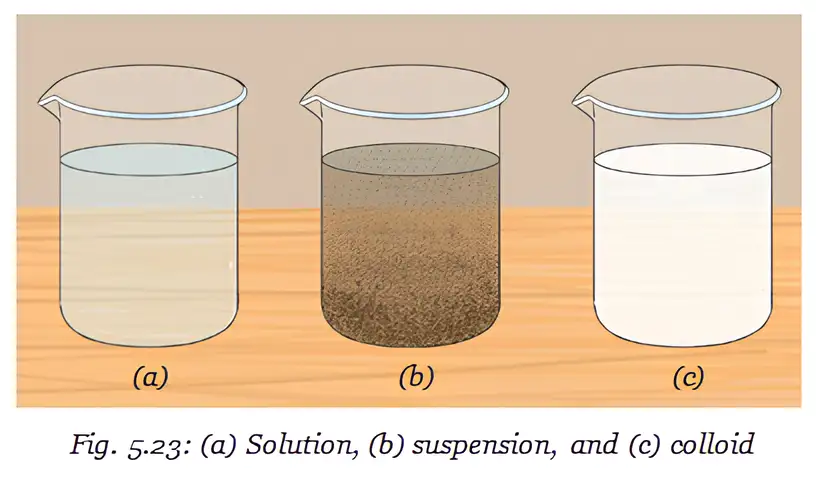
| Homogeneous | Composition is uniform throughout; solutions are homogeneous mixtures. |
| Heterogeneous | Composition is not uniform throughout; suspensions and colloids are heterogeneous mixtures. |
| Solution | A homogeneous type of mixture. |
| Suspension | A heterogeneous mixture with dispersed particles. |
| Colloid | A mixture with dispersed particles that scatter light. |
Why and How Mixtures Are Separated
Purpose
- Separation is used to obtain pure substances from mixtures.
- Method choice depends on differences in properties such as solubility, boiling point, movement, density, or particle behaviour.
| Method | Used for | Principle or key point |
|---|---|---|
| Crystallization | Obtaining a pure solid | Forms crystals from a saturated solution. |
| Distillation | Two miscible liquids, or a liquid from a liquid–solid mixture | Separates miscible liquids when their boiling points differ by at least 25 °C. |
| Paper chromatography | Separating compounds | Compounds move at different rates on the paper. |
| Separating funnel | Two immiscible liquids | Uses their different densities to separate them. |
| Centrifugation | Solid particles from a solid–liquid mixture | Rapid spinning separates the heavier solid particles. |
| Coagulation | Small particles in a heterogeneous solid–liquid mixture | A coagulant makes particles clump together and settle. |
Sublimation and Deposition
| Point | Sublimation | Deposition |
|---|---|---|
| Change of state | Solid changes directly into vapour below its melting point, without becoming liquid. | Vapour cools and changes directly into solid, without becoming liquid. |
| Direction | Solid → vapour | Vapour → solid |
Scattering of Light
Tyndall effect — The scattering of light by dispersed particles in a colloid or suspension.
Quick recap
- Mixtures are classified as homogeneous or heterogeneous, and as solutions, suspensions, or colloids.
- Separation methods use differences in physical properties to obtain pure substances.
- Crystallization yields a pure solid from a saturated solution; distillation separates liquids by boiling point.
- Chromatography, separating funnels, and centrifugation rely on differences in movement, density, and particle behaviour.
- Sublimation is solid → vapour; deposition is vapour → solid, with no liquid stage.
- Coagulation helps particles clump and settle; dispersed particles in colloids and suspensions scatter light.
Science — ALL CHAPTERS
1
Exploration: Entering the World of Secondary Science
2
Cell: The Building Block of Life
3
Tissues in Action
4
Describing Motion Around Us
5
Exploring Mixtures and their Separation
6
How Forces Affect Motion
7
Work, Energy, and Simple Machines
8
Journey Inside the Atom
9
Atomic Foundations of Matter
10
Sound Waves: Characteristics and Applications
11
Reproduction: How Life Continues
12
Patterns in Life: Diversity and Classification
13
Earth as a System: Energy, Matter, and Life