Class 9 . Science . Exploration . Work Energy and Simple Machines
Chapter 7: Work, Energy, and Simple Machines
Ch 7
Science
Class 9
Work Done by a Constant Force
Work, Energy and Simple Machines
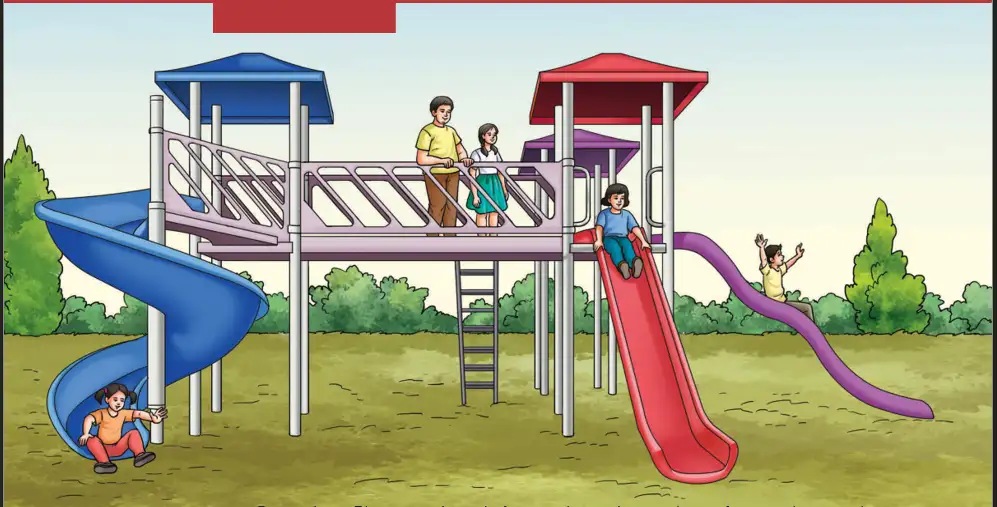
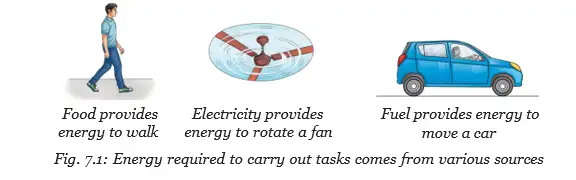
Meaning of Work
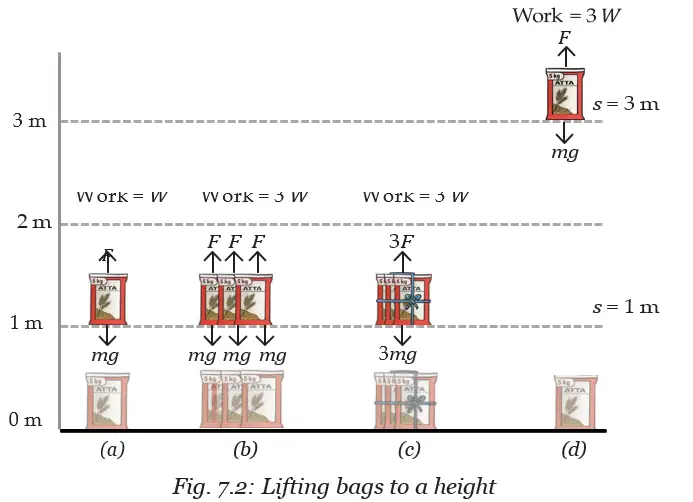
Use this when displacement is in the direction of the force.
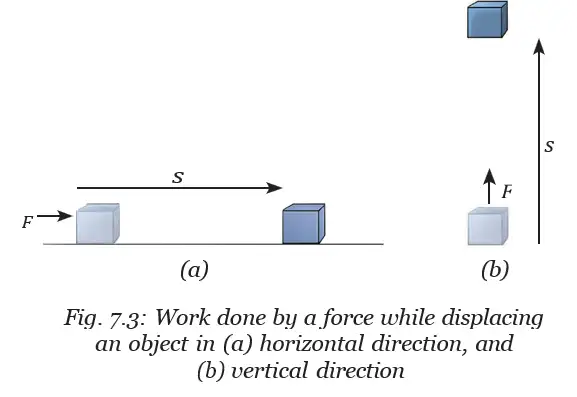
SI Unit and Force–Displacement Graph
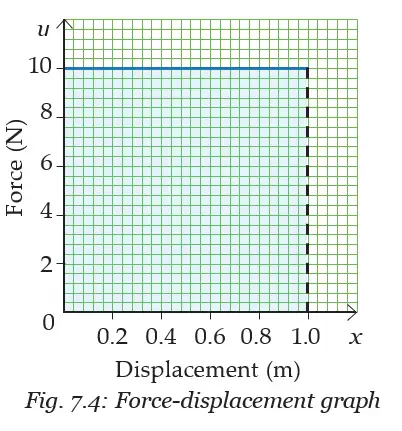
Work as a Signed Scalar
- Work: Work has magnitude but no direction, so it is a scalar quantity.
- Sign: Work is positive when force and displacement point in the same direction, and negative when they point in opposite directions.
Zero Work
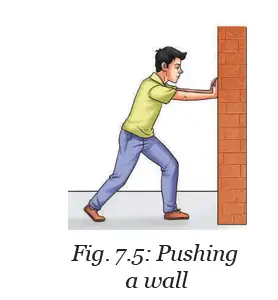
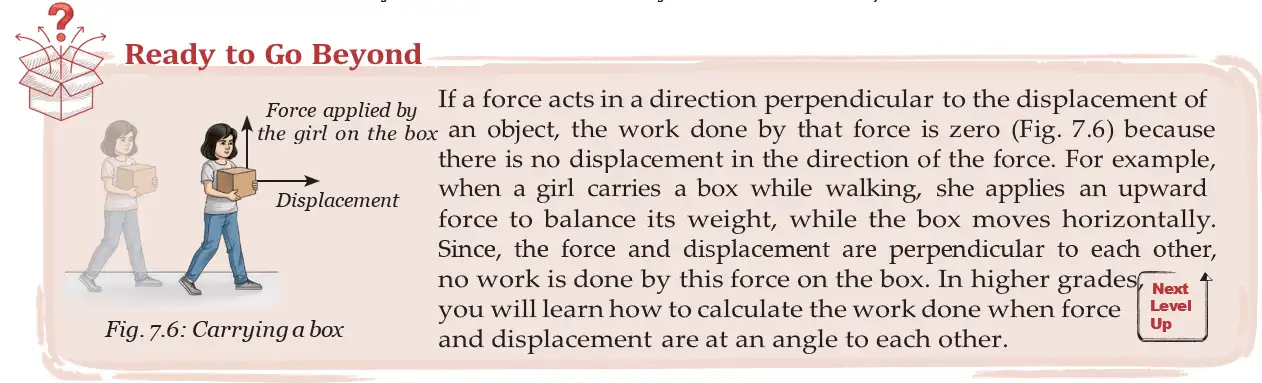
Feeling tired does not necessarily mean scientific work was done on an object: muscles use internal energy even when the object does not move.
Positive and Negative Work
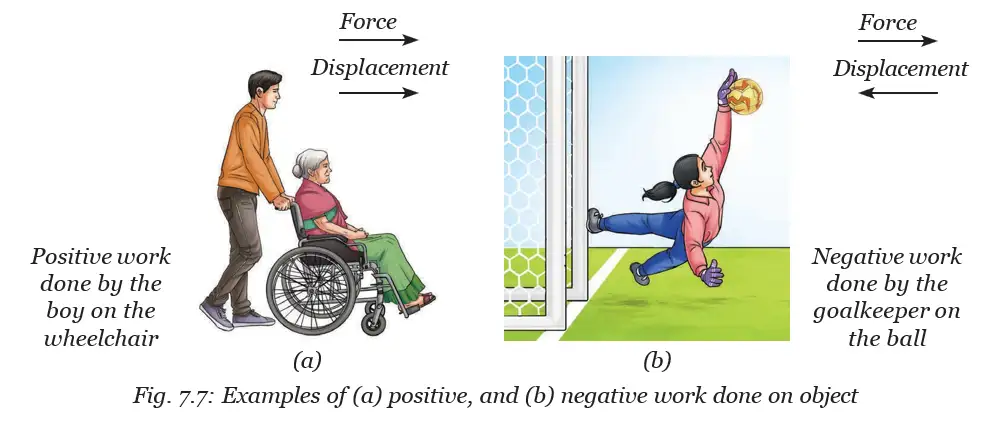
A goalkeeper applies a force of opposite to a ball's motion. If the ball moves while being stopped, what work does the goalkeeper do?
When is work done by a force positive or negative?
Quick recap
- Energy is the capacity to do work; simple machines make tasks easier or more convenient.
- For a constant force in the displacement direction, work is .
- The SI unit is the joule: .
- Work equals the area under a force–displacement graph.
- Work is zero if there is no force, no displacement, or force is perpendicular to displacement.
- Work is positive when force and displacement point the same way and negative when they point opposite ways.
The Work-Energy Theorem
Energy and Work
Energy — The capacity of an object to do work.
How Work Gives an Object Energy
- Positive work: When positive work is done on an object, it gains energy.
- Examples: A thrown cricket ball gains energy from the fielder’s work; a raised flowerpot gains energy from the work done in lifting it.
- Energy transfer: An object with energy can exert a force on another object and make it move, transferring energy.
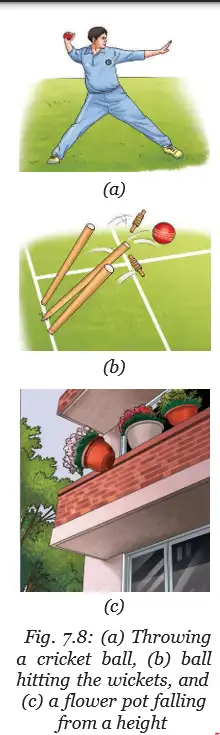
Work-Energy Theorem
Work-energy theorem — The work done on an object equals the change in its energy.
is the work done on the object and is its change in energy.
Key Points
- Meaning: Work done on an object appears as a change in its energy.
- Applicability: The theorem applies to a system of objects and when the forces on an object are not constant.
- SI unit: Work and energy are both measured in joules ().
Other Ways Energy Is Transferred
- Mechanical work: One way energy moves from one object to another.
- Heat: Energy flows from a hotter object to a colder one when they are in contact.
- Radiation: Energy can travel without direct contact; the Sun’s energy reaches Earth this way.
- Other transfers: Energy is also transferred in electric circuits, sound waves, and nuclear reactions.
Work and Energy in Collisions
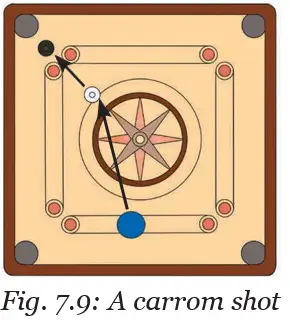
Energy Changes During the Carrom Shot
- The moving striker does positive work on the white coin → the white coin gains energy.
- The white coin exerts an opposite force and does negative work on the striker → the striker loses energy.
- The white coin does positive work on the black coin → the black coin gains energy.
- The black coin does negative work on the white coin → the white coin loses energy.
State the work-energy theorem.
Describe the work and energy changes in the striker–white coin collision.
Quick recap
- Energy is the capacity to do work.
- Positive work done on an object increases its energy; an object can transfer energy by doing work on another.
- The work-energy theorem states that work done on an object equals its change in energy: .
- The theorem applies to systems of objects and to forces that are not constant.
- Work and energy have the SI unit joule ().
- Energy can also be transferred as heat, radiation, in electric circuits, through sound waves, and in nuclear reactions.
- In a carrom collision, work is done on each coin by the object that transfers energy to it; the receiving coin gains energy.
Forms of Energy part 1
Forms of Energy
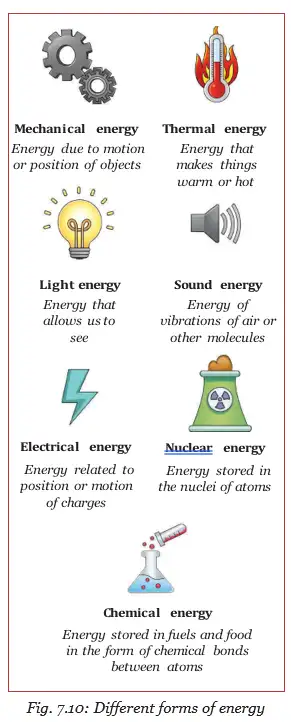
Kinetic Energy
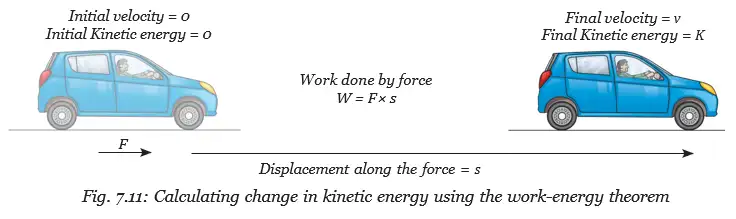
Deriving the kinetic-energy expression
- Assumptions: A constant force acts on an object of mass , changing its speed from to over displacement ; its acceleration is constant.
- Kinematics: , so .
- Work done: Using and , .
- From rest: If , the work done equals the gained kinetic energy: .
Use for an object of mass moving at speed . The SI unit is the joule (J).
For a change in speed from to , the net work equals the change in kinetic energy.
Applying the formula
- Speed doubled: Since , changing speed from to makes kinetic energy four times as large.
- Cricket ball: For and , .
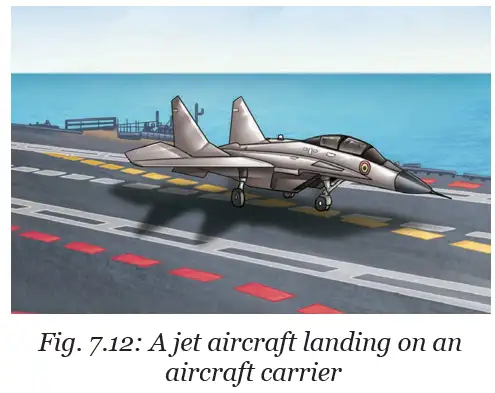
- Jet stopping: A aircraft stops over under a backward force of . The work is negative, , and equals the change from its initial kinetic energy to zero.
- Jet speed: From , the initial speed is .
Objects A and B have masses and and equal kinetic energies. Find the ratio of their speeds.
Does an object's kinetic energy change with position if it moves at constant velocity?
Do not assume that doubling speed doubles kinetic energy: because , it makes kinetic energy four times greater.
Quick recap
- Energy can change form; examples include electrical → light and chemical → mechanical.
- Kinetic energy is energy due to motion, and its SI unit is the joule (J).
- The kinetic energy of an object is .
- Net work equals the change in kinetic energy: .
- Kinetic energy increases with mass and with the square of speed.
- Negative work can reduce an object's kinetic energy, as when a force stops a moving aircraft.
Forms of Energy part 2
Potential Energy
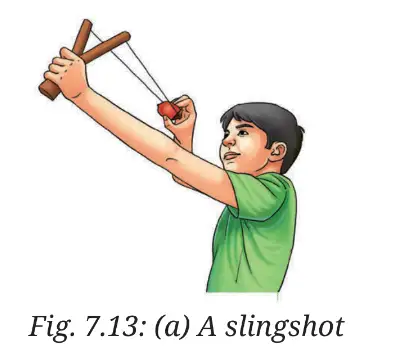
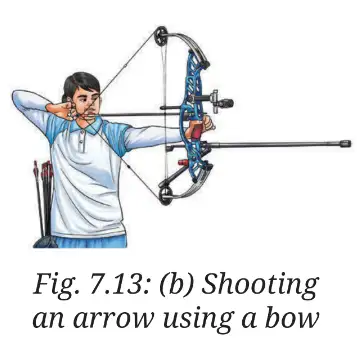
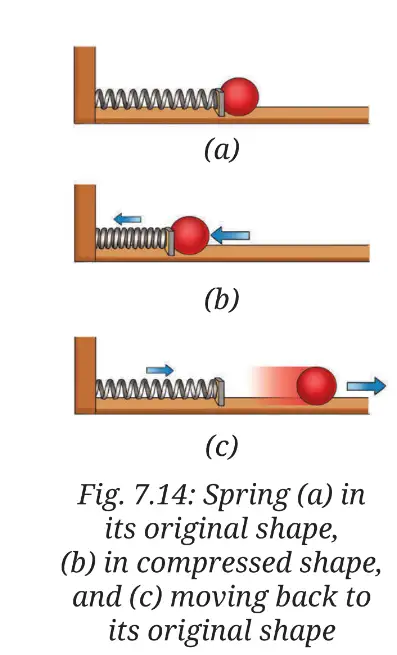
Energy from relative positions
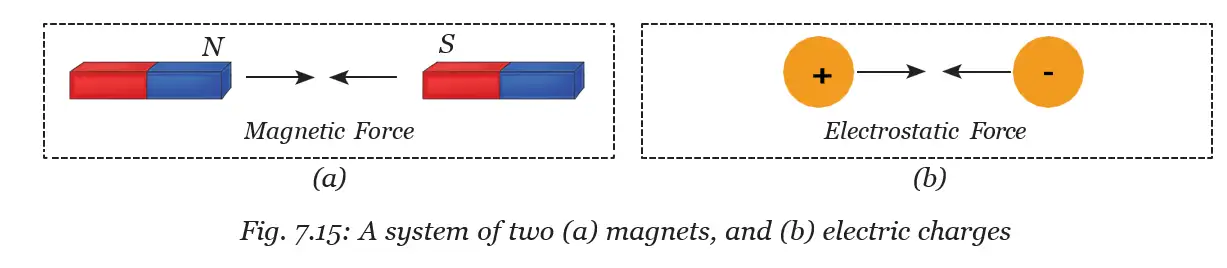
- Magnets: Work is needed to separate unlike poles; when released, they attract and can gain kinetic energy.
- Charges: A separated system of electric charges can store energy that is able to do work when released.
- Gravity: Lifting a ball requires work against Earth's gravitational force; on release, the Earth–ball system gains kinetic energy.
- General rule: Interacting objects can store potential energy due to their positions when forces such as gravitational, electric, or magnetic forces act between them.
- Internal forces: Work against a restoring internal force can store energy in a deformed object or system.
Gravitational Potential Energy
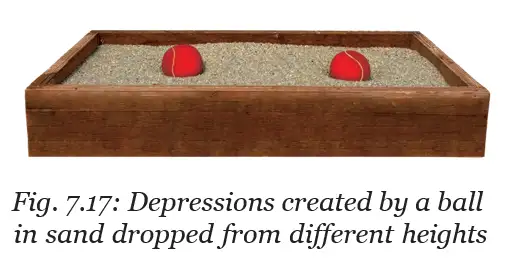
For an object of mass raised through vertical height , the applied force balances its weight . The work done is stored as potential energy.
The work done against gravity is equal to the gain in potential energy.
Using the formula
- Symbols: is gravitational potential energy, is mass, is gravitational acceleration, and is height above the chosen zero level.
- Unit: Potential energy is measured in joules (), the same unit as work and kinetic energy.
- Validity: applies near Earth's surface, where is approximately constant; farther from Earth, decreases.
A ball of mass is raised to a height of . Find its gravitational potential energy using .
Does gravitational potential energy change when an object moves horizontally at constant height?
Do not assume work against every internal force stores potential energy: work against friction does not produce stored potential energy.
Quick recap
- Potential energy is stored by deformation or by the relative positions of interacting objects.
- A stretched band, bent bow, or deformed spring can transfer stored energy into kinetic energy.
- Near Earth's surface, lifting an object increases its gravitational potential energy.
- Gravitational potential energy is given by relative to a chosen zero level.
- The unit of potential energy is the joule (); the formula applies near Earth's surface.
- Horizontal motion at constant height does not change gravitational potential energy.
Forms of Energy part 3
Mechanical Energy and Its Conservation
Use this relation to calculate an object's total mechanical energy.
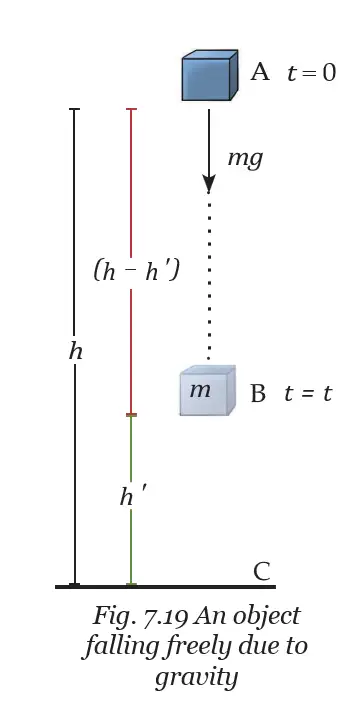
Mechanical energy during free fall
- At release: At height , an object dropped from rest has , , and .
- After time : Its speed is , and its height above the ground is .
- At height : and .
- Total: The increase in kinetic energy equals the decrease in potential energy, so throughout the fall.
- Just before impact: Taking the ground as zero potential-energy level, and ; mechanical energy is still .
Conservation of mechanical energy — When no non-conservative external forces, such as friction, remove energy from a system, its total mechanical energy remains constant.
Pendulum: Energy Changes During Motion
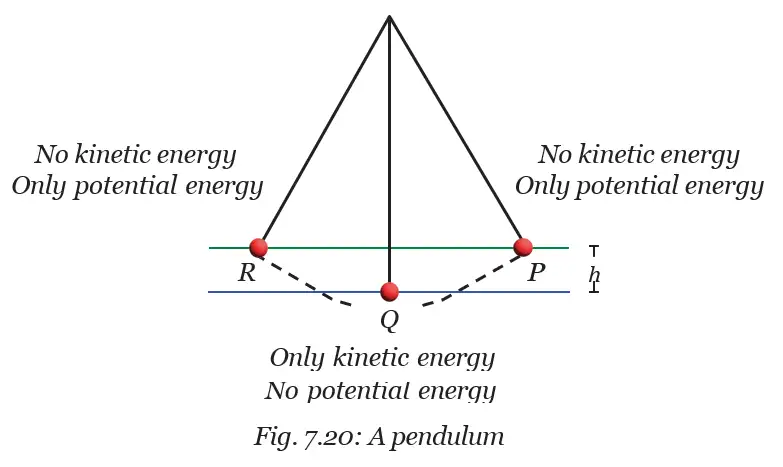
| Position | Potential energy | Kinetic energy |
|---|---|---|
| Extreme position (P or R) | Maximum; the bob is raised above its lowest point. | Zero for an instant as the bob stops before reversing direction. |
| Lowest position (Q) | Zero if this point is chosen as the reference level. | Maximum as the bob moves fastest. |
Ideal and real pendulum motion
- Ideal motion: The bob rises to its starting height on the opposite side as energy changes between potential and kinetic forms.
- Real motion: Air resistance and friction at the support dissipate mechanical energy, so the bob reaches progressively lower heights and eventually stops.
Applying Conservation of Energy
Energy in a wider context
- Total energy: Mechanical energy is one form of energy; the total energy of an isolated system remains constant.
- Problem-solving use: Conservation of mechanical energy can find an object's speed or position without tracking every stage of its motion.
For a child sliding down through vertical height , assume friction is negligible and the child starts from rest.
Slide example: what determines the bottom speed?
- Conversion: The child's potential energy at the top becomes kinetic energy at the bottom when friction is neglected.
- Result: The bottom speed depends on vertical drop and gravitational acceleration , not on the child's mass or the slide's shape.
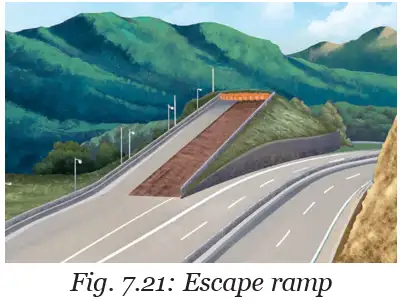
Escape-ramp example
- Given: Truck mass , speed , ramp angle , sand force , and .
- Initial kinetic energy: ; the initial potential energy is taken as zero.
- Height gained: On a ramp, vertical rise is half the distance travelled, so ramp length gives height .
- Energy used to stop: The initial kinetic energy is spent gaining gravitational potential energy and doing work against the sand: .
- Answer: , so the minimum ramp length is .
Do not assume mechanical energy is conserved when friction or air resistance acts; these forces transfer some mechanical energy to other forms, such as heat and sound. Total energy is still conserved.
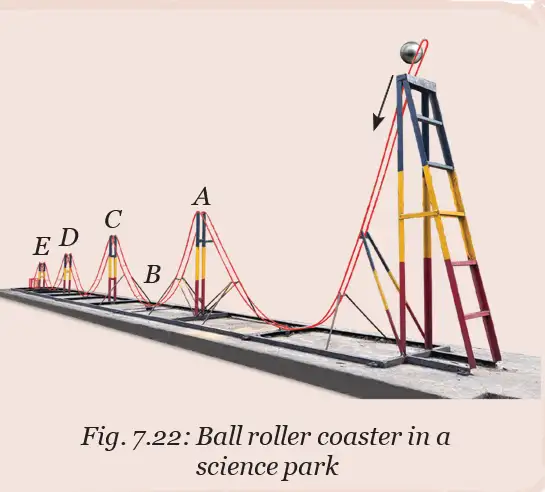
Ball moving over successive heights
- High points: Kinetic energy is small or zero at a turning point, while potential energy is high.
- Low points: Potential energy decreases and kinetic energy increases as the ball descends; climbing converts kinetic energy back to potential energy.
- Successive heights: Later turning points are usually lower because friction and air resistance convert some mechanical energy into other forms.
Why does a real pendulum eventually stop?
What happens to a freely falling object's mechanical energy as it falls?
Quick recap
- Mechanical energy is the sum of kinetic and potential energy.
- With gravity alone, a falling object's potential energy converts into kinetic energy while mechanical energy remains constant.
- A pendulum has maximum potential energy at its extreme positions and maximum kinetic energy at its lowest position.
- Friction and air resistance reduce mechanical energy but do not destroy total energy.
- For a frictionless descent through height , the bottom speed is , independent of mass and path shape.
- An escape ramp stops a truck by converting its kinetic energy into gravitational potential energy and work against the sand.
Power
Meaning and Measurement of Power
Power — The rate at which work is done.
Here, is work done and is the time taken.
Key points
- More work in the same time requires greater power.
- Same work in less time also requires greater power.
- SI unit: watt (); .
- Horsepower: ; often used for engines and pumps.
- Unit name: The watt is named in honour of James Watt.
Calculating Power
Lifting a weight
- Work done: For a mass lifted vertically, .
- Power: In , .
Accelerating a car
- Convert speed: ; the car starts from rest, so .
- Work done: This equals the increase in kinetic energy: for .
- Power: Over , .
How is power calculated when an engine changes an object's speed?
Quick recap
- Power measures how quickly work is done: .
- More work per unit time means greater power.
- The SI unit is the watt: .
- One horsepower equals .
- For a lifted mass, work is ; for acceleration, work equals the change in kinetic energy.
- Calculate average power by dividing the work done by the time taken.
Simple Machines part 1
Simple Machines and Mechanical Advantage
- Purpose: Simple machines make tasks easier by changing the magnitude or direction of the applied force.
- Effort and load: The force applied to a machine is the effort; the force it must overcome is the load.
- Mechanical advantage: It is the ratio of load to effort; machines make work more convenient but do not reduce the total work required.
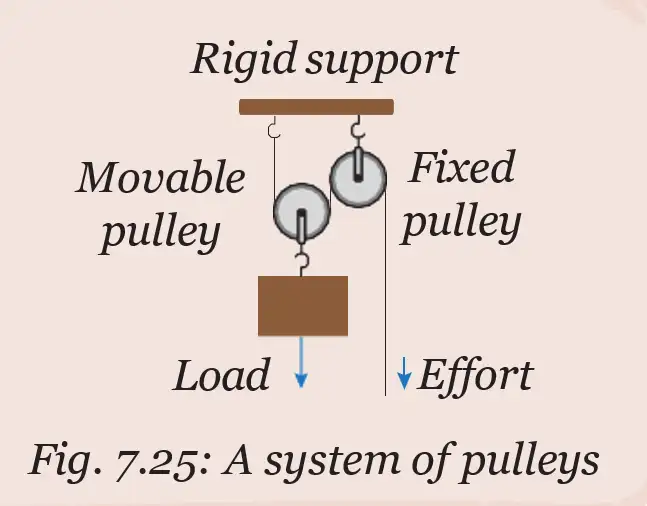
Pulley
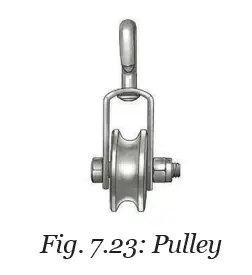
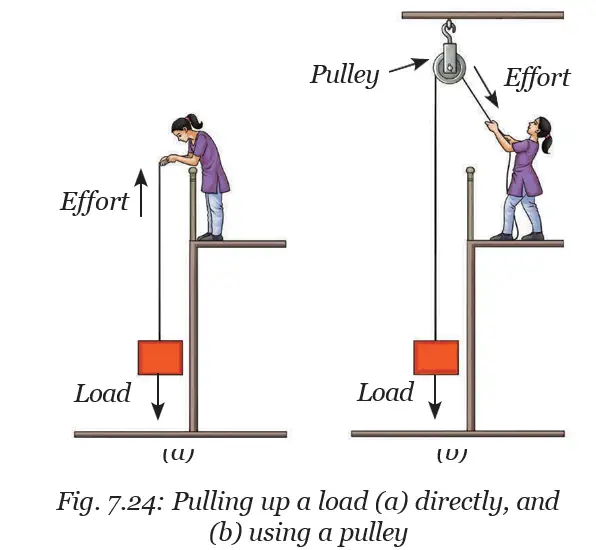
Inclined Plane
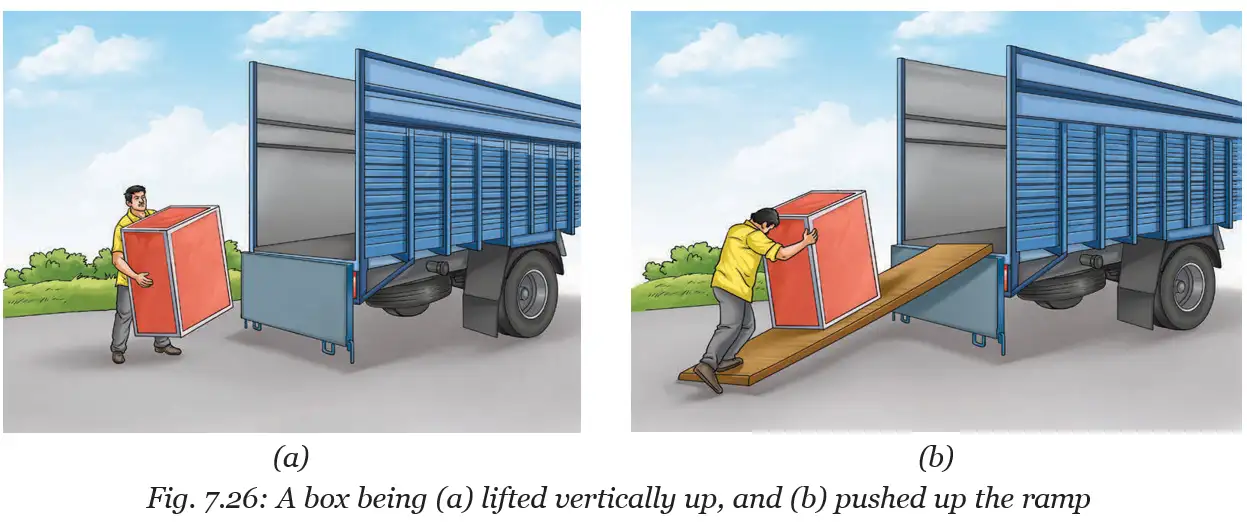
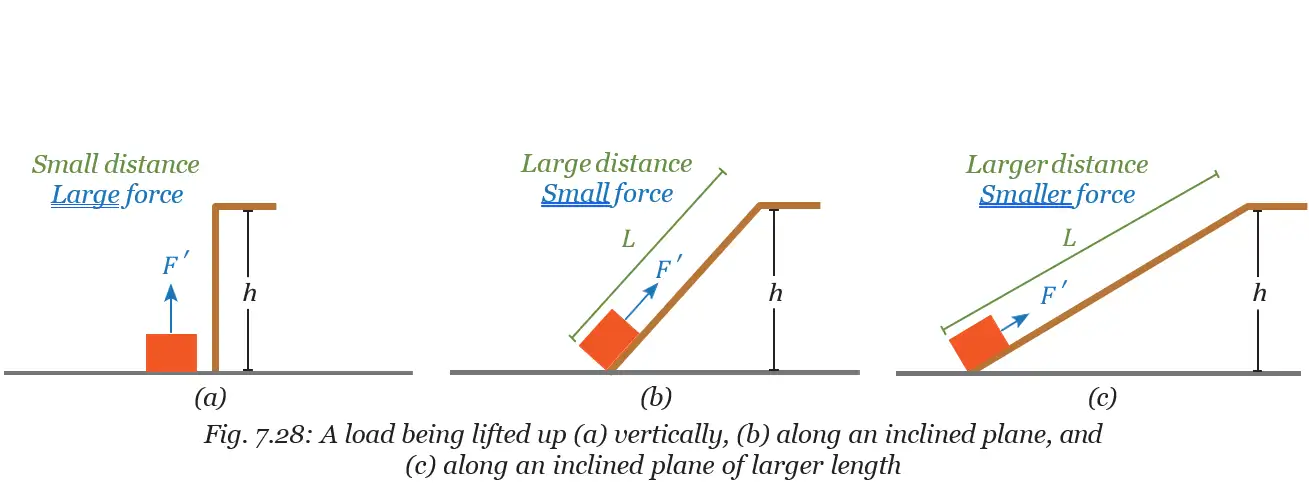
For an object of mass , raised through height along a ramp of length , the load is and the effort is .
What the inclined-plane formula shows
- Mechanical advantage: Since the ramp length is greater than the height , an ideal inclined plane has .
- Effort: Increasing while keeping the same decreases the required effort .
- Work trade-off: Less force is applied over a greater distance, so the work remains the same in the ideal case.
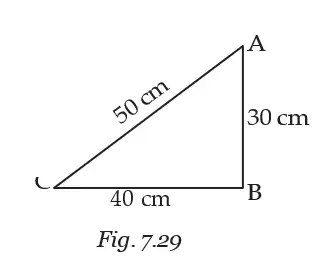
For a ramp with height and horizontal width , the ramp length is .
Applications
- Hill roads: Roads wind around hills in gentle slopes because the longer route reduces the effort needed to gain height.
- Inclined ladders: A sloping ladder makes reaching a height easier than climbing vertically because the climb is spread over a longer distance.
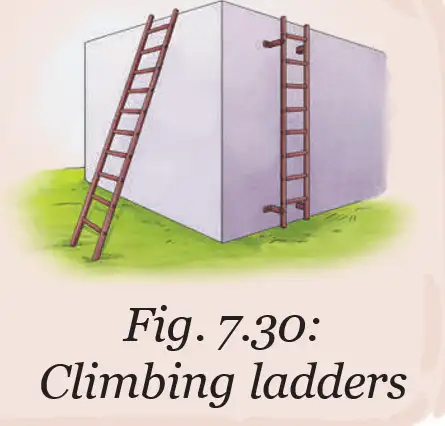
Quick recap
- Simple machines make tasks easier by changing force magnitude or direction, not by reducing total work.
- Effort is the applied force; load is the force being overcome; .
- A fixed pulley changes force direction and has mechanical advantage ; a movable pulley system can have mechanical advantage greater than .
- For an ideal inclined plane, and .
- A longer ramp reduces effort but increases the distance travelled, keeping ideal work unchanged.
- A ramp that rises over a width has a length of and mechanical advantage about .
Simple Machines part 2
The Lever and Its Parts
- Lever: A lever is a rigid bar that rotates about a fixed point.
- Main parts: The fulcrum is the fixed pivot, the load is the force to be overcome, and the effort is the force applied.
- Arms: The load arm and effort arm are the distances of the load and effort from the fulcrum, respectively.
Balance and Mechanical Advantage
| Class | Relative positions | Examples |
|---|---|---|
| First class | Fulcrum lies between effort and load. | Seesaw, scissors |
| Second class | Load lies between fulcrum and effort. | Wheelbarrow, nutcracker |
| Third class | Effort lies between fulcrum and load. | Tweezers, human forearm |
Applying the Lever Principle
Levers in Everyday Use
- Opening a can: A spoon acts as a lever; its long effort arm helps lift the lid with less effort.
- Cutting hard material: Place the material close to the scissors’ fulcrum to increase the cutting force.
- Combined machines: Many everyday machines are made of two or more simple machines.
Machines, Work, and Energy
- Work and energy: A machine transfers the work put in to useful work on the load; it does not create energy.
- Ideal machines: Ignoring friction, the input work equals the useful work done on the load.
- Real machines: Friction dissipates some energy, so useful output work is less than input work.
Watermill: Energy Conversion
- Lever balance: .
- Ideal mechanical advantage: .
- Machines: Reduce or redirect effort; they do not create energy.
Quick recap
- A lever is a rigid bar that rotates around a fulcrum to move a load using an effort.
- The effort arm and load arm are measured from the fulcrum to the effort and load.
- A balanced lever satisfies effort multiplied by effort arm equals load multiplied by load arm.
- For an ideal lever, mechanical advantage equals load divided by effort, or effort arm divided by load arm.
- Lever classes depend on which of the fulcrum, load, or effort lies between the other two.
- Machines do not create energy; friction reduces useful mechanical energy in real machines.
- Watermills convert the potential energy of descending water into wheel rotation and useful work.
At a Glance
Work
Work — Work is done when a force displaces an object in the direction of the force.
Energy and the Work-Energy Theorem
Energy — Energy is the capacity to do work.
Work-energy theorem — Work done on an object or system equals the change in its energy.
| Type | Meaning | Basis |
|---|---|---|
| Kinetic energy | Energy an object possesses due to its motion. | Motion |
| Potential energy | Energy stored due to deformation or the relative positions of objects in a system. | Deformation or relative position |
Power
Power — Power is the rate at which work is done.
Simple Machines
Simple machine — A simple machine makes work easier by changing the magnitude or direction of the force applied.
- Important: A simple machine does not reduce the total work done.
Quick recap
- Work is done when a force displaces an object in the direction of the force.
- Energy is the capacity to do work.
- Work done on an object or system equals the change in its energy.
- Kinetic energy is due to motion; potential energy is stored due to deformation or relative position.
- Power is the rate at which work is done.
- Simple machines change the magnitude or direction of applied force but do not reduce total work.
Science — ALL CHAPTERS
1
Exploration: Entering the World of Secondary Science
2
Cell: The Building Block of Life
3
Tissues in Action
4
Describing Motion Around Us
5
Exploring Mixtures and their Separation
6
How Forces Affect Motion
7
Work, Energy, and Simple Machines
8
Journey Inside the Atom
9
Atomic Foundations of Matter
10
Sound Waves: Characteristics and Applications
11
Reproduction: How Life Continues
12
Patterns in Life: Diversity and Classification
13
Earth as a System: Energy, Matter, and Life