Class 9 . Science . Exploration . Reproduction How Life Continues
Chapter 11: Reproduction: How Life Continues
Ch 11
Science
Class 9
Asexual Reproduction
Reproduction — The biological process by which living organisms produce new individuals of their own kind.
Why reproduction matters
- Life cycle: Organisms are born, grow, mature, reproduce and eventually die.
- Continuity: Reproduction allows life to continue as individuals die.
- Asexual reproduction: One parent produces offspring that are almost exact copies of the parent.
- Sexual reproduction: Offspring inherit a mix of characteristics from two individuals.
- Variation: Differences accumulate over generations, helping organisms adapt and sometimes giving rise to new species.
| Point | Asexual reproduction | Sexual reproduction |
|---|---|---|
| Parents involved | One parent | Two individuals contribute characteristics |
| Offspring | Genetically identical or nearly identical to the parent | Inherit a mix of characteristics |
| Variation | Very little variation | Differences may arise and accumulate over generations |
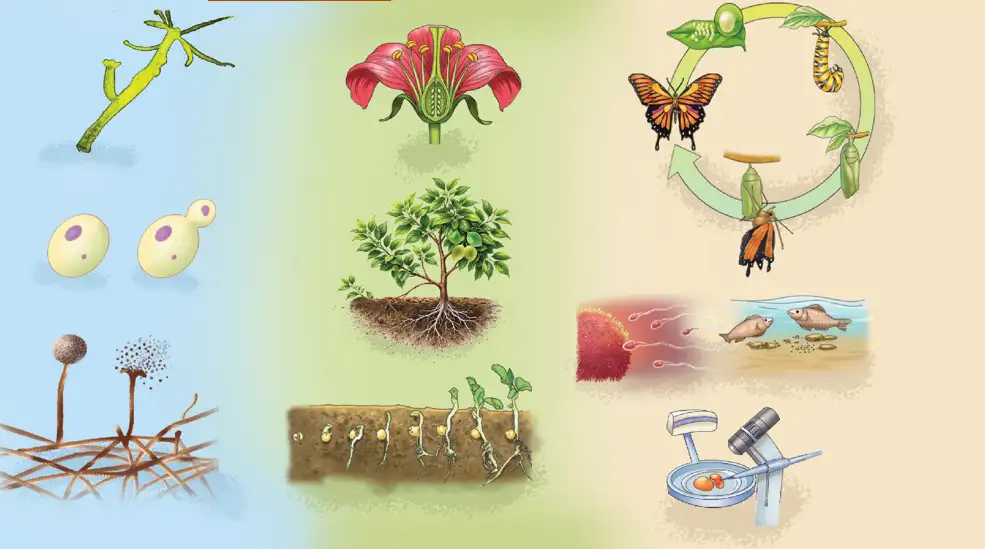
Asexual Reproduction in Plants and Other Organisms
Asexual reproduction — Reproduction in which a single parent produces offspring without mixing characteristics from two parents.
Organisms that reproduce asexually
- Unicellular organisms: Bacteria, amoeba and yeast reproduce asexually.
- Simple multicellular organisms: Hydra and sponge are examples.
- Plants: Many plants reproduce asexually through their vegetative parts.
Vegetative propagation — Asexual reproduction in plants in which new plants grow from vegetative parts such as stems, roots or leaves.
Natural vegetative propagation
- Underground stems: Potato and ginger can sprout into new plants without producing seeds.
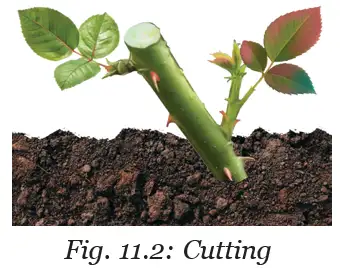
- Stem pieces: Money plant and sugarcane can grow from stem cuttings.
- Leaves: Podophyllum produces tiny plantlets along the edges of its leaves.
- Outcome: This involves one parent and produces genetically identical individuals.
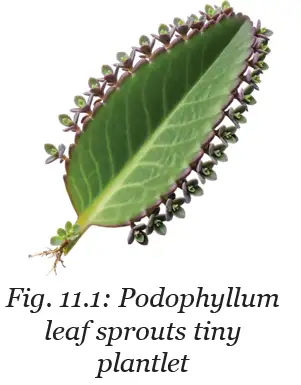
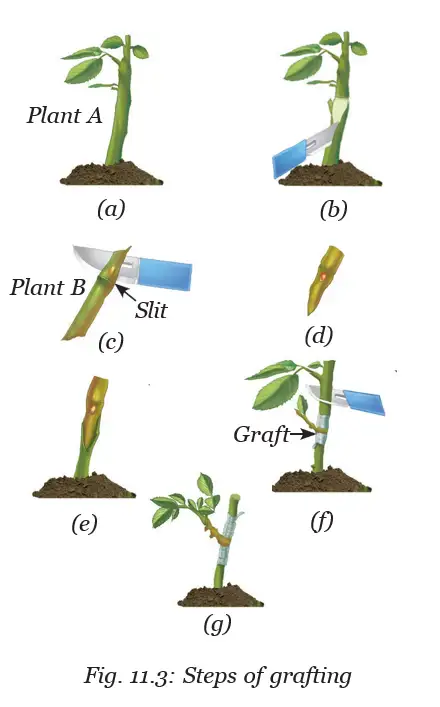
| Method | How a new plant forms | Example or use |
|---|---|---|
| Cutting | A piece of stem is planted and grows into a new plant. | Money plant and sugarcane |
| Grafting | A stem piece from one plant is joined to a slit in a rooted plant; the joined parts grow together. | Used to propagate desirable varieties, such as roses |
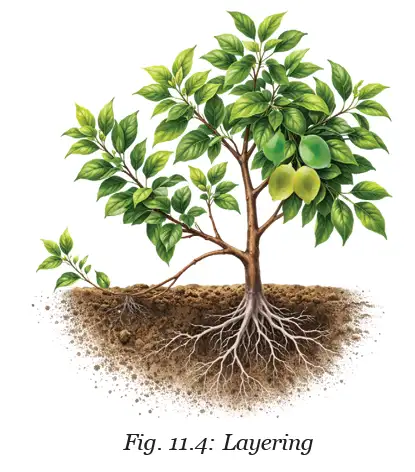
| Layering | A flexible twig is partly buried; after roots develop, it is cut from the parent. | Lemon and other shrubs; roots may form in 10–15 days |
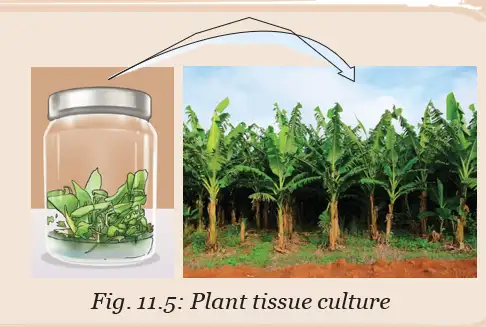
| Tissue culture | Plantlets are grown from plant tissue, such as the shoot tip (apical meristem). | Mass production of healthy banana plantlets |
Uses in agriculture and horticulture
- Large-scale growing: These methods efficiently multiply plants with desirable characteristics.
- Tissue culture: Mass-produced healthy plantlets can help eliminate virus-infected plants and support high yields.
- Farmer training: ICAR’s Krishi Vigyan Kendras (KVKs) teach modern grafting and related skills that can help farmers grow high-yield fruits, increase income and learn about marketing and government programmes.
Budding
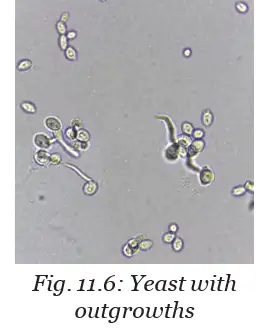
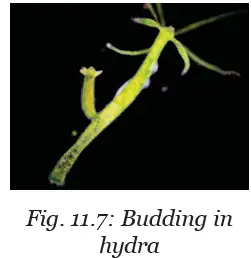
Budding — Asexual reproduction in which repeated cell division at a specific site forms a bud that grows and separates from the parent.
Budding in yeast and Hydra
- Yeast: Small, rounded buds grow from parent cells and develop into new individuals.
- Hydra: A bud enlarges on the parent body, then separates and lives independently.
- Hydra feature: Several buds may grow on one parent at the same time.
Spore Formation in Fungi
Microorganisms and pre-existing life
- Mould growth: Fungi and other microbes can grow on spoiled food and damp surfaces.
- Louis Pasteur: Experiments showed that new life comes from pre-existing life, not spontaneously from non-living matter.
- Significance: His work supported germ theory and the cell theory that all cells arise from pre-existing cells, and encouraged sterilisation of food and instruments.
How fungal spores spread and grow
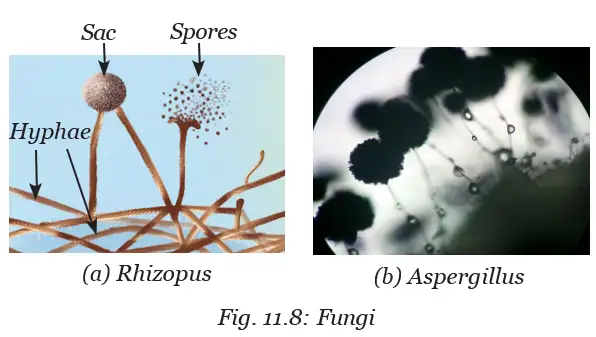
- Spore formation: Fungi produce spores in sac-like structures or on swollen structures on fungal hyphae.
- Airborne spread: Spores are produced in huge numbers, are lightweight and can travel in air currents.
- Germination: Spores landing where moisture and nutrients are available can grow into new individuals.
- Bread mould: Airborne spores settle on moist bread and reproduce rapidly.
Fungi, food and society
- Decomposition: Fungi break down organic waste; some also help remove pollutants and heavy metals from industrial waste.
- Medicines: Fungi are a source of antibiotics, including penicillin and amoxicillin.
- Growth conditions: Mould spores grow in warmth and moisture; the source gives a favourable range of 25–35 °C.
- Refrigeration: Low temperatures slow or stop microbial reproduction and help prevent food spoilage.
Mitosis and Clones
Mitosis — A type of cell division that produces two daughter cells, each with the same number of chromosomes as the parent cell.
Key outcomes of asexual reproduction
- Genetic similarity: Mitosis produces offspring genetically identical to the parent; these offspring are called clones.
- Speed: Asexual reproduction can increase a population quickly when conditions are favourable.
What is vegetative propagation? Give two examples.
How does spore formation help fungi reproduce?
Quick recap
- Reproduction produces new individuals and allows life to continue.
- Asexual reproduction involves one parent and usually produces genetically identical offspring.
- Vegetative propagation forms plants from vegetative parts; methods include cutting, grafting, layering and tissue culture.
- Budding forms a growing outgrowth in organisms such as yeast and Hydra.
- Fungal spores spread easily through air and germinate when moisture and nutrients are available.
- Mitosis produces daughter cells with the parent’s chromosome number; genetically identical offspring are clones.
- Sexual variation can help organisms adapt over generations and may sometimes contribute to new species.
Sexual Reproduction
Sexual reproduction and variation
Meiosis — A special type of cell division that reduces a diploid parent cell to haploid daughter cells, forming gametes.
How meiosis creates variation
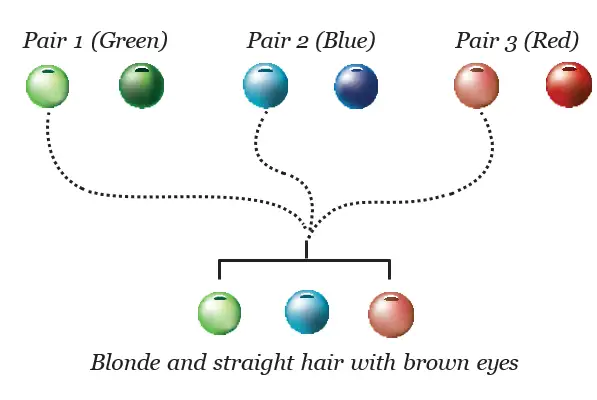
- Chromosome separation: During meiosis, the two chromosomes in each pair separate, so each gamete receives one chromosome from every pair.
- Combinations: Different combinations of chromosomes can enter gametes. With three pairs there are possible combinations; with 23 pairs, there are possible combinations.
- Offspring differences: Random combinations make offspring genetically different from their parents and siblings.
- Importance: Variation can help some individuals survive environmental change and contributes to evolution; examples include high-altitude low-oxygen tolerance and adult milk digestion.
Sexual reproduction in flowering plants
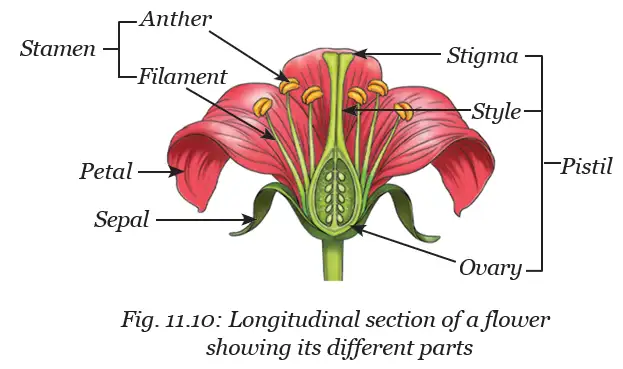
| Part | Structure | Function |
|---|---|---|
| Sepal | Outer, often green part | Protects the flower, especially in the bud stage |
| Petal | Often coloured and/or scented | Helps attract pollinators |
| Stamen | Male part: filament and anther | Anther produces pollen grains containing male gametes |
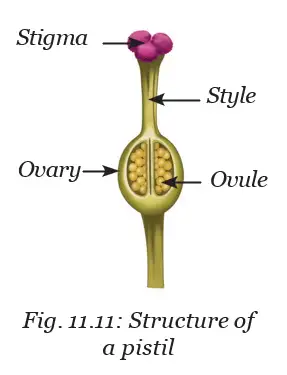
| Pistil | Female part: stigma, style and ovary | Ovary contains ovules, each with an egg cell |
Pistil structure
- Stigma: Tip of the pistil; it may be flat or sticky and receives pollen.
- Style: Thin tube connecting the stigma to the ovary.
- Ovary: Swollen base containing ovules; each ovule contains an egg cell.
Pollination
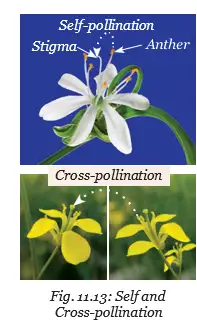
Pollinators — External agents, such as wind, water, insects or birds, that help transfer pollen to a stigma.
| Pollinator | Examples | Typical adaptations |
|---|---|---|
| Wind | Wheat, maize, rice | Pollen is small, light and abundant; stigma is long and feathery to trap it |
| Water | Vallisneria, Hydrilla | Water currents carry pollen between flowers |
| Insects | Sunflower, hibiscus, marigold | Flowers often have bright colours, fragrance and nectar; pollen is large and sticky or spiny, and stigma is sticky |
| Birds | Coral tree, hibiscus | Birds such as Indian white-eyes and sunbirds transfer pollen |
Fertilisation and seed formation
From pollination to a new plant
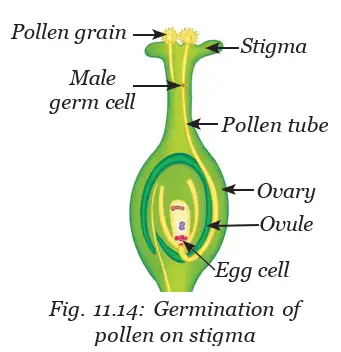
- Pollen reaches a compatible stigma
- Pollen tube grows through the style to an ovule
- Male gamete fuses with the egg cell → fertilisation
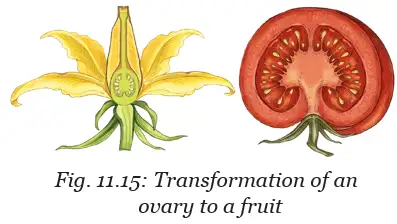
- Zygote develops into an embryo; ovule becomes a seed
- Ovary becomes a fruit → seed disperses and germinates into a new plant
Pollination efficiency
| Pollination strategy | Pollen grains per flower | Estimated seeds formed |
|---|---|---|
| Wind-pollinated grasses (maize, wheat) | 500,000–1,000,000 | 50–200 |
| Insect-pollinated plants (sunflower) | 20,000–40,000 | 800–1,000 |
Plant breeding and agriculture
How does meiosis help maintain chromosome number and create variation?
Distinguish between self-pollination and cross-pollination.
What happens to the ovary and ovules after fertilisation?
Quick recap
- Meiosis halves chromosome number in gametes and creates varied chromosome combinations.
- Flowers have sepals, petals, stamens and pistils; stamens produce pollen and ovules contain eggs.
- Pollination is pollen transfer to a stigma; it may be self-pollination or cross-pollination.
- Wind, water, insects and birds act as pollinators, with different adaptations aiding pollen transfer.
- Fertilisation forms a zygote; the ovary becomes a fruit and ovules become seeds.
- Variation and plant-breeding methods support adaptation and the development of improved crop varieties.
Sexual Reproduction in Animals
Reproduction in Animals
Reproductive Methods
- Methods: Animals reproduce through asexual and/or sexual methods.
- Asexual reproduction: Methods such as budding and spore formation have been studied earlier in the chapter.
Fertilisation in Animals
Sexual reproduction — Reproduction in which male and female gametes meet and fuse to begin development of a new organism.
| Point | External fertilisation | Internal fertilisation |
|---|---|---|
| Where it occurs | Outside the female’s body, usually in water | Inside the female’s body |
| How it occurs | Female releases eggs; male releases sperm over them | Male and female gametes meet inside the female |
| Examples | Most fish and frogs | Reptiles, birds and mammals |
| Egg number and survival | Usually many eggs; survival of young is generally low | Usually fewer eggs; survival is generally higher |
| Protection | Gametes and developing young are less protected | Fertilised egg or embryo is more protected |
Examples of Reproductive Strategies
- Fish: Live in water; external fertilisation; produce hundreds to thousands of eggs at a time; young survival is low.
- Frogs: Live in water and on land; external fertilisation; produce about 5,000–50,000 eggs at a time; young survival is low.
- Lizards: Live on land; internal fertilisation; produce about 2–20 eggs at a time; young survival is moderate.
- Birds: Live in water or on land; internal fertilisation; produce about 1–15 eggs at a time; young survival is moderate to high.
Different Reproductive Strategies
Many Eggs and Larval Development
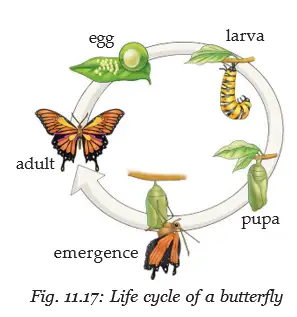
- Many eggs: Fish, amphibians and insects may produce hundreds to thousands of eggs, each with yolk that supplies nutrients to the embryo.
- Limited yolk: The mother cannot provide large amounts of yolk for so many eggs, so each egg contains enough to develop into a larva.
- Larva: An intermediate, mainly feeding stage; it obtains nutrients from organic matter such as decaying food and manure.
- Transformation: After gaining enough nutrition, the larva changes into the adult form; this occurs in animals such as butterflies and frogs.
Eggs, Development and Care of Young
- Reptiles and birds: Lay eggs with enough yolk to nourish the embryo until it hatches.
- Mammals: The zygote develops inside the female’s body; mammals usually feed their young breast milk for some time after birth.
- Care after birth or hatching: Some young find food on their own, while others need extended feeding and care.
- Development time: The need for care broadly depends on how long the embryo develops inside an egg or the mother’s body.
Why do animals with external fertilisation generally produce more eggs?
In which fertilisation method are the gametes and developing young more protected?
What is the role of yolk in an egg?
Quick recap
- Animals reproduce through asexual and/or sexual methods; asexual methods include budding and spore formation among organisms studied in the chapter.
- External fertilisation occurs outside the female’s body, commonly in water; many eggs are produced, but survival is low.
- Internal fertilisation occurs inside the female and provides greater protection, so young survival is generally higher.
- Fish, amphibians and insects often develop through a feeding larval stage before becoming adults.
- Reptile and bird eggs contain yolk to nourish the embryo until hatching.
- Mammal embryos develop inside the female; young are commonly fed breast milk after birth, and care varies with development time.
Reproduction in Human Beings part 1
Reproductive Maturity
- Reproductive maturity: During growth into adulthood, reproductive organs mature and begin producing gametes.
- Human reproduction: A sperm and egg can unite to form a zygote, which develops into an embryo and then a foetus in the uterus.
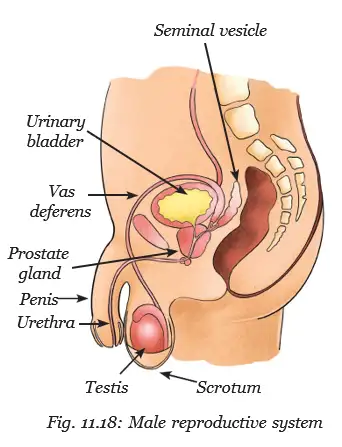
The Male Reproductive System
Sperm Structure
- Head contains genetic material.
- Tail helps the sperm swim towards the egg.
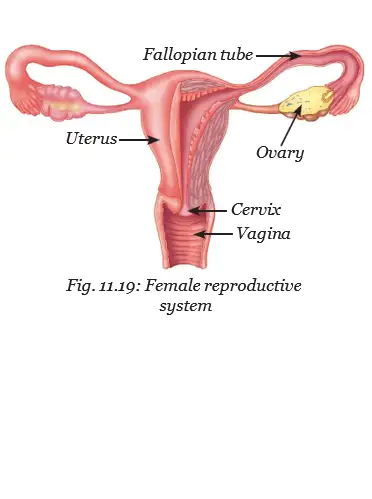
The Female Reproductive System
In-vitro Fertilisation (IVF)
- IVF: An egg and sperm are combined outside the body in a laboratory dish; the fertilised egg is then placed in the uterus.
- India’s first IVF baby: In 1978, Subhash Mukhopadhyay pioneered the birth of Kanupriya Agarwal, nicknamed Durga.
Formation of Reproductive Cells
- Gametogenesis: Gametes form in the testes and ovaries through meiosis, which halves the chromosome number.
- Chromosomes: Human body cells have 46 chromosomes, while sperm and eggs each have 23.
- Gametes: Males produce numerous small, motile sperm; females produce a single large egg.
Ovulation and Fertilisation
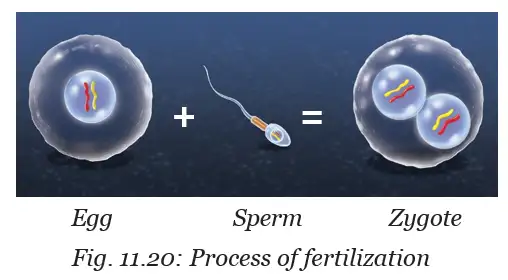
Fertilisation — The fusion of a sperm and an egg inside the female body to form a zygote.
From Fertilisation to Implantation
- A sperm meets an egg in the female reproductive tract → a zygote forms.
- The zygote divides repeatedly by mitosis while travelling towards the uterus.
- The zygote implants in the thick, blood-vessel-rich uterine lining.
- The lining provides nourishment for development; implantation marks the beginning of pregnancy.
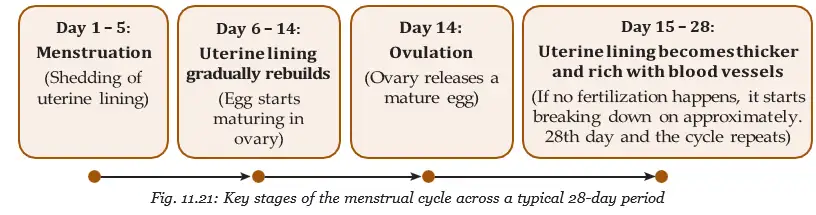
Menstruation and the Menstrual Cycle
Chromosomes and Biological Sex
- Sex chromosomes: Females usually have XX chromosomes, while males usually have XY chromosomes.
- Biological sex: The mother contributes an X chromosome; the father contributes either X or Y, so the father’s contribution determines whether the baby is XX or XY.
Menstrual Hygiene
How does the chromosome number remain constant after fertilisation?
What is menstruation, and why does it occur?
Who determines whether the chromosome combination is XX or XY?
Quick recap
- Reproductive maturity begins when reproductive organs mature and produce gametes.
- Male system produces and transports sperm; the scrotum keeps the testes cooler for sperm formation.
- Female system produces eggs and includes the ovaries, oviducts, uterus, cervix and vagina.
- Meiosis halves the chromosome number: 23 in each gamete; fertilisation restores 46 in the zygote.
- Fertilisation and implantation lead from zygote formation to the beginning of pregnancy.
- Menstruation sheds the uterine lining when fertilisation does not occur; cycles typically last 21–35 days.
- Gamete differences in size, number and structure occur in most animals; menstrual pads should be changed every 4–6 hours, or more often with heavy flow.
Reproduction in Human Beings part 2
Pregnancy and Childbirth
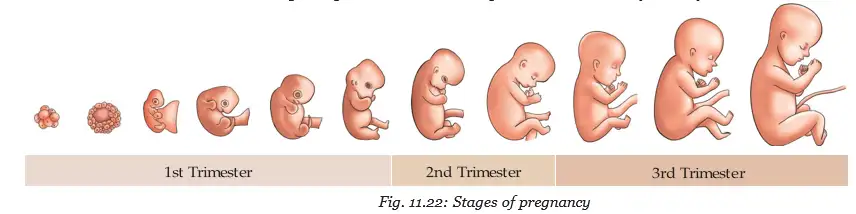
Childbirth
- Labour: Strong uterine muscle contractions push the foetus through the birth canal.
- Assisted delivery: Medical or surgical procedures may be used when vaginal birth is not possible or safe for the mother or foetus.
Menstruation and Care After Birth
- Menstruation: If an egg is not fertilised, the uterine lining sheds with some blood through the vagina; this usually lasts 3–7 days and the cycle typically repeats every 21–35 days.
- Care after birth: Breastfeeding provides nutrition and protection from disease; newborns also need warmth, timely vaccination and gentle care.
Mother’s Health During Pregnancy
Post-partum depression — A recognised condition involving anxiety and fatigue after childbirth; it can be treated, and mothers who feel low or overwhelmed should seek help from a healthcare worker.
ASHA Workers
- Role: More than 10 lakh Accredited Social Health Activist (ASHA) workers promote hygiene, immunisation, and family planning under the National Health Mission.
- Support: They advise on maternal care, safe deliveries, and contraceptive methods, especially in rural areas.
Sexual Maturity
| Point | Physical maturity | Emotional maturity |
|---|---|---|
| Meaning | Body becomes capable of reproduction. | Ability to manage emotions and make responsible decisions. |
| Development | Begins gradually during adolescence. | Takes longer to develop. |
Preventing Unwanted Pregnancies and Infections
| Method | How it works | Important note |
|---|---|---|
| Barrier: condoms or vaginal covers | Stop sperm from reaching the egg. | Condoms also help prevent STI transmission. |
| Oral contraceptive pills | Hormones are altered to change the release of eggs. | May have side effects; pills do not protect against STIs. |
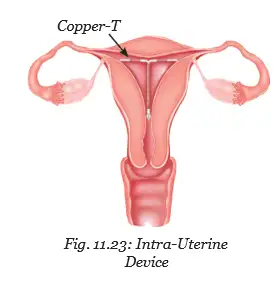
| Intra-uterine device (IUD), such as Copper-T | Placed in the uterus to prevent pregnancy. | May sometimes irritate the uterus. |
| Surgical methods | Block the vas deferens in males or the fallopian tubes in females, preventing sperm and egg from meeting. | These methods prevent fertilisation. |
Abortion — The removal of an unwanted pregnancy by surgery; it is generally carried out only within the first trimester, when the embryo is very small.
Sex Selection and the Law
- Sex-selective abortion: Choosing abortion based on a preference for a specific gender can create a serious imbalance in the societal sex ratio.
- Indian law: Prenatal sex determination is strictly prohibited to help maintain a healthy sex ratio.
Contraceptive Research in India
- Development: Scientists at the Central Drug Research Institute, Lucknow, developed the world’s first non-steroidal, non-hormonal oral contraceptive pill.
- Use and availability: Taken once weekly, it is provided free through the National Family Planning Programme; the text notes it avoids side effects such as weight gain, nausea, or headaches.
What are the main changes during the three trimesters of pregnancy?
Why are condoms useful even when other contraceptive methods are used?
Name two surgical contraceptive methods and explain how they work.
Quick recap
- Human pregnancy lasts about nine months and proceeds through three trimesters.
- The embryo is called a foetus from about the ninth week; the uterus protects and nourishes it.
- Maternal health, breastfeeding, newborn care, and emotional support are important after birth and during pregnancy.
- Sexual maturation is physical; emotional maturity and responsible decision-making develop over time.
- Contraceptive methods include barriers, oral pills, IUDs, and surgery; condoms also help prevent STIs.
- Prenatal sex determination is prohibited in India, and sex-selective abortion can imbalance the sex ratio.
At a Glance
Reproduction — The biological process by which living organisms produce new individuals of the same species.
Why reproduction matters
- Continuity of life: Reproduction produces new individuals and prevents a species from ending.
- Genetic information: It passes genetic information from one generation to the next.
Types of Reproduction
| Type | Key feature | Examples or forms |
|---|---|---|
| Asexual | New individuals arise without the fusion of male and female sex cells. | Budding, spore formation, vegetative propagation in plants |
| Sexual | Male and female sex cells fuse during fertilisation. | In flowering plants, fertilisation occurs in the ovule |
Reproduction in Flowering Plants
Flower — The reproductive organ of a flowering plant, containing male stamens and a female pistil.
Pollination
- Definition: Pollination is the transfer of pollen from the anther to the stigma.
- Self-pollination: Pollen reaches the stigma of the same flower or another flower on the same plant.
- Cross-pollination: Pollen reaches a flower on a different plant of the same species.
Fertilisation and changes after fertilisation
- Pollen lands on the stigma.
- A pollen tube grows and carries sperm cells to the ovule.
- A sperm cell fuses with the egg cell in the ovule, forming a zygote.
- The zygote develops; the ovule becomes a seed and the ovary becomes a fruit.
Human Reproduction
| Organ | Main function |
|---|---|
| Testes | Produce sperm and male hormones. |
| Seminal vesicles and prostate gland | Produce male hormones. |
| Ovaries | Produce eggs and female sex hormones. |
Ovulation
- Ovulation: The release of an egg from an ovary; it usually occurs around day 14 of the menstrual cycle.
Birth Control and Pregnancy
Birth control
- Methods: Condoms, contraceptive pills and intrauterine devices (IUDs), such as Copper-T, are used for birth control.
From fertilisation to pregnancy
- Fertilisation forms a zygote.
- The zygote develops into an embryo.
- Pregnancy begins; in humans it usually lasts about nine months.
- The mother’s body changes to support the baby’s growth.
Care during pregnancy
- Support healthy growth: Proper nutrition, medical check-ups and sufficient rest are important.
- Avoid harm: Avoid substances that may harm the developing baby.
What is pollination, and how do self-pollination and cross-pollination differ?
What changes occur in a flower after fertilisation?
Quick recap
- Reproduction continues a species and transfers genetic information.
- Asexual reproduction includes budding, spore formation and vegetative propagation; sexual reproduction involves fusion of sex cells.
- Pollination transfers pollen from anther to stigma; it may be self-pollination or cross-pollination.
- Fertilisation forms a zygote; the ovule becomes a seed and the ovary becomes a fruit.
- Testes produce sperm; testes, seminal vesicles and prostate produce male hormones, while ovaries produce eggs and female hormones.
- Ovulation usually occurs around day 14; birth control includes condoms, pills and IUDs.
- Pregnancy usually lasts about nine months and calls for nutrition, check-ups, rest and avoidance of harmful substances.
Science — ALL CHAPTERS
1
Exploration: Entering the World of Secondary Science
2
Cell: The Building Block of Life
3
Tissues in Action
4
Describing Motion Around Us
5
Exploring Mixtures and their Separation
6
How Forces Affect Motion
7
Work, Energy, and Simple Machines
8
Journey Inside the Atom
9
Atomic Foundations of Matter
10
Sound Waves: Characteristics and Applications
11
Reproduction: How Life Continues
12
Patterns in Life: Diversity and Classification
13
Earth as a System: Energy, Matter, and Life