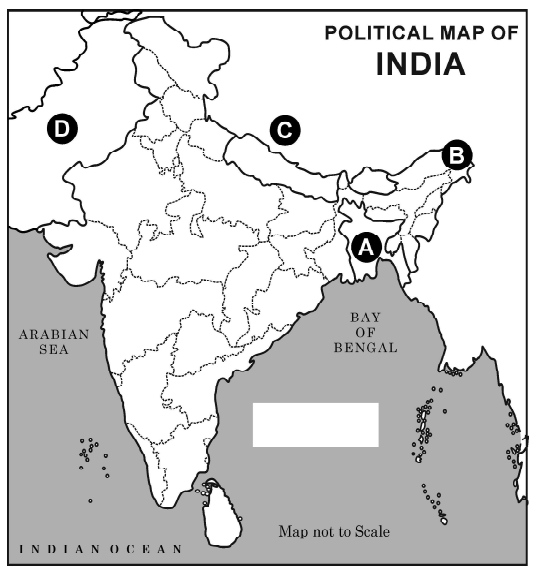
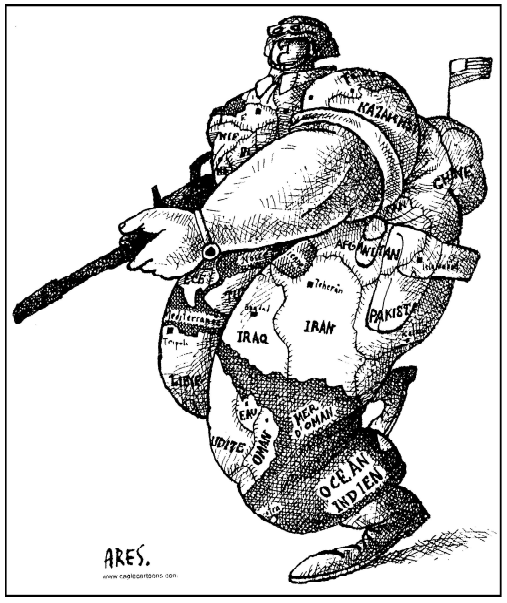
Section B
[1 Mark]
Answer: India and Nepal have a deep-rooted relationship characterized by open borders facilitating free movement. However, there exist tensions regarding India's perceived interference in Nepal's internal affairs and hydropower resources. Also, the warm ties between Nepal and China concern India. Despite these issues, both countries generally maintain stability in their relations, focusing on mutual cooperation and addressing any disputes diplomatically.
Key Points: Special treaty allowing free movement-Perceived Indian interference in Nepal's affairs-Trade disputes and concerns over India's stance towards Nepal-China relations
[1 Mark]
Answer: The main reason behind the investments of multinational corporations (MNCs) in developing countries is the opportunity for higher returns on investment. Developing nations often offer lower operational costs, emerging markets, and the potential for greater profitability compared to developed countries. Additionally, globalization facilitates the movement of capital and ideas, allowing MNCs to capitalize on the unique resources and labor markets in these regions, further incentivizing their investments.
Key Points: higher returns on investment-lower operational costs-emerging markets
[1 Mark]
Answer: Sustainable development refers to the kind of progress that fulfills the requirements of the current generation while ensuring that future generations can also meet their needs. This concept emphasizes the importance of balancing economic growth with ecological responsibility. It aims to protect our common good, allowing us to inherit a safe and clean world necessary for a good quality of life. Sustainable development encourages practices that do not deplete resources or harm the environment.
Key Points: sustainable development - meets present needs - protect future generations - balance economic growth and ecological responsibility
[1 Mark]
Answer: India claims permanent membership of the UN Security Council based on its significant economic emergence, consistent financial contributions to the UN, and the need for better representation of developing countries. India's position as one of the largest democracies and its efforts towards global peace and security further strengthens its argument. Additionally, India's growing influence in international politics and its nuclear capabilities also support its bid for a permanent seat.
Key Points: India's economic emergence-Consistent financial contributions to the UN-Need for better representation of developing countries-India's status as a large democracy-Influence in international politics-Nuclear capabilities
[1 Mark]
Answer: The Bodo community primarily belongs to the state of Assam in India. They are one of the indigenous communities in the region, advocating for autonomy and recognition of their identity. The state of Assam has seen various movements from the Bodos for greater autonomy, leading to the establishment of the Bodoland Autonomous Council. This reflects their efforts to maintain cultural heritage and governance within a defined territory in Assam.
Key Points: Bodo community-Assam-Autonomy movements-Bodoland Autonomous Council-Cultural heritage
[1 Mark]
Answer: Article 370, which granted special status to Jammu and Kashmir, was abolished on 5 August 2019. This decision was part of the Jammu & Kashmir Reorganisation Act 2019, which resulted in Jammu and Kashmir being reconstituted into two Union Territories: Jammu & Kashmir and Ladakh. The revocation aimed to integrate the region more fully with India and was met with diverse reactions among the populace.
Key Points: Abolished on 5 August 2019; part of Jammu & Kashmir Reorganisation Act 2019; constituted two Union Territories; aimed at full integration with India; varied public reactions.
Section C
[1 Mark]
-
(A) India shares the river water from Nepal.
-
(B) India and Nepal have a special treaty related to travel and work in the other country without Visa.
-
(C) Both countries have democratic form of government.
-
(D) Nepal always follows the policies of India.
Explanation: The statement 'Nepal always follows the policies of India' is NOT correct. While India and Nepal have a close relationship, the context indicates that there are differences and instances where the Nepalese government does not comply with Indian expectations, particularly regarding its relations with China and internal affairs.
[1 Mark]
-
(A) For the welfare of the underprivileged people.
-
(B) To increase their own assets and earn profits.
-
(C) For the benefit of other countries.
-
(D) To provide financial support to the developing countries.
Explanation: The correct option is 'To increase their own assets and earn profits.' Multinational corporations (MNCs) invest in developing countries primarily to capitalize on opportunities that offer better returns compared to their home countries. The context mentions that investors from rich countries can invest in developing nations for higher financial returns, highlighting the profit motive as the main driver behind such investments.
[1 Mark]
-
(A) Global commons
-
(B) Development without destruction
-
(C) Sustainable development
-
(D) Politics of developed nations
Explanation: The correct answer is 'Sustainable development'. This term accurately reflects the concept described in the context, which emphasizes balancing economic growth with ecological responsibility to ensure that future generations can also meet their needs.
[1 Mark]
-
(A) Nuclear capability
-
(B) Located in Asia
-
(C) Being a secular country
-
(D) Large population and big economic power
Explanation: India claims permanent membership of the UN Security Council primarily based on being a large population and big economic power. The context highlights India's significant economic emergence and contributions to the UN, which strengthen its case for a permanent seat. The representation of developing countries and India's demographic significance further support its claim.
[1 Mark]
-
(A) (A) is true, but (R) is false.
-
(B) (A) is false, but (R) is true.
-
(C) Both (A) and (R) are true, but (R) is not the correct explanation of (A).
-
(D) Both (A) and (R) are true and (R), is the correct explanation of (A).
Explanation: Both (A) and (R) are true and (R) is the correct explanation of (A) because the context clearly indicates that during the constitutional monarchy in Nepal, the desire for a more democratic system existed due to the King's autocratic control over the government, which stifled democratic development.
[1 Mark]
-
(A) Both (A) and (R) are true and (R), is the correct explanation of (A).
-
(B) Both (A) and (R) are true, but (R) is not the correct explanation of (A).
-
(C) (A) is true, but (R) is false.
-
(D) (A) is false, but (R) is true.
Explanation: Both (A) and (R) are true, but (R) is not the correct explanation of (A). The assertion (A) is true in the context that the UN is expected to help manage US dominance in a unipolar world. However, (R) is true as well since the disintegration of the Soviet Union did lead to new member states joining the UN, but this fact does not directly explain why the UN is expected to cope better; it merely highlights a change in membership.
[1 Mark]
-
(A) Industrialisation
-
(B) Economic equality
-
(C) Rural development
-
(D) Eradication of poverty
Explanation: The correct option is 'Industrialisation.' The Second Five Year Plan, led by P. C. Mahalanobis, placed a strong emphasis on rapid industrialisation, particularly focusing on heavy industries. It aimed for quick structural transformation of the economy, indicating that industrialisation was prioritised over other aspects like rural development or economic equality.
[1 Mark]
-
(A) To serve as a Think Tank of the Union government.
-
(B) To arrange funds for the developmental programmes.
-
(C) To put an end to the tardy implementation of the policies.
-
(D) To provide strategic input to the development process of India.
Explanation: The correct option is 'To arrange funds for the developmental programmes.' NITI Aayog's primary objectives include serving as a Think Tank, providing strategic input, and addressing policy implementation issues. However, arranging funds for development programs is not one of its defined roles.
[1 Mark]
-
(A) (i), (ii), (iii), (iv)
-
(B) (ii), (iv), (i), (iii)
-
(C) (iii), (iv), (i), (ii)
-
(D) (ii), (iii), (iv), (i)
Explanation: The correct chronological order is (i), (ii), (iii), (iv). Lal Bahadur Shastri was appointed Prime Minister after Nehru's death in June 1964. The Tashkent Agreement, signed to end the Indo-Pak conflict, took place in January 1966 after Shastri's death. The fourth General Elections were held in 1967, after which V.V. Giri was elected as President in May 1969.
[1 Mark]
-
(A) From 1970s to 1980s
-
(B) From 1960s to 1980s
-
(C) From 1960s to 1970s
-
(D) From 1950s to 1970s
Explanation: The correct option is 'From 1960s to 1970s'. The context indicates that significant changes in India's political landscape began with the Fourth General Elections in 1967, marking a transition in political dynamics, known as the first democratic upsurge. This period saw the emergence of vibrant opposition parties and changes in the dominance of the Congress party, which primarily occurred in the 1960s and continued into the 1970s.
[1 Mark]
-
(A) Assam
-
(B) Manipur
-
(C) Arunachal Pradesh
-
(D) Mizoram
Explanation: The Bodo community primarily resides in Assam, where they have been granted an Autonomous Council to satisfy their demands for autonomy while remaining in the state. The context highlights that various communities, including the Bodos, have sought autonomy within Assam, reinforcing their strong association with this state.
[1 Mark]
-
(A) 19 August, 2019
-
(B) 15 August, 2019
-
(C) 9 August, 2019
-
(D) 26 January, 2019
Explanation: Article 370 was abolished on 5 August 2019 as stated in the provided context. This article's abrogation led to the reorganization of Jammu and Kashmir into two Union Territories. Therefore, the other options listed are incorrect dates.
Section D
[2 Marks]
Answer: To improve relations between India and Pakistan, both countries should focus on enhancing people-to-people contacts and engaging in confidence-building measures. Firstly, increasing cultural exchanges such as art exhibitions, sports events, and music festivals can foster understanding and friendship between the citizens of both nations. Secondly, the two countries should prioritize economic cooperation through trade agreements that promote mutual benefits, thus fostering interdependence and reducing tensions. Such measures can contribute to a more stable and peaceful relationship.
Key Points: Enhance people-to-people contacts, Engage in confidence-building measures, Increase cultural exchanges, Promote economic cooperation, Foster mutual benefits through trade
[2 Marks]
Answer: The International Labour Organisation (ILO) plays a crucial role in promoting social justice and fair labor practices globally. One of its primary functions is setting international labor standards, which provide guidelines for fair and safe working conditions across various industries. These standards help protect workers' rights and enhance economic and social development in member states. Additionally, the ILO provides technical assistance and support for capacity building, aiming to improve labor market policies and promote decent work for all. This includes promoting policies that encourage employment, social protection, and dialogue between governments, employers, and workers to foster better working conditions worldwide.
Key Points: Setting international labor standards-Technical assistance for capacity building
[2 Marks]
Answer: India’s policy of non-alignment emerged as a vital aspect of its foreign relations during the Cold War. Advocated by Prime Minister Jawaharlal Nehru, the policy aimed to maintain India's sovereignty, territorial integrity, and promote economic development without aligning with either the US or the USSR. India's role in protesting Britain’s attack on Egypt in 1956 exemplified its commitment to this policy. However, the policy faced challenges, as seen with Pakistan aligning with US-led military alliances, creating tensions in Indo-US relations. Despite these challenges, India’s approach encouraged other developing nations to consider a neutral stance in international affairs. Non-alignment helped India to assert its independent foreign policy, focusing on peace, unity, and cooperation among nations, distinguishing itself from the military blocs formed during the Cold War.
Key Points: 1. India's non-alignment aimed to preserve sovereignty and promote development. 2. Participation in global protest against neo-colonialism (e.g., Suez Canal). 3. Challenges faced due to Pakistan's military alliances with the US. 4. Tensions with the US regarding India’s independent initiatives in foreign policy. 5. Encouragement of developing nations towards non-alignment.
[2 Marks]
Answer: The South Asian experience of democracy, particularly in countries like Pakistan, Bangladesh, and Sri Lanka, has significantly broadened the global understanding of democratic practices. Each of these nations has faced unique challenges, such as ethnic diversity, regional disparities, and socio-economic inequalities. These experiences illustrate that democracy is not a one-size-fits-all model but rather a process that must embrace local contexts and issues. For instance, India’s approach to diversity and regional aspirations demonstrates how democratic citizenship evolves as societies change. By negotiating the demands of marginalized groups, South Asia highlights the importance of inclusive politics. Furthermore, through elections and civil participation, the region showcases how democracy can accommodate pluralism, promoting multiple voices in governance. This showcases that democracy is dynamic, requiring continual adaptation to societal changes, making the South Asian experience vital for a global understanding of democratic ideals.
Key Points: Diversity in South Asia- Unique challenges faced by nations- Evolution of democratic citizenship- Negotiation of marginalized group demands- Pluralism and inclusion in governance
[2 Marks]
Answer: The formation of NITI Aayog in place of the Planning Commission was driven by the need for a more flexible and collaborative approach to economic policy making. Firstly, the Planning Commission operated under a centralized model that often led to bureaucratic delays and inefficiencies in decision-making. NITI Aayog, on the other hand, encourages greater participation from states in the planning process, fostering collaborative federalism. Secondly, the global economy and India's internal challenges have evolved, necessitating a shift towards sustainable development practices. NITI Aayog focuses on contemporary issues like innovation, cooperative federalism, and the use of technology, thereby addressing the dynamic demands of modern governance and development.
Key Points: Shift from centralised to decentralised planning; Encouragement of cooperative federalism; Evolving economic needs and sustainable development focus; Emphasis on flexibility and collaboration; Addressing modern governance issues.
[2 Marks]
Answer: India did not sign the Nuclear Non-Proliferation Treaty (NPT) and the Comprehensive Test Ban Treaty (CTBT) primarily because these treaties were perceived as discriminatory. Firstly, India viewed the NPT as legitimizing the nuclear monopoly of the five recognized nuclear-armed states, which undermined the security of non-nuclear states like India. Secondly, India's commitment to maintaining credible minimum nuclear deterrence made it resistant to binding agreements that could hinder its defense capabilities. The rejection of these treaties reflects India's stance for equal treatment in international security discussions.
Key Points: NPT considered discriminatory; legitimizes nuclear powers' monopoly - India's stance on nuclear deterrence - Commitment to credible minimum nuclear deterrence.
Section E
[4 Marks]
Answer: The Akali Dal has played a significant role in Punjab's political landscape, particularly after the state's reorganisation in 1966. Coming to power in 1967 and again in 1977, the Akali Dal formed coalition governments despite facing challenges, such as mid-term dismissals by the Central government and a lack of support among Hindus. The party was instrumental in advocating for a Punjabi-speaking state and was proactive in addressing Sikh identity and autonomy issues, particularly highlighted by the movement for water distribution in 1980. However, internal divisions within the Sikh community, alongside a stronger Dalit support base for the Congress, complicated the Akalis' political standing. As a party representing Sikh interests, it continually navigated complex dynamics, balancing coalition politics and diverse community concerns.
Key Points: Formation of Akali Dal in 1920, Advocacy for 'Punjabi suba', First coalition government in 1967, Water distribution movement in 1980, Demand for political autonomy, Internal divisions among Sikhs, Challenges faced from the Congress party, Political positioning post-reorganisation.
[4 Marks]
Answer: Sardar Vallabhbhai Patel, known as the Iron Man of India, played a pivotal role in the integration of princely states into the Indian Union after independence in 1947. As the Deputy Prime Minister and Home Minister, he effectively negotiated with over 500 princely rulers, using a combination of persuasion, diplomacy, and firmness. Patel believed in the necessity of a united India and was instrumental in framing the government's policies against fragmentation into small states. His strategic approach included sending letters to the princes, urging them to accede to India voluntarily, which helped to ensure a smoother transition. Through compelling arguments and assurances of political and administrative stability, he successfully integrated most princely states, including Hyderabad, Junagadh, and Kashmir. Patel's leadership was crucial in avoiding the chaos that could have resulted from a divided nation, solidifying his legacy as a key architect of modern India.
Key Points: Role as Deputy Prime Minister and Home Minister- Used diplomacy and firmness in negotiations- Addressed concerns of rulers through letters- Acted against fragmentation of states- Successfully integrated more than 500 princely states- Key states: Hyderabad, Junagadh, Kashmir- Ensured a stable and united India
[4 Marks]
Answer: The Earth Summit held in June 1992 at Rio de Janeiro produced significant outcomes that reshaped global environmental policies. Firstly, it resulted in the adoption of the United Nations Framework Convention on Climate Change (UNFCCC), which aimed to address global warming and climate change issues. Secondly, the Convention on Biological Diversity was established to protect the planet’s biodiversity and ensure sustainable development. Thirdly, the Forest Principles were created to guide the sustainable management and conservation of forests, recognizing their critical role in the ecosystem. Lastly, Agenda 21, a comprehensive plan for sustainability, was proposed, targeting the integration of environmental considerations into global and national policies, emphasizing the need for international cooperation and the active participation of all stakeholders. These outcomes reinforced the significance of collective action in addressing environmental challenges, marking a pivotal moment in global environmental governance.
Key Points: UN Framework Convention on Climate Change; Convention on Biological Diversity; Forest Principles; Agenda 21
[4 Marks]
Answer: The ‘Arab Spring’ epitomized the struggle against oppression and authoritarian rule in the Arab world. One significant example is the uprising in Tunisia, which began in December 2010 when Mohamed Bouazizi, a street vendor, self-immolated in protest against police harassment and corruption. His act ignited widespread protests leading to the ousting of President Zine El Abidine Ben Ali, marking the first success of the Arab Spring. Another example is the Egyptian uprising in 2011, where massive protests in Tahrir Square galvanized citizens against President Hosni Mubarak's 30-year regime characterized by human rights abuses and socio-economic inequality. The mobilization of diverse groups, including youth and civil society organizations, illustrated a collective desire for democratic reforms and justice. Both examples reflect the universal demand for dignity and accountability, illustrating the Arab Spring as a people-driven revolution against injustice.
Key Points: Tunisian uprising against Ben Ali; Bouazizi's self-immolation as a catalyst; Egyptian protests against Mubarak; Tahrir Square's role; demands for democratic reforms and justice
[4 Marks]
Answer: The split in the Congress Party in 1969 can be attributed to ideological differences and internal power struggles. Firstly, Indira Gandhi's vision for the party leaned towards a more socialist perspective, emphasizing reforms that would benefit the marginalized and enhance state control over key industries. This clashed with the older Congress leaders, referred to as the 'syndicate,' who favored a more moderate and traditional approach to governance. Secondly, there was an ongoing struggle for power within the party, as Indira sought greater autonomy and control over decision-making processes, which created friction among the traditional leadership. The divide ultimately led to the emergence of two factions: the Congress (Organisation) and the Congress (Requisitionists), marking a significant turning point in the party's history.
Key Points: Ideological differences between Indira Gandhi and old Congress leaders; internal power struggles within the party; rise of two factions: Congress (Organisation) and Congress (Requisitionists)
Section F
[6 Marks]
Answer: The evolution of the European Union (EU) from an economic union to a political entity is a multi-faceted process that has unfolded since the mid-20th century. Initially established as the European Economic Community (EEC) in 1957, the primary aim was to foster economic cooperation among member states. Over time, this economic integration laid the groundwork for deeper political unity. The Treaty of Maastricht in 1992 was a pivotal moment as it formally established the EU, expanding its role beyond just economic matters. The EU began to develop a common foreign and security policy and gained attributes of a nation-state, including a flag, anthem, and currency. The introduction of the euro in 2002 marked a significant step towards political integration. Furthermore, the formation of the European Parliament provided a platform for democratic governance, thus enhancing the EU's political dimension. The collapse of the Soviet bloc accelerated this process, leading to the inclusion of Eastern European countries and the promotion of shared policies and values. Hence, the EU today operates not just as an economic entity but as a cohesive political body with aspirations for a unified stance on global issues.
Key Points: Formation of EEC in 1957 - Treaty of Maastricht in 1992 - Introduction of euro in 2002 - Development of common foreign and security policy - Establishment of European Parliament - Influence of the collapse of the Soviet bloc - Expansion to Eastern European countries
[6 Marks]
Answer: India's emergence as a new Centre of Power can be attributed to several significant factors. First, the creation of nuclear weapons established India as a formidable force in South Asia, enhancing its security and international standing. Second, the emergence of Communist China posed a strategic challenge, prompting India to consolidate its power and adopt a more assertive foreign policy in regional affairs. Third, the process of decolonization allowed India to take a leadership role among newly independent nations, fostering solidarity and cooperation with countries striving for sovereignty. These factors collectively contributed to positioning India as a key player in the global arena.
Key Points: Creation of nuclear weapons; Emergence of Communist China; Process of decolonization
[6 Marks]
Answer: Terrorism has emerged as a significant threat to national and global security, characterized by the deliberate targeting of civilians to instill fear and achieve political objectives. A notable example is the September 11, 2001 attacks by Al-Qaeda, which involved hijacking airplanes to crash into the World Trade Center and the Pentagon, resulting in thousands of casualties and profound global implications for security policies. Another example is the Mumbai attacks in 2008, where terrorists targeted multiple civilian locations, including hotels and train stations, highlighting the vulnerability of urban centers to such threats. These events underscore terrorism's capability to transcend borders, disrupt societal harmony, and provoke widespread fear, necessitating a reevaluation of conventional security measures to address this pervasive issue.
Key Points: Definition of terrorism; Examples: September 11 attacks, Mumbai attacks; Impact on national and global security; Targeting of civilians; Need for reevaluation of security measures
[6 Marks]
Answer: The criteria proposed for new permanent and non-permanent members of the UN Security Council revolve around representation, contribution to global peace, and democratic principles. Firstly, it is suggested that new members should represent various regions, ensuring geographical diversity, particularly including developing nations. Secondly, a member's contribution to international peace and security is crucial; countries with active roles in peacekeeping missions should be considered. Thirdly, the ability to support the UN’s goals is emphasized, necessitating a commitment to multilateralism. Lastly, discussions around abolishing or limiting veto powers also influence membership criteria, with the belief that the veto conflicts with principles of democracy and sovereign equality. These considerations aim to make the Security Council more reflective of the contemporary global landscape and to secure broader international support for its decisions. Addressing these criteria could enhance the Council's legitimacy and effectiveness, fostering stronger cooperation among member nations.
Key Points: Geographical representation, Contribution to peacekeeping, Commitment to UN goals, Veto power reform proposals
[6 Marks]
Answer: The Emergency imposed in 1975 is often viewed as a controversial episode in Indian politics due to several compelling reasons. Firstly, it curtailed fundamental rights and led to widespread repression of civil liberties. Media censorship and the arrest of political opponents silenced dissent, raising concerns about authoritarianism. Secondly, the justification for the Emergency was questioned; while it was claimed to address internal threats, many believe it was primarily enacted to consolidate power. Thirdly, the political fallout was significant. The Congress party’s loss in the 1977 elections marked a dramatic shift in Indian democracy, as the public's rejection reflected discontent with the authoritarian measures. This episode significantly transformed party politics and instilled a lasting lesson regarding the protection of democratic institutions in India.
Key Points: Curtailed civil liberties-media censorship-opposition arrests; Questionable justification-internal threats vs. power consolidation; Political fallout-Congress defeat in 1977 elections-democratic transformation
[6 Marks]
Answer: The downfall of the Congress Party in the 1977 elections can be attributed to several key factors. Firstly, the imposition of the Emergency from 1975 to 1977 led to widespread discontent among the public, who felt their democratic rights were curtailed, resulting in a backlash against Congress. Secondly, the rise of the Janata Party, which united various opposition groups under the ‘non-Congressism’ umbrella, capitalized on the anti-Congress sentiment and managed to consolidate votes, ensuring a broad spectrum of support. Lastly, the Congress’s failure to adequately address the demands of backward castes and its inability to project an inclusive image hurt its electoral prospects, as voters sought alternatives that resonated with their aspirations. These factors collectively contributed to the historic defeat of Congress.
Key Points: Imposition of Emergency and public discontent; Rise of the Janata Party and consolidation of opposition votes; Failure to address backward caste issues and lack of inclusivity.
[6 Marks]
Answer: The Mandal Commission, chaired by Bindeshwari Prasad Mandal, aimed to address the socio-economic challenges faced by the Other Backward Classes (OBCs) in India. Its three key recommendations prominently served this purpose. First, the Commission suggested reserving 27% of government jobs and educational institution seats for the OBCs, providing them better access to opportunities that were historically denied. Second, it recommended land reforms to secure economic stability for OBC families, enhancing their livelihoods. Third, the focus on social awareness spurred political mobilization within OBC communities, fostering a collective identity and advocacy for their rights. The implementation of these recommendations initiated a national debate, raising awareness and empowering the OBC population to assert their place in society, ultimately leading to a more equitable social structure.
Key Points: Reservation of 27% jobs and seats for OBCs - Land reforms to enhance economic stability - Promotion of social awareness and political mobilization
[6 Marks]
Answer: The rise of Other Backward Classes (OBCs) in Indian politics can be attributed to several interrelated factors. Firstly, the Mandal Commission's recommendations in 1980 played a pivotal role by advocating for reservation of seats in educational institutions and government jobs for OBCs. This formal recognition aimed at uplifting the educational and social status of these communities spurred political mobilization. Secondly, the establishment of various regional political parties focused on the interests of OBCs brought representation to these communities, emphasizing their political significance. Parties such as the Janata Dal in the 1980s emerged, advocating for OBC rights. Thirdly, the intense national debate surrounding reservation policies heightened awareness among OBC populations about their rights and identity, galvanizing them to demand political power and influencing electoral strategies of mainstream parties to cater to this substantial segment of society. This convergence of factors catalyzed the emergence of OBCs as a formidable political force in contemporary Indian politics.
Key Points: Mandal Commission recommendations; Emergence of regional political parties; National debate on reservation policies