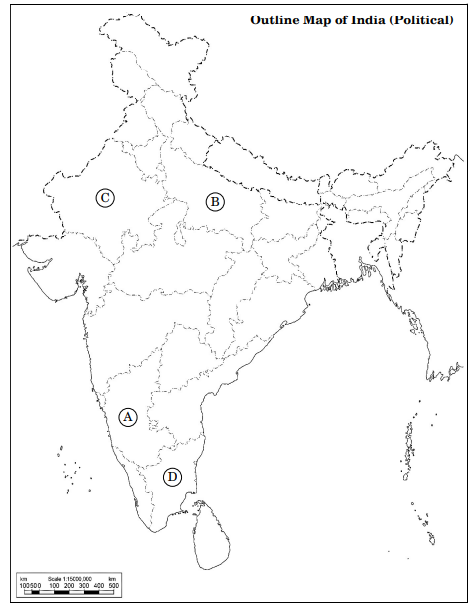
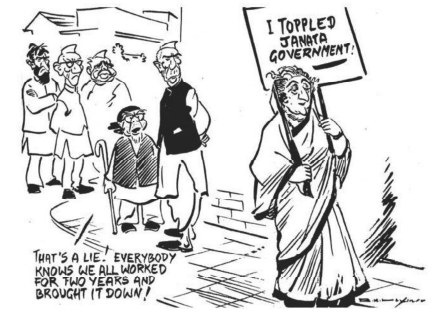
Section B
[1 Mark]
Answer: The Awami League, led by Sheikh Mujib-ur Rahman, won all the seats in the 1970 elections in East Pakistan. This victory allowed them to secure a majority in the proposed constituent assembly for the whole of Pakistan. The results were a reflection of the Bengali population's demand for autonomy and fair representation, as they had faced years of neglect and discrimination from West Pakistani rulers.
Key Points: Awami League won all seats-Leadership of Sheikh Mujib-ur Rahman-Demand for autonomy and fair representation
[1 Mark]
Answer: Global security refers to the collective measures taken by nations to ensure safety from multifaceted threats that transcend borders, including international terrorism, health epidemics, and environmental changes. It emphasizes 'freedom from want' and 'freedom from fear', addressing threats to human dignity. The concept emerged in the 1990s, highlighting the necessity for global cooperation, as no single nation can tackle these challenges alone, thereby recognizing the interconnectedness of contemporary threats.
Key Points: Global threats - Freedom from want and fear - Necessity for international cooperation
[1 Mark]
Answer: The First Five Year Plan, implemented from 1951 to 1956, primarily focused on revitalizing the agrarian sector in India, which had been severely affected by Partition. Significant investments were directed towards irrigation projects, including the Bhakhra Nangal Dam, to enhance agricultural productivity. Additionally, the plan emphasized a gradual and cautious approach to development, as advocated by economist K.N. Raj, to ensure that rapid economic advancement did not threaten the democratic fabric of the nation.
Key Points: Focus on agrarian sector-Investment in irrigation projects-Cautious approach to development
[1 Mark]
Answer: The 1952 Indian elections were a landmark in global democracy as they showcased a competitive electoral process in a large and diverse nation characterized by poverty and illiteracy. Despite these challenges, over half of eligible voters participated, marking a remarkable achievement. Observers noted its significance, as it disproved the notion that democratic elections could only thrive in wealthy, literate societies. The elections were seen as fair, with all parties accepting the results, illustrating the resilience of democracy.
Key Points: largest democratic experiment-novels in a poor illiterate country-competitive elections majority voter turnout-results accepted by all parties
[1 Mark]
Answer: The strengthening of international norms and institutions has been vital for India’s security interests. India’s advocacy for disarmament and a non-discriminatory nonproliferation regime has created a platform for equitable rights regarding weapons of mass destruction. Moreover, India has sought reform in the UN Security Council to enhance its representative nature, which helps in addressing global conflicts fairly. This international engagement reinforces India’s stance against traditional and non-traditional threats, thereby enhancing its security.
Key Points: Advocacy for disarmament - Non-discriminatory nonproliferation regime - Demand for Security Council reform
[1 Mark]
Answer: Coalition governments have several advantages, two of which are tolerance of internal differences and the ability to accommodate diverse perspectives. Firstly, coalition politics encourages inclusivity, allowing various groups and leaders to represent their interests, which can lead to a balanced governance. Secondly, these governments often foster compromise, as they must address the concerns of all coalition partners, making it difficult for the opposition to challenge their agenda effectively. This inclusive approach can enhance political stability.
Key Points: Tolerance of internal differences-Accommodation of diverse perspectives-Compromise and inclusivity
Section C
[1 Mark]
-
(A) (iv), (iii), (ii), (i)
-
(B) (i), (ii), (iii), (iv)
-
(C) (iii), (iv), (i), (ii)
-
(D) (ii), (i), (iv), (iii)
Explanation: The Russian Revolution occurred first in 1917, followed by the Soviet invasion of Afghanistan in 1979. The Fall of the Berlin Wall took place in 1989, and the Civil War in Tajikistan ended later in 1997. Hence, the correct chronological order is (ii), (i), (iv), (iii).
[1 Mark]
-
(A) Croatia and Uzbekistan
-
(B) Chechnya and Azerbaijan
-
(C) Chechnya and Dagestan
-
(D) Dagestan and Croatia
Explanation: The correct answer is Chechnya and Dagestan, as the provided context explicitly states that both of these republics in Russia experienced violent secessionist movements, characterized by insurgencies and a severe response from the Russian government.
[1 Mark]
-
(A) give up certain kinds of weapons
-
(B) regulate acquisition and development of weapons
-
(C) maintain a favourable balance with other countries
-
(D) coordinate their actions to defend against military attack
Explanation: The correct option is 'maintain a favourable balance with other countries.' This answer is supported by the context, which states that countries work hard to maintain a favourable balance of power with other nations, especially those that are close by or with which they have had conflicts in the past. The concept of balance of power is about ensuring that no single country becomes too powerful in comparison to others, which aligns with the chosen option.
[1 Mark]
-
(A) migrants
-
(B) fugitives
-
(C) internally displaced people
-
(D) indigenous people
Explanation: The correct answer is 'internally displaced people' because the relevant context states that those who have fled their homes but remain within their national borders are referred to as internally displaced people. This distinguishes them from refugees, who leave their country of origin.
[1 Mark]
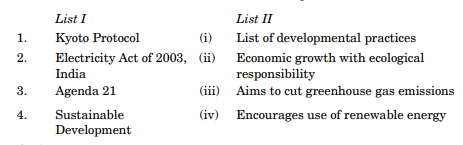
-
(A) 1-(iii), 2-(iv), 3-(i), 4-(ii)
-
(B) 1-(ii), 2-(iii), 3-(iv), 4-(i)
-
(C) 1-(iv), 2-(i), 3-(iii), 4-(ii)
-
(D) 1-(i), 2-(ii), 3-(iii), 4-(iv)
Explanation: The Kyoto Protocol aims to cut greenhouse gas emissions (iii). The Electricity Act of 2003 in India encourages the use of renewable energy (iv). Agenda 21 provides a list of developmental practices (i), and Sustainable Development refers to economic growth with ecological responsibility (ii).
[1 Mark]
-
(A) Assertion (A) is true, but Reason (R) is false.
-
(B) Both Assertion (A) and Reason (R) are true and Reason (R) is the correct explanation of the Assertion (A).
-
(C) Assertion (A) is false, but Reason (R) is true.
-
(D) Both Assertion (A) and Reason (R) are true, but Reason (R) is not the correct explanation of the Assertion (A).
Explanation: Both Assertion (A) and Reason (R) are true and Reason (R) is the correct explanation of the Assertion (A). The context states that oil remains crucial for the global economy and highlights the political struggles tied to its wealth, supporting that the importance of oil is directly related to the conflicts over its control.
[1 Mark]
-
(A) Indian National Congress
-
(B) Kashmir National Congress
-
(C) National Conference
-
(D) Communist Party of India
Explanation: The correct answer is 'National Conference' as indicated by historical context showing that the National Conference was led by Sheikh Abdullah, who was a prominent political figure in Jammu and Kashmir during that time. His party played a significant role in the political landscape of the region and was in power following its electoral success in the early 1950s.
[1 Mark]
-
(A) 1949
-
(B) 1950
-
(C) 1951
-
(D) 1952
Explanation: The correct answer is 1950. According to the provided context, the Election Commission of India was established in January 1950, making this the accurate year of its formation.
[1 Mark]
-
(A) Nepal
-
(B) Bhutan
-
(C) India
-
(D) Myanmar
Explanation: The correct answer is India, as the Dalai Lama sought and obtained political asylum in India in 1959 after fleeing from Tibet due to the suppression faced by Tibetans from Chinese forces.
[1 Mark]
-
(A) Assertion (A) is true, but Reason (R) is false.
-
(B) Both Assertion (A) and Reason (R) are true, but Reason (R) is not the correct explanation of the Assertion (A).
-
(C) Assertion (A) is false, but Reason (R) is true.
-
(D) Both Assertion (A) and Reason (R) are true and Reason (R) is the correct explanation of the Assertion (A).
Explanation: The All Assam Students’ Union (AASU) led the anti-foreigner movement in 1979 to oppose illegal migration and the inclusion of foreigners in voters’ lists. Hence, the reason directly explains why the movement was launched, making both statements true and correctly related.
[1 Mark]
-
(A) Cairo
-
(B) Belgrade
-
(C) India
-
(D) Indonesia
Explanation: The correct answer is 'Belgrade' because the First Summit of the Non-Aligned Movement (NAM) took place in Belgrade in September 1961, as stated in the context.
[1 Mark]
-
(A) Meghalaya
-
(B) Manipur
-
(C) Mizoram
-
(D) Tripura
Explanation: The Khasi Hills are located in Meghalaya, as mentioned in the context where it states that Meghalaya was created from Assam and is home to the Khasi Hills.
Section D
[2 Marks]
Answer: The Awami League won all the seats in the 1970 elections in East Pakistan, led by Sheikh Mujib-ur Rahman. This victory was a significant milestone as it reflected the overwhelming support of the Bengali population, who were demanding autonomy and fair representation after years of marginalization by the West Pakistani rulers. Despite winning, the government's refusal to convene the constituent assembly led to heightened tensions, eventually resulting in the political and military crisis that culminated in the independence of Bangladesh in 1971.
Key Points: Awami League; Sheikh Mujib-ur Rahman; won all seats in East Pakistan; demanded autonomy; refusal to convene assembly; political crisis; establishment of Bangladesh
[2 Marks]
Answer: Global security refers to the interconnectedness of national and international security concerns that transcend borders, highlighting the need for collective action to tackle threats such as global warming, international terrorism, and health epidemics. The concept emerged in the 1990s, emphasizing that no nation can address these challenges alone. It focuses on ensuring 'freedom from want' and 'freedom from fear,' which are crucial for preserving human dignity. Thus, global security encompasses a broad range of issues, advocating for international cooperation to maintain a stable and secure world.
Key Points: Emergence in the 1990s-global threats like terrorism and pandemics-need for international cooperation-freedom from want and fear-human dignity
[2 Marks]
Answer: The First Five Year Plan, initiated in 1951, primarily focused on revitalizing India's agrarian sector, which had been severely affected by the Partition. One significant feature was the substantial investment in irrigation projects, notably the construction of large-scale dams like the Bhakhra Nangal Dam, aimed at enhancing agricultural productivity. Another key aspect was the emphasis on cautious economic development, as advocated by K.N. Raj. He proposed a gradual approach to ensure stability and protect democracy, prioritizing sustainable growth over rapid industrialization.
Key Points: Focus on agrarian sector; Investment in irrigation projects; Construction of Bhakhra Nangal Dam; Emphasis on cautious economic development; Advocacy by K.N. Raj; Ensuring stability and protection of democracy.
[2 Marks]
Answer: India's general elections of 1952 marked a historic moment in global democracy as they were the first to be held in a newly independent nation with a massive population. Over 173 million voters participated, showcasing a remarkable commitment to democratic principles. This unprecedented scale demonstrated that a diverse society could engage in democracy effectively. Observers worldwide recognized this election as a successful model of democratic governance, proving that such systems could thrive in developing countries. India’s electoral success challenged the idea that large-scale democratic elections were unfeasible.
Key Points: First democratic elections in India after independence; Over 173 million voters participated; Demonstrated large-scale democracy was feasible; Positive global recognition; Challenged pessimism about democracy in developing countries.
[2 Marks]
Answer: The strengthening of international norms and institutions has significantly aided India in safeguarding its security interests. Initially, under Prime Minister Jawaharlal Nehru, India advocated for Asian solidarity and decolonization, which laid the groundwork for its proactive role in international affairs. By promoting a fair non-proliferation regime, India has sought equal rights regarding weapons of mass destruction. Additionally, India's call for a reformed Security Council underscores its concern over representation, directly influencing its diplomatic leverage. This advocacy has enabled India to engage with global powers, thereby enhancing its security through multilateral cooperation.
Key Points: Advocacy for Asian solidarity and decolonization - Promotion of non-discriminatory non-proliferation regime - Efforts for a more representative UN Security Council - Enhanced diplomatic leverage through multilateral cooperation
[2 Marks]
Answer: Coalition governments at the Centre offer several advantages. Firstly, they promote inclusivity and compromise among diverse political parties. As coalitions bring together different factions, they often lead to a more balanced approach on issues by accommodating various interests. This helps prevent the government from taking extreme positions, fostering stability in governance. Secondly, coalition governments encourage greater tolerance of internal differences. By recognizing and accommodating the ambitions of various groups and leaders, they enhance unity in diversity, which is crucial in a multi-party democracy like India.
Key Points: Inclusivity and compromise, Balanced approach, Stability in governance, Tolerance of internal differences, Accommodation of various interests
Section E
[4 Marks]
Answer: The Bangladesh War of 1971 was the culmination of long-standing political, social, and economic grievances of the people of East Pakistan against West Pakistan. The immediate catalyst was the brutal crackdown by the Pakistani military on March 25, 1971, after the arrest of Sheikh Mujibur Rahman, the leader of the Awami League who had won a majority in the 1970 elections. This repression led to widespread resistance and calls for independence in East Pakistan. As violence escalated, nearly 8 million refugees fled to India, creating a humanitarian crisis that strained India's resources. The Indian government, motivated by the need to alleviate this refugee burden and support the struggle for autonomy, backed the Bangladeshi liberation movement both financially and militarily. The Indo-Pak war erupted in December 1971, culminating in a swift victory for India and the subsequent surrender of Pakistani forces in East Pakistan, leading to the establishment of Bangladesh as an independent nation. The conflict also had repercussions for regional dynamics and India's diplomatic relations, exemplified by the later signing of the Simla Agreement in July 1972.
Key Points: Grievances of East Pakistan against West Pakistan, Arrest of Sheikh Mujibur Rahman, March crackdown by Pakistani military, Refugee crisis in India, Indian support for Bangladeshi independence, Indo-Pak war in December 1971, Formation of Bangladesh as an independent country, Simla Agreement consequences.
[4 Marks]
Answer: The disintegration of the Soviet Union can be attributed to several pivotal factors, two of which are the excessive centralization of power and the rise of nationalism among various republics. Firstly, the Soviet system was highly centralized, with decision-making concentrated in Moscow. This led to resentment among the various republics, such as Ukraine and the Baltic states, which felt marginalized and dominated by Russia. Secondly, the surge in nationalist sentiments played a crucial role in the breakup. Many regions, including the Baltic Republics and Ukraine, sought independence and desired recognition of their unique cultures and languages, leading to increasing demands for sovereignty. These combined forces ultimately resulted in the collapse of the Soviet Union in 1991.
Key Points: Excessive centralization of power in Moscow|Resentment among republics such as Ukraine and the Baltics|Rise of nationalism and desire for sovereignty|Demands for recognition of unique cultures|Final culmination in the disintegration of the USSR
[4 Marks]
Answer: To improve Indo-Pakistan relations, one effective measure could be the enhancement of people-to-people contacts through cultural exchanges and educational programs. This would allow citizens from both nations to engage directly, fostering a deeper mutual understanding and appreciation of each other's cultures. Additionally, increasing trade and economic cooperation could lead to a substantive interdependence, making conflict less likely. Joint initiatives in sectors such as agriculture and technology can pave the way for collaboration and trust, which are crucial for establishing lasting peace between these two nations. Encouraging dialogue and negotiations through back-channel diplomacy can also help resolve outstanding issues, building confidence and reducing hostility. Overall, these measures can create a foundation for a more constructive and peaceful relationship.
Key Points: Enhance people-to-people contacts, Cultural exchanges, Educational programs, Increase trade and economic cooperation, Joint initiatives, Back-channel diplomacy
[4 Marks]
Answer: To improve Indo-China relations, two significant measures can be implemented. Firstly, enhancing economic cooperation can play a critical role. This can be achieved by promoting joint ventures and investments that cater to mutual interests, particularly in sectors like technology, trade, and infrastructure. Increasing bilateral trade can foster interdependence and reduce tensions. Secondly, promoting cultural exchanges can build trust and goodwill between the two nations. Initiatives such as student exchange programs, joint cultural festivals, and collaborative scientific research can foster a better understanding of each other's cultures. These measures, focusing on economic collaboration and cultural understanding, can pave the way for a more amicable and peaceful relationship between India and China.
Key Points: 1. Enhance economic cooperation through joint ventures and bilateral trade. 2. Promote cultural exchanges, including student programs and collaborative research.
[4 Marks]
Answer: Globalization is a multifaceted phenomenon influenced by various factors. Two primary causes of globalization are advancements in technology and economic liberalization. First, technological advancements, particularly in transportation and communication, have drastically reduced the time and cost associated with moving goods and information across borders. The internet, for instance, facilitates instantaneous communication, making international collaboration and trade easier than ever. Second, economic liberalization, which encompasses policies that reduce restrictions on trade and investment, has prompted increased global economic integration. Countries adopting free trade agreements and deregulating their economies attract foreign investment and market participation. These factors have contributed significantly to the interconnected global economy we see today, reshaping cultures and societies worldwide.
Key Points: Advancements in technology; Economic liberalization; Reduced transportation and communication costs; Increased international trade; Free trade agreements and deregulation.
[4 Marks]
Answer: Globalization has positively transformed the world in numerous ways, with two significant effects being enhanced economic growth and cultural exchange. Firstly, economic globalization enables countries to specialize in producing goods and services they are best at, which increases overall efficiency and productivity. As nations engage in more trade, they can benefit from larger markets, driving economic growth and improving livelihoods. Secondly, globalization fosters cultural exchange, allowing ideas, traditions, and innovations to flow between nations. This enriches societies, promotes diversity, and encourages mutual understanding among different cultures, paving the way for collaborative problem-solving and shared advancements in various fields. Hence, while there are critiques of globalization, these positive effects illustrate its potential for fostering economic development and cultural appreciation across the globe.
Key Points: Enhanced economic growth; Specialization in production; Increased trade and market size; Cultural exchange; Promotion of diversity and understanding; Collaborative problem-solving
[4 Marks]
Answer: The complex fabric of regional aspirations within a diverse nation like India necessitates a democratic approach to negotiation instead of suppression. History shows that suppression leads to increased dissatisfaction and unrest, as seen in the militancy in Punjab during the 1980s. Instead of merely treating these regional issues as law and order problems, recognizing regional identities' importance is crucial. For instance, the Assam agitation highlighted local demands for identity and rights, necessitating political dialogue to resolve these issues. In contrast, in countries like Spain, regional movements in Catalonia and the Basque Country emphasize that even in advanced democracies, regional aspirations are significant. Acknowledging and accommodating these aspirations through democratic engagement fosters unity, stability, and a more inclusive political landscape, demonstrating that respectful dialogue can lead to resolving regional tensions.
Key Points: Democratic engagement is essential; historical examples from Punjab and Assam; regional aspirations in global context; suppression leads to unrest; strengthening unity through dialogue
Section F
[6 Marks]
Answer: The European Union (EU) is an influential regional organization due to several factors. Firstly, its significant economic power, with a projected GDP of approximately $19.35 trillion in 2024, allows it to command a substantial share of global trade, making it a key player in economic negotiations. Secondly, the EU’s political unity enhances its diplomatic influence; as a bloc, it can negotiate with other powerful nations effectively. Thirdly, France’s permanent seat in organizations like the UN Security Council bolsters the EU's global stature. Lastly, the EU's common foreign and security policy facilitates collective action, making it a formidable entity in international relations. These elements collectively contribute to the EU’s status as a significant actor on the world stage.
Key Points: Significant economic power; political unity and diplomatic influence; France's permanent seat in UN; common foreign and security policy
[6 Marks]
Answer: The Association of Southeast Asian Nations (ASEAN) has emerged as a significant regional organization, demonstrating rapid growth in influence and economic power. Established in 1967 with the objective of accelerating economic growth and promoting peace, ASEAN has played a crucial role in mediating regional conflicts such as the Cambodian conflict and the East Timor crisis. Its Vision 2020 emphasizes an outward-looking role in global affairs, focusing on negotiation and cooperation. Economically, despite being smaller compared to the US and EU, ASEAN's economy is growing at a faster pace, further enhancing its significance. The ASEAN Economic Community aims to establish a common market, promoting integration among member states which fosters economic cooperation and development. Furthermore, ASEAN's collaboration with important global players enhances its diplomatic stature. Thus, ASEAN's efforts towards conflict resolution, economic integration, and regional cooperation justify its growth as an influential organization in contemporary geopolitics.
Key Points: ASEAN has mediated regional conflicts; ASEAN's Vision 2020 emphasizes global role; fast economic growth compared to US/EU; aims for common market and production base; enhances diplomatic stature through collaboration.
[6 Marks]
Answer: India's aspiration for permanent membership in the UN Security Council is founded on several compelling grounds. Firstly, India's substantial economic emergence positions it as a significant player on the global stage, deserving of influence in crucial international decisions. Moreover, India has consistently met its financial obligations to the UN, demonstrating its commitment to multilateralism. The static composition of the Security Council contrasts with the dynamic nature of the UN General Assembly, where developing countries comprise the majority. India argues that their inclusion will enhance the Council's representative character. Furthermore, India's nuclear capabilities contribute to its argument for permanent status, although they raise concerns among some nations. Recognizing the changing global landscape, India supports expanding both permanent and non-permanent memberships to ensure that the Council's actions reflect the political support of a broader international community, especially as its activities have greatly expanded in recent years.
Key Points: Economic emergence-Consistent financial contributions-Static Security Council composition-Representative character of the Council-Concerns about nuclear capabilities-Support for expansion of memberships-Enhanced international partnerships
[6 Marks]
Answer: In 1992, the UN General Assembly adopted a resolution addressing the pressing need to reform the UN Security Council, reflecting three pivotal complaints. Firstly, there was a growing consensus that the Security Council no longer accurately represented contemporary political realities, as the global political landscape had significantly evolved since its establishment. Secondly, critics argued that the decisions made by the Security Council predominantly embodied Western values and interests, leading to claims of bias and partiality towards a select group of nations. This situation created a sense of disenfranchisement among many countries, particularly those from the Global South. Lastly, the resolution highlighted the lack of equitable representation within the Security Council, pointing out that despite the expansion of the UN General Assembly's membership, the composition of the Security Council remained stagnant, with no changes in the number of permanent members since 1965. This lack of inclusivity undermined the Council’s legitimacy and effectiveness in addressing global issues. The combination of these complaints fueled demands for a more representative, fair, and democratic Security Council structure, emphasizing the necessity for reform.
Key Points: Security Council does not reflect contemporary political realities; decisions favor Western values and interests; lack of equitable representation among nations
[6 Marks]
Answer: The merger of the princely states into the Indian Union post-independence was fraught with complexities. Firstly, despite a strong desire for unification among the populace, many rulers were reluctant. The Maharaja of Travancore declared independence, and the Nizam of Hyderabad followed suit, demonstrating resistance from influential leaders. Additionally, the backdrop of partition, characterized by violence and communal strife, intensified apprehensions, as rulers feared instability. Consequently, the Government of India had to negotiate carefully, balancing autonomy with the need for unity. The constitutional implications were significant, as the integration of states demanded redrawing internal boundaries to reflect linguistic and cultural identities, thereby ensuring a cohesive and democratic framework. This balancing act was essential to maintain the unity of the newly independent nation against the threat of fragmentation, as some rulers were inclined towards opposing the merger altogether.
Key Points: Desire for unification among people and resistance from rulers; backdrop of violence and communal tension; rulers' declarations of independence; need for careful negotiation; balancing autonomy with unity; constitutional implications in redefining boundaries; threat of fragmentation and protecting democratic prospects.
[6 Marks]
Answer: The accession of Hyderabad to the Union of India was a significant event influenced by a series of political and military developments. After India's independence in August 1947, the Nizam of Hyderabad sought to maintain independence, signing a Standstill Agreement with India for negotiations, highlighting his desire for autonomy. However, popular discontent with the Nizam's rule, particularly amongst the peasantry in Telangana, escalated almost immediately, leading to mass movements against his regime. The situation intensified when the Nizam openly declared his intent to remain independent, similar to other princely states like Travancore. In response to the growing unrest and the possibility of a communal conflict, the Indian government intervened militarily in September 1948. The Indian army advanced to stabilize the region, engaging with the Nizam's forces in intermittent fighting. The conflict culminated in the Nizam's surrender after a few days. This surrender was pivotal, resulting in Hyderabad's swift accession to India and merging it into the Indian Union, reinforcing India's territorial integrity and reducing the threat posed by the princely states. Thus, the combination of military intervention and popular discontent ultimately secured Hyderabad's accession.
Key Points: Nizam's desire for independence; Standstill Agreement; popular movements against Nizam; military intervention by Indian army; Nizam's surrender; accession to Indian Union
[6 Marks]
Answer: Since 1989, Indian politics has experienced significant transformations. Firstly, the defeat of the Congress party in the 1989 elections was monumental, reducing its seats from 415 in 1984 to just 197. This marked a shift towards a multi-party system, leading to increased competition among political players. Secondly, the rise of identity politics became prominent, particularly relating to religious affiliations, which sparked debates around secularism and democracy. For instance, the emergence of the Bharatiya Janata Party (BJP) transformed the political landscape, advocating for Hindutva. Thirdly, coalitions became a significant feature of governance in the 1990s, as no single party could achieve a majority, resulting in the formation of fragile alliances. Finally, the economic liberalization initiated in 1991 altered policy perspectives, influencing political debates and priorities. These developments collectively reshaped the foundational structures of Indian democracy and governance.
Key Points: Defeat of Congress party in 1989 elections, rise of identity politics and debates on secularism, emergence of coalition governance, economic liberalization and its influence on politics.
[6 Marks]
Answer: In contemporary Indian politics, several critical issues have garnered a consensus among various political parties, highlighting their commitment despite ideological differences. First, there is a clear agreement on the need for national integration. Parties across the spectrum acknowledge the importance of unifying the diverse cultures and languages of India to foster a strong national identity. Second, new economic policies have become a focal point of consensus, as parties often agree on the necessity to adopt reforms that promote growth and modernization, reflecting a shift towards liberalization to address economic challenges. Lastly, external relations and defense policy have also seen bipartisan support, especially regarding the protection of India’s borders and maintaining national sovereignty in a complex geopolitical landscape. This consensus signifies a strategic alignment among parties to prioritize national interests over partisan conflicts.
Key Points: National integration is crucial for a unified India; Consensus on new economic policies reflects a shift towards liberalization; Bipartisan support for defense and external relations underscores the importance of national sovereignty.