QUESTION PAPER

2024 BOARD EXAM

CBSE Class 12 Humanities Political Science Board Paper 2024 — Set 3

2024

Political Science

Class 12 Humanities

CBSE EXAMINATION PAPER-2024

POLITICAL SCIENCE

(Solved)

Time allowed : 3 hours

Maximum Marks : 105

General Instructions :

Read the following instructions carefully and follow them :

  1. This question paper contains 41 questions. All questions are compulsory.
  2. This question paper is divided into 6 sections.
  3. Section A – questions number 1 to 3 are case based questions
  4. Section B – questions number 4 to 8 are very short answer
  5. Section C – questions number 9 to 20 are multiple choice questions
  6. Section D – questions number 21 to 26 are short answer
  7. Section E – questions number 27 to 33 are long answer type i
  8. Section F – questions number 34 to 41 are long answer type ii
  9. There is no overall choice given in the question paper. However, an internal choice has been provided in few questions.
  10. Use of calculator is NOT allowed.

Section A

Question 1.

Read the following passage carefully and answer the questions that follow:

The 1980s also saw the rise of political organisations of the Dalits. In trade union of government employees. It took a strong position in favour of the SC, ST, OBC and minorities. It was out of this that the subsequent Dalit Shoshit Samaj Sangharsh Samiti and later the Bahujan Samaj Party (BSP) emerged.

(1)

Choose the correct full form of BAMCEF :

(A) Bahujan and Minority Communities Employees Federation

(B) Bahujan and Minority Communities Employees Foundation

(C) Backward and Minority Communities Employees Federation

(D) Backward and Minority Communities Employees Foundation

[1 Mark]

(2)

In which year was the Bahujan Samaj Party formed ?

(A) 1981

(B) 1984

(C) 1989

(D) 1991

[1 Mark]

(3)

Who was the founder leader of Bahujan Samaj Party ?

(A) B.R. Ambedkar

(B) Mayawati

(C) Mulayam Singh

(D) Kanshi Ram

[1 Mark]

(4)

In which State did the Bahujan Samaj Party (BSP) form its first government ?

(A) Punjab

(B) Haryana

(C) Uttar Pradesh

(D) Rajasthan

[1 Mark]
Question 2.

In the given political outline map of India (on page 19), four States have been marked as A, B, C and D. Identify these States on the basis of the information given below and write their correct names in your answer-book along with the respective serial number of the information used and the concerned alphabets given in the map as per the following format:
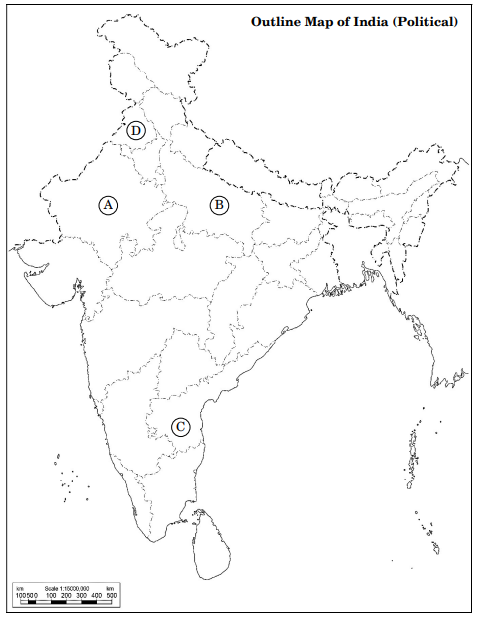
Diagram 1 – CBSE Class 12 Humanities Political Science 2024 Set 3

(1)

The State where the Congress party did not secure majority in 1967 elections.
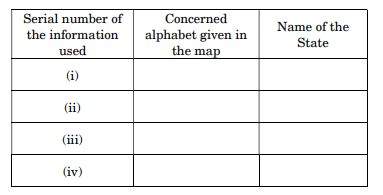
Diagram 2 – CBSE Class 12 Humanities Political Science 2024 Set 3 [1 Mark]

(2)

The State where Congress party did not secure majority in 1967 elections but formed the government with the support of other parties.

[1 Mark]

(3)

The State related to Samajwadi leader, Ram Manohar Lohia.

[1 Mark]

(4)

The State related to the former President of India, V.V. Giri.

[1 Mark]

(5)

Which popular slogan was given by Lal Bahadur Shastri ?

[1 Mark]

(6)

Which decade of Indian politics has been referred to as the 'dangerous decade'?

[1 Mark]

(7)

Which candidate was supported by Indira Gandhi for the post of President in 1969 ?

[1 Mark]

(8)

Which State is related to the phrase 'Aya Ram, Gaya Ram'?
[1 Mark]
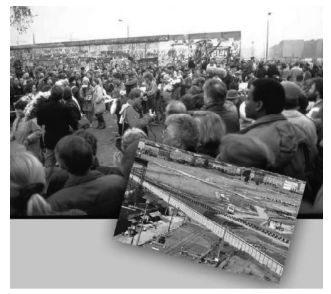
Question 3. Study the picture given below related to the Berlin Wall and answer the questions that follow:
Diagram 3 – CBSE Class 12 Humanities Political Science 2024 Set 3

(1) What did the Berlin Wall symbolise?

[1 Mark]

(2) Between which two countries was the Berlin Wall built?

[1 Mark]

(3) Highlight any two outcomes of breaking of the Berlin Wall.

[2 Marks]

(4)

In which year did the Second World War end ?

[1 Mark]

(5)

In which year was the Berlin Wall built ?

[1 Mark]

(6)

In which year did the Soviet Union disintegrate ?

[1 Mark]

(7)

Name the leader who became the General Secretary of the Communist Party of the Soviet Union in 1985.

[1 Mark]

Section B

Question 4. Highlight any two features of the Constitution of Bangladesh.
[1 Mark]
Question 5. State any two objectives of ASEAN.
[1 Mark]
Question 6. Analyse any two differences between India and China which led to a military conflict in 1962.
[1 Mark]
Question 7. Explain the nature of the Congress party as an ideological coalition during the freedom movement.
[1 Mark]
Question 8. State any two effects of imposing national emergency.
[1 Mark]

Section C

Question 9.

The 'SAARC' is a major __________________ initiative by South Asian States to evolve mutual cooperation.

[1 Mark]
  • (A) Political
  • (B) Military
  • (C) Regional
  • (D) International
Question 10.

Which region of India is referred to as the 'Seven Sisters'?

[1 Mark]
  • (A) South-East region
  • (B) North-East region
  • (C) South-West region
  • (D) North-West region
Question 11.

Who led the 'Peoples' March' to the Parliament in 1975?

[1 Mark]
  • (A) Jagjivan Ram
  • (B) S.K. Patil
  • (C) Jayaprakash Narayan
  • (D) Charu Majumdar
Question 12. Students of which two states started an agitation against the rising food prices in 1974?
[1 Mark]
  • (A) Uttar Pradesh and Bihar
  • (B) Rajasthan and Bihar
  • (C) Bihar and Gujarat
  • (D) Bihar and Madhya Pradesh
Question 13.

Arrange the following events in chronological order:

(i) Establishment of the World Bank

(ii) Establishment of the WTO

(iii) Establishment of the UNO

(iv) Establishment of the IAEA

[1 Mark]
  • (A) (i), (iii), (iv), (ii)
  • (B) (iii), (ii), (i), (iv)
  • (C) (ii), (i), (iii), (iv)
  • (D) (iii), (i), (iv), (ii)
Question 14.

Assertion (A) : The king, with the help of the army, retained full control over the government and restricted the expansion of democracy in Nepal.

Reason (R) : The king accepted the demand for a new democratic constitution in 2001, in the wake of a strong pro-democracy movement.

[1 Mark]
  • (A) Assertion (A) is true, but Reason (R) is false.
  • (B) Both Assertion (A) and Reason (R) are true, but Reason (R) is not the correct explanation of the Assertion (A).
  • (C) Both Assertion (A) and Reason (R) are true and Reason (R) is the correct explanation of the Assertion (A).
  • (D) Assertion (A) is false, but Reason (R) is true.
Question 15. Which one of the following movements was not started by the people of North-East to express their regional aspirations?
[1 Mark]
  • (A) Movement against outsiders
  • (B) Movement for greater autonomy
  • (C) Movement to form a union of North-East States
  • (D) Movement for secession
Question 16.

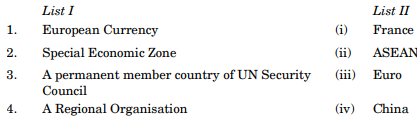
Match List I correctly with List II :
[1 Mark] Diagram 4 – CBSE Class 12 Humanities Political Science 2024 Set 3
  • (A) 1-(iii), 2-(i), 3-(ii), 4-(iv)
  • (B) 1-(iv), 2-(ii), 3-(iii), 4-(i)
  • (C) 1-(iii), 2-(iv), 3-(i), 4-(ii)
  • (D) 1-(ii), 2-(i), 3-(iv), 4-(iii)
Question 17.

Which political party was at the second place in winning the Lok Sabha seats in the first general elections of India?

[1 Mark]
  • (A) Bharatiya Jana Sangh
  • (B) The Communist Party of India
  • (C) Swatantra Party
  • (D) Socialist Party
Question 18.

Assertion (A) : The first general elections in India had to be postponed twice and were finally held from October 1951 to February 1952.

Reason (R) : It was no longer possible to argue that democratic elections could not be held in conditions of poverty or lack of education.

[1 Mark]
  • (A) Assertion (A) is false, but Reason (R) is true.
  • (B) Both Assertion (A) and Reason (R) are true and Reason (R) is the correct explanation of the Assertion (A).
  • (C) Both Assertion (A) and Reason (R) are true, but Reason (R) is not the correct explanation of the Assertion (A).
  • (D) Assertion (A) is true, but Reason (R) is false.
Question 19. Which one of the following statements about the ethnic conflict in Sri Lanka is false?
[1 Mark]
  • (A) Politics in Sri Lanka favoured the Sinhalese.
  • (B) LTTE was supported by the SAARC countries.
  • (C) Interests of Tamils were neglected.
  • (D) The Sri Lanka ethnic problem involved the Sinhalese and the Tamils.
Question 20. UN was established with the objective to:
[1 Mark]
  • (A) boost trade among the member states.
  • (B) prevent international conflict and facilitate cooperation among member states.
  • (C) provide help at the time of war.
  • (D) help the member states in formation of military alliances.

Section D

Question 21. Highlight any two features of the Constitution of Bangladesh.
[2 Marks]
Question 22. State any two objectives of ASEAN.
[2 Marks]
Question 23. Analyse any two differences between India and China which led to a military conflict in 1962.
[2 Marks]
Question 24. Explain the nature of the Congress party as an ideological coalition during the freedom movement.
[2 Marks]
Question 25. State any two effects of imposing national emergency.
[2 Marks]
Question 26.

In which year was 'NITI Aayog' constituted and which organisation did it replace?

[2 Marks]

Section E

Question 27.

"Regional aspirations and their accommodation are an integral part of Indian democratic politics." Support the statement with any two suitable arguments.

[4 Marks]
Question 28. Describe any two factors responsible for the economic growth in Sri Lanka despite the internal conflicts.
[4 Marks]
Question 29. Write any two political consequences of globalization.
[4 Marks]
Question 30. How did the coalition governments prove to be a boon for democracy in India? Explain.
[4 Marks]
Question 31. In the 2014 elections, why were people in favour of a stable government at the Centre? Explain any two reasons.
[4 Marks]
Question 32.

"India has supported the restructuring of the United Nations on several grounds." Support the statement.

[4 Marks]
Question 33.

"Reforming the United Nations means restructuring of the Security Council." Justify the statement.

[4 Marks]

Section F

Question 34.

In what ways has the principle of 'common but differentiated responsibilities helped in addressing and overcoming the differences between the 'Global North' and 'Global South' over environmental issues? Explain.

[6 Marks]
Question 35. Explain any three programmes initiated by the Government of India to protect and conserve the environment.
[6 Marks]
Question 36. Explain any three security challenges faced by the newly independent countries of Asia and Africa after the Second World War.
[6 Marks]
Question 37. Explain any three components of the Indian security strategy.
[6 Marks]
Question 38. Justify the policy of Non-Alignment adopted by India, by giving any three arguments.
[6 Marks]
Question 39.

"Foreign policy of independent India has pursued the dream of a peaceful world." Support the statement with three suitable arguments.

[6 Marks]
Question 40. Describe any three major challenges faced by India at the time of independence in 1947.
[6 Marks]
Question 41. Describe any three major difficulties that came in the way of the partition of British India in 1947.
[6 Marks]

Paper Details

CBSE Board Exam 2024

Class

Class 12 Humanities

Subject

Political Science

Year

2024

Set

Set 3

Other Years — Political Science

2022 Set-1

2022 Set-2

2022 Set-3

2022 Set-4

2022 Set-5

2023 Set-1

2023 Set-2

2023 Set-3

2023 Set-4

2023 Set-5

2024 Set-1

2024 Set-2

2024 Set-3

2024 Set-4

2024 Set-5

2025 Set-1

2025 Set-2

2025 Set-2

2026 Set-2

2026 Set-4

2026 Set-5