Section B
[1 Mark]
-
(A) Liver
-
(B) Appendix
-
(C) Pancreas
-
(D) Kidney
Explanation: The correct answer is 'Appendix' because it is considered a vestigial organ in humans, as it no longer serves a critical digestive function like it does in herbivorous ancestors.
[1 Mark]
-
(A) Bowmans capsule
-
(B) Distal convoluted tubule
-
(C) Loop of Henle
-
(D) Proximal convoluted tubule
Explanation: The correct answer is 'Proximal convoluted tubule' since it is the segment of the nephron where the majority of glucose reabsorption occurs through active transport mechanisms. The context details that the reabsorption and secretion of major substances take place in different parts of the nephron, and the proximal convoluted tubule is known for absorbing nutrients including glucose.
[1 Mark]
-
(A) Cytokinin
-
(B) Abscisic acid
-
(C) Gibberellin
-
(D) Auxin
Explanation: The correct option is Gibberellin. Gibberellins are known to promote cell elongation and are involved in various growth processes, including leaf and shoot development. While auxins also play a role in growth, the specific function of promoting cell elongation is particularly attributed to gibberellins.
[1 Mark]
-
(A) G1 phase
-
(B) G2 phase
-
(C) S phase
-
(D) M phase
Explanation: DNA replication occurs during the S phase of the cell cycle, also known as the Synthesis phase. During this phase, the amount of DNA in the cell doubles from 2C to 4C, as DNA synthesis takes place and chromosomes are duplicated.
[1 Mark]
-
(A) Tuberculosis
-
(B) Malaria
-
(C) Typhoid
-
(D) Influenza
Explanation: The correct answer is Malaria. According to the provided context, malaria is caused by a protozoan called Plasmodium, specifically different species such as P. vivax, P. malaria, and P. falciparum. Other options listed (Tuberculosis, Typhoid, and Influenza) are not caused by protozoans; they are caused by bacteria and viruses.
[1 Mark]
-
(A) Transport of food
-
(B) Transport of water
-
(C) Photosynthesis
-
(D) Reproduction
Explanation: The function of the xylem in plants is to transport water and minerals from the roots to the rest of the plant. The provided context mentions that the vascular tissue system, which includes xylem, translocates water and minerals, confirming that its primary role is indeed the transport of water.
[1 Mark]
-
(A) Genes are linked together
-
(B) Genes mutate spontaneously
-
(C) Alleles separate during gamete formation
-
(D) All traits blend in offspring
Explanation: The correct option is 'Alleles separate during gamete formation.' This is because Mendel's law of segregation explains that during the formation of gametes, the two alleles for each gene segregate from each other so that each gamete carries only one allele for each gene, as stated in the relevant context.
[1 Mark]
-
(A) Methane
-
(B) Carbon dioxide
-
(C) Lactic acid
-
(D) Oxygen
Explanation: When you exercise intensely, your muscles require energy faster than your blood can deliver oxygen. To compensate, the cells switch to anaerobic respiration. In this state, glucose is partially broken down to provide a quick burst of energy. While this process creates lactic acid as a liquid byproduct, it still results in the release of carbon dioxide as the primary gaseous waste. This carbon dioxide is then carried by the blood back to the lungs so you can exhale it. This is why you continue to breathe heavily even after you stop moving; your body is working to flush out the excess gas and provide the oxygen needed to clear away the accumulated lactic acid.
[1 Mark]
Explanation: Group ‘O’ blood can be donated to persons with any other blood group, making individuals with ‘O’ group blood the universal donors. This is because it does not have A or B antigens on the surface of red blood cells, thus avoiding immune reactions in recipients of other blood types.
[1 Mark]
-
(A) Vitamin A
-
(B) Vitamin C
-
(C) Vitamin D
-
(D) Vitamin K
Explanation: Vitamin K is essential for blood clotting because it is required for the synthesis of certain proteins that are necessary for coagulation. The context describes the coagulation process and the role of various factors without specifically mentioning Vitamin K, but its importance is well established in the medical and biological literature.
Section C
[2 Marks]
Answer: The boy may experience symptoms such as sneezing and a running nose due to an allergic reaction triggered by allergens present in his environment. When exposed to these allergens, the immune system mistakenly identifies them as harmful, releasing antibodies of the IgE type. This response leads to the common symptoms associated with allergies, reflecting the body's effort to combat what it perceives as threats, thus triggering inflammation and respiratory discomfort.
Key Points: sneezing-running nose-immune response
[2 Marks]
Answer: The scientific name of the plant from which natural cannabinoids are obtained is Cannabis sativa. The parts of the plant used for extracting the drug include the flower tops, leaves, and resin. The drug affects the human body by interacting with cannabinoid receptors in the brain, leading to various effects such as altered mood, relaxation, and increased heart rate, which can influence the cardiovascular system significantly.
Key Points: Cannabis sativa-flower tops-leaves-resin-cannabinoid receptors-altered mood-cardiovascular system
[2 Marks]
Answer: Farmers are advised to use Rhizobium and Anabaena to enhance soil fertility. Rhizobium, a bacteria, forms symbiotic relationships with leguminous plants, fixing atmospheric nitrogen into a form usable by plants. This nitrogen is essential for plant growth and increases crop yield. Anabaena, a cyanobacterium, also fixes nitrogen and is particularly beneficial in paddy fields. It enriches the soil and contributes organic matter, promoting overall soil health and fertility while reducing reliance on chemical fertilizers.
Key Points: Rhizobium fixes atmospheric nitrogen; relationship with leguminous plants; benefits crop growth; Anabaena as a biofertilizer in paddy fields; contributes organic matter; enhances soil health; reduces reliance on chemical fertilizers.
[2 Marks]
Answer: Organic farmers use Trichoderma and Baculovirus as biological control agents to manage plant pathogens and pests. Trichoderma is a beneficial fungus that helps control soil-borne plant diseases by outcompeting harmful pathogens. Baculovirus, particularly from the genus Nucleopolyhedrovirus, targets specific insect pests, ensuring minimal impact on beneficial insects. By utilizing these biological agents, organic farmers promote biodiversity, reduce dependency on harmful chemicals, and enhance overall ecosystem health in agriculture.
Key Points: Trichoderma as a fungus combating plant pathogens-Baculovirus targeting specific insect pests-Promotes biodiversity and ecosystem health-Reduces dependence on chemical pesticides
[2 Marks]
Answer: Mammals maintain homeostasis through thermoregulation, which allows them to survive in various climates, including polar regions. However, smaller animals struggle due to extreme cold, limited food availability, and harsh environmental conditions. Smaller body sizes lead to a higher surface area-to-volume ratio, causing quicker heat loss. Additionally, they may lack the fat reserves or fur insulation found in larger mammals, making them less adapted to survival in these frigid habitats.
Key Points: thermoregulation; extreme cold challenges; limited food supply; higher surface area-to-volume ratio; rapid heat loss; lack of insulation; large mammals' advantages
[2 Marks]
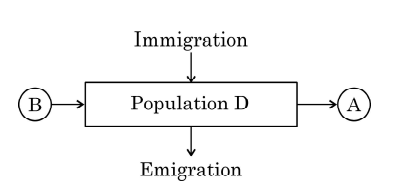
Answer: A is the leaf with an initial area of 10 cm² that increased to 15 cm², and B has an initial area of 50 cm², growing to 55 cm². The growth rate of the bacteria can be calculated as follows: Initial count = 1 million, final count = 2 million, time = 1 hour. Growth rate = (Final count - Initial count) / Time = (2 million - 1 million) / 1 hour = 1 million per hour.
Key Points: A identifies as 10 cm² leaf; B is 50 cm² leaf; bacteria grew from 1 million to 2 million; growth rate = 1 million/hour.
[2 Marks]
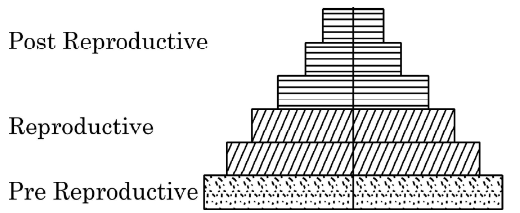
Answer: The type of pyramid is the pyramid of number. This is identified by the broad base representing the large number of producers, which narrows towards the apex showing fewer consumers. In this pyramid, the number of organisms decreases at each trophic level, which reflects the energy transfer in an ecosystem.
Key Points: pyramid of number - broad base - large number of producers - narrows towards apex - fewer consumers
[2 Marks]
Answer: The epithelial lining of the intestine is classified as a secondary lymphoid organ due to its rich association with mucosa-associated lymphoid tissue (MALT). MALT constitutes around 50% of the lymphoid tissue in the human body and plays a critical role in the immune response. The intestine contains lymphoid structures, such as Peyer's patches, which facilitate interactions between immune cells and antigens, enabling the proliferation of lymphocytes. This ensures effective immune surveillance.
Key Points: Epithelial lining contains MALT-50% of lymphoid tissue-Peyer’s patches facilitate lymphocyte interaction with antigens
Section D
[3 Marks]
Answer: The complete name of the diagnostic test for AIDS is Enzyme Linked Immuno-Sorbent Assay (ELISA). This test works on the principle of antigen-antibody interaction, where the patient's blood sample is tested for the presence of antibodies against HIV. If HIV is present, specific antibodies are produced by the immune system, which can then be detected by the ELISA method. The type of genetic material present in the AIDS-causing pathogen, Human Immunodeficiency Virus (HIV), is RNA, as it belongs to the retrovirus family.
Key Points: Enzyme Linked Immuno-Sorbent Assay (ELISA)-Principle of antigen-antibody interaction-Detection of antibodies against HIV-RNA is the genetic material of HIV
[3 Marks]
Answer: The scientific name of the microbe identified in the stool sample is Entamoeba histolytica. This protozoan parasite causes amoebiasis, which presents symptoms such as constipation, abdominal pain, and mucus in stools, along with possible blood clots. The patient may have contracted the infection through contaminated food or water, where the parasite was present due to hygienic lapses or unsanitary living conditions. To prevent future infections, maintaining proper hygiene practices such as washing hands regularly, consuming clean water, and properly cooking food are essential.
Key Points: Entamoeba histolytica; transmission through contaminated food/water; prevention through hand hygiene, clean water, safe food preparation
[3 Marks]
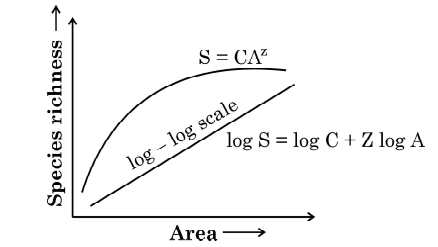
Answer: Alexander von Humboldt concluded that species richness in a region increases with the explored area, but only up to a certain limit. This observation led him to formulate the species-area relationship that significantly influences biodiversity studies. In this relationship, 'S' represents species richness, which increases as 'A', or area, increases. 'Z' indicates the slope of the relationship, demonstrating how steeply species richness grows with area; 'C' is the Y-intercept, representing the baseline level of species richness irrespective of area. His findings have been foundational in ecology.
Key Points: Species richness increases with area; Species-area relationship; 'S' = Species richness; 'A' = Area; 'Z' = slope of relationship; 'C' = Y-intercept; observations based on extensive explorations.
[3 Marks]
Answer: Co-extinction refers to the phenomenon where the extinction of one species leads to the extinction of another species that is dependent on it. One clear example is the relationship between a specific host fish species and its unique parasites. If the host fish were to become extinct, the parasites that rely on that fish would also disappear, as they cannot survive without their host. Another example involves coevolved plant-pollinator relationships. If a particular pollinator species goes extinct, the plants that depend on that specific pollinator for reproduction may also face extinction. This interconnectedness highlights the delicate balance of ecosystems and the potential ripple effects of species loss.
Key Points: Definition of co-extinction-Example of host fish and parasites-Example of plant-pollinator mutualism-Interdependence of species in ecosystems
[3 Marks]
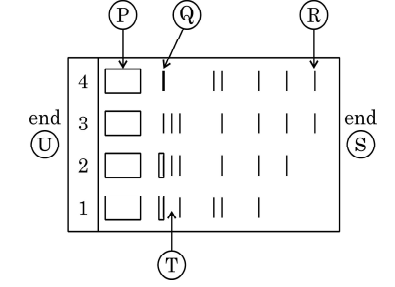
Answer: (a) In the electrophoresis diagram, the 'anode end' is represented by alphabet 'A', indicating the positive electrode where the negatively charged DNA migrates towards. The 'smallest/lightest DNA strand' can be identified with alphabet 'C', which moved the farthest due to its smaller size. The 'agarose gel' is designated by alphabet 'B', which serves as the medium for DNA separation based on size. (b) Elution is the process of extracting DNA fragments from the agarose gel after electrophoresis. This step is crucial as it allows for the purification of DNA, making it available for further applications such as cloning or analysis.
Key Points: A represents the anode end-B represents agarose gel-C represents smallest DNA strand-Elution is extraction-Purification of DNA for further use
[3 Marks]
Answer: Forests offer significant intangible benefits that enrich our lives beyond their direct economic contributions. Firstly, they provide aesthetic pleasure; walking through forests, surrounded by greenery and wildlife, can enhance mental well-being and reduce stress. Secondly, they play a crucial role in supporting biodiversity, which ensures ecosystem stability and resilience, promoting natural processes like pollination and pest control essential for food production. Lastly, forests contribute to cultural values by serving as sites for recreation, spiritual connections, and inspiration for art and literature, facilitating a deeper appreciation of nature's beauty and importance in our lives.
Key Points: Aesthetic pleasure and mental well-being - Support for biodiversity and natural processes - Cultural values and connection to nature
Section E
[5 Marks]
Answer: DNA replication in eukaryotes is a highly organized and complex process that occurs during the S-phase of the cell cycle. The process begins at specific sites along the DNA known as origins of replication. Enzymes, particularly DNA-dependent DNA polymerases, play a crucial role by catalyzing the addition of nucleotides to form new DNA strands. Unlike prokaryotes, eukaryotic DNA is linear and associated with histones, requiring multiple replication forks to ensure efficient duplication. As the double helix unwinds, each original strand serves as a template for complementary nucleotide pairing, forming new strands. The synthesis occurs in a semiconservative manner, meaning that each new DNA molecule contains one original and one newly synthesized strand. Leading strands are synthesized continuously, while lagging strands are synthesized discontinuously in fragments known as Okazaki fragments, which are later joined by DNA ligase. Throughout the process, various other enzymes assist in maintaining order and accuracy, ensuring that the genetic material is replicated faithfully. This coordination is vital for cell division, as errors can lead to conditions like polyploidy, underscoring the importance of precise DNA replication.
Key Points: 1. Replication occurs during the S-phase of the cell cycle. 2. Begins at origins of replication. 3. DNA-dependent DNA polymerases synthesize new strands. 4. Semiconservative replication with one original and one new strand. 5. Leading and lagging strands: continuous and discontinuous synthesis, respectively. 6. DNA ligase joins Okazaki fragments. 7. High accuracy is crucial to prevent genetic anomalies such as polyploidy.
[5 Marks]
Answer: The process of translation in eukaryotes involves several key steps that occur in the ribosome, where proteins are synthesized from mRNA. Initially, the mRNA molecule, which carries the genetic information transcribed from DNA, binds to the small subunit of the ribosome. Transfer RNA (tRNA) molecules, each carrying a specific amino acid, then align with the corresponding codons on the mRNA strand through complementary base pairing between the tRNA's anticodon and the mRNA codon. As the ribosome moves along the mRNA, amino acids are sequentially added, forming peptide bonds between them. This process requires energy, which assists in the formation of these bonds. The ribosome consists of a large and a small subunit, which function together during translation. Eukaryotic translation has additional complexities, such as multiple RNA polymerases transcribing different types of RNA and the compartmentalization of the transcription and translation processes. Finally, translation terminates when a release factor recognizes a stop codon on the mRNA, leading to the release of the completed polypeptide chain. Overall, translation is a highly coordinated process critical for protein synthesis in eukaryotic cells.
Key Points: Ribosome as the site of protein synthesis - mRNA defines amino acid sequence - tRNA brings amino acids with anticodon matching mRNA codon - Peptide bonds formed between amino acids requiring energy - Two ribosomal subunits function together - Translation terminates with release factor at stop codon - Additional complexity in eukaryotes with multiple RNA polymerases.
[5 Marks]
Answer: Biotechnology plays a crucial role in modern agriculture by enhancing crop production, improving resistance to pests and diseases, and reducing dependence on chemical pesticides. One significant application is the development of genetically modified organisms (GMOs). For instance, Bt cotton has been engineered to express a toxin from Bacillus thuringiensis, which makes it resistant to certain pests, thereby reducing pesticide usage and increasing yield. Additionally, biotechnology facilitates the process of tissue culture, allowing for the cultivation of disease-free plants and the development of hybrid varieties with desired traits. Other applications include bioremediation, which helps in detoxifying polluted soils and waste, and the production of biofuels from agricultural waste. Overall, biotechnology not only improves agricultural efficiency but also contributes to sustainable practices by decreasing environmental impact and resource utilization.
Key Points: 1. Improvement of crop yields through GMOs 2. Pest-resistant crops like Bt cotton 3. Tissue culture for disease-free plant production 4. Bioremediation and environmental sustainability 5. Reduction of chemical pesticide use