SOLUTIONS

2023 BOARD EXAM

CBSE Class 12 PCB Biology Board Paper 2023 — Set 1 Solutions

2023

Biology

Class 12 PCB

CBSE EXAMINATION PAPER-2023

BIOLOGY

(Solved)

Time allowed : 3 hours

Maximum Marks : 82

General Instructions :

Read the following instructions carefully and follow them :

  1. This question paper contains 39 questions. All questions are compulsory.
  2. This question paper is divided into 5 sections.
  3. Section A – questions number 1 to 3 are case based questions
  4. Section B – questions number 4 to 19 are multiple choice questions
  5. Section C – questions number 20 to 25 are very short answer
  6. Section D – questions number 26 to 33 are short answer
  7. Section E – questions number 34 to 39 are long answer
  8. There is no overall choice given in the question paper. However, an internal choice has been provided in few questions.
  9. Use of calculator is NOT allowed.

Section A

Question 1.
Question 2.

Gene expresses itself in a cell system as a protein/enzyme. How does an expression of gene occur in a cell system and when does it need to occur, and how the gene expression is regulated in a prokaryote cell system was studied by the combined efforts of Jaeque Monod, the biochemist and Francois Jacob, the geneticist. For their work on lactose metabolism in E. coli and introducing the concept of "lac operon" they were awarded the Nobel Prize in 1965.

(1)

Why is lac operon said to be a transcriptionally regulated system ?

[1 Mark]
Answer: The lac operon is described as a transcriptionally regulated system because it involves the regulation of gene expression at the transcription level, which is the initial step for gene expression. In the lac operon, which is responsible for lactose metabolism in E. coli, several structural genes are organized together and are regulated as a single unit. These genes are controlled by a common promoter and regulatory elements that respond to the availability of lactose. When lactose is present, it acts as an inducer, allowing RNA polymerase to transcribe the structural genes. This regulation system ensures that the genes for lactose metabolism are only expressed when the substrate (lactose) is available, demonstrating a coordinated response to environmental changes. The mechanisms of both positive and negative regulation by the lac operon emphasize its role in gene expression regulation in prokaryotic cells.
Key Points: Transcriptional regulation; Common promoter and regulatory genes; Inducer presence (lactose); Coordinated gene expression; Feedback to environmental availability

(2)

It is said that "the lac operon has to be operational at a very low level in the bacterial cell all the time." Justify.

[1 Mark]
Answer: The lac operon must be operational at a low level in a bacterial cell to ensure a continuous supply of essential enzymes required for the metabolism of lactose. Even when lactose is not present in significant amounts, having a baseline level of expression allows the bacteria to quickly respond and ramp up enzyme production as soon as lactose becomes available. Additionally, this regulation allows the bacterium to conserve energy and resources by prioritizing lactose metabolism only when necessary. The mechanism of negative regulation, involving a repressor, inhibits lac operon expression in the absence of lactose, but low-level expression persists to maintain readiness for lactose utilization. Hence, this low-level operation is vital for metabolic flexibility and efficient energy management.
Key Points: Low-level expression ensures preparedness for lactose metabolism - Quick response to lactose availability - Energy conservation by avoiding unnecessary enzyme production

(3)

Draw a schematic diagram of lac operon in absence of inducer in the culture medium of the bacteria.

[2 Marks]
Answer: In the absence of an inducer like lactose, the lac operon is switched off. The repressor protein binds to the operator region of the operon, preventing RNA polymerase from transcribing the structural genes (lacZ, lacY, and lacA). This leads to no transcription of the genes responsible for lactose metabolism. The schematic diagram would show the DNA segment of the lac operon with the three structural genes, the promoter, and the operator, with the repressor protein bound to the operator region, blocking RNA polymerase binding. Thus, no enzymes for lactose breakdown are produced.
Key Points: Repressor protein binds to operator - No transcription of genes - Contains genes lacZ, lacY, lacA - Prevents RNA polymerase binding - Schematic shows operon structure

(4)

Why is the regulator gene in lac operon marked as i gene?

[1 Mark]
Answer: The regulator gene in the lac operon is designated as the 'i' gene because it codes for a repressor protein that inhibits the expression of the operon. The 'i' stands for 'inhibitor,' indicating its role in controlling the transcription of structural genes involved in lactose metabolism. When lactose is absent, the repressor binds to the operator region, preventing RNA polymerase from transcribing the genes necessary for lactose utilization. Thus, the regulation of the lac operon is integral to the efficient use of resources by the bacteria, showcasing the importance of gene regulation in prokaryotic cells.
Key Points: The 'i' gene codes for the repressor protein-inhibitor of lac operon; it prevents transcription in absence of lactose; regulation is crucial for resource efficiency in bacteria.
Question 3.

Study the diagrammatic representation given below of the Earth with regions marked 'A' and 'B' respectively. Answer the questions that follow.
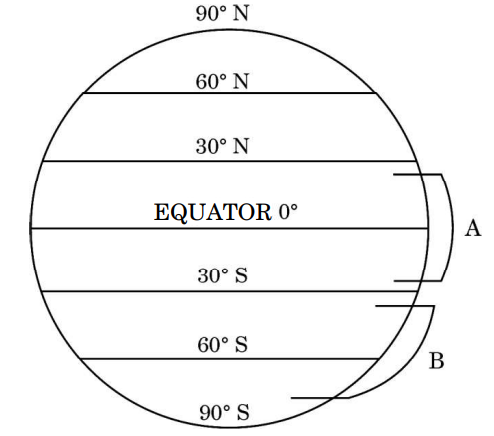
Diagram 1 – CBSE Class 12 PCB Biology 2023 Set 1 Solutions

(1)

Name the region in the world that records the greatest biodiversity and mention why.

[1 Mark]
Answer: The region that records the greatest biodiversity on Earth is the Amazonian rain forest in South America. This rainforest is home to more than 40,000 species of plants, 3,000 species of fishes, 1,300 species of birds, 427 species of mammals, 427 species of amphibians, 378 species of reptiles, and over 125,000 species of invertebrates. Its unique climatic conditions, diverse habitats, and geographical isolation contribute to this extraordinary level of biodiversity, making it a crucial area for conservation efforts.
Key Points: Amazonian rain forest; home to 40,000+ plant species, 3,000 fish species; high species richness and endemism; vital for global ecology.

(2)

Write the observations made regarding the species diversity when moving from region 'A' to region 'B'. Give two reasons also

[3 Marks]
Answer: When moving from region 'A' to region 'B', it is observed that species diversity decreases significantly. In region 'A', located near the equator, there is a higher variety of plant and animal species due to the favorable climatic conditions that support various ecosystems. As we transition to region 'B', which is further away from the equator, there is a marked decrease in species richness. This decline in diversity can be attributed to two primary reasons: first, the temperature and climatic variations that occur with increasing latitude make survival more challenging for many species. Second, a reduction in habitat types and the overall area available for different species as one moves towards the poles limits ecological niches, leading to decreased biodiversity.
Key Points: Species diversity decreases from region 'A' to 'B'-Higher diversity in equatorial regions due to favorable climate-Reduced habitat types and ecological niches limit biodiversity in polar regions

(3)

Stating the reason, mention the approximate number of bird species recorded in India.

[1 Mark]
Answer: India is home to over 1,200 species of birds, which can be attributed to its diverse habitats and climatic conditions. The country's location in tropical latitudes, along with various ecosystems such as forests, wetlands, and mountains, provides a suitable environment for a rich avifauna. This diversity in habitats allows for a wide array of bird species to thrive in the region, thereby contributing to India's status as a biodiversity hotspot.
Key Points: India has over 1,200 bird species - Tropical latitudes contribute to diversity - Diverse habitats support various species

Section B

Question 4.

Which one of the following processes results in the production of recombinants in future generations?

(i) Crossing over of bivalents

(ii) Independent assortment during meiosis I

(iii) Mutation

(iv) Independent assortment during meiosis II

[1 Mark]
  • (A) (i), (ii) and (iii)
  • (B) (iv) only
  • (C) (ii) and (iv)
  • (D) (i), (ii), (iii) and (iv)
Explanation:

The correct answer is (i), (ii), and (iii). Crossing over of bivalents during meiosis I results in genetic recombination as non-sister chromatids exchange genetic material. Independent assortment during meiosis I also contributes to genetic variation by randomly distributing maternal and paternal chromosomes into gametes. Mutation can introduce new alleles into a population, leading to further variation. However, independent assortment during meiosis II does not produce recombinants as it deals with already haploid cells that do not undergo chromosome crossover.

Question 5.

Identify the region of transcription in prokaryote as shown in the schematic representation given below.
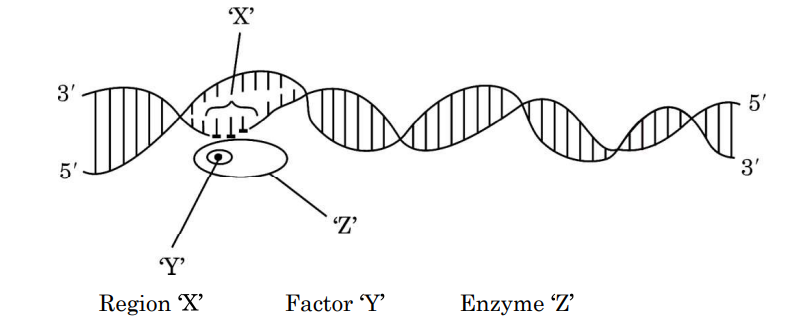
[1 Mark] Diagram 2 – CBSE Class 12 PCB Biology 2023 Set 1 Solutions
  • (A) Promoter Rho (p) RNA polymerase
  • (B) Promoter Sigma (σ) DNA polymerase
  • (C) Promoter Sigma (σ) RNA polymerase
  • (D) Terminator Sigma (σ) RNA polymerase
Explanation: The correct option is 'Promoter Sigma (σ) RNA polymerase' because the promoter is the region where RNA polymerase binds to initiate transcription in prokaryotes. The sigma (σ) factor is an initiation factor that assists RNA polymerase in recognizing the promoter region, thereby facilitating the start of transcription.
Question 6.

The status of the human population reflected in the human age pyramid given below is:
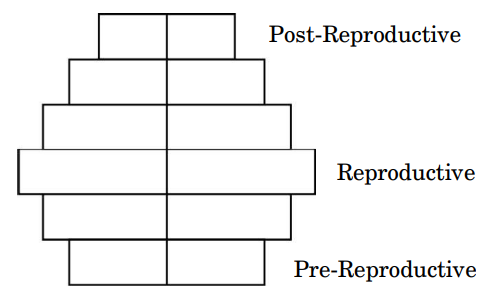
[1 Mark] Diagram 3 – CBSE Class 12 PCB Biology 2023 Set 1 Solutions
  • (A) Extinct population
  • (B) Declining population
  • (C) Expanding population
  • (D) Stable population
Explanation: A stable population pyramid has a relatively uniform width across the base, middle, and top, indicating that the number of young people is about the same as the number of older people. This means births are about equal to deaths, so the population size remains more or less constant over time.
Question 7.

The graph plotted below is based on the data collected by biology students with respect to the levels of oxygen at the specific points in the river flowing outside their city. Which point in the graph indicates the entry of untreated sewage in the river?
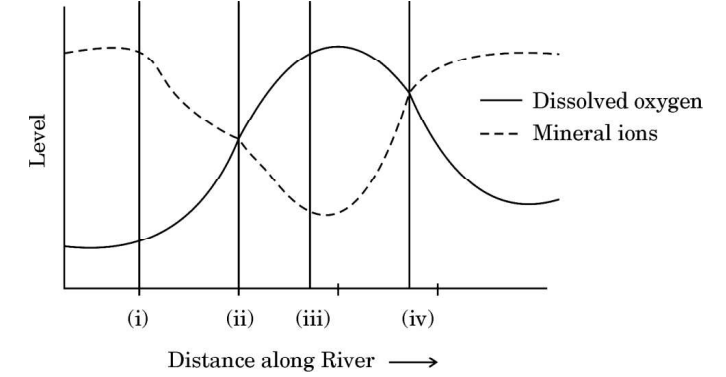
[1 Mark] Diagram 4 – CBSE Class 12 PCB Biology 2023 Set 1 Solutions
  • (A) Point (iv)
  • (B) Point (i)
  • (C) Point (iii)
  • (D) Point (ii)
Explanation: The entry of untreated sewage into a river usually leads to a decrease in the oxygen levels due to the increased bacterial activity that consumes oxygen. Point (ii) in the graph represents a sudden drop in oxygen concentration, indicating pollution from untreated sewage entering the river at this point.
Question 8.

Given below are two columns. In Column I is the list of four enzymes and in Column II is the list of functions of the given enzymes. Which one of the following options shows the enzymes matched with their respective functions correctly?
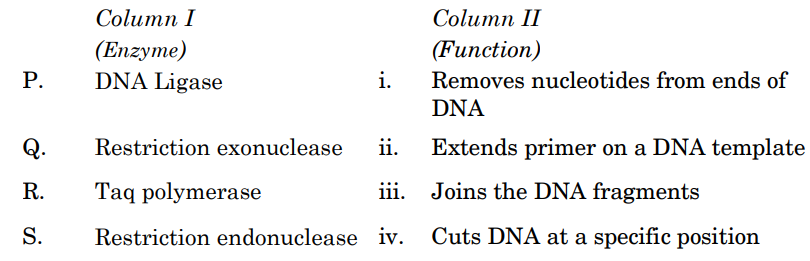
[1 Mark] Diagram 5 – CBSE Class 12 PCB Biology 2023 Set 1 Solutions
  • (A) P-i, Q-iv, R-iii, S-ii
  • (B) P-iii, Q-i, R-ii, S-iv
  • (C) P-i, Q-ii, R-iv, S-iii
  • (D) P-iv, Q-iii, R-ii, S-i
Explanation: The correct answer is 'P-i, Q-iv, R-iii, S-ii' because each enzyme is matched to its specific function based on the classification of enzymes mentioned in the context provided. For example, oxidoreductases catalyze oxidoreduction reactions, which corresponds to the correct function listed in Column II.
Question 9.

Study the DNA profiles obtained as a result of DNA fingerprinting of a child 'X' and three individuals 1, 2 and 3. Which one of the following options shows the possible parents of the child 'X' ?
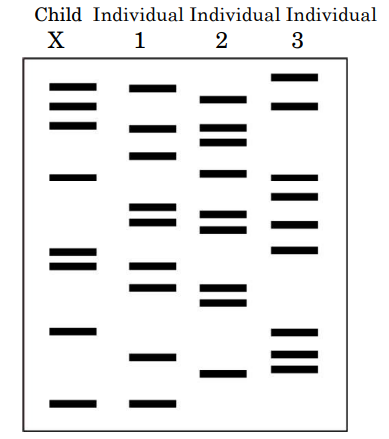
[1 Mark] Diagram 6 – CBSE Class 12 PCB Biology 2023 Set 1 Solutions
  • (A) 2 and 3
  • (B) 1 and 2
  • (C) 1 and 3
  • (D) Only individual 3
Explanation: The correct answer is '1 and 3', because child 'X' must inherit DNA bands from both parents. Therefore, the banding patterns of child 'X' should closely match the patterns of individual 1 and individual 3, indicating they are likely the parents.
Question 10.

Select the option that gives the correct description of the process of Natural Selection with respect to the length of the neck of giraffe.
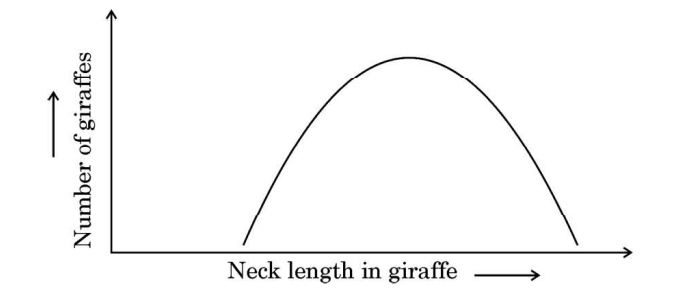
[1 Mark] Diagram 7 – CBSE Class 12 PCB Biology 2023 Set 1 Solutions
  • (A) Disruptive selection as giraffes with smaller and longer neck lengths are selected.
  • (B) Stabilising selection as giraffes with longer neck lengths are selected further.
  • (C) Directional selection as giraffes with longer neck lengths are selected.
  • (D) Stabilising selection as giraffes with medium neck lengths are selected.
Explanation: The correct option is 'Directional selection as giraffes with longer neck lengths are selected.' This is because, as stated in the context, giraffes evolved longer necks to better reach leaves on tall trees, indicating a shift in the average neck length over generations towards longer necks due to natural selection favoring this trait.
Question 11.

Choose the option that gives the correct number of pollen grains that will be formed after 325 microspore mother cells undergo microsporogenesis.

[1 Mark]
  • (A) 650
  • (B) 1300
  • (C) 975
  • (D) 325
Explanation: During microsporogenesis, each microspore mother cell undergoes meiosis to produce four microspores. Therefore, if 325 microspore mother cells undergo this process, the total number of pollen grains formed will be 325 x 4 = 1300. Thus, the correct option is 1300.
Question 12.

Given below are two columns. In Column I the names of four contraceptive devices are given and in Column II the modes of action of the contraceptives are given. Select the option where the contraceptive devices are correctly matched with their respective modes of action.
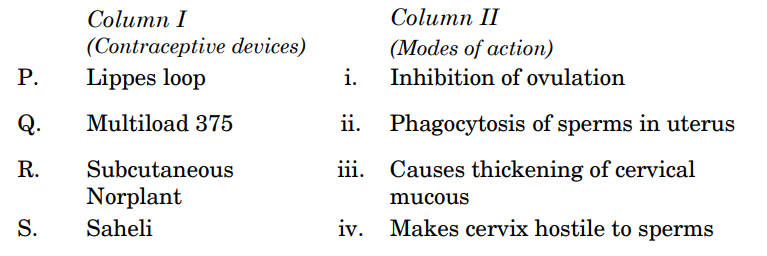
[1 Mark] Diagram 8 – CBSE Class 12 PCB Biology 2023 Set 1 Solutions
  • (A) P-iv, Q-iii, R-ii, S-i
  • (B) P-i, Q-ii, R-iii, S-iv
  • (C) P-iii, Q-i, R-iv, S-ii
  • (D) P-ii, Q-iv, R-iii, S-i
Explanation: The correct option is P-iii, Q-i, R-iv, S-ii. This option correctly correlates each contraceptive device with its mode of action based on the context provided. For instance, IUDs (P) prevent implantation by making the uterus unsuitable for it (iii), while progestogen pills (Q) work by suppressing ovulation (i). Additionally, barrier methods like condoms (R) prevent sperm from reaching the egg (iv), and hormonal contraceptives like implants (S) are designed to alter the hormonal environment to prevent ovulation (ii).
Question 13.

In which one of the following options does the endocrine gland correctly match with its hormonal secretion and its function?
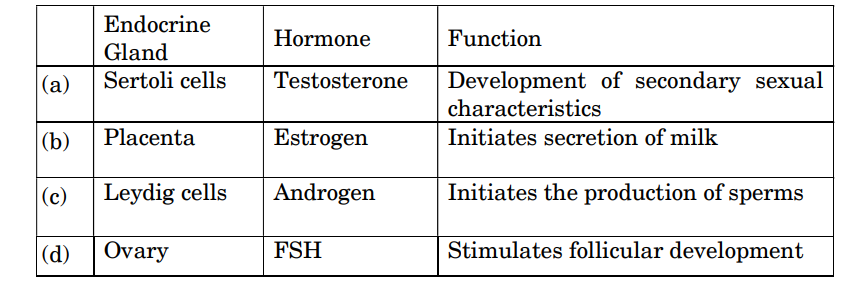
[1 Mark] Diagram 9 – CBSE Class 12 PCB Biology 2023 Set 1 Solutions
  • (A) Sertoli cells Testosterone Development of secondary sexual characteristics
  • (B) Leydig cells Androgen Initiates the production of sperms
  • (C) Ovary FSH Stimulates follicular development
  • (D) Placenta Estrogen Initiates secretion of milk
Explanation: The correct option is 'Leydig cells Androgen Initiates the production of sperms.' Leydig cells in the testes produce androgens (like testosterone), which are essential for the process of spermatogenesis, i.e., the production of sperm.
Question 14.

The organism used in construction of the first artificial recombinant DNA by Cohen and Boyer in 1972 was:

[1 Mark]
  • (A) Salmonella typhimurium
  • (B) E. coli
  • (C) Agrobacterium tumefaciens
  • (D) Bacillus thuringiensis
Explanation: The first artificial recombinant DNA was constructed using plasmids from Salmonella typhimurium but introduced into Escherichia coli (E. coli) which served as the host or cloning organism. E. coli was used because it can replicate the recombinant DNA using its own DNA polymerase, allowing multiple copies of the antibiotic resistance gene to be cloned. Hence, E. coli was the organism used for the construction and replication of the first artificial recombinant DNA.
Question 15.

Who among the following challenged the patent right granted to the University of Mississippi Medical Centre for 'use of turmeric in wound healing'?

[1 Mark]
  • (A) Dr. Venugopalan
  • (B) Ms. Vandana Shiva
  • (C) Mr. Ajay Phadke
  • (D) Dr. R.A. Mashelkar
Explanation: Ms. Vandana Shiva is known for her activism in protecting traditional knowledge and challenging unjust patent claims on indigenous resources, like turmeric. Her efforts align with the concerns mentioned in the context about safeguarding traditional herbal medicines from patent exploitation.
Question 16.

Assertion (A): A patient of ADA deficiency undergoing treatment for gene therapy requires periodic infusion of genetically engineered lymphocytes.

Reason (R): Lymphocytes are immortal.

[1 Mark]
  • (A) Assertion (A) is false, but Reason (R) is true.
  • (B) Both Assertion (A) and Reason (R) are true, but Reason (R) is not the correct explanation of the Assertion (A).
  • (C) Assertion (A) is true, but Reason (R) is false.
  • (D) Both Assertion (A) and Reason (R) are true and Reason (R) is the correct explanation of the Assertion (A).
Explanation: Assertion (A) is true, but Reason (R) is false. The patient indeed needs periodic infusion of genetically engineered lymphocytes for treatment; however, lymphocytes are not immortal, which means they cannot survive indefinitely without periodic replacement.
Question 17.

Assertion (A): A cattle egret and grazing cattle in close association is a classic example of commensalism. Reason (R): As grazing cattle move through the field, they stir up and flush out insects from the vegetation that otherwise might be difficult for egrets to find and catch.

[1 Mark]
  • (A) Assertion (A) is true, but Reason (R) is false.
  • (B) Both Assertion (A) and Reason (R) are true and Reason (R) is the correct explanation of the Assertion (A).
  • (C) Assertion (A) is false, but Reason (R) is true.
  • (D) Both Assertion (A) and Reason (R) are true, but Reason (R) is not the correct explanation of the Assertion (A).
Explanation: Both Assertion (A) and Reason (R) are true and Reason (R) is the correct explanation of the Assertion (A). The context provided clearly states that the cattle egret benefits from the presence of grazing cattle, which help to flush out insects, making it easier for the egrets to forage. This exemplifies the commensalism interaction described in Assertion (A).
Question 18.

Assertion (A): Endosperm is completely consumed during the development of embryo in ex-albuminous seeds.

Reason (R): Castor, pea and beans are all examples of ex-albuminous seeds.

[1 Mark]
  • (A) Assertion (A) is true, but Reason (R) is false.
  • (B) Both Assertion (A) and Reason (R) are true and Reason (R) is the correct explanation of the Assertion (A).
  • (C) Assertion (A) is false, but Reason (R) is true.
  • (D) Both Assertion (A) and Reason (R) are true, but Reason (R) is not the correct explanation of the Assertion (A).
Explanation: The assertion is correct because in ex-albuminous seeds (also called non-albuminous seeds), the endosperm is completely consumed by the developing embryo at the time of seed maturity, as seen in peas and beans. However, the reason is incorrect because castor seeds are not ex-albuminous; castor seeds retain endosperm even at maturity and are albuminous seeds. Thus, the reason does not correctly explain the assertion.
Question 19.

Assertion (A): Birds like pigeon have heterogametic females whereas the males are homogametic.

Reason (R): In pigeons, females have Z and W sex chromosomes whereas males have ZZ sex chromosomes.

[1 Mark]
  • (A) Both Assertion (A) and Reason (R) are true, but Reason (R) is not the correct explanation of the Assertion (A).
  • (B) Both Assertion (A) and Reason (R) are true and Reason (R) is the correct explanation of the Assertion (A).
  • (C) Assertion (A) is true, but Reason (R) is false.
  • (D) Assertion (A) is false, but Reason (R) is true.
Explanation: Both Assertion (A) and Reason (R) are true and Reason (R) is the correct explanation of the Assertion (A). In birds, including pigeons, females are heterogametic with ZW chromosomes, while males are homogametic with ZZ chromosomes, thus explaining the assertion.

Section C

Question 20.

The diagram given below shows a developmental stage of human embryo. Answer the following questions with reference to it :

(a) Identify and name the human embryonic stage shown.

(b) Mention its exact location in the normal pregnancy of a woman.

(c) Write one function of each of the two parts labelled 'X' and 'Y'.
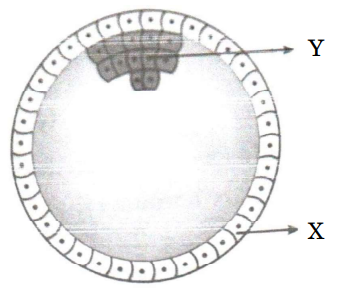
[2 Marks] Diagram 10 – CBSE Class 12 PCB Biology 2023 Set 1 Solutions
Answer: The human embryonic stage shown is the blastocyst, which appears approximately 5 to 6 days after fertilization. During normal pregnancy, it is located in the uterus as it implants into the uterine wall. Part 'X' represents the inner cell mass, which develops into the embryo, while part 'Y' is the trophoblast, responsible for forming the placenta and facilitating nutrient exchange between the mother and embryo.
Key Points: Blastocyst-Implantation in uterus-Inner Cell Mass develops into embryo-Trophoblast forms placenta
Question 21.

(a) From which end of the ovule, and how does the pollen tube gain its entry into the embryo sac of a Hibiscus flower ?

(b) State the fate of the male nuclei present in the pollen tube.

[2 Marks]
Answer: The pollen tube enters the embryo sac of a Hibiscus flower from the micropylar end of the ovule. It grows towards the ovule and penetrates one of the synergids, allowing the male gametes to be delivered. After entry, one of the male nuclei fuses with the egg cell, leading to fertilization, while the other male nucleus fuses with the central cell to form the triploid endosperm, crucial for seed development.
Key Points: Pollen tube entry from micropylar end - Penetration into synergids - Fusion with egg and central cell nuclei
Question 22.

(i) Identify and name the structures 'A' and 'B' marked in the image given below:

(ii) State their importance in various biotechnology experiments.
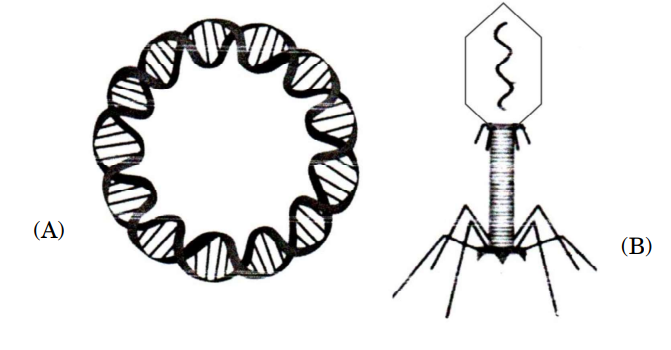
[2 Marks] Diagram 11 – CBSE Class 12 PCB Biology 2023 Set 1 Solutions
Answer: Structure 'A' is identified as red blood cells, which are round and biconcave in shape, facilitating efficient oxygen transport. Structure 'B' is white blood cells, which are amoeboid, allowing them to move and respond to infections. These cells are crucial in biotechnology as red blood cells can be used in blood transfusions and white blood cells are essential for immunological studies and vaccine development.
Key Points: Structure A: Red blood cells - shape, function; Structure B: White blood cells - shape, function; Importance: applications in blood transfusions, immunology, vaccine research
Question 23.

Explain the process by which a bacterial cell can be made 'competent' to take up foreign DNA from its surroundings, using divalent cations and temperature treatment.

[2 Marks]
Answer: Bacterial cells can be made competent by using divalent cations like calcium chloride, which facilitates DNA uptake. The process begins by treating the bacterial cells with calcium ions, increasing membrane permeability. The cells are then incubated with foreign DNA on ice, followed by a brief heat shock at 42°C. This temperature change creates pores in the cell membrane, allowing the DNA to enter. Finally, the cells are returned to ice to stabilize them, completing the transformation.
Key Points: use of divalent cations-calcium ions increase permeability-ice incubation followed by heat shock at 42°C-cells become receptive to DNA-return to ice stabilizes cells
Question 24.

Ecological pyramids give important information about the ecological system, but do have some limitations. List any two limitations of ecological pyramids.

[2 Marks]
Answer: Ecological pyramids, while useful, have limitations. Firstly, they can overlook organisms that exist at multiple trophic levels, which skews the energy dynamics. Secondly, they assume a simplistic food chain while real ecosystems function as complex food webs. This complexity means that interactions between species are not accurately represented. Thus, ecological pyramids may misrepresent energy flow and biomass distribution in ecosystems.
Key Points: Does not account for species at multiple trophic levels; Assumes a simple food chain rather than a complex food web.
Question 25.

India is the seventh largest country in the world in terms of total land area including land and water. Write the value of the land area of our country (in terms of percentage) of the world. Mention then, what makes India one of the 12 mega diversity countries of the world.

[2 Marks]
Answer: India accounts for only 2.4% of the world’s total land area. However, it is home to approximately 8.1% of global species diversity, making it one of the 12 mega diverse countries. This biodiversity is supported by about 45,000 recorded plant species and double the number of animal species. Moreover, India's varied ecosystems, such as deserts, rainforests, and mountain ranges, contribute to habitat diversity, enhancing its ecological significance.
Key Points: 2.4% of world land area-8.1% of global species diversity-45,000 species of plants

Section D

Question 26.

With the help of a schematic diagram only, show in three steps, the formation of recombinant DNA by the action of restriction endonuclease EcoRI and DNA ligase.

[3 Marks]
Answer: The formation of recombinant DNA using restriction endonuclease EcoRI and DNA ligase can be illustrated in three major steps. First, EcoRI recognizes specific palindromic sequences in both the source DNA and the plasmid vector, cutting both at these sites to generate sticky ends. Next, the desired DNA fragment with complementary sticky ends is mixed with the open plasmid, allowing the sticky ends to hybridize. Finally, DNA ligase is added to facilitate the joining of the DNA strands, forming stable recombinant DNA. This recombinant vector can now be introduced into host cells for replication and protein expression.
Key Points: Step 1: EcoRI cuts source DNA and vector DNA, producing sticky ends. Step 2: Desired DNA fragment is mixed with vector allowing hybridization. Step 3: DNA ligase joins the fragments to create recombinant DNA.
Question 27.

Study the given pedigree chart and answer the questions that follow.

(a) Is the trait given in the chart dominant or recessive ? Give reason in support of your answer.

(b) Is this trait autosomal or sex-linked ? Give reason in support of your answer.

(c) Write the possible genotypes of the children numbers '1' and '3' of the second generation.
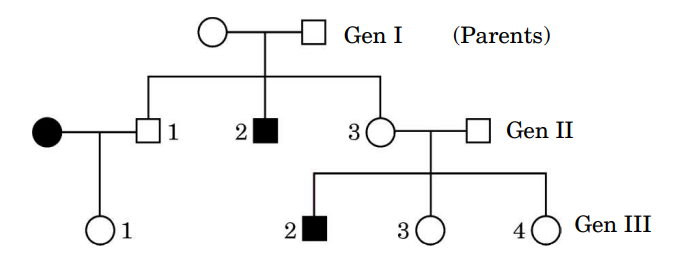
[3 Marks] Diagram 12 – CBSE Class 12 PCB Biology 2023 Set 1 Solutions
Answer: The trait depicted in the pedigree chart is likely recessive, as it appears to skip generations, indicating that unaffected individuals can carry the gene. If both parents express the trait and their child does not, it further supports the recessive nature. Regarding whether the trait is autosomal or sex-linked, it appears to be autosomal because the trait is transmitted equally to both male and female offspring without a clear gender bias. This pattern is typical for autosomal inheritance. For the children numbered '1' and '3', if we consider possible parental genotypes, '1' could have the genotype 'Aa' while '3' could be 'aa', suggesting varying carrier statuses among the siblings.
Key Points: Trait shows skipped generations indicating recessivity - Affects both sexes equally, suggesting autosomal inheritance - Potential genotypes of children based on parental inheritance patterns
Question 28.

(a) (a) Write the characteristics of 'stem cells'.

(b) From where can one obtain 'stem cells' in humans?

(c) State any two applications of 'stem cells' in curing human diseases.

[3 Marks]
Answer: Stem cells are unique cells characterized by their ability to differentiate into various cell types and self-renewal. They are undifferentiated cells, capable of giving rise to specialized cells for all tissues in the body. Stem cells can be obtained from various sources in humans, primarily from embryonic tissues, umbilical cord blood, and adult bone marrow. Applications of stem cells include treatment of blood disorders like leukemia, and regenerative medicine, such as repairing heart tissue after a heart attack.
Key Points: Characteristics: unspecialized, capable of differentiation, self-renewal; Sources: embryonic tissues, umbilical cord blood, adult bone marrow; Applications: treatment of leukemia, regenerative medicine for heart tissue repair
Question 29.

(a) Differentiate between malignant and benign tumours.

(b) Name and explain the most feared property of a malignant tumour.

[3 Marks]
Answer: Benign tumours are non-cancerous growths that remain localized and do not invade surrounding tissues or spread to other parts of the body. They usually cause minimal damage and can often be surgically removed without significant harm to the body. In contrast, malignant tumours are cancerous; they grow rapidly, invade nearby tissues, and can metastasize, meaning they can spread to distant sites through the bloodstream, forming new tumours. The most feared property of malignant tumors is their ability to metastasize, which makes them particularly dangerous as they compromise the function of multiple organs.
Key Points: Benign tumours are localized and non-invasive; Malignant tumours invade tissues and spread; Metastasis is the ability to spread, making malignant tumours more dangerous.
Question 30.

Treatment of wastewater is done in a sewage treatment plant to make it less polluting. Explain the following with reference to this treatment process :

(a) Primary sludge

(b) Activated sludge

(c) Anaerobic sludge digesters

[3 Marks]
Answer: The treatment of wastewater involves various stages crucial for reducing its polluting potential. (a) Primary sludge is obtained during the primary treatment stage when larger particles settle out as sediment from the sewage, representing a combination of solid waste and biologically active microorganisms. (b) Activated sludge is formed when primary effluent enters aeration tanks, where it is agitated and aerated. This process encourages the growth of microbial flocs that digest organic matter, significantly lowering BOD levels. A portion of this sludge is recycled back to maintain microbial activity. (c) Anaerobic sludge digesters are large, oxygen-free tanks where the accumulated activated sludge is treated further. Here, anaerobic bacteria decompose the organic matter, releasing biogas, which mainly consists of methane, a valuable renewable energy source. This sequenced approach effectively cleans wastewater before its release.
Key Points: Primary treatment, which removes large particles; formation of activated sludge through aeration; anaerobic digesters that utilize bacteria to further break down sludge.
Question 31.

(a) Name the two primate ancestors of the present day humans, who existed approximately about 15 million years ago.

(b) According to geological records, when and where did Australopithecines live ?

(c) Give two differences between Homo habilis and Homo erectus.

[3 Marks]
Answer: (a) The two primate ancestors of modern humans that existed approximately 15 million years ago are Dryopithecus and Ramapithecus. Dryopithecus is considered to be more ape-like, while Ramapithecus displays more human-like characteristics. (b) According to geological records, Australopithecines lived around 2 million years ago in the East African grasslands. They were known for their bipedal locomotion and likely used stone tools. (c) Two differences between Homo habilis and Homo erectus are: Homo habilis had a smaller brain capacity of 650-800cc, whereas Homo erectus had a larger brain, typically ranging from 600-1,100cc. Additionally, Homo habilis is believed to have primarily consumed fruits, while Homo erectus had a more varied diet, including meat.
Key Points: Dryopithecus-Ramapithecus, Australopithecines-East African grasslands-2 million years ago, differences in brain size and diet between Homo habilis and Homo erectus
Question 32.

(i) Expand the abbreviations given below, used for different modes of assisted reproductive technologies :

(1) ZIFT

(2) ICSI

(3) IUT

(4) GIFT

(ii) Which one of them cannot be considered as a procedure of IVF ? Give reasons in support of your answer.

[3 Marks]
Answer: The expansions of the abbreviations are as follows: ZIFT stands for Zygote Intra Fallopian Transfer, ICSI stands for Intra Cytoplasmic Sperm Injection, IUT stands for Intra Uterine Transfer, and GIFT stands for Gamete Intra Fallopian Transfer. Among these, GIFT is not considered a procedure of IVF because it does not involve fertilization taking place in the laboratory. Instead, GIFT transfers the collected ovum and sperm into the fallopian tube for natural fertilization, while IVF involves fertilizing the egg outside the body and then transferring the embryo.
Key Points: ZIFT – Zygote Intra Fallopian Transfer; ICSI – Intra Cytoplasmic Sperm Injection; IUT – Intra Uterine Transfer; GIFT – Gamete Intra Fallopian Transfer; GIFT is not an IVF procedure; GIFT does not involve fertilization outside the body.
Question 33.

Differentiate between the following :

(i) Perisperm and Pericarp

(ii) Syncarpous pistil and Apocarpous pistil

(iii) Plumule and Radicle

[3 Marks]
Answer: Perisperm refers to the nutritive tissue that surrounds the embryonic sac in some seeds, while pericarp is the outer layer of the fruit that develops from the ovary wall after fertilization. A syncarpous pistil consists of fused carpels, whereas an apocarpous pistil features separate, distinct carpels. Lastly, the plumule is the part of the seed that develops into the shoot or stem of the plant, while the radicle is the embryonic root that develops downward into the soil.
Key Points: Perisperm is nutritive tissue, Pericarp is the fruit wall; Syncarpous has fused carpels, Apocarpous has separate carpels; Plumule develops into the shoot, Radicle develops into the root.

Section E

Question 34.

Meselson and Stahl carried out an experiment to prove the nature of DNA replication. Recall the experiment and answer the following questions.

(i) Which two types of nitrogen were used by them in their experiment and why ?

(ii) Why did they take samples of E. coli at definite time intervals for their observation ?

(iii) State the role of caesium chloride density gradient in their experiment. (iv) Write the conclusions they arrived at.

[5 Marks]
Answer: In their landmark experiment, Meselson and Stahl used two types of nitrogen isotopes: 15N, a heavy isotope, and 14N, the lighter, more common isotope. The purpose of using these isotopes was to track the incorporation of nitrogen into the DNA of E. coli, thereby providing evidence for the mode of DNA replication. By isolating pure DNA and subjecting it to caesium chloride density gradient centrifugation, they could distinguish between the densities of DNA molecules after replication. Samples were taken at specific intervals to observe the transition from the heavy 15N DNA to the hybrid DNA, thus demonstrating semiconservative replication. The gradient allowed them to analyze the density differences, confirming that each daughter DNA molecule consisted of one strand from the parent and one newly synthesized strand.
Key Points: Use of 15N (heavy) and 14N (light) isotopes for tracking DNA replication - E. coli samples taken at intervals to observe DNA transition - Caesium chloride density gradient used for density separation of DNA - Conclusions: DNA replication is semiconservative, with hybrid molecules present in each generation.
Question 35.

(i) A true breeding tall pea plant with round seeds is crossed with a recessive dwarf pea plant having wrinkled seeds. Work out the cross up to F2 generation giving the phenotypic ratios of F1 and F2 generation respectively.

(ii) State the Mendelian principle that can be derived only with the help of such a cross.

[5 Marks]
Answer: To determine the inheritance from a true-breeding tall pea plant (genotype TT, RR) crossed with a dwarf pea plant (genotype tt, rr), we first examine the F1 generation. All offspring will be tall with round seeds (TtRr). When the F1 generation is self-pollinated, the F2 generation emerges. Using a Punnett square for both traits, we find the phenotypic ratio: 9 Tall Round (T_R_), 3 Tall Wrinkled (T_rr), 3 Dwarf Round (ttR_), and 1 Dwarf Wrinkled (ttrr). This totals to 3:1:3:1, showing that both characters assort independently. The derived Mendelian principle from this cross is the Law of Independent Assortment, which states that alleles of different genes segregate independently of each other during gamete formation.
Key Points: Cross of true breeding tall (TT, RR) and dwarf (tt, rr) plants - F1 generation all tall and round (TtRr) - F2 generation phenotypic ratio of 9:3:3:1 - Demonstrates Law of Independent Assortment
Question 36.

(i) What is the chemical name of 'smack'? Why is the consumption of smack considered as an abuse?

(ii) Name the source plant and one effect of the following drugs on the human body:

(1)Marijuana

(2) Cocaine

(3) Morphine

[5 Marks]
Answer: The chemical name of 'smack' is diacetylmorphine, which is derived from morphine obtained from the latex of the opium poppy plant, Papaver somniferum. Heroin acts as a depressant, slowing down bodily functions and, when abused, can lead to serious health consequences, including addiction, respiratory failure, and death. Consumption is considered abuse when taken for non-medicinal purposes or in excessive amounts that impair physical or psychological functions. (1) Marijuana is sourced from the Cannabis sativa plant and can cause relaxation and altered perceptions. (2) Cocaine, derived from coca leaves, is a powerful stimulant that increases energy and alertness. (3) Morphine also comes from the opium poppy and is primarily used as a pain reliever, but can lead to physical dependence and addiction.
Key Points: Chemical name: diacetylmorphine; Source plant: Papaver somniferum; Abuse: non-medicinal use, impaired functions; Marijuana effect: relaxation; Cocaine effect: energy increase; Morphine effect: pain relief, addiction risk
Question 37.

Study the diagram given below showing the modes of pollination. Answer the questions that follow.

(i) The given diagram shows three methods of pollen transfer in plants. What are the technical terms used for pollen transfer methods '1', '2' and '3'?

(ii) How do the following plants achieve pollination successfully ?

(1) Water lily

(2) Vallisneria

(iii) Flowering plants have developed many devices to avoid inbreeding depression. Explain one hereditary and one physiological device which helps plants to achieve this target.
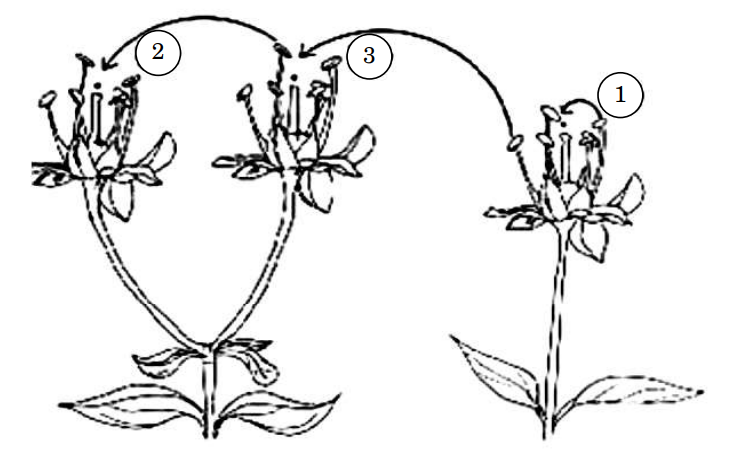
[5 Marks] Diagram 13 – CBSE Class 12 PCB Biology 2023 Set 1 Solutions
Answer: Pollination in flowering plants can occur through various mechanisms. The technical terms for the methods shown in the diagram are as follows: (1) Autogamy, which refers to self-pollination within the same flower; (2) Geitonogamy, where pollen is transferred between different flowers on the same plant; and (3) Allogamy, indicating cross-pollination between flowers of different plants. Water lilies achieve pollination through water, utilizing hydrophily, as their flowers float on the surface, while Vallisneria employs a similar method, where flowers emerge only when pollination is needed. To prevent inbreeding depression, hereditary devices can include self-incompatibility mechanisms that prevent self-fertilization, while physiological devices might involve temporal separation of male and female flower maturation, ensuring cross-pollination occurs.
Key Points: Autogamy, Geitonogamy, Allogamy; Water lily uses hydrophily; Vallisneria has similar adaptation; Hereditary devices like self-incompatibility; Physiological devices like temporal separation
Question 38.

Observe the diagram given below showing the menstrual cycle of a normal human female and answer the questions that follow :

(i) What are the suitable technical terms used for the following ?

(1) Days 1-7

(2) Days 8-12

(3) Days 16-28

(4) Days 13-15

(ii) Explain the role of ovarian and pituitary hormones during the following time periods :

(1) Days 8-12

(2) Days 13-15

(3) Days 16-28
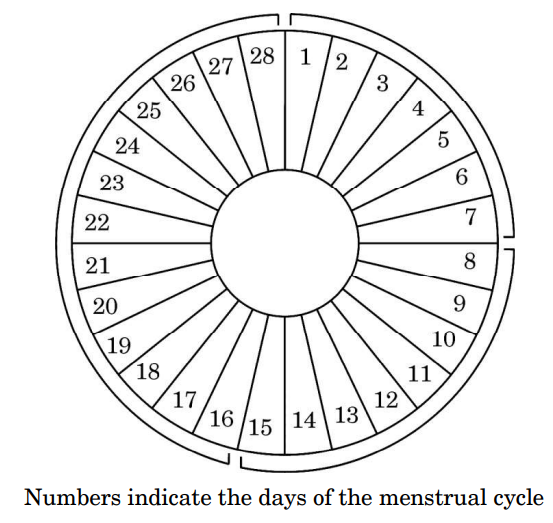
[5 Marks] Diagram 14 – CBSE Class 12 PCB Biology 2023 Set 1 Solutions
Answer: The menstrual cycle consists of four main phases. (1) Days 1-7 are called the Menstrual Phase, characterized by menstrual flow. (2) Days 8-12 are termed the Follicular Phase, where follicles in the ovaries mature under FSH influence. (3) Days 16-28 are known as the Luteal Phase, marked by the development of the corpus luteum. (4) Days 13-15 correspond to Ovulation, when an ovum is released. During Days 8-12, estrogen levels rise due to follicular development. Days 13-15 see a surge in LH, triggering ovulation. From Days 16-28, progesterone from the corpus luteum prepares the endometrium for potential implantation.
Key Points: Menstrual Phase (Days 1-7)-Follicular Phase (Days 8-12)-Ovulation (Days 13-15)-Luteal Phase (Days 16-28)-Ovarian Hormones-Role of Estrogen-Role of Progesterone-Pituitary Hormones (LH, FSH)-Impact on Uterine Lining
Question 39.

A time-bound vaccination programme is followed for the children in our country from their birth up to ten years of age. A graph plotted below shows the effect of the vaccination followed by infection by the same pathogen, and the antibody concentration in the blood of the child.

(i) Explain why the administration of a vaccine causes an increase in the antibody concentration.

(ii) If the child is infected with the same pathogen almost four months later, the antibody concentration in his/her blood increases very fast. Explain why.

(iii) A table given below gives information about different types of immunity and how they are attained. Identify P , Q , R , S and T in the table.

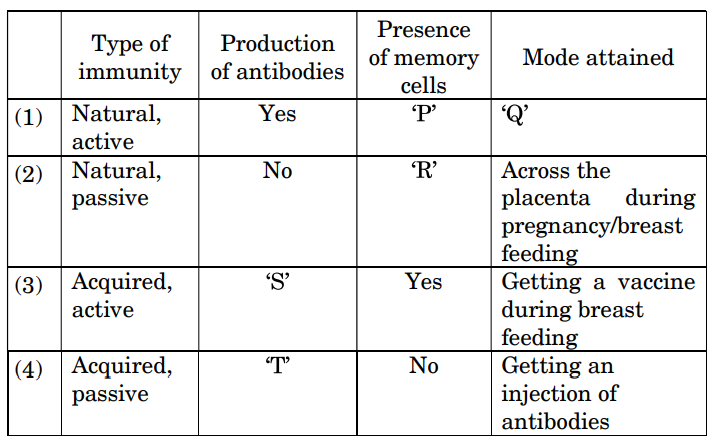
Diagram 15 – CBSE Class 12 PCB Biology 2023 Set 1 Solutions

[5 Marks] Diagram 16 – CBSE Class 12 PCB Biology 2023 Set 1 Solutions
Answer:

(i) A vaccine contains harmless antigens (inactivated pathogen or protein fragments) that stimulate your B-cells to divide and differentiate into plasma cells, which secrete large amounts of specific antibodies—so you get a rise in antibody concentration without having to suffer the actual disease.

(ii) When you were vaccinated, you not only made antibodies but also produced long-lived memory B-cells. On re-exposure to the same pathogen those memory cells immediately reactivate, proliferate and become plasma cells, so antibody levels soar much faster than on the first encounter.

(iii) Filling in P, Q, R, S and T in the immunity table

Row

Type of immunity

Production of Abs

Memory cells

Mode attained

(1)

Natural, active

Yes

P = Yes

Q = Infection by pathogen

(2)

Natural, passive

No

R = No

Across the placenta…

(3)

Acquired, active

S = Yes

Yes

Getting a vaccine

(4)

Acquired, passive

T = No

No

Injection of antibodies

So the missing entries are:

  • P = Yes

  • Q = Infection by (exposure to) the live pathogen

  • R = No

  • S = Yes

  • T = No

Key Points:
  • Vaccination → Antibody Rise

    • Vaccines present harmless antigens that activate B-cells.

    • B-cells become plasma cells and secrete specific antibodies.

  • Secondary (Memory) Response

    • Vaccination also creates memory B-cells.

    • On re-exposure, memory B-cells rapidly proliferate → fast, high antibody spike.

  • Immunity Table Fill-Ins

    • P (Natural, active → memory cells): Yes

    • Q (Natural, active → mode attained): Infection by pathogen

    • R (Natural, passive → memory cells): No

    • S (Acquired, active → production of antibodies): Yes

    • T (Acquired, passive → production of antibodies): No

  • Modes of Attainment

    • Natural active: infection by the pathogen.

    • Natural passive: antibodies passed via placenta/breast milk.

    • Acquired active: vaccination.

    • Acquired passive: injection of ready-made antibodies.

Paper Details

CBSE Board Exam 2023

Class

Class 12 PCB

Subject

Biology

Year

2023

Set

Set 1

Other Years — Biology

2022 Set-1

2022 Set-2

2022 Set-3

2022 Set-4

2022 Set-5

2023 Set-1

2023 Set-3

2023 Set-5

2024 Set-1

2024 Set-2

2024 Set-3

2024 Set-4

2024 Set-5

2025 Set-1

2025 Set-2

2025 Set-3

2025 Set-4

2025 Set-5

2025 Set-6

CBSE Class 12 Biology 2023 Set 1 Solutions | Prepzy