Section B
[1 Mark]
-
(A) Aspergillus and Penicillium
-
(B) Microsporum and Trichophyton
-
(C) Rhizopus and Mucor
-
(D) Candida and Claviceps
Explanation: The correct answer is Microsporum and Trichophyton, as these two genera are well-known for causing dermatophyte infections, including ringworm, in humans.
[1 Mark]
-
(A) It lacks sufficient microbes
-
(B) It is too dry
-
(C) It produces less gas
-
(D) It contains harmful pathogens
Explanation: The correct answer is 'It contains harmful pathogens.' Human excreta may carry various harmful pathogens that can pose health risks, making it unsafe for direct use in biogas plants compared to cow dung, which is generally free of such pathogens and more suitable for biogas production.
[1 Mark]
-
(A) It increases heart rate by acting on the cerebellum
-
(B) It inhibits dopamine reuptake at synapses
-
(C) It blocks insulin release
-
(D) It stimulates GABA secretion
Explanation: The correct answer is 'It inhibits dopamine reuptake at synapses.' Cocaine primarily acts by blocking the reuptake of dopamine, a neurotransmitter associated with pleasure and reward, which leads to an accumulation of dopamine in the synaptic cleft and enhances its signaling.
[1 Mark]
-
(A) Chlorination
-
(B) Filtration
-
(C) Transfer to anaerobic sludge digesters
-
(D) Aeration
Explanation: The correct option is 'Transfer to anaerobic sludge digesters.' After the Biological Oxygen Demand (BOD) is significantly reduced, the sewage is typically directed to anaerobic sludge digesters. This process further treats the sludge, allowing for the breakdown of organic matter in the absence of oxygen, which reduces the volume of sludge and stabilizes it.
[1 Mark]
-
(A) Quadrat method
-
(B) Direct counting
-
(C) Biomass measurement
-
(D) Percent cover
Explanation: Since there is only a single huge Banyan tree with a large canopy, counting individuals or using quadrat method is not meaningful. Percent cover or biomass measurement is better to represent the population size of such a large single tree, as it considers the area covered by the tree rather than just the number of individuals.
[1 Mark]
-
(A) Predation among barnacles
-
(B) Competitive exclusion principle
-
(C) Temperature adaptation
-
(D) Mutualism in rocky areas
Explanation: Connell's barnacle field experiment demonstrated the competitive exclusion principle, which shows how different species compete for the same resources, leading to one species outcompeting the other in certain habitats.
[1 Mark]
-
(A) HIV damages the heart
-
(B) HIV causes severe dehydration
-
(C) HIV causes brain hemorrhage
-
(D) HIV weakens the immune system, allowing opportunistic infections
Explanation: HIV weakens the immune system, allowing opportunistic infections to take hold. These infections arise because the body is unable to fight them off due to the compromised immune response caused by HIV.
[1 Mark]
-
(A) Cyclosporin A
-
(B) Morphine
-
(C) Penicillin
-
(D) AZT
Explanation: The correct answer is Cyclosporin A, as it is an immunosuppressant drug that is commonly prescribed to organ transplant recipients to prevent the body's immune system from rejecting the new organ. Morphine is a pain reliever, Penicillin is an antibiotic, and AZT is an antiviral medication, none of which are specifically used for lifelong immunosuppression after organ transplants.
[1 Mark]
-
(A) Area
-
(B) Slope
-
(C) Carbon content
-
(D) Species richness
Explanation: In the equation S = CA^Z, 'S' represents species richness, which refers to the number of different species present in a particular area. The context suggests that 'S' quantifies biodiversity, making this the correct option.
[1 Mark]
-
(A) Antibiotic resistance
-
(B) Initiation of replication
-
(C) Transcription termination
-
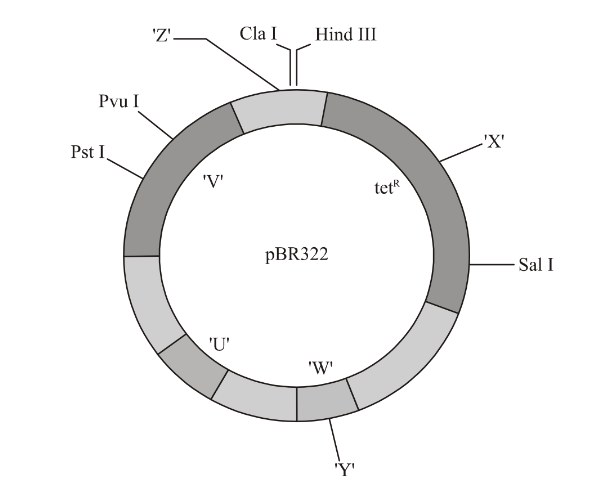
(D) Site of gene insertion
Explanation: The 'Ori' site (origin of replication) is essential for the initiation of replication in the pBR322 vector, allowing the DNA to be copied and maintained within the host cells.
Section C
[2 Marks]
Answer: Two genera of fungi that cause ringworm are Trichophyton and Microsporum. Symptoms of ringworm include red, itchy, circular patches on the skin and hair loss in the affected areas. These symptoms are a result of the fungal infection affecting the outer layer of the skin, leading to discomfort and potential secondary infections.
Key Points: Trichophyton - Microsporum - red itchy patches - hair loss
[2 Marks]
Answer: Yes, human excreta can be used instead of cowdung slurry to produce biogas. Both human and animal waste contain organic matter that can be decomposed by anaerobic bacteria to generate biogas. However, human excreta may require more rigorous treatment to remove pathogens and ensure safety. Furthermore, it has a higher nitrogen content which can enhance biogas production, but monitoring is essential. Overall, while feasible, it requires careful management.
Key Points: Human excreta can produce biogas-contains organic matter-requires treatment for safety-higher nitrogen content-enhances biogas production
[2 Marks]
Answer: Cocaine acts as a powerful stimulant on the human body by inhibiting the reuptake of neurotransmitters like dopamine, norepinephrine, and serotonin in the brain. This leads to increased mood, energy, and alertness, but can also cause harmful effects such as addiction and cardiovascular issues. Cocaine is derived from the leaves of the coca plant, scientifically known as Erythroxylum coca.
Key Points: mode of action-inhibits reuptake of neurotransmitters-energy and alertness-Erythroxylum coca
[2 Marks]
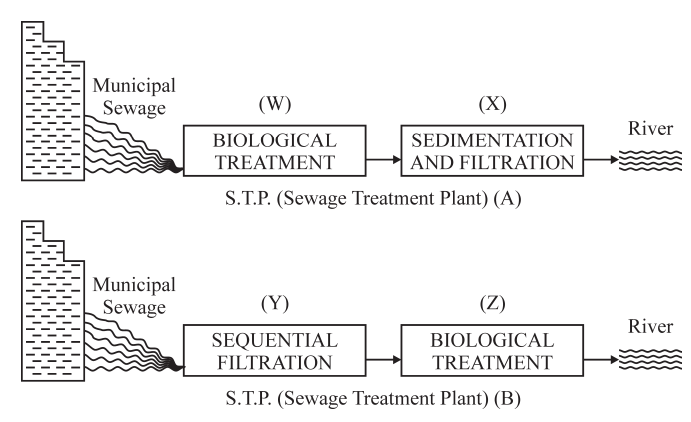
Answer: Sewage Treatment Plant B is more effective as it may include advanced processes for breaking down human excreta. In step Z, after the BOD is reduced, the treatment involves aeration to facilitate the growth of bacteria that consume remaining organic matter. Following aeration, the sewage is separated from sludge, and then it undergoes additional filtration to further purify the water. Finally, treated effluent is directed to anaerobic sludge digesters for final decomposition.
Key Points: S.T.P B is preferred; BOD reduction; aeration process; bacterial growth; separation of sewage and sludge; filtration; anaerobic sludge digesters.
[2 Marks]
Answer: To measure the population density, the ecologist should use a quadrat sampling method. They can place a quadrat of a known area around the Banyan tree and count its biomass, then do the same for 20 Parthenium weeds. Comparing these densities will show the ecological impact and resource competition between the tree and the weeds. This method provides a clear visual representation and quantifiable data on their respective densities, making it easily justifiable.
Key Points: quadrat method-benefits of biomass comparison-density representation
[2 Marks]
Answer: In Connell's field experiment, he observed that the distribution of two barnacle species, Chthamalus and Balanus, was influenced by competition and environmental factors. Chthamalus thrived in higher zones, while Balanus dominated lower zones. Additionally, the presence of Balanus restricted Chthamalus's distribution due to competition for space and resources. As for categories of organisms adversely affected by competition, plants and small vertebrates (like some fish) often suffer from competition for light, nutrients, and habitat resources.
Key Points: Connell's experiment on barnacles, Observed zonation of Chthamalus and Balanus, Competition restricts distribution, Plants affected by competition, Small vertebrates affected by competition
[2 Marks]
Answer: Four common warning signs of drug and alcohol abuse among youth include: a drop in academic performance, which may indicate a loss of focus; unexplained absences from school or college; withdrawal from family and friends, showing signs of isolation; and a noticeable decline in personal hygiene, reflecting a lack of self-care. These signs can help in identifying adolescents who may be struggling with substance abuse issues.
Key Points: drop in academic performance-unexplained absences-lack of interest in personal hygiene-withdrawal and isolation
[2 Marks]
Answer: Graph (X) depicts the tropical region, while Graph (Y) represents the temperate regions. The tropics (X) receive more solar energy and have a constant environment, promoting higher biological diversity compared to temperate regions (Y), which experience fluctuations like glaciations. The stability and richness of resources in the tropics allow for greater speciation and niche specialization, contributing to their high diversity.
Key Points: Tropical region is Graph X- Temperate region is Graph Y- Tropics have more solar energy- Greater biological diversity in tropics- Constant environment leads to more species.
Section D
[3 Marks]
Answer: I agree with the statement that an HIV patient does not usually die from AIDS directly, but rather from opportunistic infections and complications that arise due to the immunodeficiency caused by HIV. HIV attacks the immune system, particularly CD4 cells, which play a crucial role in fighting infections. As the immune system weakens over time, the patient becomes vulnerable to infections that a healthy immune system could easily combat. Common opportunistic infections include pneumonia, tuberculosis, and certain cancers. Additionally, advanced HIV can lead to conditions such as wasting syndrome and neurological complications, further compromising health. Effective antiretroviral therapy (ART) can significantly increase life expectancy by maintaining immune function and minimizing the risk of these opportunistic infections, thus allowing many HIV-positive individuals to live long lives without progressing to AIDS. Ultimately, it is these secondary infections that are typically the immediate cause of death in people living with HIV.
Key Points: HIV weakens the immune system, leading to opportunistic infections; Patients die from infections rather than AIDS; Common infections include tuberculosis and pneumonia; Antiretroviral therapy can improve health and longevity; Importance of a strong immune response in preventing complications.
[3 Marks]
Answer: Doctors conduct numerous tests to ensure compatibility between the donor and recipient for organ transplants. Compatibility is crucial to minimize the risk of organ rejection, which occurs when the recipient's immune system identifies the new organ as foreign. Tests include blood type matching, tissue typing, and cross-matching to assess immune response. Furthermore, the donor's medical history is examined to avoid transmitting infections. Post-transplant, patients must take immunosuppressants, like ciclosporin, lifelong to prevent rejection.
Key Points: Organ compatibility, tissue typing, blood type matching, immune response, medical history assessment, risk of organ rejection, lifelong immunosuppressants
[3 Marks]
Answer: The method referred to is the Polymerase Chain Reaction (PCR), which was developed by Kary Mullis in 1983. PCR is a technique that allows for the amplification of specific DNA sequences exponentially. The basic steps involved in PCR include: 1) Denaturation - where the double-stranded DNA is heated to separate it into two single strands. 2) Annealing - where short DNA primers bind to the target DNA sequences at lower temperatures. 3) Extension - where a DNA polymerase enzyme synthesizes new DNA strands by extending from the primers. These steps are repeated for 20-40 cycles, resulting in millions of copies of the target DNA segment.
Key Points: Polymerase Chain Reaction (PCR)-Denaturation-Annealing-Extension-Cycles of amplification
[3 Marks]
Answer: The Species-Area relationship is graphically represented by plotting species richness (S) on the y-axis against area (A) on the x-axis. The resulting curve typically demonstrates that as the area increases, the number of species tends to increase exponentially. In this equation, 'S' refers specifically to species richness, which is the total number of different species found in a given area. For frugivorous birds and mammals, the value of 'Z', the regression coefficient, is often around 0.3, indicating a consistent relationship between species richness and area across different tropical forest ecosystems.
Key Points: Graphical representation shows S vs A; 'S' is species richness; 'Z' value for frugivorous birds/mammals is approximately 0.3
[3 Marks]
Answer: Gene therapy for ADA deficiency focuses on correcting the underlying genetic defect that prevents the production of the enzyme adenosine deaminase (ADA). This involves direct modification of the patient's own cells, usually by extracting blood cells, genetically altering them to express the ADA enzyme, and reintroducing them into the patient's body. The modified cells can now produce ADA, restoring normal levels and allowing the immune system to function effectively. To receive recombinant DNA (rDNA), a host cell must be made competent, which means it must be capable of taking up foreign DNA. This is essential for the transformation process, as competent cells can incorporate rDNA into their genome, facilitating the expression of desired traits or proteins.
Key Points: Gene therapy; ADA deficiency; direct modification of cells; extraction and modification of blood cells; reintroduction; immune system restoration; host cell competence; uptake of foreign DNA; transformation process; rDNA incorporation
[3 Marks]
Answer: To identify regions as 'Biodiversity hotspots', two primary criteria are used. First, a region must contain at least 1,500 species of vascular plants as endemics. This ensures that the area has a unique ecological value that supports a wide range of biodiversity. Second, the region must have lost at least 70% of its original habitat. This criterion highlights areas that are significantly threatened and thus require immediate conservation efforts. In India, two recognized biodiversity hotspots are the Western Ghats and the Himalayas. Both of these regions are rich in species diversity and endemism, making them vital for conservation.
Key Points: 1. Must contain at least 1,500 endemic vascular plant species. 2. Must have lost 70% or more of its original habitat. 3. Western Ghats and Himalayas are notable hotspots in India.
[3 Marks]
Answer: (i) In the given pie chart, (X) represents amphibians, and (Y) represents reptiles. (ii) Amongst vertebrates, amphibians are the most vulnerable group to extinction, as evidenced by their declining populations and high rates of disappearance. Their sensitivity to environmental changes and habitat loss has made them particularly susceptible. (iii) Recent examples of species extinctions include the Steller’s Sea Cow from Russia, the dodo from Mauritius, and the thylacine from Australia. These extinctions highlight the ongoing biodiversity crisis.
Key Points: Identify (X) as amphibians and (Y) as reptiles - Amphibians are highly vulnerable to extinction - Recent extinction examples: Steller’s Sea Cow (Russia), Dodo (Mauritius), Thylacine (Australia)
Section E
[5 Marks]
Answer: Darwin's theory of natural selection posits that organisms best adapted to their environment have a higher survival rate and thus are more likely to reproduce. This process leads to the gradual evolution of species over time. The main postulates include the existence of variation within populations, the struggle for existence due to limited resources, and the resultant differential survival and reproduction of individuals. Evidence supporting this theory includes the fossil record demonstrating transitional forms, homologous structures among different species indicating common ancestry, and observed instances of natural selection in real-time, such as the peppered moth's color variation in response to industrial pollution. Additionally, the concept of branching descent illustrates how species evolve from common ancestors, leading to biodiversity. The combination of morphological, genetic, and ecological evidence solidifies the foundation of evolution by natural selection, underscoring its role in shaping the diversity of life on Earth.
Key Points: Natural selection, variation in populations, struggle for existence, differential survival, fossil record, homologous structures, observed natural selection, branching descent and common ancestry, genetic evidence, biodiversity
[4 Marks]
Answer: Recombinant DNA technology is a process that allows scientists to manipulate genetic material for various applications. The first step involves the isolation of DNA from an organism. Next, the DNA is fragmented using restriction endonucleases, which cut the DNA at specific sequences. A desired DNA fragment is then isolated, which may contain a gene of interest. The DNA fragment is ligated into a vector, which is a carrier molecule. This recombinant DNA is transferred into a host cell, often bacteria, using methods such as transformation or transfection. After the host cells take up the recombinant DNA, they are cultured in a suitable medium. Finally, the desired product, often a protein, is extracted from the cultured cells. In medicine, this technology has led to the production of therapeutic proteins, such as insulin, monoclonal antibodies, and vaccines, which are more effective and safe compared to those obtained from non-human sources. In agriculture, recombinant DNA technology has enabled the development of genetically modified crops that are resistant to pests, diseases, and environmental stresses, thus enhancing food security and agricultural productivity.
Key Points: Isolation of DNA-Fragmenation with restriction endonucleases-Isolation of desired fragment-Ligation into a vector-Transfer to host cells-Culturing and extraction of the product-Medicine applications: production of therapeutic proteins (insulin, antibodies)-Agriculture applications: development of genetically modified crops
[5 Marks]
Answer: A neuron is the fundamental unit of the nervous system and comprises three main parts: the cell body, dendrites, and axon. The cell body contains the nucleus and cytoplasm, with Nissl's granules playing a crucial role in protein synthesis. Dendrites receive signals from other neurons, while the axon transmits these signals away from the cell body to other neurons or tissues. The transmission of nerve impulses occurs at synapses, where neurotransmitters, which are chemicals stored in vesicles at the axon terminals, are released into the synaptic cleft. These neurotransmitters bind to receptors on the post-synaptic neuron, facilitating the continuation of the nerve impulse. There are two types of synapses: electrical, where impulses transfer directly, and chemical, which relies on neurotransmitter release. This intricate system allows for rapid communication within the nervous system, enabling the body to respond to stimuli effectively.
Key Points: Neuron structure: cell body, dendrites, axon; Function: signal transmission; Synapse: pre-synaptic and post-synaptic neurons; Neurotransmitters role; Electrical vs chemical synapses; Impulse transmission mechanisms
 (i) Give a graphical representation of the given equation showing Species-Area relationship.