Section B
[1 Mark]
-
(A) 25%
-
(B) 0%
-
(C) 50%
-
(D) 75%
Explanation: The father is colour-blind, which means he has the defective X chromosome associated with colour blindness (XcY). The mother, having a colour-blind mother and a normal father, is a carrier (XcX) since she does not exhibit colour blindness herself. The potential male offspring can inherit the Y chromosome from the father and either the normal X chromosome or the X chromosome carrying the colour blindness gene from the mother. Therefore, there is a 50% chance that a son will inherit the Xc chromosome from the mother, resulting in 50% of their male children being colour-blind.
[1 Mark]
-
(A) Ground Environment Action Committee
-
(B) Genetic and Environment Approval Committee
-
(C) Genome Engineering Action Committee
-
(D) Genetic Engineering Approval Committee
Explanation: The correct answer is 'Genetic Engineering Approval Committee' as stated in the context provided, which indicates that the Indian Government has established this committee to oversee the validity and safety of GM research and the introduction of genetically modified organisms.
[1 Mark]
-
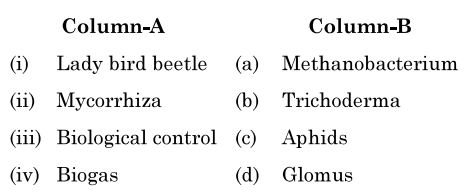
(A) (i) - (c), (ii) - (d), (iii) - (b), (iv) - (a)
-
(B) (i) - (b), (ii) - (d), (iii) - (c), (iv) - (a)
-
(C) (i) - (c), (ii) - (b), (iii) - (a), (iv) - (d)
-
(D) (i) - (d), (ii) - (a), (iii) - (b), (iv) - (c)
Explanation: The correct answer is (i) - (c), (ii) - (d), (iii) - (b), (iv) - (a) based on the details in the provided context regarding blood groups and donor compatibility. This indicates the relationships between different blood types and their corresponding compatibility for transfusions.
[1 Mark]
-
(A) inorganic nutrients from humus.
-
(B) both organic and inorganic nutrients from detritus.
-
(C) organic nutrients from humus.
-
(D) inorganic nutrients from detritus and formation of humus.
Explanation: The correct option is 'inorganic nutrients from humus.' Mineralization is the process in which microorganisms break down organic matter, such as humus, to release inorganic nutrients, providing essential minerals back to the soil.
[1 Mark]
-
(A) Autoimmune response
-
(B) Humoral immune response
-
(C) Cell mediated immune response
-
(D) Physiological immune response
Explanation: The correct answer is 'Cell mediated immune response' because this type of immune response involves T-lymphocytes that identify and reject foreign tissues or organs, which is the mechanism responsible for graft rejection in transplantation.
[1 Mark]
-
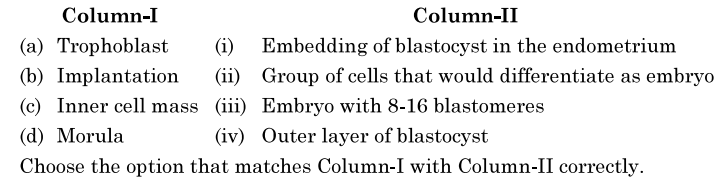
(A) (a) - (iv), (b) - (i), (c) - (ii), (d) - (iii)
-
(B) (a) - (ii), (b) - (i), (c) - (iv), (d) - (iii)
-
(C) (a) - (i), (b) - (ii), (c) - (iii), (d) - (iv)
-
(D) (a) - (ii), (b) - (iv), (c) - (iii), (d) - (i)
Explanation: Lenders require collateral to mitigate the risk of loan default, as it provides them with a form of security. If the borrower fails to repay the loan, the lender can claim the collateral to recover some or all of the lost funds.
[1 Mark]
-
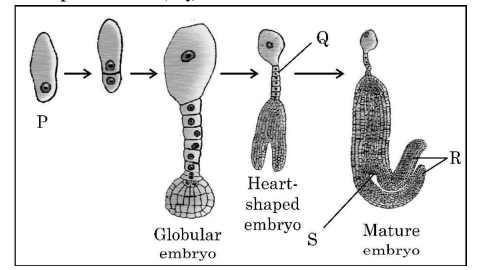
(A) P: Zygote, Q: Suspensor, R: Cotyledon, S: Radicle
-
(B) P: Egg, Q: Radicle, R: Suspensor, S: Cotyledon
-
(C) P: Zygote, Q: Suspensor, R: Cotyledon, S: Plumule
-
(D) P: Egg, Q: Suspensor, R: Radicle, S: Cotyledon
Explanation: The correct option is P: Zygote, Q: Suspensor, R: Cotyledon, S: Plumule. In a typical dicot embryo, the zygote is the initial fertilized cell, the suspensor supports the embryo, cotyledons are the seed leaves that help in nourishment, and the plumule is the part that develops into the shoot. This aligns with the development stages described for dicot embryos.
[1 Mark]
-
(A) 1 million times
-
(B) 1 billion times
-
(C) 0.1 million times
-
(D) 1 trillion times
Explanation: The correct answer is '1 billion times' as indicated in the provided context, which states that the process of DNA replication can amplify the DNA segment to approximately 1 billion copies through the repetitive cycles of PCR using thermostable DNA polymerase.
[1 Mark]
-
(A) 5’-UUACGAACCGAG— 3’
-
(B) 5’-AAUGCUAGGCAC — 3’
-
(C) 5’-UUACGUACCGUG-— 3’
-
(D) 5’-AACGUAGGCAGC — 3’
Explanation: The mRNA is transcribed from the coding strand of DNA by replacing thymine (T) with uracil (U) and keeping the sequence same. The coding strand sequence is 5’ — AATGCTAGGCAC — 3’, so the transcribed mRNA will be 5’ — AAUGCUAGGCAC — 3’. This option corresponds directly with the original DNA sequence, making it the correct answer.
[1 Mark]
-
(A) 100, 25
-
(B) 50, 50
-
(C) 200, 100
-
(D) 200, 50
Explanation: Each microspore mother cell (PMC) undergoes meiosis to produce four microspores, so for 50 PMCs, this results in 50 x 4 = 200 pollen grains. Each megaspore mother cell (MMC) typically results in one functional megaspore (ovule), so 50 MMCs result in 50 ovules. Therefore, the total is 200 pollen grains and 50 ovules.
[1 Mark]
-
(A) Australopithecines → Ramapithecus → Dryopithecus → Homo sapiens
-
(B) Dryopithecus → Homo erectus → Australopithecines → Homo sapiens
-
(C) Australopithecines → Homo erectus → Neanderthal → Homo sapiens
-
(D) Homo erectus → Australopithecines → Homo sapiens → Neanderthal
Explanation: The correct series is 'Australopithecines → Homo erectus → Neanderthal → Homo sapiens'. This sequence reflects the evolutionary lineage where Australopithecines are considered one of the earliest human ancestors, followed by Homo erectus which displayed more advanced traits, then Neanderthals who coexisted with early Homo sapiens, ultimately leading to the emergence of modern humans (Homo sapiens). This progression is supported by fossil evidence and the study of comparative anatomy.
[1 Mark]
-
(A) Preventing the process of replication of DNA of the nematode.
-
(B) Preventing the process of translation of mRNA of the nematode.
-
(C) Preventing the process of transcription of DNA of the plant.
-
(D) Preventing the process of replication of DNA of the plant.
Explanation: The correct option is 'Preventing the process of translation of mRNA of the nematode.' RNA interference (RNAi) involves the introduction of complementary RNA that forms double-stranded RNA (dsRNA) with the specific mRNA of the nematode, leading to its silencing and preventing its translation. This mechanism specifically targets and inhibits the expression of the nematode's genes, allowing the tobacco plant to resist the infestation.
[1 Mark]
-
(A) (A) is false, but (R) is true.
-
(B) (A) is true, but (R) is false.
-
(C) Both (A) and (R) are true and (R) is the correct explanation of (A).
-
(D) Both (A) and (R) are true, but (R) is not the correct explanation of (A).
Explanation: Saheli is indeed the world's first non-steroidal oral contraceptive pill and is a 'once a week' pill with very few side effects and high contraceptive value. However, it was developed by the Central Drug Research Institute (CDRI) in Lucknow, not by the National Institute of Immunology, New Delhi. Therefore, both statements (A) and (R) are true, but (R) does not correctly explain (A).
[1 Mark]
-
(A) Both (A) and (R) are true, but (R) is not the correct explanation of (A).
-
(B) (A) is true, but (R) is false.
-
(C) (A) is false, but (R) is true.
-
(D) Both (A) and (R) are true and (R) is the correct explanation of (A).
Explanation: Both (A) and (R) are true and (R) is the correct explanation of (A). The degeneracy of the genetic code means that multiple codons can code for the same amino acid, which supports the statement in the assertion that degeneracy is a property of the genetic code.
[1 Mark]
-
(A) (A) is false, but (R) is true.
-
(B) (A) is true, but (R) is false.
-
(C) Both (A) and (R) are true, but (R) is not the correct explanation of (A).
-
(D) Both (A) and (R) are true and (R) is the correct explanation of (A).
Explanation: Assertion (A) is true because a bioreactor indeed provides optimal conditions such as temperature, pH, oxygen, and nutrients for the growth of microbial, plant, animal, or human cells to produce the desired product. Reason (R) is also true since stirring type bioreactors are the most commonly used due to their effective mixing. However, Reason (R) does not explain Assertion (A) since the fact that stirring bioreactors are commonly used does not directly explain the provision of optimal growth conditions; they are related but Reason (R) is not a direct explanation of Assertion (A).
[1 Mark]
-
(A) Both (A) and (R) are true and (R) is the correct explanation of (A).
-
(B) (A) is true, but (R) is false.
-
(C) (A) is false, but (R) is true.
-
(D) Both (A) and (R) are true, but (R) is not the correct explanation of (A).
Explanation: (A) is true, but (R) is false. The assertion (A) is correct because genes on the same chromosome tend to be inherited together, resulting in more parental types. However, (R) is incorrect because while crossing over does lead to recombinant types, it doesn’t explain why parental combinations are more abundant; it rather suggests the opposite with increased genetic variation.
Section C
[2 Marks]
Answer: Morphine and heroin are chemically related; heroin is derived from morphine through a process called acetylation. Morphine acts as a potent painkiller and sedative, while heroin, being a depressant, slows down bodyfunctions. Both compounds interact with opioid receptors in the body, resulting in pain relief and euphoria. However, heroin's effects are more intense, leading to higher potential for abuse and addiction compared to morphine, which is used medically under controlled conditions.
Key Points: Heroin is diacetylmorphine; derived from morphine via acetylation-morphine is a painkiller and sedative; heroin is a depressant; both act on opioid receptors; heroin's effects are more intense; higher potential for abuse and addiction.
[2 Marks]
Answer: 1. With distillation: Whisky, brandy, or rum. 2. Without distillation: Wine or beer. Cyanobacteria, or blue-green algae, serve as bio-fertilizers in paddy fields. They help in enriching the soil by fixing atmospheric nitrogen, which is beneficial for plant growth. Additionally, they improve soil fertility by adding organic matter, thereby reducing the need for chemical fertilizers. Their use promotes sustainable agriculture practices.
Key Points: Microbes produce alcoholic drinks; Distillation provides spirits like whisky; Non-distillation yields beer and wine; Cyanobacteria as bio-fertilizers; Nitrogen fixation; Enhances soil fertility; Reduces chemical fertilizer use.
[2 Marks]
Answer: In terms of primary productivity, a young forest typically shows higher productivity compared to a natural old forest and a shallow polluted lake. Young forests have abundant sunlight, water, and nutrients, promoting rapid biomass production. In contrast, old forests have slower growth rates due to maturity but maintain biodiversity. A shallow polluted lake often struggles with low primary productivity due to toxic substances impacting aquatic plants. Therefore, the young forest emerges as the most productive ecosystem.
Key Points: young forest-higher biomass production-favorable sunlight and nutrients-natural old forest-slower growth rates-biodiversity-shallow polluted lake-low productivity-pollution impact
[2 Marks]
Answer: Gross primary productivity (GPP) refers to the total amount of organic matter produced by photosynthesis in an ecosystem, representing the overall energy captured from sunlight. In contrast, net primary productivity (NPP) is the portion of GPP that remains after accounting for the energy used by producers for respiration. Therefore, NPP indicates the available biomass for consumption by heterotrophs, including herbivores and decomposers.
Key Points: GPP is total organic matter production-GPP includes energy used for respiration-NPP indicates available biomass for consumers
[2 Marks]
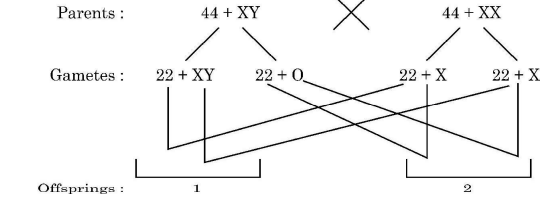
Answer: Abnormality '1' in the offspring typically represents a dominant phenotype resulting from a homozygous dominant or heterozygous genotype, whereas '2' indicates a recessive phenotype resulting from a homozygous recessive genotype. This distinction helps in understanding inheritance patterns. For example, in a test cross, the dominant phenotype can obscure the genetic contributions from both parents, revealing the hidden recessive traits solely through crossbreeding with a recessive parent.
Key Points: Dominant phenotype-recessive phenotype-homozygous dominant-heterozygous-homozygous recessive
[2 Marks]
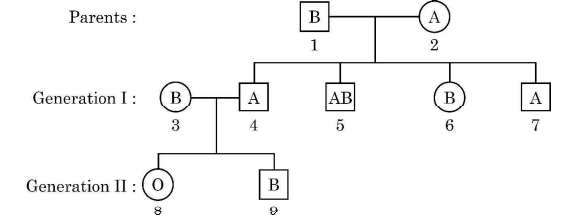
Answer: The possible genotypes of individuals 1 and 2 can be A or AO for individual 1 and B or BO for individual 2, considering the ABO blood group system. The antigens present on the R.B.Cs membranes of individuals '5' and '8' should be determined by their blood type. If individual 5 is AB, both A and B antigens will be present, while if individual 8 is type O, no antigens will be present.
Key Points: Possible genotypes for individual 1: A or AO; for individual 2: B or BO; Antigens for individual 5 (AB): A and B; Antigens for individual 8 (O): none
[2 Marks]
Answer: Periodic infusions of genetically engineered lymphocytes are necessary for ADA deficiency patients because these lymphocytes, which produce the crucial enzyme adenosine deaminase (ADA), are not immortal and eventually die off. This leads to a continuous need for fresh supplies of these cells. A permanent cure for ADA deficiency could be achieved through gene therapy, specifically by introducing the ADA gene into the patient’s stem cells at the embryonic stage, producing a lasting corrective effect.
Key Points: Genetically engineered lymphocytes are not immortal-Periodic infusion essential for ADA production-Permanent cure via gene therapy at embryonic stages
[2 Marks]
Answer: Two techniques to transfer recombinant DNA directly into host cells without vectors include micro-injection and biolistics. Micro-injection involves the direct injection of recombinant DNA into the nucleus of a host cell using a fine needle. This method allows for precise delivery of DNA. Biolistics, or the gene gun method, entails bombarding plant cells with microscopic gold or tungsten particles coated with DNA. This technique effectively penetrates cell walls and delivers DNA into plant cells.
Key Points: micro-injection-directly injects DNA-nucleus of host cell; biolistics-bombards cells with DNA-coated particles-penetrates cell walls.
Section D
[3 Marks]
Answer: (a) The palindromic nucleotide sequence for the DNA segment 5’- GAATTC - 3’ is 5’- GAATTC - 3’ on one strand and 3’- CTTAAG - 5’ on the complementary strand. This means that the sequence is read the same forwards and backward on both strands. (b) The restriction endonuclease that recognizes this sequence is EcoRI. (c) Sticky ends are produced when restriction endonucleases cut the DNA at specific sites to leave overhanging ends, enabling the fragments to easily bind with complementary sequences. This 'stickiness' facilitates the joining of fragments through hydrogen bonds, enhancing the efficiency of DNA ligase in recombinant DNA technology.
Key Points: palindromic sequence GAATTC; complementary strand CTTAAG; restriction enzyme EcoRI; produced by cuts that leave overhangs; allows for hydrogen bonding; facilitates DNA ligase action
[3 Marks]
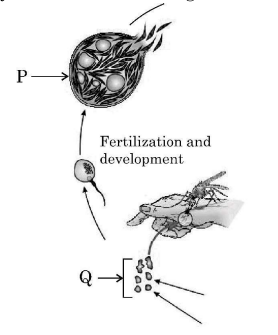
Answer: The infective stage of Plasmodium stored in the female Anopheles mosquito is called sporozoites. Fertilization and development of the parasite take place in the female Anopheles mosquito itself. In typical diagrams illustrating the life cycle, label P usually refers to sporozoites while label Q typically represents oocysts. The asexual phase of the Plasmodium life cycle occurs in humans, while the sexual phase occurs in the female Anopheles mosquito.
Key Points: Infective stage: sporozoites, Fertilization and development site: female Anopheles mosquito, Label P: sporozoites, Label Q: oocysts, Asexual phase host: human, Sexual phase host: female Anopheles mosquito
[3 Marks]
Answer: Human activities have significantly accelerated biodiversity loss through various means. For instance, habitat loss, primarily due to deforestation for agriculture, undermines ecosystems, exemplified by the Amazon rainforest destruction, leading to the extinction of numerous native species. Alien species invasion can be illustrated through the introduction of the zebra mussel in North America, disrupting local aquatic ecosystems. The IUCN Red Data List is crucial as it assesses species' conservation status and highlights those at risk, guiding conservation efforts. Biodiversity hotspots are regions of significant biological wealth under threat; conserving these areas is vital for protecting a large number of species and maintaining ecological balance.
Key Points: habitat loss-example Amazon rainforest-deforestation; alien species invasion-example zebra mussel; IUCN Red Data List-assesses conservation status; biodiversity hotspots-protects significant species.
[3 Marks]
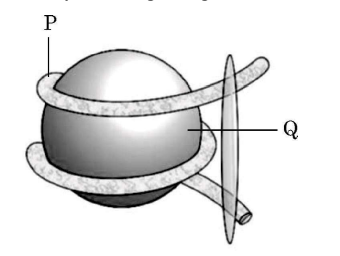
Answer: The structure depicted in the diagram is chromatin, which is composed of DNA and histone proteins. Label P refers to euchromatin, which is the less condensed form of chromatin that is transcriptionally active, thus allowing gene expression. Label Q corresponds to heterochromatin, the more tightly packed chromatin that is transcriptionally inactive. Histone proteins are basic proteins that package and manage DNA within the nucleus, allowing it to fit into the cell. On the other hand, euchromatin is loosely packed and active during transcription, while heterochromatin is densely packed and not actively involved in gene expression.
Key Points: Structure is chromatin; P is euchromatin; Q is heterochromatin; histones package DNA; euchromatin is active; heterochromatin is inactive.
[3 Marks]
Answer: To determine the risk of genetic disorders, Shyam and Radha can opt for non-invasive prenatal testing (NIPT). This test analyzes cell-free fetal DNA circulating in Radha's blood, gauging the risk of conditions like Down’s syndrome and cystic fibrosis without the need for invasive procedures. If abnormalities are found and pose risks, one option could be amniocentesis, which safely offers definitive results. However, this procedure carries risks, especially in the early second trimester. It’s generally safe after 15 weeks of gestation. The procedure is illegal if performed solely for sex determination, which is prohibited under the Prenatal Diagnostic Techniques Act. The law aims to prevent female foeticide by banning such practices. Couples must follow legal guidelines to ensure ethical standards in prenatal care.
Key Points: 1. Non-Invasive Prenatal Testing (NIPT) to assess genetic risk 2. Amniocentesis as a possible option if abnormalities detected 3. Safety of amniocentesis after 15 weeks gestation 4. Legal restrictions on amniocentesis for sex determination 5. Ethical considerations in prenatal testing
[3 Marks]
Answer: Gel electrophoresis is a technique that exploits the negative charge of DNA to separate its fragments. When an electric current is applied, DNA fragments migrate towards the positive electrode, with smaller fragments moving faster through the agarose gel matrix due to a sieving effect. This allows for the resolution of DNA fragments based on size, enabling the visualization of bands after staining with ethidium bromide and exposure to UV light. The purified DNA products obtained from this process can be utilized in constructing recombinant DNA by joining them with cloning vectors, and they can also be used for genetic fingerprinting or analyzing genetic variations in organisms.
Key Points: DNA is negatively charged; moves toward positive electrode - Agarose gel provides a sieving effect - Separation based on fragment size - Visualization with ethidium bromide and UV light - Applications: constructing recombinant DNA, genetic fingerprinting
[3 Marks]
Answer: Convergent evolution occurs when unrelated species develop similar traits as they adapt to similar environments, despite having different ancestral origins. A prime example is the evolution of wings in bats (marsupials) and birds (placental mammals), showcasing similar functional traits despite differing lineage. In contrast, divergent evolution involves two or more related species developing different traits as they adapt to varied environments, reflecting their common ancestry. For instance, the variety of beak shapes in Darwin's finches exemplifies this, where species evolved from a common ancestor yet adapted differently based on their dietary needs. Both processes highlight the adaptability of organisms but underscore different evolutionary paths: convergence illustrates similar adaptations from diverse ancestors, while divergence shows diversification from a shared lineage.
Key Points: Convergent evolution, unrelated species, similar traits, different lineage; example: wings of bats and birds; Divergent evolution, related species, different traits, common ancestor; example: Darwin's finches, beak adaptations
Section E
[5 Marks]
Answer: MALT, or Mucosa-Associated Lymphoid Tissue, refers to a collection of lymphoid tissue associated with mucosal surfaces in the body, playing a crucial role in the immune system by identifying and responding to pathogens that enter through these surfaces. MALT is primarily located in the gastrointestinal tract (GALT), including the Peyer’s patches, as well as in the respiratory tract (BALT) and the urogenital tract. It acts as a first line of defense, contributing to the body’s local immunity. Cytokine barriers refer to the mechanism by which virus-infected cells secrete interferons, which are vital proteins that help protect nearby uninfected cells from viral infection, thereby enhancing the body’s innate immune response. In terms of AIDS diagnosis, the enzyme-linked immunosorbent assay (ELISA) is a common test that detects antibodies against HIV in the blood, indicating a potential infection. This principle operates on the ability of the test to identify specific antibodies produced in response to HIV. Bone marrow is responsible for producing various blood cells, including lymphocytes, while the thymus is crucial for the maturation of T-cells, both essential components of the adaptive immune response. Together, they ensure that the immune system can effectively respond to infections and maintain immunity.
Key Points: MALT definition and function; location of MALT in the body; explanation of cytokine barriers; specific role of interferons; diagnostic test for AIDS (ELISA); principle of ELISA; role of bone marrow in immune system; role of thymus in immune system.
[5 Marks]
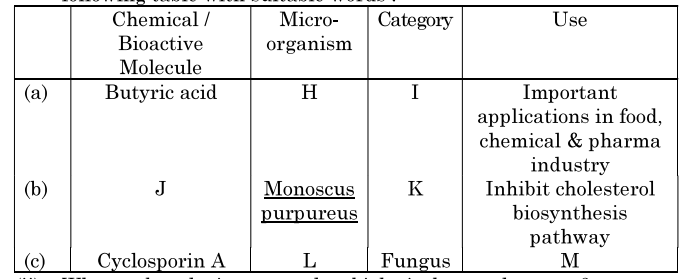
Answer: Baculoviruses, primarily those belonging to the genus Nucleopolyhedrovirus, are effective biocontrol agents targeting specific insect pests and are utilized in agricultural practices. Their specificity allows for narrow-spectrum insecticidal applications, meaning they can control only certain pest species without harming beneficial insects. This selectivity is crucial as it helps in maintaining biodiversity and eco-balance within the ecosystem. Moreover, their viral nature ensures that the pests do not develop significant resistance, making baculoviruses a sustainable choice for pest management in agriculture.
Key Points: Baculoviruses are specific to insects and arthropods; Genus Nucleopolyhedrovirus; Effective biocontrol agents; Species-specific applications; Narrow spectrum insecticides; Preserves beneficial insects; Sustainable pest management; Less risk of resistance development
[5 Marks]
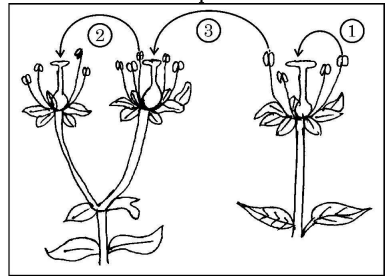
Answer: In a mature male gametophyte of an angiosperm, there are typically two types of cells: the generative cell and the tube cell. The generative cell is responsible for producing the two male gametes, which will later participate in the double fertilization process. It divides to form the sperms that are essential for fertilization. On the other hand, the tube cell develops into the pollen tube upon germination, facilitating the transport of the male gametes to the ovule. The formation of these two cells ensures successful reproduction in flowering plants through the mechanisms of pollination and fertilization.
(i) The technical terms for the pollen transfer methods are:
1. Anemophily (wind pollination)
2. Entomophily (insect pollination)
3. Hydrophily (water pollination).
(ii) Water lilies achieve pollination via the method of floating flowers that are accessible to pollinators, while Vallisneria utilizes water currents to aid in the transfer of pollen to stigmas submerged beneath the water's surface.
(iii) The advantages of method ‘3’ (Hydrophily) include the ability to pollinate even in aquatic environments and the potential for large-scale pollen dispersal through water currents, ensuring genetic diversity and successful reproduction in various habitats.
Key Points: Generative cell produces male gametes; Tube cell develops into pollen tube; Double fertilization process; Anemophily, Entomophily, Hydrophily; Water lily uses floating flowers; Vallisneria uses water currents for pollination; Advantages of water pollination include aquatic adaptability and genetic diversity.
[5 Marks]
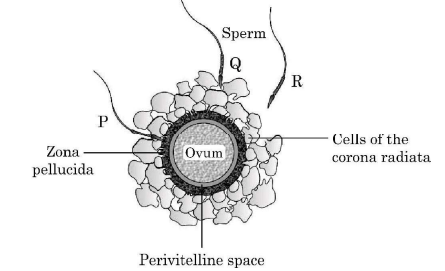
Answer: In the reproductive process, only one sperm successfully fertilizes the ovum, while the others (sperms P and Q) are unable to penetrate the zona pellucida and contribute genetically, ultimately dying. Sperm R, however, penetrates the zona pellucida, aided by enzymes released from its acrosome, facilitating fusion with the ovum. Once fertilization occurs, the ovum completes its second meiotic division, leading to the formation of a haploid ovum and a polar body. The zona pellucida undergoes changes that prevent additional sperm from entering. The middle piece of the sperm provides energy for motility, crucial for reaching the ovum during fertilization.
Key Points: Only one sperm fertilizes, others die; Zona pellucida prevents multiple fertilizations; Sperm R successfully penetrates and fuses; Acrosome releases enzymes to aid penetration; Ovum completes meiosis after sperm entry; Middle piece provides energy for sperm movement.
[5 Marks]
Answer: (i) When two sickle cell carriers (heterozygous) are crossed, the genotypic ratio of their progeny is 1:2:1. Here, 1 is disease free (AA), 2 are carriers (AS), and 1 is diseased (SS - sickle cell anemia). The substitution of the nitrogenous base is from adenine (A) to thymine (T) in the sixth codon of the beta-globin gene, which changes glutamic acid to valine in the haemoglobin molecule, causing sickle cell disease.
(ii) In garden pea plants, the inheritance of flower colour shows complete dominance where purple flower colour (P) is dominant over white (p). In monohybrid crosses, F₁ generation shows all purple flowers and F₂ generation shows a 3:1 ratio of purple to white flowers.
In contrast, snap-dragon plants display incomplete dominance in flower colour. A cross between red (RR) and white (WW) flowers produces pink (RW) flowers in F₁ generation. In F₂ generation, the phenotypic ratio is 1 red : 2 pink : 1 white. This shows that neither allele is completely dominant and the heterozygous condition results in an intermediate phenotype.
Key Points: Cross between two sickle cell carriers produces 1 disease free : 2 carriers : 1 diseased - Nitrogen base substituted is thymine replacing adenine - Garden pea shows complete dominance with 3:1 ratio - Snap-dragon shows incomplete dominance with 1:2:1 ratio - Heterozygous shows intermediate phenotype in snap-dragon
[5 Marks]
Answer: The lac operon in E. coli is a group of genes involved in the metabolism of lactose. It consists of structural genes (z, y, a), an operator (o), a promoter (p), and a regulatory gene (i) that codes for the repressor protein.
(i) In absence of inducer: When no inducer (lactose or its analog) is present, the repressor protein produced by the i gene binds to the operator region. This binding prevents RNA polymerase from attaching to the promoter and transcribing the structural genes. As a result, the enzymes needed to metabolize lactose are not produced. This is because the cell does not need to metabolize lactose when it is absent.
(ii) In presence of inducer: When lactose or an inducer is present, it binds to the repressor protein and changes its shape, rendering it inactive. This inactivation releases the repressor from the operator. RNA polymerase can now bind to the promoter and transcribe the structural genes. The resulting enzymes beta-galactosidase, permease, and transacetylase help in the uptake and breakdown of lactose to glucose and galactose, providing energy to the cell. Thus, gene expression is induced only when the substrate (lactose) is present, demonstrating an example of inducible operon regulation.
Key Points: lac operon consists of promoter, operator, structural genes, and regulatory gene - repressor protein binds operator in absence of inducer to block transcription - inducer binds repressor causing conformational change and release from operator - RNA polymerase transcribes structural genes in presence of inducer - enzymes produced metabolize lactose for energy