Section B
[1 Mark]
-
(A) Methanogens
-
(B) Bacillus subtilis
-
(C) Azotobacter
-
(D) Escherichia coli
Explanation: The correct option is Methanogens, as they are a group of archaea that produce methane and are commonly found in anaerobic environments such as sewage treatment facilities and the rumen of cattle, where they play a crucial role in the decomposition process.
[1 Mark]
-
(A) Fungi
-
(B) Bacteria
-
(C) Mycoplasma
-
(D) Nematodes
Explanation: Certain fungi are highly effective biocontrol agents used to manage plant pathogens, including some viruses. A well-known example is the genus Trichoderma, which lives in the root ecosystem and can induce "systemic resistance" in plants. This means the fungus triggers the plant's own internal defense mechanisms, making it better at fighting off viral infections. Some fungi also act as "hyperparasites," directly attacking other soil-borne pathogens that might otherwise weaken the plant and make it more susceptible to viruses.
[1 Mark]
-
(A) Fungi
-
(B) Virus
-
(C) Eukaryota
-
(D) Bacteria
Explanation: The correct answer is 'Bacteria'. Bacteria are known to play a crucial role in enhancing soil fertility and plant growth by fixing nitrogen and making nutrients more available to plants. They are commonly used as biofertilizers due to their ability to form symbiotic relationships with plants.
[1 Mark]
-
(A) Promoting plant growth
-
(B) Enhancing nutrient uptake
-
(C) Decomposing organic matter
-
(D) Producing antibiotics
Explanation: Trichoderma species are highly versatile fungi that provide multiple benefits, but their most significant role is as biocontrol agents that promote plant growth. They achieve this by colonizing plant roots and protecting them from various soil-borne pathogens. By suppressing diseases and inducing systemic resistance within the plant, they ensure the host remains healthy and grows more vigorously. Furthermore, they can produce growth-regulating compounds that directly stimulate root development and overall plant productivity.
While Trichoderma does play a role in decomposing organic matter (Option 1) and can produce secondary metabolites, its primary definition in agricultural science and biotechnology is its ability to act as a potent promoter of plant health and growth. This makes it a sustainable alternative to chemical pesticides and fertilizers. Options 2 and 4 are often secondary effects or specific to other types of microbes like Streptomyces (for antibiotics) or Mycorrhizae (for specific nutrient uptake).
[1 Mark]
-
(A) Diversity has no impact on growth
-
(B) One species may dominate
-
(C) Competition is beneficial for both species
-
(D) Cooperation increases growth rate
Explanation: In biological interactions involving competition for limited resources, it is rare for both species to thrive equally. According to the Competitive Exclusion Principle, when two species compete for the exact same resources, the one that is more efficient or better adapted will eventually outcompete the other. This leads to a scenario where the population of the dominant species increases while the other species' growth is suppressed or eliminated from that specific habitat.
[1 Mark]
-
(A) Stable population with minor fluctuations
-
(B) Decline due to resource depletion
-
(C) Exponential growth forever
-
(D) Logistic growth with carrying capacity
Explanation: The correct answer is 'Logistic growth with carrying capacity' because this statement reflects the typical pattern of population growth that stabilizes as it approaches the carrying capacity of the environment, balancing births and deaths.
[1 Mark]
-
(A) AIDS
-
(B) Influenza
-
(C) Dengue
-
(D) Typhoid
Explanation: Typhoid is caused by the bacterium Salmonella typhi, while Dengue, Influenza, and AIDS are all caused by viruses. Thus, Typhoid is the correct answer as it is the only disease in the options not caused by a virus.
[1 Mark]
-
(A) AIDS
-
(B) Influenza
-
(C) Dengue
-
(D) Typhoid
Explanation: The correct answer is Typhoid. Typhoid is caused by the bacterium Salmonella typhi, whereas Dengue, Influenza, and AIDS are all caused by viruses.
[1 Mark]
-
(A) Housefly
-
(B) Female Anopheles mosquito
-
(C) Sand fly
-
(D) Male Anopheles mosquito
Explanation: The correct option is 'Female Anopheles mosquito' because, as stated in the context, the female Anopheles mosquito is the vector that transmits the Plasmodium parasites to humans when it bites them, introducing the infectious sporozoites into the body.
[1 Mark]
-
(A) Always inverted
-
(B) Irregular
-
(C) Spindle-shaped
-
(D) Always upright
Explanation: The correct option is 'Always upright'. In a terrestrial ecosystem, the pyramid of biomass typically shows a base that is broader at the producers (first trophic level) and narrows towards the top consumers (higher trophic levels). This indicates that there is more biomass at the producer level compared to the consumers, which is characteristic of an upright pyramid. The provided context mentions that while the pyramid of biomass in aquatic ecosystems can be inverted, terrestrial ecosystems generally maintain an upright structure.
Section C
[2 Marks]
Answer: Vaccines and antitoxins trigger immune responses differently. Firstly, vaccines stimulate the body's immune system to produce its own antibodies against pathogens by introducing a harmless form of the pathogen, thus promoting long-term immunity. Secondly, antitoxins are pre-formed antibodies introduced into the body to neutralize toxins immediately, offering short-term protection. Vaccines lead to active immunity, while antitoxins provide passive immunity.
Key Points: Vaccines stimulate long-term immunity; Antitoxins provide immediate response; Vaccines encourage antibody production; Antitoxins are pre-formed antibodies.
[2 Marks]
Answer: The common bacterium found in anaerobic sludge during sewage treatment and in the rumen of cattle is Methanogen, specifically Methanobrevibacter. This bacterium plays a crucial role in anaerobic digestion by breaking down organic matter into methane and carbon dioxide. Commercially, Methanobrevibacter is useful in biogas production, providing renewable energy. Biogas generated from anaerobic digestion can be used for heating, electricity, and as a vehicle fuel, contributing to sustainable energy solutions.
Key Points: Methanobrevibacter-Methanogen-anerobic digestion-biogas production-renewable energy-commercial usefulness
[2 Marks]
Answer: The prokaryotic microbes used as biofertilizers fall under the taxonomic group of 'Bacteria.' An example is Rhizobium, which forms a symbiotic relationship with leguminous plants. It resides in the root nodules of these plants and converts atmospheric nitrogen into a form that the plants can absorb and utilize. This enhances soil fertility and promotes plant growth without the need for synthetic fertilizers.
Key Points: Prokaryotes-Bacteria-Rhizobium-symbiotic relationship-nitrogen fixation
[2 Marks]
Answer: Trichoderma species are beneficial to humans as they are utilized in the production of enzymes like cellulases that are important for biofuel production. In agriculture, they act as biocontrol agents against plant pathogens, such as Fusarium, promoting healthier crop growth. For example, Trichoderma harzianum is commonly used to protect crops from root rot, enhancing yields and reducing the need for chemical pesticides.
Key Points: Enzymes for biofuel production; Biocontrol agents against pathogens; Example: Trichoderma harzianum for root rot
[2 Marks]
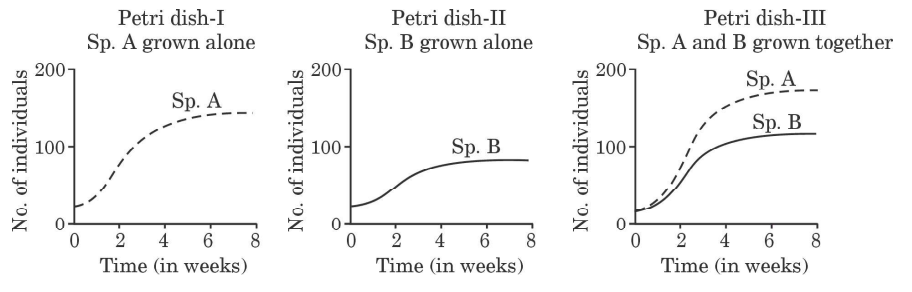
Answer: The graphs indicate that the interaction between species A and B affects growth. When grown separately, both species exhibited healthy growth. However, in Petri dish-III, where they were grown together, one species likely outcompeted the other for resources, resulting in reduced growth for at least one species. This suggests that interspecific competition occurred, highlighting how species within the same genus can significantly influence each other's growth dynamics through competition for nutrients or space.
Key Points: Species A and B grown alone had optimal growth; species interaction in dish III resulted in competition; interspecific competition negatively impacted at least one species' growth; resources limited, affecting overall growth rates.
[2 Marks]
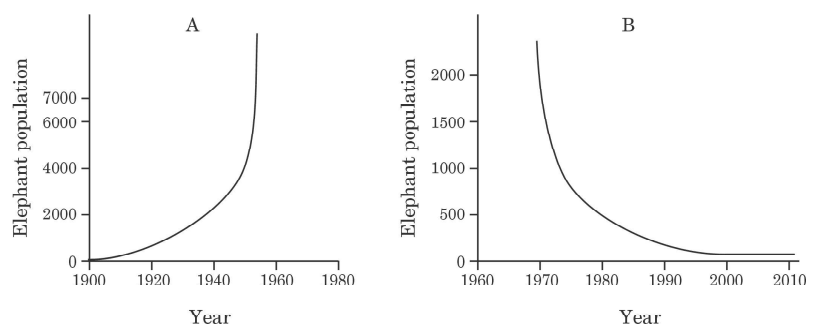
Answer: Graph A shows a steady increase in the elephant population over time, indicating successful breeding and a stable ecosystem. In contrast, Graph B shows fluctuations in population size, suggesting environmental stressors or poaching. The differences highlight how habitat quality and human impact influence wildlife populations. A stable environment often supports growth, while disturbances can lead to declines.
Key Points: Graph A shows steady growth-Graph B shows fluctuations-Possible reasons: habitat quality, poaching, ecosystem stability
[2 Marks]
Answer: Effective biocontrol agents of various plant viruses include baculoviruses and the fungus Trichoderma. Baculoviruses, specifically in the genus Nucleopolyhedrovirus, target insects, providing a species-specific pest control method. Trichoderma, a free-living fungus, combats numerous plant pathogens and enhances soil health. Both agents reduce the reliance on harmful chemical pesticides, thus supporting environmental balance by promoting biodiversity and maintaining ecological integrity.
Key Points: Baculoviruses as biocontrol agents-Trichoderma as effective against plant pathogens-Reduction of chemical pesticide use-Positive impact on soil health and biodiversity
Section D
[3 Marks]
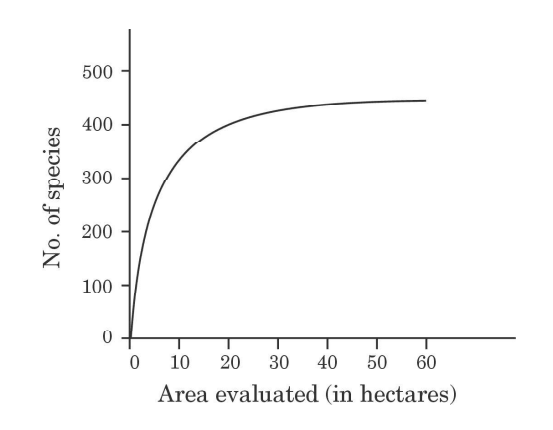
Answer: The graph illustrates the species-area relationship, demonstrating that as the area of a habitat increases, the number of species it can support also increases. This is typically due to the greater availability of resources and niches that larger areas provide. When a road is constructed dividing the habitat, it can significantly impact species richness. The fragmentation may isolate populations, reduce genetic diversity, and hinder movement of species. Consequently, the smaller fragmented areas may face local extinctions, leading to a decline in overall biodiversity in that region. Moreover, the edge effects caused by the road can further disadvantage some species that require larger, uninterrupted habitats.
Key Points: species-area relationship indicates that larger areas support more species; habitat fragmentation due to road construction; isolation of populations leads to reduced genetic diversity; increased risk of local extinctions; negative edge effects impacting species that require larger habitats
[3 Marks]
Answer: The loss of biodiversity in a region has significant consequences that affect ecological balance, human health, and economic stability. Firstly, ecosystems rely on a diverse array of species for essential functions such as pollination, nutrient cycling, and pest control. A decline in biodiversity can disrupt these services, leading to poorer crop yields and diminished food security. Additionally, the erosion of genetic diversity compromises species' ability to adapt to environmental changes, making them more susceptible to diseases and extinction. The loss of biodiversity can also affect cultural values and emotional well-being, as many communities depend on nature for recreation and inspiration. Ultimately, a reduction in biodiversity can lead to a less resilient ecological system, harming our planet and future generations.
Key Points: Ecosystem services disruption, food security impact, genetic diversity loss, vulnerability to diseases, cultural and emotional consequences, ecological resilience reduction.
[3 Marks]
Answer: Bacillus thuringiensis (Bt) is a bacterium that produces proteins toxic to certain insect pests, making it a crucial component in Integrated Pest Management (IPM). The use of Bt allows farmers to control pest populations without the extensive use of chemical pesticides, thus promoting environmental sustainability. Bt is effective against a variety of pests, including caterpillars and beetles, and can be used in both soil and foliar applications. Additionally, the introduction of transgenic crops expressing Bt genes further enhances pest resistance. Crops such as cotton and corn are efficiently protected from pests using Bt, reducing crop damage and increasing yields.
Key Points: 1. Bacillus thuringiensis produces insecticidal proteins. 2. It reduces dependence on chemical pesticides. 3. Enhances environmental sustainability. 4. Effective against caterpillars and beetles. 5. Transgenic crops expressing Bt genes. 6. Examples of protected crops: cotton and corn.
[3 Marks]
Answer: The production of human insulin using r-DNA technology involves several key steps. First, the human insulin gene is isolated from human DNA. This is done using enzymes that cut the DNA. Next, the isolated gene is inserted into a plasmid, a small circular DNA found in bacteria. The recombinant plasmid is then introduced into a bacterial host, usually E. coli, through a process called transformation. The bacteria are then cultured, and as they reproduce, they replicate the recombinant plasmid, producing human insulin in the process. After sufficient insulin is produced, it is extracted and purified for medical use. This process allows for the mass production of insulin, which is essential for diabetes treatment.
Key Points: Isolate human insulin gene-Insert gene into plasmid-Introduce plasmid into E. coli-Culture bacteria-Extract and purify insulin
[3 Marks]
Answer: (a) Primary lymphoid organs, such as the bone marrow and thymus, are crucial for the production and maturation of immune cells. In the bone marrow, lymphocytes are generated, while in the thymus, T-cells complete their maturation, preparing them to recognize foreign antigens. Secondary lymphoid organs, including lymph nodes and the spleen, serve as sites for immune cell activation and interaction, facilitating the detection of pathogens. They filter lymph and blood, allowing immune cells to respond rapidly to infections. (b) Doctors typically advise against tonsillectomy because the tonsils play a vital role in immune protection. They help trap pathogens entering through the mouth and nose, and their removal can compromise local immunity, making individuals more susceptible to infections post-surgery.
Key Points: Primary lymphoid organs produce and mature immune cells- Bone marrow generates lymphocytes- Thymus matures T-cells- Secondary lymphoid organs activate immune response- Lymph nodes and spleen filter lymph and blood- Tonsils trap pathogens and provide immunity
[3 Marks]
Answer: RT-PCR stands for Reverse Transcription Polymerase Chain Reaction. It is a laboratory technique used to detect and quantify RNA. The RT-PCR process involves several steps: first, the RNA is reverse-transcribed into complementary DNA (cDNA) using the enzyme reverse transcriptase. This is followed by the amplification of the cDNA through a series of cycles involving denaturation, annealing, and extension. During denaturation, the cDNA is heated to separate the strands. In the annealing step, specific primers attach to the template strands, and in the extension step, DNA polymerase synthesizes new DNA strands. These cycles are repeated, leading to exponential amplification of the target DNA, which allows for detection and analysis. This technique is crucial in diagnosing infections like COVID-19 by identifying the viral RNA.
Key Points: RT-PCR definition; RNA reverse transcription to cDNA; amplification steps: denaturation, annealing, extension; role in diagnosing COVID-19
[3 Marks]
Answer: Dr. David Tilman's experiments demonstrated a significant relationship between species richness and community stability. He found that plots with greater species diversity exhibited less year-to-year variation in total biomass, indicating higher stability. This stability is characterized by consistent productivity and resilience against disturbances. Tilman's work suggests that diverse communities are more resistant to invasions and can maintain function despite environmental fluctuations. His findings support the notion that higher species richness contributes positively to ecosystem stability and productivity.
Key Points: Tilman's experiments on species diversity-stability link; less variation in biomass with more species; stability defined by consistent productivity; resilience to disturbances; resilience against invasive species; supports greater species richness leads to enhanced ecosystem stability.
[3 Marks]
Answer: The decline in population growth rate in the country can primarily be attributed to two reasons: improved healthcare and changing social dynamics. Firstly, advancements in healthcare have resulted in lower maternal and infant mortality rates, enabling more children to survive into adulthood. This, combined with increased access to reproductive health education, encourages families to plan and limit the number of children they have. Secondly, socio-economic factors such as urbanization and women's empowerment have significantly influenced family sizes. As more women participate in the workforce, there is a trend towards prioritizing education and career over early childbirth, leading to delayed family planning and smaller family sizes. Both of these factors contribute to a decline in the overall population growth rate.
Key Points: Improved healthcare; Lower maternal and infant mortality rates; Access to reproductive health education; Socio-economic factors; Urbanization; Women's empowerment; Prioritization of education and career; Smaller family sizes
Section E
[5 Marks]
Answer: Genetically Modified Organisms (GMOs) are created through genetic engineering techniques, which involve altering the DNA of an organism by introducing, removing, or changing specific genes. This can be done using several methods, including CRISPR technology, gene cloning, and Agrobacterium-mediated transformation. In agriculture, GMOs such as Bt cotton, which expresses a toxin to deter pests, help reduce pesticide use. Another example is golden rice, engineered to produce Vitamin A, combating malnutrition. In medicine, GMOs are used in producing insulin and vaccines through modified bacteria or yeast, significantly improving healthcare outcomes. These applications highlight the versatility and benefits of GMOs in both fields.
Key Points: DNA alteration through genetic engineering, methods like CRISPR and Agrobacterium, applications in pest-resistant crops, nutritionally enhanced crops like golden rice, production of pharmaceuticals like insulin and vaccines.
[5 Marks]
Answer: The process of fertilisation in flowering plants involves the fusion of male and female gametes, which are found in the pollen grain and embryo sac, respectively. After compatible pollination, the pollen grain germinates on the stigma, and the pollen tube grows through the style to reach the ovules. It discharges two male gametes into one of the synergids of the embryo sac, leading to a phenomenon known as double fertilisation. One male gamete fuses with the egg cell to form a diploid zygote, while the other fuses with two polar nuclei to form a triploid primary endosperm nucleus. This crucial step lays the foundation for further developments: the primary endosperm develops into the endosperm tissue that provides nourishment to the developing embryo, which originates from the zygote. Following fertilisation, the zygote undergoes several mitotic divisions, developing into an embryo while the endosperm completes its formation in parallel. Thus, the endosperm provides essential nutrients to the embryo until it can emerge and photosynthesize. The ovule then matures into a seed, while the ovary transforms into the fruit, safeguarding the seed and facilitating its dispersal.
Key Points: Fertilisation involves fusion of male and female gametes; double fertilisation occurs with syngamy and triple fusion; zygote develops into embryo; primary endosperm nucleus becomes endosperm tissue; endosperm nourishes embryo; ovule matures into seed; ovary turns into fruit.
[5 Marks]
Answer: The human sperm is a microscopic cell that consists of four main parts: the head, neck, middle piece, and tail. The head contains the nucleus, which houses the genetic material, and is capped by the acrosome, which contains enzymes to penetrate the ovum's protective layers. The neck connects the head to the middle piece, which is rich in mitochondria that provide energy for movement. The tail, or flagellum, is a whip-like structure that propels the sperm through the female reproductive tract.
Fertilisation occurs during coitus when semen is released into the vagina, containing millions of sperm. These motile sperm swim through the cervix and uterus, ultimately reaching the fallopian tube. Here, a single sperm interacts with the ovum’s zona pellucida, triggering a series of changes that prevent additional sperm from entering. This ensures that only one sperm fertilises the ovum, forming a zygote. The successful fusion initiates the development of a new organism, illustrating the intricate processes of human reproduction.
Key Points: Structure of sperm includes head, neck, middle piece, and tail; Head contains nucleus and acrosome; Middle piece provides energy via mitochondria; Tail propels sperm; Fertilisation occurs during insemination; Sperm swims to fallopian tube; Contact with ovum's zona pellucida prevents entry of more sperm; Fusion of sperm and ovum forms zygote.