Section B
[1 Mark]
-
(A) Linker DNA
-
(B) Histone proteins
-
(C) NHC proteins
-
(D) Nucleosomes
Explanation: The correct option is 'Nucleosomes'. In the context provided, nucleosomes are described as the repeating units of chromatin that form the 'beads' in the 'beads-on-string' structure. Each nucleosome consists of a segment of DNA wrapped around histone proteins, and they are visualized under an electron microscope as the beads in this structural model.
[1 Mark]
-
(A) (ii), (iv), (v)
-
(B) (i), (iii), (iv)
-
(C) (ii), (iii), (v)
-
(D) (i), (ii), (iv)
Explanation: The true statements about the accessory ducts of the human male reproductive system are (ii) and (iii). The correct sequence for sperm transport is: seminiferous tubules → rete testis → vasa efferentia → epididymis → vas deferens → urethra. Statement (i) is incorrect because the vasa efferentia, not the vas deferens, directly connect the rete testis to the epididymis. Statement (iv) is incorrect because the vas deferens receives a duct from the seminal vesicle, not the prostate gland, and opens into the urethra as the ejaculatory duct. Statement (v) is incorrect; the urethra originates from the urinary bladder and extends through the penis to its external opening, but it is not the ejaculatory duct that originates from the urinary bladder.
Therefore (ii), (iii) and (v) are correct
[1 Mark]
-
(A) Ribonucleotide triphosphate
-
(B) Ribonucleoside triphosphate
-
(C) Deoxyribonucleoside triphosphate
-
(D) Deoxyribonucleotide triphosphate
Explanation: The correct answer is 'Deoxyribonucleotide triphosphate' because DNA-dependent DNA polymerase requires deoxyribonucleotides (the building blocks of DNA) as substrates for the synthesis of new DNA strands. These deoxyribonucleotides also provide the necessary energy for the polymerization reaction during DNA replication.
[1 Mark]
-
(A) Sex-linked recessive trait
-
(B) Sex-linked dominant trait
-
(C) Autosome linked dominant trait
-
(D) Autosomal recessive trait
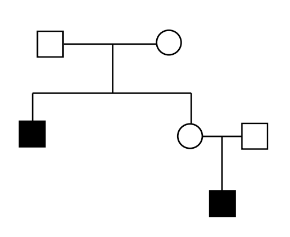
Explanation: The correct answer is 'Sex-linked recessive trait'. Haemophilia is known to be a sex-linked (or X-linked) recessive disorder, which means that it is carried on the X chromosome and typically affects males more than females. In the context given, the unaffected carrier female (the daughter) passes on the allele for haemophilia to her son, resulting in his haemophilic condition.
[1 Mark]
-
(A) Phenylketonuria
-
(B) Thalassemia
-
(C) Rheumatoid arthritis
-
(D) Filariasis
Explanation: The correct option is 'Rheumatoid arthritis' because it is classified as an auto-immune disease, which means the immune system mistakenly attacks the body's own cells, leading to inflammation and damage in the joints. The context specifically mentions that rheumatoid arthritis causes damage to the body and qualifies as an auto-immune disease.
[1 Mark]
-
(A) (i) and (ii)
-
(B) (i) and (iii)
-
(C) (ii) and (iv)
-
(D) (iii) and (iv)
Explanation: (ii) and (iv) are correct statements regarding a typical dicotyledonous embryo. The portion of the embryonal axis above the level of cotyledons is indeed the epicotyl, which terminates with the plumule. Additionally, the lower end of the embryo has the radicle, covered with a root cap. Statement (i) is incorrect because dicotyledonous embryos consist of an embryonal axis and two cotyledons, not a scutellum which is characteristic of monocotyledons. Statement (iii) is incorrect as the portion below the level of cotyledons is the hypocotyl, not coleorhiza.
[1 Mark]
-
(A) Homo habilis and Homo erectus
-
(B) Homo erectus and Homo sapiens
-
(C) Dryopithecus and Ramapithecus
-
(D) Australopithecine and Neanderthal
Explanation: The correct option is 'Dryopithecus and Ramapithecus' because the context explains that about 15 million years ago, these primates existed and exhibited walking patterns similar to those of gorillas and chimpanzees, with Ramapithecus being more man-like and Dryopithecus being more ape-like.
[1 Mark]
-
(A) Isoleucine
-
(B) Tyrosine
-
(C) Methionine
-
(D) Valine
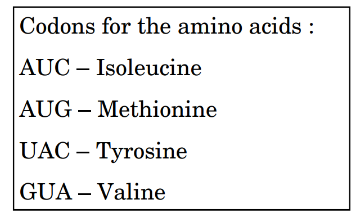
Explanation: The sequence TAC on the coding strand corresponds to the codon AUG on mRNA. According to the context, AUG codes for Methionine, which is also known as the initiator codon in translation. Therefore, the correct option is Methionine.
[1 Mark]
-
(A) PCR
-
(B) RNAi
-
(C) ELISA
-
(D) EST
Explanation: The correct answer is ELISA. ELISA, or Enzyme Linked Immuno-sorbent Assay, is specifically noted in the context for its basis on antigen-antibody interaction, making it a powerful technique for early detection of pathogens and related diseases.
[1 Mark]
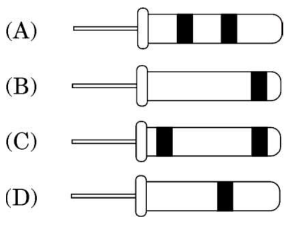
Explanation: The correct answer is C.which shows two bands, one representing the hybrid DNA and the other represents the light DNA.
[1 Mark]
-
(A) Trichoderma polysporum
-
(B) Monascus purpureus
-
(C) Aspergillus niger
-
(D) Propionibacterium sharmanii
Explanation: The correct answer is Trichoderma polysporum, as the context states that cyclosporin A, an immunosuppressive agent, is produced by this fungus. The other options do not relate to the production of cyclosporin A.
[1 Mark]
-
(A) 3 : 1
-
(B) 2 : 1
-
(C) 1 : 0
-
(D) 1 : 1
Explanation: In a cross between two heterozygous pea plants (Ii x Ii), where 'I' represents the dominant allele for inflated pod shape and 'i' represents the recessive allele for constricted pod shape, the expected phenotypic ratio of the offspring will be 3:1 (3 inflated pods to 1 constricted pod). This ratio is based on Mendelian genetics and relates to the concept of dominant and recessive traits.
[1 Mark]
-
(A) Both Assertion (A) and Reason (R) are true and Reason (R) is the correct explanation of the Assertion (A).
-
(B) Both (A) and (R) are false.
-
(C) Both Assertion (A) and Reason (R) are true, but Reason (R) is not the correct explanation of the Assertion (A).
-
(D) Assertion (A) is true, but Reason (R) is false.
Explanation: Repeat-onstring refers to the Linker DNA, which is the DNA segment connecting one nucleosome to the next. This makes both the assertion and reason true. However, the reason that it holds nucleosomes together is true but is not the correct explanation of the assertion that it represents Linker DNA. The linker DNA is simply the connecting DNA strand, not named due to its role in holding nucleosomes together but because it links nucleosomes.
[1 Mark]
-
(A) Both Assertion (A) and Reason (R) are true, but Reason (R) is not the correct explanation of the Assertion (A).
-
(B) Assertion (A) is true, but Reason (R) is false.
-
(C) Both Assertion (A) and Reason (R) are true and Reason (R) is the correct explanation of the Assertion (A).
-
(D) Assertion (A) is false, but Reason (R) is true.
Explanation: Both Assertion (A) and Reason (R) are true and Reason (R) is the correct explanation of the Assertion (A). The context explains that malaria symptoms of chills and high fever are directly linked to the rupture of red blood cells caused by the Plasmodium parasite, which releases haemozoin, leading to these recurring fever episodes.
[1 Mark]
-
(A) Both Assertion (A) and Reason (R) are true and Reason (R) is the correct explanation of the Assertion (A).
-
(B) Both Assertion (A) and Reason (R) are true, but Reason (R) is not the correct explanation of the Assertion (A).
-
(C) Assertion (A) is true, but Reason (R) is false.
-
(D) Both (A) and (R) are false.
Explanation: IgE antibodies are primarily involved in allergic reactions and do not have a role in increasing phagocytosis of sperms. Also, IgE is an antibody (a protein) and not a non-steroidal preparation (which typically refers to drugs like NSAIDs). Thus, both the assertion and reason are false.
[1 Mark]
-
(A) Both Assertion (A) and Reason (R) are true, but Reason (R) is not the correct explanation of the Assertion (A).
-
(B) Assertion (A) is true, but Reason (R) is false.
-
(C) Assertion (A) is false, but Reason (R) is true.
-
(D) Both Assertion (A) and Reason (R) are true and Reason (R) is the correct explanation of the Assertion (A).
Explanation: Assertion (A) is true because the ABO blood grouping system involves three alleles (IA, IB, i), which is a classic example of multiple allelism. However, Reason (R) is false as it incorrectly states that more than two genes govern the same character; actually, it is the three alleles of the same gene that determine the blood group phenotypes. Therefore, the correct option is that Assertion (A) is true, but Reason (R) is false.
Section C
[2 Marks]
Answer: If the thymus gland undergoes atrophy at an early stage, it significantly impairs the immune system. The thymus produces thymosins, which are crucial for T-lymphocyte maturation, responsible for cell-mediated immunity. Consequently, reduced thymosin levels lead to fewer T-lymphocytes, particularly helper T-cells, which are vital for coordinating immune responses. This deficiency results in increased susceptibility to infections, chronic illness, and a weakened immune response overall, making the individual vulnerable to diseases.
Key Points: Thymus is vital for T-lymphocyte development-thymosins promote immune response-helper T-cells are crucial-decreased thymosin leads to infections-atrophy weakens immunity.
[2 Marks]
Answer: Interferons are proteins secreted by virus-infected cells. Their primary role is to protect neighboring non-infected cells by interfering with viral replication, thereby enhancing the immune response. They help activate immune cells like macrophages and natural killer cells, which target and destroy infected cells. Interferons can be classified as a type of cytokine barrier in innate immunity, which is the body's first line of defense against pathogens.
Key Points: Interferons are proteins; secreted by virus-infected cells; protect non-infected cells; interfere with viral replication; activate immune cells; classified as cytokine barriers in innate immunity
[2 Marks]
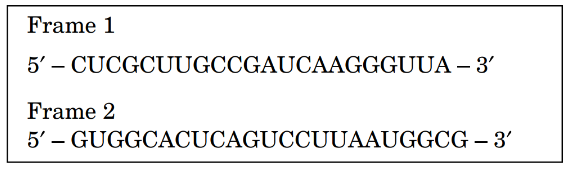
Answer: In reading frame 1, starting from the first nucleotide, the mRNA is translated into 5 amino acids before a stop codon is reached. In reading frame 2, starting from the second nucleotide, only 4 amino acids are specified as a stop codon appears earlier. The difference is due to the start position of the codons affecting how many complete triplets can be formed until a stop codon is encountered.
Key Points: Reading frame 1 amino acids: 5; Reading frame 2 amino acids: 4; Stop codon limits translation; Codons are triplets.
[2 Marks]
Answer: MTP stands for Medical Termination of Pregnancy, which refers to the intentional and voluntary termination of a pregnancy before the full term. The Government of India legalized MTP in 1971 primarily to address issues of unwanted pregnancies resulting from factors like unprotected intercourse, contraceptive failure, or rape. Legalizing MTP aimed to prevent unsafe, illegal abortions and address the serious social concern of female foeticide in the country.
Key Points: Definition of MTP; Legalization in India; Address unwanted pregnancies; Prevent unsafe abortions; Combat female foeticide
[2 Marks]
Answer: Two STIs that might occur in a human female are gonorrhoea and chlamydiasis. Early symptoms of gonorrhoea include painful urination and abnormal vaginal discharge. For chlamydiasis, early symptoms can include a burning sensation during urination and lower abdominal pain. Detecting these symptoms early can help facilitate better treatment outcomes.
Key Points: Gonorrhoea-Chlamydiasis-Painful urination-Abnormal vaginal discharge
[2 Marks]
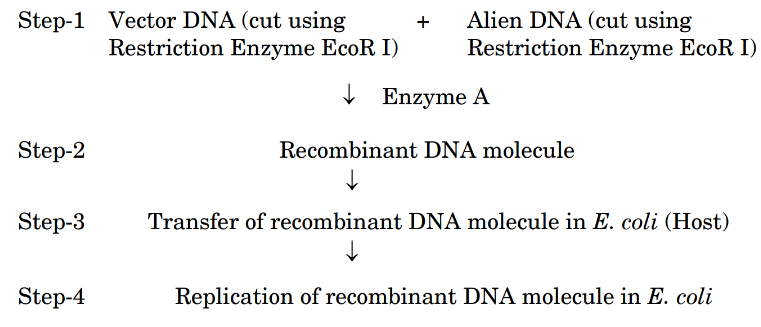
Answer: The enzyme used in Step-1 to join the cut plasmid and alien DNA is DNA ligase. The technical term used for Step-3 is ligation, which refers to the process of joining DNA fragments together. The use of the same restriction enzyme, EcoR I, is crucial because it ensures that both the vector DNA and the alien DNA have compatible ends. This allows for effective ligation, creating a stable recombinant DNA molecule.
Key Points: DNA ligase-EcoR I-ligation-same restriction enzyme-compatible ends
[2 Marks]
Answer: The interaction between the sea anemone and clownfish exemplifies commensalism as the clownfish benefits by receiving protection from predators due to the anemone's stinging tentacles, which deter would-be attackers. In this relationship, the clownfish finds a safe habitat among the anemone’s tentacles, while the anemone itself does not gain any significant benefit or experience harm from the presence of the clownfish, illustrating the core principle of commensalism.
Key Points: clownfish gains protection from predators-sea anemone's tentacles deter predators-no significant benefit or harm to anemone-example of commensalism
[2 Marks]
Answer: The ecological pyramid of biomass in the sea typically shows an inverted structure. At the base, phytoplankton, the primary producers, have a standing crop of 40 units, constituting the first trophic level. Zooplankton, the herbivores, occupy the second trophic level, with a standing crop of 90 units. Finally, small fishes, the primary carnivores, form the third trophic level with a biomass of 120 units. This inversion occurs because the biomass of fish, although lower in number, exceeds that of phytoplankton.
Key Points: Pyramid of biomass; Inversion due to higher weight of fish; Trophic levels: producers (phytoplankton), primary consumers (zooplankton), secondary consumers (small fishes); Ecological significance
Section D
[3 Marks]
Answer: After the implantation of the blastocyst in the endometrium, the trophoblast layer of the blastocyst adheres to the uterine lining. This triggers rapid division of uterine cells, enveloping the blastocyst and embedding it firmly into the endometrium. Subsequently, the chorionic villi, which are projections from the trophoblast, extend into the uterine tissue. These villi interdigitate with maternal blood vessels, forming the placenta, a crucial organ for nutrient and gas exchange. The placenta also acts as an endocrine tissue, producing essential hormones such as human chorionic gonadotropin (hCG) and human placental lactogen (hPL). Furthermore, it connects to the developing embryo via the umbilical cord, facilitating transport of oxygen, nutrients, and waste products. This complex interconnection establishes a vital interface between the mother and the embryo, supporting its growth and development throughout pregnancy.
Key Points: Trophoblast layer attachment- Rapid division of uterine cells- Formation of chorionic villi- Interdigitation with maternal tissue- Establishment of placenta- Endocrine functions of placenta- Connection via umbilical cord
[3 Marks]
Answer: Gregor Mendel's success in his hybridisation experiments can be attributed to two key reasons: firstly, he carefully selected garden peas, which exhibit distinct and easily observable traits, allowing him to accurately record inheritance patterns. Secondly, Mendel employed a systematic approach, focusing on simple, controllable crosses and analyzing multiple generations to draw consistent conclusions. Regarding the law of independent assortment, Mendel proposed that during gamete formation, alleles for different traits segregate independently of one another, meaning the inheritance of one trait does not influence the inheritance of another. This principle was derived from his dihybrid crosses, particularly when examining traits like seed shape and color.
Key Points: Mendel's choice of garden peas for distinct traits; systematic breeding methods and multiple generations; law of independent assortment states alleles segregate independently.
[3 Marks]
Answer: In the DNA stick diagram, the covalent bonds represented by (a) and (b) are phosphodiester bonds. These bonds link the phosphate group of one nucleotide to the deoxyribose sugar of the next, establishing the backbone of the DNA strand. The total number of purines in the given stick diagram is dependent on the specific bases depicted. Typically, in DNA, the purines are adenine (A) and guanine (G). The structural recognition of these components is vital for understanding DNA's function.
Key Points: Covalent bonds in DNA are phosphodiester bonds-Identify purines (A and G)-Understanding structure aids function
[3 Marks]
Answer: The biological treatment of primary effluent in sewage treatment plants occurs in large aeration tanks where the effluent is mechanically agitated and oxygen is introduced. This process utilizes heterotrophic microbes present in the sewage to break down organic matter. The microbes consume a significant portion of this organic material, leading to a notable reduction in the biochemical oxygen demand (BOD) of the effluent. The reduction of BOD is essential as high BOD indicates greater pollution potential. After the microbial activity, the treated effluent is moved to a settling tank, allowing the formed bacterial flocs, referred to as activated sludge, to sediment. Some of this activated sludge is recirculated back into the aeration tank to maintain the microbial population, ensuring efficient treatment. The overall process not only cleans the effluent but also produces biogas, which can be utilized as a source of energy.
Key Points: Aeration tanks; Heterotrophic microbes; Reduction of BOD; Settling tank; Activated sludge; Recirculation; Biogas production
[3 Marks]
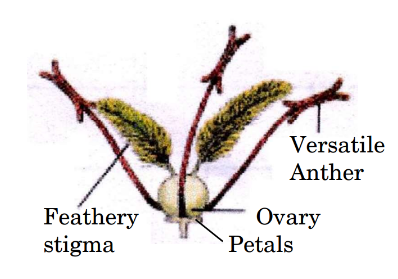
Answer: The mode of abiotic pollination depicted in the diagram is wind pollination. Exposed large feathery stigmas are essential for capturing pollen grains carried by the wind, thereby increasing the chances of successful fertilization. Pollen grains in wind-pollinated flowers exhibit adaptations such as reduced size and lightweight structures, enabling them to be easily carried by air currents. Additionally, pollen grains may have a sticky outer coating to enhance adherence to stigmas. The petals being small and non-green suggests that they are less involved in attracting pollinators, thereby optimizing energy for pollen production as these flowers rely on wind rather than biotic agents.
Key Points: Mode of pollination: wind pollination; Exposed stigmas: capture wind-borne pollen; Pollen adaptations: lightweight and sticky; Petals: small and non-green for energy optimization.
[3 Marks]
Answer: The removal of Lantana camara is crucial for restoring the Mudumalai Tiger Reserve (MTR) because this invasive species was choking out native vegetation essential for the ecosystem's health. By eradicating Lantana, the department facilitated the recovery of native grasses and legumes, providing better habitat for tigers and their prey. This restoration helps maintain the balance within the ecosystem and reduces human-wildlife conflicts, as healthy forests can better support wildlife without encroaching on human settlements.
Key Points: Lantana camara is invasive, competes with native plants, its removal restores native vegetation, improves tiger habitat, enhances prey availability, reduces human-wildlife conflict.
[3 Marks]
Answer: The Green Revolution significantly increased food production, with one of its primary advantages being the tripling of food supply, which helped in improving food security for a growing population. However, it also posed challenges. Firstly, one major disadvantage is the heavy reliance on chemical fertilizers and pesticides, which can lead to soil degradation and health hazards due to chemical exposure. Secondly, the use of high-yielding varieties often reduces the genetic diversity of crops, making them more susceptible to diseases and pests, creating long-term vulnerabilities in agricultural systems.
Key Points: tripling of food supply; reliance on chemical fertilizers and pesticides; soil degradation and health hazards; reduced genetic diversity of crops; vulnerability to diseases and pests
Section E
[5 Marks]
Answer: Double fertilisation in flowering plants involves two key fusion events: syngamy and triple fusion. After pollination, the pollen grain germinates on the stigma, forming a pollen tube that travels down the style to the ovule. The tube discharges two male gametes into the embryo sac. One male gamete fuses with the egg cell, resulting in the formation of a diploid zygote (syngamy), while the second gamete fuses with two polar nuclei to form the triploid endosperm. This endosperm serves as the nutritive tissue for the developing embryo. Following fertilisation, the ovule develops into a seed, and the ovary matures into a fruit. Thus, double fertilisation not only secures the formation of a new plant but also ensures proper nourishment through the endosperm, reflecting a remarkable evolutionary adaptation in angiosperms.
Key Points: Pollination initiation-Pollen tube germination and growth-Fusion of male gametes with egg cell (syngamy)-Fusion of second male gamete with polar nuclei (triple fusion)-Formation of diploid zygote and triploid endosperm-Development of seeds and fruits
[5 Marks]
Answer: The male reproductive system includes a pair of testes, which are vital for sperm production. Each testis contains approximately 250 compartments known as testicular lobules. Within each lobule, there are one to three coiled seminiferous tubules. The inner lining of these tubules comprises two primary cell types: male germ cells, known as spermatogonia, and Sertoli cells. Spermatogonia are responsible for undergoing meiotic division, ultimately leading to sperm formation. Sertoli cells play a crucial supportive role by providing nutrition and structural support to the developing germ cells. Furthermore, the process of spermatogenesis is initiated at puberty due to increased levels of gonadotropin-releasing hormone (GnRH), which is secreted by the hypothalamus. GnRH stimulates the anterior pituitary gland to release FSH and LH, promoting the production of sperms and testosterone, respectively, thus facilitating the entire process of spermatogenesis.
Key Points: Testicular lobules contain seminiferous tubules; Two types of cells: spermatogonia and Sertoli cells; Spermatogonia undergo meiosis, Sertoli cells provide nutrition; GnRH triggers spermatogenesis by stimulating anterior pituitary; Leads to secretion of FSH and LH, promoting sperm and testosterone production.
[5 Marks]
Answer: The biotechnological strategy to prevent infection by the nematode Meloidegyne incognitia involves the use of RNA interference (RNAi) mediated by Agrobacterium vectors. This approach requires the introduction of specific nematode genes into the tobacco plant through Agrobacterium tumefaciens, which delivers a segment of DNA known as T-DNA. This inserted DNA is engineered to express both sense and anti-sense RNA, which are complementary to each other. When these RNAs are produced within the plant cells, they form double-stranded RNA (dsRNA). This dsRNA triggers the RNAi pathway, silencing the specific messenger RNA (mRNA) of the nematode. The silenced mRNA results in the inability of the nematode to produce essential proteins for its survival, ultimately leading to its death. By implementing this strategy, transgenic tobacco plants can effectively resist nematode infestations, thus maintaining plant health and improving crop yields. This technique highlights the potential of genetic engineering to provide sustainable solutions to agricultural problems caused by pests.
Key Points: 1. Use of RNA interference (RNAi) to prevent nematode infection; 2. Insertion of nematode-specific genes into tobacco using Agrobacterium tumefaciens; 3. Production of sense and anti-sense RNA forming dsRNA; 4. Silencing of nematode mRNA through RNAi; 5. Resulting in resistance against Meloidegyne incognitia and improved crop yields.
[5 Marks]
Answer: The Polymerase Chain Reaction (PCR) is a revolutionary technique used to amplify specific segments of DNA, allowing for the generation of millions of copies of a gene of interest. The process consists of three main steps: denaturation, where the double-stranded DNA is heated to separate it into two single strands; primer annealing, where short sequences of RNA or DNA primers bind to the single-stranded templates; and extension, where DNA polymerase synthesizes new DNA strands from the primers. This polymerase, often derived from the thermophilic bacterium Thermus aquaticus, is heat-stable, enabling it to withstand the high temperatures necessary for denaturation. Through repeated cycles of these steps, typically 20-40 times, the target DNA can be amplified to a billion copies. This high level of amplification makes PCR incredibly useful for various applications, including cloning, genetic testing, forensics, and medical diagnostics, such as detecting HIV or identifying genetic mutations associated with cancer. The amplified DNA can then be used for further analysis or ligation into vectors for cloning purposes. PCR's sensitivity allows for the detection and analysis of even trace amounts of DNA, making it an essential tool in molecular biology.
Key Points: Definition and importance of PCR - Process: denaturation, primer annealing, extension - Role of DNA polymerase - Amplification to a billion copies - Applications: cloning, diagnostics, forensics - Sensitivity for trace DNA detection
[5 Marks]
Answer: In nature, populations often exhibit logistic growth due to limited resources. Such populations experience an initial period of exponential growth when resources are abundant. However, as resources become limited, competition increases, eventually slowing down growth until it reaches a plateau known as the carrying capacity (K). The logistic growth equation is represented as dN/dt = rN(K-N)/K, where N is the population size, r is the intrinsic growth rate, and K is the carrying capacity. This curve depicts a sigmoidal shape, illustrating the transition from exponential growth to stabilization at K. Graphically, the curve starts steep, then flattens as it approaches the carrying capacity, indicating that population growth is constrained by resource availability.
Key Points: 1. Definition of logistic growth; 2. Equation: dN/dt = rN(K-N)/K; 3. Carrying capacity (K); 4. Graphical representation: sigmoidal curve; 5. Transition from exponential to stable population growth.
[5 Marks]
Answer: The Species-Area relationship posits that species richness increases with the area of the habitat, forming a commonly observed rectangular hyperbolic curve. As proposed by Alexander von Humboldt, this relationship indicates that larger areas support more species diversity, though it plateaus after reaching a certain limit. When plotted, this relationship shows a curve that eventually levels off. On a logarithmic scale, this relationship can be expressed with the equation log S = log C + Z log A, where S is species richness, A is area, C is the Y-intercept, and Z is the slope. The value of Z typically ranges from 0.1 to 0.3, depicting the dependency of biodiversity on the extent of habitat available.
Key Points: Species richness increases with area; Graph forms a rectangular hyperbola; Plateauing effect; Logarithmic representation linear; Equation log S = log C + Z log A; Variables: S = species richness, A = area, C = Y-intercept, Z = slope; Z value range is 0.1 to 0.3.