Section B
[1 Mark]
-
(A) endosperm, nucellus and zygote
-
(B) zygoate, nucellus and endosperm
-
(C) antipodals, synergids and integuments
-
(D) antipodal, zygote and endosperm
Explanation: The correct option is 'antipodal, zygote and endosperm.' In a fertilized ovule, the zygote is diploid (2n), formed by the fusion of the sperm and ovule, the antipodal cells are haploid (n), and the endosperm, which provides nourishment, is triploid (3n) as it is formed by the fusion of one sperm cell with two polar nuclei.
[1 Mark]
-
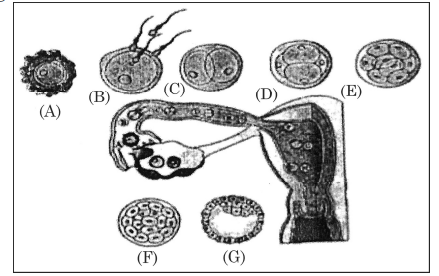
(A) Ovum – B, Morula – D, Blastocyst – F
-
(B) Ovum – A, Morula – E, Blastocyst – G
-
(C) Ovum – A, Morula – B, Blastocyst – G
-
(D) Ovum – B, Morula – D, Blastocyst – G
Explanation: According to the provided context, the fertilized egg moves through the fallopian tube passing points labeled from B to H. The morula, which is an embryo with 8 to 16 blastomeres, is shown at point E. The blastocyst, a hollow ball of cells with an outer trophoblast layer and an inner cell mass, is indicated at point G. Therefore, the ovum corresponds to point A (before fertilization and division), the morula to point E, and the blastocyst to point G.
[1 Mark]
-
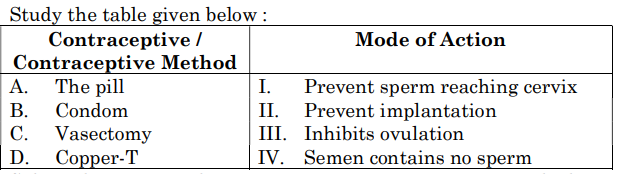
(A) A – II, B – III, C – I, D – IV
-
(B) A – III, B – II, C – I, D – IV
-
(C) A – III, B – I, C – IV, D – II
-
(D) A – IV, B – III, C – II, D – I
Explanation: The correct option is: A – III, B – I, C – IV, D – II. The pill (A) inhibits ovulation (III), the condom (B) prevents sperm from reaching the cervix (I), vasectomy (C) ensures that semen contains no sperm (IV), and Copper-T (D) prevents implantation (II).
[1 Mark]
-
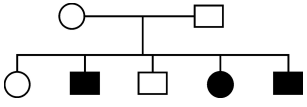
(A) X-Linked dominant
-
(B) Autosomal dominant
-
(C) X-Linked recessive
-
(D) Autosomal recessive
Explanation: The correct option is determined by analyzing the inheritance pattern shown in the pedigree chart. If the disorder appears in males more frequently than females and skips generations, it is likely X-Linked recessive. If both males and females are equally affected and it does not skip generations, it's likely Autosomal dominant. If females are primarily affected and the trait is passed from father to daughter, it's X-Linked dominant. In cases where both genders are equally affected and the trait can skip generations, it is Autosomal recessive.
[1 Mark]
-
(A) Chromosome – X
-
(B) Chromosome – 21
-
(C) Chromosome – 1
-
(D) Chromosome – 11
Explanation: According to the provided context, the sequence of chromosome 1 was completed only in May 2006, and it was the last among the 24 human chromosomes (22 autosomes plus X and Y) to be completely sequenced.
[1 Mark]
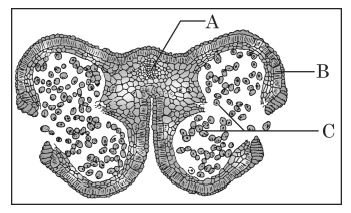
-
(A) A – Endothecium, B – Pollen grain, C – Connective.
-
(B) A – Endothecium, B – Connective, C – Pollen grain.
-
(C) A – Connective, B – Endothecium, C – Pollen grain.
-
(D) A – Pollen grain, B – Connective, C – Endothecium.
Explanation: In a transverse section of a young anther, part 'A' corresponds to the endothecium, which is the layer just beneath the epidermis helping in anther dehiscence. Part 'B' is the connective, the tissue connecting the two lobes of the anther. Part 'C' refers to pollen grains, the male gametophytes produced inside pollen sacs. This identification aligns perfectly with the described anatomy of anther layers and tissues.
[1 Mark]
-
(A) Autosomal abnormality
-
(B) Polyploidy
-
(C) Euploidy
-
(D) Aneuploidy
Explanation: The correct answer is 'Aneuploidy' because Turner’s syndrome is caused by the absence of one X chromosome in females, resulting in a total of 45 chromosomes instead of the typical 46. This type of chromosomal abnormality falls under aneuploidy, which refers to the presence of an abnormal number of chromosomes in a cell.
[1 Mark]
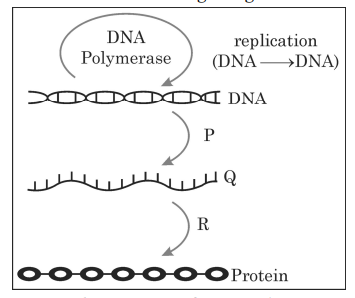
-
(A) P – Replication, Q – rRNA, R – Transcription
-
(B) P – Transcription, Q – mRNA, R – Translation
-
(C) P – Translation, Q – mRNA, R – Transcription
-
(D) P – Replication, Q – mRNA, R – Translation
Explanation: The correct answer is 'P – Transcription, Q – mRNA, R – Translation'. This is because the Central Dogma of molecular biology describes the flow of genetic information where transcription is the process of converting DNA into mRNA, and translation is the process of synthesizing proteins from mRNA.
[1 Mark]
-
(A) Hugo de Vries
-
(B) Louis Pasteur
-
(C) Darwin
-
(D) Weisman
Explanation: The correct answer is Hugo de Vries. He proposed the mutation theory, which suggests that new species arise through sudden and significant genetic changes or mutations, rather than gradual changes as suggested by Darwin's theory of natural selection.
[1 Mark]
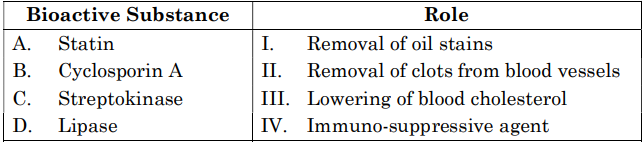
-
(A) A – III, B – IV, C – II, D – I
-
(B) A – II, B – III, C – I, D – IV
-
(C) A – IV, B – I, C – II, D – III
-
(D) A – IV, B – II, C – I, D – III
Explanation: The correct option is determined by analyzing the relationships between the bioactive substances and their respective actions. Therefore, upon matching each listed substance with their correct action, we can identify the accurate pairs, which can be found in the correct option among those provided.
[1 Mark]
-
(A) Restriction enzymes
-
(B) Exonuclease
-
(C) Cleaving enzyme
-
(D) Endonuclease
Explanation: The correct answer is 'Restriction enzymes'. Molecular scissors refer to enzymes that can cut DNA at specific sequences, which are known as restriction enzymes. These enzymes play a key role in molecular biology for gene cloning and DNA manipulation.
[1 Mark]
-
(A) pathogen – antigen interaction
-
(B) antigen – protein interaction
-
(C) antigen-antibody interaction
-
(D) DNA replication
Explanation: The correct answer is 'antigen-antibody interaction' because the ELISA (Enzyme-Linked Immunosorbent Assay) technique relies on the specific binding of antibodies to their corresponding antigens to detect and quantify biological substances.
[1 Mark]
-
(A) Both (A) and (R) are true and (R) is not the correct explanation of (A).
-
(B) Both (A) and (R) are true and (R) is the correct explanation of (A).
-
(C) (A) is true, but (R) is false.
-
(D) (A) is false, but (R) is true.
Explanation: Both (A) and (R) are true and (R) is the correct explanation of (A) because the fig relies on a specific wasp for pollination, and the wasp, in its search for a place to lay eggs, simultaneously pollinates the fig, establishing a mutual dependence.
[1 Mark]
-
(A) (A) is true, but (R) is false.
-
(B) Both (A) and (R) are true and (R) is not the correct explanation of (A).
-
(C) (A) is false, but (R) is true.
-
(D) Both (A) and (R) are true and (R) is the correct explanation of (A).
Explanation: The assertion (A) is true because plasmids are indeed small, circular DNA molecules that replicate independently of the chromosomal DNA inside bacterial cells. However, the reason (R) is incomplete and not provided fully in the question, so it cannot be considered true or a correct explanation of (A). Therefore, (A) is true but (R) is false.
[1 Mark]
-
(A) Both (A) and (R) are true and (R) is not the correct explanation of (A).
-
(B) (A) Both (A) and (R) are true and (R) is the correct explanation of (A).
-
(C) (A) is false, but (R) is true.
-
(D) (A) is true, but (R) is false.
Explanation: Both (A) and (R) are true and (R) is the correct explanation of (A) because patents are indeed granted by governments to protect the rights of inventors and prevent unauthorized commercial use of their inventions.
[1 Mark]
-
(A) (A) is true, but (R) is false.
-
(B) Both (A) and (R) are true and (R) is the correct explanation of (A).
-
(C) (A) is false, but (R) is true.
-
(D) Both (A) and (R) are true and (R) is not the correct explanation of (A).
Explanation: Both (A) and (R) are true and (R) is not the correct explanation of (A). Aquatic ecosystems can have inverted biomass pyramids where the biomass of primary producers (like phytoplankton) is less than that of higher trophic levels (like zooplankton and fish) due to the high turnover rate of primary producers. While it is true that higher trophic levels require more energy, it does not explain the occurrence of inverted pyramids.
Section C
[2 Marks]
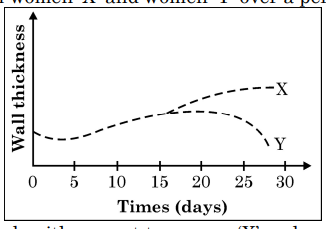
Answer: The graph shows that woman 'X' experiences a consistent thickening of the uterine wall throughout the month, indicating the influence of hormonal regulation during her menstrual cycle. In contrast, woman 'Y' shows irregular changes, suggesting possible hormonal imbalances. The differences exemplify how endometrial changes respond to hormonal fluctuations, primarily driven by estrogen and progesterone. Thus, woman 'X' reflects normal cyclical changes, while woman 'Y' may need further investigation regarding menstrual irregularities.
Key Points: Thickening of uterine wall; Woman 'X' shows consistent thickening; Woman 'Y' shows irregular changes; Indicates hormonal regulation; Cyclical changes based on estrogen and progesterone; Suggests woman 'Y' may have hormonal imbalances.
[2 Marks]
Answer: Intensely lactating mothers generally do not conceive due to a biological phenomenon known as lactational amenorrhea. During breastfeeding, particularly exclusive breastfeeding, the hormones prolactin and oxytocin are elevated, which suppress ovulation and menstrual cycles. This natural contraceptive effect leads to a delay in the return of fertility. Therefore, breastfeeding serves not only to nourish infants but also to space births naturally, resulting in a lower likelihood of conception during this period.
Key Points: lactational amenorrhea-hormonal suppression of ovulation-breastfeeding as natural contraceptive
[2 Marks]
Answer: Insulin was traditionally extracted from the pancreases of slaughtered cattle and pigs. This animal-derived insulin is no longer widely used because it may cause allergic reactions and is less effective than human insulin. Eli Lilly produces human insulin by using genetically modified bacteria, which synthesizes insulin that does not require processing. Human insulin is produced as a pro-hormone containing C-peptide, which is removed during maturation. This makes the Eli Lilly insulin ready for use without additional processing.
Key Points: insulin source historically cattle/pig pancreas – allergic reactions/effectiveness issues; Eli Lilly produces human insulin using bacteria – no processing needed; human insulin synthesized as pro-hormone; C-peptide removed during maturation
[2 Marks]
Answer: The grazing food chain starts with primary producers like plants, which are eaten by herbivores. This chain is primarily driven by photosynthesis and energy from the sun. In contrast, the detritus food chain begins with dead organic matter, which is decomposed by detritivores, such as fungi and bacteria, and then consumed by larger organisms. While the grazing food chain is linked to living plants and herbivores, the detritus food chain focuses on decomposers and nutrient recycling.
Key Points: Grazing food chain starts with producers; Detritus food chain starts with dead matter; Grazing food chain involves herbivores; Detritus food chain focuses on decomposers; Energy source varies (sun vs decay).
[2 Marks]
Answer: Brood parasitism is a reproductive strategy where one species lays its eggs in the nest of another species, relying on the host to raise its young. A well-known example is the cuckoo bird. Cuckoos lay their eggs in the nests of other birds, such as reed warblers. Once the cuckoo chick hatches, it usually pushes the host's eggs or chicks out of the nest, ensuring it gets all the food and care from the unsuspecting host parents.
Key Points: Brood parasitism - reproductive strategy - one species uses another's nest - cuckoo as an example - lays eggs in hosts' nests - cuckoo chick outcompetes host's young
[2 Marks]
Answer: Biodiversity hotspots, though cover less than 2% of Earth's land area, are crucial for sustaining the majority of Earth's biodiversity. By implementing strict protection measures in these areas, we can safeguard endangered species and their habitats, reducing the rate of extinctions significantly. Conservation efforts help maintain ecosystem functionality, protecting genetic diversity, and ensuring that species have the necessary resources for survival. Two biodiversity hotspots in India are the Himalayas and the Western Ghats.
Key Points: Biodiversity hotspots importance; Coverage of Earth; Strict protection reduces extinction rates; Conservation of habitats; Examples: Himalayas, Western Ghats
Section D
[3 Marks]
Answer: The male gametophyte, or microspore, of an angiosperm represents a crucial stage in the plant’s reproduction. The diagram should include labels such as the generative cell, tube cell, pollen wall, and nucleus. The generative cell develops into two sperm cells, which are essential for fertilization in the ovule. The tube cell, once the pollen grain lands on a stigma, develops a pollen tube that carries the sperm cells towards the ovule for successful fertilization. These structures work together to facilitate the reproductive process in flowering plants.
Key Points: Generative cell; functions in developing into sperm; Tube cell; forms pollen tube for fertilization; Pollen wall; provides protection and structure; Nucleus; contains genetic material for reproduction.
[3 Marks]
Answer: To determine the genotype of the father, we represent his genotype as either IAIA or IAi (where IA represents gene for A). The mother’s genotype is IAIB. Setting up a Punnett square: For the father (IAi) and mother (IAIB), the possible combinations yield genotypes IAIB (Blood Group AB), IAi (Blood Group A), IBi (Blood Group B), and ii (Blood Group O). Thus, possible blood groups of their children are A, B, AB, and O. ABO blood grouping is based on presence/absence of antigens A and B on RBCs, governed by three alleles (IA, IB, i).
Key Points: Punnett square analysis; Possible genotypes of father (IAi); Blood groups of children (A, B, AB, O); Basis of ABO blood grouping (presence/absence of A and B antigens); Multiple alleles in ABO system.
[3 Marks]
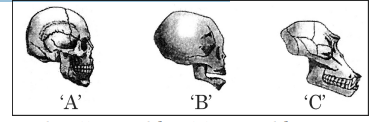
Answer: The skulls ‘A’, ‘B’, and ‘C’ likely belong to different species of early hominins and possibly represent stages in human evolution. Without visual aids, it is challenging to determine which two skulls are more similar. Typically, skulls from the genus Homo, such as Homo erectus, might be more similar to each other compared to those from earlier species like Australopithecus. Approximately 1.5 million years ago, ape-like primates such as Australopithecus and man-like primates like Homo habilis existed, marking significant milestones in evolution.
Key Points: 1. Identification of skulls A, B, C; 2. Similarity analysis between skulls; 3. Ape-like primates 1.5 million years ago; 4. Man-like primates 1.5 million years ago
[3 Marks]
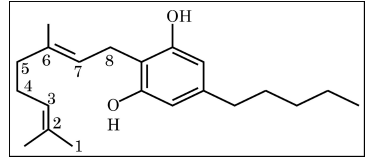
Answer: The group of drugs depicted is typically classified as 'steroid drugs'. These drugs can be consumed in various forms such as oral pills, injections, or topical applications. Oral consumption involves taking a tablet or capsule, while injections can be intramuscular or subcutaneous. Topical steroids are applied directly to the skin. The principal organ affected by the consumption of these drugs is the liver, as it plays a crucial role in metabolizing steroids, which can lead to various liver-related health issues, including potential liver damage and dysfunction.
Key Points: steroid drugs-forms of consumption: oral, injection, topical-afflicted organ: liver
[3 Marks]
Answer: An antibody molecule, also known as an immunoglobulin, typically has a Y-shaped structure. Four key components of an antibody are: 1) Heavy Chain - a long polypeptide chain that gives the antibody its structure; it is composed of amino acids, making it a protein. 2) Light Chain - a shorter polypeptide chain that pairs with the heavy chain; like the heavy chain, it is also a protein. 3) Antigen-binding site - located at the tips of the Y, it interacts with specific antigens, determined by its unique amino acid sequence. 4) Fc region - the stem of the Y, important for binding to cell receptors, also a protein. Antibodies are produced by B lymphocytes (B cells) which undergo differentiation into plasma cells that secrete antibodies.
Key Points: 1) Heavy Chain - protein structure 2) Light Chain - protein structure 3) Antigen-binding site - binds to antigens 4) Fc region - interacts with immune cells 5) Produced by B lymphocytes/ plasma cells
[3 Marks]
Answer: During sewage treatment, flocs play a crucial role in the secondary treatment phase. They are aggregates of microorganisms, including bacteria, that form during the biological treatment process. These flocs help in the removal of organic matter by clumping together and settling down, thereby facilitating sedimentation. On the other hand, anaerobic sludge digesters are essential for breaking down the excess biomass produced in the treatment process. They use anaerobic bacteria to decompose the organic material in the sludge, resulting in the production of biogas and reducing the volume of waste. This process not only helps in waste stabilization but also allows for the recovery of energy in the form of methane, which can be utilized as a renewable energy source.
Key Points: Role of flocs in sewage treatment; Formation of microorganisms; Clumping and sedimentation; Function of anaerobic sludge digesters; Use of anaerobic bacteria; Breakdown of excess biomass; Production of biogas; Energy recovery.
[3 Marks]
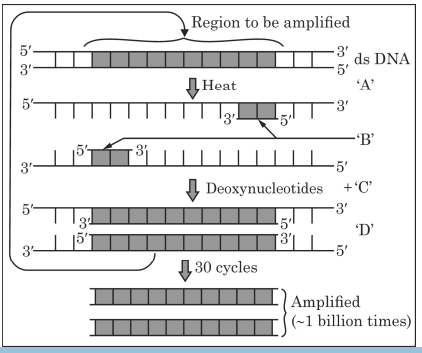
Answer: In this specific technique, step 'A' typically represents the extraction of nucleic acids, while step 'D' refers to the amplification of the target nucleic acid sequences. Step 'B' usually represents the addition of primers, essential for initiating the PCR process. Step 'C' is the polymerase enzyme, specifically Taq polymerase, sourced from the thermophilic bacterium Thermus aquaticus. This PCR technique is widely used in molecular diagnostics to detect genetic material, identify pathogens, and perform genetic testing.
Key Points: Step A: Nucleic acid extraction; Step D: Amplification of nucleic acids; Step B: Addition of primers; Step C: Taq polymerase; Source organism: Thermus aquaticus; Uses: Genetic material detection, pathogen identification, genetic testing.
[3 Marks]
Answer: Transgenic animals play a pivotal role in various fields of biomedical research. (a) In the production of biological products, transgenic animals can be engineered to produce therapeutic proteins, hormones, and antibodies in their milk or blood, making these substances more accessible and cost-effective. (b) For studying diseases, transgenic models mimic human diseases, providing insights into disease mechanisms and allowing researchers to test new treatments. (c) In chemical safety testing, transgenic animals are used to evaluate the toxic effects of chemicals, helping to determine safety levels for human exposure, thereby assisting regulatory agencies.
Key Points: Production of therapeutic proteins-Transgenic models for disease study-Assessment of chemical toxicity
Section E
[5 Marks]
Answer: The life cycle of HIV (Human Immunodeficiency Virus) starts when the virus enters the human body, typically through bodily fluids during unprotected sexual contact, sharing needles, or from mother to child. Upon entering, HIV targets CD4+ T cells, which are crucial for the immune response. The virus attaches to the CD4 receptor and fuses with the host cell's membrane, releasing its RNA and enzymes into the cell. Using reverse transcriptase, the viral RNA is transcribed into DNA, which then integrates into the host's genome. This integrated viral DNA can remain dormant for years, allowing the virus to evade detection. When the T cell is activated, the integrated viral DNA is transcribed into new viral RNA, leading to the production of new viral particles. These particles bud off from the host cell, allowing the cycle to continue. Over time, as more CD4+ T cells are destroyed, the immune system becomes weakened, and the individual may start to exhibit symptoms of HIV infection like fatigue, fever, or swollen lymph nodes. Without treatment, the progression leads to AIDS (Acquired Immunodeficiency Syndrome), characterized by a severely compromised immune system, making it difficult to fight off opportunistic infections and certain cancers. The transition from HIV to AIDS can take many years, often 10 or more, depending on various factors such as the individual's overall health and access to antiretroviral therapies.
Key Points: HIV entry via bodily fluids; targets CD4+ T cells; attaches and fuses to cell; releases RNA and enzymes; reverse transcription into DNA; integrates into host genome; remains dormant; activation leads to new virion production; immune system weakening; transition to AIDS; opportunistic infections.
[5 Marks]
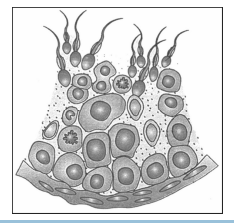
Answer: The process depicted in the diagram is called spermatogenesis, which is the formation of spermatozoa from spermatogonia. Spermatogenesis occurs in the seminiferous tubules of the testes and involves several stages, including mitosis and meiosis. Spermatogonia undergo mitotic division to produce primary spermatocytes, which then undergo meiosis to form secondary spermatocytes and finally haploid spermatids. These spermatids undergo differentiation to mature into spermatozoa. The clustered spermatozoa seen in the diagram are attached to Sertoli cells. Sertoli cells provide structural and nutritional support to developing sperm cells, facilitate transport of nutrients, remove waste, and secrete hormones like inhibin, which regulates spermatogenesis.
Key Points: Spermatogenesis is the process of sperm formation; Occurs in seminiferous tubules; Involves mitosis and meiosis; Primary spermatocytes form secondary spermatocytes; Spermatids mature into spermatozoa; Sertoli cells support and nourish sperm; Sertoli cells secrete inhibin to regulate sperm production.
[5 Marks]
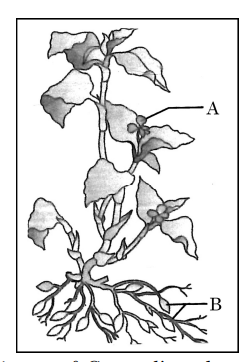
Answer: In the Commelina plant, the two types of flowers labeled 'A' and 'B' are typically male (staminate) and female (pistillate) flowers. Characteristically, flower 'A' is smaller, has a prominent style, and contains only stamens, while flower 'B' is larger, possesses a well-formed ovary, and contains pistils. Regarding modes of pollination, flower 'A' may primarily use wind or insect pollination, while flower 'B' tends to rely on self-pollination to ensure fertilization. Outbreeding devices in flowering plants include dioecy, where male and female flowers are on separate plants, and self-incompatibility mechanisms that prevent self-fertilization. These devices are essential as they enhance genetic diversity, promote cross-pollination, and increase resilience to diseases and environmental changes, leading to healthier progeny.
Key Points: Identification of flowers 'A' and 'B' as male and female; comparison of characteristics between male and female flowers; discussion of pollination modes for each flower; identification of outbreeding devices such as dioecy and self-incompatibility; explanation of why outbreeding devices are important for genetic diversity and plant health.
[5 Marks]
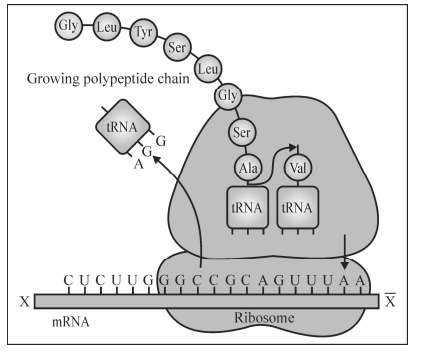
Answer: (i) The polarity in the mRNA segment is from the 5' end to the 3' end. The number of amino acids that can be added to the polypeptide being translated can be determined by the number of codons remaining after the initial codon. Each codon corresponds to one amino acid. If there are 10 codons remaining, then 10 more amino acids can be added to the polypeptide chain due to the continuous reading of mRNA by the ribosome.
(ii) The initiating codon for translation is AUG. The corresponding anticodon on the tRNA is UAC, and this codon codes for the amino acid Methionine, which is the first amino acid incorporated during protein synthesis.
(iii) The charging of an adaptor molecule, such as tRNA, involves the attachment of an amino acid to its corresponding tRNA molecule. This process is facilitated by the enzyme aminoacyl-tRNA synthetase, which ensures that the correct amino acid is attached to the correct tRNA. This charging is critical because it enables the tRNA to deliver the appropriate amino acid during the process of translation, ensuring that the polypeptide chain is synthesized correctly according to the sequence specified by the mRNA.
Key Points: Polarity is from 5' to 3'-More amino acids depend on remaining codons-Starting codon is AUG, anticodon is UAC, Methionine coded-Charging involves tRNA and amino acids-Ensured by aminoacyl-tRNA synthetase-Important for correct translation.
[5 Marks]
Answer: Sickle-cell anaemia is named for the characteristic sickle or crescent shape of the red blood cells that occur in this disorder. These misshapen cells can lead to blockages in blood flow and various health complications. The disorder is caused by a mutation in the HBB gene on chromosome 11, leading to the production of an abnormal form of hemoglobin called hemoglobin S (HbS). This mutation is inherited in an autosomal recessive pattern. An individual must inherit two copies of the HbS gene (one from each parent) to exhibit symptoms of sickle-cell anaemia. Parents who are carriers of the sickle cell trait (HbAS) typically exhibit no symptoms of the disease; however, there is a 25% chance with each pregnancy that their child will inherit two sickle genes and thus suffer from the disorder. This is illustrated in a Punnett square where the combinations of alleles from two carriers yield the genotypes: AA (normal), AS (carrier), and SS (sickle-cell), demonstrating that an individual can inherit sickle-cell anaemia even if both parents are asymptomatic.
Key Points: Sickle-cell anaemia name from sickle-shaped cells - Mutation in HBB gene - Autosomal recessive inheritance - Carriers (HbAS) are asymptomatic - Punnett square analysis shows 25% chance of child with sickle-cell (SS) if both parents are carriers.
[5 Marks]
Answer: Malaria is characterized by a range of symptoms that typically include high fever, chills, sweating, headaches, nausea, vomiting, fatigue, and muscle pain. These symptoms are caused by the malaria parasite, primarily Plasmodium falciparum, which enters the bloodstream via mosquito bites. As the parasites reproduce in the liver and invade red blood cells, they cause cell rupture and release toxic substances such as hemozoin, resulting in the clinical manifestations of the disease. The rapid destruction of red blood cells leads to anemia, worsening the symptoms. Treatment often involves antimalarial drugs to eliminate the parasites and alleviate symptoms, though prevention through mosquito control is crucial to curbing the spread of malaria.
In the sexual reproduction phase of the malarial parasite, the process begins when a female Anopheles mosquito bites an infected human, ingesting the male and female gametocytes from the blood. Inside the mosquito's gut, the gametocytes mature into gametes. Fertilization occurs, forming a zygote that transforms into an ookinete, which then penetrates the gut wall and forms an oocyst. This oocyst undergoes division, producing sporozoites, the infectious form of the parasite. After maturation, the oocyst bursts, releasing sporozoites into the mosquito's salivary glands. When the mosquito bites another human, it transmits the sporozoites, initiating a new cycle of infection.
Key Points: Symptoms of malaria: high fever, chills, sweating, headaches; causes: Plasmodium falciparum, toxic release, anemia, red blood cell destruction. Sexual reproduction process: mosquito ingestion of gametocytes, formation of gametes, fertilization into zygote, oocyst development, sporozoite release in salivary glands, transmission in new bite.