Class 6 . Social Science . Exploring Society India And Beyond . Grassroots Democracy Part 1 Governance
Chapter 10: GRASSROOTS DEMOCRACY – PART 1 GOVERNANCE
Ch 10
Social Science
Class 6
Introduction and Three Organs of Government
Why Rules and Governance Are Needed
Governance — The process of making decisions, organising society through rules, and ensuring that the rules are followed.
Rules and Government
- Rules help maintain order and harmony when many people live together.
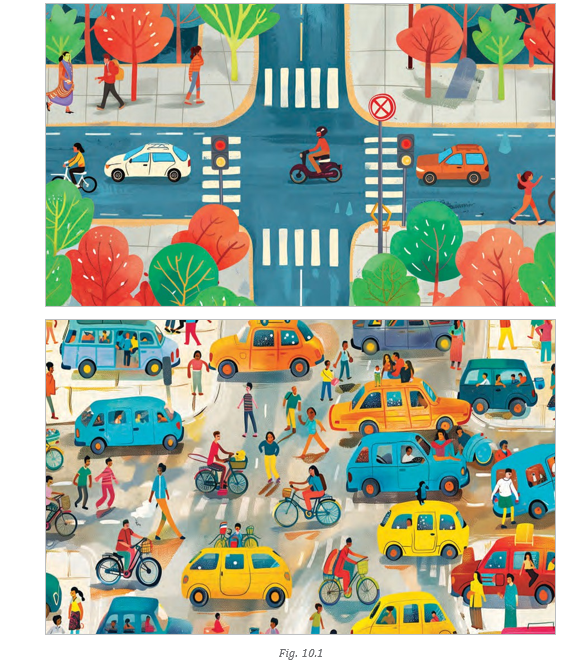
- Everyday rules apply at home, in schools, on roads, and at workplaces.
- Without rules, society would not be able to function properly.
- Government is the group of people or system that makes rules and ensures they are followed.
- Laws are some of the more important rules governing society.
- Citizens’ role Rules and laws are not fixed forever; citizens can have a say in changing them.
The Three Organs of Government
| Organ | Main role | Examples / details |
|---|---|---|
| Legislature | Makes new laws; may update or remove existing laws. | An assembly of representatives of the people. |
| Executive | Implements laws. | Includes the head of state, ministers, and agencies responsible for law and order. |
| Judiciary | Courts decide whether someone has broken the law and what action, including punishment, is appropriate. | May review executive decisions and examine whether laws are well conceived and fair to all. |
How the Organs Respond to Cybercrime
- Legislature passes or updates laws to address cybercrime.
- Executive enforces those laws; for example, cyber police investigate and arrest suspected offenders.
- Judiciary decides whether the accused broke the law and, if so, determines the appropriate action or punishment, such as a fine or imprisonment.
Separation of Powers
Separation of powers — The three organs are kept separate, while still interacting and working together.
Checks and Balances
- Purpose Separation of powers prevents one organ from having unchecked control.
- Checks and balances Each organ can check what the others do and restore balance if one acts beyond its expected role.
- Why it matters Keeping law-making, implementation, and court decisions distinct helps support fair governance.
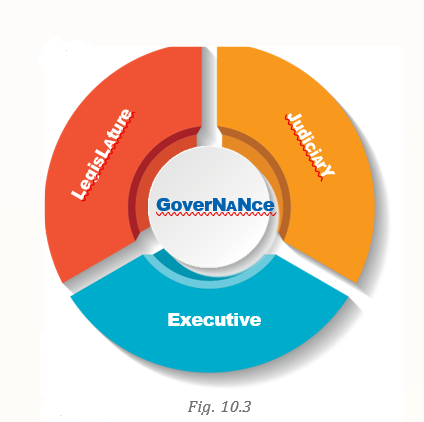
What are the three organs of government and their main functions?
Quick recap
- Rules help maintain order and harmony in society.
- Governance means making decisions, organising society through rules, and ensuring that they are followed.
- Government makes rules and ensures they are followed; important rules are called laws.
- The legislature makes laws, the executive implements them, and the judiciary decides whether laws were broken and what action is appropriate.
- Separation of powers allows the three organs to work together while checking one another.
Three Levels of Government
Levels of Government
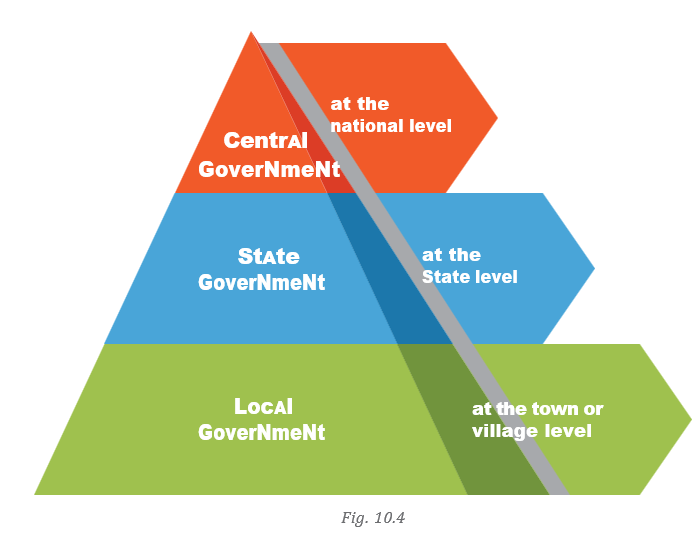
How the Levels Respond to Problems
Flood response as the scale increases
- Limited local flooding → local authorities respond.
- Flood affects several towns and villages → the State Government may send rescue teams.
- Massive flood across vast areas → the Central Government may also provide relief supplies and the army.
Government at National and State Levels
- Three organs: At the national and State levels, the legislature makes laws, the executive implements them, and the judiciary decides whether laws have been broken.
- Working together: These organs carry out the government’s responsibilities while checking and balancing one another.
Important Terms
Name the three levels of government in India.
Who are the nominal and executive heads at the national and State levels?
Quick recap
- Governments operate at least at local and national levels; many countries, including India, have a State or regional level too.
- India has local, State, and Central or Union levels of government.
- Problems are handled at the level matching their area and seriousness; higher levels may assist.
- The Supreme Court is at the national level; the High Court is listed at the State level.
- Parliament has the Lok Sabha and Rajya Sabha; States have an Assembly, usually one house.
- The President and Governor are nominal heads; the Prime Minister and Chief Minister are executive heads.
- National and State governments have different, sometimes overlapping, responsibilities; listed duties are examples, not complete lists.
Democracy
Meaning of Democracy
Democracy — A system of governance based on the rule or power of the people.
- Word origin: Greek *dēmos* means “people” and *kratos* means “rule” or “power”.
- Practical limit: It is usually not possible for everyone to take part personally in every decision.
Representative Democracy
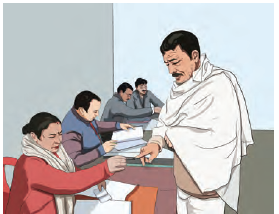
Representative democracy — A form of democracy in which citizens elect representatives to discuss issues and make decisions on their behalf.
- How it works: Citizens vote in elections → representatives are elected → they discuss laws, problems and solutions in assemblies.
- State level: Elected representatives are Members of Legislative Assembly (MLAs).
- National level: Elected representatives are Members of Parliament (MPs).
- Decision-making: Representatives use dialogue and debate to try to convince one another when opinions differ.
- Classroom example: An elected class representative can take the class’s concern or suggestion to the principal.
Democracy in India
- Type: India is a representative democracy and the world’s largest democracy.
- Voting right: In principle, all Indian citizens above the age of 18 have the right to participate in elections.
- 2024India had about 970 million voters.
Direct Democracy and Voting
Direct democracy — A form of democracy in which people take part directly in deciding an issue.
- Voting: People express their choices; the option receiving more votes is selected.
- Example: If a class votes between picnic places A and B, every student’s opinion is counted and the place with more votes is chosen.
| Point | Direct democracy | Representative democracy |
|---|---|---|
| Who participates? | People decide directly. | People elect representatives to discuss and decide on their behalf. |
| Example | A class votes on its picnic place. | Citizens elect MLAs and MPs. |
Grassroots Democracy
Grassroots democracy — A system that enables and encourages ordinary citizens to participate in decisions that affect them.
- Citizen participation: Ordinary people—the base of the democratic system—can have a say in decisions affecting their lives.
Democracy and Governance
- Need for governance: No country can run without governance and government.
- Government organs: The legislative, executive and judiciary need to work together.
- Levels in India: Government functions at the Centre (national), State and local levels.
- Overall framework: Democracy enables people to participate through elected representatives at State and national levels.
- Democracy
- Rule of the people; a system in which people participate in governance.
- Representative democracy
- Democracy in which citizens elect representatives to discuss and make decisions on their behalf.
- Direct democracy
- Democracy in which people decide an issue themselves.
- Grassroots democracy
- A system that encourages ordinary citizens to participate in decisions affecting them.
How does representative democracy work in India?
What is grassroots democracy?
Quick recap
- Democracy literally means “rule of the people”.
- In representative democracy, citizens elect representatives to discuss and make decisions on their behalf.
- MLAs represent people at the State level; MPs represent people at the national level.
- Direct democracy involves people deciding an issue themselves, such as by voting on a class picnic place.
- Grassroots democracy encourages ordinary citizens to participate in decisions affecting them.
- No country can run without governance and government; the legislative, executive and judiciary work together.
- India’s government functions at Centre, State and local levels.
Social Science — ALL CHAPTERS
1
LOCATING PLACES ON THE EARTH
2
Oceans and Continents
3
LANDFORMS AND LIFE
4
TIMELINE AND SOURCES OF HISTORY
5
INDIA, THAT IS BHARAT
6
THE BEGINNINGS OF INDIAN CIVILISATION
7
INDIA’S CULTURAL ROOTS
8
UNITY IN DIVERSITY, OR MANY IN THE ONE
9
FAMILY AND COMMUNITY
10
GRASSROOTS DEMOCRACY – PART 1 GOVERNANCE
11
GRASSROOTS DEMOCRACY – PART 2 LOCAL GOVERNMENT IN RURAL AREAS
12
GRASSROOTS DEMOCRACY – PART 3 LOCAL GOVERNMENT IN URBAN AREAS
13
THE VALUE OF WORK
14
ECONOMIC ACTIVITIES AROUND US