Class 6 . Social Science . Exploring Society India And Beyond . Grassroots Democracy Part 3 Local Government in Urban Areas
Chapter 12: GRASSROOTS DEMOCRACY – PART 3 LOCAL GOVERNMENT IN URBAN AREAS
Ch 12
Social Science
Class 6
Introduction
Participatory democracy — A form of democracy in which citizens take an active part in the functioning of their country.
Urban local government
- Urban areas are generally more complex and diverse than villages, so their governance systems also need to address greater complexity.
- Purpose: Urban local government applies the principles of local governance to cities and towns.
- Scope: This lecture introduces the basic principles of urban governance.
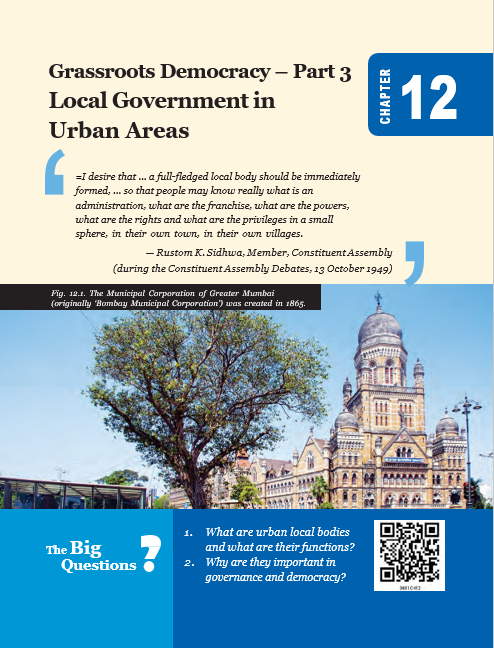
Levels of Government
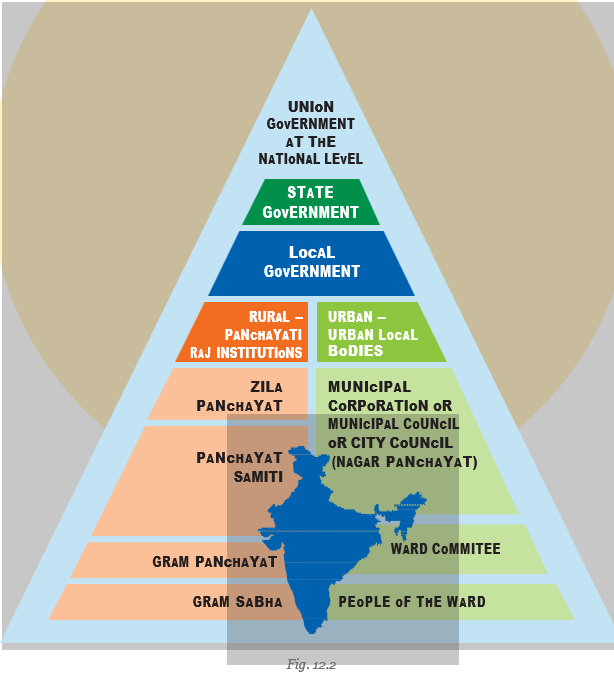
Governance from local to national
- Local level: closest to the people; includes rural and urban local government.
- State level
- National level: the top level of the governance structure
| Point | Rural local government | Urban local government |
|---|---|---|
| Setting | Villages and rural areas | Cities and towns |
| System introduced | Panchayati Raj | Urban local government |
| Place in governance | Local level, close to people | Local level, close to people |
What is participatory democracy?
Quick recap
- Participatory democracy involves active citizen participation in governance.
- Urban areas are generally more complex and diverse than villages.
- Urban local government serves cities and towns; Panchayati Raj serves rural areas.
- Local government is the base of the governance structure and is closest to people.
- The governance structure also includes state and national levels.
Urban Local Bodies
Meaning and Structure
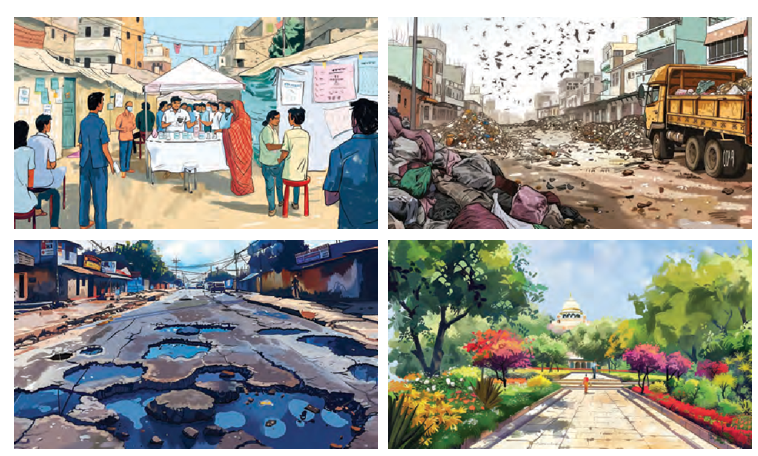
Responsibilities and Citizen Participation
Citizen Participation and Better Local Services
- Citizens care for their area and follow local instructions.
- They separate waste and report leaks or hazards promptly.
- Local bodies receive useful information and can respond to problems.
- Services work more efficiently and community resources are better protected.
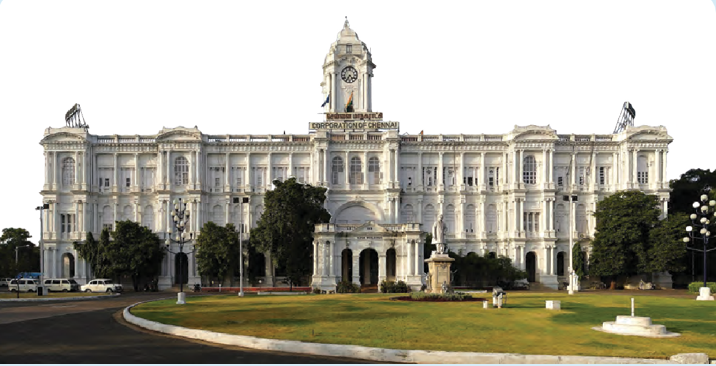
Municipal Corporation: Chennai Example
Madras Corporation
- 1687The East India Company issued a charter constituting Fort St. George and nearby territories into a corporation.
- 29 September 1688The Madras Corporation was established.
- 1792A Parliamentary Act empowered the Corporation to levy municipal taxes.
Types of Urban Local Bodies
- Urban local bodies: Cities and towns are governed through local bodies suited to their size and population.
- Representation: These bodies have elected members who represent local citizens.
Services and Funding
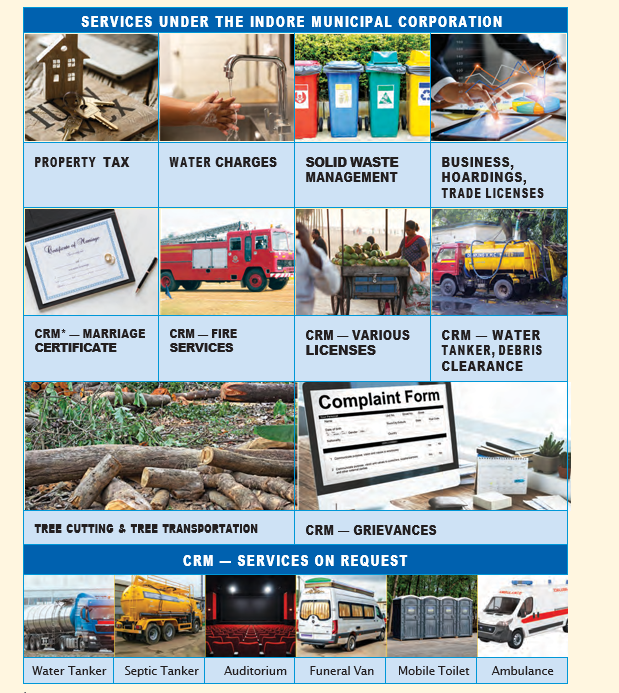
- Ward
- A smaller administrative unit within a city or town.
- Ward committee
- A local committee that helps address ward needs and report civic problems.
- Decentralised governance
- Decision-making that gives local communities a direct role in managing their area.
- CRM
- Citizen Relationship Management; a system for handling public services and citizen requests.
Community Action and Local Democracy
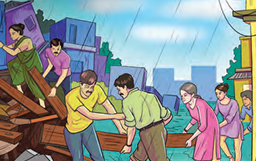
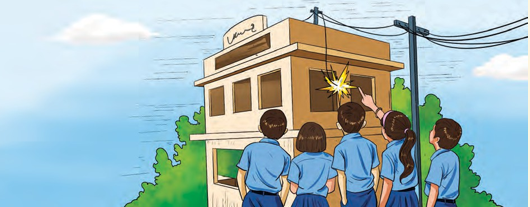
How do urban local bodies and citizens share responsibility for city services?
Name the three types of urban local bodies and the population ranges given for them.
Quick recap
- Urban local bodies provide decentralised government for cities and towns.
- Cities are divided into wards, where committees help address local concerns.
- Their work includes infrastructure, waste, local taxes, schemes and development planning.
- Citizens help services work well by following guidance and reporting problems.
- The main types are Municipal Corporations, Municipal Councils and Nagar Panchayats.
- The Madras Corporation was established in 1688 and gained municipal-tax powers in 1792.
Social Science — ALL CHAPTERS
1
LOCATING PLACES ON THE EARTH
2
Oceans and Continents
3
LANDFORMS AND LIFE
4
TIMELINE AND SOURCES OF HISTORY
5
INDIA, THAT IS BHARAT
6
THE BEGINNINGS OF INDIAN CIVILISATION
7
INDIA’S CULTURAL ROOTS
8
UNITY IN DIVERSITY, OR MANY IN THE ONE
9
FAMILY AND COMMUNITY
10
GRASSROOTS DEMOCRACY – PART 1 GOVERNANCE
11
GRASSROOTS DEMOCRACY – PART 2 LOCAL GOVERNMENT IN RURAL AREAS
12
GRASSROOTS DEMOCRACY – PART 3 LOCAL GOVERNMENT IN URBAN AREAS
13
THE VALUE OF WORK
14
ECONOMIC ACTIVITIES AROUND US