Class 6 . Social Science . Exploring Society India And Beyond . Grassroots Democracy Part 2 Local Government in Rural Areas
Chapter 11: GRASSROOTS DEMOCRACY – PART 2 LOCAL GOVERNMENT IN RURAL AREAS
Ch 11
Social Science
Class 6
Panchayati Raj System
Why Villages Need Local Government
- Local needs may include water for fields, road repairs, maintaining the primary school, and addressing land or crop disputes.
- Local decisions affect villagers’ daily lives; people cannot depend on the State or national capital to resolve every village issue.
- Local resources are needed to meet these needs and support village development.
Panchayati Raj System
Panchayat — A village council that provides local government and helps villagers participate in decisions about their community.
- Panchayati Raj is the system of self-government through Panchayats.
- Purpose: Bring governance closer to people and allow them to take part in local decision-making.
- Role: Address local issues, promote development, and help government schemes reach people at the grassroots.
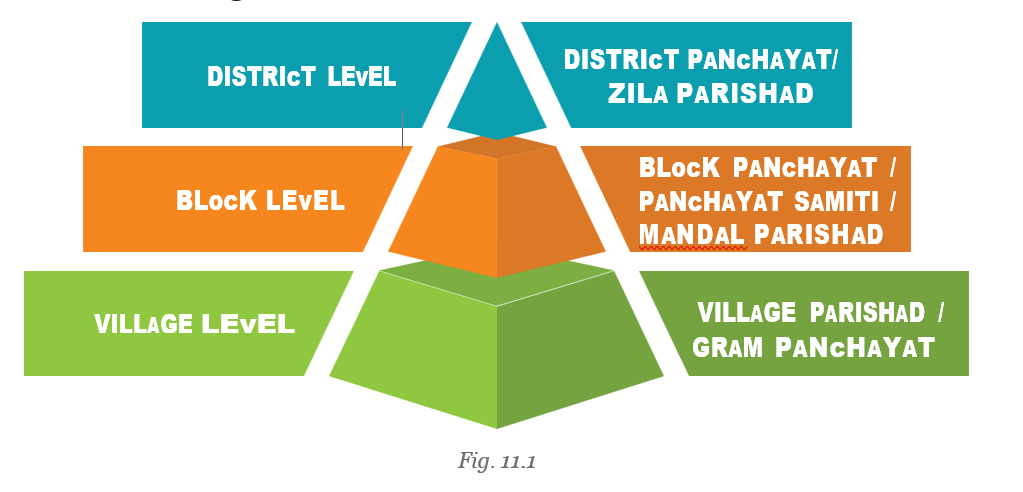
Three-tier system — A system of rural local government organised at three levels: village, block, and district.
Panchayati Raj levels
- Village level
- Block level
- District level
Areas of responsibility
- Development and services: Agriculture, housing, roads, and water resources.
- Community well-being: Education, health care, and social welfare.
- Community life: Cultural activities.
- Combined role: Panchayati Raj institutions together address many aspects of life across the district.
- Panchayat
- A village council providing local government.
- Panchayati Raj
- The system of rural self-government through Panchayats.
- Grassroots
- The local community level, where people experience and address everyday needs.
- Three-tier system
- Rural local government organised at village, block, and district levels.
What is the Panchayati Raj system?
Name the three levels of the Panchayati Raj system.
Quick recap
- Panchayats are village councils that bring local government closer to the people.
- Panchayati Raj is a form of rural self-government and encourages participation in local decisions.
- The system has three levels: village, block, and district.
- Panchayats address local issues and help promote development.
- Their responsibilities include agriculture, housing, roads, water, education, health care, social welfare, and culture.
Gram Panchayat & Exemplary Sarpanchs
Gram Panchayat and Gram Sabha
Gram Sabha — The Gram Sabha consists of adult residents of a village, or neighbouring villages, who are enrolled as voters.
How the Gram Panchayat works
- Gram Panchayat: The local government closest to people in rural areas.
- Election: Gram Panchayat members are elected directly by the Gram Sabha.
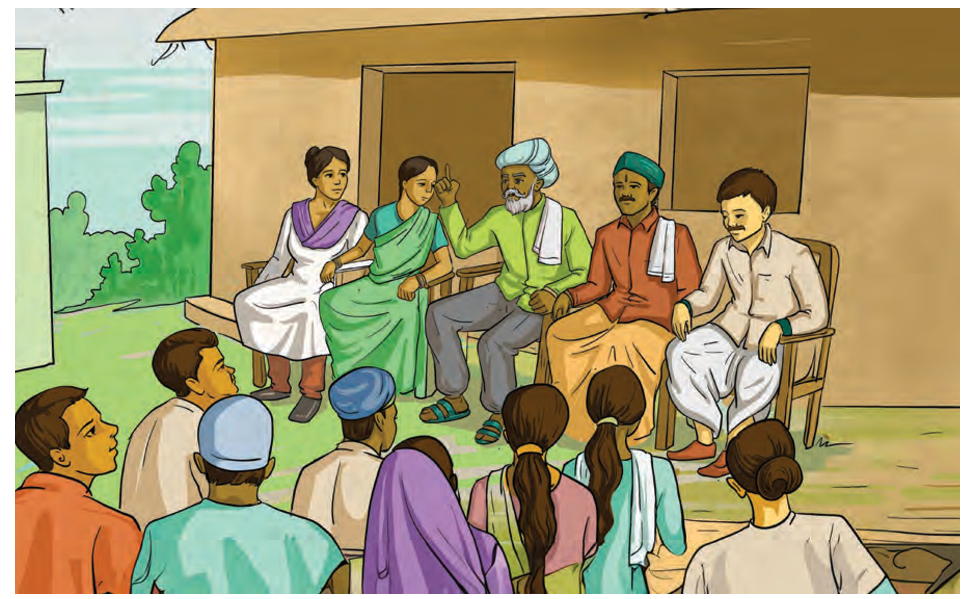
- Gram Sabha’s role: Women and men discuss local matters and take decisions.
- Sarpanch: The Gram Panchayat elects its head, called the Sarpanch or Pradhan.
- Women’s leadership: More women have become Sarpanchs in recent years.
Exemplary Sarpanchs
Leadership and village development
- Dnyaneshwar Kamble: A transgender person elected Sarpanch of Tarangfal village, Solapur district, Maharashtra. His motto, *lok seva, gram seva*, means “Service to the village is service to the public.”
- Vandana Bahadur Maida: A Bhil woman who became the first female Sarpanch of Khankhandvi village, Madhya Pradesh, challenging patriarchal norms.
- Vandana’s work: She encouraged women to attend Sabha meetings and addressed education and sanitation issues.
- Popatrao Baguji Pawar: As Sarpanch of Hiware Bazar, Maharashtra, he tackled drought and poor agricultural yields through rainwater harvesting, watershed conservation and large-scale tree planting.
- Hiware Bazar’s change: Villagers’ collaboration helped recharge groundwater and transform the village into a green, prosperous place. Pawar received the Padma Shri in 2020.
Key dates
- 2017Dnyaneshwar Kamble was elected Sarpanch of Tarangfal village.
- 2020Popatrao Baguji Pawar received the Padma Shri.
Support for the Gram Panchayat
| Role | Main responsibility |
|---|---|
| Panchayat Secretary | Performs administrative work, such as calling meetings and maintaining records. |
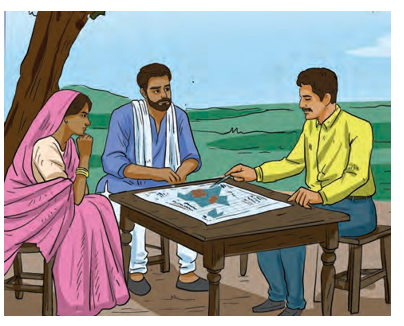
| Patwari | In many parts of India, maintains villagers’ land records and may keep very old maps. |
- Gram Sabha
- Assembly of adult village voters that discusses local matters and takes decisions.
- Gram Panchayat
- Elected local government body serving rural communities.
- Sarpanch (Pradhan)
- Head of the Gram Panchayat.
- Patwari
- Official who maintains villagers’ land records in many parts of India.
Quick recap
- The Gram Sabha includes adult residents enrolled as voters.
- Gram Sabha members elect Gram Panchayat members directly and discuss village matters.
- The Gram Panchayat elects a head called the Sarpanch or Pradhan.
- Sarpanchs can lead social change and local development, as shown by Kamble, Maida and Pawar.
- The Panchayat Secretary handles administration; the Patwari maintains land records and may keep old maps.
Child-friendly Panchayat Initiative & Panchayat Samiti and Zila Parishad
Child-Friendly Panchayat Initiative
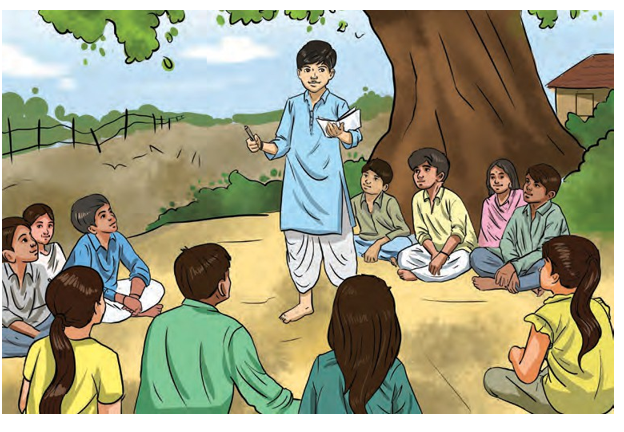
Children’s Parliament: how it worked
- Learning democracy: Night schools and parliament-like elections taught children about democracy and social responsibility.
- Formal procedures: The Parliament used voter ID cards and campaigning; elected representatives formed a Cabinet.
- Community role: The Cabinet oversaw school management and advocated for community needs, including education, sanitation and social equality.
- Impact: Participation developed leadership and social awareness and helped children challenge social norms and advocate for change.
Recognition of the Children’s Parliament
- 2001The Children’s Parliament received the World’s Children’s Honorary Award.
Panchayat Samiti and Zila Parishad
How block-level coordination supports development
- Gram Panchayats prepare development plans.
- The Panchayat Samiti collects and coordinates plans from Gram Panchayats across the block.
- It presents the combined plans at district or State level.
- This helps arrange funds for development projects and government schemes.
Development schemes and representation
- Example: The Pradhan Mantri Gram Sadak Yojana promotes the construction of all-weather roads in rural areas.
- Disadvantaged sections: Special rules at all three levels help ensure their needs and problems are heard.
- Women’s representation: One-third of the seats are reserved for women.
A Historical Example of Rural Administration
| Unit | Villages covered |
|---|---|
| Sangrahaṇa (sub-district headquarters) | 10 |
| Kārvatika (district headquarters) | 100 |
| Droṇamukha | 400 |
| Sthānīya (provincial headquarters) | 800 |
Purpose and Principles of Panchayati Raj
- Bal Panchayat
- A children’s group that provides a way to participate and raise concerns.
- Panchayat Samiti
- The block-level institution linking Gram Panchayats with the Zila Parishad.
- Zila Parishad
- The rural local-government institution at district level.
- Self-governance
- The ability of local people to manage local issues and take part in development.
How did the Children’s Parliament encourage children’s democratic participation?
How does the Panchayat Samiti support development across a block?
How do Panchayati Raj institutions support inclusion?
Quick recap
- Child-friendly Panchayats create opportunities for children to raise concerns through Bal Sabhas and Bal Panchayats.
- Maharashtra Bal Panchayats addressed child labour and child marriage; a Sikkim Panchayat improved school safety and meal facilities.
- The Children’s Parliament, an offshoot of Bunker Roy’s Barefoot College initiative, involved rural children aged 8–14 in democratic participation and received an award in 2001.
- Rural local government has three tiers: Gram Panchayat, Panchayat Samiti and Zila Parishad.
- The Panchayat Samiti coordinates development plans across Gram Panchayats and helps seek funds for projects and schemes.
- Panchayati Raj supports local self-governance through direct participation and elected representatives; one-third of seats are reserved for women.
Social Science — ALL CHAPTERS
1
LOCATING PLACES ON THE EARTH
2
Oceans and Continents
3
LANDFORMS AND LIFE
4
TIMELINE AND SOURCES OF HISTORY
5
INDIA, THAT IS BHARAT
6
THE BEGINNINGS OF INDIAN CIVILISATION
7
INDIA’S CULTURAL ROOTS
8
UNITY IN DIVERSITY, OR MANY IN THE ONE
9
FAMILY AND COMMUNITY
10
GRASSROOTS DEMOCRACY – PART 1 GOVERNANCE
11
GRASSROOTS DEMOCRACY – PART 2 LOCAL GOVERNMENT IN RURAL AREAS
12
GRASSROOTS DEMOCRACY – PART 3 LOCAL GOVERNMENT IN URBAN AREAS
13
THE VALUE OF WORK
14
ECONOMIC ACTIVITIES AROUND US