Class 6 . Social Science . Exploring Society India And Beyond . Unity in Diversity or Many in the One
Chapter 8: UNITY IN DIVERSITY, OR MANY IN THE ONE
Ch 8
Social Science
Class 6
A Rich Diversity and Food for All
Unity in Diversity: The Many in the One
The chapter’s central idea
- Rabindranath Tagore: His idea of the “one in the play of the many” expresses finding shared unity among many different people and ways of life.
- Sri Aurobindo: He viewed unity in diversity as fundamental to India’s nature (*Swabhava*) and duty (*Swadharma*).
A Rich Diversity
India’s diversity — The many differences in people’s languages, scripts, food, dress, customs and traditions across India.
What makes India diverse?
- Everyday differences: Travelling across India, people encounter changing landscapes, clothing, food, languages and scripts.
- Within regions: People may follow different customs and traditions, including those brought from other parts of India.
- Population: India has over 1.4 billion inhabitants—about 18% of the world’s population.
Survey of India’s communities
- Late 20th centuryThe Anthropological Survey of India’s People of India project surveyed 4,635 communities across the country’s States.
What the survey recorded
- Languages and scripts: It counted 325 languages written using 25 scripts.
- Migration: Many Indians live away from their birthplace or original community and may therefore be described as migrants.
Unity in diversity — The coexistence of many differences within a shared larger whole—the many within the one.
Understanding unity in diversity
- The challenge: India’s many differences can seem bewildering, making it difficult to describe the country as one whole.
- The idea: Diversity does not prevent unity; different communities and ways of life belong to a shared India.
- Vincent Smith’s observation: He argued that India’s unity in diversity helps make it possible to write a history of the country.
Food for All
Shared ingredients, varied dishes
- Food diversity: India has thousands of dishes and preparations, with recipes varying by region and community.
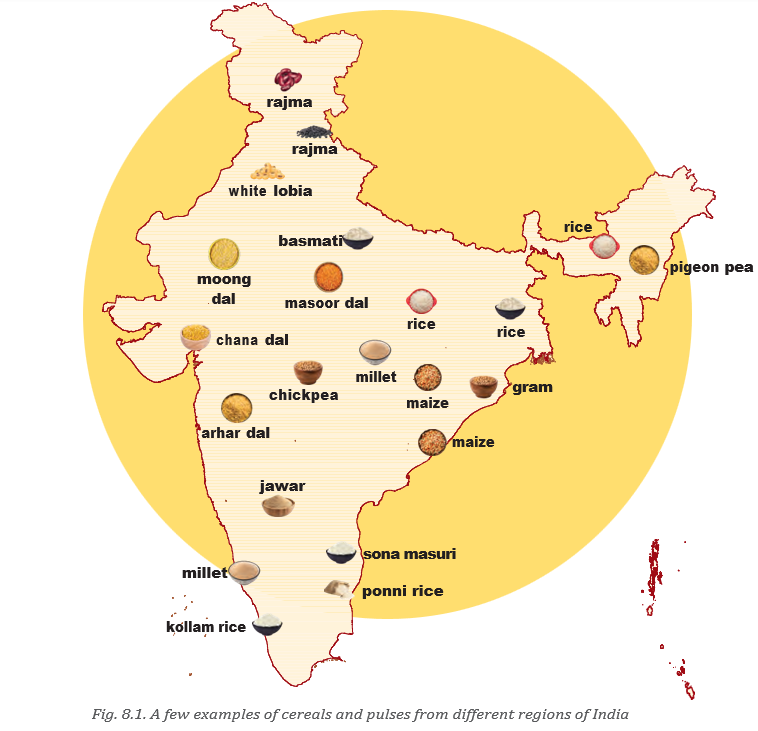
- Common ingredients: Many regions use similar grains, pulses, spices, vegetables and oils.
- Unity and diversity: Shared ingredients can be combined in different ways to create a wide variety of dishes.
| Group | Examples |
|---|---|
| Cereals | Rice, barley and wheat |
| Millets | Pearl millet (bajra), sorghum (jowar) and finger millet (ragi) |
| Pulses | Different kinds of dals and grams |
| Spices | Turmeric, cumin, cardamom and ginger |
Staple grains — Basic food grains that form an important part of the diet of most people.
- Diversity
- The presence of differences among people, communities and ways of life.
- Unity in diversity
- A shared whole that includes many different people and traditions.
- Migrant
- A person living away from their birthplace or original community.
- Staple grains
- Basic grains that are a regular food for most people.
How do common ingredients show unity in India’s diverse food culture?
Quick recap
- India’s diversity can be seen in its languages, scripts, food, dress and traditions.
- Tagore’s “one in the play of the many” and Aurobindo’s *Swabhava* and *Swadharma* highlight unity in diversity as central to India.
- The People of India project surveyed 4,635 communities in the late 20th century.
- The survey recorded 325 languages using 25 scripts.
- Unity in diversity means that differences exist within a shared whole.
- Staple grains include cereals, millets and pulses; common ingredients are combined into many regional dishes.
Textiles and Clothing
The Sari: Unity and Diversity
Textile Traditions and Trade
Textiles in Time
- A few centuries BCEA stone relief from Vaiśhali depicts the sari.
- 17th centuryIndian printed cotton chintz became popular in Europe.
Chintz and European Import Bans
- Indian printed cotton chintz became popular in Europe.
- Sales of some European dresses dropped sharply.
- England and France banned chintz imports to protect their own products.
Ways of Wearing and Using Cloth
Relief — A relief is a design that stands out from the surface of a panel made of stone, wood, ceramic or another material.
- Sari
- An unstitched length of cloth worn as clothing.
- Chintz
- A printed cotton textile from India that became popular in 17th-century Europe.
- Weaving
- Making cloth by interlacing threads; designs can be woven into the fabric.
- Relief
- A design that stands out from a surface.
How does the sari show both unity and diversity in India?
Why did England and France ban imports of Indian chintz?
Quick recap
- The sari is an unstitched garment worn in most parts of India.
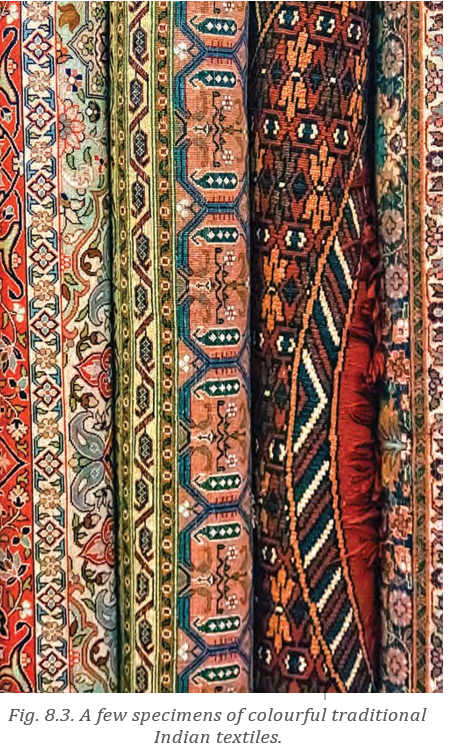
- Saris share a common identity but vary in fabrics, designs, colours and draping styles.
- Sari designs may be woven into cloth or printed after weaving; pigments create varied colours.
- India’s long textile tradition included producing fine cotton and exporting textiles to Europe.
- Indian chintz became popular in 17th-century Europe, and England and France later banned its import to protect local products.
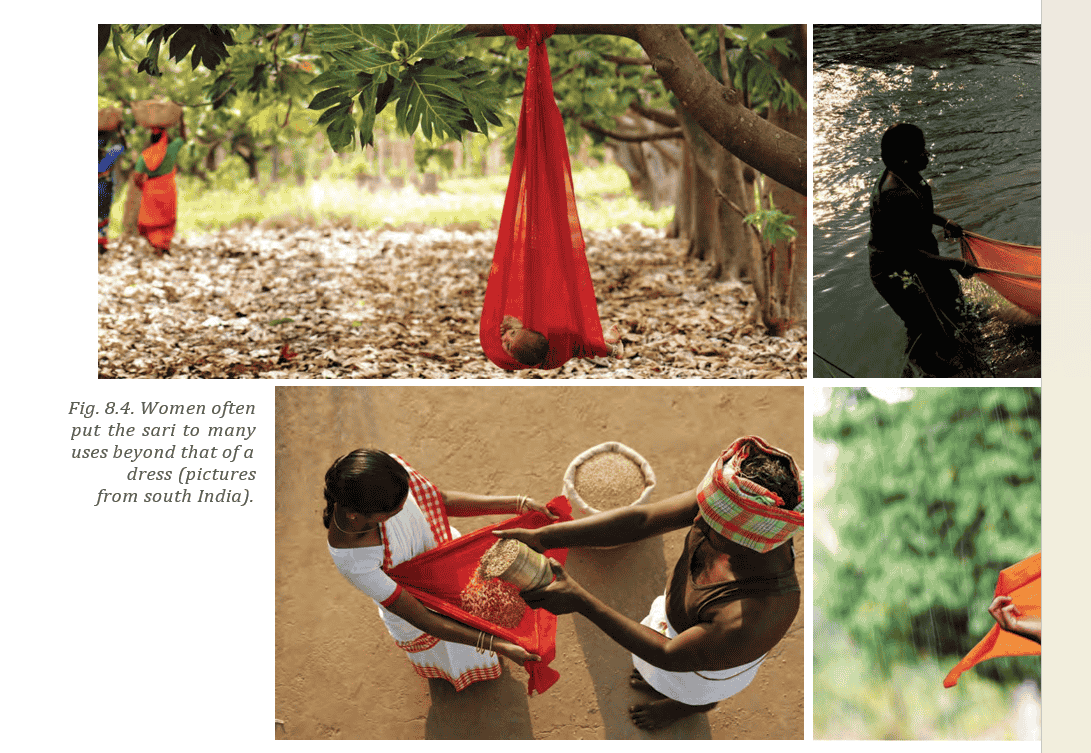
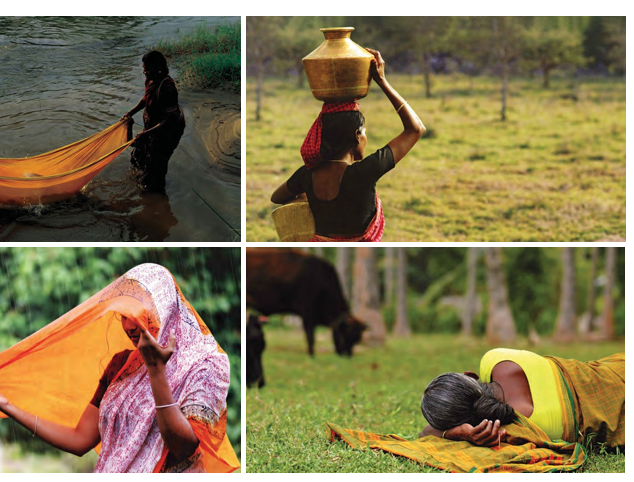
- The sari is valued for its simplicity and economy, and it can be used beyond clothing.
Festivals Galore and an Epic Spread
Festivals Galore
Shared festival seasons, different regional names
- Festival diversity: India has immense variety in festivals; some common festivals are celebrated across regions at about the same time, with different names.
- Makara Sankrānti: In many parts of India, it marks the beginning of the harvest season on or around January 14.
- October–November: Many major festivals take place across India during this period.
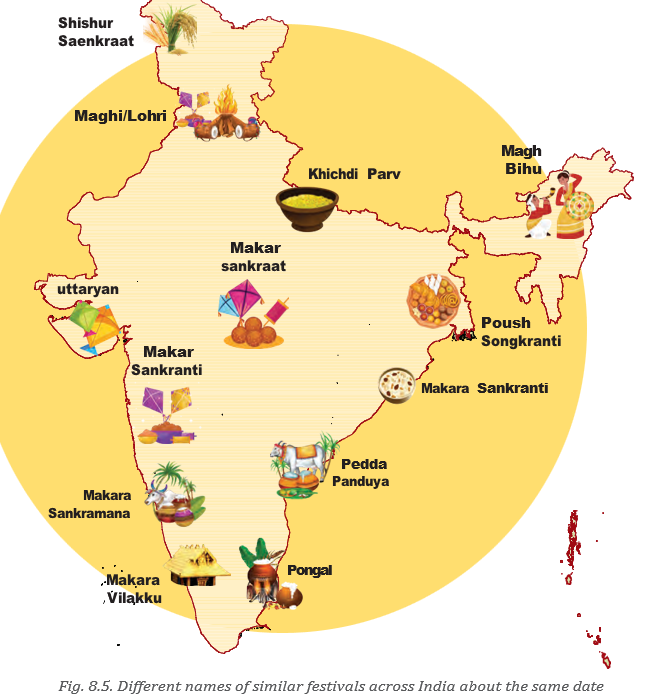
Festival periods mentioned
- Around January 14Makara Sankrānti marks the beginning of the harvest season in many parts of India.
- October–NovemberMany major festivals take place across India.
An Epic Spread
Indian literature: diversity and shared concerns
- Literary diversity: Indian literatures are extremely diverse and among the most abundant in the world.
- Shared themes: Over centuries, literatures across languages and techniques have shared important themes and concerns.
Adaptation — A retelling or reshaping of a story in a different language, community or literary form.
The Pañchatantra: one collection, many retellings
- Pañchatantra: A collection of stories with animals as main characters; the stories teach important life skills.
- Origins and reach: Its original Sanskrit text is at least 2,200 years old. The stories spread into Indian languages and to Southeast Asia, the Arab world and Europe.
- Many versions: An estimated 200 adaptations exist in more than 50 languages.
How one story collection became many
- Original Sanskrit stories
- Translations and adaptations in many languages
- Retellings spread across India and beyond, inspiring new story collections
The Rāmāyaṇa and the Mahābhārata
- Form and theme: These long Sanskrit poems together might fill about 7,000 pages in their original versions; they tell of heroes who fight to re-establish dharma.
- Mahābhārata: The Pāṇḍavas, helped by Kṛiṣhṇa, fight their cousins, the Kauravas, to recover their kingdom.
- Rāmāyaṇa: Rāma, aided by his brother Lakṣhmaṇa and Hanuman, defeats Rāvaṇa, who had kidnapped Sītā.
- Values: Both epics contain shorter stories about values and raise questions about what is right and wrong.
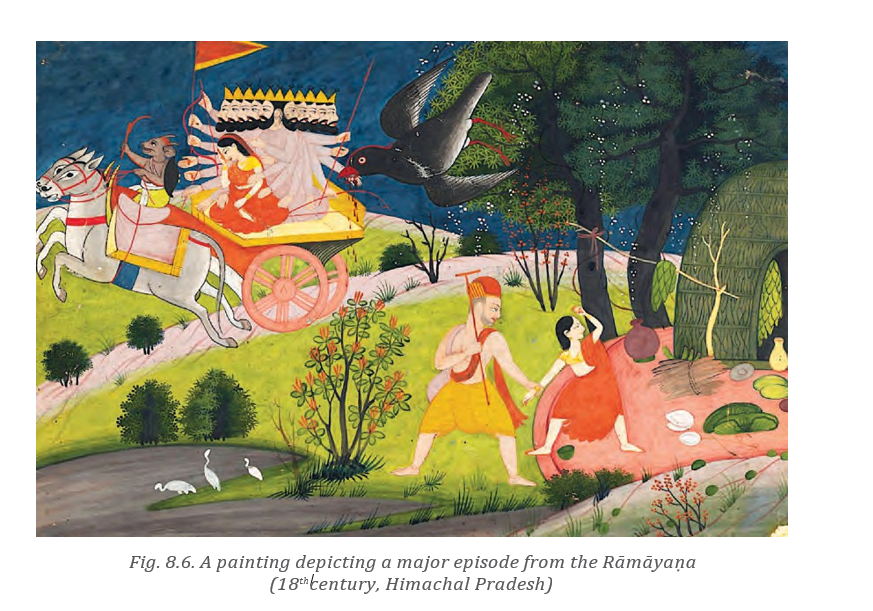
The long spread of the epics
- For more than two millenniaThe Rāmāyaṇa and Mahābhārata have been translated and adapted in regional literatures in India and beyond.
- 18th centuryThe Himachal Pradesh painting shown in the lecture depicts an episode from the Rāmāyaṇa.
Regional, folk and tribal versions
- Folk versions: Both epics have countless folk retellings; a survey in Tamil Nadu counted about 100 folklore versions of the Mahābhārata.
- Community traditions: Many communities have their own versions and legends connecting their history with the epics.
- Examples: Such traditions are found among the Bhils, Gonds and Mundas, and communities in Northeast India and the Himalayan regions, including Kashmir.
- Oral transmission: Tribal adaptations and local legends are passed down orally, including stories of epic heroes visiting community regions.
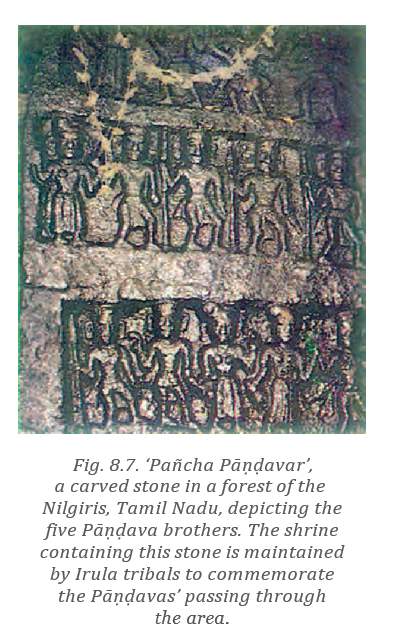
Epic traditions connect communities
- Local figures: Tribal accounts may include the Pāṇḍavas, Draupadī, or sometimes Duryodhana, their cousin and adversary.
- K.S. Singh: The anthropologist who directed the People of India project noted that folklores place the Pāṇḍavas in hardly any place in the country without a visit.
- Cultural connections: Over centuries, the epics created a dense web of cultural interactions across India and many parts of Asia.
How epic traditions express unity in diversity
- Shared epics and themes
- Translations, regional adaptations and oral retellings
- Communities connect the stories with their own places and histories
- Many local forms create cultural links across India and Asia
Unity enriches diversity
- Many forms of culture: India’s diversity is seen in its landscapes, people, languages, clothes, food, festivals and customs.
- Underlying unity: Indian culture celebrates diversity as an enrichment while retaining a shared unity.
- Dharma
- The righteous order the epic heroes seek to re-establish.
- Folk version
- A story form preserved and retold through community traditions.
- Oral transmission
- Passing stories and knowledge from person to person by speaking.
- Unity in diversity
- Different cultural forms sharing connections and common themes.
How do the Rāmāyaṇa and Mahābhārata illustrate unity in diversity?
Give two examples of how the epics became part of community traditions.
What does Makara Sankrānti illustrate about festivals in India?
Quick recap
- Some festivals are celebrated across India around the same time but have different regional names.
- Makara Sankrānti marks the start of the harvest season in many places around January 14.
- Indian literatures are diverse, yet have shared important themes and concerns over centuries.
- The Pañchatantra spread from Sanskrit into many languages and inspired numerous adaptations.
- The Rāmāyaṇa and Mahābhārata have many regional, folk and oral versions that connect communities.
- India’s diversity enriches its culture while an underlying unity remains.
Social Science — ALL CHAPTERS
1
LOCATING PLACES ON THE EARTH
2
Oceans and Continents
3
LANDFORMS AND LIFE
4
TIMELINE AND SOURCES OF HISTORY
5
INDIA, THAT IS BHARAT
6
THE BEGINNINGS OF INDIAN CIVILISATION
7
INDIA’S CULTURAL ROOTS
8
UNITY IN DIVERSITY, OR MANY IN THE ONE
9
FAMILY AND COMMUNITY
10
GRASSROOTS DEMOCRACY – PART 1 GOVERNANCE
11
GRASSROOTS DEMOCRACY – PART 2 LOCAL GOVERNMENT IN RURAL AREAS
12
GRASSROOTS DEMOCRACY – PART 3 LOCAL GOVERNMENT IN URBAN AREAS
13
THE VALUE OF WORK
14
ECONOMIC ACTIVITIES AROUND US