Class 6 . Social Science . Exploring Society India And Beyond . The Value of Work
Chapter 13: THE VALUE OF WORK
Ch 13
Social Science
Class 6
Introduction Economic - Non-economic Activities
How Work Is Classified
| Point | Economic | Non-economic |
|---|---|---|
| Meaning | Involves money or money’s worth for the people involved. | Does not generate income or wealth; often done out of love, care, gratitude or respect. |
| Examples | Selling goods or farm produce, paid legal services, transporting goods, factory work and salaried jobs. | Cooking for family, helping children with schoolwork, caring for grandparents, helping renovate a family home and volunteering. |
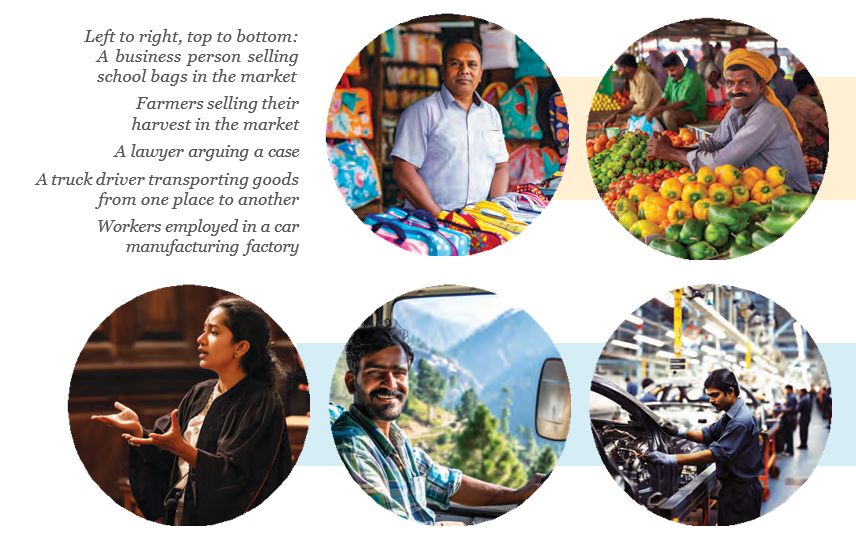

- Money’s worth
- The monetary value a person places on an object based on the benefit they receive from it.
- Market
- A place where people exchange goods and services, usually for money.
- Fee
- Payment for professional advice or services, such as a doctor’s or lawyer’s services.
- Salary
- A fixed, regular payment, generally made monthly by an employer to an employee.
| Situation | Classification | Reason |
|---|---|---|
| Geeta Aunty works as an Air Force pilot and receives a salary. | Economic | She is paid for her work while also serving the country. |
| Rohan works for a software company and receives a salary. | Economic | His work is paid. |
| Rohan volunteers to teach computer skills at a youth development programme. | Non-economic | He teaches voluntarily without payment. |
| Kabir’s grandfather teaches neighbourhood children for free. | Non-economic | The teaching is voluntary and unpaid. |
| A teacher teaches at school as a paid job. | Economic | The teacher receives payment for the work. |
Do not classify work by its kind or importance alone. Similar work, such as teaching, can be economic when paid and non-economic when done voluntarily without payment.
How do economic and non-economic work differ?
Why is Rohan’s company work economic while his weekend teaching is non-economic?
Quick recap
- Economic work involves money or money’s worth; examples include selling goods, farming and salaried jobs.
- Non-economic work does not generate income or wealth and is often motivated by love, care, gratitude or respect.
- Markets are places where goods and services are exchanged, usually for money.
- A fee pays for professional advice or services; a salary is a fixed, regular payment from an employer.
- The same kind of work can be economic when paid and non-economic when done voluntarily for free.
Types of Economic Activities
Work and Different Forms of Payment
Examples of Work and Payment
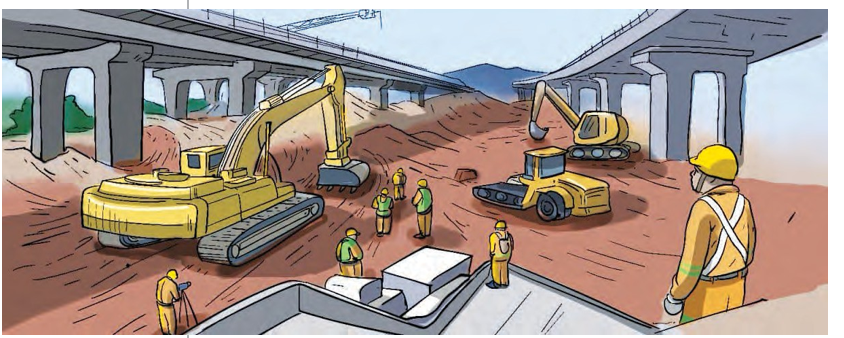
- Construction technician: Kavya’s uncle operates a bulldozer and receives a monthly salary.
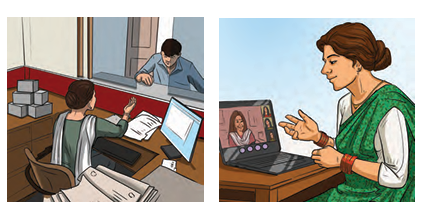
- Post-office worker: Kavya’s aunt receives a monthly salary for her job.
- Online teacher: The aunt also teaches exam classes and charges a weekly fee.
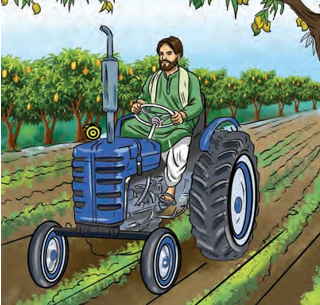
- Farm labourer: Sahil tills land using a tractor and earns a daily wage; part of his pay is cash and part is mangoes.
Wage — A payment made by an employer to a worker for a specific period of work.
Payment in kind — A non-cash payment received for work performed, such as mangoes given as part of Sahil’s pay.
| Payment form | Example |
|---|---|
| Monthly salary | Construction technician or post-office worker |
| Weekly fee | Online exam classes |
| Daily wage | Farm labourer |
| Payment in kind | Mangoes received for farm work |
Economic Activities and Value Addition
Economic activity — An activity that has value in terms of money and involves payment.
Value addition — The monetary value created when work transforms something into another or more useful form.
Recognising Economic Activity
- Paid work: Making goods or providing services for payment are economic activities.
- Value at each stage: Work can add monetary value as materials are transformed and goods are sold.
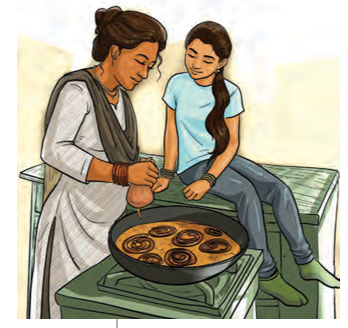
- Unpaid household work: Cooking for one’s family or caring for a relative is valuable work, but these examples do not involve direct payment.
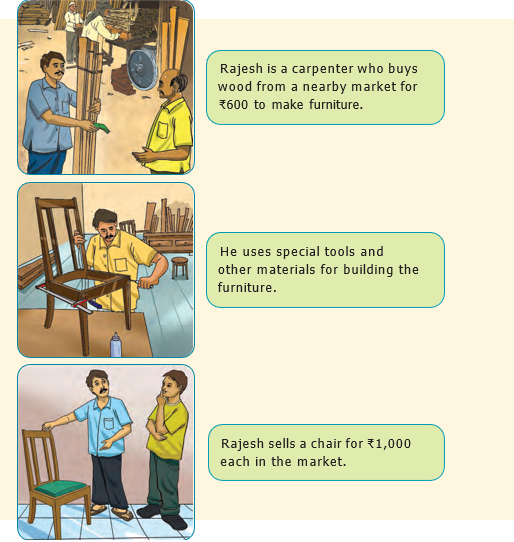
The Carpenter’s Value Addition
- Rajesh buys wood for Rs. 600.
- He uses his skill, time and effort to make a chair.
- The chair sells for Rs. 1,000, so Rs. 400 is the additional monetary value.
Selling price minus cost of wood.
How the Highway Affects Travel
- A highway is built near Kamlapur.
- Travel to the nearest town becomes quicker.
- Travel time falls from five hours to two hours.
- Kavya can visit her aunt more often.
- Economic activity
- An activity with monetary value that involves payment.
- Value addition
- The increase in value created by transforming something through work.
- Wage
- Payment from an employer to a worker for a specific period of work.
- Payment in kind
- Non-cash payment for work, such as goods or produce.
What is value addition? Explain it using Rajesh’s chair.
What is payment in kind?
Quick recap
- Economic activities have monetary value and involve payment.
- People may receive a salary, fee, wage or payment in kind.
- Payment in kind is non-cash payment for work.
- Value addition is the monetary value created by transforming something through work.
- Rajesh adds Rs. 400 in value by making a chair from wood costing Rs. 600 and selling it for Rs. 1,000.
- Cooking for family and caring for a relative are valuable forms of work but do not involve direct payment in these examples.
The Importance of Non-economic Activities
Value of Non-Economic Activities
- Non-economic activities: Activities that may not involve money but create value in people’s lives.
- Importance: They contribute to social welfare, personal wellbeing and overall quality of life.
Sevā: Selfless Service
Sevā — Selfless service performed for others without expecting anything in return.
How Sevā Creates Value
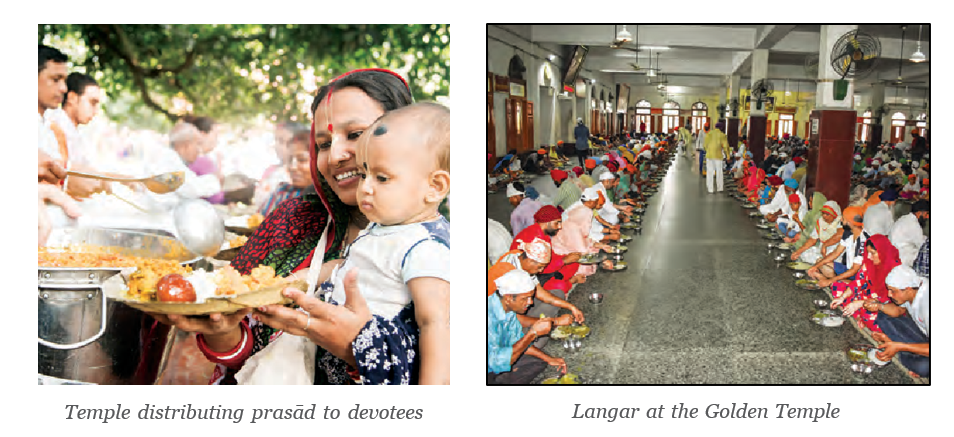
- Where it happens: Sevā is practised in places of worship, including temples, gurudwaras, mosques and churches.
- Example: Gurudwara langars (community kitchens) provide free food to every visitor.
- Value: Selfless service can foster satisfaction and gratitude, while contributing to society without seeking payment or reward.
The Strength of Community Participation
Collective Efforts for Cleanliness
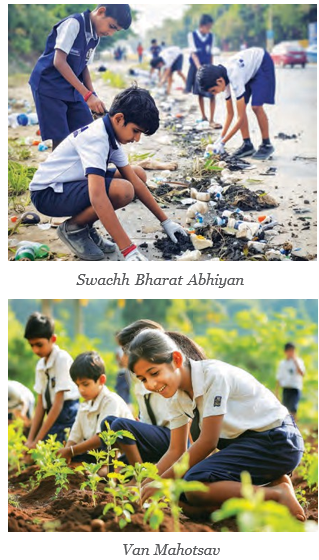
- Swachh Bharat Abhiyan: This initiative relies on the collective efforts of Indian citizens to keep their surroundings clean.
- Individual action: People keep their homes and nearby surroundings clean.
- Community action: People join together to clean streets, roads, parks and other public or community spaces.
- Combined result: Individual and collective efforts help create cleaner homes, neighbourhoods, societies and the nation.
Van Mahotsav and Community Participation
- Van Mahotsav: The festival of forests promotes awareness of the value of trees and the conservation of forests.
- Community participation: Community members come together for tree-plantation drives.
- Festival cooperation: People also organise festival activities, decorate places together and share food they have prepared; these acts of participation and sharing create social value.
- Non-economic activities can support social welfare and personal wellbeing without involving payment.
- Their value can improve people’s overall quality of life.
Quick recap
- Non-economic activities may not involve money, yet they create value in people’s lives.
- Sevā is selfless service, such as serving free food in a gurudwara langar.
- Swachh Bharat Abhiyan brings individual and collective efforts together to improve cleanliness.
- Van Mahotsav encourages awareness of trees and forest conservation through community tree planting.
- Festival activities such as organising, decorating and sharing food create social value.
- Non-economic activities support social welfare, personal wellbeing and quality of life.
Social Science — ALL CHAPTERS
1
LOCATING PLACES ON THE EARTH
2
Oceans and Continents
3
LANDFORMS AND LIFE
4
TIMELINE AND SOURCES OF HISTORY
5
INDIA, THAT IS BHARAT
6
THE BEGINNINGS OF INDIAN CIVILISATION
7
INDIA’S CULTURAL ROOTS
8
UNITY IN DIVERSITY, OR MANY IN THE ONE
9
FAMILY AND COMMUNITY
10
GRASSROOTS DEMOCRACY – PART 1 GOVERNANCE
11
GRASSROOTS DEMOCRACY – PART 2 LOCAL GOVERNMENT IN RURAL AREAS
12
GRASSROOTS DEMOCRACY – PART 3 LOCAL GOVERNMENT IN URBAN AREAS
13
THE VALUE OF WORK
14
ECONOMIC ACTIVITIES AROUND US