Class 11 Humanities . Political Science . Political Theory . Citizenship
Chapter 6: CITIZENSHIP
Ch 6
Political Science
Class 11 Humanities
Introduction
Meaning and Rights of Citizenship
Citizenship — Full and equal membership in a political community, usually a state.
- Political identity: States give members a shared identity, such as Indian, Japanese or German.
- State relationship: Citizens can expect rights, help and protection from their state, including when travelling.
- Equal status: Equality of rights and status is a basic principle of citizenship.
| Right type | Examples |
|---|---|
| Political rights | Right to vote and participate in political life |
| Civil rights | Freedom of speech and belief |
| Socio-economic rights | Right to education and a minimum wage |
Why Full Membership Matters
- Refugees and illegal migrants: Without membership of a state, people may lack guaranteed rights and live in precarious conditions.
- Example: Palestinian refugees have struggled for full membership and a secure political community.
- Unequal citizenship: A group denied equal rights does not enjoy full and equal membership.
Citizenship Is Won Through Struggle
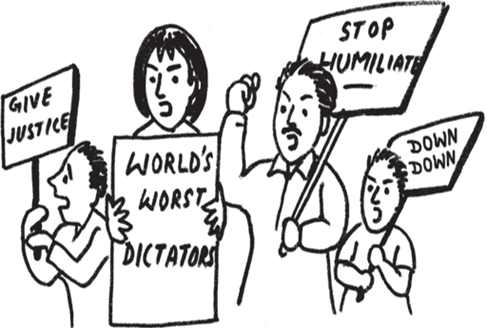
- Against monarchies: People struggled to assert independence and rights against powerful monarchies; some struggles were violent.
- French Revolution: The revolution of 1789 was one such struggle for rights.
- Anti-colonial struggles: In Asia and Africa, demands for equal citizenship formed part of the fight for independence from colonial rule.
- South Africa: The black population struggled against the ruling white minority for equal citizenship until the early 1990s.
- Continuing movements: Women’s and Dalit movements seek to change public opinion and influence government policy to secure equal rights and opportunities.
Citizens’ Obligations and Shared Life
- Beyond the state: Citizenship also shapes relations among citizens and their responsibilities to one another and society.
- Legal and moral duties: Citizens must follow legal obligations and have a moral responsibility to participate in and contribute to community life.
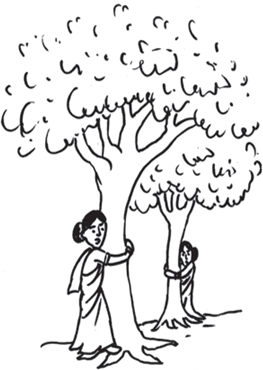
- Shared inheritance: Citizens are inheritors and trustees of their country’s culture and natural resources.
Testing the Meaning of Equal Membership
South Africa under White Rule
- Whites: Had the right to vote, contest elections, elect the government, buy property and move freely around the country.
- Black people: Were denied these rights and were placed in separate colonies and schools.
- Restrictions: Black people needed passes to work in white neighbourhoods and could not keep their families in white areas.
- Conclusion: These unequal rights and restrictions meant that black people did not have full and equal membership.
Full and Equal Membership Within a Country
- Insiders and outsiders: Competition for limited space or services can lead people to exclude those they see as outsiders.
- Scarce resources: When jobs, education, medical care, land or water are limited, people may demand that access be restricted.
- Example: The slogan “Mumbai for Mumbaikars” expresses a demand to favour local residents.
- Central question: Does equal membership guarantee every citizen equal rights and opportunities to live, study and work anywhere in the country?
Freedom of Movement and Work
Freedom of movement — A citizen’s right to move within the country; it is especially important for people who migrate to find work.
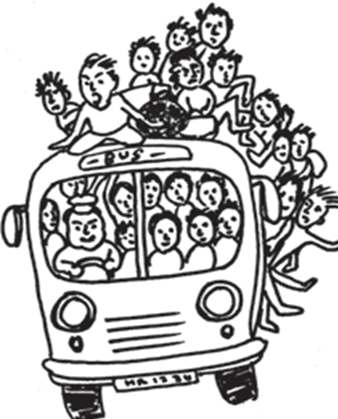
- Work-related migration: Workers move when local job opportunities are limited; skilled and unskilled workers find jobs in different regions.
- Examples: IT workers may move to Bangalore; nurses from Kerala and workers in construction, road-making and infrastructure projects work across regions.
- Local resistance: Residents may object when migrants compete for scarce jobs, sometimes at lower wages; demands may arise to reserve jobs for locals or local-language speakers.
- Possible consequences: Political parties may take up the issue, and opposition can become organised violence against outsiders.
- Unequal welcome: Skilled or affluent migrants may be welcomed more readily than poor and unskilled migrants, raising questions about equal rights.
| Issue | Key question |
|---|---|
| Movement and work | Does freedom of movement include the right to live and work anywhere in the country? |
| Local preference | Should long-term residents receive preference for jobs and facilities? |
| Equal treatment | Should poor and unskilled workers have the same right to migrate as skilled workers? |
| Education | Should states set college-admission quotas for students from outside the state? |
Resolving Disputes in a Democracy
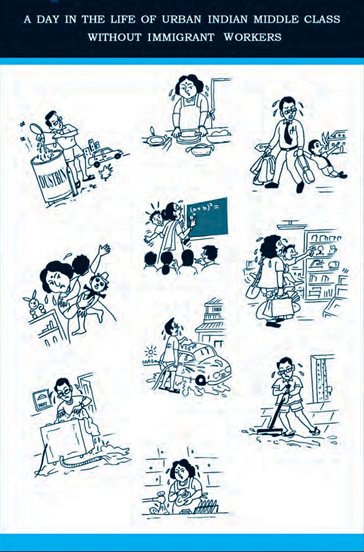
- Right to protest: The Constitution guarantees citizens the right to protest as an aspect of freedom of expression, provided protest does not harm people’s lives or damage property belonging to others or the State.
- Ways to influence decisions: Citizens can form groups, hold demonstrations, use the media, appeal to political parties or approach the courts.
- Role of courts and government: Courts may decide an issue or urge the government to address it; change can take time.
- Democratic principle: Disputes should be settled through negotiation and discussion rather than force, while upholding full and equal membership.
- Civic obligation: Using peaceful, democratic means to address shared problems is part of responsible citizenship.
Martin Luther King Jr. and Civil Rights
- Civil Rights Movements: In the 1950s, movements opposed inequalities between black and white populations in several southern US states.
- Segregation Laws: These laws denied black people civil and political rights and separated facilities such as railways, buses, theatres, housing, hotels and restaurants.
- Equality and dignity: Martin Luther King Jr. argued that all people are equal in self-worth and dignity, regardless of race or colour.
- Psychological harm: He called segregation “social leprosy” because it inflicted deep psychological wounds on those subjected to it.
- Harm to the wider community: Segregation also reduced white people’s quality of life; parks were closed rather than shared, and some baseball teams were disbanded rather than include black players.
- Cooperation: Segregation created artificial divisions that prevented people from cooperating for the country’s benefit.
- Method of resistance: King called for peaceful, non-violent resistance and warned against allowing protest to become physical violence.
Key Dates and Periods
- 17th–20th centuryWhite Europeans established rule over black people in South Africa.
- 1789The French Revolution was one struggle for rights and independence from powerful monarchies.
- 1950sCivil Rights Movements emerged against racial inequalities in several southern US states.
- Early 1990sThe long struggle for equal citizenship by South Africa’s black population continued until this period.
- Until 1994Discriminatory practices against black people continued in South Africa.
- Political community
- A community organised under a political authority, such as a state.
- Segregation
- Enforced separation of people by race, accompanied by unequal rights and access.
- Migrant
- A person who moves to another place, often to find work.
- Freedom of expression
- The freedom to express views, including through peaceful protest.
Why did black people in South Africa lack full and equal membership?
How should disputes over jobs and migration be addressed in a democracy?
Give two arguments Martin Luther King Jr. used against segregation.
Quick recap
- Citizenship means full and equal membership in a political community and includes political, civil and socio-economic rights.
- Citizenship rights have often been won through struggle and are still demanded by social movements.
- Citizenship includes legal duties and moral responsibilities to contribute to community life and protect shared resources.
- Freedom of movement raises debates about migration, local preference and equal access to jobs and facilities.
- The Constitution guarantees the right to protest as an aspect of freedom of expression, subject to restrictions against harming lives or property.
- Democratic disputes should be addressed through peaceful protest, negotiation, discussion and lawful processes.
- Martin Luther King Jr. opposed segregation as unjust, harmful to human dignity and damaging to cooperation.
Equal Rights
Equal Citizenship and the Urban Poor
Equal citizenship — A guiding principle that all citizens should receive equal rights and protection; it does not necessarily require identical policies for everyone.
Urban poverty and citizenship
- Urban poor: Slum-dwellers and squatters often do essential, low-paid work but may be treated as outsiders and blamed for straining city resources or spreading crime and disease.
- Living conditions: Overcrowded housing, inadequate toilets, water and sanitation, and insecurity of life and property are common.
- Contribution: Residents work as hawkers, petty traders, scavengers, domestic workers, plumbers and mechanics; small businesses may include weaving, textile printing and tailoring.
- Unequal services: Cities may spend relatively little on water and sanitation for slum communities.
- Political participation: A fixed address may be needed for voter registration, making it difficult for squatters and pavement-dwellers to exercise the right to vote.
Policy recognition of street vendors
- January 2004A national policy on urban street vendors was framed to recognise and regulate vendors, helping them work without harassment if they followed government regulations.
- 2014The Street Vendors (Protection of Livelihood and Regulation of Street Vending) Act was passed.
Organising for rights
- Growing awareness: Governments, NGOs, other agencies and slum-dwellers have increasingly recognised the difficulties faced by the urban poor.
- Collective action: Slum-dwellers organise and sometimes approach courts to demand their rights.
Tribal People, Forest Dwellers and Conflicting Needs
- Dependence: Many tribal people and forest-dwellers rely on forests and other natural resources for their livelihood and way of life.
- Threats: Population pressure and demand for land and resources can disrupt their lives; mining, commercial interests and tourism can also threaten forests and coasts.
- Policy challenge: Governments must protect communities and their habitats while also addressing the country's development needs.
- Shared concern: Decisions about development and rights affect all citizens, not only tribal communities.
Equal Rights Do Not Always Mean Identical Policies
| Point | Uniform treatment | Substantive equality |
|---|---|---|
| Approach | Applies the same policy to everyone. | Accounts for different needs and claims when making policy. |
| Aim | Treats people identically, even when their circumstances differ. | Makes people more equal by responding to unequal needs. |
| Challenge | May overlook disadvantage or conflicts between groups' rights. | Requires balancing the rights and needs of different groups. |
Citizenship changes over time
- Changing circumstances: Changes in the world, economy and society create new questions about citizenship and rights.
- Evolving interpretation: Formal citizenship laws are a starting point; their meaning and interpretation continue to develop.
- Guiding principle: Equal rights and protection for every citizen should guide government policy.
T. H. Marshall: Citizenship, Equality and Rights
Citizenship (Marshall) — A status given to full members of a community, who are equal in the rights and duties attached to that status.
Equality in Marshall's idea
- Quality: The rights and duties attached to citizenship improve.
- Quantity: The number of people who receive those rights and duties grows.
- Social class: Class is a system of inequality; citizenship can counter divisions created by class hierarchy and help build a more integrated community.
| Type of right | What it protects or enables | Significance |
|---|---|---|
| Civil | The individual's life, liberty and property. | Protects personal freedom and security. |
| Political | Participation in governance. | Enables citizens to take part in political processes. |
| Social | Access to education and employment. | Helps citizens lead a life of dignity. |
Marshall and his work
- 1893–1981T. H. Marshall, the British sociologist, lived during this period.
- 1950Marshall's book Citizenship and Social Class was published.
Right to Livelihood: Olga Tellis Case
Supreme Court decision
- 1985The Supreme Court decided a Public Interest Litigation filed by social activist Olga Tellis against the Bombay Municipal Corporation.
Case and principle
- Petition: Pavement-dwellers argued that they needed to live near their work because no alternative accommodation was available; eviction could cost them their livelihoods.
- Article 21: The Supreme Court held that the constitutional right to life includes the right to livelihood.
- Shelter: The Court said pavement-dwellers should be provided alternative accommodation before eviction, linking the case to the right to shelter.
Application: Land Inequality in Zimbabwe
| Group | Land owned | Land quality |
|---|---|---|
| About 4,400 white families | 32% of agricultural land, about 10 million hectares | Fertile and irrigated |
| About one million Black peasant families | 38% of agricultural land, about 16 million hectares | Less fertile and unirrigated |
- Historical background: The lecture says fertile land had been taken from native people by white settlers about a century earlier; white people had since lived in Zimbabwe for generations.
- Population: White people made up about 0.06% of Zimbabwe's population.
- Policy dispute: In 1997, President Mugabe announced plans to take over about 1,500 farms. The case raises questions about historical injustice, equal citizenship and competing claims to land.
Zimbabwe land policy
- 1997President Mugabe announced plans to take over around 1,500 farms.
- Civil rights
- Rights protecting life, liberty and property.
- Political rights
- Rights enabling participation in governance.
- Social rights
- Rights providing access to education and employment.
- Public Interest Litigation (PIL)
- A court case brought to raise an issue affecting the public interest.
- Substantive equality
- Promoting real equality by taking different needs and circumstances into account.
What are the three kinds of rights in T. H. Marshall's idea of citizenship?
Why do equal rights not necessarily require identical policies for every group?
What did the Supreme Court recognise in the Olga Tellis case?
Quick recap
- Equal citizenship means equal rights and protection, but different needs may call for different policies.
- Urban poor communities contribute to city economies yet often face poor services, insecure housing and barriers to political participation.
- Tribal people and forest-dwellers face pressures from resource extraction, population growth and tourism; policy must balance protection and development.
- Marshall linked citizenship to equality and identified civil, political and social rights.
- The Olga Tellis decision connected Article 21's right to life with livelihood and shelter.
- Zimbabwe's land distribution example highlights how historical disadvantage and competing claims can challenge equal citizenship.
Citizen and Nation
Nation, State and National Identity
Nation-state — A modern state whose territory is associated with a shared national identity, culture and history.
National Identity
- Modern development: The nation-state evolved in the modern period; French revolutionaries made an early assertion of its sovereignty and citizens’ democratic rights.
- Symbols: National identity may be expressed through a flag, national anthem, language and ceremonial practices.
- Diversity: Modern states usually contain people of different religions, languages and cultural traditions.
- Democratic ideal: National identity should provide a shared political identity that enables all citizens to feel part of the nation.
- Unequal belonging: In practice, national identity may fit some citizens more easily than others and can affect who gains citizenship.
Early Assertion of Nation-State Rights
- 1789French revolutionaries asserted nation-state sovereignty and the democratic rights of citizens.
National Identity and Assimilation
Inclusion and Unequal Belonging
- Democratic aim: States generally seek an inclusive national identity that allows every citizen to identify with the nation.
- France: France presents itself as secular and inclusive, including citizens of European and other origins, but expects citizens to assimilate into its public culture and language.
- Private and public: Personal beliefs and practices may be retained privately, but the boundary between public and private life is not always clear.
- Religious symbols: Some French schools disallowed Sikh boys’ turbans and Muslim girls’ headscarves as religious symbols in public education.
- Unequal effect: Assimilation may be harder for groups whose religious practices require visible symbols than for groups without such practices.
Citizenship Criteria in Different Countries
- Different rules: Criteria for granting citizenship to new applicants vary from country to country.
- Israel and Germany: Religion or ethnic origin may be given priority in citizenship decisions.
- Germany: Turkish workers were once encouraged to work in Germany; a continuing demand is that their Germany-born and raised children receive citizenship automatically.
- Wider point: Even democratic countries that value inclusion may restrict citizenship or make it easier for some groups to qualify.
India’s Inclusive Nation-State
Partition and India’s Constitutional Commitment
- 1947Partition followed the failure to resolve differences with the Muslim League; Indian leaders remained committed to a secular and inclusive nation-state.
Constitutional Inclusion
- Independence movement: The broad-based movement sought to unite people across religions, regions and cultures.
- Constitutional aim: The Constitution sought to accommodate diversity without requiring people to give up their beliefs, languages or cultural practices.
- Equal citizenship: It aimed to include Scheduled Castes and Scheduled Tribes, women who had lacked equal rights, remote communities and others.
- Cultural diversity: The Constitution sought to make room for the different languages, religions and practices found across India.
- Symbol: The Republic Day parade in Delhi represents the state’s attempt to include people from different regions, cultures and religions.
| Aspect | Key points |
|---|---|
| Legal basis | Citizenship provisions are in Part Two of the Constitution and in later laws passed by Parliament. |
| Ways to acquire citizenship | Birth, descent, registration, naturalisation or inclusion of territory. |
| Non-discrimination | The state must not discriminate against citizens only on grounds of religion, race, caste, sex, place of birth or any of them. |
| Minority protection | The rights of religious and linguistic minorities are protected. |
| Rights and obligations | Citizens’ rights and obligations are listed in the Constitution. |
Citizenship as an Ongoing Democratic Project
- Continuing struggles: Women’s and Dalit movements, and people displaced by development projects, have challenged the denial of full citizenship rights.
- Changing demands: As society changes, marginalised groups raise new issues and demands.
- Democratic response: These claims must be negotiated; equal citizenship is an ideal that societies must keep working towards.
Universal Citizenship and Statelessness
Universal citizenship — The idea that full membership of a state should be available to everyone who ordinarily lives and works there, as well as to people who apply for citizenship.
Stateless people — People who cannot return to their home and are not accepted as citizens by any state.
Refugees and the Limits of National Citizenship
- State rules: Although many states support universal and inclusive citizenship in principle, each sets legal criteria and may use its power to keep unwanted visitors out.
- Displacement: War, persecution, famine and other crises can force people to leave their homes or countries; walls and restrictions do not stop all migration.
- Consequences: People without accepted citizenship may live in camps or as illegal migrants and may be unable to work legally, educate their children or own property.
- International assistance: The United Nations appointed a High Commissioner for Refugees to help address the problem.
- Difficult choice: States weigh humanitarian duties to people fleeing war or persecution against limits on the number they can absorb and security concerns.
India and Refuge
- 1959India provided refuge to the Dalai Lama and his followers.
The Refugee Challenge
- India’s experience: People have entered from neighbouring countries across India’s borders; some remain stateless for years or generations, while relatively few eventually gain citizenship.
- Wider impact: Conflict and political disputes can make people lose homes, political identities and security, forcing them to migrate.
- Unresolved issue: Many cannot gain citizenship in a state of their choice, raising the question of what alternative identity and protection they can receive.
Global Citizenship
Cross-Border Events
- 2004The South Asian tsunami prompted sympathy and assistance for victims across national borders.
Global citizenship — The idea that people are connected across national borders and should cooperate on shared concerns.
Why Global Citizenship Is Considered
- Interconnection: The internet, television and mobile phones spread news quickly and help build shared concerns and sympathy across countries.
- Cross-border issues: Terrorist networks and the risk of bird flu spreading into a human pandemic require cooperation across states.
- Emerging global society: Supporters see worldwide help for disaster victims as evidence that people already feel linked across national boundaries.
- Potential benefit: A global outlook may support cooperation on migration and statelessness and help secure basic rights regardless of where people live.
- Limits: National citizenship remains important because many inequalities can ultimately be addressed only by the people and governments of that society.
- Complementary roles: National membership provides essential rights; global awareness encourages cooperation among people and governments across borders.
How does the Indian Constitution seek to make citizenship inclusive?
What does universal citizenship propose, and why can it be difficult to achieve?
Why is global citizenship seen as useful, and why does national citizenship remain important?
Quick recap
- National identity links a state to shared symbols, culture and history, while democratic states aim to make it inclusive.
- Assimilation and citizenship rules can affect groups unequally, including religious minorities in France and applicants in countries such as Germany.
- India’s Constitution sought equal citizenship in a diverse society and protects against specified discrimination and for religious and linguistic minorities.
- Indian citizenship may be acquired by birth, descent, registration, naturalisation or inclusion of territory.
- Universal citizenship proposes full membership for those ordinarily living and working in a state, but national rules can leave refugees and other people stateless.
- Global citizenship encourages cross-border awareness and cooperation, while national citizenship remains essential.
Political Science — ALL CHAPTERS
1
Constitution: Why And How?
2
Rights In The Indian Constitution
3
Election And Representation
4
Executive
5
Legislature
6
Judiciary
7
Federalism
8
Local Governments
9
Constitution as A Living Document
10
The Philosophy Of The Constitution
1
INTRODUCTION TO POLITICAL THEORY
2
FREEDOM OVERVIEW
3
EQUALITY
4
SOCIAL JUSTICE
5
RIGHTS
6
CITIZENSHIP
7
NATIONALISM
8
SECULARISM