Class 11 Humanities . Political Science . India Constitution At Work . Local Governments
Chapter 8: Local Governments
Ch 8
Political Science
Class 11 Humanities
Why Local Governments ?
Meaning and Importance of Local Government
Local government — Government at the village and district levels, closest to people and their everyday concerns.
Why It Matters
- Local knowledge and interests: Understanding local needs helps make decisions relevant, efficient and people-friendly.
- Accessibility: People can approach nearby authorities to solve problems quickly and at lower cost.
- Effective action: Local governments can protect community interests and address everyday problems.
- Example—Jamonia Talab: Gram Panchayat Sarpanch Geeta Rathore helped bring about significant change through her active role.
- Example—Vengaivasal: The Gram Panchayat’s efforts helped the village retain its land and its right to decide how to use it.
Local Government and Democracy
- Meaningful democracy: Democracy requires both active participation and accountability.
- Participation: Citizens can help shape decisions about their lives, needs and development.
- Accountability: People can hold local representatives responsible for local decisions and actions.
- Familiarity: People are more familiar with local government than with State or national government.
- Direct impact: Local government’s work—or failure to act—directly affects daily life, so people are especially concerned with it.
- Local responsibility: Tasks that can be performed locally should be handled by local people and their representatives.
- Democratic strengthening: Strong local governments bring decisions closer to people and strengthen democratic processes.
Growth of Local Government in India
Key Developments
- Earliest timesVillage self-governing communities are believed to have existed as sabhas, or village assemblies.
- Over timeVillage assemblies developed into panchayats—assemblies of five people—that resolved village-level issues.
- After 1882On Viceroy Lord Ripon’s initiative, elected local bodies called local boards were created; progress was slow.
- After 1882The Indian National Congress urged the government to take steps to make local bodies more effective.
- Government of India Act 1919Village panchayats were established in a number of provinces.
- Government of India Act 1935The trend of establishing village panchayats continued.
Decentralisation in the National Movement
- Mahatma Gandhi: Strongly supported decentralising economic and political power and strengthening village panchayats.
- Development: Gandhi believed development initiatives needed local involvement to succeed.
- Democratic purpose: Panchayats were seen as instruments of decentralisation and participatory democracy.
- Independence: National movement leaders sought to reduce the concentration of decision-making, executive and administrative power at the centre.
Local Government in the Constitution
- State responsibility: The Constitution assigned local government to the States.
- Directive Principles: Local government was included among the policy directives to governments.
- Non-justiciable provision: As part of the Directive Principles of State Policy, it was advisory and could not be enforced by courts.
Why Local Government Received Limited Constitutional Emphasis
| Viewpoint | Support for local government | Concern |
|---|---|---|
| Constituent Assembly members | Many wanted Village Panchayats to form the basis of democracy in India; the importance of people’s participation in development planning was recognised. | Members were also concerned about factionalism and other problems in village society. |
| Constitutional context | Local government was recognised as a subject for policy direction. | Partition-related turmoil encouraged a strong unitary inclination in the Constitution. |
| Jawaharlal Nehru | — | He regarded extreme localism as a possible threat to national unity and integration. |
| Dr. B.R. Ambedkar | — | He feared factionalism and caste divisions in rural society could undermine village-level local government. |
Why Local Government Was Not Given Greater Constitutional Importance
- Partition-related turmoil → stronger unitary inclination in the Constitution.
- Concern about national unity → Nehru viewed extreme localism as a potential threat to integration.
- Rural factionalism and caste divisions → Ambedkar feared these could undermine village-level local government.
- Sabha
- A village assembly associated with early self-governing communities.
- Panchayat
- A village council; historically, the term referred to an assembly of five people.
- Decentralisation
- Distribution of decision-making and governing powers away from a central authority.
- Non-justiciable
- Not enforceable through courts.
Why are local governments important for democracy?
How did local government develop in India before and around independence?
Why did local government receive limited emphasis in the Constitution?
Quick recap
- Local government is closest to people and deals with village- and district-level needs.
- Local knowledge and interests support efficient, people-friendly administration and accessible solutions.
- People are more familiar with local government, whose actions directly affect their daily lives.
- Local government strengthens participation and accountability in democracy.
- India’s local bodies developed from sabhas to panchayats; elected local boards appeared after 1882.
- The Indian National Congress urged action to make local bodies more effective; Gandhi supported decentralisation through village panchayats.
- The Constitution assigned local government to the States and included it in the non-justiciable Directive Principles; national unity and rural social divisions limited its constitutional emphasis.
Local Governments in Independent India
Early efforts and challenges
Review and constitutional reform
- 1952The Community Development Programme sought to promote people’s participation in local development.
- Around 1960Gujarat and Maharashtra adopted elected local bodies.
- After 1987A thorough review of local government institutions began.
- 1989The P.K. Thungon Committee recommended constitutional recognition for local bodies, periodic elections, appropriate functions, and funds.
- 1989The central government introduced two constitutional amendment proposals to strengthen local governments and promote uniformity.
- 1992Parliament passed the 73rd and 74th Constitutional Amendments.
- 1993The 73rd and 74th Amendments came into force.
Why constitutional reform was sought
- Weak local bodies: Limited powers, inadequate funds, and dependence on higher governments.
- Unreliable elections: Elections were indirect, postponed, or absent; some bodies were dissolved.
- Review of institutions: After 1987, their functioning was examined, leading to the P.K. Thungon Committee’s recommendations.
- Constitutional reform: The amendments aimed to strengthen local governments and make their structure and functioning more uniform.
The 73rd and 74th Amendments
| Amendment | Area covered | Local government |
|---|---|---|
| 73rd | Rural areas | Panchayati Raj Institutions (PRIs) |
| 74th | Urban areas | Nagarpalikas |
What the amendments changed
- Purpose: Strengthen local governments and establish an element of uniformity in their structures and functioning across India.
- State responsibility: Local government remained a State subject, so States could make laws on it.
- Constitutional requirement: After the Constitution was amended, States had to revise their local-government laws to conform to it.
- Time allowed: States were given one year to make the required changes.
| Level | Powers and protection |
|---|---|
| States and Federal Districts | Have assigned independent powers and jurisdiction. |
| Municipal Councils | Have assigned independent powers and jurisdiction; States are prohibited from interfering in their affairs. |
| Republic | Cannot interfere in State affairs except on grounds specified by the Constitution. |
- Panchayati Raj Institutions (PRIs)
- Rural local government bodies covered by the 73rd Amendment.
- Nagarpalikas
- Urban local government bodies covered by the 74th Amendment.
- State subject
- A subject on which States are free to make their own laws, subject to constitutional requirements.
What were the key recommendations of the P.K. Thungon Committee?
Which levels of local government do the 73rd and 74th Amendments cover?
Why did States have to change their local-government laws after the amendments?
Quick recap
- The 1952 Community Development Programme encouraged public participation in local development.
- Many early local bodies had weak powers, inadequate funds, and unreliable elections.
- The P.K. Thungon Committee recommended constitutional recognition, periodic elections, functions, and funds.
- The 73rd Amendment covers rural PRIs; the 74th covers urban Nagarpalikas.
- Parliament passed the amendments in 1992, and they came into force in 1993.
- States had one year to bring their local-government laws into conformity with the amended Constitution.
73rd Amendment
Panchayati Raj Structure
Gram Sabha — The Gram Sabha consists of all adult members registered as voters in a Panchayat area.
Elections and Tenure
- Direct elections: People directly elect members at all three Panchayati Raj levels.
- Five-year term: Each Panchayat serves for five years; if dissolved early, fresh elections must be held within six months.
Reservations
Women’s reservation is not limited to general seats: it also applies within seats reserved for SCs, STs and backward classes. A seat may be reserved for a woman from an SC or ST community.
Transfer of Subjects
- Eleventh Schedule: It lists 29 subjects, mainly related to local development and welfare, for transfer to Panchayati Raj institutions.
- State legislation: Each State decides how many of these subjects and related functions are transferred to local bodies.
Adivasi Areas and the 1996 Act
Extension to Adivasi Areas
- 1996A separate Act extended the Panchayat system to Adivasi areas and protected community roles in managing local resources.
State Election Commissioner
- Appointment: The State government appoints a State Election Commissioner to conduct elections to Panchayati Raj institutions.
- Autonomy: The Commissioner is an independent officer, separate from and not controlled by the Election Commission of India.
State Finance Commission
- Gram Sabha
- All adult registered voters in a Panchayat area.
- Adhyaksha
- Chairperson of a Panchayati Raj institution.
- Eleventh Schedule
- List of 29 subjects intended for possible transfer to Panchayats.
- Decentralisation
- Shifting decision-making powers closer to local communities.
What happens if a Panchayat is dissolved before completing its five-year term?
How does reservation for women apply within Panchayats?
What do the State Election Commissioner and State Finance Commission do?
Quick recap
- Panchayati Raj has village, intermediate and district levels; smaller States may omit the intermediate level.
- The Gram Sabha includes all adult registered voters in the Panchayat area; State legislation decides its role and functions.
- Panchayat representatives are directly elected for five years; elections after early dissolution must occur within six months.
- One-third of positions are reserved for women; SC/ST reservations are population-based, and States may provide OBC reservations.
- The Eleventh Schedule lists 29 development and welfare subjects, but States decide how many are transferred.
- A separate 1996 Act protects traditional self-government and community resource management in Adivasi areas.
- State Election Commissioners conduct Panchayat elections, while State Finance Commissions review local finances every five years.
74th Amendment
Urban Areas and the 74th Amendment
74th Amendment — The constitutional amendment that provides for urban local bodies, or Nagarpalikas.
Provisions for Urban Local Bodies
- Similar framework: The 74th Amendment extends key features of the 73rd Amendment to urban areas.
- Shared provisions: Direct elections, reservations, transfer of subjects, a State Election Commission and a State Finance Commission apply to Nagarpalikas.
- Twelfth Schedule: The Constitution lists functions to be transferred from State governments to urban local bodies in this Schedule.
Implementation and Representation
Implementation of the Amendments
- State legislation: All States have passed legislation to implement the 73rd and 74th Amendments.
- Elections: During 1994–2004, most States held at least two rounds of local-body elections; Madhya Pradesh, Rajasthan and some others held three.
Scale of Local Representation
- Rural institutions: India had over 600 Zilla Panchayats, about 6,000 block-level Panchayats and 2,40,000 Gram Panchayats.
- Urban institutions: There were over 100 city Corporations, 1,400 town Municipalities and over 2,000 Nagar Panchayats.
- Elected members: More than 32 lakh people were elected to local bodies every five years; at least 13 lakh were women.
- Comparison: Parliament and State Assemblies together had fewer than 5,000 elected representatives.
- Significance: Uniform local-government structures across the country created a platform for people’s participation in government.
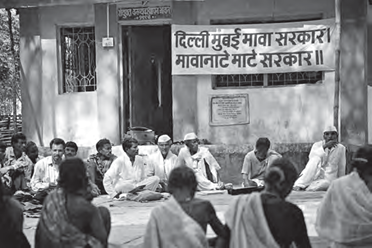
Women’s Participation
- Reserved positions: Reservations for women also apply to leadership posts such as Sarpanch and Adhyaksha.
- Rural leadership: At least 200 women were Zilla Panchayat Adhyakshas, 2,000 were block or taluk Panchayat presidents, and over 80,000 were Gram Panchayat Sarpanchas.
- Urban leadership: There were over 30 women Mayors, over 500 women Adhyakshas of town Municipalities and nearly 650 women heading Nagar Panchayats.
- Impact: Participation has helped many women gain confidence, influence over resources and understanding of political processes.
- Continuing challenge: Some elected women initially acted as proxies for male relatives, but such cases were becoming fewer.
Social Representation and Power
- Reservations: Seats are constitutionally reserved for Scheduled Castes (SCs) and Scheduled Tribes (STs); many States also reserve seats for Backward Castes.
- Population shares: SCs made up 16.2% and STs 8.2% of India’s population; about 6.6 lakh local-body members belonged to these communities.
- Effect: Reservations have made local bodies more representative of the social groups in the communities they serve.
- Tensions: Groups that previously controlled local power may resist sharing it; conflict can accompany efforts to make democracy more inclusive.
How Reservations Change Local Representation
- Reserved seats and positions → greater representation of women and disadvantaged communities.
- Greater representation → local bodies better reflect the society they serve.
- Sharing power with previously excluded groups → resistance and social tension may arise.
- Such tension can be part of making democracy more meaningful and inclusive.
Autonomy, Finance and Decentralisation
Functions and Limited Autonomy
- Assigned subjects: The 73rd and 74th Amendments assigned 29 subjects to local governments, linked to local welfare and development.
- Incomplete transfer: Many States have not transferred most of these subjects to local bodies.
- Result: Limited control over functions, welfare programmes and resources can make elected local bodies ineffective or largely symbolic.
- Criticism: Local decisions may have little influence over how policies and resources are decided at State and central levels.
Bolivia’s Local Decentralisation
- 1994The Popular Participation Law decentralised power, enabled popular election of mayors, created municipalities and established automatic fiscal transfers.
Bolivia as an Example
- Structure: Bolivia had 314 municipal governments, each headed by a popularly elected mayor (presidente municipal) and a municipal council (cabildo).
- Elections: Local elections took place nationwide every five years.
- Responsibilities: Municipalities were entrusted with building and maintaining local health and education facilities.
- Funding: 20% of national tax collections were distributed among municipalities per capita; municipalities could also tax motor vehicles, urban property and large agricultural properties.
- Dependence: Fiscal transfers supplied most municipal operating funds.
Local-Body Finances in India
- Limited own revenue: Rural local bodies raised only 0.24% of total government revenue but accounted for 4% of total government expenditure.
- Consequence: Spending more than they raise makes local bodies reliant on grants from State and central governments.
- Effect on capacity: Dependence on outside financial support can weaken their ability to operate effectively.
Why Local Bodies May Lack Power
- States retain many assigned functions and local bodies raise little revenue.
- Local bodies depend on grants and have limited control over programmes and resources.
- Their ability to carry out local welfare and development work is reduced.
- Elections and institutions alone cannot ensure real decentralisation.
Democracy and Decentralisation
The Test of Democratic Local Government
- Implementation role: Local governments often remain agencies carrying out welfare and development schemes designed by State and central governments.
- Meaning of decentralisation: People in villages and urban localities should have power to choose policies and programmes and decide how resources are used.
- Key principle: Democracy requires power to be shared with people at the local level.
- Final test: The existence of laws is an important step, but democracy depends on whether those provisions work in practice.
- Nagarpalika
- An urban local body.
- Twelfth Schedule
- The constitutional schedule listing functions for urban local bodies.
- Decentralisation
- Sharing decision-making power with people at local levels.
- Fiscal transfer
- Transfer of government funds to local governments.
What are the key provisions of the 74th Amendment?
How have reservations changed representation in local bodies?
Why is the existence of local bodies not enough to ensure real decentralisation?
Quick recap
- The 74th Amendment provides for urban local bodies; Census urban-area criteria include population, occupation and density.
- It extends key local-government provisions to Nagarpalikas, with urban functions listed in the Twelfth Schedule.
- All States passed implementing legislation, and local elections expanded representation across rural and urban bodies.
- Reservations widened participation, including women’s leadership and representation of SCs and STs.
- Incomplete transfer of functions and weak local revenues limit local bodies’ autonomy and effectiveness.
- Bolivia’s 1994 reform illustrates decentralisation supported by elected municipalities and fiscal transfers.
- Real decentralisation means local people can decide policies, programmes and resource use; legal provisions must work in practice.
Political Science — ALL CHAPTERS
1
Constitution: Why And How?
2
Rights In The Indian Constitution
3
Election And Representation
4
Executive
5
Legislature
6
Judiciary
7
Federalism
8
Local Governments
9
Constitution as A Living Document
10
The Philosophy Of The Constitution
1
INTRODUCTION TO POLITICAL THEORY
2
FREEDOM OVERVIEW
3
EQUALITY
4
SOCIAL JUSTICE
5
RIGHTS
6
CITIZENSHIP
7
NATIONALISM
8
SECULARISM