Class 11 Humanities . Political Science . India Constitution At Work . Federalism
Chapter 7: Federalism
Ch 7
Political Science
Class 11 Humanities
What is Federalism?
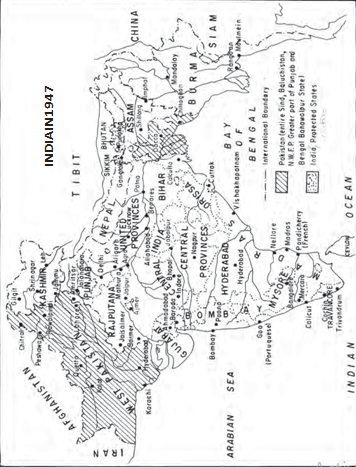
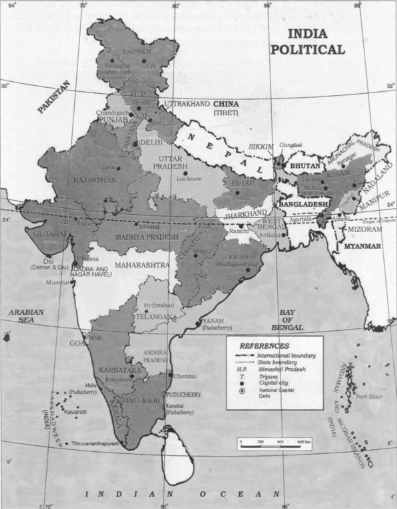
India’s Unity and Examples of Division
- 1947India became independent after a painful partition; its federal structure was adopted through the Constitution.
- After 1989The USSR broke up into several independent countries.
Federalism Does Not Guarantee Unity by Itself
- USSR: Excessive centralisation and concentration of power, along with Russian domination of regions with distinct languages and cultures, contributed to its breakup; Uzbekistan is one example.
- Other divisions: Czechoslovakia, Yugoslavia and Pakistan also faced division. Canada came close to breaking up between its English-speaking and French-speaking regions.
- Key lesson: A federal constitution alone does not ensure unity; the design of the federation and the practice of federalism also matter.
India: Unity in Diversity
- Diversity: India has more than 20 major languages, hundreds of minor languages, several major religions and millions of indigenous people.
- Shared identity: People share a common land and aspects of a common history, especially the struggle for independence.
- National vision: Leaders imagined India as a country of “unity in diversity” or “unity with diversity”.
Meaning and Main Features
Federalism — A system of government that accommodates national and regional governments, each autonomous within its own sphere.
Federalism Has Different Forms
- No fixed blueprint: Federalism develops differently in different historical situations.
- Different models: American federalism differs from German and Indian federalism, though they share key ideas such as divided powers and regional autonomy.
Core Features
- Two levels: National and regional governments have distinct powers, responsibilities and systems of government.
- Autonomy: Each level governs independently within its assigned sphere.
- Constitution: A written, supreme constitution generally sets out the division of powers and is the source of authority for both levels.
- Identity and citizenship: People may identify with both their region and nation. Some federations have dual citizenship; India has single citizenship.
- Independent judiciary: Courts settle legal disputes between governments over the division of powers.
| Level | Typical responsibilities | Examples |
|---|---|---|
| National / Union | Matters concerning the nation as a whole | Defence, currency |
| Regional / State | Regional or local matters | State and local concerns |
How Federalism Works in Practice
Conditions for Smooth Working
- Influences: Real politics, culture, ideology and history shape how a federation works.
- Helpful practices: Trust, cooperation, mutual respect and restraint support smooth relations.
- Political parties: Parties influence how the constitutional arrangement operates in practice.
How Domination Can Threaten a Federation
- One state, linguistic group or ideology dominates the federation
- Other units or groups feel excluded, and resentment grows
- Aggrieved units may demand secession
- Severe conflict may lead to civil war or the breakup of the country
- Federalism
- A system with national and regional governments, autonomous in their respective spheres.
- Autonomy
- The authority of a level of government to make decisions within its assigned sphere.
- Supreme constitution
- The highest legal framework that defines the powers of the governments.
- Secession
- The attempt by a region or unit to separate from a country.
Do not assume that adopting a federal constitution alone keeps a country united; how power is shared and federalism is practised is also crucial.
What is federalism?
Name the main features of a federal system.
What helps federalism function smoothly, and what can threaten it?
Quick recap
- Federalism accommodates national and regional governments, each autonomous within its own sphere.
- A supreme constitution divides powers, while an independent judiciary settles legal disputes over that division.
- National governments handle matters such as defence and currency; regional governments manage regional or local matters.
- Federalism takes different forms, and a federal constitution alone does not guarantee a country’s unity.
- Trust, cooperation, mutual respect and restraint support the working of a federation.
- Domination and exclusion can cause resentment, secession demands, civil war or breakup.
Federalism In The Indian Constitution
Why India Adopted Federalism
- Large country: Governing India required powers to be shared between the central government and regional governments.
- Diversity: Regional and linguistic differences needed recognition, with people able to govern themselves in their own regions.
- Democracy: Sharing power across regions was considered necessary for democratic government.
- Constitutional choice: After Partition was decided, the Constituent Assembly chose unity and cooperation between the Centre and States, while giving States separate powers.
Cooperative federalism — A system in which the Centre and States have separate powers, but their relations are based on cooperation.
India as a Union of States
- Terminology: The Constitution does not use the word “federation”; it describes India as a Union of States.
- Article 1: India, that is Bharat, shall be a Union of States. The States and their territories are those specified in the First Schedule.
Division of Powers
- Two levels: The Constitution establishes a Union government for the whole country and a State government for each State.
- Constitutional status: Both levels have constitutional status and clearly defined areas of activity.
- Disputes: The Judiciary can resolve disputes over which level controls a power, using the Constitution.
- Financial balance: Economic and financial powers are centralised to a significant extent, while States have many responsibilities but comparatively limited revenue sources.
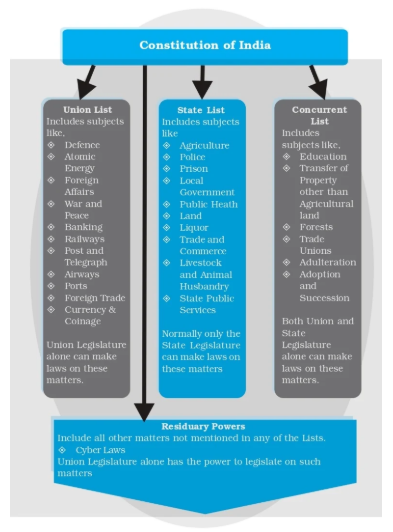
| Category | Power allocation |
|---|---|
| Union List | Subjects under the Union’s exclusive domain |
| State List | Subjects under the States’ exclusive domain |
| Concurrent List | Subjects assigned to both the Union and the States |
| Residuary powers | Powers over subjects not assigned to the lists belong to the Union |
Why did the Constitution recognise regional powers?
How does the Constitution resolve disputes over the division of powers?
Quick recap
- India’s size and diversity made power-sharing between central and regional governments important.
- The Constitution calls India a Union of States and does not use the word federation.
- The Union and State governments each have constitutional status and defined responsibilities.
- Legislative powers are divided among the Union, State and Concurrent Lists; residuary powers belong to the Union.
- The Judiciary resolves disputes about the constitutional division of powers.
- Economic and financial powers are centralised, while States have substantial responsibilities and limited revenue sources.
Federalism With A Strong Central Government
Why India Needed a Strong Centre
Reasons for Central Strength
- A diverse, newly independent country with many princely states
- Need to protect national unity and integrate territories
- Need for coordinated action on poverty, illiteracy and inequality
- A federal system with a strong Centre
Constitutional Features Strengthening the Centre
Parliament’s Power over States
- Create or merge States: Parliament may form a new State by separating territory from an existing State or by uniting States.
- Change State boundaries or names: Parliament can alter a State’s boundaries or name.
- Safeguard: The concerned State legislature’s views are sought, but the State does not have the final decision.
Emergency Provisions
- Centralisation: During an emergency, the federal system can become highly centralised and powers are lawfully concentrated at the Centre.
- State subjects: Parliament can make laws on matters normally within the States’ jurisdiction.
Financial Powers and Planning
- Revenue: Major revenue-generating items are controlled by the Centre; States rely substantially on central grants and financial assistance.
- Planning: After independence, planning was used to promote rapid economic progress, centralising important economic decisions.
- Planning Commission: Appointed by the Union government, it coordinated and supervised States’ resource management.
- Grants and loans: The Union government uses discretion in distributing these resources; the distribution has been criticised as lopsided and discriminatory towards opposition-ruled States.
Governor’s Role
- State government: The Governor can recommend dismissal of the State government and dissolution of the Legislative Assembly.
- State bills: The Governor may reserve a bill passed by the State legislature for the President’s assent.
- Effect: This allows the Centre to delay, examine or veto State legislation.
Legislative and Executive Authority
- State List legislation: In certain circumstances, Parliament may legislate on State List matters if the Rajya Sabha ratifies the move.
- Executive authority: The Constitution makes the Union’s executive powers superior to those of the States.
- Directions: The Centre may direct a State government to ensure that its executive action does not impede or prejudice Union executive power.
Article 257(1) — A State must exercise its executive power without impeding or prejudicing Union executive power; the Union may issue directions to a State for this purpose.
Integrated Administrative System
- All-India Services: Services such as the IAS and IPS operate across India, and their officers serve in State administration.
- Centre’s control: State governments cannot take disciplinary action against these officers or remove them from service.
Articles 33 and 34; Armed Forces Special Powers Act
- Articles 33 and 34: Parliament may protect persons in Union or State service from legal action for acts done during martial law to maintain or restore order.
- AFSPA: The Armed Forces Special Powers Act was made on the basis of these provisions.
- Impact: The Act has sometimes created tensions between people and the armed forces.
- All-India Services
- Services whose officers can serve in both Union and State administrations across India.
- State List
- Subjects normally within the jurisdiction of State legislatures.
- Martial law
- Military rule in an area, referred to in Articles 33 and 34 in relation to maintaining or restoring order.
- AFSPA
- The Armed Forces Special Powers Act, made on the basis of Articles 33 and 34.
Why did the Constitution’s framers provide for a strong Centre?
How can Parliament affect a State’s territory?
State two ways the Centre can influence State administration.
Quick recap
- India’s strong Centre was designed to protect unity and support coordinated development.
- Parliament can create States and change their boundaries or names after seeking the affected State’s views.
- Emergency provisions allow centralisation and Parliament to legislate on State subjects.
- Central control of revenue, planning and grants gives the Union substantial financial influence.
- Governors, Union directions and All-India Services are other channels of central influence.
- Articles 33 and 34 support protection for certain service personnel during martial law; AFSPA is based on these provisions.
Conflicts in India’s Federal System
Why Centre–State Conflicts Arise
- Unequal powers: The Constitution gives the Centre strong powers while recognising the separate identity of the States.
- State demands: States seek a greater role and more powers in governing their affairs and the country.
- Political tensions: These demands can create conflicts between the Centre and the States, often requiring negotiation.
Centre–State Relations Change with Politics
Phases of Centre–State Relations
- 1950s and early 1960sUnder Jawaharlal Nehru, Congress dominated the Centre and the States. Relations were generally normal, apart from disputes over forming new States. States expected progress through central grants-in-aid and socio-economic development policies.
- Middle of the 1960sCongress dominance declined and opposition parties formed governments in many States. State demands for greater powers grew amid complaints of unnecessary central interference.
- Since the 1990sCongress dominance largely ended and coalition politics became prominent, especially at the Centre. National and regional parties governed States, giving States a greater say and encouraging respect for diversity and more mature federalism.
Why Autonomy Demands Grew in the 1960s
- Congress dominance declined → opposition parties formed governments in many States.
- Different parties governed at the Centre and in many States → State governments demanded greater powers and autonomy.
- States viewed central actions as unnecessary interference → relations became tense.
- The Congress government at the Centre was also uncomfortable dealing with opposition-led State governments → autonomy became a major political debate.
| Point | 1950s and early 1960s | Since the 1990s |
|---|---|---|
| Political pattern | Congress dominated the Centre and the States. | Coalition politics became prominent at the Centre; different national and regional parties governed States. |
| Centre–State relations | Generally normal, with the formation of new States as a notable issue. | States gained a greater say and diversity received greater respect. |
| Federalism | Its foundations were laid under Jawaharlal Nehru. | A more mature federalism began to develop. |
- State autonomy
- The demand for States to have greater powers and freedom in governance.
- Grants-in-aid
- Financial assistance provided by the Centre to States.
- Coalition politics
- Politics in which multiple parties join together to form a government.
Why did demands for State autonomy increase in the middle of the 1960s?
How did the political situation since the 1990s affect federalism?
Quick recap
- The Constitution recognises State identities but gives strong powers to the Centre.
- Judiciaries resolve legal disputes; political autonomy demands need negotiation.
- Centre–State relations are shaped by changing political processes.
- Different parties governing the Centre and States intensified autonomy demands in the middle of the 1960s.
- Since the 1990s, coalition politics has strengthened the States’ voice and encouraged a more mature federalism.
Demands for Autonomy
Different dimensions of autonomy
State autonomy — A State’s autonomy is the degree of independence and authority it has in relation to the Union government.
What autonomy demands may involve
- Division of powers: States may seek more powers, including powers of greater importance, to be assigned to them.
- Supporters: Tamil Nadu, Punjab and West Bengal, along with parties such as the DMK, Akali Dal and CPI(M), have made autonomy demands.
- Financial autonomy: States may seek independent revenue sources and greater control over resources.
- Administrative autonomy: States may object to Union control over the State administrative machinery.
- Cultural and linguistic autonomy: Demands may oppose Hindi domination or seek protection and advancement of regional languages and cultures.
Examples of financial and cultural demands
- West Bengal: In 1977, its Left Front government issued a document demanding a restructuring of Centre–State relations.
- Tamil Nadu and Punjab: Their autonomy demands also implied support for greater financial powers.
- Language: Tamil Nadu opposed the domination or imposition of Hindi; demands in Punjab included advancing Punjabi language and culture.
- Regional concern: Some States felt Hindi-speaking areas dominated others; anti-Hindi agitations occurred in some States during the 1960s.
Governors and President’s Rule
Why the Governor’s role is controversial
- Appointment: The Governor is not elected; the Union government appoints the office-holder.
- Perceived interference: Because of the appointment process, State governments may view a Governor’s actions as Union interference.
- Political difference: Controversy can intensify when different parties govern at the Union and State levels.
- Sarkaria Commission: Appointed in 1983 to examine Centre–State relations; it submitted its report in 1988 and recommended strictly non-partisan appointments of Governors.
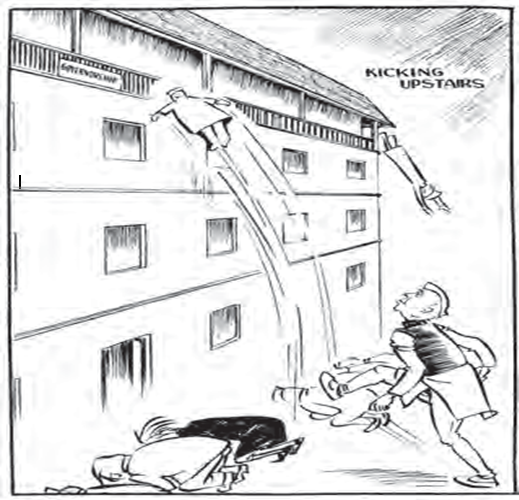
President’s Rule (Article 356) — A constitutional provision allowing the Union to take over a State’s government when it cannot be carried on according to the Constitution.
How Article 356 operates
- Ground: It may be invoked when the State government cannot function in accordance with the Constitution.
- Governor’s role: The Governor can recommend dismissal of the State government and suspension or dissolution of the State Assembly.
- Union takeover: President’s Rule transfers the State government’s functions to the Union government.
- Approval and duration: Parliament must ratify the President’s proclamation; President’s Rule can continue for up to three years.
- Judicial review: The Supreme Court has ruled that courts can examine whether imposing President’s Rule was constitutionally valid.
Use and political controversy
- Before 1967: Article 356 was used sparingly.
- After 1967: With non-Congress governments in many States and Congress at the Union level, the provision was often used to dismiss State governments or prevent a majority party or coalition from taking office.
- Contested dismissals: Kerala’s government was dismissed in 1959 despite having a legislative majority; elsewhere, governments were dismissed without first testing their majority.
- 1980s examples: Elected governments in Andhra Pradesh and Jammu and Kashmir were removed by the Union government.
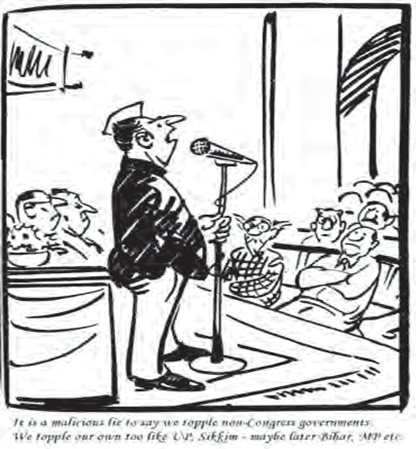
Dates and periods mentioned
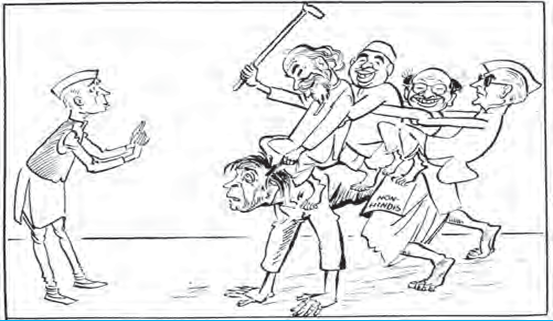
- 18 September 1949Date shown with the political cartoon on unequal power and demands in a federation.
- 27 April 1952Date shown with the political cartoon depicting officials being “kicked upstairs.”
- 1959Kerala’s State government was dismissed despite having a legislative majority.
- 1960sAnti-Hindi agitations took place in some States.
- 1967Article 356 began to be used more often amid conflict between non-Congress State governments and the Congress-led Union government.
- 1977West Bengal’s Left Front government issued a document seeking restructuring of Centre–State relations.
- 1983The Sarkaria Commission was appointed to examine Centre–State relations.
- 1980sThe Union government removed elected governments in Andhra Pradesh and Jammu and Kashmir.
- 1988The Sarkaria Commission submitted its report, recommending strictly non-partisan appointments of Governors.
What are the main dimensions of demands for State autonomy?
What is Article 356, and what checks apply to its use?
Quick recap
- State autonomy demands can concern the division of powers, finances, administration, language and culture.
- Tamil Nadu, Punjab and West Bengal, and parties including the DMK, Akali Dal and CPI(M), have raised autonomy demands.
- The Governor’s Union appointment can make the office a source of Centre–State conflict.
- Article 356 enables President’s Rule; Parliament ratifies the proclamation and courts can review its validity.
- Article 356 was used sparingly before 1967 but more frequently amid political conflict after 1967.
- The Sarkaria Commission recommended strictly non-partisan appointments of Governors.
Demands for New States
Why states were reorganised
- National unity: The national movement built pan-Indian unity alongside shared identities based on language, region and culture.
- Democratic principle: It supported creating states, as far as possible, around common cultural and linguistic identities.
- Later demands: State divisions also responded to demands for separate statehood and the need for greater administrative efficiency.
Key stages in state reorganisation
- December 1953The States Reorganisation Commission was set up; it recommended linguistic states for at least the major linguistic groups.
- 1956Some states were reorganised, beginning the creation of linguistic states.
- 1960Gujarat and Maharashtra were created.
- 1966Punjab and Haryana were separated.
- 2000Madhya Pradesh, Uttar Pradesh and Bihar were divided to create Chhattisgarh, Uttarakhand and Jharkhand respectively.
- 2014Telangana was formed by dividing Andhra Pradesh.
Further reorganisations
- North-East: Reorganisation created Manipur, Tripura, Meghalaya, Mizoram and Arunachal Pradesh.
- Continuing demands: Some regions and linguistic groups still seek separate statehood; Vidarbha in Maharashtra is one example.
- Ongoing process: State reorganisation continued beyond the initial creation of linguistic states.

Interstate Conflicts
Sources and resolution of disputes
- State–Centre tensions: States also dispute with the Centre over autonomy and their share of revenue resources.
- Interstate disputes: Conflicts between states commonly concern boundaries or the sharing of resources such as river water.
- Judiciary: Courts can arbitrate disputes of a legal nature, but many conflicts also have political implications.
- Best resolution: Negotiation and mutual understanding are important because legal decisions alone may not resolve political tensions.
| Point | Border disputes | River-water disputes |
|---|---|---|
| Main issue | Competing claims over territory between neighbouring states. | Sharing river water needed for drinking and agriculture. |
| Nature and seriousness | Often more about sentiment; border regions may include people speaking more than one language, so linguistic majority alone may not settle the dispute. | More serious because disputes affect drinking water and agriculture; they also test states’ patience and cooperative spirit. |
| Examples | Maharashtra–Karnataka over Belgaum; Manipur–Nagaland; Punjab–Haryana over border areas and Chandigarh. | Tamil Nadu–Karnataka over the Cauvery; Gujarat, Madhya Pradesh and Maharashtra over the Narmada. |
Examples and developments
- Belgaum: Maharashtra and Karnataka have a long-standing border dispute over the city.
- Chandigarh: It serves as the capital of both Punjab and Haryana. In 1985, Prime Minister Rajiv Gandhi reached an understanding with Punjab’s leadership that it would be transferred to Punjab, but this has not happened.
- Cauvery: Tamil Nadu and Karnataka depend on its waters, including for farming. The dispute has reached the Supreme Court despite the river-water tribunal system.
- Narmada: Gujarat, Madhya Pradesh and Maharashtra have contested the sharing of its waters.
- Linguistic state
- A state organised largely around a shared language.
- States Reorganisation Commission
- The commission set up in December 1953 that recommended linguistic states for major linguistic groups.
- Interstate dispute
- A conflict between states, commonly over territory or shared resources.
- River-water tribunal
- A body intended to settle disputes over the sharing of river water.
Why were states reorganised on linguistic lines?
Name the states created in 2000 by dividing larger states.
Why can interstate disputes be difficult to resolve through legal mechanisms alone?
Quick recap
- The national movement linked democratic federalism with recognition of linguistic and cultural identities.
- The States Reorganisation Commission was established in December 1953; reorganisation began in 1956.
- States continued to be created through linguistic reorganisation and later demands for separate statehood and administrative efficiency.
- States may dispute with the Centre over autonomy and the sharing of revenue resources.
- Interstate conflicts commonly concern borders or river-water sharing.
- Border disputes are often about sentiment; river-water disputes are serious because they affect drinking water and agriculture.
- Legal bodies can help settle disputes, but negotiation and mutual understanding are also essential.
Special Provisions
Special Provisions in Indian Federalism
Differential treatment — Some Indian States receive special constitutional arrangements because of their distinct social and historical circumstances.
Why States receive different arrangements
- Representation: Rajya Sabha seats vary with State size and population, while smaller States still receive minimum representation.
- Common division of powers: The Constitution’s division of powers generally applies across States.
- Special provisions: Some States receive additional arrangements suited to their particular circumstances.
- North-east: Assam, Nagaland, Arunachal Pradesh and Mizoram have provisions linked largely to sizeable indigenous tribal populations and distinct histories and cultures.
- Other States: Special provisions also exist for Himachal Pradesh, Andhra Pradesh, Goa, Gujarat, Maharashtra, Sikkim and Telangana.
- Limitation: Special provisions have not prevented alienation and insurgency in parts of the north-east.
Jammu and Kashmir: Former Special Status
Key events
- October 1947After Pakistan sent tribal infiltrators into Kashmir, Maharaja Hari Singh sought Indian help and acceded to the Indian Union.
- 31 October 2019The Jammu and Kashmir Reorganisation Act’s new arrangement took effect, dividing the State into the Union Territories of Jammu and Kashmir and Ladakh.
Accession in 1947
- Jammu and Kashmir was a large princely State with the option of joining India, joining Pakistan or remaining independent.
- Pakistan sent tribal infiltrators from its side to capture Kashmir.
- Maharaja Hari Singh sought India’s help and acceded to the Indian Union.
Article 370 (as described in the lecture) — A constitutional provision that gave Jammu and Kashmir greater autonomy by requiring the State’s concurrence for applying many Union and Concurrent List laws.
How the former arrangement worked
- Concurrence: Unlike other States, Jammu and Kashmir required State concurrence for laws on subjects in the Union and Concurrent Lists; the Union’s powers were therefore more limited.
- Presidential orders: The President could specify, with the State government’s concurrence, which parts of the Union List applied. Two such orders extended large parts of the Constitution to the State.
- Parliament’s powers: As a result, Parliament’s power to legislate on Union List subjects was fully accepted, even though Jammu and Kashmir had its own Constitution and flag.
- Constitutional amendments: Amendments under Article 368 could apply with the concurrence of the Jammu and Kashmir government.
| Point | Jammu and Kashmir | Other States |
|---|---|---|
| Union and Concurrent List laws | State concurrence was required for applying many such laws. | The constitutional division of powers applied automatically. |
| Internal emergency | An emergency due to internal disturbances could not be declared without the State’s concurrence. | This special concurrence requirement did not apply. |
| Financial emergency | The Union government could not impose one in the State. | The special restriction did not apply. |
| Directive Principles | Did not apply in Jammu and Kashmir. | Applied under the Constitution. |
| Constitutional amendments | Could apply with the State government’s concurrence. | Applied under the ordinary constitutional procedure. |
Change in status
- Article 370 status: The lecture states that the special status under Article 370 no longer exists.
- Reorganisation: Under the Jammu and Kashmir Reorganisation Act, 2019, the former State was divided into two Union Territories: Jammu and Kashmir, and Ladakh.
- Effective date: The new arrangement came into effect on 31 October 2019.
Federalism: Unity and Diversity
Conditions for a cooperative federation
- Balance: Federalism must continually balance the powers and interests of the Centre and the States.
- Political culture: No legal or institutional formula alone guarantees smooth federal functioning; people and political processes must build mutual trust, tolerance and cooperation.
- Unity with diversity: Federalism recognises both national unity and social diversity.
- Avoid forced uniformity: Suppressing differences can create social strife and alienation, ultimately weakening unity.
- Responsive government: A polity sensitive to diversity and demands for autonomy is the basis of a cooperative federation.
- Asymmetrical representation
- Unequal representation of States in the Rajya Sabha, reflecting differences such as population while ensuring minimum representation for smaller States.
- Concurrence
- Agreement or consent required from the Jammu and Kashmir government under the former special arrangement.
- Autonomy
- A State’s scope to govern its affairs with a degree of independence from the Union.
- Cooperative federation
- A federal system sustained by Centre–State balance, mutual trust and cooperation while respecting diversity.
How did Article 370 give Jammu and Kashmir greater autonomy under the arrangement described in the lecture?
What change did the Jammu and Kashmir Reorganisation Act, 2019 bring?
Why does the lecture say forced uniformity can weaken national unity?
Quick recap
- Some States receive special provisions because of distinct social and historical circumstances.
- North-eastern provisions are linked largely to indigenous tribal populations and distinctive histories and cultures.
- Under the former Article 370 arrangement, many Union and Concurrent List laws required Jammu and Kashmir’s concurrence.
- The 2019 reorganisation created the Union Territories of Jammu and Kashmir and Ladakh, effective 31 October 2019.
- Cooperative federalism depends on trust, tolerance and cooperation between the Centre, States and people.
- Respecting diversity and autonomy helps sustain unity; forced uniformity can foster alienation.
Political Science — ALL CHAPTERS
1
Constitution: Why And How?
2
Rights In The Indian Constitution
3
Election And Representation
4
Executive
5
Legislature
6
Judiciary
7
Federalism
8
Local Governments
9
Constitution as A Living Document
10
The Philosophy Of The Constitution
1
INTRODUCTION TO POLITICAL THEORY
2
FREEDOM OVERVIEW
3
EQUALITY
4
SOCIAL JUSTICE
5
RIGHTS
6
CITIZENSHIP
7
NATIONALISM
8
SECULARISM