Class 11 Humanities . Political Science . India Constitution At Work . Election and Representation
Chapter 3: Election And Representation
Ch 3
Political Science
Class 11 Humanities
Election And Democracy
Why Election Rules Matter
Elections need agreed rules and impartial conduct
- Rules determine how elections are conducted and can affect their outcome.
- Impartial machinery is needed to conduct elections fairly, like an umpire whose decisions are accepted by all.
- Constitutional safeguards set the basic election rules in advance; governments should not be free to change them to suit themselves.
Elections and Democracy
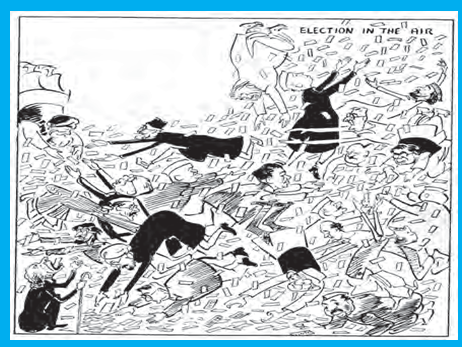
Cartoon date
- 17 February 1957Date associated with the political cartoon about elections.
Direct democracy — A system in which citizens directly take part in day-to-day decisions and government.
| Point | Direct democracy | Representative democracy |
|---|---|---|
| Who makes decisions? | Citizens participate directly. | Elected representatives make major decisions. |
| Where it is practical | Small communities; ancient Greek city-states are an example. Gram sabhas are a close modern example. | Large countries, where direct participation by lakhs or crores of people is impractical. |
| Citizens’ role | Direct involvement in decision-making and administration. | Citizens choose representatives and participate indirectly through them. |
Election — The method by which citizens choose representatives to govern and administer the country.
Why elections are important
- Representation allows people to participate in governing through representatives when direct decision-making by everyone is impractical.
- Elections are a highly visible symbol of democracy and determine how representatives are chosen.
- The election method matters because citizens have a limited, indirect role in major decisions and policy-making.
| Point | Democratic elections | Non-democratic elections |
|---|---|---|
| Purpose and effect | Allow people to choose representatives and support genuine participation. | May be held in ways that do not threaten the rulers’ hold on power. |
| Key issue | Must be free and fair, with fair representation. | Holding an election alone does not make a country democratic. |
Do not assume that every country holding elections is democratic; elections must be conducted democratically and offer a genuine choice.
Constitutional Rules for Elections
The Constitution sets basic rules
- Constitution lays down the basic election rules; legislatures usually provide further details through laws.
- Eligibility: Who may vote, and who may contest an election?
- Supervision: Who is responsible for overseeing elections?
- Choice and counting: How do voters choose representatives, and how are votes counted to decide who is elected?
| Purpose | Questions addressed |
|---|---|
| Free and fair elections | Who may vote or contest; who supervises elections; how voters choose their representatives. |
| Fair representation | How votes are counted and representatives are elected. |
- Representation
- People’s interests and decisions are carried into government through chosen representatives.
- Election
- A process for choosing representatives.
- Direct democracy
- Citizens participate directly in governing decisions.
- Free and fair election
- An election conducted impartially, with genuine participation and choice.
- Non-democratic election
- An election arranged so it does not genuinely challenge or transfer power from rulers.
Why are elections important in a large democracy?
Can a country be democratic simply because it holds elections?
Which constitutional election rules support free and fair elections, and which support fair representation?
Quick recap
- Large democracies rely on elected representatives because direct participation by everyone is impractical.
- Direct democracy involves citizens in decisions; representative democracy works through elected representatives.
- Elections are important, but holding elections alone does not make a country democratic.
- Constitutions establish basic election rules, while laws usually supply the details.
- Eligibility, supervision, and how voters choose representatives help make elections free and fair.
- Vote-counting rules and how representatives are elected help ensure fair representation.
Election System in India
Why Election Rules Matter
- Election rules: Different methods for counting votes can produce different winners and shape how parties and groups are represented.
- Democratic choice: Constitutional rules establish how voters choose representatives and help make elections fair.
First Past the Post System
First Past the Post (FPTP) system — An electoral system in which the candidate with more votes than any other candidate in a constituency wins.
How FPTP Works in India
- Constituencies: The country is divided into 543 constituencies.
- Representation: Each constituency elects one representative.
- Winner: The candidate with the highest number of votes in that constituency is elected.
- Constitution: FPTP is the method of election prescribed by the Constitution.
| Point | Plurality (FPTP) | Majority |
|---|---|---|
| Votes needed to win | More votes than each other candidate | More than half of the votes |
| Can a winner have less than 50%? | Yes | No |
Do not assume an FPTP winner must receive a majority: the candidate only needs more votes than every rival.
Votes and Seats: The 1984 Lok Sabha Election
Election Example
- 1984Congress won 415 of the 543 Lok Sabha seats—more than 80%—with 48% of the votes.
| Party | Votes (%) | Seats |
|---|---|---|
| Congress | 48.0 | 415 |
| BJP | 7.4 | 2 |
| Janata | 6.7 | 10 |
| Lok Dal | 5.7 | 3 |
| CPI(M) | 5.7 | 22 |
| Telugu Desam | 4.1 | 30 |
| DMK | 2.3 | 2 |
| AIADMK | 1.6 | 12 |
| Akali Dal | 1.0 | 7 |
| AGP | 1.0 | 7 |
Why Vote Shares and Seat Shares Differ
- In each constituency, only the candidate with the most votes wins the seat.
- A candidate can win with less than 50% if several rivals divide the remaining votes.
- Votes for losing candidates do not win seats in that constituency.
- A party can therefore win a much larger share of seats than its share of votes.
Key Implications
- Congress in 1984: It received 48% of votes but won 415 seats, over 80% of the Lok Sabha.
- BJP in 1984: It received 7.4% of votes but won only 2 seats.
- Possible outcome: A party receiving 25% of votes in every constituency could win every seat if all other candidates received fewer votes.
- Constituency
- An electoral area that chooses one representative under FPTP.
- Plurality system
- Another name for FPTP; the candidate with the most votes wins.
- Majority
- More than half of the votes.
- Vote-seat disproportionality
- A difference between a party’s share of votes and its share of seats.
Why can a candidate win under FPTP without getting a majority?
How did Congress win over 80% of the seats with 48% of the votes in 1984?
Quick recap
- FPTP elects the candidate with the most votes in each constituency.
- Each of India’s 543 constituencies elects one representative.
- An FPTP winner does not need more than 50% of the votes.
- Votes for losing candidates do not secure a seat in that constituency.
- FPTP can produce a large gap between a party’s vote share and seat share.
- In 1984, Congress won 415 seats with 48% of the votes.
Proportional Representation
Proportional Representation: Meaning and Types
Proportional Representation (PR) — An electoral system in which each party receives a share of seats proportional to its share of votes.
How PR works
- Party lists: Parties publish candidate preference lists before the election and fill the seats they win from those lists.
- Voter's choice: Voters generally choose a party, not an individual candidate.
- Representation: More than one representative can be elected from a constituency, and representatives may belong to different parties.
- India: PR is used on a limited scale for indirect elections, including elections for the President, Vice-President, Rajya Sabha and Vidhan Parishads.
| Form | Constituency arrangement | Example |
|---|---|---|
| Single national constituency | The whole country is one constituency; parties receive seats according to national vote shares. | Israel, Netherlands |
| Multi-member constituencies | The country is divided into constituencies that elect several members; parties submit lists for each constituency. | Argentina, Portugal |
PR in Israel
Key features
- Legislature: Israel's parliament is the Knesset; elections are held every four years.
- Voting: Parties announce candidate lists, and voters vote for a party rather than a candidate.
- Threshold: A party needs at least 3.25% of votes to qualify for seats.
- Effect: Smaller parties can gain representation, often resulting in a multi-party coalition government.
| Party/list | Vote share (per cent) | Seats | Seat share (per cent) |
|---|---|---|---|
| Likud | 23.40 | 30 | 25.00 |
| Zionist Camp | 18.67 | 24 | 20.00 |
| Joint List | 10.61 | 13 | 10.83 |
| Yesh Atid | 8.82 | 11 | 9.17 |
| Kulanu | 7.49 | 10 | 8.33 |
| Habayit Hayehudi | 6.74 | 8 | 6.67 |
| Shas | 5.74 | 7 | 5.83 |
| Yisrael Beitenu | 5.10 | 6 | 5.00 |
| United Torah Judaism | 4.99 | 6 | 5.00 |
| Israel's Left | 3.93 | 5 | 4.17 |
| Other parties | 4.51 | 0 | 0 |
| Total | 100 | 120 | 100 |
First-Past-the-Post and PR Compared
| Point | FPTP | PR |
|---|---|---|
| Constituencies | The country is divided into small geographical constituencies or districts. | Constituencies are larger; the whole country may be one constituency. |
| Members elected | One representative is elected from each constituency. | Several representatives may be elected from a constituency. |
| Voter chooses | A candidate. | A party. |
| Seat allocation | A party may win a larger or smaller share of seats than its vote share. | A party's share of seats reflects its share of votes. |
| Winning candidate | Can win without receiving a majority of votes (50%+1). | Seats are allocated proportionally; voters choose party lists. |
| Examples | United Kingdom, India. | Israel, Netherlands. |
Single Transferable Vote in Rajya Sabha Elections
Single Transferable Vote (STV) — A PR method in which voters rank candidates by preference and votes can transfer when candidates are eliminated.
Rajya Sabha election process
- Electors: MLAs of each State Legislative Assembly elect that State's Rajya Sabha members; each State has a set number of seats.
- Preferences: Each MLA ranks candidates in order of preference.
- Quota: A candidate must secure the required minimum number of votes to be elected.
- Counting: First-preference votes are counted first. If too few candidates reach the quota, the candidate with the fewest first-preference votes is eliminated and their votes transfer according to second preferences.
- Continuation: Transfers and eliminations continue until the required number of candidates is elected.
Here, is the total votes polled and is the number of candidates to be elected. For 200 MLAs electing 4 members, the quota is 41 votes.
Why India Adopted FPTP
Reasons for choosing FPTP
- Simplicity: It is easy to understand and use, including for voters without specialised knowledge of elections.
- Clear choice: Voters choose a specific candidate and can weigh the candidate and party.
- Local accountability: Each constituency has one identifiable representative whom local voters can hold accountable; PR lists do not create the same one-locality link.
- Stable government: Parliamentary government needs a legislative majority. PR may divide seats among parties without producing a clear majority.
- Seat bonus: FPTP often gives the largest party or coalition extra seats relative to its vote share, helping it form a stable government.
- Social integration: Winning locally can encourage support across social groups; nationwide PR could encourage separate community-based parties.
| Party | Vote share (per cent) | Seats won |
|---|---|---|
| AIADMK | 40.77 | 135 |
| DMK | 31.64 | 88 |
| INC | 6.42 | 8 |
| PMK | 5.32 | 0 |
| BJP | 2.84 | 0 |
| DMDK | 2.39 | 0 |
| CPI | 0.79 | 0 |
| IUML | 0.73 | 1 |
| Other parties | 6.37 | 0 |
| Independents | 1.43 | 0 |
| NOTA | 1.30 | — |
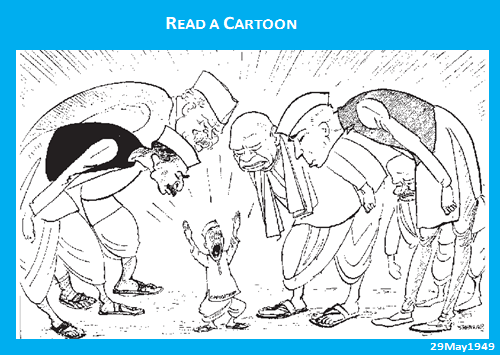
Effects and Experience of FPTP in India
Expected and observed effects
- Majorities: FPTP has helped larger parties win clear majorities at both national and State levels.
- Party competition: It often tends towards two major competitors alternating in power and can make it harder for new or third parties to share power.
- India's early pattern: After Independence, one-party dominance existed alongside many smaller parties.
- After 1989: Multi-party coalition governments emerged nationally; two-party competition has also gradually developed in many States.
- Indian feature: Coalitions have enabled smaller and newer parties to enter electoral competition despite FPTP.
- Social base: FPTP has discouraged parties relying entirely on votes from one caste or community.
Changes in India's party system
- After IndependenceOne-party dominance developed alongside many smaller parties.
- After 1989Multi-party coalitions began functioning; two-party competition also gradually emerged in many States.
- Proportional Representation (PR)
- A system allocating parties seats broadly in proportion to their vote shares.
- First-Past-the-Post (FPTP)
- A system in which one candidate wins a constituency by receiving more votes than any other candidate.
- Single Transferable Vote (STV)
- A ranked-preference PR method that transfers votes during counting.
- Quota
- The minimum vote total required for election under STV.
- Threshold
- The minimum vote share required for a party to qualify for seats.
How does PR differ from FPTP in the way votes are translated into seats?
How are Rajya Sabha members elected using STV?
Give two reasons India adopted FPTP.
Quick recap
- PR allocates party seats in proportion to vote shares; voters usually choose parties rather than individual candidates.
- PR may use one nationwide constituency or several multi-member constituencies.
- Israel uses a 3.25% threshold; smaller parties can gain seats, often leading to coalition governments.
- Rajya Sabha elections use STV: MLAs rank candidates, meet a quota, and transfer votes through preferences.
- FPTP is simple and creates a direct local representative link, while often helping produce a legislative majority.
- India's FPTP experience includes early one-party dominance, coalitions after 1989, and growing two-party competition in some States.
Reservation of Constituencies
Why Constituencies Are Reserved
- Fair representation: Under the First Past the Post system, smaller or oppressed social groups may remain unrepresented when dominant groups win across constituencies.
- Reserved constituencies: They help ensure representation for disadvantaged groups while allowing all voters in the constituency to vote.
Reservation for Scheduled Castes and Scheduled Tribes
- Constitutional provision: Seats in the Lok Sabha and State Legislative Assemblies are reserved for Scheduled Castes and Scheduled Tribes.
- Purpose: Reservation ensures these groups receive representation in elected bodies.
- Duration and seats: The provision has been extended to 2030; as of 26 January 2019, 84 Lok Sabha seats were reserved for SCs and 47 for STs.
How Reserved Constituencies Are Chosen
- Delimitation Commission: Appointed by the President, it draws constituency boundaries in collaboration with the Election Commission of India.
- State quota: The number of reserved constituencies in each State depends on the proportion of SC or ST population there.
- Selection: ST-reserved seats are chosen where ST population is highest; SC-reserved seats are selected from areas with higher SC populations and spread across the State. Reserved constituencies may be rotated after delimitation.
Reservation for Women and Fair Elections
- Women’s representation: The demand to reserve one-third of Lok Sabha and State Assembly seats for women has grown because few women are elected.
- Existing provision: Seats are reserved for women in rural and urban local bodies; extending this to Parliament and State Assemblies requires a constitutional amendment.
- Fair elections: An impartial and transparent process allows voters’ aspirations to be reflected legitimately in election results.
Universal Adult Franchise
- Universal adult franchise: Every adult citizen is eligible to vote, without discrimination based on education or social status.
- Voting age: The voting age was reduced from 21 to 18 by a constitutional amendment in 1989.
- Equality: Adult franchise recognises citizens as equals in choosing their representatives.
Right to Contest Elections
- FPTP
- First-past-the-post system: the candidate with the most votes in a constituency wins.
- Separate electorate
- An arrangement in which only voters from a specified community vote for its representative.
- Reserved constituency
- A constituency open to all voters but restricted to candidates from a specified group.
- Universal adult franchise
- The right of every adult citizen to vote.
Quick recap
- Reserved constituencies seek fair representation while allowing all voters in the constituency to vote.
- SC and ST seats are reserved in the Lok Sabha and State Legislative Assemblies in proportion to population.
- The Delimitation Commission sets boundaries and selects reserved constituencies using population distribution.
- Women have reserved seats in local bodies; a constitutional amendment would be needed for reservation in Parliament and State Assemblies.
- Every adult citizen can vote; India’s voting age was lowered from 21 to 18 in 1989.
- Citizens may contest elections subject to age and legal disqualification rules; the minimum age for Lok Sabha and Assembly elections is 25.
Independent Election Commission
Constitutional Basis and Jurisdiction
- Article 324: It vests the superintendence, direction and control of electoral rolls and elections in the Election Commission of India.
- Jurisdiction: The Commission oversees elections to Parliament, State Legislatures, and the offices of President and Vice-President.
- Local elections: Local body elections are conducted independently by State Election Commissioners, not by the Election Commission of India.
Composition, Appointment and Tenure
The ECI’s Membership and Major Challenges
- Until 1989The ECI was a single-member body.
- Just before the 1989 general electionsTwo Election Commissioners were appointed, making the ECI multi-member; it reverted to one member soon after the elections.
- 1991After former Prime Minister Rajiv Gandhi was assassinated during campaigning, the ECI postponed the election process midway.
- 1993Two Election Commissioners were appointed again; the ECI has remained multi-member since then.
- 2002The ECI postponed Gujarat Assembly elections for a few months because unprecedented violence made an immediate free and fair election impossible. The Supreme Court upheld its decision.
- Since 1951–52The ECI has conducted seventeen Lok Sabha elections, as well as many State Assembly elections and by-elections.
Why a Multi-member Commission?
- Early concern Disagreements arose over how power was shared between the CEC and other Commissioners; the Supreme Court settled the dispute.
- Current view A multi-member Commission is generally considered more appropriate because it shares power and increases accountability.
Special majority — A resolution needs both two-thirds of members present and voting, and a simple majority of the House’s total membership.
Functions of the Election Commission
- Electoral rolls and schedule: The Commission updates voter lists and sets the election timetable, from nominations through polling, counting and results.
- Fair polling: It enforces the Model Code of Conduct and may postpone or cancel elections, order a re-poll, or direct a recount to protect fairness.
- Political parties: It grants party recognition and allots election symbols.
Election Administration and Independence
How Independence Protects Elections
- Constitution gives the ECI authority over electoral rolls and election conduct.
- Security of tenure makes it harder for a ruling party to punish a CEC for impartial decisions.
- ECI supervises election officials and enforces rules during the election process.
- Impartial supervision helps protect free and fair elections and the credibility of the electoral process.
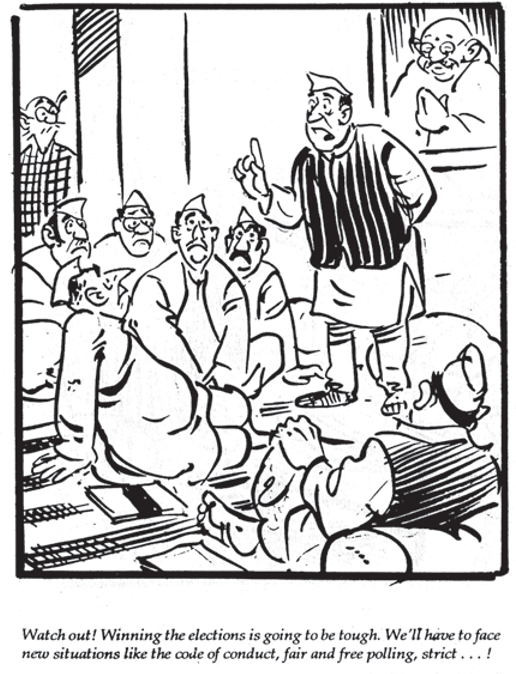
- Electoral roll
- The official list of eligible voters for an election.
- Chief Election Commissioner
- The Commissioner who presides over the ECI; has equal decision-making power with the other Commissioners.
- Model Code of Conduct
- Rules the ECI enforces to guide conduct during elections.
- Special majority
- A requirement combining a two-thirds majority of those present and voting with a simple majority of total membership.
What powers does Article 324 give the Election Commission?
How is the Chief Election Commissioner protected from arbitrary removal?
State four important functions of the Election Commission.
Quick recap
- Article 324 gives the ECI control over electoral rolls and specified national and State elections.
- The ECI has remained multi-member since 1993, with Commissioners sharing equal decision-making powers.
- The President appoints Commissioners on the advice of the Council of Ministers; the CEC has special protection against early removal.
- The ECI manages voter lists, election schedules, fair polling, party recognition and symbols.
- During elections, it directs government officers on election-related work.
- The ECI’s independence and effectiveness depend on impartial use of its constitutional powers.
Spatial Majority
Constitutional Basis and Independence
Election Commission of India — An independent constitutional body responsible for supervising, directing and controlling electoral rolls and elections to Parliament, State Legislatures, and the offices of President and Vice-President.
Article 324
- Article 324 vests the superintendence, direction and control of electoral rolls and specified elections in the Election Commission.
- Scope The Supreme Court has supported a broad interpretation of these powers, giving the Commission a decisive role in election matters.
- State support A Chief Electoral Officer assists the Commission in each State.
- Local elections The Election Commission of India does not conduct local body elections; independent State Election Commissioners do so.
Composition, Appointment and Tenure
Changes in Commission Membership
- Until 1989The Election Commission was a single-member body.
- Just before the 1989 general electionTwo Election Commissioners were appointed, making the Commission multi-member; it returned to single-member status soon after the election.
- 1993Two Election Commissioners were appointed again, and the Commission has remained multi-member since then.
How the Commission Works
- Equal powers The Chief Election Commissioner (CEC) presides, but has no greater decision-making power than the other Commissioners.
- Collective decisions The CEC and the two Election Commissioners decide election matters as a body.
- Why multi-member? Shared power encourages accountability; after early disagreements over members’ powers, the Supreme Court settled the issue.
- Appointment The President appoints the CEC and Election Commissioners on the advice of the Council of Ministers.
- Concern about partisanship A ruling party may appoint a person favourable to it. Suggested reforms include consultation with the opposition leader and the Chief Justice of India.
| Office | Tenure | Removal |
|---|---|---|
| CEC and Election Commissioners | Six years or until age 65, whichever comes first | The CEC can be removed by the President only after both Houses of Parliament recommend removal by special majority. Election Commissioners can be removed by the President. |
Purpose of Security of Tenure
- Protection from pressure Secure tenure helps prevent a ruling party from removing a CEC who refuses to favour it in an election.
Functions and Election Administration
| Area | What the Commission does |
|---|---|
| Electoral rolls | Keeps voters’ lists up to date and works to remove errors, such as missing eligible voters or including ineligible and non-existent voters. |
| Election schedule | Sets the timing and schedule: notification, nomination dates, scrutiny, withdrawal, polling, counting and declaration of results. |
| Fair polling | Implements the Model Code of Conduct and can postpone or cancel an election where conditions prevent a free and fair poll. |
| Polling and counting | Can order a re-poll in a constituency or a recount when it considers the process unfair. |
| Parties | Recognises political parties and allots election symbols. |
Control of Election Staff
- Administrative machinery The Commission has limited staff of its own, so it conducts elections using government administrative staff.
- Election period Once the election process begins, the Commission controls officers assigned election-related duties.
- Powers over officers It can transfer officers, stop their transfers, and act against those who fail to remain non-partisan.
Growing Effectiveness and Challenges
How the Commission Became More Assertive
- The Constitution gave the Election Commission significant powers and protections.
- The Commission began using its existing powers more effectively.
- It became more independent and assertive in protecting electoral fairness, without needing additional constitutional powers.
Elections and Difficult Decisions
- 1951–52 onwardThe Election Commission has conducted Lok Sabha, State Assembly and by-elections; the lecture records seventeen Lok Sabha elections.
- 1991After former Prime Minister Rajiv Gandhi was assassinated during campaigning, the Commission postponed the election process mid-way.
- 2002Following the dissolution of the Gujarat Assembly, the Commission postponed elections for a few months because unprecedented violence made a fair election impossible immediately; the Supreme Court upheld its decision.
Other Electoral Challenges
- Conflict-affected areas The Commission has faced difficulties conducting elections in militancy-affected areas such as Assam, Punjab and Jammu and Kashmir.
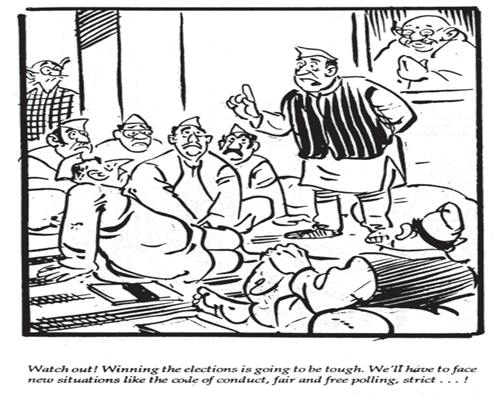
- Article 324
- Constitutional provision assigning election supervision and control to the Election Commission.
- Electoral roll
- The official list of eligible voters.
- Model Code of Conduct
- Rules for political parties and candidates during the election process.
- Re-poll
- A fresh poll ordered in a constituency when the Commission considers it necessary.
Why is the Election Commission considered independent and important?
What is the significance of a multi-member Election Commission?
What did the Commission decide in Gujarat in 2002, and what was the Supreme Court’s response?
Quick recap
- Article 324 gives the Election Commission broad control over electoral rolls and specified elections.
- The Commission has been multi-member since 1993, with equal decision-making powers among its members.
- The CEC and Election Commissioners serve six years or until age 65, whichever comes first.
- The Commission manages voter lists, schedules, polling fairness, party recognition and symbols.
- During elections, it controls government officers assigned election duties.
- Its greater independence has come from more effective use of existing powers.
Political Science — ALL CHAPTERS
1
Constitution: Why And How?
2
Rights In The Indian Constitution
3
Election And Representation
4
Executive
5
Legislature
6
Judiciary
7
Federalism
8
Local Governments
9
Constitution as A Living Document
10
The Philosophy Of The Constitution
1
INTRODUCTION TO POLITICAL THEORY
2
FREEDOM OVERVIEW
3
EQUALITY
4
SOCIAL JUSTICE
5
RIGHTS
6
CITIZENSHIP
7
NATIONALISM
8
SECULARISM