Class 11 Humanities . Political Science . Political Theory . Introduction to Political Theory
Chapter 1: INTRODUCTION TO POLITICAL THEORY
Ch 1
Political Science
Class 11 Humanities
What Is Politics ?
Different Views of Politics
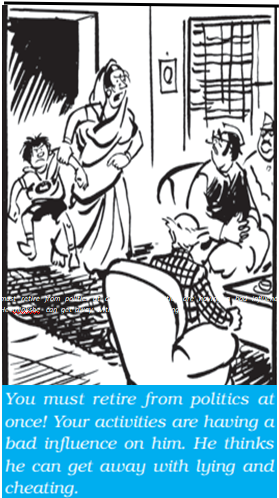
Why Politics Matters
Politics — The negotiation of different visions and interests through which people make collective decisions, influence government and address common problems.
Political Participation
- People’s influence: Politics is not limited to government; people organise associations and campaigns, negotiate, debate and protest to shape public decisions.
- Collective activity: People engage in politics when they take part in collective efforts to promote social development and resolve shared problems.
- Examples: Citizens debate representatives’ actions, question corruption and discuss whether policies such as reservations are just.
What Political Theory Studies
Political theory — The systematic study of ideas and principles that shape constitutions, governments and social life.
Its Main Concerns
- Concepts: It clarifies ideas such as freedom, equality, justice, democracy and secularism.
- Principles: It examines the significance of rule of law, separation of powers and judicial review.
- Arguments and experience: It studies arguments offered by political thinkers, reflects on current political life and considers future possibilities.
- Influence of ideas: Thinkers need not hold political office for their ideas to shape political movements and generations of leaders.
Thinkers and Political Ideas
- Fifth century BCEPlato and Aristotle discussed whether monarchy or democracy was the better form of government.
| Thinker | Key idea in the lecture | Constitutional connection |
|---|---|---|
| Kautilya, Plato and Aristotle | Contributed to long-running debates on political ideas and forms of government. | Their ideas form part of the wider tradition of political thought. |
| Jean-Jacques Rousseau | Freedom as a fundamental human right. | Freedom is enshrined in the Indian Constitution’s Preamble. |
| Karl Marx | Equality is as crucial as freedom. | Equality is enshrined in the Indian Constitution’s Preamble. |
| Mahatma Gandhi | Genuine freedom, or swaraj. | Gandhian principles appear in the Directive Principles. |
| Dr. B.R. Ambedkar | Scheduled Castes should be treated as a minority and receive special protection. | The Constitution abolishes untouchability and protects rights. |
- Rule of law
- The principle that public power is governed by law.
- Separation of powers
- The principle of dividing government powers among different institutions.
- Judicial review
- The examination of laws or government actions by the judiciary.
- Swaraj
- Genuine freedom, as discussed by Gandhi.
Why Political Theory Remains Relevant
Three Continuing Challenges
- Unequal experience: Equal political rights do not guarantee equality in social or economic life; caste discrimination, poverty and lack of basic opportunities can restrict freedom.
- Changing interpretations: Rights are reinterpreted as new circumstances arise. Courts have interpreted the right to life to include the right to livelihood, and a new law granted the right to information.
- Continuing expansion: Fundamental rights have been amended and expanded over time through judicial interpretations and government policies responding to new problems.
- New threats and choices: Global communications can help activists protect communities and forests, but can also help criminals and terrorists connect.
- Online privacy and regulation: Internet commerce creates a need to protect personal information. Debates include how to balance online freedom with security, who should regulate, and whether private emails may be monitored to track terrorists.
Socrates, Plato and the Question of Justice
- Socrates: In Athens, he challenged widely accepted beliefs about society, religion and politics; the rulers condemned him to death.
- Plato’s Republic: Plato used a character based on Socrates to examine justice. Its opening dialogue with Cephalus shows that common ideas about justice may be inadequate.
- Method of questioning: Socrates used reason to expose contradictions and limitations in an argument, leading people to reconsider beliefs they had accepted.
What does political theory study?
Why is political theory still relevant?
Quick recap
- Politics is negotiation among people with different visions and interests to make collective decisions and solve common problems.
- Government policies affect everyday life, while people influence decisions through organising, debate and protest.
- Political theory studies political concepts, principles and arguments that shape constitutions, governments and social life.
- Rousseau, Marx, Gandhi and Ambedkar advanced ideas reflected in constitutional rights and principles.
- Fundamental rights are reinterpreted and expanded through judicial interpretations and government policies as new challenges arise.
- Socrates used reasoned questioning to test accepted beliefs and expose weaknesses in arguments.
Putting Political Theory to Practice
Political Theory and Political Ideas
- Political theory: It studies the origins, meanings and significance of political ideas such as freedom, citizenship, justice and secularism.
- Purpose: It examines different interpretations of these ideas and how they guide public policy and social life.
Understanding Equality Through Everyday Life
From Everyday Experience to Political Theory
- Notice a situation, such as queue-jumping or a child missing school.
- Ask what is fair and whose needs or circumstances matter.
- Compare different opinions and identify the meanings of equality involved.
- Debate what action is justified and who should ensure fairness.
- Consider practical policy options, such as support for children to attend school.
Political Theory in Practice
- Context matters: The meaning of equality changes with the situation and the people affected.
- Different layers: Fairness can require equal opportunity, special provisions or action against economic disadvantage.
- Policy questions: Political theorists ask when equal opportunity is enough and when special treatment or support is needed.
- Practical impact: Debates about equality can guide public policies on education and employment.
- Example policy issue: Whether poor children should receive midday meals to encourage school attendance is a question for public debate.
Testing Ideas About Justice
- Political theory
- Systematic examination of political ideas, their meanings and their significance.
- Equality
- Fairness that can involve equal opportunity, justified special treatment and measures to address disadvantage.
- Formal right
- A right guaranteed in law that may not be effective in practice without the means to use it.
- Public policy
- A course of action adopted by public authorities to address an issue, such as access to education.
- Justice
- A political idea whose meaning is debated and tested against the consequences of proposed rules or actions.
Why Study Political Theory?
Why is equal opportunity sometimes not enough to achieve equality?
Give two reasons why citizens should study political theory.
Quick recap
- Political theory clarifies and debates the meanings of political ideas such as equality and justice.
- Equality can require equal opportunity, justified special treatment and action to reduce economic disadvantage.
- A right guaranteed by law may remain only formal if people lack the support to exercise it.
- Testing definitions against cases reveals weaknesses, as in the debate about truth, debts, friends and enemies.
- Political theory helps citizens participate responsibly, examine prejudice and argue with reasons.
Political Science — ALL CHAPTERS
1
Constitution: Why And How?
2
Rights In The Indian Constitution
3
Election And Representation
4
Executive
5
Legislature
6
Judiciary
7
Federalism
8
Local Governments
9
Constitution as A Living Document
10
The Philosophy Of The Constitution
1
INTRODUCTION TO POLITICAL THEORY
2
FREEDOM OVERVIEW
3
EQUALITY
4
SOCIAL JUSTICE
5
RIGHTS
6
CITIZENSHIP
7
NATIONALISM
8
SECULARISM