Class 11 Humanities . Political Science . Political Theory . Equality
Chapter 3: EQUALITY
Ch 3
Political Science
Class 11 Humanities
Why Does Equality Matters ?
Equality as a Moral and Political Ideal
Equality in Political Struggles
- 18th centuryFrench revolutionaries used “Liberty, Equality and Fraternity” against feudal privilege and monarchy.
- 20th centuryEquality was demanded in anti-colonial liberation struggles in Asia and Africa.
- 2011India’s Census recorded household amenities that illustrate rural–urban disparities.
The Paradox of Equality and Inequality
| Household amenity or asset | Rural families | Urban families |
|---|---|---|
| Electricity connection | 55% | 93% |
| Tap water in the house | 35% | 71% |
| Bathroom in the house | 45% | 87% |
| Television | 33% | 77% |
| Scooter, moped or motorcycle | 14% | 35% |
| Car, jeep or van | 2% | 10% |
What Equality Requires
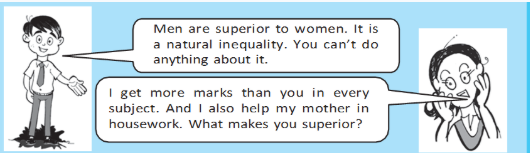
Equality of Opportunity
- Equal opportunity: All people are entitled to the same rights and opportunities to develop their talents and pursue their goals.
- Fair access: Inequality arises when people lack equal access to basic goods such as education, health care and safe housing.
Natural and Social Inequalities
Why Birth-Based Inequality Concerns Advocates of Equality
- A person is born into a particular family or social circumstance.
- That circumstance can limit access to basic goods and opportunities.
- Limited access can restrict the person’s ability to develop and pursue goals.
- Advocates of equality therefore seek to minimise and eliminate these birth-based disadvantages.
- Common humanity
- Shared human worth, which grounds equal respect and universal human rights.
- Equality of opportunity
- Fair access to rights and basic goods needed to develop abilities and pursue goals.
- Natural inequality
- A difference associated with characteristics and abilities people are born with, generally assumed to be unalterable.
- Socially produced inequality
- A difference created by social arrangements, unequal opportunities or exploitation.
Does equality require identical treatment or the elimination of all differences?
What is the difference between natural and socially produced inequalities?
Which inequalities are of greatest concern to advocates of equality?
Quick recap
- Equality holds that all people have equal worth and deserve equal consideration and respect; this ideal is also affirmed by faiths that regard human beings as creations of God.
- The ideal has challenged privilege and inspired revolutionary, anti-colonial and continuing social struggles.
- People accept equality as an ideal, but major inequalities in wealth, resources, health and opportunities persist.
- Equal respect does not require identical treatment or equal outcomes in every area.
- Equality of opportunity requires fair access to education, healthcare, safe housing and other basic goods.
- Natural inequalities are associated with inborn characteristics and abilities; social inequalities are created by society, and the boundary can be difficult to judge.
- Equality advocates seek to reduce disadvantages rooted in a person’s family or circumstances at birth.
Three Dimensions of Equality
Dimensions of Equality
Three dimensions
- Political equality concerns equal citizenship and rights.
- Social equality concerns fair opportunities and conditions across groups.
- Economic equality concerns differences in wealth, property and income.
- Together, these dimensions help build a more just and equal society.
Political Equality
Political equality — Equal citizenship and legal rights for all members of a state, enabling them to participate in public affairs.
Rights and limits
- Equal citizenship includes the right to vote and freedoms of expression, movement, association and belief.
- Legal protection: these rights are guaranteed by the constitution and laws.
- Equal opportunity is also demanded to create a “level playing field” for citizens.
- Limit: equal legal rights alone cannot remove inequalities caused by unequal resources and opportunities.
Social Equality
Social equality — Fair chances for people from different groups to access opportunities and social goods.
Making opportunity meaningful
- Legal equality removes formal barriers to participation and access to social goods.
- Fair competition requires reducing the effects of social and economic disadvantage.
- Minimum conditions should include adequate health care, good education, nourishment and a minimum wage.
- Why it matters: without these conditions, people cannot compete on equal terms and society may waste a large pool of talent.
Gender barriers and the role of the state
- Barriers can include unequal inheritance rights, restrictions on activities, and discouragement from higher education.
- State action should prevent discrimination and harassment, and encourage women's access to education and professions.
- Social responsibility: groups and individuals can raise awareness and support people exercising their rights.
Inequalities in Education
Graduates per thousand persons in urban India
- Reading the figures: differences between communities raise questions about unequal opportunity; the figures alone do not establish their causes.
- Possible influences include caste-based barriers and differences in social and economic resources.
| Caste/community | Graduates per 1,000 persons |
|---|---|
| Scheduled Caste | 47 |
| Muslim | 61 |
| Hindu–OBC | 86 |
| Scheduled Tribes | 109 |
| Christian | 237 |
| Sikh | 250 |
| Hindu–Upper Caste | 253 |
| Other Religions | 315 |
| All India average | 155 |
Data source
- 1999–2000The National Sample Survey Organisation's 55th-round survey reported the education figures.
Economic Equality
Economic inequality — Significant differences in wealth, property or income between individuals or classes.
Measuring inequality
- Relative gap: compare the wealth or income of the richest and poorest groups.
- Poverty measure: estimate how many people live below the poverty line.
- Equal opportunity can let people with talent and determination improve their position, even if differences in outcomes remain.
- Absolute equality of wealth or income has probably never existed in a society.
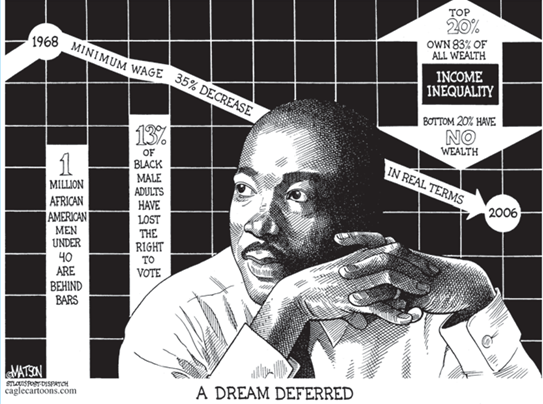
Entrenched inequality
- Entrenched inequality persists across generations and is especially harmful to society.
- Power and wealth concentrated in one class can make reform difficult and divide society into wealthy and persistently poor groups.
How entrenched inequality can threaten society
- Wealth and power remain concentrated across generations.
- Society becomes divided between powerful wealthy classes and persistently poor groups.
- Class differences can fuel resentment and violence.
- The power of wealthy classes can obstruct reforms toward a more open and egalitarian society.
Marxist and Liberal Views
Marx
- 19th centuryKarl Marx argued that private ownership of important economic resources was a root cause of entrenched inequality.
| Point | Marxist/socialist view | Liberal view |
|---|---|---|
| Main concern | Economic inequality and the ownership of essential resources | Unjust or entrenched inequalities that limit people's capabilities |
| Cause or mechanism | Private ownership of key resources creates wealth and political power for owners. | Open, fair competition is the most efficient and just way to distribute rewards. |
| Preferred response | Go beyond equal opportunity; seek public control over essential resources and property. | The state should help secure a minimum standard of living and equal opportunity, while preserving fair competition. |
| Relationship between inequalities | Economic inequality can support social inequalities such as differences of rank or privilege. | Political, social and economic inequalities are not necessarily linked; each needs an appropriate strategy. |
Competition in practice
- Liberal view: fair competition for jobs or educational places rewards talent and effort.
- Regulation: government and courts may regulate institutions and entrance tests to help ensure a fair chance to compete.
- Outcome: some people may not get limited places, but the selection process is considered fair if competition is open and equal.
Feminism
Feminism — A political doctrine advocating equal rights for women and men.
Patriarchy — A social, economic and cultural system that values men over women and gives men power over women.
| Point | Sex | Gender |
|---|---|---|
| Meaning | Biological differences between women and men | Social roles assigned to women and men |
| Example | Only women can become pregnant and bear children. | This does not mean that only women must care for children. |
Gender inequality and the public/private divide
- Feminist argument: many inequalities between women and men are socially produced, not natural or unavoidable.
- Traditional division: women are assigned private/domestic work; men are associated with the public domain.
- Double burden: many women work outside the home and still carry primary responsibility for housework.
- Unequal voice: women may have little say in public decisions despite their participation in public work.
- Feminist aim: eliminate the public/private division and gender inequalities so women and men can live freely and equally.
Socialism
Socialism — A set of political ideas that arose in response to inequalities produced and reproduced by industrial capitalism.
Socialist priorities
- Aim: reduce inequality and distribute resources justly.
- Markets: socialists are not necessarily opposed to markets, but favour government regulation, planning and control in key areas such as education and health care.
Rammanohar Lohia's Sapta Kranti
- Five inequalities to fight simultaneously: inequality between men and women; inequality based on skin colour; caste inequality; colonial rule; and economic inequality.
- Seven revolutions: Lohia added a revolution for civil liberties against unjust intrusion into private life, and a revolution for non-violence and renunciation of weapons in favour of Satyagraha.
- Key idea: inequalities have independent roots and must be fought separately and simultaneously—not assumed to disappear automatically when class inequality ends.
- Equality of opportunity
- A fair chance for people to compete for opportunities and social goods.
- Entrenched inequality
- Inequality that persists relatively unchanged across generations.
- Patriarchy
- A system that privileges men and gives them power over women.
- Gender
- Social roles associated with women and men.
- Double burden
- Women's paid or public work alongside primary responsibility for housework.
- Sapta Kranti
- Lohia's ideal of socialism based on seven revolutions against inequality and injustice.
Why are equal legal rights alone insufficient to create social equality?
How do Marxist/socialist and liberal approaches differ on economic inequality?
What is Lohia's Sapta Kranti?
Quick recap
- Equality has political, social and economic dimensions; each is needed for a just society.
- Political equality guarantees equal citizenship and legal rights, but does not by itself remove unequal opportunity.
- Social equality requires fair access and minimum life conditions; discrimination can block these chances.
- Economic inequality can be measured through wealth or income gaps and the extent of poverty; entrenched inequality can produce division and conflict.
- Marxist/socialist views emphasise ownership and public control, while liberal views prioritise fair competition and equal opportunity.
- Feminism challenges patriarchy and socially assigned gender roles; socialism seeks fairer distribution and action against multiple inequalities.
- Lohia's Sapta Kranti combines five struggles against inequality with struggles for civil liberties and non-violence.
How Can We Promote Equality?
Establishing Formal Equality
- End privileges: Formal equality requires ending customs and laws that deny some groups opportunities or rewards.
- Equal treatment by law: The Constitution prohibits discrimination on grounds such as religion, race, caste, sex or place of birth, and abolishes untouchability.
Equality Through Differential Treatment
- Beyond identical treatment: Equality before the law may not be enough; sometimes people need different treatment to enjoy equal rights.
- Examples: Ramps can enable disabled people to enter public buildings, while safe transport can protect women working at night.
Affirmative Action
| View | Main argument |
|---|---|
| For | Past discrimination and unequal starting points mean that some groups need special support to gain a fair opportunity. |
| Against | Reservations may be seen as unfairly denying equal treatment to others and as reverse discrimination. |
| Against | Making distinctions based on caste or colour may reinforce social divisions and prejudices; supporters of this view argue that social distinctions should be removed. |
Equal Rights and Fair Competition
How inequality limits opportunity
- Unequal access to good schools and health care
- Poor children in rural areas or urban slums may attend schools with limited facilities
- Early disadvantages continue to affect qualifications and access to coaching
- High professional-course fees and limited preparation hinder admission
- Students cannot compete on equal terms for courses and jobs
Policy choices and identifying disadvantage
- Goal and disagreement: The goal of equal opportunity is widely recognised; debate focuses on which policies best achieve it.
- Policy options: Governments may reserve seats or provide facilities that develop skills and talents from an early age.
- Identification: A key question is whether disadvantage should be measured economically or through social inequalities such as caste.
- Test of policy: Policies should be judged by whether they make society more egalitarian and fair.
| Point | Identical treatment | Treating people as equals |
|---|---|---|
| Approach | Treat everyone in exactly the same way. | Consider whether different support is needed to secure equal rights. |
| Aim | Apply the same rule to everyone. | Promote equality and fair opportunity, sometimes through differential treatment. |
| Safeguard | Can overlook unequal barriers. | Special measures must be justified and must not create new dominance or oppression. |
Women’s struggle for equal rights
- Nineteenth centuryWomen demanded the right to vote, to earn degrees, and to work.
- As women entered the job marketThey highlighted the need for maternity leave and workplace crèches to exercise equal rights and compete for jobs.
- Check necessity: Does the measure help a group enjoy the same rights as others?
- Check its effects: Does it reduce disadvantage without creating new privilege, dominance, or oppression?
- Keep the purpose clear: Differential treatment is justified as a means to a just and egalitarian society.
- Formal equality
- Equal treatment under the law and removal of legal privileges or restrictions.
- Affirmative action
- Positive measures to reduce entrenched disadvantage and improve equality of opportunity.
- Reservation
- A policy setting aside seats in education or jobs for deprived groups.
- Reverse discrimination
- A criticism that preferential policies unfairly disadvantage groups not receiving the preference.
Why may differential treatment be necessary to promote equality?
What is affirmative action, and why is it debated?
Quick recap
- Formal equality removes legal discrimination and privileges, but may not remove real barriers.
- Differential treatment can promote equality when it helps people access the same rights and opportunities.
- Affirmative action addresses the lasting effects of past exclusion; reservations are one Indian example.
- Debate concerns which policies create fair opportunities and how disadvantage should be identified.
- Special measures must be justified and guarded against creating new dominance or oppression.
Political Science — ALL CHAPTERS
1
Constitution: Why And How?
2
Rights In The Indian Constitution
3
Election And Representation
4
Executive
5
Legislature
6
Judiciary
7
Federalism
8
Local Governments
9
Constitution as A Living Document
10
The Philosophy Of The Constitution
1
INTRODUCTION TO POLITICAL THEORY
2
FREEDOM OVERVIEW
3
EQUALITY
4
SOCIAL JUSTICE
5
RIGHTS
6
CITIZENSHIP
7
NATIONALISM
8
SECULARISM