Class 11 Humanities . Political Science . India Constitution At Work . Constitution As a Living Document
Chapter 9: Constitution as A Living Document
Ch 9
Political Science
Class 11 Humanities
Are the Constitution Static ?
Constitutions Can Change
India: Continuity
- 26 November 1949The Constitution of India was adopted.
- 26 January 1950The Constitution formally came into effect.
Why India’s Constitution Continues to Serve
- Robust framework: Its basic structure is well suited to India and provides a stable framework for government.
- Foresight: The Constitution-makers provided for many possible future situations.
- Adaptability: No constitution can anticipate every eventuality or remain suitable without any change.
- Flexible working: Constitutional interpretation through political practice and judicial rulings has shown maturity and flexibility.
France: Changing Constitutions
- 1793A post-revolution constitution marked the First French Republic.
- 1848The Second French Republic began.
- 1875A new constitution established the Third French Republic.
- 1946A new constitution established the Fourth French Republic.
- 1958A new constitution established the Fifth French Republic.
A Constitution: Present Needs and Future Framework
Living document — A living document is a constitution that can be modified and interpreted flexibly as society’s needs change.
| Point | Supreme and respected | Changeable when needed |
|---|---|---|
| Status | The Constitution stands above ordinary law and should be respected by future generations. | It is not unalterable; changing social needs may require constitutional modifications. |
| Risk if taken to an extreme | Treating it as untouchable can prevent necessary change. | Treating it like an ordinary law can weaken its special status. |
Why the Indian Constitution Is a Living Document
- Society changes and new situations arise.
- The Constitution recognises that some provisions may need modification.
- Political practice and judicial rulings interpret and apply it flexibly.
- It remains both a respected framework and an adaptable instrument of democratic governance.
- Constitutional modification
- A change to constitutional provisions to meet changing needs.
- Constitutional interpretation
- The way constitutional provisions are understood and applied in practice.
- Living document
- A constitution that retains its framework while allowing change and flexible interpretation.
- Ordinary law
- A law that does not have the Constitution’s special status above other laws.
Why is the Indian Constitution called a living document?
What balance did the makers of the Indian Constitution seek?
What two roles must a constitution perform?
Quick recap
- Constitutions may be replaced or revised after social change or political upheaval.
- India adopted its Constitution on 26 November 1949; it came into effect on 26 January 1950.
- A constitution must address current problems while providing a framework for the future.
- The Indian Constitution is above ordinary law but may be modified when changing needs require it.
- Flexible political practice and judicial rulings help keep the Constitution effective.
- The Constitution is a living document, not a static or unalterable rulebook.
How to amend the Constitution
Why the Constitution Needs Both Flexibility and Rigidity
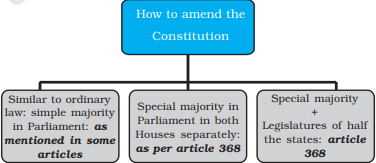
Three Ways to Amend the Constitution
Simple-Law Route
- “By law” in provisions such as Articles 2 and 3 means Parliament can modify them through an ordinary law, without using Article 368.
- No special distinction: For these provisions, the change is made in the same way as an ordinary law.
- Result: Some parts of the Constitution are especially flexible.
Who Initiates and Approves Amendments?
- Flexible Constitution
- A Constitution whose provisions can be changed relatively easily.
- Rigid Constitution
- A Constitution whose provisions are difficult to amend.
- Special majority
- The parliamentary majority required for amendments under Article 368.
- Parliamentary sovereignty
- The principle that elected representatives have authority to decide on constitutional amendments.
Why does the Indian Constitution combine flexibility with rigidity?
What are the three routes for changing constitutional provisions?
What does the amendment procedure show about parliamentary sovereignty?
Quick recap
- The Constitution balances flexibility for necessary change with rigidity to protect important features.
- Articles such as Articles 2 and 3 can be changed by ordinary law, without Article 368’s procedure.
- Other amendments require a special majority in both Houses of Parliament.
- Some amendments also require consent from at least half the State legislatures.
- Amendments are initiated in Parliament; no outside body or referendum is required.
- The President cannot return an amendment bill for reconsideration; elected representatives make the final decision.
Special Majority
Simple Majority and Special Majority
- Simple majority: Ordinary legislative business is generally passed by a majority of members voting.
- Amendment process: Constitutional amendments follow stricter voting requirements than ordinary laws.
Special Majority for Constitutional Amendments
Lok Sabha examples
- Total strength: With 545 Lok Sabha members, at least 273 votes in favour are needed to meet the total-strength requirement.
- 300 members vote: The two-thirds threshold is 200, but the total-strength threshold is 273; therefore, at least 273 must support the bill.
- 400 members vote: Two-thirds is 266⅔, so at least 267 votes are needed by that test. The total-strength threshold is higher, so 273 votes are required.
If 400 Lok Sabha members vote on an amendment bill, how many votes in favour are needed?
Principles in Amendment Procedures
| Country | Amendment procedure mentioned |
|---|---|
| United States | Two-thirds majority |
| South Africa and Russia | Three-fourths majority for some amendments |
| Switzerland | People can initiate an amendment |
| Russia and Italy | Examples where people can initiate or approve amendments |
Why Amendments Need Broad Support
- Both Houses must approve separately with a special majority
- A narrow governing-party majority cannot pass an amendment alone
- Support from opposition parties and parliamentarians is needed
- The procedure promotes broad political consensus
Ratification by States
- Special majority
- For an amendment, support from at least half the House’s total strength and at least two-thirds of members voting.
- Ratification by States
- Approval by legislatures of at least half the States for specified constitutional amendments.
- Federalism
- A system in which powers are divided between the Union government and the States.
- Constitutional amendments require special-majority approval in each House separately.
- Some amendments also need approval from at least half the State legislatures.
- The procedure prevents easy tampering while allowing future generations to adapt the Constitution.
Quick recap
- Ordinary legislation generally needs a simple majority of members voting.
- An amendment needs at least half the House’s total strength and two-thirds of members voting.
- Both Houses must pass an amendment separately; there is no joint session.
- Some amendments also require approval by at least half the State legislatures.
- State legislatures use a simple-majority rule for this ratification.
- These requirements encourage broad consensus while keeping amendment possible.
Why have there been so many Amendments ?
The Pattern of Constitutional Amendments
Amendments over time
- By 26 January 2024: The Constitution had completed 74 years and had been amended 106 times, despite its relatively difficult amendment procedure.
- 1970–1990: These two decades saw a large number of amendments.
- 1974–1976: Ten amendments were made within three years during a period of Congress dominance. Congress had 352 Lok Sabha seats and a majority in most State Assemblies.
- 2001–2003: Ten amendments were also made within three years amid coalition politics, different parties governing different States, and rivalry between the BJP and its opponents.
- Key inference: The pace of amendments does not depend only on the size or nature of the ruling party’s majority.
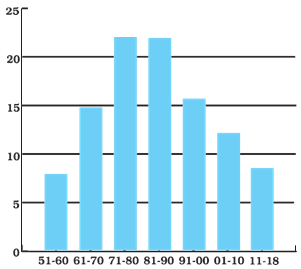
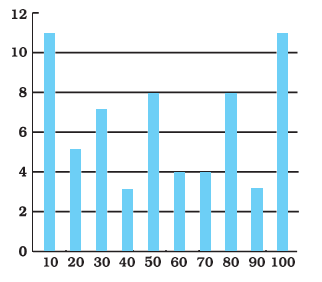
Key periods in the amendment pattern
- 1970–1990The two decades saw a large number of amendments.
- 1974–1976Ten amendments were made in three years during Congress dominance; Congress had 352 Lok Sabha seats and a majority in most State Assemblies.
- 2001–2003Ten amendments were made in three years amid coalition politics.
- 26 January 2024The Constitution completed 74 years and had been amended 106 times.
Why Amendments Are Made
Interpreting the number of amendments
- Common criticism: 106 amendments in 74 years may seem like too many, especially because the Constitution has a relatively difficult amendment procedure.
- Pattern: Apart from the first decade after the Constitution came into force, every decade saw a steady stream of amendments.
- Main point: Amendments were needed from time to time under different political conditions; their occurrence cannot be explained only by party politics.
- Do not conclude from the number alone: It does not by itself prove that the original Constitution was inadequate or that the Constitution is too flexible.
Contents of Amendments Made So Far
Three groups of amendments
- Classification: Amendments made so far can be classified into three groups.
- First group: Technical or administrative amendments that clarify, explain, or make minor modifications to original provisions.
- Scope here: These amendments are changes in the legal sense but do not substantially alter the provisions; the examples below illustrate this first group.
Technical or administrative amendment — An amendment that clarifies, explains, or makes a minor change to an original provision without substantially changing its effect.
| Example | Amendment | Purpose or effect |
|---|---|---|
| High Court judges’ retirement age | 15th Amendment | Raised the age from 60 to 62 years. |
| Judges’ salaries | 54th Amendment | Increased the salaries of High Court and Supreme Court judges. |
| Reserved seats for Scheduled Castes and Scheduled Tribes | Six amendments so far | Extended the original ten-year reservation period by another ten years each time to ensure fair representation. |
| President and ministerial advice | Amendment to Article 74(1) | Clarified that the Council of Ministers’ advice is binding on the President; it reiterated the established practice. |
Why does the number of amendments not depend only on the ruling party’s majority?
What is a technical or administrative amendment? Give one example.
- Constitutional amendment
- A formal change made to the Constitution.
- Technical amendment
- A clarification or minor change that makes no substantial difference to a provision.
- Article 74(1)
- The provision clarified to state that the President is bound by the Council of Ministers’ advice.
- Reserved seats
- Legislative seats reserved for Scheduled Castes and Scheduled Tribes, with the period extended periodically.
Quick recap
- By 26 January 2024, the Constitution had completed 74 years and had been amended 106 times.
- Ten amendments were made in both 1974–1976 and 2001–2003 under very different political conditions; in 1974–1976 Congress had 352 Lok Sabha seats and a majority in most State Assemblies.
- Amendments occurred across decades and were not determined only by the ruling party’s majority.
- Amendments are classified into three groups; the material here describes the technical or administrative group.
- Technical amendments clarify or slightly modify provisions without substantially changing them.
- Examples include changes to judges’ retirement age and salaries, reservation extensions, and Article 74(1).
Differing Interpretations
Different Interpretations of the Constitution
- Interpretations: The judiciary and the government sometimes differed over the meaning and scope of constitutional provisions.
- Amendments: Parliament sometimes amended the Constitution to establish its preferred interpretation, especially between 1970 and 1975.
Amendments Through Political Consensus
- Political consensus: Agreements among political parties led to amendments reflecting changing political ideas and society’s aspirations.
- Broad support: Many amendments after 1984 were passed despite coalition politics because parties reached agreement on important issues.
Controversial Amendments
How the Constitutional Balance Was Restored
- Controversial amendments during the Emergency period
- Opposition criticism that the Constitution was being undermined
- Congress defeated in the 1977 election
- New government passed the 43rd and 44th Amendments
- Most changes made by the 38th, 39th and 42nd Amendments were cancelled
- Constitutional interpretation
- The way an institution understands the meaning and scope of constitutional provisions.
- Political consensus
- Broad agreement among political parties that a constitutional change is needed.
- Judicial review
- The judiciary’s power to review laws and government action.
- Anti-defection
- Measures addressing elected representatives changing political allegiance.
What were the main areas of disagreement between Parliament and the judiciary?
State four major effects of the 42nd Amendment.
Quick recap
- Parliament and the judiciary have sometimes interpreted constitutional powers differently.
- Parliament amended the Constitution in response to judicial rulings, especially during 1970–1975.
- Political consensus supported several amendments, including those on anti-defection, voting age, local government and reservations.
- The 38th, 39th and 42nd Amendments were especially controversial and were made in the context of the Emergency.
- The 42nd Amendment made wide-ranging changes, including adding Fundamental Duties and restricting judicial review.
- The 43rd and 44th Amendments reversed most changes made by the 38th, 39th and 42nd Amendments.
Basic Structure of Constitution
The Basic Structure Doctrine
Basic structure doctrine — The doctrine that Parliament may amend the Constitution, but no amendment may damage its basic structure.
The Kesavananda Bharati ruling
- Case: The Supreme Court established the doctrine in the Kesavananda Bharati case in 1973.
- Amending power: Parliament may amend any part of the Constitution, subject to the basic-structure limit.
- Judicial authority: The Judiciary has the final say on whether an amendment violates the basic structure and what that structure includes.
- Constitutional status: The doctrine is not written in the Constitution; it developed through judicial interpretation and acts as an informal constitutional change.
- Acceptance: The ruling has guided constitutional interpretation, and the country’s institutions have accepted the doctrine.
| Aspect | Rigid feature | Flexible feature |
|---|---|---|
| Amendments | The basic structure cannot be damaged. | Other parts of the Constitution may be amended. |
Judicial Interpretation and Constitutional Evolution
How court rulings shape constitutional practice
- Basic structure: Since 1973, the Supreme Court has elaborated on the doctrine through later cases.
- Reservations: The Court held that reservations in jobs and educational institutions should not exceed 50% of the total seats.
- Creamy layer: In cases concerning reservations for Other Backward Classes, the Court introduced the creamy-layer principle; those classified in this category are not entitled to reservation benefits.
- Rights: Judicial interpretation has also shaped the understanding of the right to education, the right to life and liberty, and the right to form and manage minority educational institutions.
- Effect: These interpretations help the Constitution evolve without a formal amendment.
Judicial Interpretation as Constitutional Change
- Constitutional questions arise in changing social and political conditions.
- The Supreme Court interprets relevant constitutional provisions.
- Rulings clarify how provisions apply in practice.
- Those interpretations become part of the Constitution’s evolving operation, without a formal amendment.
Review of the Constitution
The Constitution review commission
- Purpose: Efforts to review the entire Constitution took place in the late 1990s.
- Appointment: In 2000, the Government of India appointed a commission to review how the Constitution was working.
- Chairperson: It was chaired by Justice Venkatachaliah, a retired Chief Justice of the Supreme Court.
- Controversy: Opposition parties and several organisations boycotted the commission amid political controversy.
- Outcome: The commission upheld the basic-structure doctrine and proposed no measures that would endanger it, showing the doctrine’s importance in constitutional practice.
Key Dates and Periods
- 1950 onwardThe question of Parliament’s supremacy repeatedly arose in constitutional and legal debates.
- 1973The Supreme Court gave the Kesavananda Bharati ruling, establishing the basic-structure doctrine.
- Late 1990sEfforts were made to review the entire Constitution.
- 2000The Government of India appointed the Constitution review commission chaired by Justice Venkatachaliah.
The Constitution as a Living Document
Living constitution — A constitution that responds to new experiences and changing circumstances through amendment, interpretation and evolving democratic practices.
Why a living Constitution matters
- Adaptability: The Constitution remains effective through social change because it can respond to new situations and interpretations.
- Democratic evolution: Democratic ideas and practices develop over time as society engages in new experiments.
- Durability: A Constitution that protects democracy while allowing new practices can remain durable and earn citizens’ respect.
- Key test: A democratic Constitution must protect both itself and democracy.
| Point | Parliament’s role | Constitutional framework |
|---|---|---|
| Basis of authority | It represents the people and is expected to have an upper hand over the Executive and Judiciary. | The Constitution assigns powers to different organs of government. |
| Limit | Parliament’s authority must operate within the constitutional framework. | The rule of law and institutional balance limit the exercise of power. |
Democracy and institutions
- More than elections: Democracy involves votes and representation, but also the rule of law and functioning institutions.
- Accountability: Political institutions must be responsible to the people.
- Balance: Government institutions must maintain a balance with one another.
- Basic structure
- The fundamental features of the Constitution that Parliament cannot damage through amendment.
- Judicial interpretation
- The Judiciary’s explanation of constitutional meaning and how provisions apply.
- Creamy layer
- A category excluded from reservation benefits under the Court’s ruling on OBC reservations.
- Rule of law
- The principle that government power must operate under law.
- Living constitution
- A Constitution that adapts to changing circumstances through interpretation and evolving practices.
What did the Kesavananda Bharati ruling establish?
How can judicial interpretation contribute to constitutional change?
Why must Parliament’s supremacy operate within the Constitution?
Quick recap
- The Supreme Court established the basic-structure doctrine in the 1973 Kesavananda Bharati case.
- Parliament may amend the Constitution, but cannot damage its basic structure; the Judiciary decides what that limit means.
- Judicial rulings on reservations and rights have helped constitutional practice evolve without formal amendments.
- The 2000 review commission, chaired by Justice Venkatachaliah, upheld the basic-structure doctrine.
- A living Constitution adapts to changing circumstances while protecting democracy.
- Parliament represents the people, but its authority operates within the Constitution, the rule of law and institutional balance.
Contribution of the Judiciary
Judiciary, Parliament and Constitutional Limits
| Point | Parliament | Judiciary |
|---|---|---|
| Role and concern | Saw law-making and amendment as necessary to advance the interests of poor, backward and needy people. | Held that welfare measures must remain within the Constitution and follow legal procedures. |
| View of power | Emphasised the responsibility to act for people's welfare. | Warned that bypassing laws, even for good ends, could enable arbitrary use of power. |
The Basic Structure Theory
- Constitutional balance: The Kesavananda ruling resolved tensions by considering the Constitution's underlying spirit, not only its literal wording.
- Not expressly named: The Constitution does not list or use the term “basic structure”; the Judiciary developed the theory through interpretation.
- Core idea: Basic structure means the essential features without which the Constitution could not be imagined.
- Purpose: The theory limits changes that would damage the Constitution's fundamental identity.
| Point | Letter | Spirit |
|---|---|---|
| Meaning | The document's literal words. | The intentions, values and social aspirations behind the document. |
| How it guides interpretation | Read the text as written. | Consider the context and purposes that produced the text. |
| In the basic-structure approach | The Constitution does not expressly list a basic structure. | The Court identified essential features needed to preserve the Constitution. |
Maturity of Political Leadership
Constitutional Debate and Acceptance
- 1967–1973A fierce controversy took place between the Judiciary and Parliament over constitutional powers.
- After the Kesavananda rulingAttempts to get the Court to reconsider its decision failed; the 42nd Amendment asserted parliamentary supremacy.
- 1980In Minerva Mills, the Supreme Court reaffirmed its earlier stand.
How the Basic-Structure Limit Endured
- Parliamentary attempts to secure reconsideration of the Kesavananda ruling failed.
- The 42nd Amendment asserted parliamentary supremacy.
- The Supreme Court reaffirmed its stand in Minerva Mills (1980).
- Political parties, leaders, government and Parliament accepted the basic-structure limit; constitutional review could not cross it.
A Shared Constitutional Vision
- Common ideals: Leaders in the Constituent Assembly shared a vision of individual dignity and freedom, social and economic equality, everyone's well-being, and unity based on national integrity.
- Enduring commitment: Nehru described the vision at independence as a “tryst with destiny”; people and leaders continued to hope to realise it.
- Constitutional authority: This shared vision helped the Constitution remain respected and authoritative, with its basic public values intact.
Debate, Compromise and Popular Authority
Democratic Practice
- Debate is healthy: Disagreement over what belongs to the basic structure reflects democracy's diversity, openness and liveliness.
- Compromise matters: Political leaders must moderate extreme positions and find common ground through give-and-take.
- Shared responsibility: Government organs may compete over authority and disagree about public welfare, but constitutional politics requires limits and accommodation.
- Final authority: In the end, authority rests with the people; their freedoms and well-being are both the purpose and outcome of democracy.
- Basic structure
- Essential features that preserve the Constitution's fundamental identity.
- Letter of the Constitution
- The literal wording of the constitutional text.
- Spirit of the Constitution
- The purposes, values and aspirations underlying the constitutional text.
- Constitutional review
- Review of constitutional change within the limits set by the basic-structure theory.
Why did the Judiciary insist that welfare measures follow constitutional procedures?
How did the basic-structure theory balance the letter and spirit of the Constitution?
What made the working of the democratic Constitution successful?
Quick recap
- Parliament emphasised welfare-oriented law-making; the Judiciary insisted that it follow constitutional limits.
- The basic-structure theory is not explicitly written in the Constitution; the Judiciary developed it through interpretation.
- The Kesavananda ruling balanced constitutional wording with the document's underlying purpose and values.
- Minerva Mills (1980) reaffirmed the Court's stand after the 42nd Amendment asserted parliamentary supremacy.
- A shared vision of dignity, freedom, equality, well-being and national unity helped sustain respect for the Constitution.
- Democracy needs open debate and compromise, while final authority rests with the people.
Political Science — ALL CHAPTERS
1
Constitution: Why And How?
2
Rights In The Indian Constitution
3
Election And Representation
4
Executive
5
Legislature
6
Judiciary
7
Federalism
8
Local Governments
9
Constitution as A Living Document
10
The Philosophy Of The Constitution
1
INTRODUCTION TO POLITICAL THEORY
2
FREEDOM OVERVIEW
3
EQUALITY
4
SOCIAL JUSTICE
5
RIGHTS
6
CITIZENSHIP
7
NATIONALISM
8
SECULARISM