Class 11 Humanities . Geography . Fundamental Of Physical Geography . Biodiversity and Conservation
Chapter 14: Biodiversity And Conservation
Ch 14
Geography
Class 11 Humanities
Biodiversity And Conservation
Biodiversity: Distribution and Change
Environmental conditions and biodiversity
- Solar energy and water influence the degree of weathering in different climatic zones.
- Weathering mantle supports varied vegetation, contributing to differences in biodiversity.
- Abundant solar energy and water are associated with a wider range of biodiversity.
Biodiversity through time
- 2.5–3.5 billion yearsBiodiversity evolved over this long span of time.
- Before human emergenceEarth supported greater biodiversity than in any other period.
- Since human emergenceBiodiversity has declined rapidly, with species facing extinction through overuse.
Global patterns and estimates
- Estimated global species: Estimates range from 2 million to 100 million; 10 million is considered the best estimate.
- Newly discovered species: New species are regularly discovered, and most remain unclassified; about 40% of South American freshwater fishes are estimated to be unclassified.
- Tropical forests: These are particularly rich in biodiversity.
- Changing system: Biodiversity evolves at both the species level and the level of individual organisms.
- Species turnover: The average species half-life is estimated at 1–4 million years; 99% of all species that have lived on Earth are now extinct.
- Latitude pattern: Biodiversity is generally richer in the tropics; toward the poles, populations of fewer species become larger.
Meaning and Levels of Biodiversity
Biodiversity — The number and variety of living organisms in a specified region, including variation within and between species and ecosystems.
What biodiversity includes
- Living variety: Includes plants, animals and microorganisms, along with the genes they contain and the ecosystems they form.
- Living wealth: Biodiversity is the product of hundreds of millions of years of evolutionary history.
| Level | Meaning | Example or key point |
|---|---|---|
| Genetic diversity | Variation in genes within a species. | Humans belong to Homo sapiens but vary in height, colour and appearance; genetic variation supports healthy breeding. |
| Species diversity | Variety and number of species in a defined area. A species is a group of individual organisms with certain similarities in physical characteristics. | Measured through species richness, abundance and types; species-rich areas are called hotspots of diversity. |
| Ecosystem diversity | Differences among ecosystem types, habitats and ecological processes. | Community and ecosystem boundaries are not rigid, so defining their limits can be difficult. |
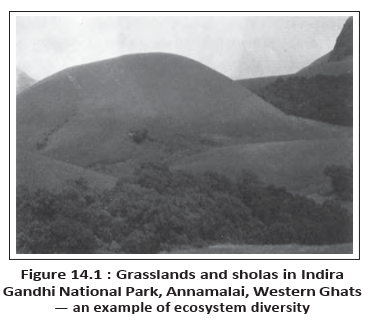
Importance of Biodiversity
Biodiversity and human communities
- Two-way relationship: Biodiversity has contributed to human culture, while human communities have shaped genetic, species and ecological diversity.
- Main roles: Biodiversity has ecological, economic and scientific importance.
Ecological Role
How species support ecosystems
- Ecosystem functions: Species capture and store energy, produce and decompose organic matter, cycle water and nutrients, fix atmospheric gases and help regulate climate.
- Interdependence: Organisms obtain what they need while also contributing to the lives and survival of other organisms.
- Resilience: Greater species diversity improves the chance that an ecosystem can withstand adversity and environmental change.
- Stability and productivity: More diverse ecosystems are generally more stable and productive; species loss weakens the ecosystem's ability to maintain itself.
Biodiversity and ecosystem stability
- Greater variety of species
- More ecosystem functions and responses available
- Greater capacity to withstand adversity and environmental change
- Higher likelihood of ecosystem stability and productivity
Economic Role
Biodiversity as a resource
- Daily life: Biodiversity provides resources used by people in everyday life.
- Agro-biodiversity: Crop diversity is an important part of biodiversity.
- Useful products: Biological resources support food, pharmaceutical and cosmetic products.
- Economic commodities: Examples include food crops, livestock, forests, fish and medicinal resources.
- Resource pressures: Treating biodiversity as a reservoir to draw from can contribute to its deterioration and create conflicts over resource ownership and division.
Scientific and Ethical Roles
Scientific value
- Evolution: Each species can provide clues about how life evolved and may continue to evolve.
- Ecosystem understanding: Studying biodiversity helps explain how life functions and how species sustain ecosystems, including those humans depend on.
- Intrinsic right
- The inherent right of every species to exist.
- Ethical responsibility
- People should respect other species' right to live; deliberately causing a species' extinction is morally wrong.
- Biodiversity as an indicator
- The level of biodiversity reflects the state of human relationships with other living species.
Culture and responsibility
- Cultural connection: Biodiversity is an integral part of many human cultures.
- Guiding principle: Humans should live while allowing other species to live.
What are the three levels of biodiversity?
Explain how biodiversity contributes to ecosystem stability.
Quick recap
- Biodiversity reflects the variety of life and is influenced by climatic inputs such as solar energy and water.
- The tropics, especially tropical forests, are richer in biodiversity than polar regions.
- Biodiversity has three levels: genetic, species and ecosystem diversity.
- Species are groups of organisms with similar physical characteristics; species diversity concerns their variety and number in an area.
- Species diversity is described through richness, abundance and types; species-rich areas are biodiversity hotspots.
- Biodiversity supports ecosystem functions, resilience, stability and productivity.
- It provides economic resources and scientific insight, and every species has an intrinsic right to exist.
Loss Of Biodiversity And Conservation Of Biodiversity
Loss of Biodiversity
- Human pressures: Population growth, overuse of resources and deforestation destroy habitats and accelerate biodiversity loss.
- Other causes: Natural calamities, pollution, introduced exotic species and poaching also damage biodiversity.
Threatened Species
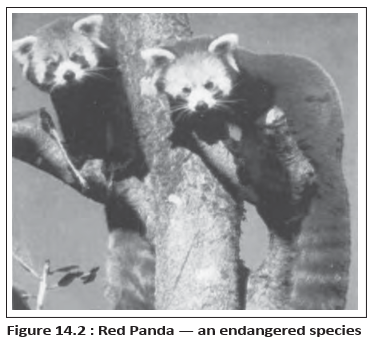
Conservation of Biodiversity
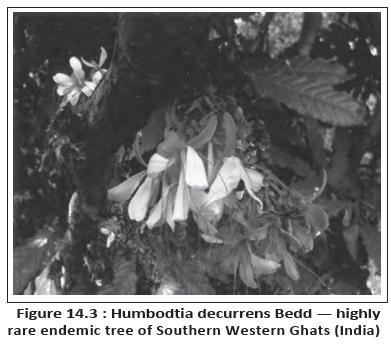
Conservation Measures and Agreements
Indian and International Action
- Convention on Biodiversity: India and 155 other nations signed it at the Earth Summit in Rio de Janeiro, Brazil, in June 1992.
- Wild Life (Protection) Act, 1972: India passed this Act to protect, preserve and propagate species within their natural boundaries.
- Protected areas: Under the Act, national parks and sanctuaries were established, and biosphere reserves were declared.
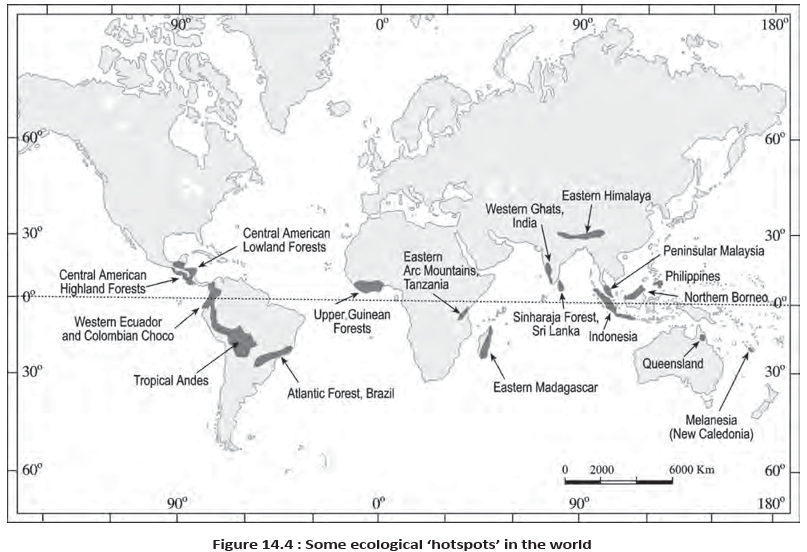
Mega-Diversity Centres and Hotspots
Key Conservation Dates
- 1972India passed the Wild Life (Protection) Act.
- June 1992India and 155 other nations signed the Convention on Biodiversity at the Earth Summit in Rio de Janeiro, Brazil.
- Exotic species
- A species introduced into a habitat where it does not naturally occur.
- Endemic
- Native to and restricted to a particular place or region.
- Primary productivity
- The production of organic matter by plants, forming the base of ecosystem resources.
Distinguish endangered, vulnerable and rare species.
State four measures recommended by the world conservation strategy.
Quick recap
- Human pressure, habitat destruction, calamities, pollution, exotic species and poaching all contribute to biodiversity loss.
- IUCN categories covered here are endangered, vulnerable and rare.
- Biodiversity supports human existence because species and ecosystems are interdependent.
- Conservation requires sustainable practices, local participation, habitat protection and continued conservation processes.
- India passed the Wild Life (Protection) Act in 1972 and signed the Convention on Biodiversity in June 1992.
- Mega-diversity centres contain exceptional species diversity; hotspots are areas prioritised for conservation.
Geography — ALL CHAPTERS
1
GEOGRAPHY AS A DISCIPLINE
2
THE ORIGIN AND EVOLUTION OF THE EARTH
3
INTERIOR OF THE EARTH
4
DISTRIBUTION OF OCEANS AND CONTINENTS
5
Geomorphic Processes
6
Landforms And Their Evolution
7
Composition And Structure Of Atmosphere
8
Solar Radiation, Heat Balance And Temperature
9
Atmospheric Circulation And Weather Systems
10
Water In The Atmosphere
11
World Climate And Climate Change
12
Water ( Oceans )
13
Movements Of Ocean Water
14
Biodiversity And Conservation
1
India - Location
2
Structure And Physiography
3
Drainage System
4
Climate
5
Natural Vegetation
6
Natural Hazards And Disasters