Class 7 . Social Science . Exploring Society India and Beyond Part II . Banks and the Magic of Finance
Chapter 8: Banks and the Magic of Finance
Ch 8
Social Science
Class 7
Introduction
Financial Infrastructure
Financial infrastructure — A network of institutions and systems that helps people, businesses and governments make financial transactions and manage money.
- Includes: Banks, payment systems, stock markets and other financial institutions.
- Role: Helps people, businesses and governments carry out financial transactions and manage money.
- Link to physical infrastructure: Financial infrastructure helps fund the development and maintenance of facilities such as roads and railways.
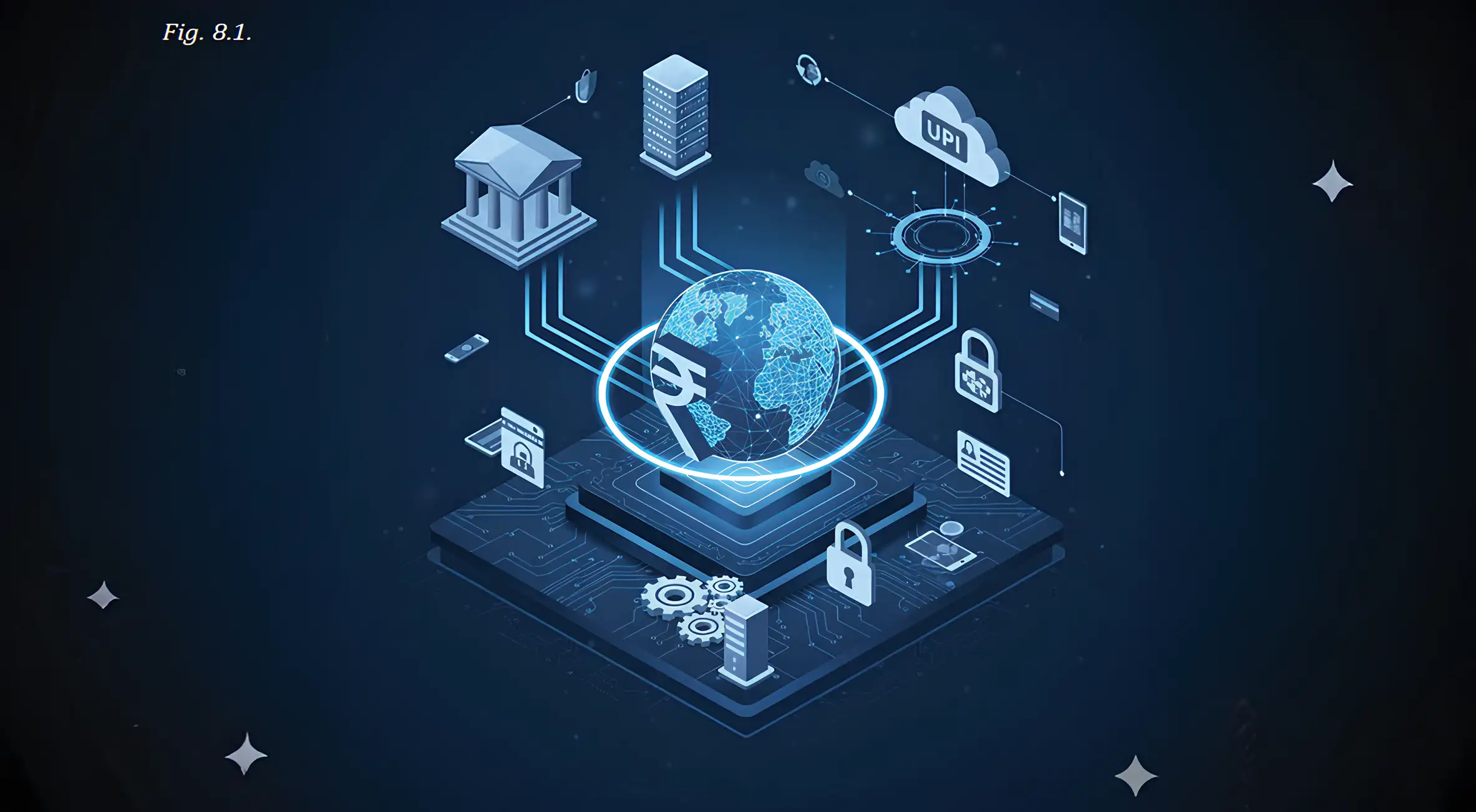
How Financial Infrastructure Supports Progress
- Financial institutions and systems enable transactions and money management.
- This supports economic activities by people, businesses and the government.
- Financial infrastructure helps mobilise funds for developing and maintaining physical infrastructure.
Banks: Deposits and Loans
Bank — A financial institution that collects money from people as deposits and lends money to borrowers as loans.
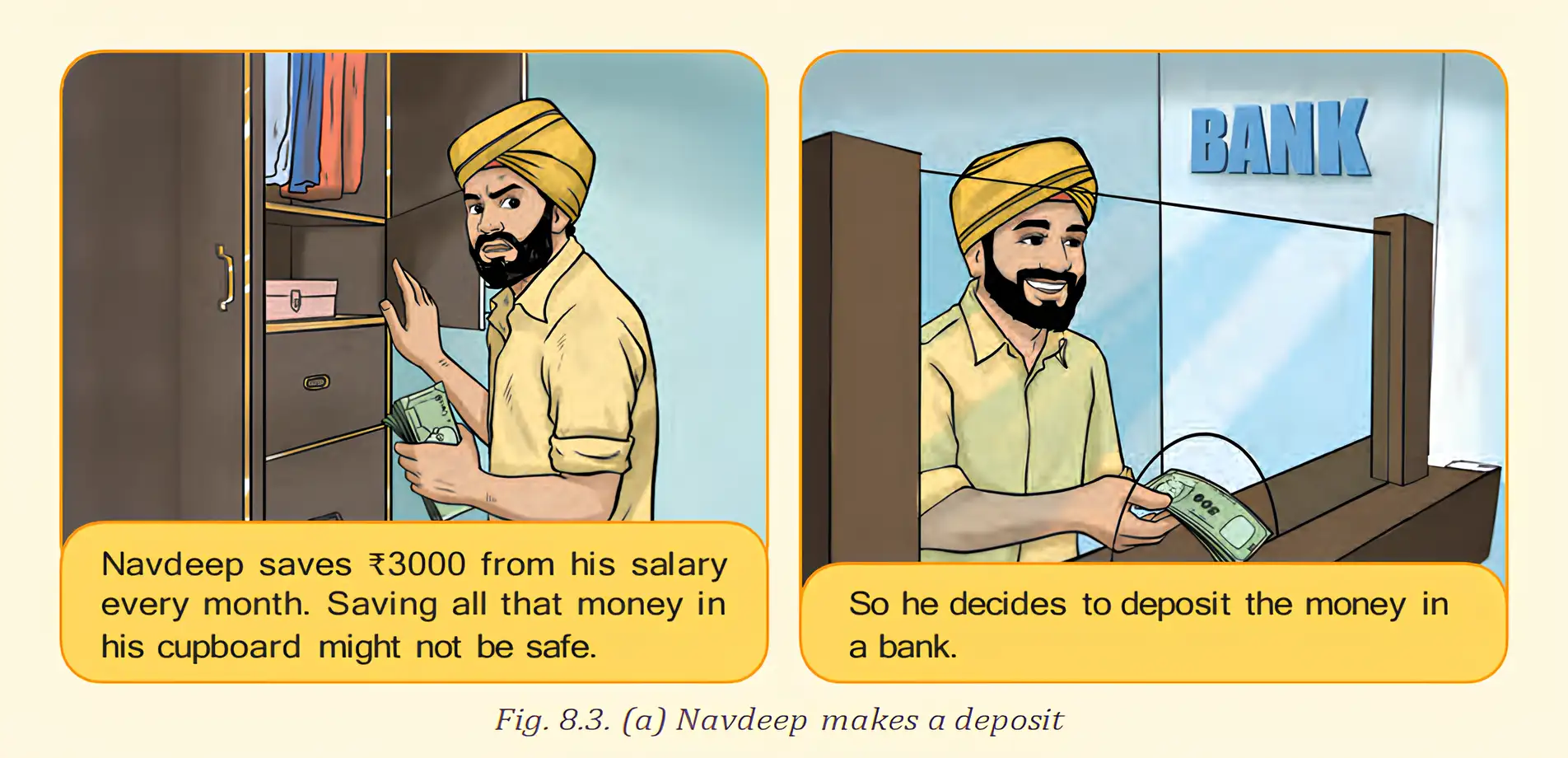
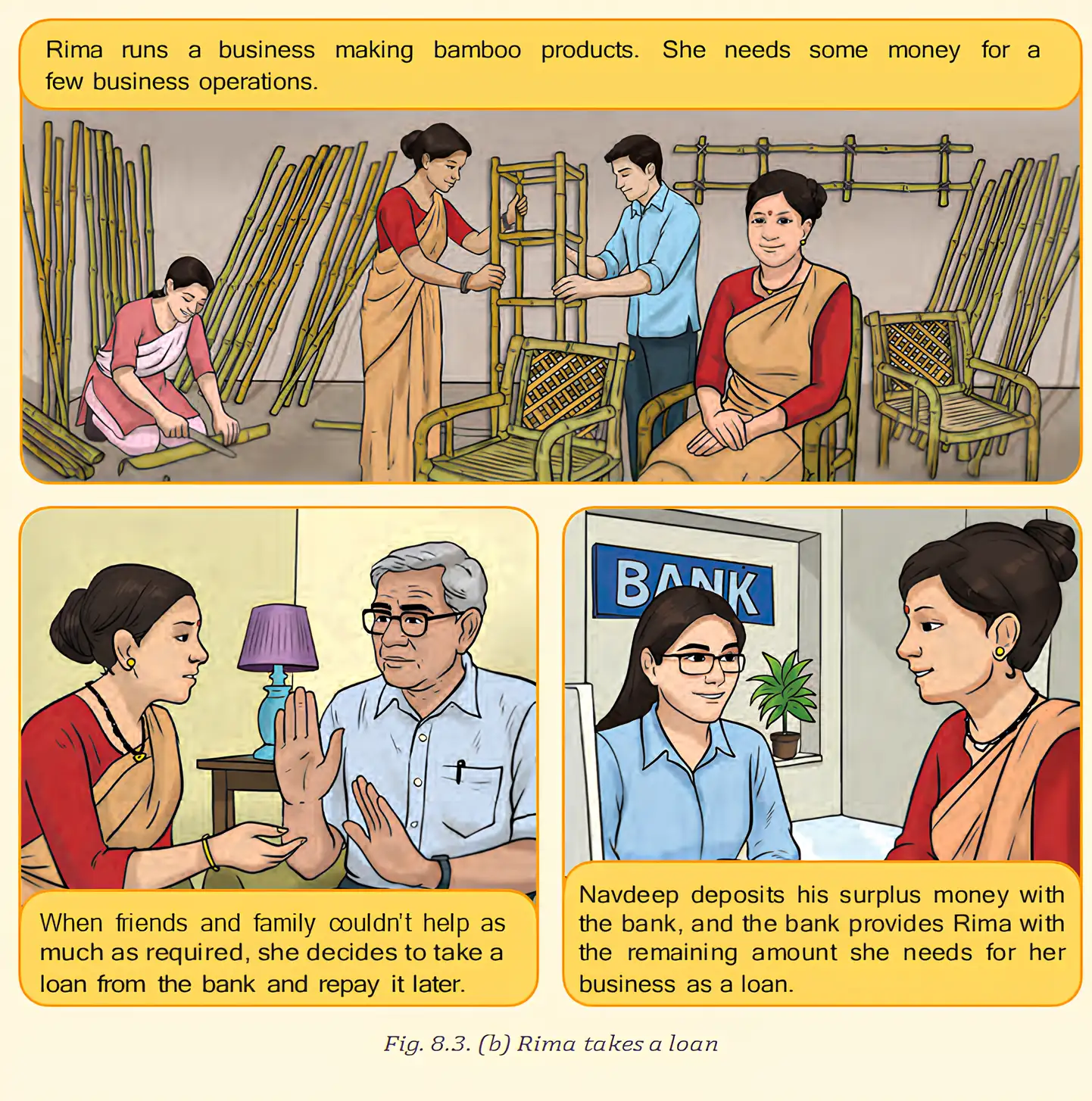
- For savers: People can deposit savings in a bank instead of keeping cash at home.
- For borrowers: A bank loan can help fund activities such as a business.
- Economic role: Banks connect people’s deposits with borrowers’ need for money and credit.
- Financial infrastructure
- Institutions and systems that enable financial transactions and money management.
- Deposit
- Money placed in a bank.
- Loan
- Money lent by a bank to a borrower.
- Credit
- Money made available to a borrower, for example through a bank loan.
What is financial infrastructure, and how does it support national progress?
What are the two main functions of a bank?
Quick recap
- Financial infrastructure enables transactions and money management for people, businesses and governments.
- It includes banks, payment systems, stock markets and other financial institutions.
- Banks collect deposits and lend money as loans.
- Bank loans can help borrowers fund activities such as a business.
- Financial infrastructure supports economic activity and helps fund physical infrastructure.
What are Banks and What do they do Part-1
Banks and Bank Accounts
What banks do
- Services: Banks make money transactions easier by helping people save, withdraw and borrow money.
- Users: Individuals such as farmers, shopkeepers and nurses, as well as businesses and institutions, use banks.
- Bank account: A person or business must open an account to use a bank’s services; they are then an account holder.
Deposits and Interest
Deposit — Money kept in a bank account that can be withdrawn according to the bank’s terms and often earns interest.
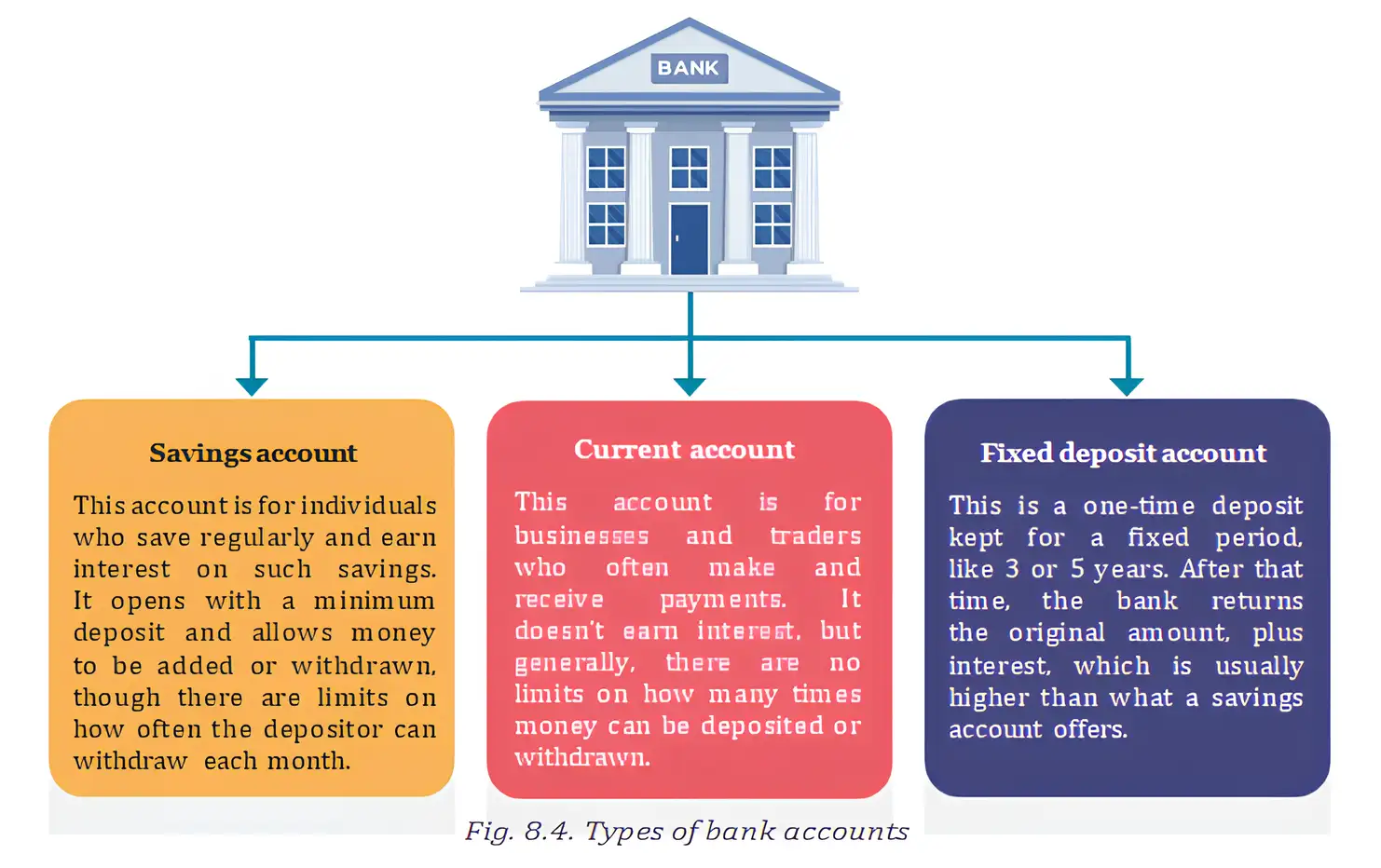
How deposits help
- Safety and lending: Banks keep deposited money safe and lend it to businesses or other people.
- Interest: In return, banks pay depositors extra money at regular intervals, such as monthly, quarterly or annually.
- Saving: Interest helps savings grow and encourages people to save.
Interest — The amount paid for borrowing money or earned by lending money, usually expressed as a percentage.
Quarterly — Occurring four times a year, once every three months.
Compounding: Interest on Interest
Compounding — Earning interest on the original deposit and also on interest added in earlier periods.
Example: Rs. 1,000 deposited at 6% per year
- After year 1: Interest is of , or ; the balance becomes Rs. 1,060.
- After year 2: Interest is now calculated on : of is ; the balance becomes Rs. 1,123.60.
- Over time: The interest earned grows because each period’s interest is added to the amount earning interest.
- Long-term result: If left for 12 years at this rate, Rs. 1,000 grows to Rs. 2,012.20.
How compounding grows savings
- Deposit earns interest → interest is added to the balance
- The new balance earns interest → the amount of interest increases
- Repeated over time → savings can grow substantially
Rice on the Chessboard
In the story of a king from Ambalappuzha and a sage, the reward began with one grain on the first chessboard square and doubled on each next square. It reached 128 grains on square 8, 32,768 on square 16 and over 210 crore on square 32—showing how repeated doubling creates very rapid growth.
Passbooks and Transaction Records
Passbook — A bank-provided record of money received into and paid out of an account; it can be updated at the bank.
Debit — Money taken out of an account.
Credit — Money received into an account.
| Date | Particulars | Cheque No. | Debit | Credit | Ending balance |
|---|---|---|---|---|---|
| 13.01.25 | Transfer/company salary account | — | — | 10,500.00 | 15,000.00 |
| 17.01.25 | Transfer/payment of rent | 10523 | 6,000.00 | — | 9,000.00 |
| 28.01.25 | UPI/Royal cinema | — | 1,500.00 | — | 7,500.00 |
| 29.01.25 | UPI/Coffee house | — | 400.00 | — | 7,100.00 |
| 03.02.25 | Cash deposit, self | — | — | 500.00 | 7,600.00 |
| 15.02.25 | SMS charges | — | 12.00 | — | 7,588.00 |
| 31.03.25 | Interest credit | — | — | 1,327.00 | 8,915.00 |
Why records matter
- Tracking: Passbook entries show when money entered or left the account and the resulting balance.
- Checking: Records help account holders review transactions and keep track of their money.
What is compounding, and how does it make savings grow?
What do debit and credit mean in a bank account?
Quick recap
- Banks provide saving, withdrawal and borrowing services to individuals, businesses and institutions.
- Deposits are kept by banks, which lend money and pay interest to depositors.
- Compounding means earning interest on earlier interest as well as on the original deposit.
- Repeated doubling, like the chessboard rice story, shows how quickly amounts can grow.
- A passbook records account transactions; debit is money out and credit is money in.
What are Banks and What do they do Part-2
Banks Offer Loans or Credit
Loan — Money borrowed from a bank or financial institution that must be repaid later with interest.
Why people and businesses borrow
- Individuals may borrow to buy a house or vehicle, or to fund education.
- Businesses may borrow to buy machinery and raw materials, transport goods, or launch new products.
- Repayment includes the original loan amount and the interest charged by the bank.
How Banks Earn from Interest
| Point | Savings deposits | Loans |
|---|---|---|
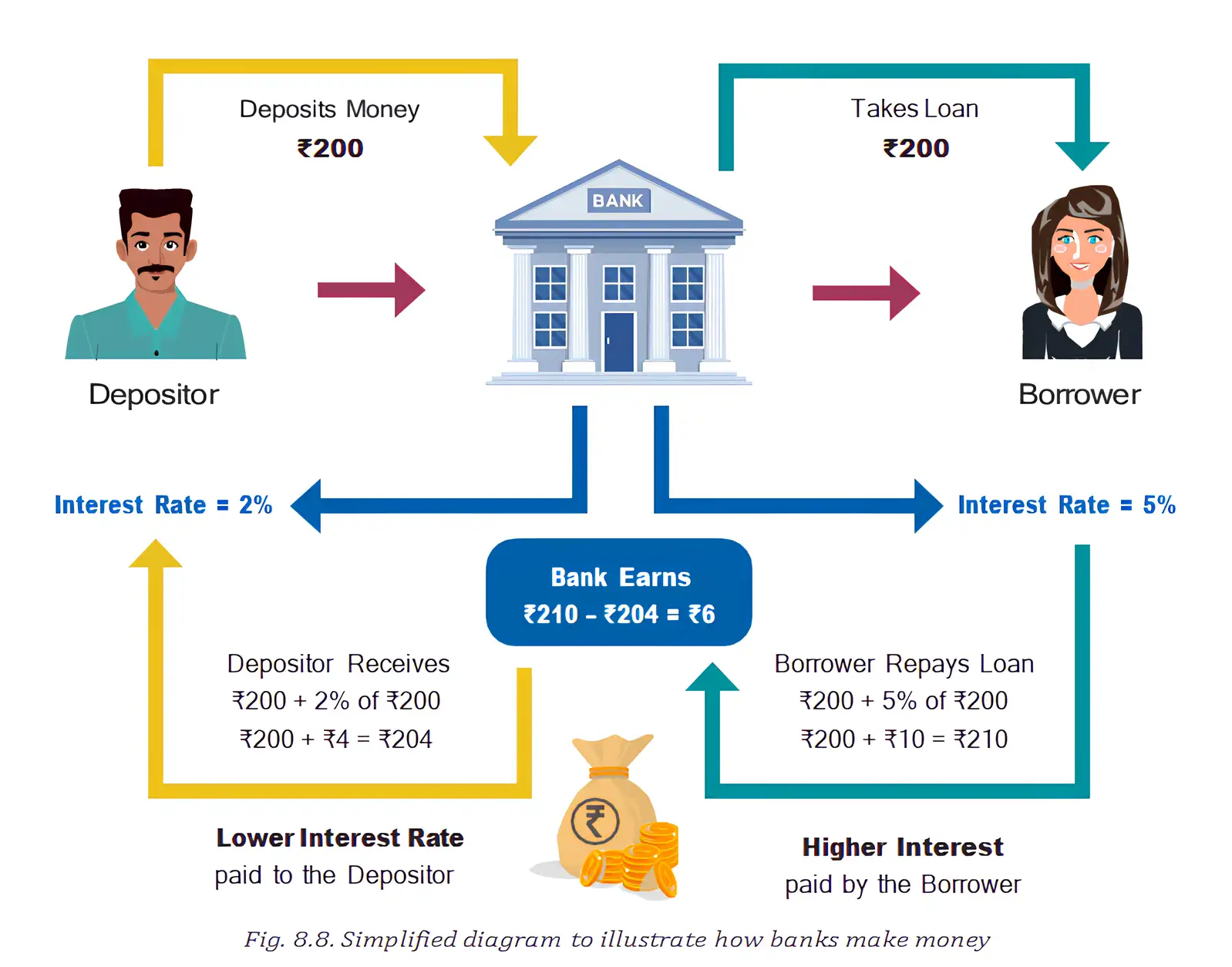
| Who receives or pays interest? | The bank pays interest to depositors. | Borrowers pay interest to the bank. |
| Typical rate | Lower | Higher |
| Effect for the bank | Interest paid is an expense. | The higher interest received is a source of income. |
Example
- Deposit: Anand keeps ₹200 in the bank at interest; the bank owes him ₹4 in interest.
- Loan: The bank lends ₹200 to Shreya at ; she pays ₹10 interest and repays the ₹200 principal, for a total of ₹210.
- Bank’s earnings in this example: It receives ₹10 interest and pays Anand ₹4, earning ₹6 from the difference.
- Reserve money: Banks keep some money in reserve, so they do not lend all deposits to borrowers.
Jan Dhan Yojana and Access to Banking
Expansion of Bank Accounts in India
- Before 2014Only 15 crore Indians had bank accounts, and most people relied on cash.
- 2014The Pradhan Mantri Jan Dhan Yojana was launched to provide every Indian, especially low-income earners, access to a bank account without a minimum balance or fees.
- Since 2014Over 50 crore accounts have been opened, mainly by women.
How Bank Accounts Help People Receive Funds
- Access to bank accounts expands to people from all walks of life.
- Farmers can borrow to start a small business or expand farming; workers can receive wages directly into their accounts.
- Students who do well academically can receive scholarships directly into their accounts.
- Direct transfers reduce middlemen and help funds reach people on time.
- Loan
- Borrowed money that must be repaid with interest.
- Interest
- Money paid for borrowing, or received for saving money in a bank.
- Principal
- The original amount borrowed, before interest.
- Jan Dhan Yojana
- A scheme launched in 2014 to widen access to bank accounts.
How do banks earn income through deposits and loans?
State two ways Jan Dhan Yojana has helped people.
Quick recap
- Banks lend to individuals and businesses for different purposes.
- Borrowers repay the principal plus interest.
- Banks generally charge borrowers a higher interest rate than they pay depositors.
- Banks keep some deposits as reserves rather than lending them all.
- Jan Dhan Yojana began in 2014 and expanded access to bank accounts.
- Direct wage and scholarship payments reduce middlemen and help funds arrive on time.
Other Financial Institutions
Financial Institutions Beyond Banks
Post Offices and Sector-Specific Institutions
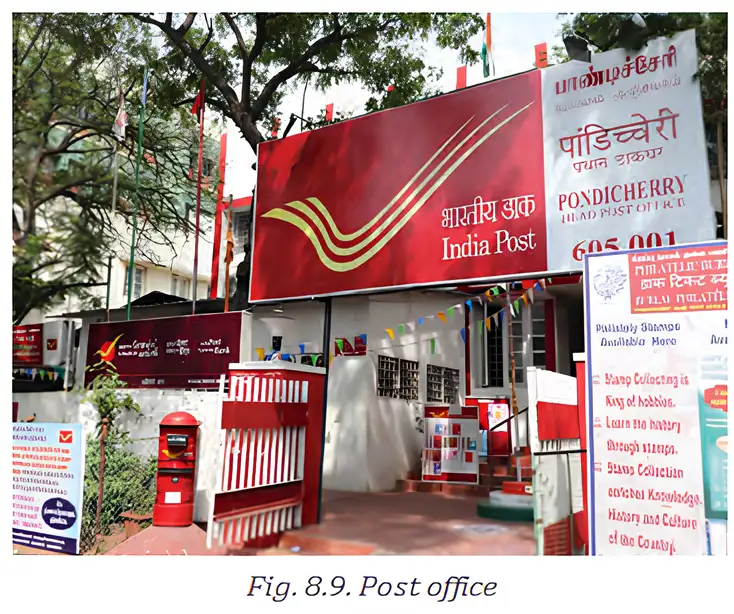
- Post offices offer savings schemes such as National Savings Certificates (NSC), Kisan Vikas Patra and Sukanya Samriddhi accounts.
- Wide reach makes post offices a popular savings option, including in remote areas.
- Industrial Finance Corporation of India (IFCI) funds businesses in sectors such as power and textiles.
- NABARD supports rural development by funding banks that lend for farming, village industries and infrastructure such as roads and irrigation.
Reserve Bank of India: Banker to Banks
Reserve Bank of India (RBI) — India’s central bank, which supervises the banking system and manages policies related to banking.
RBI’s Main Roles
- Banker to banks: Maintains other banks’ accounts, helps transfer funds between them and lends money to banks.
- Government banker: The RBI also provides loans to the government.
- Currency: The RBI has the sole right to issue currency and sets rules for printing and distributing Indian banknotes.
- Interest rates: It fixes the benchmark interest rate used for lending to commercial banks.
Benchmark interest rate — The base interest rate fixed by the RBI for lending money to commercial banks.
RBI and an Earlier Example of Lending
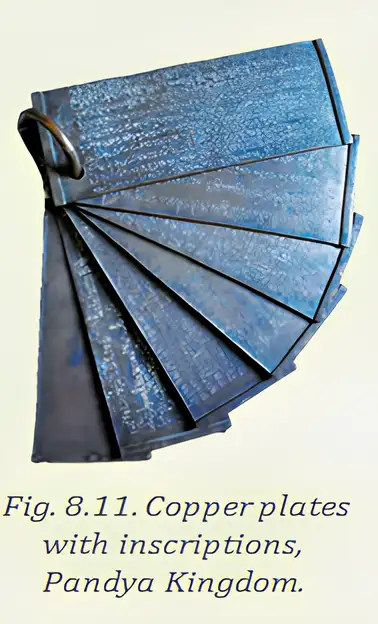
- 13th centuryAn inscription from Kodumbalur, Tamil Nadu, records communities borrowing from the Tirumudukunramudaiya-Nayanar temple under an agreement to pay interest.
- 1935The Reserve Bank of India was established and began performing some central-bank functions.
- 1949After Independence and transfer to the Government of India, the RBI began functioning as the central bank and banker to banks.
Temple Lending in Earlier Times
- Temples lent money to artisans, merchants and local governments, including for infrastructure, though they did not take public deposits like modern banks.
- Loan agreements were sometimes engraved on copper plates, preserving evidence of lending and interest agreements.
Payment Modes and Systems
Payment system — A mechanism for clearing and settling financial transactions so people, businesses and organisations can transfer funds.
| Point | Payment modes | Payment systems |
|---|---|---|
| Meaning | Ways used to make or receive payments. | Mechanisms that enable the transfer, clearing and settlement of funds. |
| Examples | Cash, cheques and debit cards. | Unified Payments Interface (UPI), a quick and convenient way to transfer money. |
Withdrawing Cash from a Bank Account
- Withdrawal slip: Fill it in, submit it at the bank’s cash counter and withdraw cash from the account.
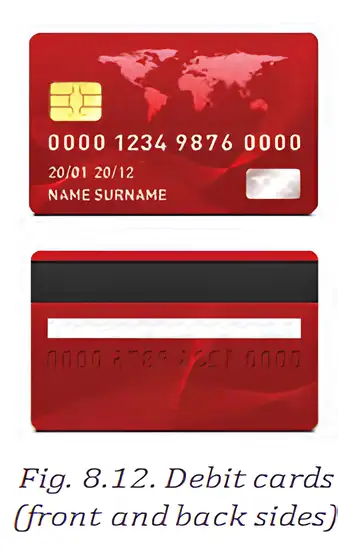
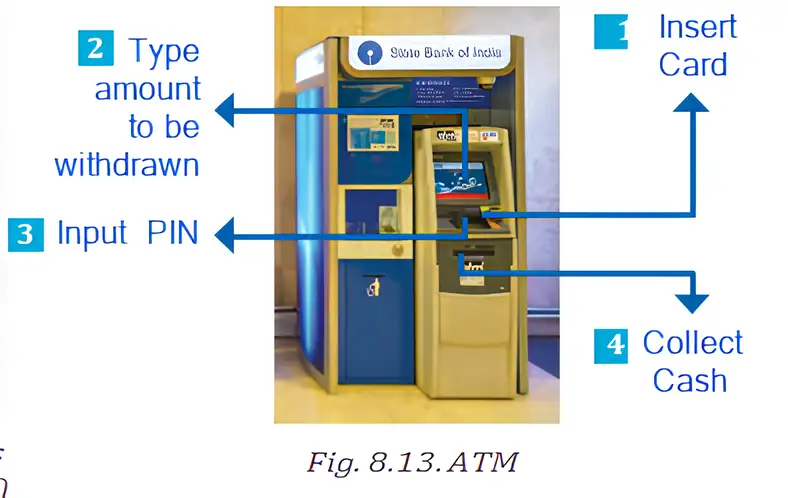
- Debit card and ATM: A debit card lets an account holder withdraw cash from an Automated Teller Machine (ATM), available around the clock in many public places.
- ATM security: Insert the debit card, enter the PIN and choose the amount to withdraw.
PIN (Personal Identification Number) — A numeric code, usually 4 to 6 digits, used to authenticate a person and protect financial transactions.
- Central bank
- The institution that supervises a country’s banking system and related policies.
- NABARD
- National Bank for Agriculture and Rural Development; supports rural development by funding banks.
- ATM
- Automated Teller Machine; a self-service machine used for banking tasks such as cash withdrawal.
- UPI
- Unified Payments Interface; a payment system used to transfer money conveniently.
State two roles of the RBI as banker to banks.
What is the RBI benchmark interest rate?
How can an account holder withdraw cash using an ATM?
Quick recap
- Post offices offer savings schemes and provide financial services, including in remote areas.
- IFCI supports businesses in sectors such as power and textiles; NABARD supports rural lending and development.
- The RBI supervises India’s banking system, acts as banker to banks and government, and has the sole right to issue currency.
- The RBI was established in 1935 and has functioned as India’s central bank since 1949.
- Cash, cheques and debit cards are payment modes; UPI is a payment system for transferring funds.
- Cash can be withdrawn using a bank withdrawal slip or a debit card and PIN at an ATM.
How can money be transferred from one bank account to another?
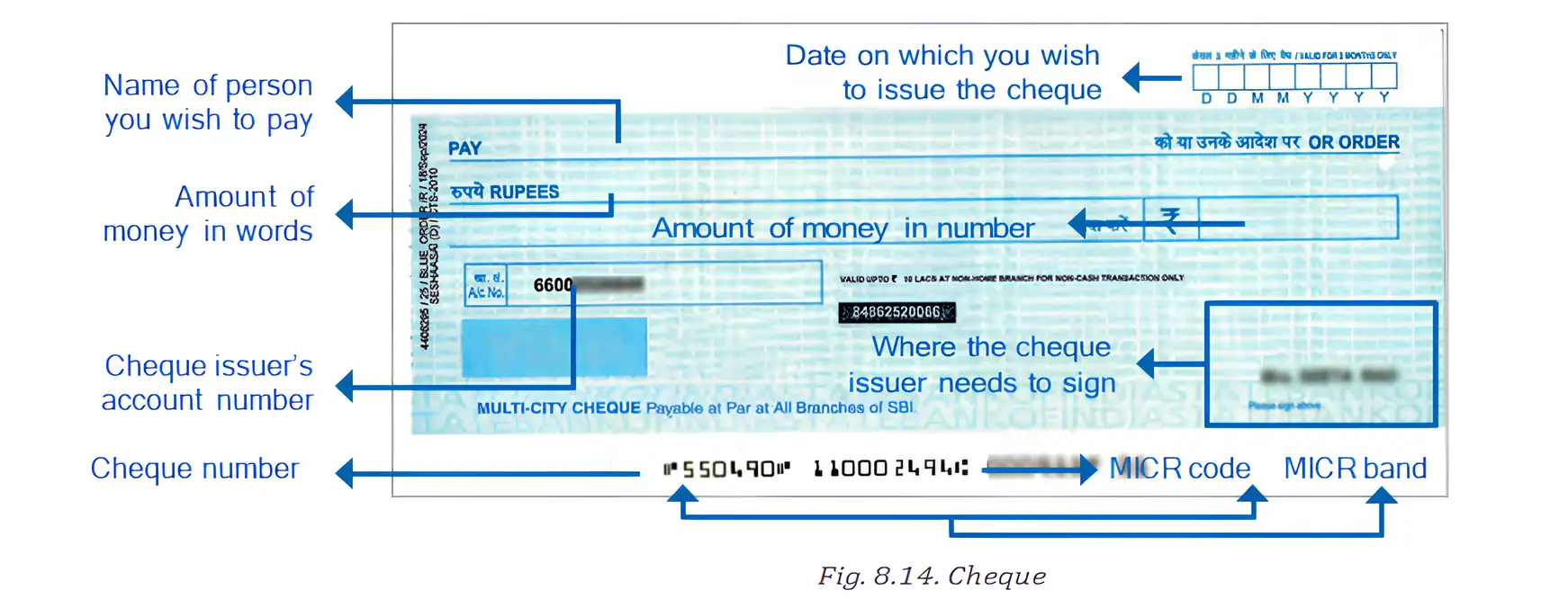
Cheque
Electronic Payments
- Electronic payments: Transfer money electronically from a payer’s account to a recipient or merchant.
- Advantage: They make payments faster and more convenient than cheque transfers, which require physical handling and take time.
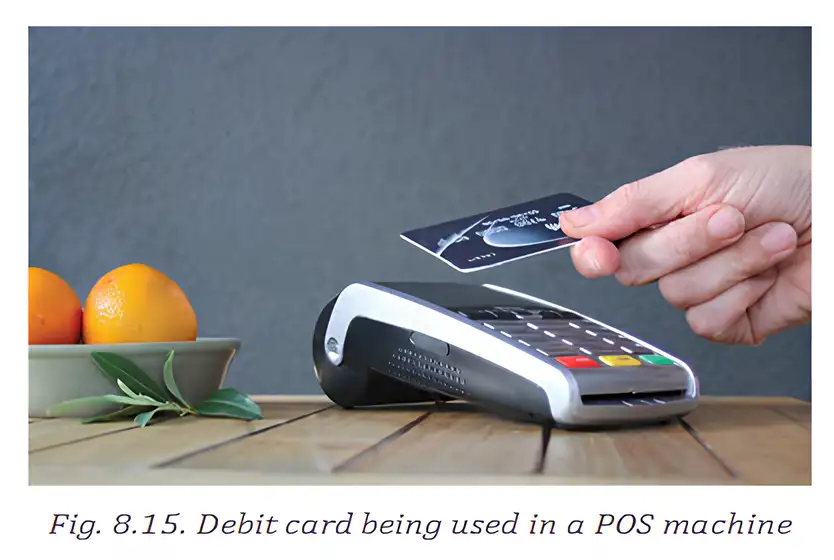
Debit Cards and POS Machines
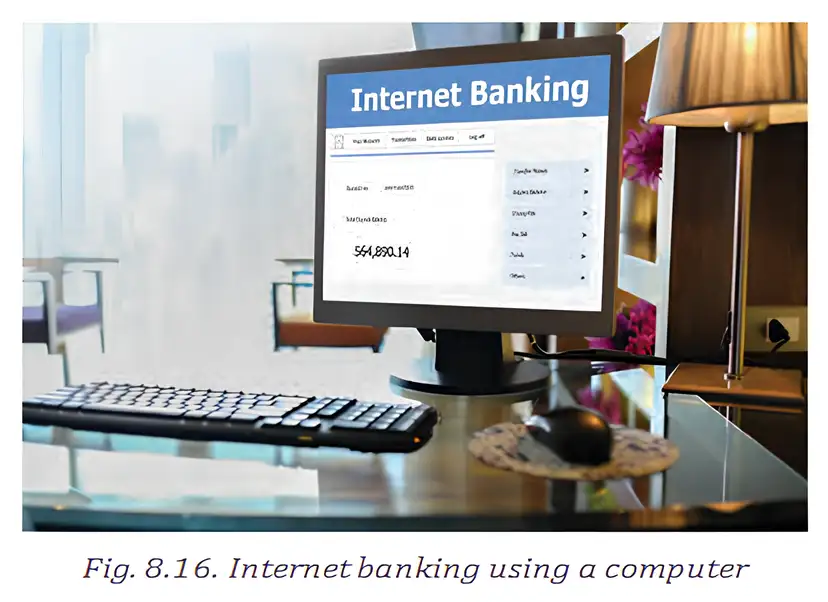
Internet Banking
Mobile Payments
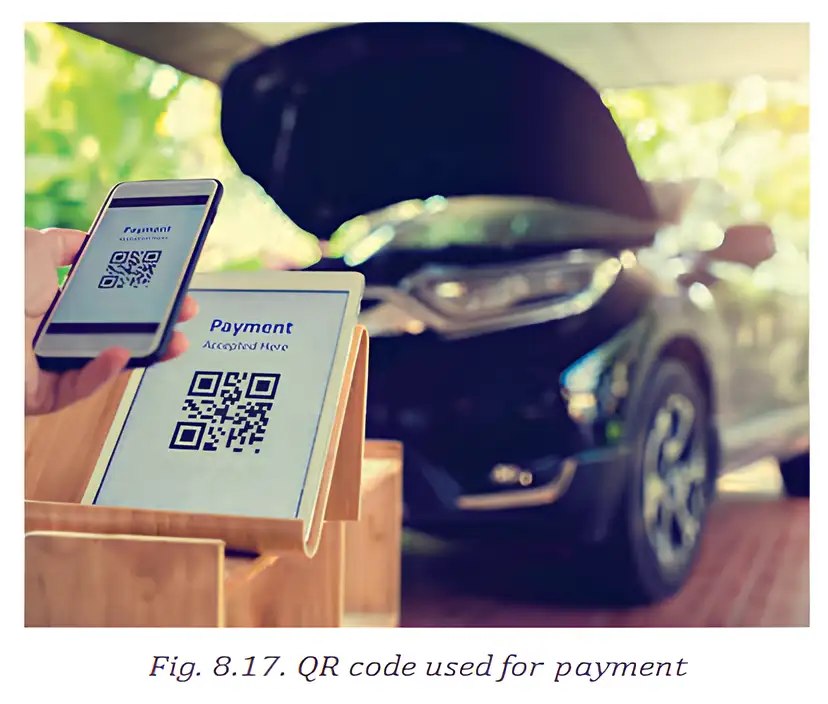
Unified Payments Interface (UPI)
UPI Payment Route
- Buyer initiates a UPI payment
- Payment passes through the banks and NPCI
- Seller receives the payment
Why UPI Became Important
- Cheque-based transfers were time-consuming
- Many people relied heavily on cash
- Cash transactions worth billions of rupees took place every day without a record
- UPI enabled quick digital transfers and supported cashless payments
UPI Adoption
- 2016NPCI launched UPI in India.
- 2022Nepal became the first country to adopt India’s UPI as a payment platform.
UPI Beyond India
- International use: The United Arab Emirates, France, Sri Lanka, Bhutan and Mauritius are among the countries that have adopted UPI.
- Expansion: More countries are showing interest in using the system.
- Debit
- Money deducted from an account.
- Credit
- Money added to an account.
- PIN
- A personal identification number used to authorise a card payment.
- NPCI
- National Payments Corporation of India, which launched UPI.
How does a cheque transfer money?
What is UPI, and who launched it?
How can a customer pay a store using a debit card?
Quick recap
- A cheque transfers money from the sender’s account to the receiver’s account, but takes time.
- Debit cards make POS payments by deducting money directly from the customer’s account.
- Internet banking supports balance checks, transaction history and money transfers.
- BHIM uses UPI, which enables quick payments through a QR code or phone number.
- NPCI launched UPI in 2016; Nepal became the first country to adopt it in 2022.
- UPI supports cashless transactions and is used by countries beyond India.
Stock Market
Shares, Stocks and Investment
Investment — Investment is putting resources into assets expected to gain value over time.
Stock Exchanges and Share Prices
Stock Exchange in India
- 1875The Bombay Stock Exchange (BSE) was established; it is one of the oldest stock exchanges in the world.
| Point | Boom | Crash |
|---|---|---|
| Price movement | Share prices rise | Share prices fall sharply |
| Market pattern | A general rise in prices | Prices of many companies fall at the same time |


What Affects Share Prices?
Company Performance and Share Prices
- Company performs well and is expected to earn money
- More people want its shares
- Share demand and value can rise
- Company faces problems or losses
- Fewer people want its shares, so its price can fall
Economic shock — An economic shock is a sudden, unexpected event that causes major changes in how people earn, spend or save money in a country.
Examples of Economic Shocks
- Examples: Natural disasters such as earthquakes and floods, wars, pandemics, sudden government policy changes and sudden changes in commodity prices.
Tax rules — Tax rules are government-set requirements for paying taxes on income, profits, and some goods, services and transactions.
Taxes
- Meaning: Tax is a compulsory contribution paid by individuals and businesses to the government.
- Where it applies: Taxes may be charged on income and profit, or added to the cost of certain goods, services and transactions.
Financial Frauds and Digital Safety
- Never share personal information, passwords or OTPs with strangers.
- Avoid clicking unknown links or videos received in messages.
- Do not store sensitive banking details, such as account passwords or debit card PINs, on devices.
Why do companies issue shares, and why do people buy them?
Name factors that can cause share prices to fluctuate.
What should you do if you encounter digital payment fraud?
Quick recap
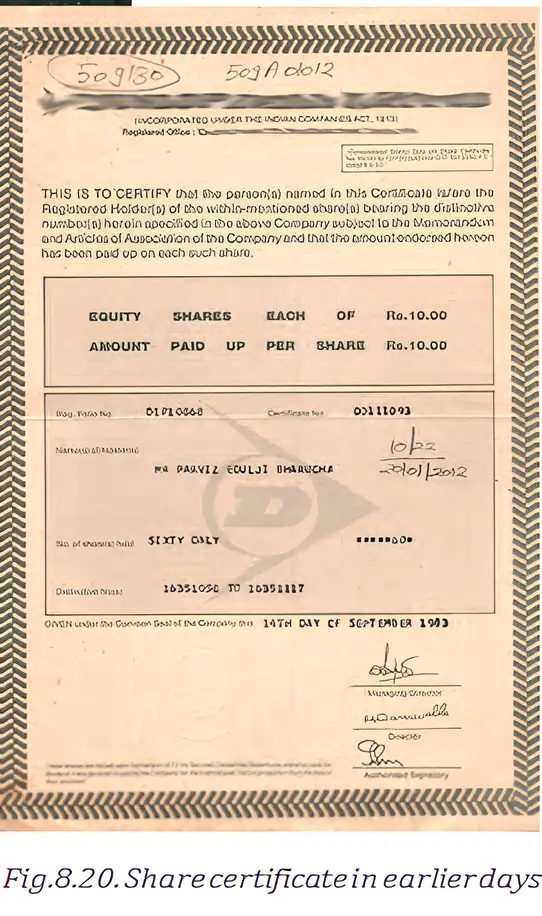
- A share represents part-ownership in a company; issuing shares helps companies raise funds.
- People trade shares on stock exchanges; the BSE was established in 1875.
- A general rise in share prices is a boom; a simultaneous fall across many companies is a crash.
- Company performance, government decisions and wider events can cause share prices to fluctuate.
- Economic shocks are sudden events that cause major changes in a country’s economy.
- Never share OTPs or sensitive banking details; report fraud to 1930 or the National Cybercrime Reporting Portal.
Before we move on
Financial infrastructure — Institutions and systems that enable money to move smoothly among people, businesses and the government.
How financial infrastructure supports prosperity
- Banks, payment systems and the stock market enable financial transactions.
- Smooth transactions support savings, credit and investment.
- Savings, credit and investment boost economic activity.
- Greater economic activity contributes to national prosperity.
Quick recap
- Financial infrastructure includes banks, payment systems and the stock market.
- It helps money flow smoothly among people, businesses and the government.
- It promotes savings, credit and investment.
- These activities boost economic activity and contribute to national prosperity.
Social Science — ALL CHAPTERS
1
Geographical Diversity of India
2
Understanding the Weather
3
Climates of India
4
New Beginnings Cities and States
5
The Rise of Empires
6
The Age of Reorganisation
7
The Gupta Era: An Age of Tireless Creativity
8
How the Land Becomes Sacred
9
From the Rulers to the Ruled: Types of Governments
10
The Constitution of India - An Introduction
11
From Barter to Money
12
Understanding Markets
1
The Story of Indian Farming
2
India and Her Neighbours
3
Empires and Kingdoms: 6th to 10th Centuries
4
Turning Tides: 11th and 12th Centuries
5
India, a Home to Many
6
The State, the Government, and You
7
Infrastructure: Engine of India’s Development
8
Banks and the Magic of Finance