Class 7 . Social Science . Exploring Society India and Beyond Part I . Understanding Markets
Chapter 12: Understanding Markets
Ch 12
Social Science
Class 7
What is a Market?
Markets and Their Role
| Point | Needs | Wants |
|---|---|---|
| Meaning | Essential for survival | Desired, but not essential for survival |
| Examples | Food, water, clothing, shelter | Goods or services a person would like to have |
The Hampi Bazaar
Hampi in Historical Accounts
- 16th centuryHampi was described as a prosperous city with a wide variety of goods for sale.
| Traveller | Description |
|---|---|
| Domingos Paes | Called Hampi “the best-provided city in the world”; noted grains, seeds, milk, oil, silk, animals and birds. |
| Fernao Nuniz | Described street craftsmen, gold jewellery, rubies, diamonds, pearls, other precious stones, cloth, and abundant grass and straw. |
Trade and Market Transactions
Price — Price is the amount at which a buyer is willing to buy and a seller is willing to sell a particular good or service.
- Market
- A physical or online place where buyers and sellers exchange goods and services.
- Need
- Something essential for survival.
- Want
- Something desired but not essential for survival.
- Trade
- Buying, selling or exchanging goods and services.
- Price
- The amount at which a buyer is willing to buy and a seller is willing to sell.
What are the essential features of a market transaction?
Why was Hampi Bazaar important?
Quick recap
- Markets can be physical or online and make goods and services available to people and businesses.
- Markets may also be called bazaars, haats or mārukatté.
- Needs are essential for survival; wants are desired but not essential.
- Hampi Bazaar was a prosperous market in the Vijayanagara Empire, opposite the Virupaksha temple.
- Markets involve buyers, sellers and an agreed price; bargaining can help set that price.
Prices and Markets
Negotiation Between Buyers and Sellers
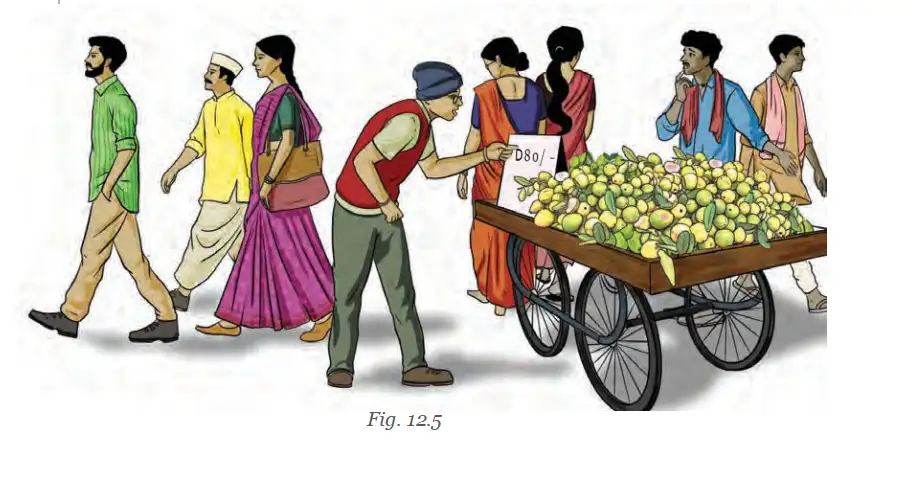
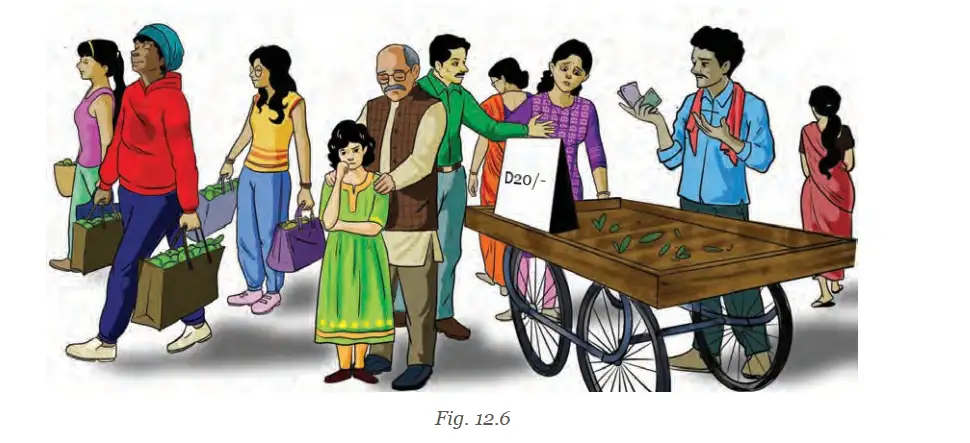
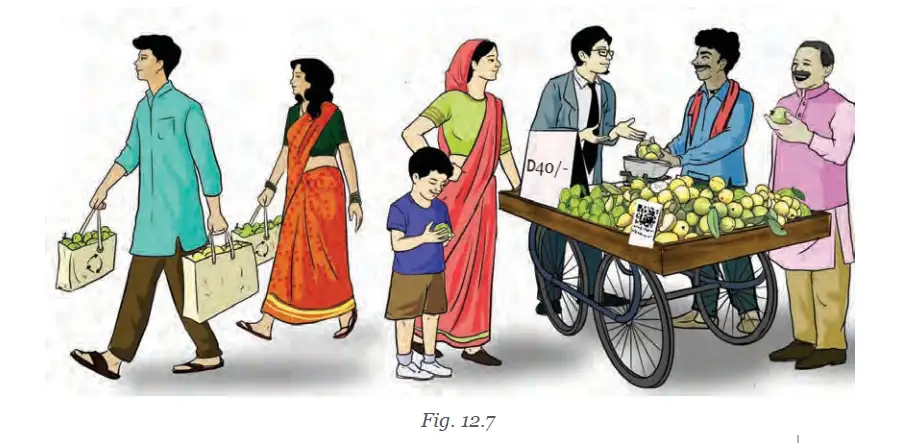
How Buyers and Sellers Help Determine Prices
From Market Interaction to Price
- Buyers indicate what price they are willing to pay and how much they require.
- Sellers consider their offered price and whether selling at that price is profitable.
- Buyers and sellers negotiate; agreement allows the transaction to take place.
- Over time, the quantities offered and required help determine a price acceptable to both.
Prices at Different Times
- Buyer
- A person who wants to purchase a good.
- Seller
- A person who offers a good for sale.
- Negotiation
- Discussion between a buyer and seller to reach an agreed price.
- Transaction
- The buying and selling of a good.
Why may a transaction not take place?
How can a seller use buyers’ responses when planning future sales?
Quick recap
- Buyers and sellers may negotiate when they do not initially agree on a price.
- A transaction can take place when both sides agree; without agreement, it may not happen.
- A price acceptable to both is high enough for the seller and low enough for the buyer.
- The quantity offered and the quantity required help determine prices over time.
- Sellers can use buyers’ responses to estimate how much to offer in future.
- Vegetables may be cheaper late at night, and woollens may be heavily discounted at winter’s end.
Markets Around Us
Physical and Online Markets
| Point | Physical markets | Online markets |
|---|---|---|
| Buyer and seller | Meet in person to buy and sell goods or services. | Can transact without meeting, even when thousands of kilometres apart. |
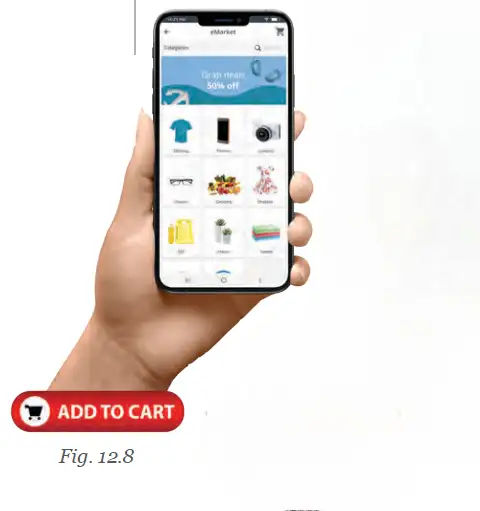
| How they operate | Buyers visit a market, such as a weekly market or shop. | Transactions take place through shopping apps or websites on a phone or computer. |
| Examples | Weekly markets, haats, local shops and malls. | Online shopping platforms and websites. |
| Goods and services | Vendors sell items such as vegetables, essentials, handicrafts and street food. | Goods include books, clothes, furniture, groceries and electronics; services include online classes. |
| Delivery and payment | Goods are purchased in person. | Goods can be delivered to the buyer’s doorstep, and payments can be made online. |
How Online Markets Are Used
- Platforms: Businesses create apps and websites that make a wide variety of goods and services available.
- Production inputs: Manufacturers can buy components online to use in producing goods.
- In-person services: Some services, such as tailoring, require physical contact and cannot be provided online.
- Inputs for production
- Materials or resources used in the production of goods and services.
- Manufacturer
- A person or company that makes goods for sale.
Other Types of Markets
- Share or stock market: A type of market that does not transact goods and services.
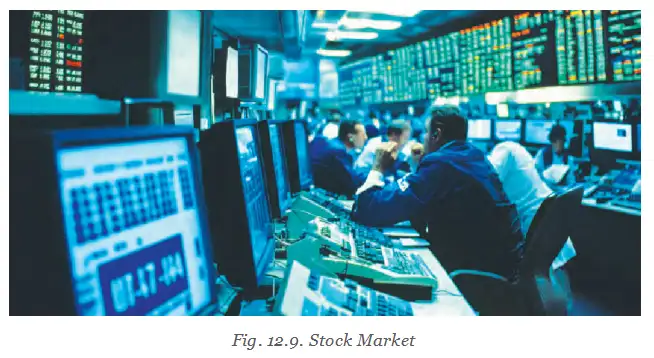
Domestic and International Markets
| Point | Domestic markets | International markets |
|---|---|---|
| Boundary | Goods and services are bought and sold within one country. | Trade takes place across country borders. |
| Trade | Transactions occur within the country. | Sellers export products to another country, or buyers import products from another country. |
| Example | Paper for printing the book was procured from paper mills located across India. | India imports palm oil from countries including Malaysia, Indonesia and Thailand. |
- Domestic market
- A market where goods and services are bought and sold within a country.
- Export
- Selling goods or services produced in one country to a buyer in another country.
- Import
- Buying goods or services from another country and bringing them into one’s own country.
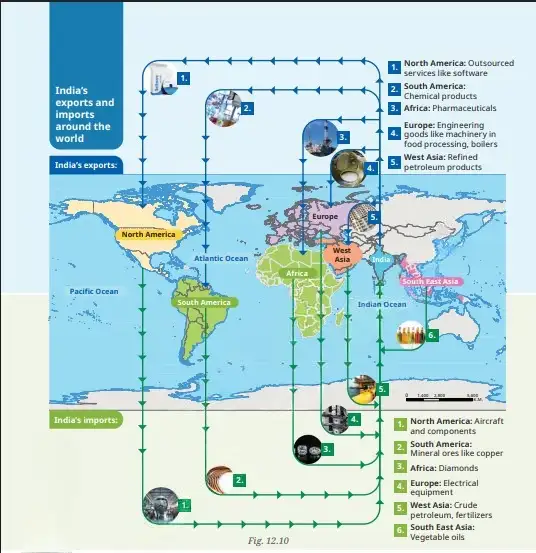
India’s Vegetable Oil Imports
- 2024India was the world’s largest importer of vegetable oils, including palm, sunflower and soybean oils. Most palm oil was imported from Malaysia, Indonesia and Thailand.
What is the difference between domestic and international markets?
Quick recap
- Physical markets bring buyers and sellers together in person; examples include weekly markets, haats, local shops and malls.
- Online markets let people buy goods and services remotely through apps or websites.
- Online purchases can be delivered to the buyer’s doorstep, with online payment available.
- Manufacturers can buy production inputs online, while some services require in-person contact.
- Share or stock markets are a type of market that does not transact goods and services.
- Domestic markets operate within a country; international markets involve trade across borders.
- Exports are sold to another country, while imports are bought from another country; in 2024, India was the world’s largest vegetable oil importer.
Wholesale and Retail Markets Part-1
Wholesale and Retail in Physical Markets
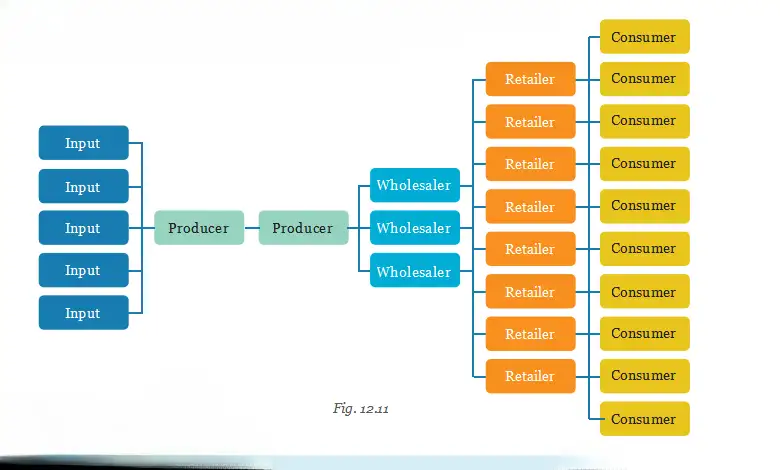
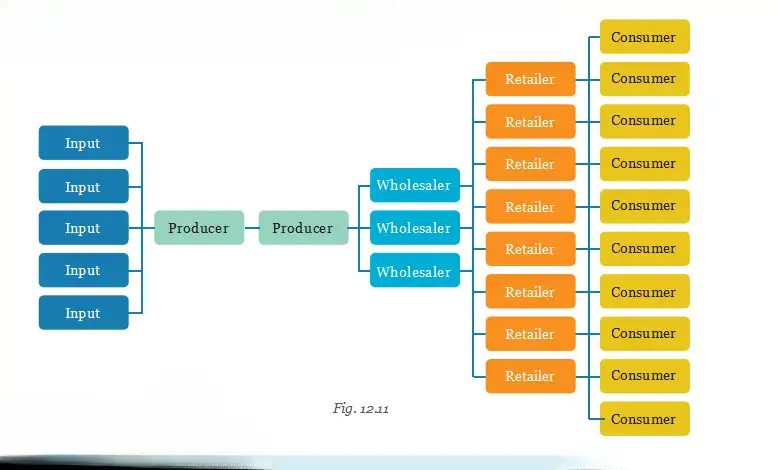
Wholesaler — A wholesaler buys goods in large quantities from producers or manufacturers and supplies them to retailers.
How physical goods move
- Bulk purchase: Wholesalers may buy grains, vegetables and fruits directly from farms.
- Storage: Goods are kept in large warehouses called godowns; perishables may be stored in cold storage.
- Markets: Produce is brought to markets called mandis.
- Supply: Wholesalers sell goods to retailers, who make them available to consumers.
Cold storage — A specialized warehouse kept at low temperatures to preserve perishable goods.
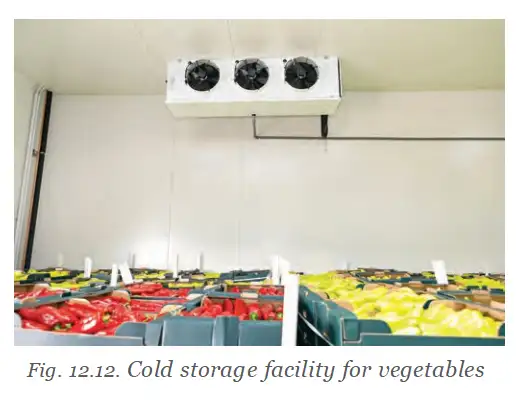
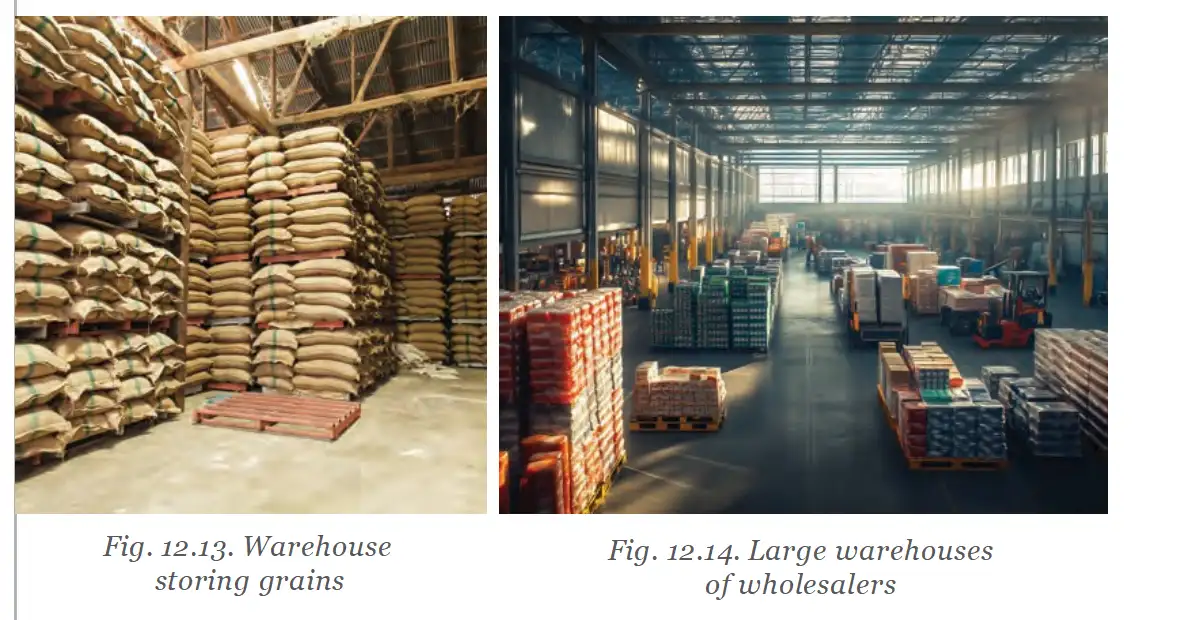
Examples of wholesale markets
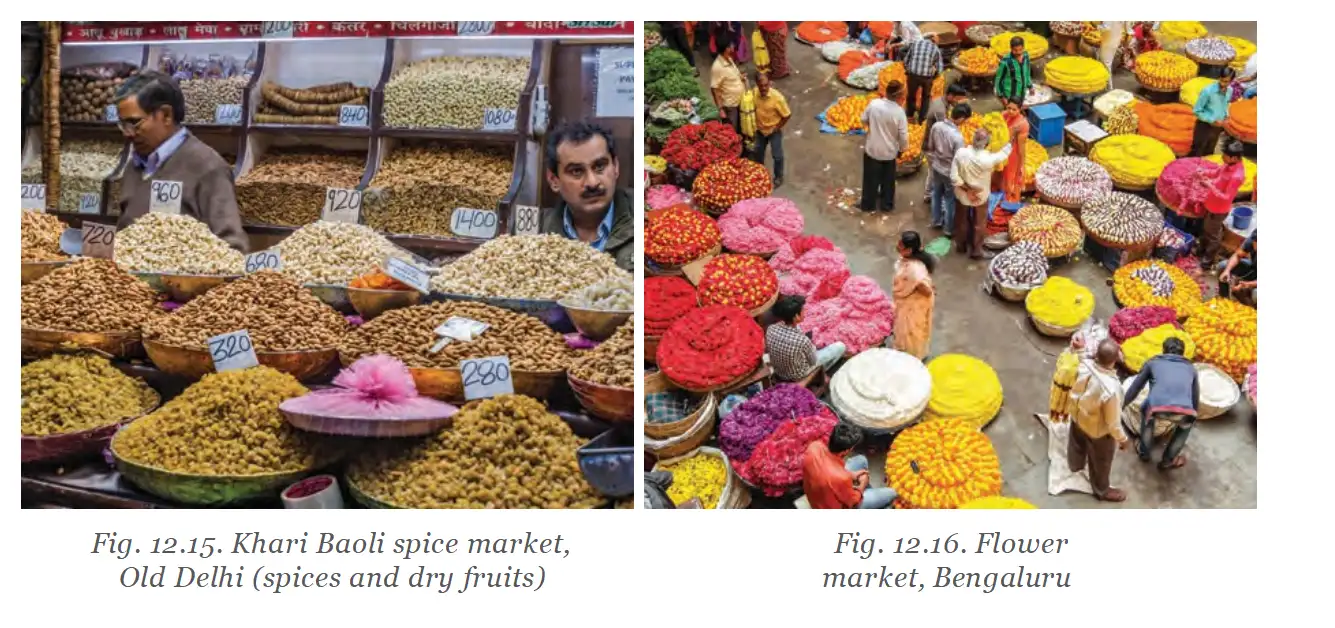
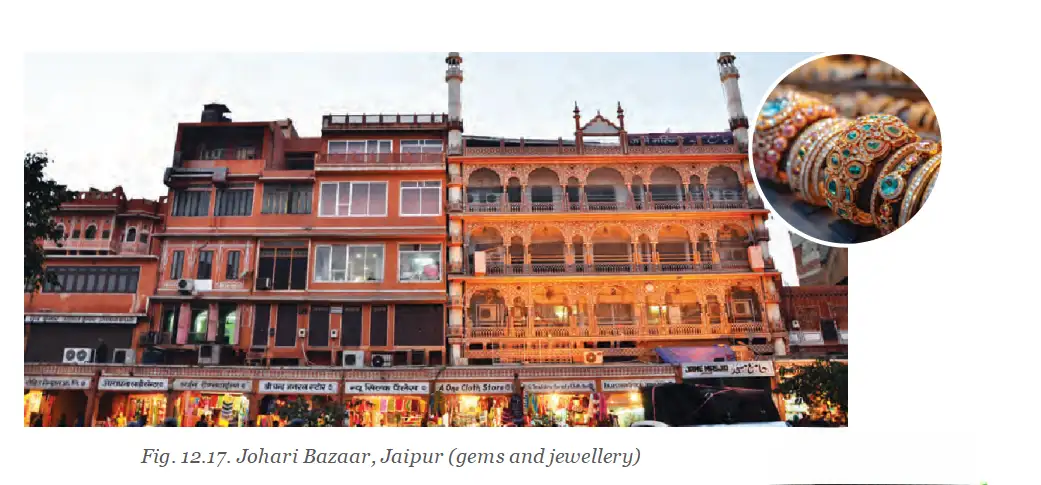
- Commodities: Wholesale markets deal in grains, produce, chemicals, electronics and components, construction materials, and automotive parts.
- Examples: Old Delhi has spice and dry-fruit markets; Bengaluru has a flower market.
Retailer — A retailer sells goods in small quantities to final consumers for use or consumption, not resale.
| Point | Wholesaler | Retailer |
|---|---|---|
| Quantity | Buys and sells in large quantities | Sells in smaller quantities |
| Main customers | Retailers | Final consumers |
| Purpose | Goods are supplied for resale | Goods are sold for consumption or use |
Retail goods and services
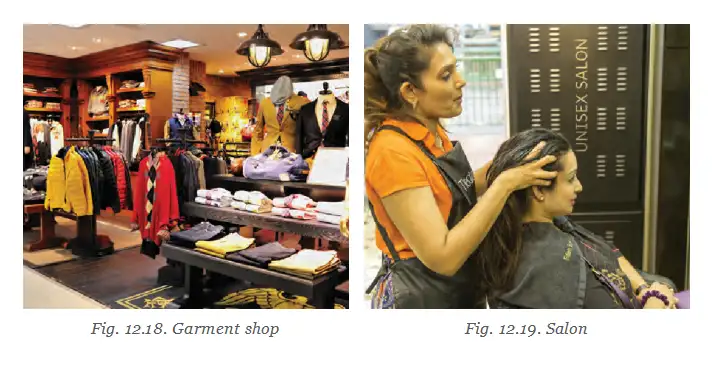
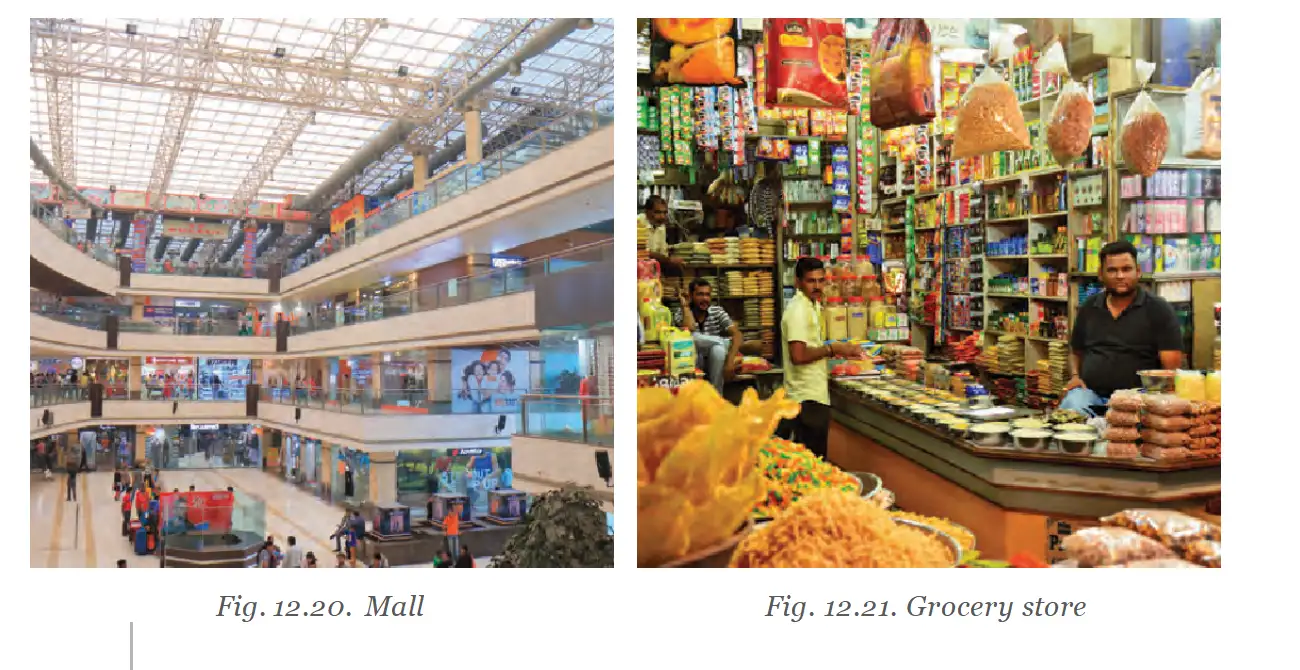
- Goods: Shops and stores near households sell products directly to consumers.
- Services: Retail markets also include salons, movie theatres and restaurants.
- Role: Retailers increase the availability of goods and services to households.
Distributors and Online Markets
Distributor — An individual or business that supplies goods from manufacturers or wholesalers to retailers.
Why distributors are needed
- Challenge: Distance and difficult terrain can make it hard for wholesalers to reach many retailers.
- Solution: Distributors help bridge this gap by moving goods along the supply chain.
Aggregator — A website or mobile application that combines offers from multiple sellers and sells to consumers in one place.
Online distribution channel
- Manufacturers send products in bulk to the online business's warehouse.
- Consumers select and buy products through a website or mobile application.
- The aggregator packs the order and delivers it to the online buyer.
| Point | Physical markets | Online markets |
|---|---|---|
| Supply route | Producer → wholesaler → retailer → consumer | Manufacturer → aggregator's warehouse → online buyer |
| How consumers buy | From shops or stores | Through a website or mobile application |
| Order handling | Retailer sells goods to the consumer | Aggregator packs and delivers the order |
How do wholesalers and retailers differ?
What is the role of distributors?
Quick recap
- Wholesalers buy goods in bulk and supply them to retailers.
- Godowns store goods; cold storage preserves perishables, and produce may be brought to mandis.
- Retailers sell goods in small quantities to final consumers and also provide services.
- Distributors help connect suppliers and retailers across difficult distances or terrain.
- In online markets, aggregators receive bulk goods, take online orders, pack products and arrange delivery.
Wholesale and Retail Markets Part-2
Surat’s Textile Supply Chain
Textile market chain — A market chain links the stages through which a product moves from raw material to the final consumer.
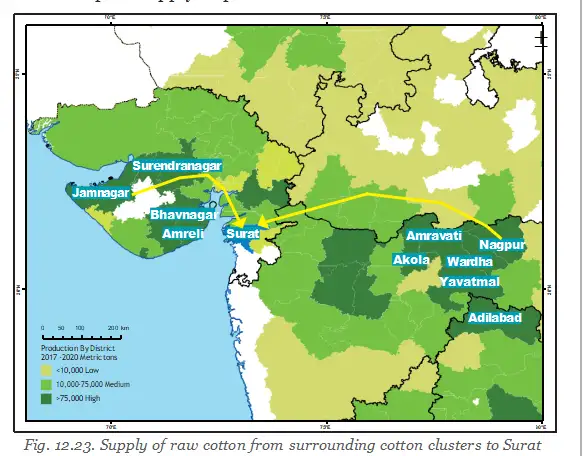
- Textile hub: Surat, Gujarat, is known as Asia’s oldest textile market and has thousands of factories manufacturing cotton and synthetic textiles.
- Raw cotton: Cotton reaches Surat through mandis from nearby Maharashtra and other parts of Gujarat.
- Processing: Cotton is woven on power looms, dyed in processing units and made into fabric or garments.
- Stage-wise markets: Products are traded as woven fabric, dyed fabric and finished goods such as sarees or ready-made garments.
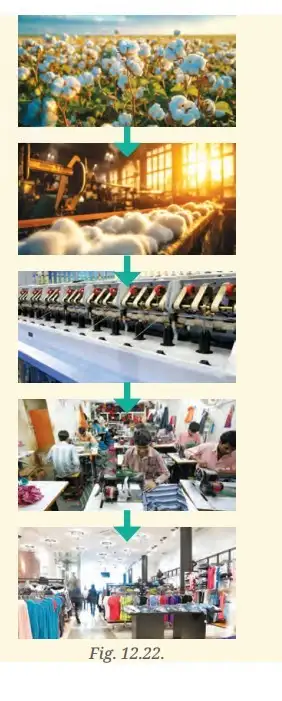
Cotton to Clothing Shop
- Cotton from mandis → weaving on power looms → woven fabric
- Woven fabric → dyeing and processing → dyed fabric
- Dyed fabric → garment production or finishing → wholesale market
- Wholesale market → retailers → consumers
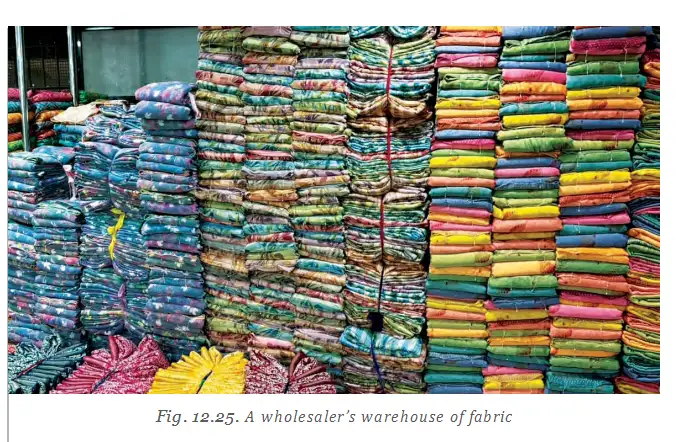
Role of Wholesalers
Wholesaler — A wholesaler is an important link that distributes products from manufacturers to retailers.
- Distribution: Wholesalers supply goods to small shopkeepers and large retail stores across the country and internationally.
- Demand assessment: They estimate how much product retailers need.
- Stock and supply: Retail demand information helps manufacturers maintain stock and supports an uninterrupted supply to consumers.
Surat as a Trading Hub
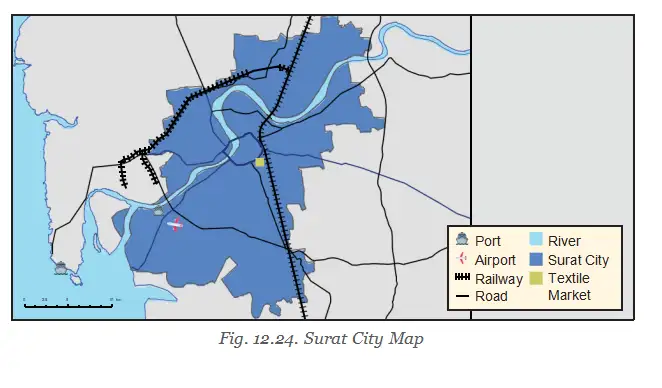
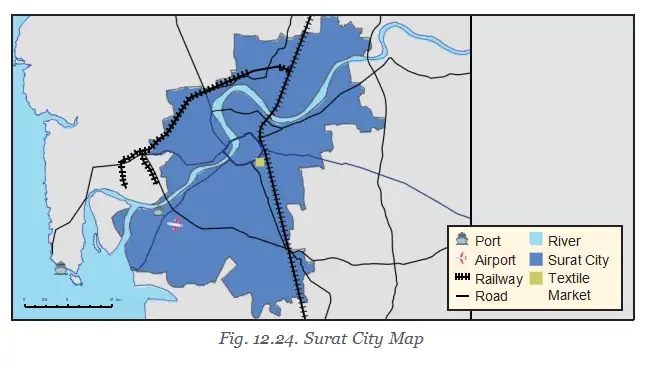
- Location and transport: Surat’s west-coast location supported the development of ports and road networks that remain important for trade.
- Skilled work: Artisan communities have lived in Surat for centuries, passing specialist skills down through generations.
- Textiles and diamonds: Surat is a major textile centre and home to the world’s largest diamond industry, with about 1.5 million artisans involved in work such as cutting and polishing.
Factors Behind Surat’s Trading Importance
- West-coast location → ports and road networks develop
- Transport links → goods can move through trade routes
- Generations of skilled artisans → strong textile and diamond industries
- Industries and connectivity → Surat becomes a flourishing trading hub
Trade in Surat
- From the 16th century onwardsTrade flourished in Surat.
- Mandi
- A market where goods such as raw cotton are traded.
- Wholesaler
- A trader who distributes goods to retailers.
- Retailer
- A seller who supplies goods directly to consumers.
- Market chain
- Linked stages that move a product from inputs and production to consumers.
How do wholesalers help maintain the supply of textile products?
State two reasons why Surat became an important trading hub.
Quick recap
- Surat has thousands of factories making cotton and synthetic textiles.
- Cotton from nearby regions is processed into fabric and garments through several stages.
- Wholesalers assess retailers’ needs, distribute goods and help manufacturers manage stock.
- Surat’s coastal location, transport links and inherited artisan skills support trade.
- Trade flourished in Surat from the 16th century onwards; its diamond industry involves about 1.5 million artisans.
The Role of Markets in People’s Lives
Markets and Economic Life
- Market
- A setting or network that enables producers and consumers to exchange goods and services.
- Ready market
- A market with readily available buyers and sellers for a product.
- Energy-efficient refrigerator
- A refrigerator designed to use less electricity.
- Ima Keithel
- A market in Imphal, also called Mother’s Market, owned and run by women.
How Markets Benefit Society
Consumer Demand Can Shape Production
- Many consumers prefer refrigerators that use less electricity.
- Demand signals this preference to producers through the market network.
- Producers make refrigerators that use less electricity.
- Society benefits from the availability of energy-efficient products.
Markets Have Social Significance
- Social significance: Markets bring people together and allow them to build relationships beyond buying and selling.
- Community connections: Interactions in markets can sustain trust and shared traditions across generations.
Ima Keithel: A Market and Community Space
- Women-run market: Ima Keithel, or Mother’s Market, in Imphal is owned and run by about 3,000 women.
- Livelihoods and culture: It provides income for families and brings people together to exchange ideas and share traditions.
Customs Beyond Buying and Selling
How can consumer preferences influence what producers make?
Give two ways markets can have significance beyond economic exchange.
Why is Ima Keithel important to people in Imphal and nearby areas?
Quick recap
- Markets connect producers and consumers and help people access needed goods and services.
- Consumer demand can guide producers to make products with preferred features.
- Markets can support long-term trust and social relationships, not just monetary exchange.
- Ima Keithel is run by about 3,000 women and supports livelihoods and cultural exchange.
- Market customs, such as gifting haldi and kumkum, can express good wishes.
Government’s Role in the Market
- Demand
- The quantity of a good or service buyers are willing and able to purchase at a particular price and time.
- Supply
- The quantity of a good or service sellers are willing and able to sell at a particular price and time.
Why Government Has a Role
- Markets work through buyers’ demand and sellers’ supply, but this interaction may not always produce fair or safe outcomes.
- Government monitors the interaction between consumers and producers and helps ensure prices are determined fairly.
Controlling Prices to Protect Buyers and Sellers
| Price measure | How it works | Purpose / example |
|---|---|---|
| Maximum price | Sets the highest price sellers may charge. | Limits the price of essential goods and services, such as life-saving medicines. |
| Minimum price | Sets the lowest price at which a product may be sold. | For wheat, paddy and maize, it helps protect farmers from losses. |
| Minimum wage | Sets the lowest payment employers may give workers. | Helps ensure employees receive fair wages. |
Why Price Limits Need Careful Setting
- Price set too low → producers may lose the motivation to produce.
- Price set too high → consumers may be disadvantaged.
- Carefully chosen limits → help balance the interests of buyers and sellers.
Changes in Supply and Prices
- Scarcity: If the supply of onions falls while people still want to buy them, their price can rise.
- Market fairness: Government action may be needed when goods are not supplied in the required quantities or buyers are otherwise disadvantaged.
Ensuring Quality and Safety Standards
How Drug Safety Is Protected
- Government sets procedures for approving medicines.
- Samples of medicines are tested against quality standards.
- Standards and testing help protect consumers from unsafe or poor-quality drugs.
Protecting Consumers
- Purpose: Quality and safety rules protect consumer welfare and prevent unfair practices.
- Responsibility: Manufacturers must follow required standards when producing goods and delivering services.
Mitigating the External Effects of Markets
Controlling Harmful Effects
- Production of some goods → pollution or other harm beyond the buying and selling itself.
- Single-use plastics → can pollute the environment and create health risks.
- Government intervention → strict regulations to reduce these negative effects.
Checking Packaged Goods
- Weights and measures: Government systems monitor packaged products to check that the stated net quantity is accurate.
Consumer Protection in the Arthashastra
- Kautilya’s Arthashastra includes rules for traders selling ghee.
- Manasrava: Buyers were to receive an extra one-fiftieth to make up for ghee sticking to the measuring can.
- Rules help markets work fairly and protect consumers from exploitation.
- Too many rules can make markets difficult to operate properly.
How does the government protect both buyers and sellers through price controls?
Give two ways the government protects consumers beyond controlling prices.
Quick recap
- Markets depend on the interaction of demand and supply, but outcomes may not always be fair.
- Government price controls include maximum prices, minimum prices and minimum wages.
- Price limits need careful setting to avoid harming consumers or discouraging producers.
- Quality standards and medicine testing help protect consumers’ health and safety.
- Government regulations can reduce pollution and monitor the net quantity of packaged products.
- Rules protect consumers, but excessive regulation can make markets function poorly.
Providing Public Goods
Public Goods and Government Provision
- Public goods: Goods and services available to all members of society, such as parks, roads and policing.
- Government provision: Governments provide these goods and services when producers do not expect to make a profit from supplying them.
Assessing the Quality of Products and Services
- Consumer choice: Buyers compare a product’s price and qualities with their needs before deciding what to purchase.
- Reputation: Recommendations from family, friends and other consumers can help buyers judge products and services.
- Online feedback: Reviews and ratings can help consumers make informed choices when shopping online.
Product Labels and Quality Certifications
| Mark | Issued by / meaning | Products or information indicated |
|---|---|---|
| ISI Mark | Issued by the Bureau of Indian Standards (BIS). | Used on items such as electrical appliances, construction materials, automotive tyres and paper; indicates quality and safety. |
| AGMARK | Agricultural certification mark. | Used on agricultural products such as fruits, vegetables, cereals, pulses, spices and honey. |
| BEE Star rating | BEE means Bureau of Energy Efficiency. | Stars on electronics indicate energy efficiency; more stars mean less energy and electricity use, lower bills and a benefit to the environment. |

Reputation, Reviews and Buying Decisions
- Public goods
- Goods or services available to all, without their use reducing future availability.
- FSSAI
- Food Safety and Standards Authority of India; its mark indicates tested food is safe to consume.
- ISI Mark
- A BIS-issued mark indicating that specified products meet quality and safety standards.
- AGMARK
- Certification mark for agricultural products.
- BEE Star rating
- A label showing an appliance’s energy efficiency; more stars indicate lower energy use.
Quick recap
- Public goods are available to everyone, and their use does not reduce future availability.
- The government provides goods and services that may not be profitable for private producers, including welfare provisions.
- Consumers assess product quality using their needs and relevant packaging information.
- FSSAI, ISI and AGMARK marks help buyers identify products that meet quality or safety standards.
- More BEE stars mean an appliance uses less energy and electricity.
- Word-of-mouth recommendations, online reviews and ratings can influence buying decisions.
Before we move on
Markets and Exchange
Market — A market facilitates the exchange of goods and services between buyers and sellers at a mutually agreed price.
How market prices are determined
- Demand comes from buyers who want to purchase goods or services.
- Supply comes from sellers who offer goods or services.
- Price is mutually agreed between buyers and sellers and is influenced by demand and supply.
The Chain of Market Participants
How goods reach consumers
- Manufacturers make goods
- Wholesalers and distributors help move goods through the supply chain
- Retailers sell goods to final consumers
Why the chain matters
- Participants such as manufacturers, wholesalers, distributors and retailers connect production to consumers.
- Supply reaches final consumers through the work of this chain.
Markets as Places of Interaction
- Interaction occurs as markets bring people together, not only to exchange goods and services.
- Ideas and traditions can also be shared through these interactions.
Regulation and Consumer Awareness
- Government regulates markets to encourage product and service quality standards and fair practices.
- Certification marks from government agencies help consumers assess product quality.
- Online reviews are another way consumers can judge products and services.
- Demand
- Buyers' willingness to purchase goods or services.
- Supply
- Goods or services offered by sellers.
- Retailer
- A participant who sells goods to final consumers.
- Certification mark
- A mark from a government agency that consumers can use to assess product quality.
How do demand and supply influence market prices?
How can consumers assess product quality?
Quick recap
- Markets connect buyers and sellers for exchange at mutually agreed prices.
- Demand from buyers and supply from sellers influence prices.
- Manufacturers, wholesalers, distributors and retailers help goods reach consumers.
- Markets also bring people together to share ideas and traditions.
- Government regulation supports quality standards and fair market practices.
- Consumers can assess quality using certification marks and online reviews.
Social Science — ALL CHAPTERS
1
Geographical Diversity of India
2
Understanding the Weather
3
Climates of India
4
New Beginnings Cities and States
5
The Rise of Empires
6
The Age of Reorganisation
7
The Gupta Era: An Age of Tireless Creativity
8
How the Land Becomes Sacred
9
From the Rulers to the Ruled: Types of Governments
10
The Constitution of India - An Introduction
11
From Barter to Money
12
Understanding Markets
1
The Story of Indian Farming
2
India and Her Neighbours
3
Empires and Kingdoms: 6th to 10th Centuries
4
Turning Tides: 11th and 12th Centuries
5
India, a Home to Many
6
The State, the Government, and You
7
Infrastructure: Engine of India’s Development
8
Banks and the Magic of Finance