Class 7 . Social Science . Exploring Society India and Beyond Part I . The Gupta Era an Age of Tireless Creativity
Chapter 7: The Gupta Era: An Age of Tireless Creativity
Ch 7
Social Science
Class 7
Introduction
The Gupta Empire
- Gupta dynasty: The chapter introduces the Gupta Empire and its rulers, including Chandragupta II.
- Historical setting: The map shows the Gupta Empire and neighbouring kingdoms during the 3rd–6th centuries CE.
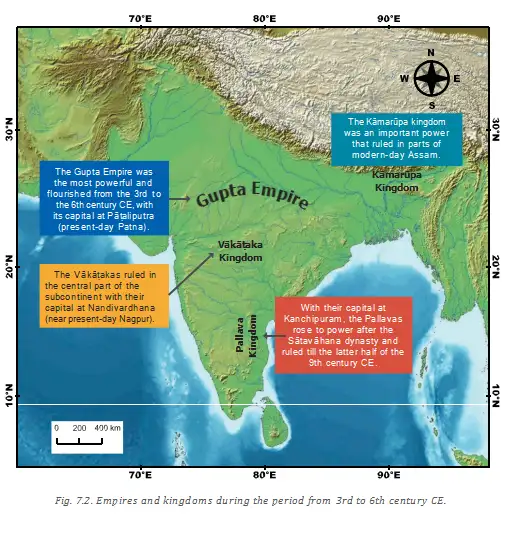
Period shown on the map
- 3rd–6th centuries CEThe map presents the Gupta Empire and neighbouring kingdoms during this period.
The Iron Pillar of Delhi
- Location and age: The Iron Pillar stands at Mehrauli in Delhi and is over 1,600 years old.
- Construction: The pillar weighs about 6 tonnes and demonstrates advanced ancient Indian metallurgical skill.
- Chandragupta II: It was erected during the reign of this Gupta ruler.
- Original location: It was probably first erected in front of the Udayagiri caves in Madhya Pradesh, then brought to Delhi centuries later.
- Purpose and inscription: Dedicated to Vishnu, its inscription celebrates the king’s achievements.
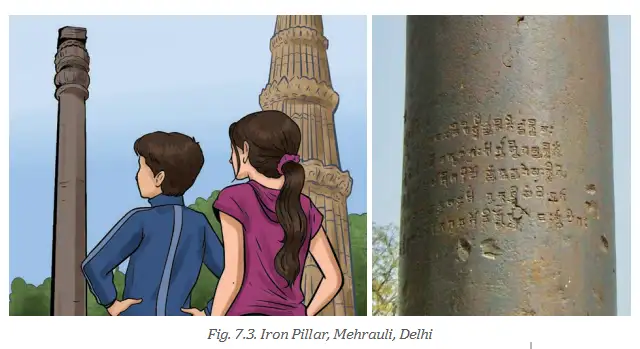
Why the pillar resists corrosion
- Special iron and oxygen in the air interact at the surface
- A thin protective layer forms on the iron
- The layer helps prevent corrosion, so the pillar remains largely unaltered
- Metallurgy
- The science and skill of working with metals.
- Inscription
- Words engraved or written on a durable surface, such as stone or metal.
- Corrosion
- The gradual damage of a metal through reactions with its surroundings, such as rusting of iron.
Quick recap
- The map presents the Gupta Empire and nearby kingdoms in the 3rd–6th centuries CE.
- The Iron Pillar stands at Mehrauli, Delhi, and is over 1,600 years old.
- The 6-tonne pillar was erected during Chandragupta II’s reign and dedicated to Vishnu.
- Its inscription celebrates the king’s achievements; the pillar was probably first erected at Udayagiri.
- A thin surface layer formed from the special iron and air helps protect the pillar from corrosion.
A New Power Emerges Part-1
The Rise of the Guptas
Changing Powers
- By the 3rd century CEThe Kushana Empire, which had spread across northern and northwestern India, began to weaken.
From Kushana Decline to Gupta Power
- Kushana decline → New kingdoms emerged.
- New regional powers → The Guptas rose to prominence.
- Gupta expansion → A powerful empire took shape.
Gupta Origins and Importance
- Origins: Several theories exist, but the Guptas are widely believed to have emerged as regional rulers near present-day Uttar Pradesh.
- Legacy: The Gupta period saw major developments in art, architecture, literature and science, especially during Chandragupta II’s reign.
- Continuing influence: The Gupta period’s cultural legacy continues to be recognised today.
Chandragupta I and Chandragupta II
Chandragupta I
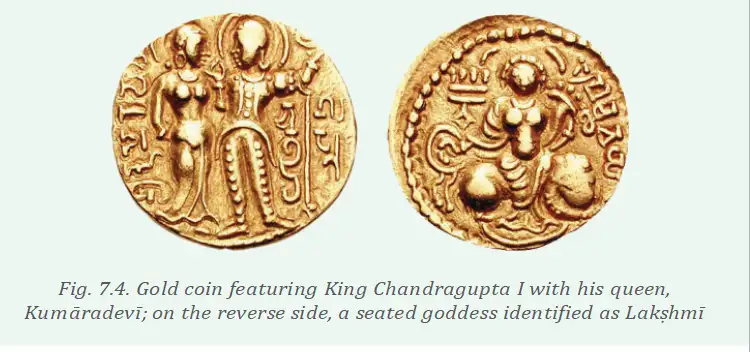
- Role: Chandragupta I helped expand the early Gupta Empire and laid foundations for a strong empire.
- Methods: His coins and strategic alliances helped him consolidate power.
- Family link: He was Chandragupta II’s grandfather; the number II distinguishes the later ruler from him.
Chandragupta II (Vikramaditya)
- Iron pillar inscription: The Delhi iron pillar refers to a king named “Chandra,” identified with Chandragupta II.
- Title: Chandragupta II was also known as Vikramaditya and was a renowned Gupta ruler.
- Religion and symbol: He was a devotee of Vishnu; Garuda, Vishnu’s mount, appears on many inscriptions.
- Avoid confusion: Chandragupta II was a Gupta ruler, not Chandragupta Maurya of the Maurya dynasty.
- Regional ruler
- A ruler whose power is centred in a particular region.
- Consolidate
- To strengthen and secure power.
- Vāhana
- A deity’s mount; Garuda is the mount of Vishnu.
What changes followed the weakening of the Kushana Empire?
Who was Chandragupta II, and what other name was he known by?
How did Chandragupta I help the early Gupta Empire?
Quick recap
- The Kushana Empire weakened by the 3rd century CE, creating space for new powers.
- The Guptas are believed to have emerged as regional rulers near present-day Uttar Pradesh.
- Chandragupta I used coins and strategic alliances to consolidate early Gupta power.
- Chandragupta II, also called Vikramaditya, is identified with the king “Chandra” in the Delhi iron pillar inscription.
- Chandragupta II was a devotee of Vishnu, and Garuda appears on many Gupta inscriptions.
- The Gupta period was marked by flourishing art, architecture, literature and science.
A New Power Emerges Part-3
Samudragupta: The Warrior King
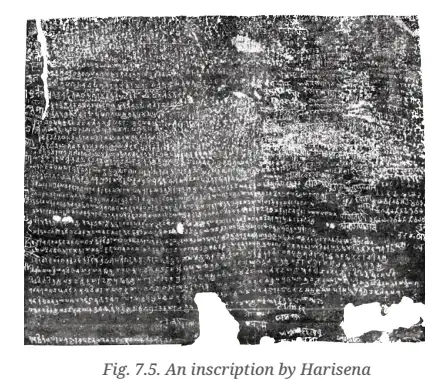
Prayaga Prashasti — A pillar inscription at Prayagraj, composed by court poet Harisena, that praises Samudragupta’s achievements.
Samudragupta’s Rule
- Family: Samudragupta was the father of Chandragupta II.
- Ambition: Harisena says Samudragupta aimed to be “dharani-bandha”, or to unify the Earth.
- Conquests: He fought wars, defeated kings, took over kingdoms and expanded his empire.
- Defeated rulers: Some kings were reinstated and paid tribute; others submitted without protest.
- Prosperity: Harisena also describes the king as supporting art, learning and trade.
Coins as Historical Sources
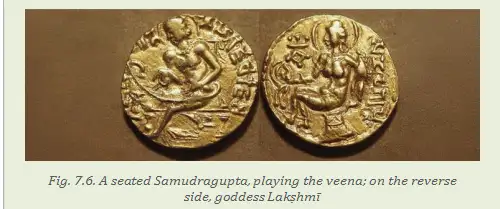
- Samudragupta’s coin: One coin depicts him playing the veena, showing his association with music and the arts.
- Other image: Gupta-era coins also depict the goddess Lakshmi.
Why might kings have proclaimed their achievements in inscriptions?
Ashvamedha and Royal Legacy
Ashvamedha — A royal horse sacrifice performed by ambitious kings to build mighty empires and leave a legacy for the future.
Commemorating the Ashvamedha
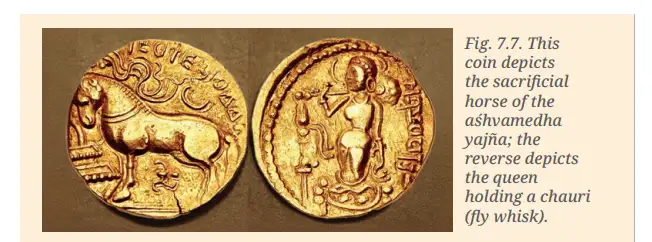
- Special coins: An Ashvamedha was commemorated by minting coins.
- Coin image: One side shows the horse; the reverse shows the queen holding a fly whisk.
The Gupta Empire: Sources and Extent
Vishnu Purana — A literary source that names regions associated with Gupta rule.
Regions and Empire Extent
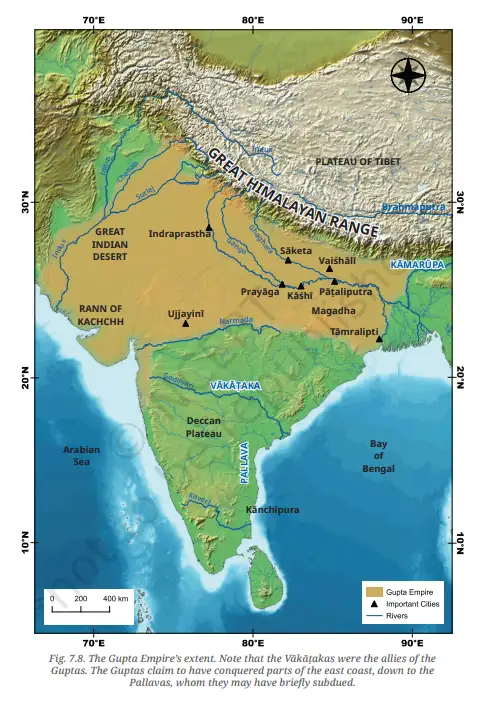
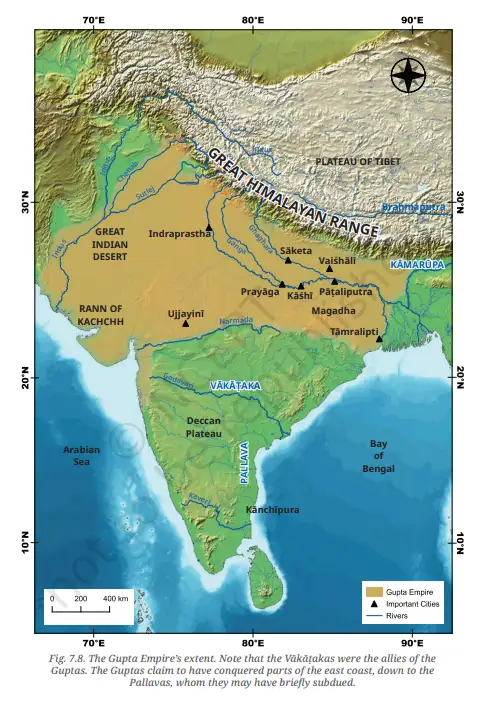
- Regions named in the Vishnu Purana: Anuganga (middle-Gangetic basin), Prayaga (present-day Prayagraj), Saketa (Ayodhya), Magadha (approximately present-day Bihar) and surrounding regions.
- At its peak: The Gupta Empire covered most of present-day north and west India, along with parts of central and east India.
- Historical sources: Inscriptions, coins and literary works provide information about rulers, kingdoms, regions and people.
Supporting a Large Army
- Logistics: Moving soldiers, elephants, horses, cooks and other staff—and supplying them with food—required substantial resources.
- Tributary kings: They were likely expected to provide supplies for the armies.
- Prayaga Prashasti
- Harisena’s pillar inscription praising Samudragupta.
- Tribute
- Payment or offerings made by a subordinate or defeated ruler to a powerful king.
- Ashvamedha
- A royal horse sacrifice associated with building a mighty empire and leaving a legacy.
- Literary source
- A written work that can provide information about past rulers, regions and people.
Which regions does the Vishnu Purana associate with Gupta rule, and how far did the empire extend at its peak?
Quick recap
- Harisena’s Prayaga Prashasti praises Samudragupta, the father of Chandragupta II.
- Samudragupta fought wars, expanded his empire, and received tribute from some defeated kings.
- Harisena describes Samudragupta as supporting art, learning and trade; coins depict him playing the veena.
- Ashvamedha coins commemorate the horse sacrifice, with the horse on one side and the queen on the other.
- The Vishnu Purana names regions associated with Gupta rule, while the empire at its peak extended much farther.
- Tributary kings were likely expected to help supply the large armies and their support staff.
A Traveller’s Account of Indian Society in the Gupta Age
Faxian’s Account of Gupta Society
Faxian’s Visit
- Early 5th century CE; AD 399–414Faxian travelled in India to visit Buddhist sites, study with scholars and collect Buddhist manuscripts for China.
Society described by Faxian
- People and taxes: He described people as numerous and happy, with no need to register households or attend officials; farmers on royal land paid part of their grain.
- Cities: The cities of the Gangetic plains were described as prosperous, with wealthy Vaishya families and foreign merchants.
- Charity: Vaishya families established houses offering care, food and medicines to the poor, orphans and sick people.
- Public life: The king’s guards and attendants received salaries, and city lanes were kept in good order.
| Evidence | Interpretation | |
|---|---|---|
| Faxian’s travelogue | A surviving account of his observations at a particular time and place. | It reflects the writer’s perspective and does not describe every group or region. |
| Chanḍālas | Faxian elsewhere described their harsh treatment and their living outside city limits. | Their experience shows that the prosperous picture in the excerpt did not represent everyone. |
| Historical conclusions | Historians examine accounts such as Faxian’s. | They compare multiple sources and interpretations to corroborate conclusions. |
- Outcastes
- People rejected from a social or cultural group; chanḍālas were treated as outside the varṇa system.
- Regent
- A person who temporarily governs for a monarch unable to rule.
- Land grant
- Land given by rulers to local rulers, priests or chieftains.
Governance and Administration
Kingdoms and Alliances
- Coexistence: Several kingdoms existed at the same time and could compete or go to war to expand their control.
- Alliance: Kauṭilya included *mitra* (ally) among the seven components of a kingdom, or *saptānga*.
- Gupta expansion: Gupta rulers used military conquests, diplomacy and alliances, including matrimonial alliances, to expand and consolidate the empire.
| Point | Gupta rulers | Earlier rulers |
|---|---|---|
| Examples | ‘Mahārājadhirāja’, ‘samrāṭ’ and ‘chakravartin’ | ‘Rājan’ and ‘mahārāja’ |
| Meaning | Claimed supreme authority and superiority. | Simpler titles. |
Prabhāvatī Gupta and the Vākāṭakas
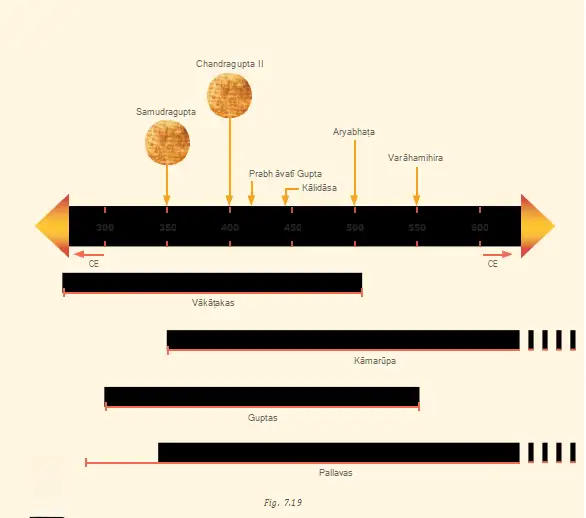
- Alliance: Chandragupta II’s daughter, Prabhāvatī Gupta, married a prince of the Vākāṭaka kingdom, the Gupta neighbours to the south.
- Regency: After her husband died early, she ruled as regent and maintained strong ties between the two kingdoms.
- Family: An inscription called her a ‘mother of two kings’, referring to her sons who later ruled the Vākāṭakas.
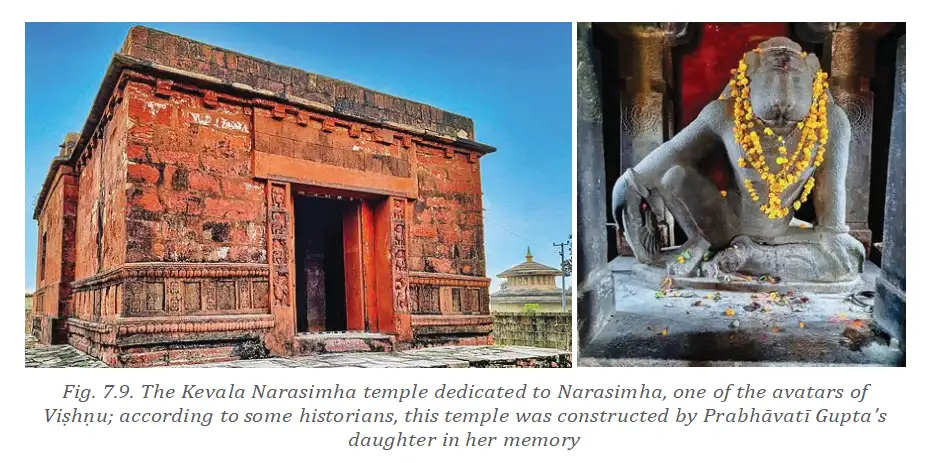
- Religion and temples: A devotee of Viṣṇu, she is associated with building seven temples to Viṣṇu and his avatars; some were at Ramagiri (Ramtek hill) in present-day Maharashtra.
Provincial Administration and Land Grants
- Organisation: The empire was divided into provinces rather than being controlled entirely by a central authority.
- Local control: Land grants to local rulers, priests and chieftains gave them some authority over their regions.
- Records: Grants were inscribed on copper plates; many have been found by archaeologists.
- Purpose: Recorded grants helped with accurate record-keeping and tax collection, supporting efficient governance.
Thriving Trade
| Revenue source | Use |
|---|---|
| Land tax (main source), fines, and taxes on mines, irrigation, trade and crafts | Administration, the army, temples and infrastructure, and support for scholars and artists |
Trade Networks and Socotra
- Trade links: India traded with the Mediterranean world, Southeast Asia and China through internal routes and the Indian Ocean network.
- Exports: Indian traders exported textiles, spices, ivory and gemstones.
- Socotra: This strategically located island in the Arabian Sea was an important stop on routes towards Mediterranean markets.
- Evidence and exchange: Pottery, Brahmi inscriptions and Buddhist stūpa designs show Indian traders were present on Socotra over several centuries, alongside traders from Egypt, Arabia, Rome and Greece.
Why should Faxian’s account be compared with other historical sources?
How did Gupta rulers strengthen their empire and administer it?
Quick recap
- Faxian’s early 5th-century account describes prosperity, charity and orderly cities, but reflects only his perspective.
- His account also records the harsh treatment of chanḍālas, showing that experiences in Gupta society differed.
- Gupta rulers claimed supreme authority through grand titles and used conquest, diplomacy and alliances to expand.
- Prabhāvatī Gupta ruled as regent and helped preserve ties between the Guptas and Vākāṭakas.
- Provincial administration and copper-plate land grants supported local control and tax collection.
- Land tax was the main revenue source, while trade connected India to distant regions and encouraged cultural exchange.
New Ideas and Wonders: The Classical Age
Inclusive Patronage and the Classical Age
Religious and intellectual life
- Religious support: Gupta rulers were devoted followers of Viṣhṇu, reflected in their coins and inscriptions, but also supported other traditions.
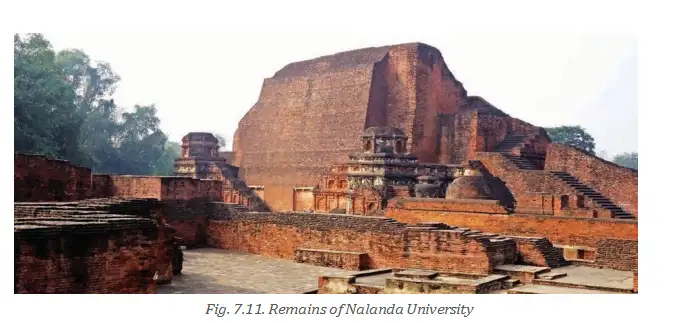
- Buddhist institutions: They patronised Buddhist vihāras (monasteries), including the renowned Nālandā centre of learning.
- Classical age: Peace and stability encouraged achievements in literature, science, medicine and metallurgy; some historians call this period the ‘classical age’ of India.
- Knowledge and texts: Earlier knowledge was consolidated into texts, including Sanskrit literature, major Purāṇas and medical works.
- Metallurgy: The rust-resistant Iron Pillar is an example of progress in metalworking.
- Courtly patronage: Chandragupta II supported learned people, poets and artists, enriching his court.
How Stability Encouraged Cultural Growth
- Long period of peace and stability
- Stronger economy and greater state support
- Patronage for scholars, artists and scientists
- Growth in knowledge, literature and the arts
Aryabhata
Aryabhata — A mathematician and astronomer whose work helped lay the foundation for later scientific advances in India and beyond.
Life and contributions
- Place and work: He lived in Kusumapura, near present-day Patna, around 500 CE, and wrote the mathematics and astronomy treatise Āryabhaṭīya.
- Astronomy: He gave methods to calculate the motions of the Sun, Moon and planets, and proposed that Earth spins on its axis, causing day and night.
- Length of year: He estimated 365 days, 6 hours, 12 minutes and 30 seconds; the modern value given in the text is 365 days, 5 hours, 48 minutes and 45 seconds.
- Other contributions: He estimated Earth’s size, correctly explained solar and lunar eclipses, and described calculation and equation-solving techniques.
Varahamihira
Varahamihira — A mathematician, astronomer and astrologer known for combining observation, logical reasoning and traditional knowledge.
Life and work
- Place: He lived in Ujjayinī, a city renowned for learning and scholarship.
- Bṛihat Samhitā: This encyclopedic work covered astronomy, astrology, weather forecasting, architecture, town planning and farming.
- Approach: His observation and logical reasoning, combined with traditional knowledge, made him a pioneer in science.
Kalidasa and Sanskrit Literature
Kalidasa — A celebrated Sanskrit poet renowned for refined poetry and literary works.
Meghadutam
- Life: Little is known about Kalidasa; legends say that ridicule motivated him to work hard and transform his life.
- Story: In “The Cloud Messenger,” a banished yakṣha asks a passing cloud to carry a message to his beloved.
- Importance: The poem expresses love and vividly describes the landscapes and weather of northern India along the cloud’s journey.
Medicine and Ayurveda
Ayurveda — A traditional Indian system of medicine with older roots that was codified during the Gupta period.
Medical texts and ideas
- Texts: The Charaka Saṃhitā and Sushruta Saṃhitā, rooted in knowledge dating back several centuries BCE, were compiled and given their final shape during the Gupta period.
- Topics: They deal with identifying and diagnosing diseases, treatments, healthy diet, preparing medicines and surgical techniques advanced for their time.
- Holistic approach: Ayurveda emphasises healing through the connection between mind, body and nature.
Dates and Periods
- Several centuries BCEAyurveda’s roots extend back several centuries before the Gupta period.
- Gupta periodThe Charaka Saṃhitā and Sushruta Saṃhitā were compiled and given their final shape.
- Around 500 CEAryabhata lived and wrote the Āryabhaṭīya.
- Vihāra
- A Buddhist monastery.
- Classical age
- A period recognised for major achievements in knowledge, literature and the arts.
- Codified
- Arranged or written in an organised and systematic form.
- Yakṣha
- A minor deity; in Meghadutam, the character who sends a message through a cloud.
How did Aryabhata explain day and night, and what were his other important contributions?
What subjects did Varahamihira cover in Bṛihat Samhitā?
What are the main features of Meghadutam and the Gupta-era medical texts?
Quick recap
- Gupta rulers supported different traditions, including Buddhist institutions such as Nālandā.
- Peace, economic strength and patronage encouraged scholarship and artistic achievement; the rust-resistant Iron Pillar shows progress in metallurgy.
- Aryabhata advanced mathematics and astronomy, including explanations of Earth’s rotation and eclipses.
- Varahamihira’s Bṛihat Samhitā covered astronomy and many practical subjects.
- Kalidasa’s Meghadutam is celebrated for poetry, emotion and descriptions of nature.
- Ayurvedic medical texts were systematised during the Gupta period and addressed health, treatment and surgery.
The Quest for Beauty Part-1
Art and Creativity under the Guptas
Key centres and works
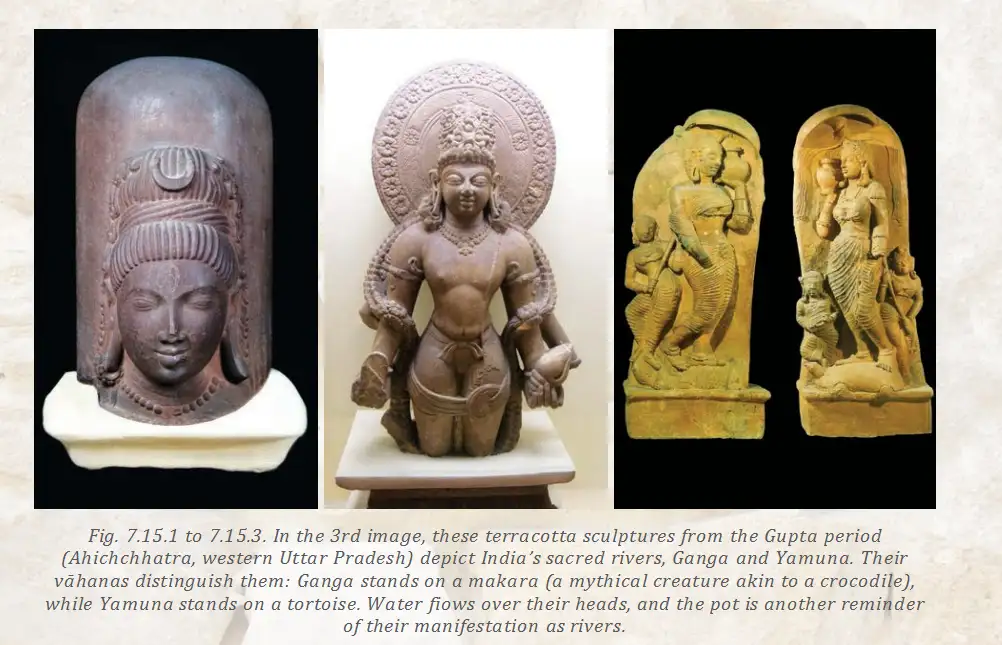
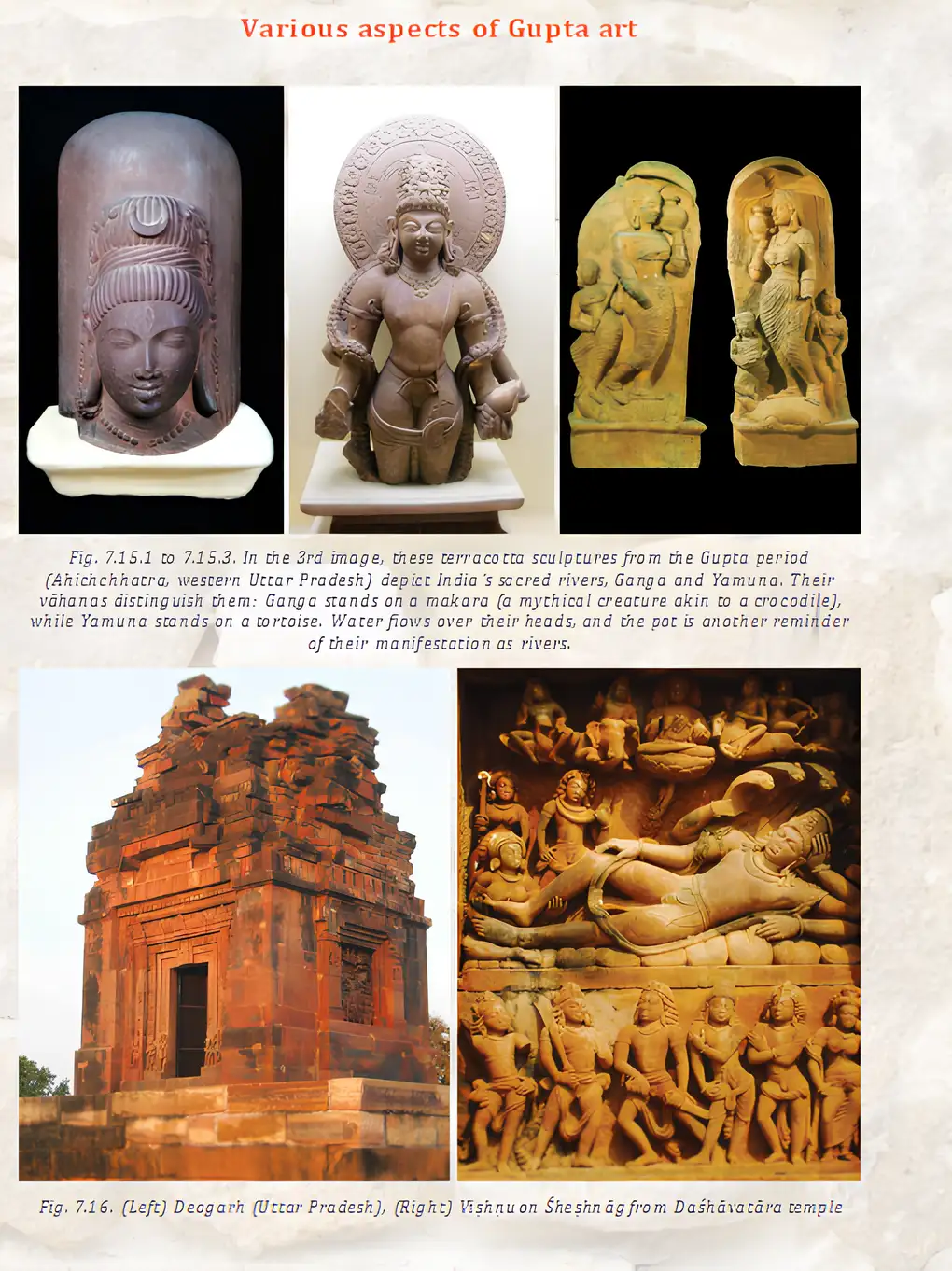
- Patronage: Gupta rulers created a supportive setting for artists and craftspeople, encouraging remarkable artistic work.
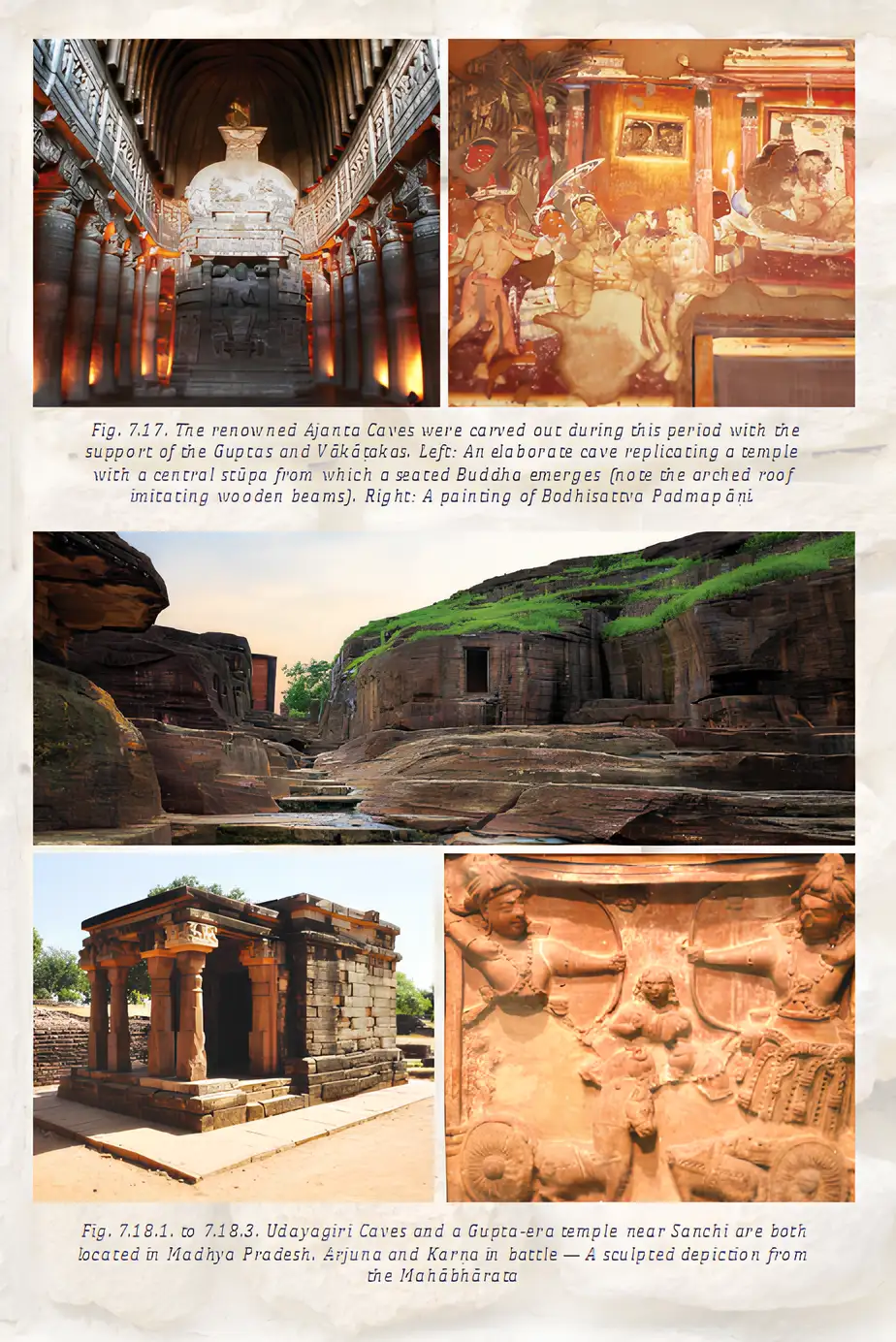
- Sarnath: Near present-day Varanasi in Uttar Pradesh; renowned for its finely crafted Buddha sculptures.
- Ajanta: The caves in present-day Maharashtra are among the outstanding artistic centres of the period.
- Udayagiri: In Madhya Pradesh; noted for rock-cut caves and detailed carvings of deities.
- Gupta art: Its standards of beauty and artistic refinement influenced later art.
The Decline of the Guptas
Decline
- 6th century CEThe Gupta Empire began to decline amid external invasions and growing challenges from regional rulers.
Factors weakening Gupta rule
- Repeated attacks by the Huna tribe from Central Asia → weakened Gupta control in north India.
- Powerful regional rulers rose → internal conflicts increased.
- External invasions and internal conflicts → the empire showed signs of decline.
Pallavas in the South
Power, art and learning
- Rise: While the Guptas ruled the north, the Pallavas became powerful in parts of present-day Tamil Nadu, Karnataka, Telangana and Andhra Pradesh.
- Origins: Their beginnings are unclear. They seem to have been tributaries of the Satavahanas and gained power as Satavahana rule declined.
- Art and religion: The Pallavas patronised art and architecture; most were devotees of Shiva and are credited with building temples and rock-cut caves.
- Kanchipuram: Their capital in present-day Tamil Nadu was called the “city of a thousand temples” and became a major southern centre of learning.
- Ghatikas: Centres of learning that emerged during Satavahana rule helped foster education and intellectual life.
Kamarupa in the Northeast
Region and names
- Kamarupa: A kingdom ruled by the Varman dynasty, covering the Brahmaputra valley—broadly, present-day Assam—and northern parts of present-day Bengal and Bangladesh.
- Pragjyotisha: An ancient name for Assam’s Brahmaputra valley, mentioned in the Ramayana and Mahabharata.
- Mahabharata reference: The text mentions Bhagadatta as a king; the provided passage ends before stating his realm.
- Gupta art
- Art of the Gupta period, known for refined craftsmanship and influential standards of beauty.
- Hunas
- A Central Asian tribe whose repeated attacks weakened Gupta control in north India.
- Ghatikas
- Centres of learning that supported education and intellectual growth.
- Kamarupa
- The Varman-ruled kingdom centred on the Brahmaputra valley and adjoining regions.
- Pragjyotisha
- An ancient name for the Brahmaputra valley of Assam.
Quick recap
- Gupta rulers supported a flourishing tradition of art and craftsmanship.
- Sarnath, Ajanta and Udayagiri were important centres of Gupta-period art.
- In the 6th century CE, Huna attacks and regional conflicts contributed to Gupta decline.
- The Pallavas rose in the south as Satavahana power declined and patronised temples and rock-cut architecture.
- Kanchipuram became a major southern learning centre; ghatikas fostered education.
- The Varman-ruled kingdom of Kamarupa covered the Brahmaputra valley and neighbouring regions.
The Quest for Beauty Part-2
Kāmarūpa and Pragjyotisha
Kāmarūpa
- Location: Kāmarūpa was in the northeast, in the region of modern-day Assam.
- Pragjyotisha: In the Great War tradition, Pragjyotisha is associated with a figure said to have fought on the Kauravas’ side; some historical rulers claimed this figure as an ancestor.
- Importance: Kāmarūpa was a major cultural and political centre, where temples and monasteries flourished as centres of learning.
Samudragupta’s Policy towards Regional Rulers
Pallavas and Kāmarūpa
- Prayāga Praśasti: It mentions both the Pallavas and Kāmarūpa.
- Southern campaign: Samudragupta defeated a Pallava ruler but allowed him and other local kings to remain on their thrones.
- Northeast: He defeated the ruler of Kāmarūpa but did not take direct control of the region.
- Terms of submission: Local rulers accepted Gupta authority and paid tribute.
Tributary Rule
- Samudragupta defeated regional rulers → did not annex their territories.
- Local kings retained their thrones → accepted Gupta authority and paid tribute.
- Local rule continued under Gupta supremacy → peaceful relations were encouraged.
The Gupta Legacy
A Period of Progress
- Reach: Gupta influence extended beyond the empire and shaped Indian life for centuries.
- Knowledge: Progress in mathematics, astronomy, medicine, and metallurgy supported later scientific and technological growth.
- Art and literature: Temples and Sanskrit literature became enduring achievements that continue to inspire.
- Governance and society: Gupta rule fostered stability and prosperity and became a model for later rulers.
- Continuing legacy: Gupta-era ideas and achievements remain part of India’s culture, traditions, and way of life.
- Kāmarūpa
- A prominent northeastern kingdom and cultural centre in the region of modern Assam.
- Pragjyotisha
- A name linked with the Assam region and a Kaurava-side figure in the Great War tradition.
- Tribute
- Payment made by a local ruler to acknowledge the authority of a stronger ruler.
- Prayāga Praśasti
- An inscription that mentions the Pallavas and Kāmarūpa among other rulers.
How did Samudragupta deal with the Pallavas and Kāmarūpa?
Why is the Gupta period considered a time of remarkable progress?
Quick recap
- Kāmarūpa, in the region of modern Assam, was a political and cultural centre with temples and monasteries.
- Pragjyotisha is linked in Great War tradition with a figure said to have fought on the Kauravas’ side.
- The Prayāga Praśasti mentions both the Pallavas and Kāmarūpa.
- Samudragupta often allowed defeated local rulers to retain power in return for accepting his authority and paying tribute.
- The Gupta era made important contributions to science, art, literature, and governance.
- Gupta achievements influenced later generations and remain part of India’s cultural legacy.
Before we move on
Gupta Power and Achievements
- Consolidating power: Gupta kings used military campaigns, land grants and matrimonial alliances to strengthen their rule and ensure stability.
- Cultural achievements: The period saw important contributions to art, literature, science and mathematics.
Other Regional Dynasties
- Regional rulers: The Vākāṭakas, Pallavas and Varmans ruled in their respective regions alongside the Guptas.
- Period character: These dynasties were part of an era of cultural and intellectual vibrancy.
- Matrimonial alliance
- An alliance between ruling families formed through marriage.
- Land grant
- A grant of land made by a ruler.
Quick recap
- Gupta kings consolidated power through military campaigns, land grants and matrimonial alliances.
- These measures helped ensure stability in the empire.
- The period saw contributions to art, literature, science and mathematics.
- The Vākāṭakas, Pallavas and Varmans ruled in their respective regions.
- The era was culturally and intellectually vibrant.
Social Science — ALL CHAPTERS
1
Geographical Diversity of India
2
Understanding the Weather
3
Climates of India
4
New Beginnings Cities and States
5
The Rise of Empires
6
The Age of Reorganisation
7
The Gupta Era: An Age of Tireless Creativity
8
How the Land Becomes Sacred
9
From the Rulers to the Ruled: Types of Governments
10
The Constitution of India - An Introduction
11
From Barter to Money
12
Understanding Markets
1
The Story of Indian Farming
2
India and Her Neighbours
3
Empires and Kingdoms: 6th to 10th Centuries
4
Turning Tides: 11th and 12th Centuries
5
India, a Home to Many
6
The State, the Government, and You
7
Infrastructure: Engine of India’s Development
8
Banks and the Magic of Finance