Class 7 . Social Science . Exploring Society India and Beyond Part II . The Story of Indian Farming
Chapter 1: The Story of Indian Farming
Ch 1
Social Science
Class 7
India’s Agricultural Landscape
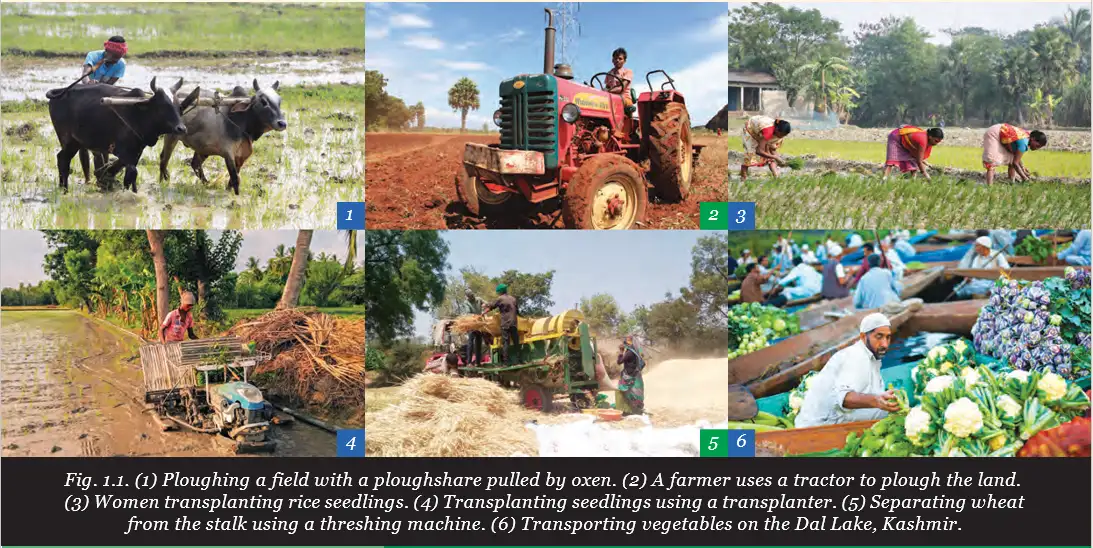
Agriculture and its importance
Agriculture — The broad system of preparing soil, growing plants and rearing livestock; it also includes forestry and horticulture.
Scope and importance
- Related activities: Farming may include animal husbandry, fish rearing (pisciculture), silkworm rearing, beekeeping (apiculture) and fibre production.
- Government classification: Agriculture and allied activities include agriculture, livestock, apiculture, fisheries, silk production and fibres such as cotton and hemp.
- Word origin: Agriculture comes from Latin *agri* (field) and *culture* (to cultivate).
- Livelihood and economy: In 2022–2023, agriculture and allied activities contributed a little over 18% of India’s GDP and supported about 46% of the working population.
- Women’s work: In 2025, women made up more than 75% of people working in rural India’s agriculture sector; they carry out tasks from sowing to harvesting and threshing.
Threshing — Removing edible grain from straw or husk, by hand or machine.
Farming, place and resources
India’s agricultural diversity
- Varied farming: Indian agriculture combines traditional and modern practices, diverse crops and strong cultural connections to farming.
- Regional examples: Wheat fields in Punjab, saffron in Kashmir, tea gardens in the Northeast and Nilgiris, and paddy fields in Kerala show this diversity.
How local conditions shape farming
- Soil, climate, water availability and terrain differ by region.
- These conditions affect which crops can grow well.
- Crop suitability influences what farmers cultivate and what foods are locally available.
Early farming in India
Archaeological and early textual evidence
- c. 3500 BCEIn the pre-urban phase of the Sindhu-Sarasvati civilisation, cattle, asses, sheep, goats, dogs, pigs and fowl were domesticated.
- 7th millennium BCERice grains are found in the Ganga Plain; barley and millet cultivation is dated to Mehrgarh in Baluchistan, an antecedent site of the Sindhu-Sarasvati civilisation.
- 3rd millennium BCEHarappan sites indicate rice in some regions, alongside staple barley and wheat, millets and several vegetables.
| Evidence | Interpretation | |
|---|---|---|
| Ganga Plain rice | Rice grains are present as early as the 7th or 8th millennium BCE. | This alone does not prove systematic rice cultivation; it may have taken several more millennia to master. |
Expansion of crops and farming methods
- Later crops: Farmers cultivated oilseeds such as sesame, safflower, linseed, mustard and castor; legumes such as green gram, black gram and fenugreek.
- Other crops: Cotton, hemp and jute were grown for fibre, alongside more vegetables and fruits such as grapes, dates, jujube, jackfruit, mango, mulberry and black plum.
- Vedic crop names: The Vedas mention *yava* (barley), *godhuma* (wheat) and *vrihi* (rice), as well as sesame, black gram and other pulses and legumes.
Intercropping — Growing two or more different crops at the same time.
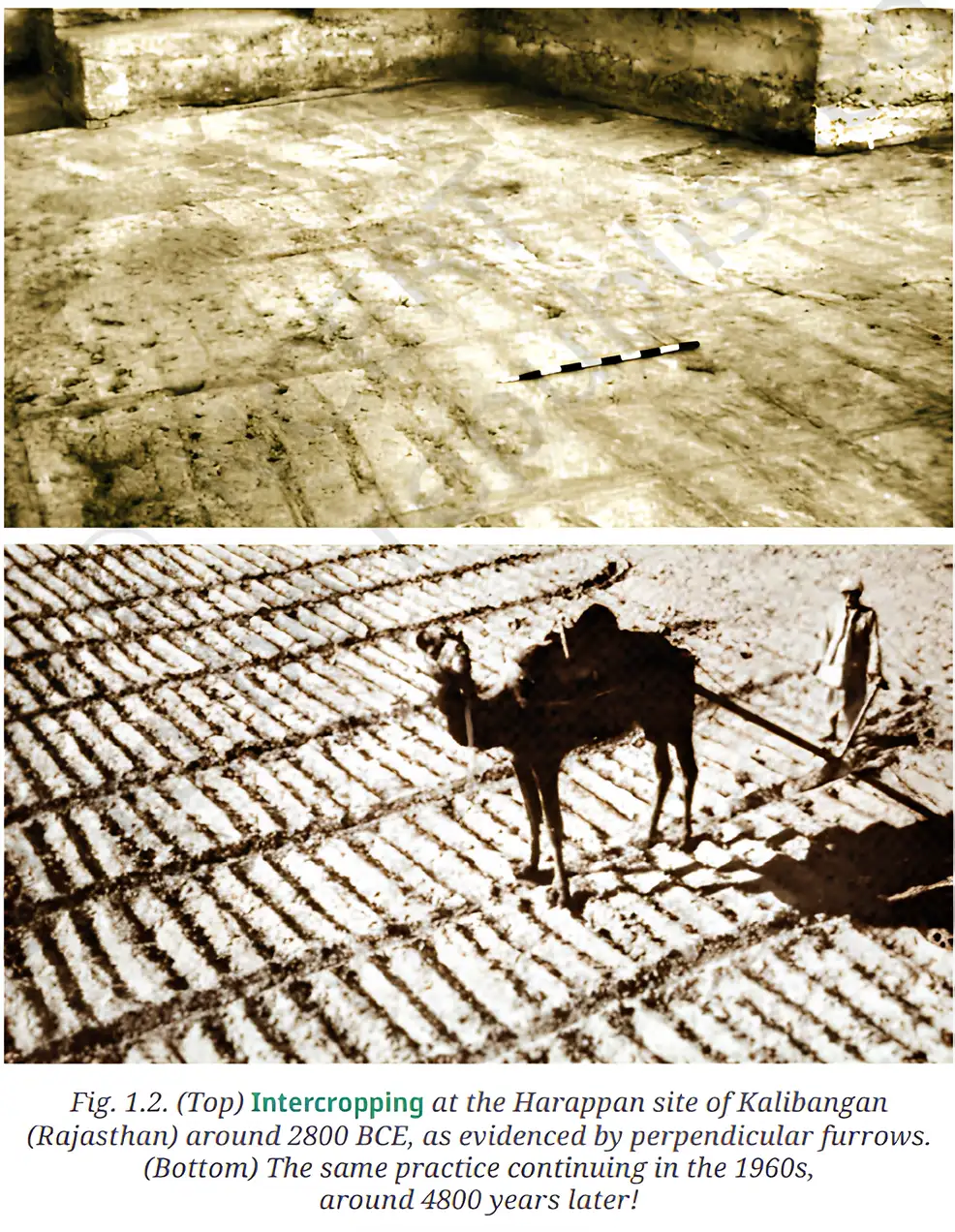
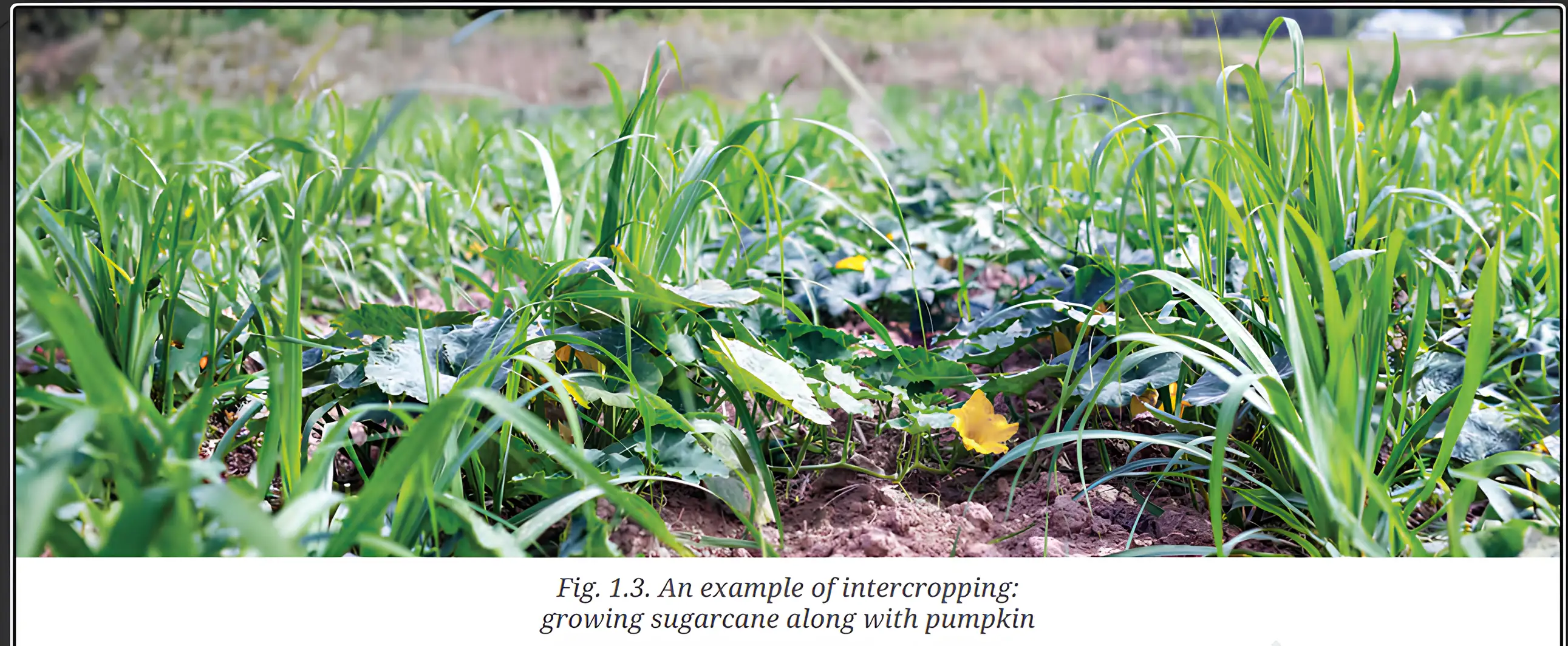
Agricultural knowledge in ancient texts
Texts and their contributions
- Sources: Kauṭilya’s *Arthaśhastra*, early Tamil Sangam literature, *Amarakosha*, *Kṛiṣhiparashara*, Varahamihira’s *Brihatsamhita* and Surapala’s *Vrikshayurveda* discuss agriculture, horticulture and plant diversity; some also discuss animal care.
- Vrikshayurveda: Gives guidance on seed preparation, soil cultivation, planting and watering. It recommends watering newly planted trees in arid soil morning and evening for 15 days, until the soil is fully soaked.
- Brihatsamhita: Describes a grafting method that is still used today.
Grafting — Joining one plant to another so they grow as one, combining desirable traits such as pest resistance or sweeter fruit.
- Pisciculture
- Rearing fish.
- Apiculture
- Beekeeping.
- Animal husbandry
- Raising and caring for livestock.
What factors influence the crops grown in a region?
What does archaeological evidence tell us about early Indian agriculture?
Name two ancient texts that record agricultural knowledge and one contribution from each.
Quick recap
- Agriculture includes crop cultivation, livestock rearing, forestry and horticulture, along with related activities.
- In 2022–2023, the sector contributed a little over 18% of GDP and supported about 46% of India’s working population.
- Women performed more than 75% of rural agricultural work in 2025, including sowing, harvesting and threshing.
- Soil, climate, water and terrain shape regional crop choices and agricultural diversity.
- Early evidence includes rice grains in the Ganga Plain and barley and millet cultivation at Mehrgarh in the 7th millennium BCE.
- Ancient texts record farming, plant care and animal knowledge; intercropping and grafting are examples of established practices.
Climate, Seasons, and Crops: What Grows Where and When
Climate and Crop Diversity
- Climate diversity: India’s varied geography creates different climates, rainfall patterns, and seasonal temperatures.
- Crop diversity: These differences influence which crops grow in each region and at different times of the year.
Agroclimatic Zones
- Agroclimatic zones: India is divided into 15 zones based on climate, soil, terrain, and vegetation.
- Purpose: These zones help agencies plan which crops to grow, when to grow them, and how to improve agricultural production.
The Monsoon and Agriculture
Monsoon Rainfall and Crop Growing
- Southwest and northeast monsoons bring rain at different times and to different regions.
- In southern India, rainfall from both monsoon periods enables farmers to grow crops in the intervening period.
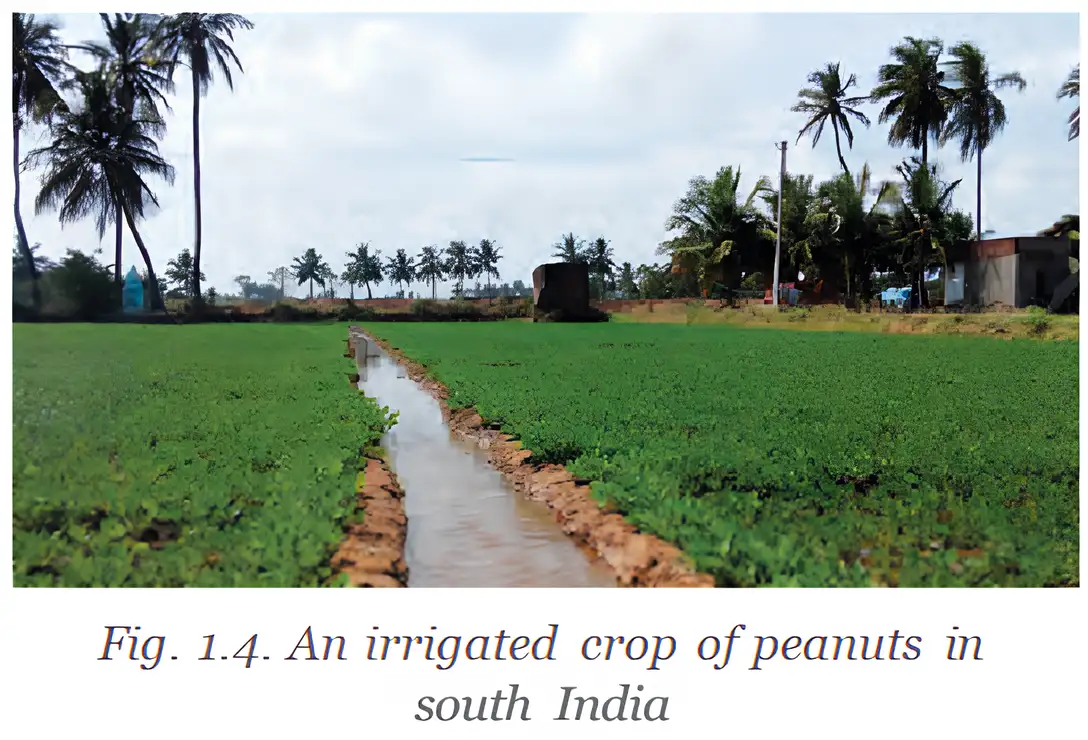
- In northern India, the intervening period is dry, so farmers use groundwater, rivers, canals, ponds and moisture stored in soil for irrigation.
- Reliable monsoon water and irrigation allow states such as Tamil Nadu, West Bengal and Andhra Pradesh to grow rice throughout the year.
- Kharif crops
- Crops grown seasonally with the support of monsoon rainfall.
- Irrigation
- Supplying water to crops using sources such as wells, rivers, canals and ponds.
- Agroclimatic zone
- An area classified using climate, soil, terrain and vegetation for agricultural planning.
Quick recap
- India’s varied climates and local conditions shape the crops grown in each region.
- India has 15 agroclimatic zones used to guide agricultural planning.
- The southwest monsoon brings rain from June to September and supports kharif crops.
- The northeast monsoon brings rain from October to December, especially to eastern and southern India.
- Some coastal regions receive rainfall from both monsoons.
- Irrigation helps farmers grow crops during dry periods; some states grow rice throughout the year.
The Rhythm of Seasons and Crops: Kharif, Rabi, and Zaid
India’s Three Cropping Seasons
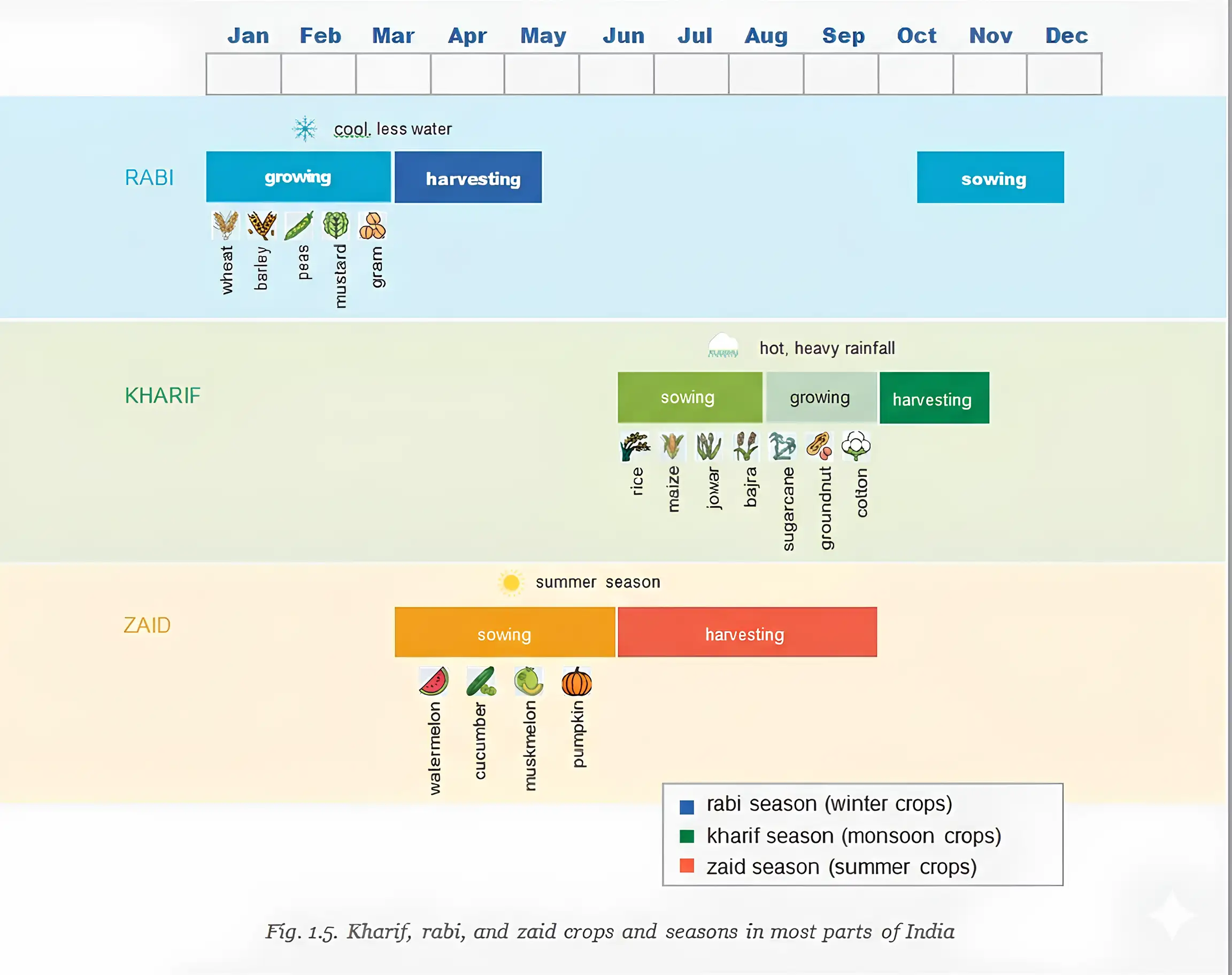
Crop Examples and Seasonal Risks
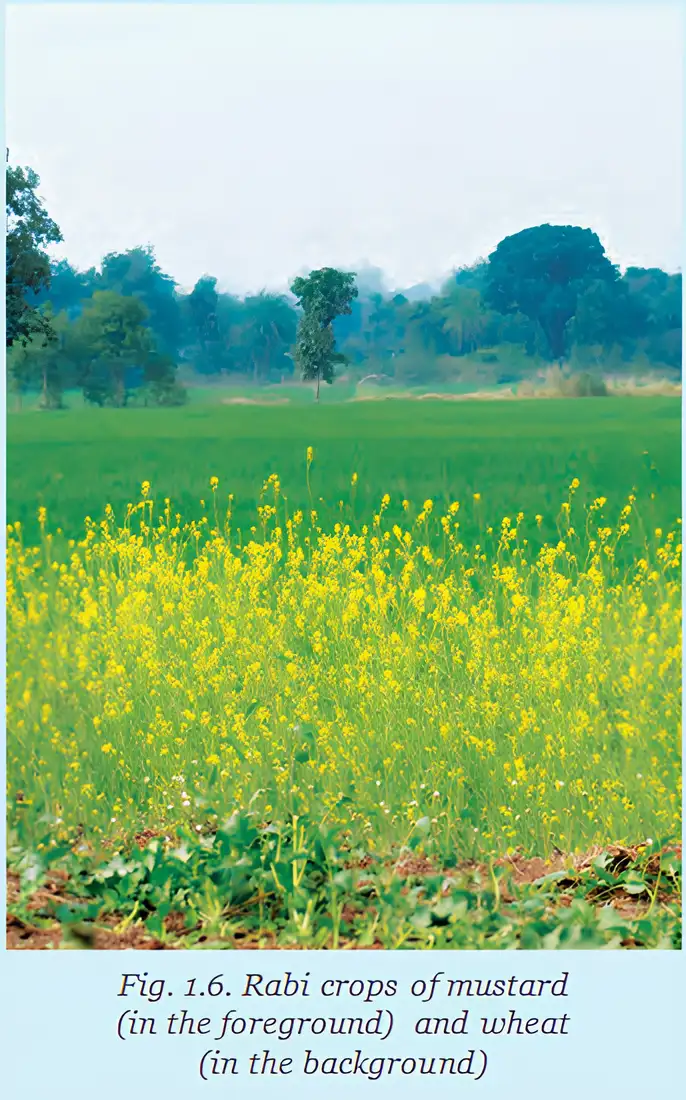
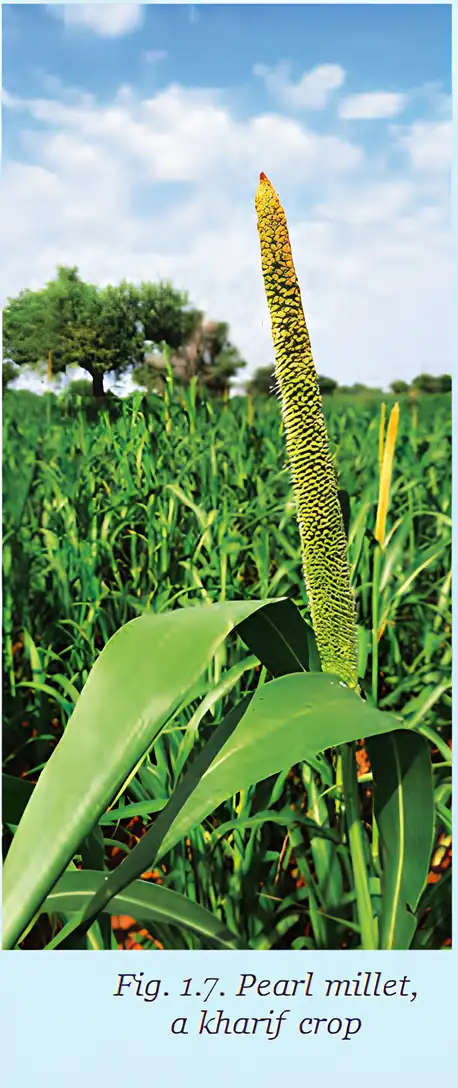
Monsoon Effects on Kharif Crops
- Kharif crops depend on the monsoons arriving on time.
- A timely monsoon supports crop growth.
- Excessive rainfall can destroy crops.
- Crop destruction can cause significant distress to farmers and their families.
- Kharif
- A crop season whose crops depend on the monsoons.
- Rabi
- One of India’s three main cropping seasons; wheat and mustard are examples.
- Zaid
- One of India’s three main cropping seasons, associated with summer crops.
- Kedāra, haimana, graiṣhmika
- Earlier names for wet, winter, and summer crops, respectively.
Quick recap
- Indian agriculture has three main crop seasons: kharif, rabi, and zaid.
- The Arabic-origin season names have been used since Mughal times.
- Earlier, the seasons were called kedāra (wet), haimana (winter), and graiṣhmika (summer).
- The seasonal rhythm makes a variety of agricultural products available through the year and helps support food supply.
- Pearl millet is a kharif example; wheat and mustard are rabi examples.
- Kharif crops depend on timely monsoons, while excessive rain can destroy crops and distress farming families.
Soil, the Foundation of Cultivation Part-1
Agriculture and the Rainy Season
Agricultural knowledge in the Arthashastra
- Arthashastra: Its agriculture sections discuss preparing land and seeds, payments to farmers, and related matters.
- Rainfall pattern: It describes a good rainy season as having one-third of annual rainfall at the beginning and end, and two-thirds in the middle.
- Crop cycle: The pattern reflects the importance of rainfall across different stages of crop growth.
Rainy-season periods described in the Arthashastra
- Beginning: Shravana (July–August)The rainy season begins.
- Middle: Praushthapada (August–September)Part of the period receiving most of the season’s rainfall.
- Middle: Ashvayuja (September–October)Part of the period receiving most of the season’s rainfall.
- End: Kartika (October–November)The rainy season ends.
Soil and Its Formation
Soil — The thin upper layer of Earth’s crust that supports plant life.
Why soil matters and how it forms
- Formation: Soil develops over millions of years as rocks break down and organic matter decays.
- Support for crops: It supplies nutrients and water, and provides physical support for plant growth.
- Importance: Soil is one of the most essential resources for farmers.
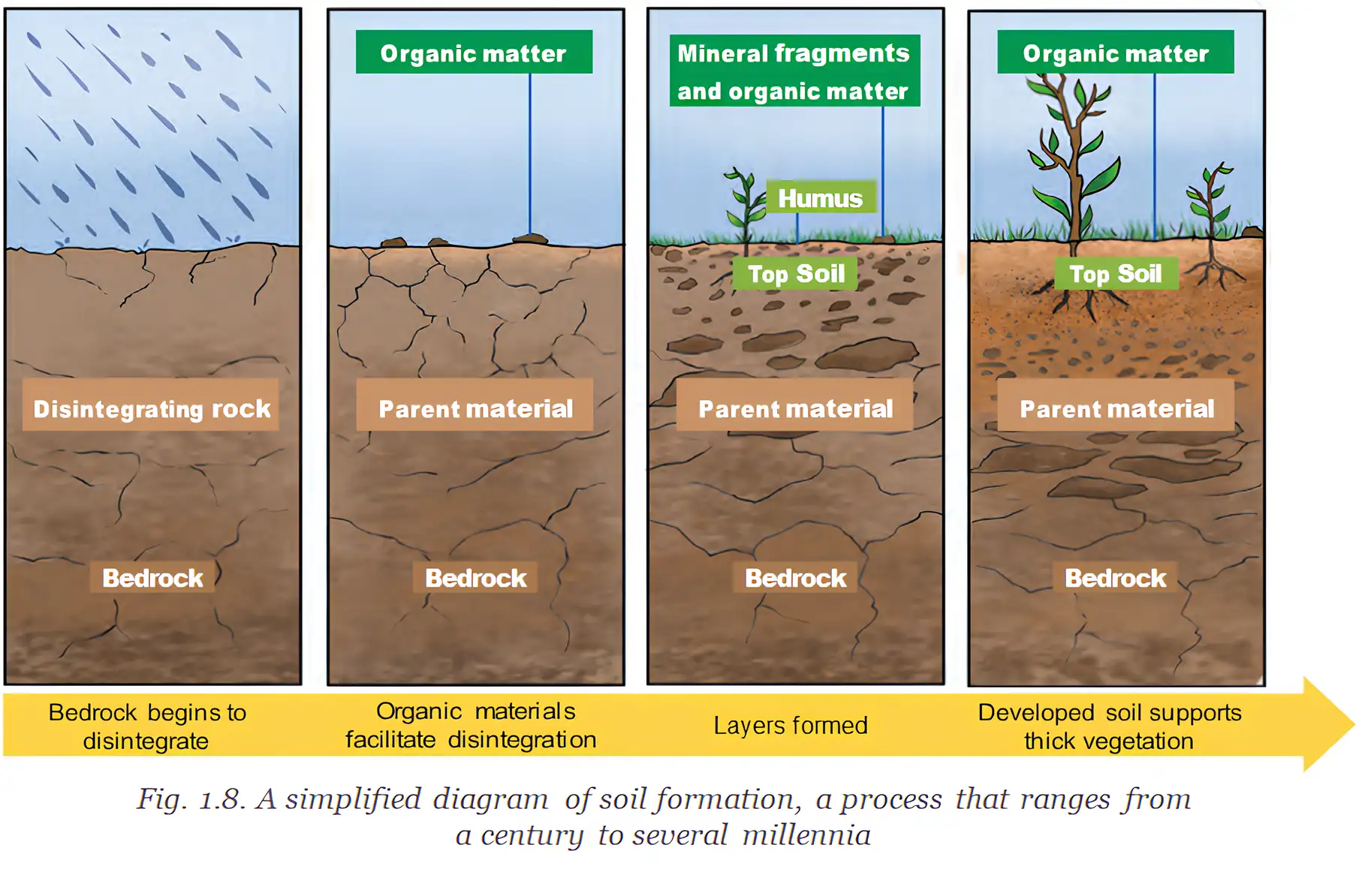
Humus
Humus — Dark organic matter in soil, formed by the decomposition of plant and animal matter.
Properties of humus
- Nutrients: Humus is rich in nutrients that support plant growth.
- Moisture: It helps soil retain water.
- Word origin: “Humus” comes from the Latin word for “earth” or “soil.”
Soils of India
Soil classification
- Diversity: India has many soils, each with distinct properties and links to particular crops.
- Amarakoṣha: This ancient text describes twelve types of agricultural land based on soil fertility.
- Modern classification: Indian soils are grouped into six major types.
| No. | Soil type |
|---|---|
| 1 | Alluvial soil |
| 2 | Black soil |
| 3 | Red soil |
| 4 | Laterite soil |
| 5 | Desert soil |
| 6 | Mountain / alpine soil |
- Soil
- The upper layer of Earth’s crust that supports plant life.
- Humus
- Nutrient-rich organic matter formed from decayed plants and animals.
- Amarakoṣha
- An ancient text describing twelve types of agricultural land based on fertility.
Quick recap
- Soil is the thin upper layer of Earth’s crust that supports plants and crops.
- Soil forms over millions of years through rock breakdown and organic decay.
- Humus adds nutrients and helps soil retain moisture.
- The Arthashastra discusses land and seed preparation, farmer payments, and seasonal rainfall.
- The Amarakoṣha describes twelve agricultural land types; modern classification identifies six major Indian soil types.
Soil, the Foundation of Cultivation Part-2
Soil–Crop Linkages
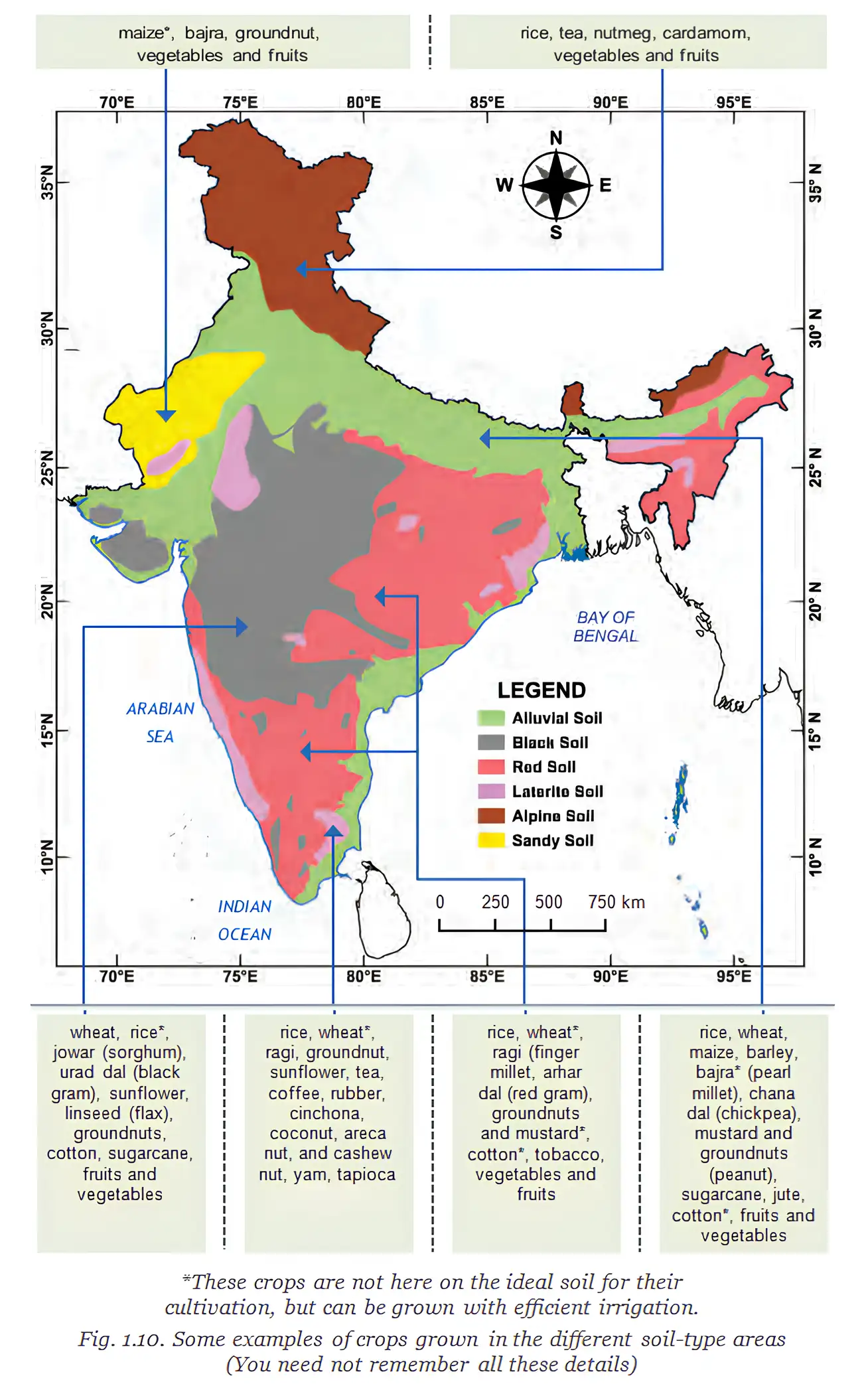
Weathering — The physical, chemical, or biological breakdown of rocks and minerals into soil particles.
Silt — Fine, dust-like rock and mineral particles, larger than clay but smaller than sand; rivers carry silt from mountains to plains.
Bedrock — The original rock from which new rocks and soils develop through weathering, erosion, and other processes.
Nurturing the Soil
- Healthy soil: Soil contains minerals, humus, water, air, and organisms such as bacteria, fungi, and earthworms.
- Soil fertility: Soil organisms break down organic matter and support healthy plant growth.
- Conservation: Managing soil carefully helps prevent degradation and preserve its productivity.
Traditional Soil-Conservation Methods
Soil conservation — Managing soil to prevent its degradation and preserve its productivity.
Panchagavya
- Ingredients: A fermented mixture of cow dung, urine, milk, curd, and ghee.
- Use: Acts as a biofertiliser that enhances crop growth and productivity and increases resistance to diseases.
Contemporary Soil-Conservation Methods
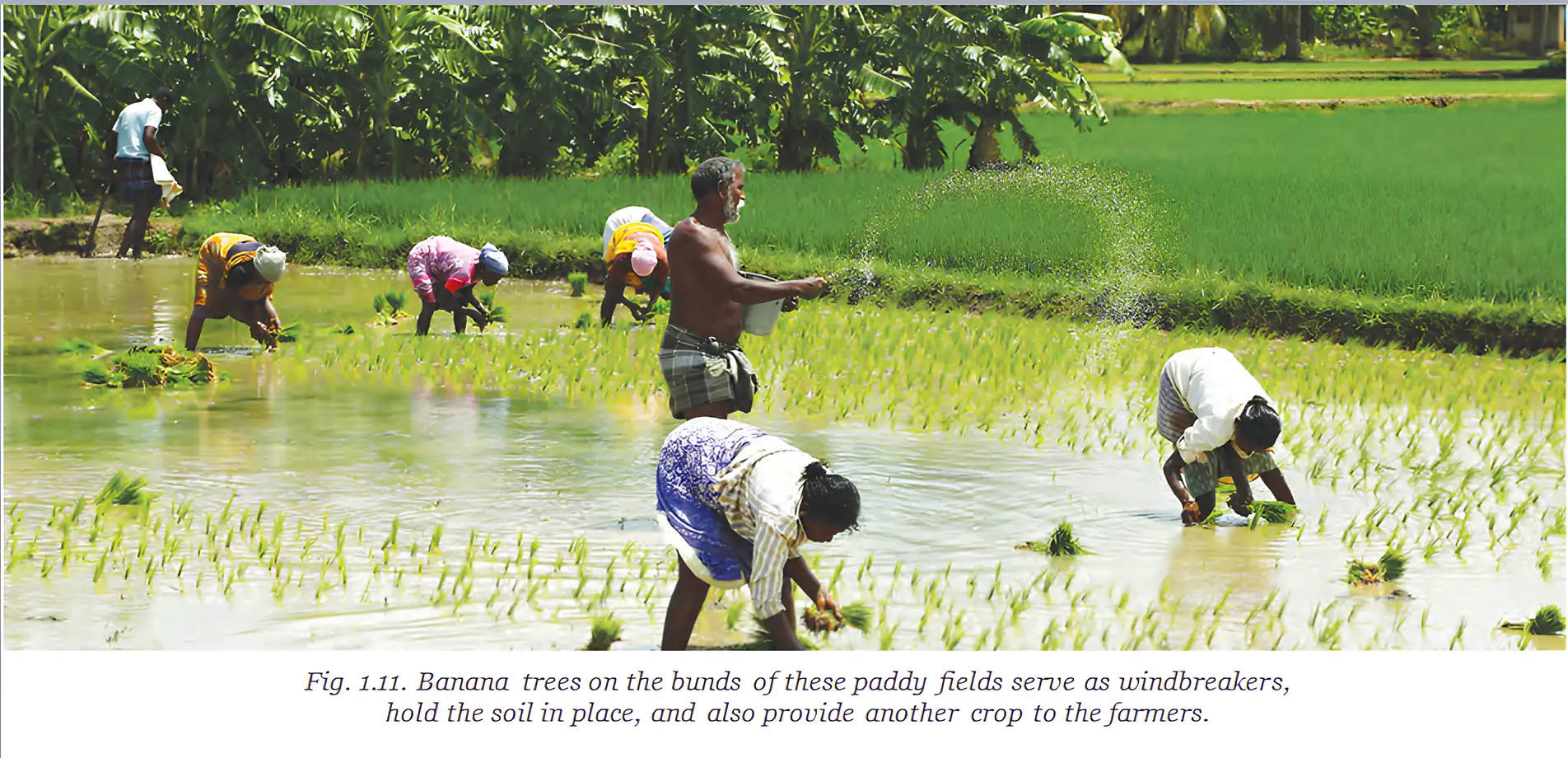
Greenhouse — A transparent glass- or plastic-covered structure that captures sunlight and heat to grow plants in a controlled environment.
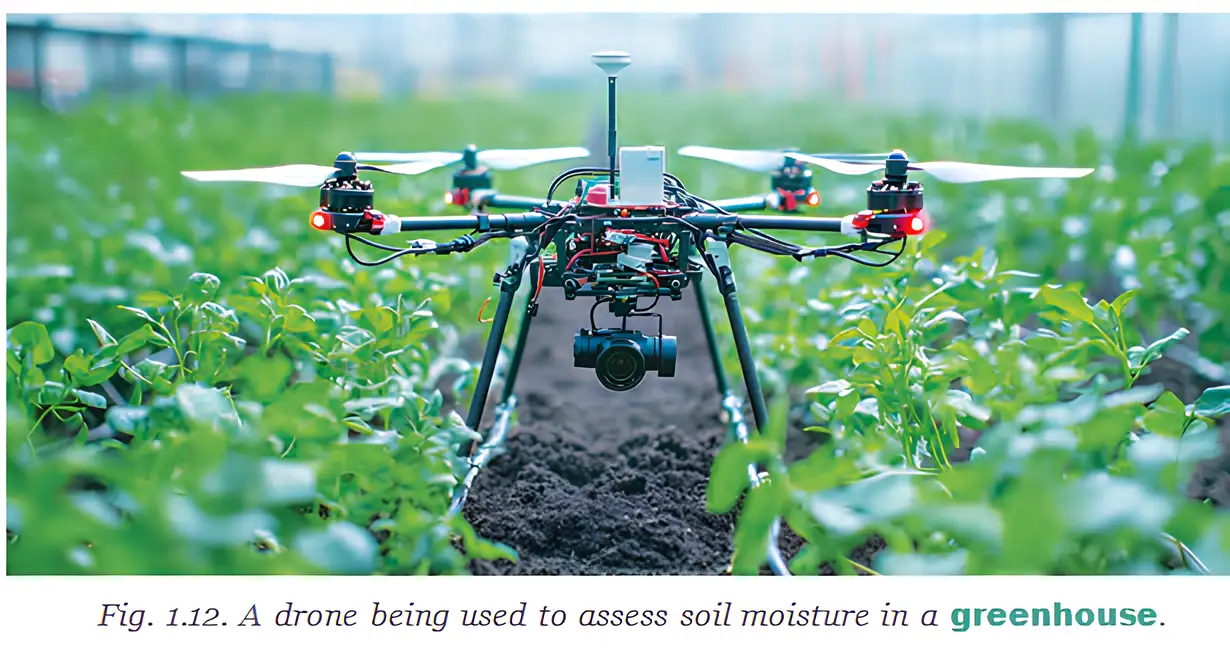
Quick recap
- Soil and crops: Soil type, along with agroclimatic conditions, influences which crops can grow.
- Soil formation: Weathering breaks down rocks and minerals; bedrock is the original rock from which soil develops.
- Silt: Its particles are larger than clay but smaller than sand, and rivers transport it from mountains to plains.
- Healthy soil: Organisms, minerals, humus, water, and air together support plant growth and soil fertility.
- Conservation methods: Rotation, multiple cropping, contour ploughing, terracing, afforestation, mulching, and careful fertiliser use protect soil.
- Panchagavya and greenhouses: Panchagavya is a five-cow-product biofertiliser; greenhouses capture sunlight and heat for controlled plant growth.
Water: Rain-Fed vs. Irrigated Agriculture Part-2
Rain-Fed and Irrigated Agriculture
- Rain-fed agriculture: Crops depend entirely on rainfall, so droughts and unpredictable monsoons can threaten harvests.
- Irrigated agriculture: Water is supplied to crops using artificial methods, reducing dependence on rainfall and helping improve productivity.
Traditional Irrigation Systems
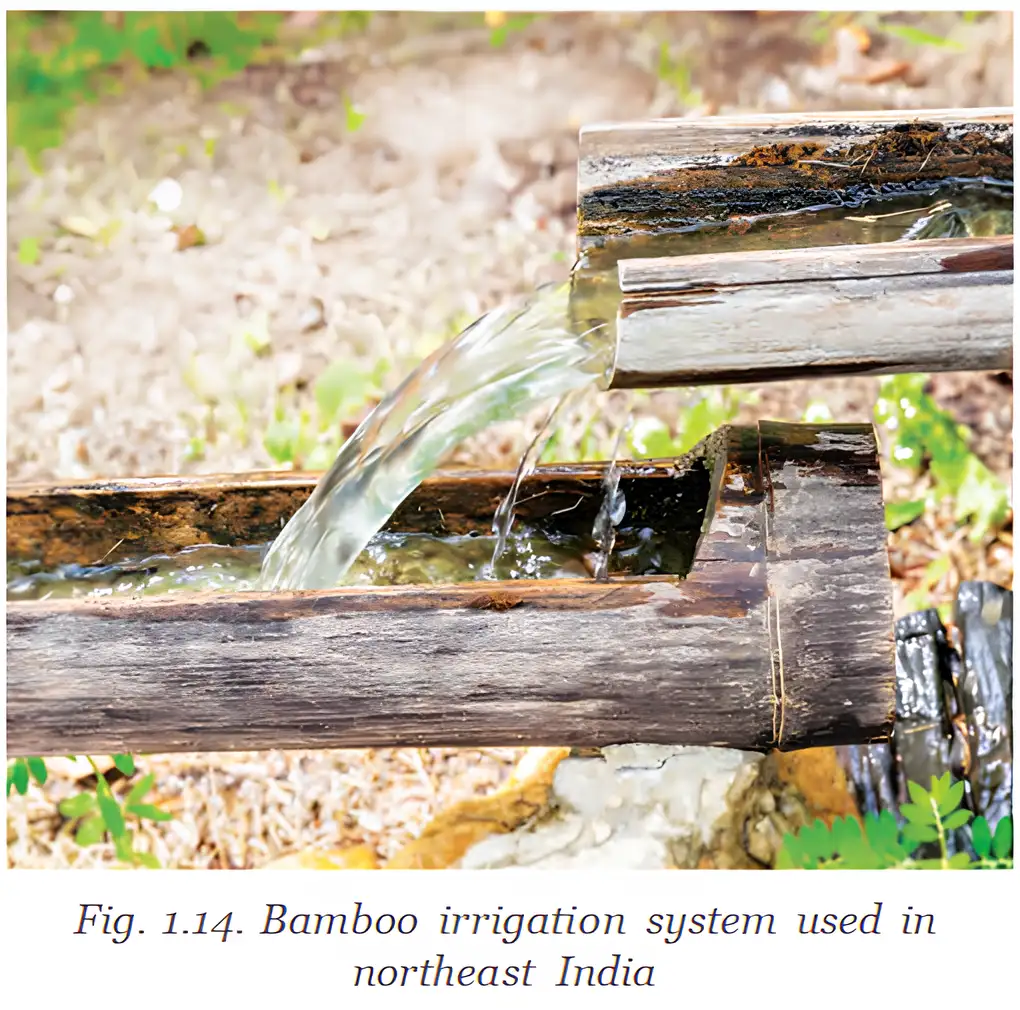
Irrigation Through Time and Modern Methods
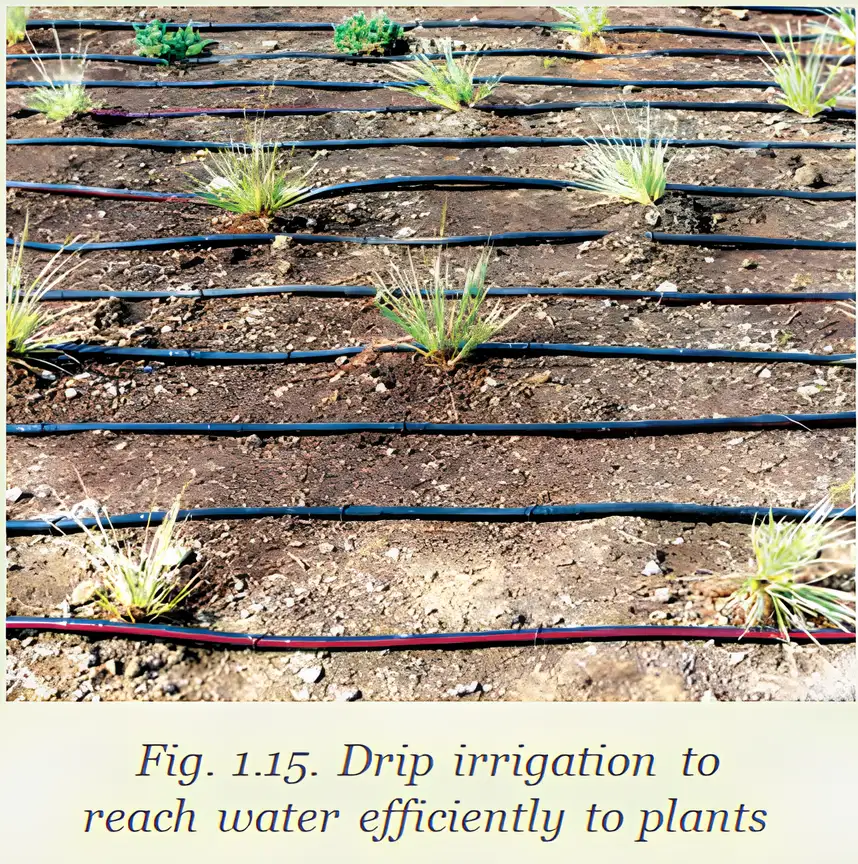
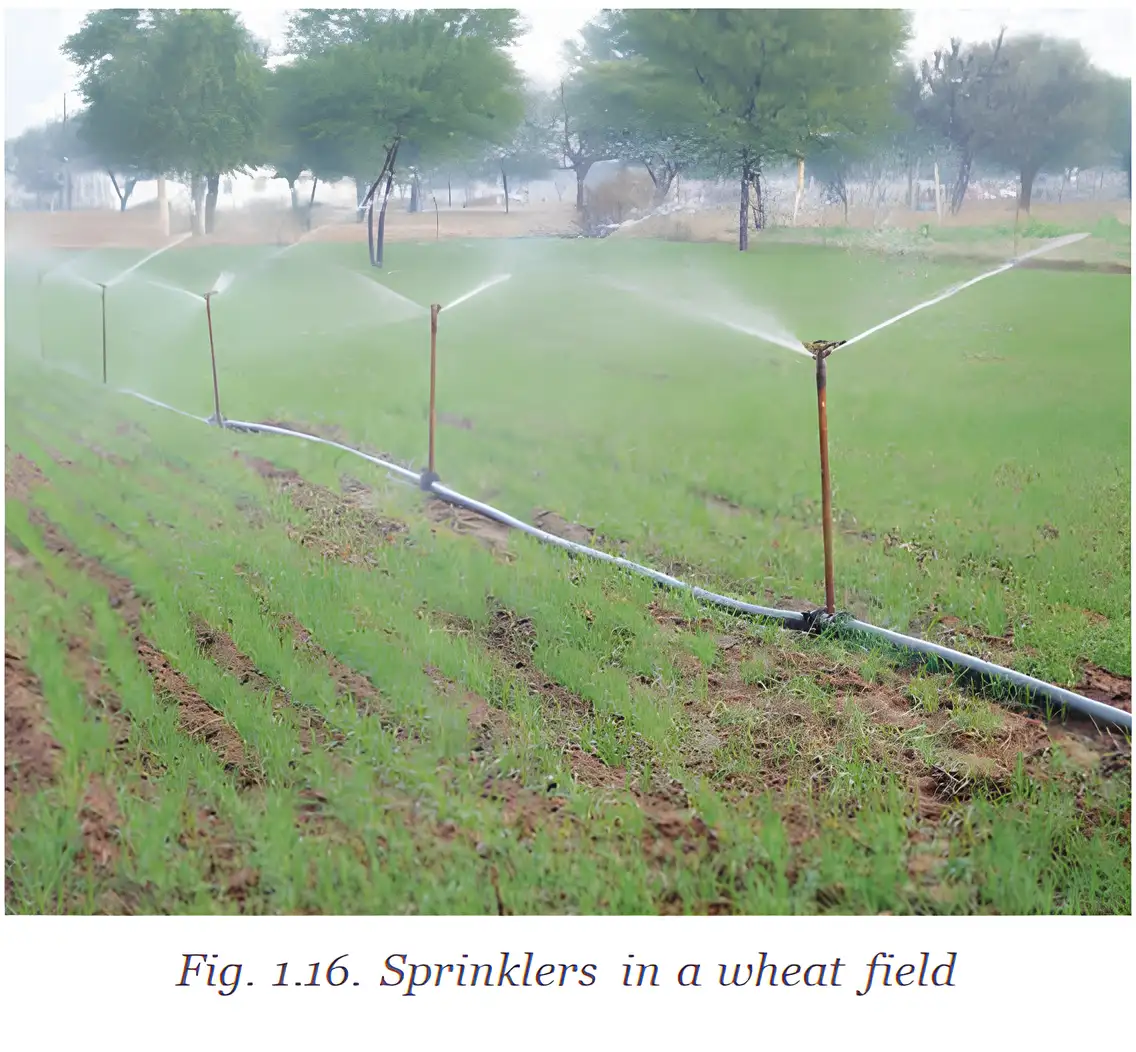
Irrigation in India
- Since the Indus civilisationWater structures have been built in India.
- About 1,800 years agoKarikala built Kallanai across the Kaveri River to divert water for irrigation.
- Modern timesDrip and sprinkler irrigation provide water more efficiently.
Seeds and Traditional Seed Care
- Seeds: Seeds are essential for growing crops and have traditionally been preserved, shared, and passed down through families and communities.
- Selection: Farmers carefully chose and saved suitable seeds for planting in the next season.
Seed Treatments, Tools and Modern Seeds
Effects of Irrigation and Purchased Seeds
- Irrigation supplies water beyond rainfall alone → farming becomes possible in areas with low rainfall.
- More reliable water supply → crop yields can increase → the food supply can become more stable.
- Company seeds may not produce seeds suitable for the next season → farmers may need to buy seeds again → dependence on seed companies can increase.
- Rain-fed agriculture
- Farming that depends entirely on rainfall.
- Irrigated agriculture
- Farming in which artificial methods supply water to crops.
- Drip irrigation
- Slow delivery of water directly to plant roots through tubes and emitters.
- Sprinkler irrigation
- Watering crops by spraying water into the air so it falls like rain.
- Beejamrit
- A seed-coating paste made with cow dung, urine and other materials.
- Seed drill
- A tool that combines soil preparation, seed planting and closing the furrow.
How do drip and sprinkler irrigation differ?
What is the Indian seed drill, and how does it reduce labour?
Quick recap
- Rain-fed farming depends entirely on rainfall and is vulnerable to droughts and unpredictable monsoons.
- Farmers adapt to rainfall risks with drought-resistant crops and traditional water harvesting.
- Phad canals divert river water; bamboo drip systems carry spring water to fields.
- Drip irrigation waters roots directly, while sprinklers spread water over crops like artificial rain.
- Kallanai, built by Karikala across the Kaveri about 1,800 years ago, irrigates thousands of hectares.
- Traditional seed care included selection, preservation and treatments; ICAR developed methods for using beejamrit paste.
- The seed drill combines three tasks; some company-developed seeds can increase farmers’ dependence on seed suppliers.
Agricultural Practices: Traditional Wisdom and Modern Innovations Part-1
Traditional Farming Systems
Traditional agriculture — A farming approach that treats plants, soil and the organisms living in it as an interconnected system.
- Soil and nutrients: Soil is the primary source of plant nutrients; farmyard manure supplies additional nutrients.
- Soil organisms: Bacteria and fungi convert nutrients into forms plants can absorb. Plant roots provide energy that supports these organisms.
- Approach: Traditional farming is usually small-scale, resource-reliant and closely connected to the environment.
- Natural cycles: These systems often follow the ritu chakra (cycle of seasons) and involve families and domestic animals.
- Combined methods: Many farmers use a combination of traditional practices and modern techniques.
| Practice | How it works | Main feature or benefit |
|---|---|---|
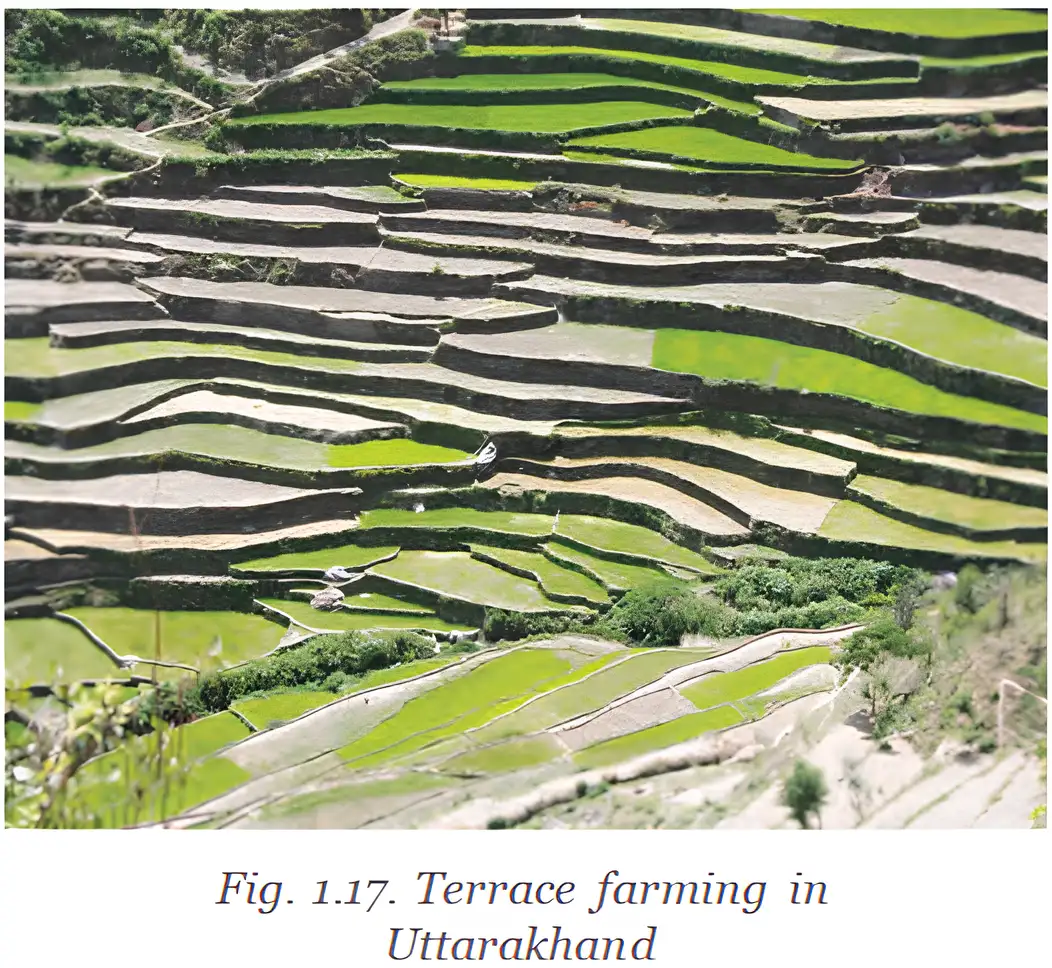
| Terrace farming | Steps or flat terraces are cut into hilly slopes. | Helps prevent soil erosion and conserve water. |
| Kulagar | Families cultivate a variety of crops around their homes using a structured irrigation system. | Traditional homestead farming common in Goa’s Konkan Plains. |
| Gokrishi | Cows provide manure for organic fertiliser; bullocks are used to plough fields. | A holistic method combining livestock and cultivation. |
Kulagar and ICAR Findings
- Kulagar name: From the Konkani words kula (“family”) and āgar (“storehouse”).
- Kulagar crops: Food crops, cash crops, fruits, vegetables, spices and medicinal plants are grown around the home.
- ICAR documentation: The Indian Council of Agricultural Research documented almost 5,000 traditional practices and tested over 100.
- Scientific validation: More than 85% of the practices tested were validated by modern science; they can help reduce chemical use and improve soil health.
Contemporary Agriculture
Contemporary agriculture — Modern farming that uses technology, machinery and new farming techniques.
Major Agricultural Changes
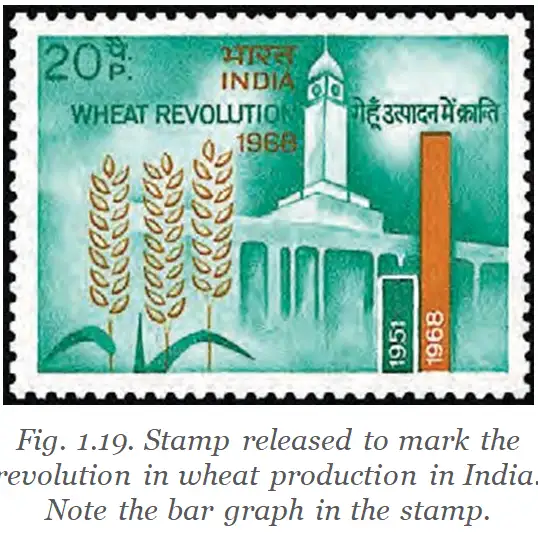
- 1951–1968The lecture’s wheat-production graphic shows an increase in wheat production over this period.
- 1960s–1970sThe Green Revolution brought major changes to Indian agriculture.
Green Revolution
- New inputs and methods: High-yielding variety (HYV) seeds, increased irrigation, chemical fertilisers and pesticides, and mechanised equipment.
- Machinery: Tractors, harvesters and other equipment made farm work faster and easier.
- Production: Food-grain production rose significantly, particularly for wheat and rice.
- Outcome: India achieved self-sufficiency in food; agriculture emerged as the backbone of the Indian economy.
| Point | Traditional farming | Contemporary farming |
|---|---|---|
| Approach | Works with soil ecosystems and natural cycles. | Uses technology, machinery and modern techniques. |
| Resources and inputs | Often relies on local resources, farmyard manure, family involvement and domestic animals. | Uses HYV seeds, increased irrigation, chemical fertilisers and pesticides. |
| Scale and tools | Typically small-scale and resource-reliant. | May use machinery such as tractors and harvesters. |
Green Revolution: Benefits and Concerns
- HYV seeds, increased irrigation, chemical inputs and mechanisation → higher food-grain production, especially wheat and rice.
- Higher production → India achieved self-sufficiency in food.
- Long-term use of these methods → soil impoverishment and groundwater depletion.
- Fertilisers and pesticides → contamination of soil and water, and damage to human and animal health.
- Health concerns include increased cancer cases in rural areas, as reported by scientific studies → agricultural scientists question the sustainability of this approach.
How does traditional farming treat soil, plants and soil organisms as an interconnected system?
Name the main changes introduced by the Green Revolution and state its major outcomes and concerns.
Quick recap
- Traditional farming links soil, plants, soil organisms, local resources and natural cycles; many farmers combine traditional and modern methods.
- Terrace farming helps prevent erosion and conserve water on hillsides.
- Kulagar is diverse, irrigated homestead farming; Gokrishi uses cows for manure and bullocks for ploughing.
- ICAR documented almost 5,000 traditional practices; over 85% of those tested were validated by modern science.
- The Green Revolution of the 1960s–1970s increased food-grain production and helped India become self-sufficient in food.
- Concerns include soil impoverishment, groundwater depletion, pollution and risks to human and animal health.
Agricultural Practices: Traditional Wisdom and Modern Innovations Part-2
Sustainable Pathways in Agriculture
Sustainable agriculture — Farming that meets food needs while protecting the environment and supporting long-lasting soil and ecosystem health.
Combining traditional wisdom and modern methods
- Approach: Combine the productivity of modern methods with the environment-friendly wisdom of traditional practices.
- Inspiration: Indian Knowledge Systems (IKS) support farming that works in harmony with nature.
- Organic farming: Avoids chemical fertilisers and pesticides; uses natural inputs such as compost, seed cake and animal manure.
- Seed cake: The residue left after oil has been extracted from seeds.
- Neem-based pesticides: Use neem for pest control and are less harmful to the environment than chemical pesticides.
Sikkim: organic farming
- First: Sikkim is the world’s first 100 per cent organic state.
- Policy: In 2014, it banned chemical fertilisers and pesticides and focused on natural farming practices.
| Point | Modern methods | Traditional methods |
|---|---|---|
| Main strength | High productivity; can produce large amounts of food quickly. | Often more resilient and sustainable because they work in harmony with nature. |
| Limitations | Chemical use can pollute water and harm ecosystems, including bees needed for pollination. | May produce lower yields. |
| Path forward | Use innovation to meet food needs. | Combine it with sustainable practices to balance productivity and environmental care. |
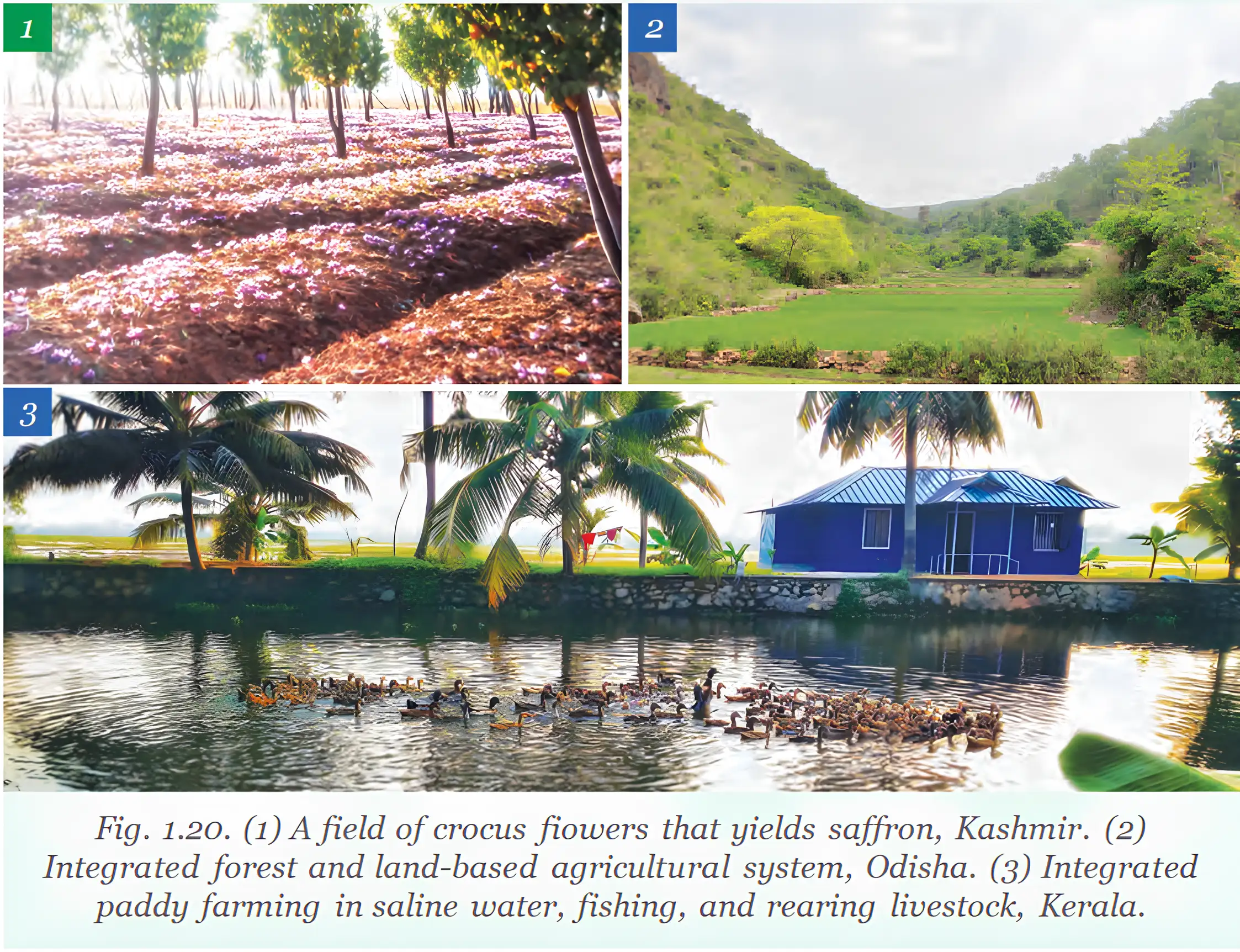
Indian agricultural heritage systems
- Recognition: The Food and Agriculture Organisation (FAO) recognises three globally significant agricultural heritage systems in India.
| Place | Agricultural system |
|---|---|
| Kashmir | Saffron cultivation. |
| Odisha | Traditional agriculture integrated with forest management. |
| Kerala | Below-sea-level agriculture, including crop plantation and fishing. |
Hydroponics
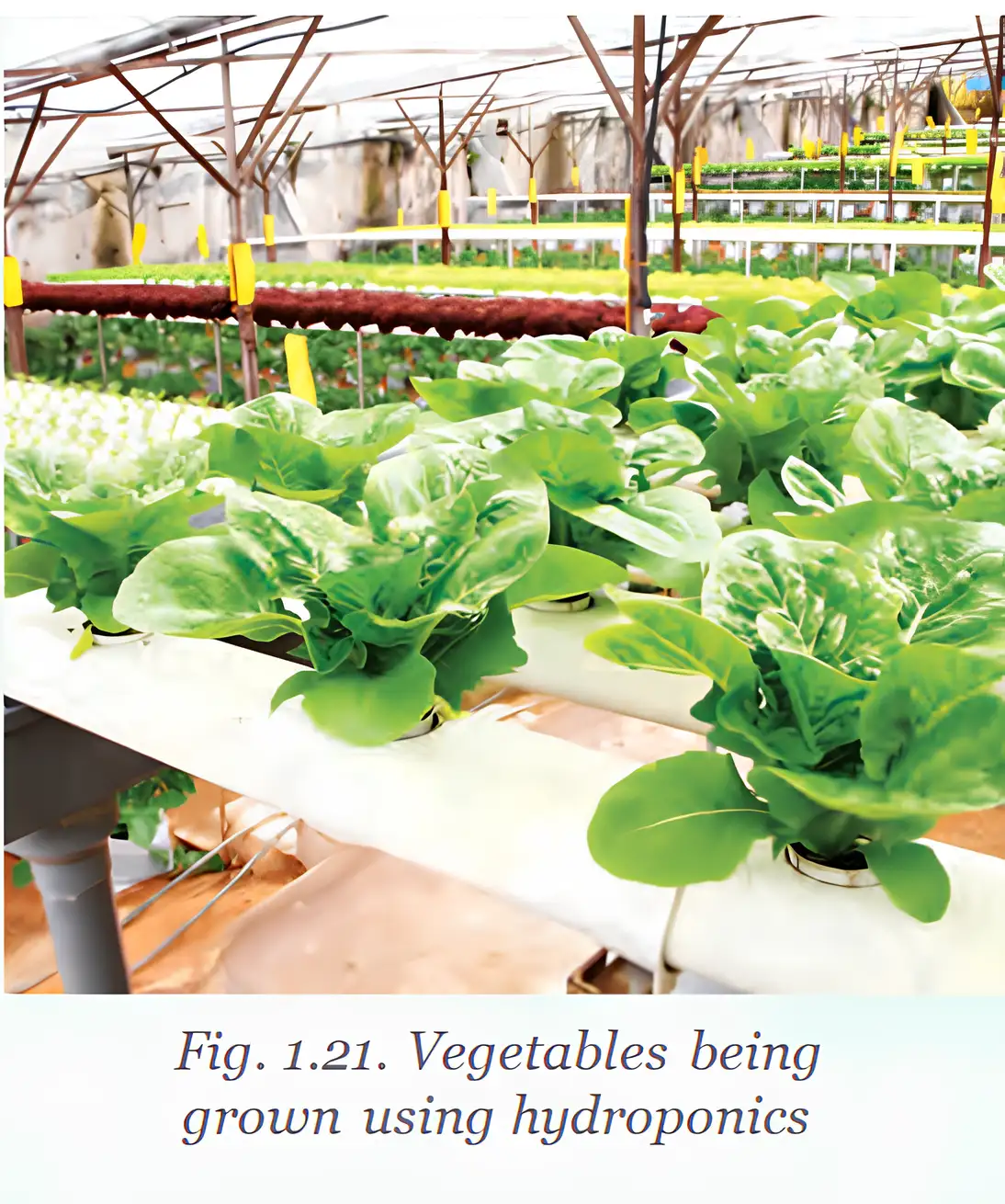
Hydroponics — A method of growing plants without soil, using nutrient-rich water solutions.
How hydroponics works and where it is useful
- Nutrients: Essential minerals are supplied directly to the plant roots through the water solution.
- Growing conditions: Hydroponics is used in controlled environments.
- Uses: It can support urban farming and farming in areas with poor soil quality.
Quick recap
- Sustainable agriculture combines modern productivity with traditional, nature-friendly practices.
- Organic farming avoids chemical fertilisers and pesticides and uses natural inputs such as compost, seed cake and animal manure.
- Sikkim is the world’s first 100 per cent organic state; it banned chemical fertilisers and pesticides in 2014.
- Modern methods can raise production quickly, but chemical use can pollute water and harm ecosystems, including bees.
- Traditional methods are often resilient and sustainable, but may produce lower yields; balancing both approaches is the challenge.
- FAO-recognised heritage systems include saffron cultivation in Kashmir, forest-integrated farming in Odisha and below-sea-level agriculture in Kerala.
- Hydroponics grows plants without soil, supplying minerals directly to roots through nutrient-rich water.
The Role of the Government
Government Support for Farmers
Ways the Government Supports Farmers
- Inputs and knowledge: Support systems help farmers access seeds, fertilisers, pesticides, weather forecasts, research and training in new farming practices.
- Lower costs: Electricity for irrigation is supplied at lower prices to reduce farmers’ input costs.
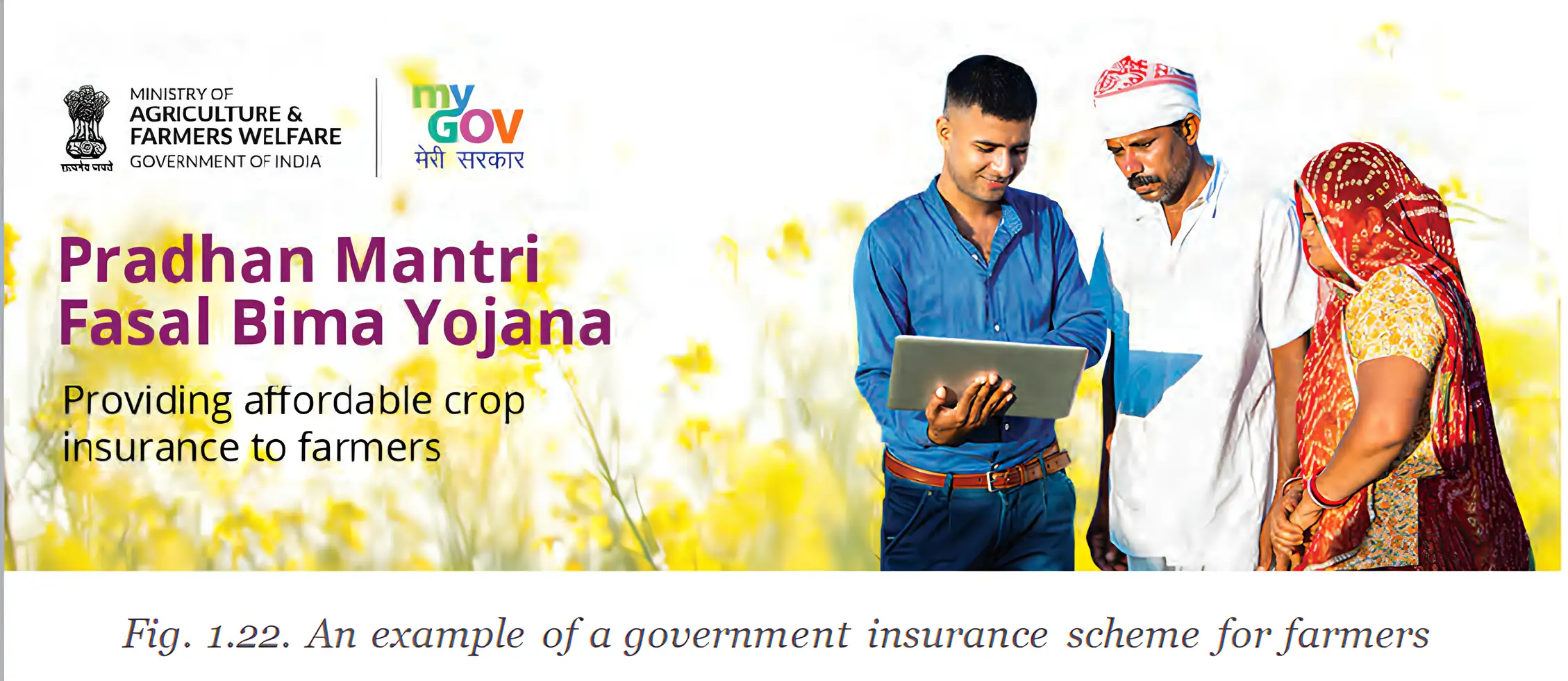
- Financial protection: Crop-insurance schemes, such as the Pradhan Mantri Fasal Bima Yojana, provide financial assistance.
- Marketing and prices: Government purchasing of important crops helps farmers market their produce and receive fair prices.
- Storage and digital access: Cold storages and digital technology improve farmers’ access to information and markets, helping them obtain better prices.
Challenges Faced by Farmers
- Landholding
- An area of land owned by a person.
- Hectare
- A unit of area; one hectare equals 10,000 square metres.
- Debt trap
- A situation in which borrowers struggle to repay loans and may need to borrow again.
Small Landholdings and Income
- Shrinking farms: Land is divided among family members over generations, reducing the size of each holding.
- Average size: The average Indian landholding is about three-fourths of a hectare—roughly the size of an average football field. An acre is about 4,047 square metres.
- Low earnings: Small holdings often do not provide farmers with much income.
- Difficult mechanisation: Tractors and other machines can be costly to buy or rent and are often designed for larger farms, though some machines are now designed for small farms.
Multiple Sources of Livelihood
- Additional activities: Farming families may rear cows, goats or poultry; practise apiculture or fishing; collect forest produce; and grow fruit or timber trees on field bunds.
- Resilience: Diverse sources of livelihood can help families withstand difficulties, but these sources are increasingly insufficient for a decent quality of life.
Climate Change and Farming Risk
- Global warming increases weather unpredictability, including untimely rain.
- Droughts and heavy rainfall become more frequent extreme events.
- Crops face a greater risk of destruction.
- Crop losses can cause heavy financial hardship for farmers; these risks are likely to worsen as the planet warms.
The Ganga Basin Under Stress
Causes and Possible Consequences
- The Ganga basin has rich alluvial soil and provides food and water to over 500 million people today.
- Global warming is causing Himalayan glaciers to melt rapidly; irrigation diverts water, while agriculture and industry pump large amounts of groundwater.
- Hundreds of dams also interfere with the river’s natural flow, contributing to low water levels and reduced replenishment.
- Some stretches are no longer navigable by river boats in summer because water levels are too low.
- If the river’s condition persists, farming in the basin may become less sustainable, threatening millions of livelihoods and India’s food production.
Debt and Farmers Leaving Agriculture
From Hardship to Leaving Farming
- Hardship leads farmers to take loans.
- Difficulty repaying loans can trap farmers in debt.
- According to some estimates, as many as 2,300 farmers a day have been compelled to abandon agriculture.
- New approaches to farming offer hope that agriculture can flourish across India.
How does the government support farmers?
Name two major challenges Indian farmers face.
Why is the Ganga’s declining water level a concern for farming?
Quick recap
- Government support includes farm inputs, information, cheaper irrigation electricity, crop insurance and crop purchasing.
- Cold storages and digital technology improve access to both information and markets, helping farmers get better prices.
- The average landholding is about three-fourths of a hectare; small farms often bring low income and make machinery harder to use.
- Diversifying livelihoods builds resilience, but may no longer ensure a decent quality of life.
- Climate change brings unpredictable weather and more extreme events, raising the risk of crop losses.
- Water diversion, groundwater pumping, glacier melt and dams are contributing to stress on the Ganga.
- Loans taken during hardship can lead to debt traps; some farmers are compelled to leave agriculture.
Before we move on
Indian Agriculture
Agriculture — Agriculture includes growing crops and related activities such as livestock rearing and forestry.
- Mixed methods: Indian farming combines traditional practices with modern methods.
- Diversity: Farming is shaped by India’s varied climates and monsoon patterns.
| Season | Main feature |
|---|---|
| Kharif | One of India’s three cropping seasons |
| Rabi | One of India’s three cropping seasons |
| Zaid | One of India’s three cropping seasons |
Soil and Crop Choice
Soil health — The condition of soil that supports productive farming and sustainable agriculture.
- Soil types: Six major soil types influence which crops can be grown in different areas.
- Crop choice: Farmers need to match crops to the conditions of their soil.
- Sustainability: Maintaining soil health is important for farming over the long term.
Seeds and Farming Methods
High-yield variety seeds — Seeds intended to produce high yields and often purchased by farmers from companies.
- Traditional seeds: Farmers may preserve and pass down seeds through generations.
- Company seeds: Farmers may buy high-yield variety seeds from companies.
- Possible concern: Reliance on company seeds can make farmers dependent on seed suppliers.
- Sustainable farming: Combines modern technology with eco-friendly practices, including efficient irrigation.
| Point | Traditional seed sources | Company-supplied seeds |
|---|---|---|
| Source | Passed down by farmers | Bought from companies |
| Possible concern | — | May create dependence on companies |
Challenges and Support for Farmers
Small landholding — A small area of farmland.
- Challenges: Farmers face small landholdings, climate change, costly modern equipment and market difficulties.
- Government support: Help includes access to information, research and training.
- Financial support: The government also provides different forms of financial assistance.
- Kharif
- One of India’s three cropping seasons.
- Rabi
- One of India’s three cropping seasons.
- Zaid
- One of India’s three cropping seasons.
- Sustainable farming
- Farming that combines technology with practices that support the environment and long-term soil health.
- High-yield variety seeds
- Seeds intended to produce high yields, often obtained from companies.
Quick recap
- Indian agriculture includes crops, livestock, forestry and both traditional and modern methods.
- Climate and monsoons influence the three cropping seasons: kharif, rabi and zaid.
- Six major soil types affect crop choice; healthy soil is essential for sustainable farming.
- Seeds may be passed down traditionally or bought as high-yield varieties, which can create dependence on companies.
- Sustainable farming uses modern technology and eco-friendly practices such as efficient irrigation.
- Farmers face land, climate, equipment-cost and market challenges; government support includes information, research, training and financial assistance.
Social Science — ALL CHAPTERS
1
Geographical Diversity of India
2
Understanding the Weather
3
Climates of India
4
New Beginnings Cities and States
5
The Rise of Empires
6
The Age of Reorganisation
7
The Gupta Era: An Age of Tireless Creativity
8
How the Land Becomes Sacred
9
From the Rulers to the Ruled: Types of Governments
10
The Constitution of India - An Introduction
11
From Barter to Money
12
Understanding Markets
1
The Story of Indian Farming
2
India and Her Neighbours
3
Empires and Kingdoms: 6th to 10th Centuries
4
Turning Tides: 11th and 12th Centuries
5
India, a Home to Many
6
The State, the Government, and You
7
Infrastructure: Engine of India’s Development
8
Banks and the Magic of Finance