Class 7 . Social Science . Exploring Society India and Beyond Part I . From Barter to Money
Chapter 11: From Barter to Money
Ch 11
Social Science
Class 7
Introduction
Barter and Exchange
Barter system — A system of exchanging goods or services directly for other goods or services, without using money.
How barter works
- Exchange: Each person gives something they have in return for something they need.
- Example: A student with an extra eraser exchanges it for a classmate’s extra pencil.
- Early use: Barter was the earliest form of exchange and was practised in many parts of the world.
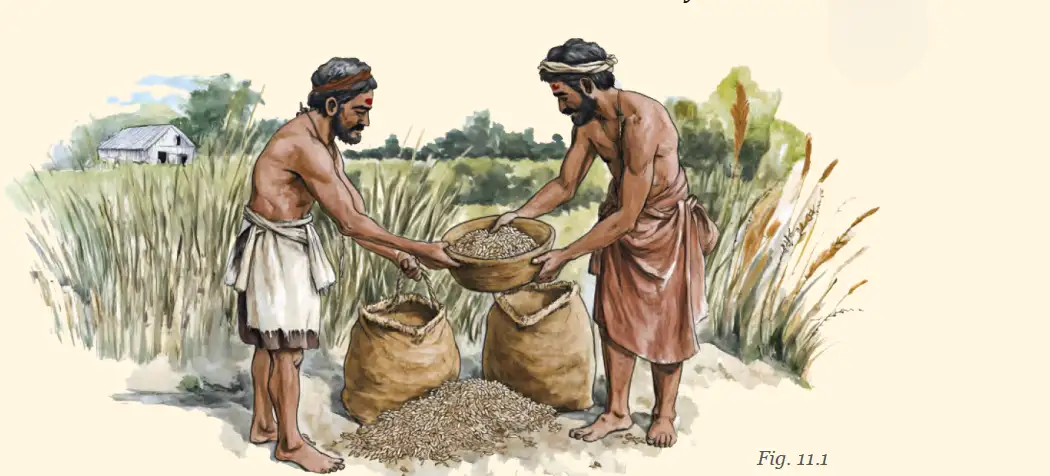
Commodities used in barter
- Examples: Cowrie shells, salt, tea, tobacco, cloth, cattle, and seeds were used as tradable goods.
- Cattle: Bartered animals included cows, goats, horses, and sheep.
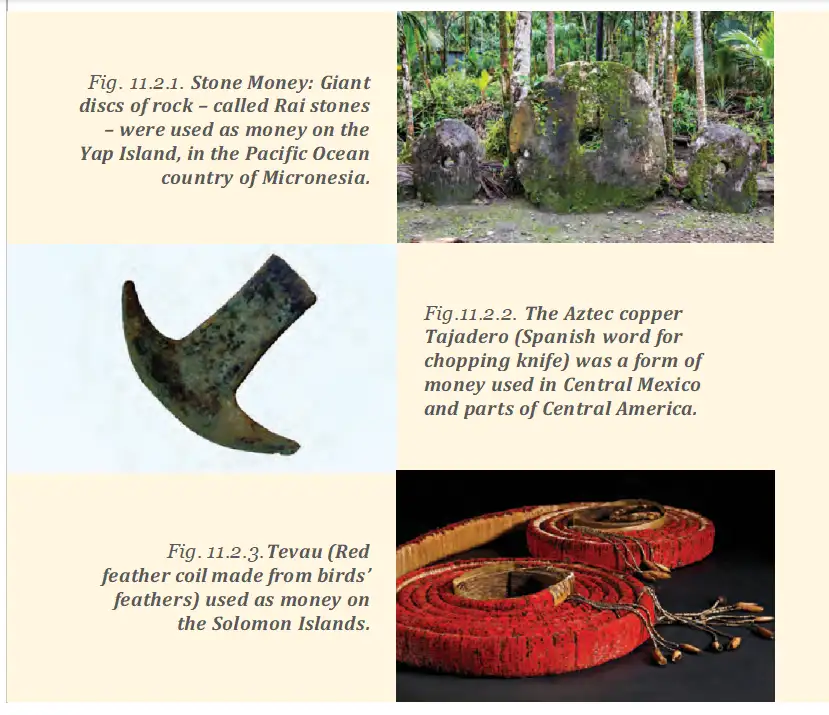
Money and Transactions
Money — A commonly accepted tool used to make or receive payments for goods and services.
Forms of payment today
- Physical money: Coins and notes are used to buy and sell goods.
- Digital payments: People also make transactions using mobile phones and computers.
- Barter system
- Direct exchange of goods or services without money.
- Money
- A commonly accepted means of making and receiving payments.
- Transaction
- A business act between people, especially buying or selling.
- Commodity
- A product or good that can be traded, bought, or sold.
What is the barter system? Give an example.
Quick recap
- Barter is the direct exchange of goods or services without money.
- It was the earliest form of exchange.
- People bartered goods such as shells, salt, cloth, cattle, and seeds.
- Money is commonly accepted for payments in exchange for goods and services.
- Today, payments can use coins, notes, mobile phones, or computers.
- A transaction is an act of business such as buying or selling.
Why Do we Need Money Part-1
Barter and the Farmer’s Problem
Barter system — A system in which people exchange goods directly for other goods, without using money.
The Farmer’s Challenge
- Needs: A farmer has an ox to exchange but needs shoes, a sweater and medicines.
- Multiple trades: The farmer might exchange the ox for wheat, then trade portions of wheat for each item.
- Extra burden: This involves carrying goods, negotiating quantities and storing what remains.
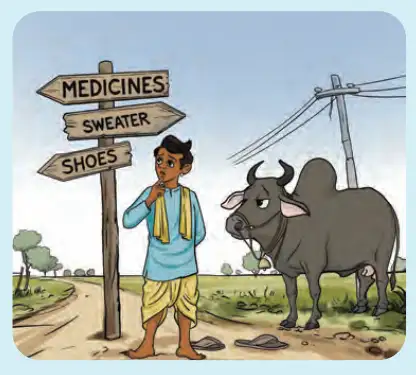
A Possible Barter Chain
- Exchange the ox for bags of wheat.
- Carry wheat to different people and exchange portions for shoes, a sweater and medicines.
- Negotiate how much wheat each item is worth, then store any wheat left over.
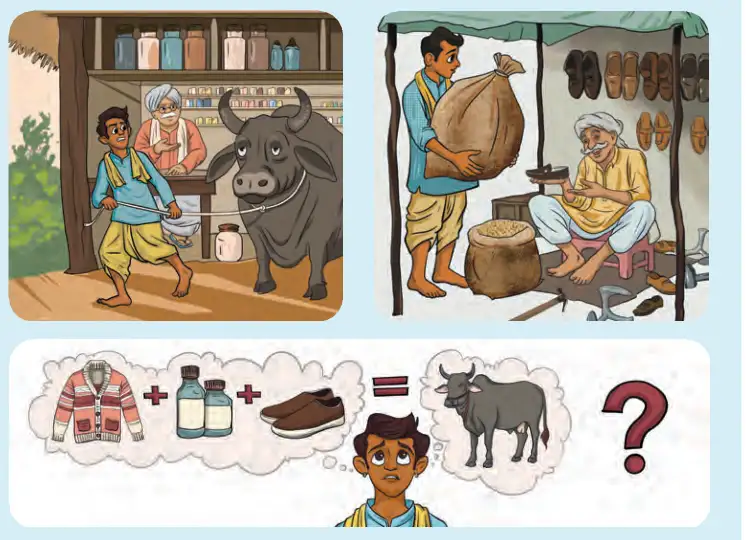
Difficulties of Barter
Double coincidence of wants — A situation in which two people each have something the other wants and can exchange them directly.
Finding a Match
- Matching needs: The farmer must find someone who wants an ox and can offer something the farmer needs.
- Unlikely match: Finding one person willing to trade shoes, a sweater and medicines for the ox may be difficult.
Common standard measure of value — An agreed-upon worth that helps determine the value of goods and services in an economy.
Comparing Values
- No common measure: People must negotiate how much of one good should be exchanged for another.
- Possible disagreement: If either person considers the exchange disadvantageous, they may refuse it.
| Problem | Meaning | Example |
|---|---|---|
| Divisibility | The capacity to split an object or material into portions. | An ox cannot be divided to exchange only part of it for a sweater. |
| Portability | The ability to carry or move something from place to place. | Taking an ox or many bags of wheat from place to place is difficult. |
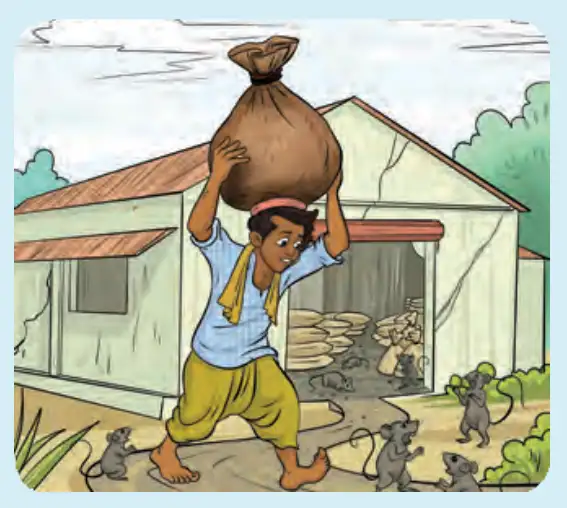
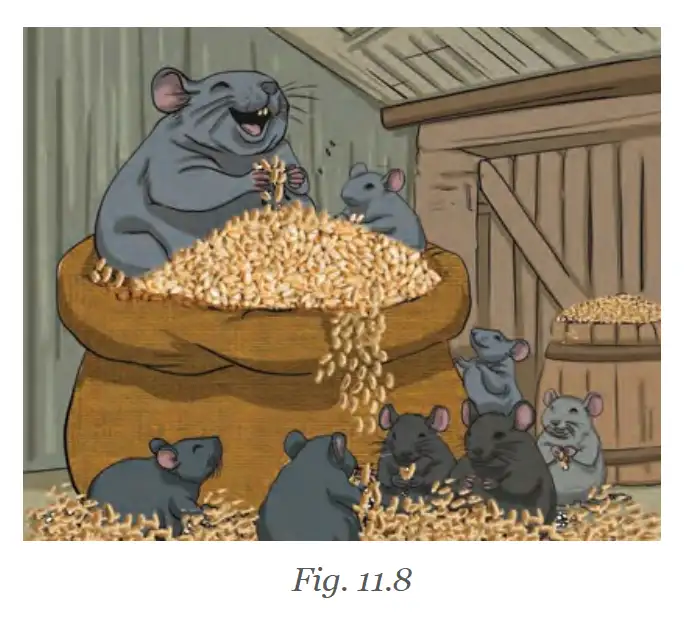
| Durability | The ability to be stored without spoiling or being damaged. | Wheat may rot or be eaten by rats while stored. |
What is double coincidence of wants?
Name four difficulties of barter shown by the farmer’s situation.
Quick recap
- Barter is the direct exchange of goods for goods.
- Barter depends on a double coincidence of wants.
- Without a common measure of value, people may disagree about fair exchange proportions.
- Barter goods may be difficult to divide or carry.
- Perishable goods such as wheat may be difficult to store safely for long.
Why Do we Need Money Part-2
Barter Still Exists
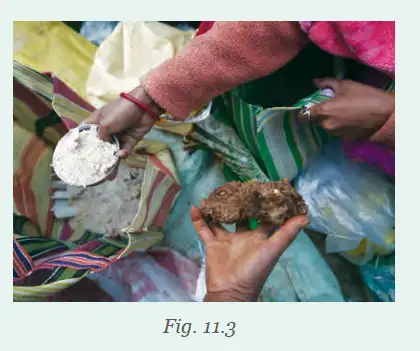
Junbeel Mela
Origins of the Fair
- Beginning in the 15th centuryTiwa, Karbi, Khasi and Jaintia chiefs of Assam and Meghalaya met annually to discuss political issues and maintain friendly relations.
- LaterPeople gathered around the meetings, brought their produce to exchange, and the gathering developed into a fair.
Durability — The longevity of an object or material and its ability to withstand damage, allowing it to be stored for a longer time.
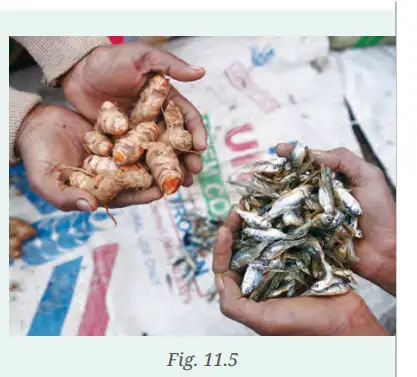
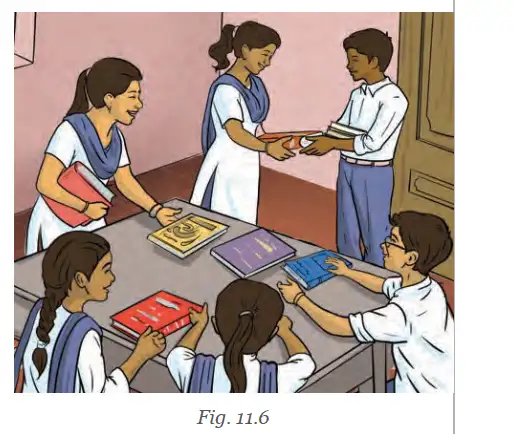
Other Examples of Barter
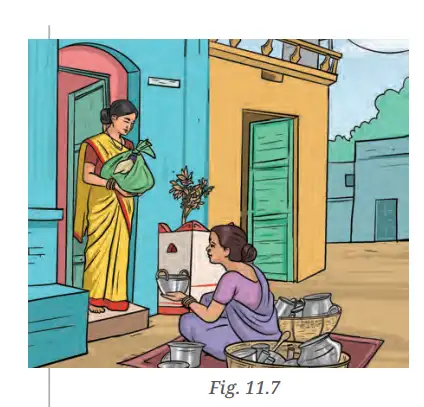
How did Junbeel Mela develop into a fair?
Give two examples of barter that continue today.
Quick recap
- Barter is the direct exchange of goods without money, and it continues in some places today.
- Junbeel Mela is a three-day annual socio-cultural fair in Morigaon district, Assam.
- The fair begins with Agni Puja and includes exchanges between people of the hills and plains.
- The fair developed from annual gatherings of Tiwa, Karbi, Khasi and Jaintia chiefs beginning in the 15th century.
- Book swaps and exchanges of used clothes for utensils are examples of barter.
- Durability means an object's ability to last and withstand damage, enabling longer storage.
Basic Functions of Money
Why Money Emerged
Money — A commonly accepted medium used to pay for goods and services.
- Need: As the number of goods exchanged and the distances involved in trade grew, barter became difficult.
- Solution: A common medium of exchange made buying and selling easier.
- Acceptance: As more people used money for transactions, it became an accepted method of payment.
Store of Value
Store of value — Money can be saved and kept for use in future purchases.
- Farmer’s example: Wheat may rot or be eaten by rats, so it is difficult to store for long.
- Money instead: A farmer can keep money received for goods and use it to make purchases later.
Measure of Value
Measure of value — Money provides a common denomination for expressing the value of goods and services.
- Use: Prices expressed in money make it possible to compare the value of different goods and services.
Medium of Exchange
Medium of exchange — Money is accepted by buyers and sellers in exchange for goods and services.
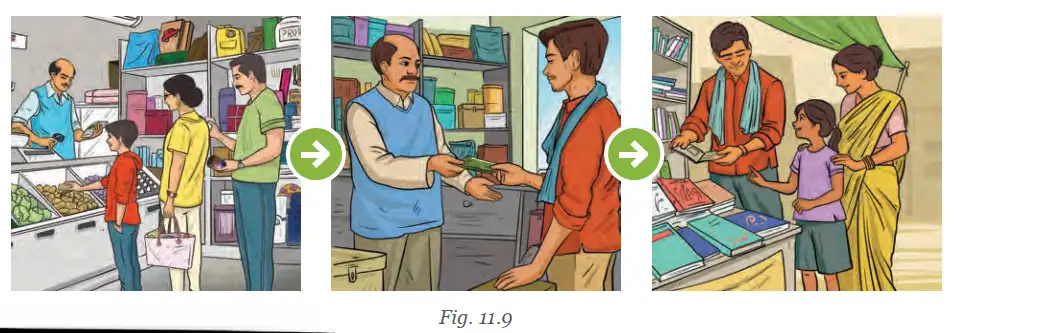
- Example: Parents pay shopkeepers for products; shopkeepers use money to pay workers’ salaries.
- Circulation: Workers then use the same money to buy essentials and pay expenses such as school fees.
Standard of Deferred Payment
Standard of deferred payment — Money can be accepted as a way to make a payment at a later time.
- Example: If a book costs ₹100 but a buyer has only ₹50, the buyer could ask to pay the remaining amount later; this is a deferred payment if the shopkeeper accepts.
Quick recap
- Money emerged as a common medium to make exchange easier than barter.
- Store of value: Money can be kept and used for purchases later, unlike wheat that may spoil or be eaten by rats.
- Measure of value: Money gives goods and services prices that can be compared.
- Medium of exchange: The same money can pass between buyers, sellers and workers.
- Deferred payments: Money can be accepted for payments made later.
The Journey of Money
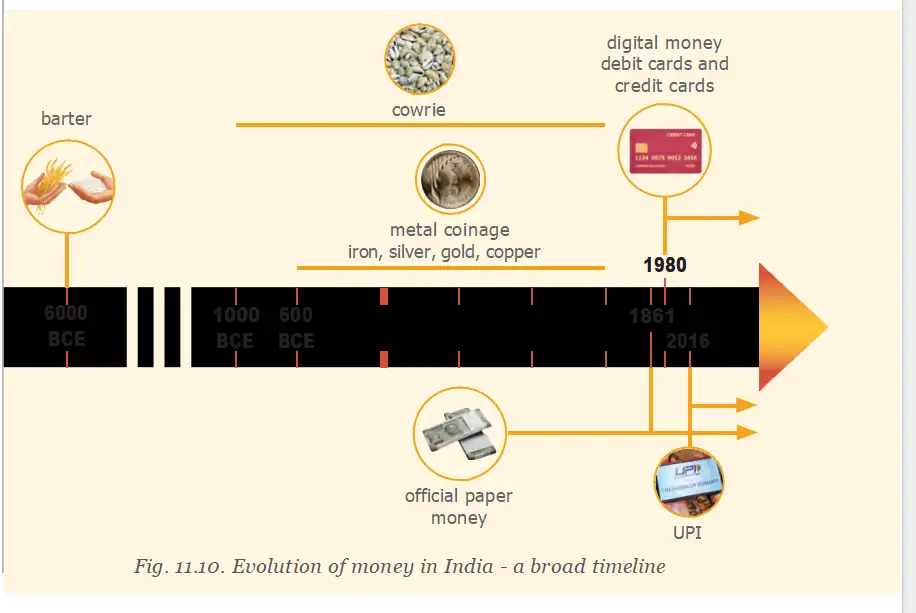
Coinage
Coinage — Metallic money made as coins and issued for use in transactions.
Early coins
- Rulers and kingdoms: Rulers controlled the minting and issue of coins; different kingdoms had their own coinage.
- Wider acceptance: Coins of powerful rulers could be accepted in other kingdoms, helping trade across regions.
- Materials and names: Coins were made from gold, silver, copper or their alloys, and were called karshapanas or panas.
- Silver-copper alloys: Alloys of silver and copper were also used to mint coins.
- Coin symbols: Symbols punched onto early coins were called rupas. Variations of pana remain in regional words for money, such as panam and hana.
- Minting
- The process of producing coins; a mint is the facility where coins are made.
- Alloy
- A material formed by combining two or more metallic elements; it can make coins stronger.
- Obverse
- The side of a coin or medal bearing the head or principal design.
Designs on coins
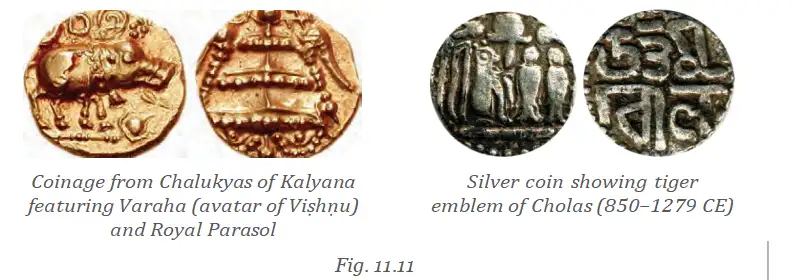
- Two sides: The head side is the obverse; the other side is the reverse. Ancient coins often had different symbols on each side.
- Common designs: Images included animals, trees, hills, rulers and deities.
- Chalukya example: One side showed Varaha, an avatar of Vishnu; the other had a decorated three-tiered parasol.
- Materials today: Modern coins are also alloys, made largely from iron with other materials such as chromium, silicon and carbon.
Coins and trade
What coin finds reveal
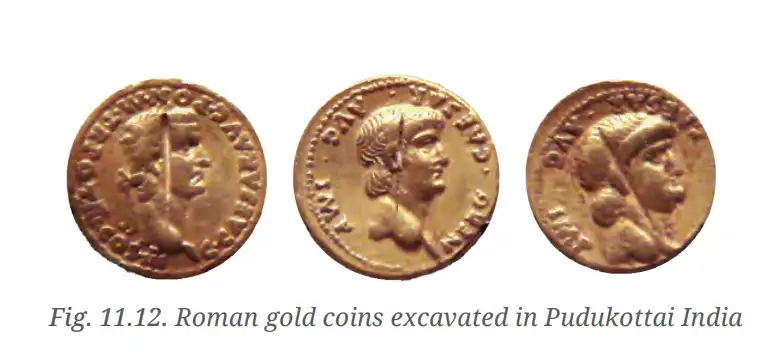
- Roman coins in India: Roman gold coins bearing Roman kings’ heads were found during excavations at Pudukkottai, Tamil Nadu.
- Trade links: Roman coins found in parts of Kerala and Tamil Nadu provide evidence of southern India’s maritime trade with the wider world.
- Trade balance: Scholars infer from these finds that the trade was in favour of India.
Denominations and modern coins
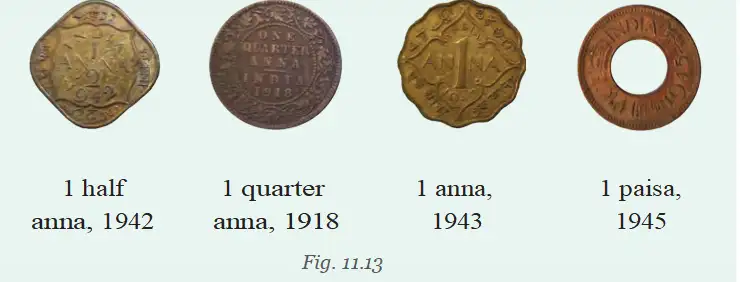
- Old denomination: One anna was equal to of a rupee. In 1947, one anna could buy a dozen bananas.
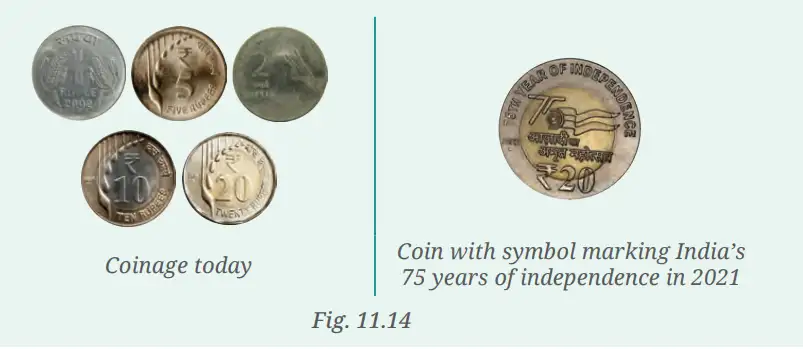
- Modern coins: Coins come in different sizes and denominations, with Hindi and English used on them.
- Commemorative coins: Special coins may be issued to mark important national events.
The rupee symbol
- 2010The Government of India adopted the ₹ symbol, designed by Udaya Kumar of IIT Bombay.
Meaning of the ₹ symbol
- Design: It combines the Devanagari “Ra” and Roman “R”.
- Two horizontal stripes: They represent the national flag and the “equal to” sign.
Changing forms of money
- Progression: Barter used non-metallic forms of money; metallic coinage later developed and eventually gave way to other forms of money.
What do Roman coins found in Pudukkottai suggest?
Describe the design of the ₹ symbol.
Quick recap
- Early coins were issued and controlled by rulers and could support trade between kingdoms.
- Coins were made from precious metals or alloys, including silver-copper alloys; early forms included karshapanas or panas.
- Coin designs often showed nature, rulers or deities on the obverse and reverse.
- Roman coin finds in southern India point to maritime trade and trade favourable to India.
- One anna equalled of a rupee; modern coins include commemorative issues.
- India adopted the ₹ symbol in 2010; coinage eventually gave way to other forms of money.
Paper Money
Why Paper Money Was Introduced
- Problem with coins: Using coins for every kind of purchase meant carrying and storing large numbers of them could be difficult.
- Alternative: Paper money made it easier to handle higher-value exchanges.
- History: Paper money was first used in China and was introduced in India in the late 18th century.
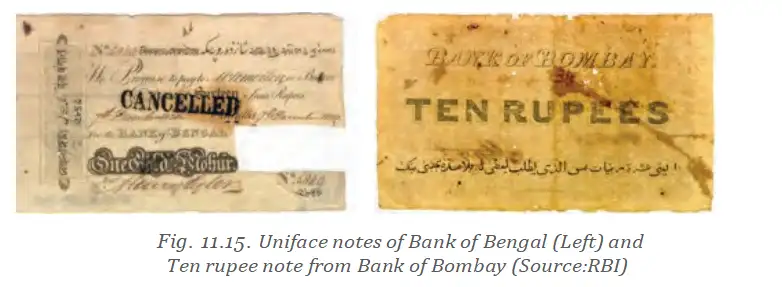
Paper Money in India
- Late 18th centuryPaper money was introduced in India.
Currency and Denominations
- Currency
- The system of money used in a particular country; Indian currency is based on the rupee.
- Denomination
- A unit into which coins and paper notes are classified, such as ₹10 or ₹100.
| Point | Coins | Paper currency |
|---|---|---|
| Common use | Smaller denominations | Higher denominations |
| Examples from Indian currency | 50 paisa, ₹1, ₹2, ₹5 and ₹10 | ₹10, ₹20, ₹50, ₹100, ₹200, ₹500 and ₹1000 |
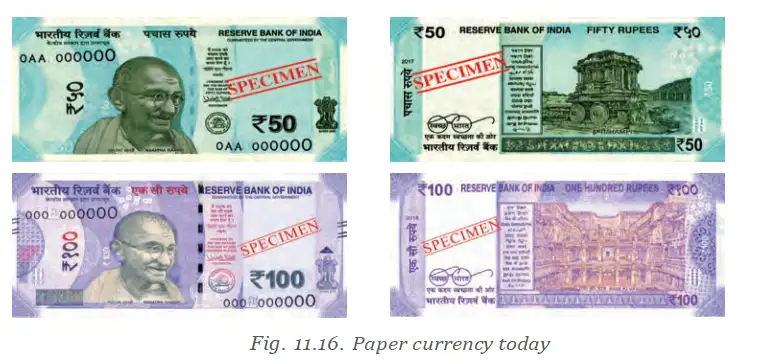
Who Issues Currency in India?
Reserve Bank of India (RBI) — India’s central authority that controls the issue of currency; no other person or organisation may legally issue currency.
Digital Money and New Payment Methods
Digital money — Money in electronic, intangible form that cannot be touched or felt like coins and paper notes.
- Payment methods: Debit cards, credit cards, net banking and UPI (Unified Payments Interface) can be used for transactions.
- How they work: These methods transfer money directly from one person’s bank account to another.
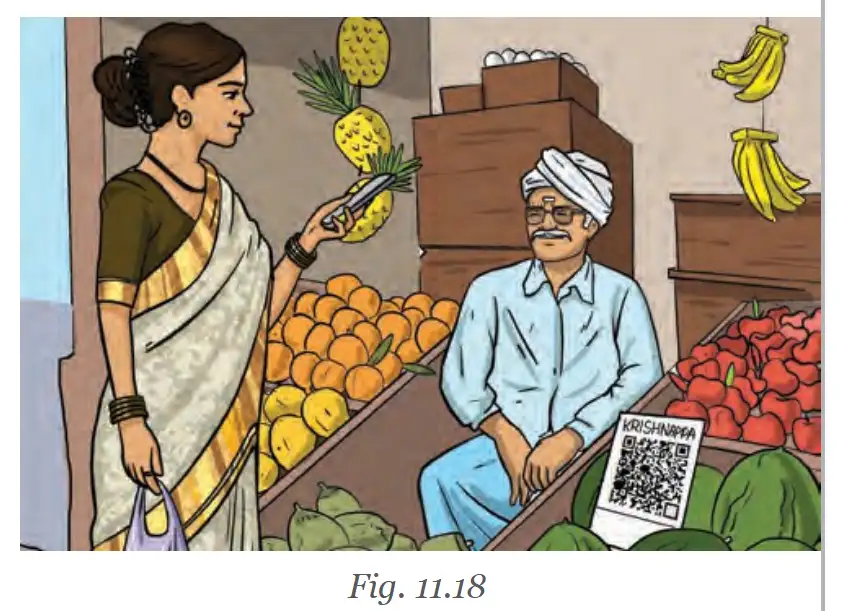
- Example: A fruit seller displays a QR code; a customer scans it with a phone and the payment goes into the seller’s bank account.
QR code — A “quick response” code made of black-and-white squares that a smartphone or QR scanner can read; it carries receiver account information for digital payments.
Why did paper money become a useful alternative to coins?
Who controls the issue of currency in India?
What is digital money, and how can a QR code be used to pay?
Quick recap
- Paper money was first used in China and reached India in the late 18th century.
- Coins are commonly used for smaller denominations; paper currency is used for higher ones.
- Currency is a country’s money system; denominations are its classified units.
- The RBI controls the issue of currency in India.
- Digital money is electronic and intangible; cards, net banking and UPI enable account-to-account transfers.
- QR codes contain receiver account information used to make digital payments.
Before we move on
From Barter to Money
Changing Forms of Money
- Barter using commodities
- Money used as a medium of exchange
- Forms of money: shells → coins → paper currency
- Newer payment methods, including QR codes
- Medium of exchange
- Something accepted to facilitate the exchange of goods and services.
- QR code payment
- A way to make or receive payments using a QR code.
Quick recap
- Barter existed before money and involved direct exchange of commodities.
- Limitations of barter encouraged the development of money.
- Money acts as a medium of exchange.
- Forms of money have included shells, coins and paper currency.
- Payment methods continue to evolve, including QR code payments.
Social Science — ALL CHAPTERS
1
Geographical Diversity of India
2
Understanding the Weather
3
Climates of India
4
New Beginnings Cities and States
5
The Rise of Empires
6
The Age of Reorganisation
7
The Gupta Era: An Age of Tireless Creativity
8
How the Land Becomes Sacred
9
From the Rulers to the Ruled: Types of Governments
10
The Constitution of India - An Introduction
11
From Barter to Money
12
Understanding Markets
1
The Story of Indian Farming
2
India and Her Neighbours
3
Empires and Kingdoms: 6th to 10th Centuries
4
Turning Tides: 11th and 12th Centuries
5
India, a Home to Many
6
The State, the Government, and You
7
Infrastructure: Engine of India’s Development
8
Banks and the Magic of Finance