Class 7 . Social Science . Exploring Society India and Beyond Part I . From the Rulers to the Ruled Types of Governments
Chapter 9: From the Rulers to the Ruled: Types of Governments
Ch 9
Social Science
Class 7
What is Government? What are its Functions
Government and Its Functions
Government — The government is the system that makes and carries out decisions for a country and manages its public affairs.
Main functions of government
- Law and order: Maintain rules and order in society.
- Peace and security: Promote stability and protect people.
- Foreign relations: Manage relationships with other countries.
- National defence: Protect the country from external threats.
- Public services: Provide essential services such as education, healthcare and infrastructure.
- Economy: Manage economic activities.
- Welfare: Work to improve people’s lives.
Democracy
Democracy — Democracy means “rule of the people”: the people are the source of power and authority in the country.
Forms of government
- Different forms: Many countries are democratic, while some have other forms of government.
- Variation: Democratic governments are not all exactly the same.
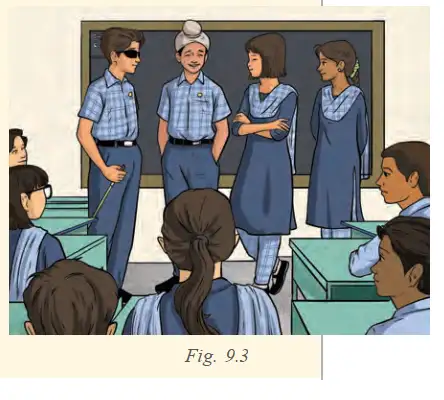
Representation: The School Committee Example
Why a school may need a committee
- Many tasks: Schools organise timetables, sports, midday meals, assemblies and special activity days.
- Committee role: Students can help make rules, put them into practice and check that they are followed.
- Key question: The school must decide who will serve on the committee.
| Method | How it works | Main outcome |
|---|---|---|
| Everyone participates | Every student joins the committee and takes responsibility. | It may be hard to make decisions and manage their implementation. |
| Head Teacher chooses | The Head Teacher selects committee members. | Many students have no role or way to make their needs and views heard. |
| Students elect representatives | Students vote for representatives, with each grade choosing someone to speak for it. | Representatives bring their grade’s needs to the committee; this is a democratic way to form it. |
Representative — A person chosen to act or make decisions on behalf of another person or group.
How student representation works
- Students in each grade vote
- Each grade chooses a representative
- Representatives bring their grade’s needs to the committee
- The committee helps make and implement rules and check that they are followed
- Government
- System that manages public affairs and carries out decisions for a country.
- Democracy
- A form of government in which the people are the source of power and authority.
- Representative
- A person chosen to act or make decisions for a group.
What are the main functions of government?
Why is electing student representatives a democratic way to form a committee?
Quick recap
- Government maintains order and security, manages external relations and defence, provides services, manages the economy and works for welfare.
- Democracy means rule of the people; people are the source of authority.
- Governments can take different forms, and democratic systems may differ from one another.
- A school committee can include all students, members chosen by the Head Teacher or elected student representatives.
- Electing representatives gives students a voice while making the committee more manageable.
Functions of Government
The Three Functions of Government
| Function | Main responsibility |
|---|---|
| Legislative | Creates rules that provide a framework for running the country. |
| Executive | Implements rules and administers the country according to them. |
| Judicial | Ensures that rules are followed. |
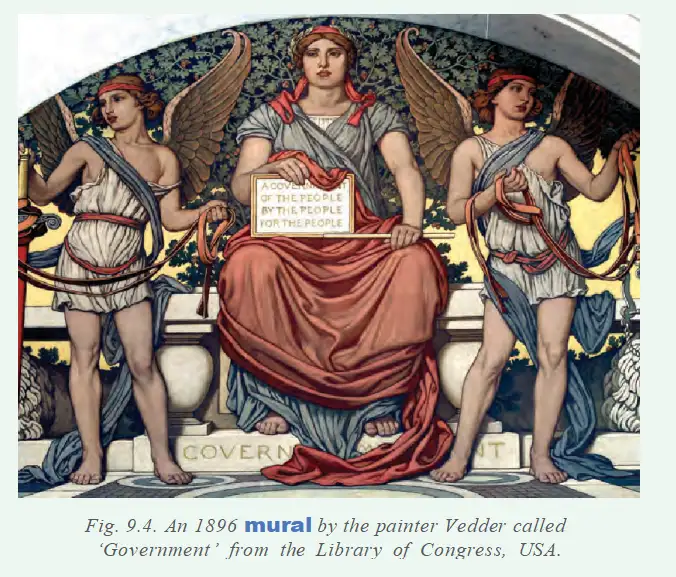
Democracy
What Makes Governments Different?
| Aspect | What it asks | Examples |
|---|---|---|
| Source of authority | Who or what gives the government power? | In India’s democracy, the people are the source of authority; in a theocracy, authority comes from religious beliefs and a religious head. |
| How it is formed | How is the government set up? | Democracies usually use elections; in kingdoms, a member of the ruling family usually continues to rule. |
| Parts and rules | Which bodies perform government functions, and what rules guide them? | Legislative, executive and judicial functions may belong to independent bodies or the same body. A constitution sets fundamental rules in most democracies; in monarchies, the ruler may decide how government works. |
| Goals | What values and aims does the government serve? | Some governments aim for equality and prosperity for all; others may serve only certain families or groups. |
- Legislative function
- Making rules for the country.
- Executive function
- Implementing rules and administering the country.
- Judicial function
- Ensuring that rules are followed.
- Democracy
- A system in which people choose representatives to govern.
- Theocracy
- A form of government whose authority comes from religious beliefs.
- Constitution
- A written set of a country’s fundamental rules.
What are the three functions of government?
Name the four major aspects by which governments differ.
Quick recap
- The government makes rules, implements them and ensures they are followed.
- These responsibilities are called the legislative, executive and judicial functions.
- Democracy means rule by the people, who choose representatives to govern them.
- Governments differ in their source of authority and how they are formed.
- Government structures and guiding rules may differ between forms of government.
- Governments may pursue goals such as equality and prosperity for all, or benefit only particular groups.
Democratic Governments around the World Part-1
Fundamental Principles of Democracy
- Representative participation: Citizens have the right to elect representatives through elections; elected representatives become members of the legislature.
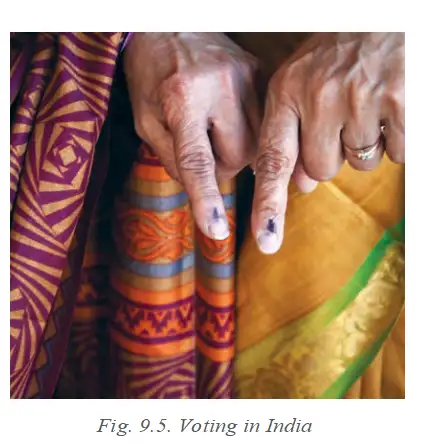
- Universal adult franchise: Every citizen above the legally specified age has the right to vote for representatives.
- Fundamental rights: Democracy provides and protects rights such as equality, freedom of speech and expression, and protection against exploitation.
- Independent judiciary: It protects citizens’ fundamental rights and ensures that citizens and every part of government follow the law.
- Ideal and practice: These principles are ideals; democracies may not always fully put them into practice. Citizens should continue to uphold them.
Voting Rights: Examples of Change Over Time
- 1950India provided universal adult franchise from the beginning of the Indian republic.
- 1971Women in Switzerland gained the right to vote.
Different Forms of Democratic Government
- Shared ideals: Democracies uphold principles such as equality, freedom and people’s participation.
- Different systems: Democratic governments vary in how they are formed and how people take part in decision-making.
Direct Democracy
- Direct democracy: Citizens make decisions directly and are responsible for the country’s rules and functions.
- Limitation: Direct participation is difficult to manage, especially in large countries.
Representative Democracy
| Country | General election interval |
|---|---|
| India | Every five years |
| United States of America | Every four years |
Accountability — In a democracy, accountability means that the government is answerable to the people who elected it.
| Point | Direct democracy | Representative democracy |
|---|---|---|
| Who makes decisions? | Citizens participate directly. | Elected representatives govern on people’s behalf. |
| Citizens’ role | Direct involvement in decisions. | Choose representatives through elections. |
| Practical note | Difficult to carry out, especially in large countries. | Elections at fixed intervals allow citizens to change their choice. |
- Universal adult franchise
- The right of every citizen above the specified age to vote.
- Representative participation
- Citizens’ participation in government by electing representatives.
- Independent judiciary
- A judiciary that protects rights and ensures the law is followed.
- Accountability
- The government’s duty to answer to the people who elected it.
What are the main features of representative democracy?
Why is direct democracy difficult to practise in large countries?
What does accountability mean in a democracy?
Quick recap
- Democracy rests on equality, freedom, participation, voting rights, fundamental rights and an independent judiciary.
- Democratic principles are ideals that may not always be fully practised; citizens should keep them in view.
- India adopted universal adult franchise in 1950; women in Switzerland gained the vote in 1971.
- In direct democracy, citizens make decisions themselves; it is difficult to manage in large countries.
- In representative democracy, citizens elect representatives and the government remains accountable to them.
- General elections are held every five years in India and every four years in the United States of America.
Democratic Governments around the World Part-2
Democracy Has Evolved
Changing democracies
- Evolution: Democracies have developed over time, and their forms and functioning differ from country to country.
- Different beginnings: Countries may have adopted democracy before all the democratic principles accepted today were in place.
- Common principles: Equality, freedom and universal adult franchise are shared features of democracies.
Democracy and Universal Adult Suffrage
- 1787Democracy was established in the USA.
- 1848Democracy was established in Switzerland.
- 1928Effective universal adult suffrage was achieved in the UK.
- 1947Democracy was established in India.
- 1949Democracy was established in Germany.
- 1964Democracy was established in Kenya.
- 1965Effective universal adult suffrage was achieved in the USA.
- 2008Democracy was established in Nepal.
Forms of Representative Democracy
Representative democracy — A system in which people elect representatives to govern and make decisions on their behalf.
| Point | Parliamentary democracy | Presidential democracy |
|---|---|---|
| Executive and legislature | The executive is made up of members of the legislature. | The executive works independently of the legislature. |
| How the executive is formed | People elect the legislature; selected legislators become ministers. | The president is elected by the people. |
| Accountability and tenure | The council of ministers must retain the legislature’s confidence to remain in office; in India, it must retain the Lok Sabha’s confidence. | The president does not need the legislature’s confidence to remain in office. |
| Example | In India, the prime minister and council of ministers are members of Parliament. | The USA and South Korea have presidents as executives. |
The Three Organs of Government
- Executive
- The organ of government responsible for implementing laws; the way it is elected differs between countries.
- Legislature
- The body responsible for making laws. It is called Parliament in India and Congress in the USA.
- Upper and Lower Houses
- Many legislatures have two houses. The Lower House is usually directly elected and generally more powerful; the Upper House may be elected or nominated. In India, the Lok Sabha is the Lower House and the Rajya Sabha is the Upper House.
- Separation of power
- The legislature, executive and judiciary function independently and do not interfere in one another’s work.
| Country | Executive | Legislature | Judiciary |
|---|---|---|---|
| India | Prime minister and council of ministers | Lok Sabha (Lower House) is more powerful than Rajya Sabha (Upper House) | Independent of the executive and legislature |
| USA | President | Senate and House of Representatives have equal power | Independent of the executive and legislature |
| South Korea | President | Single house: National Assembly | Independent of the executive and legislature |
| Australia | Prime minister and council of ministers | Senate and House of Representatives have equal power | Independent of the executive and legislature |
How structures differ
- Different structures: Democracies vary in how their governments are formed and how their institutions function.
- Different relationships: The balance and relationship among the executive, legislature and judiciary also vary.
- India’s states: States such as Rajasthan and Kerala have their own governments, but remain under the larger Union Government.
How does a parliamentary democracy differ from a presidential democracy?
What is separation of power?
Quick recap
- Democracies developed at different times and did not all begin with universal adult suffrage.
- Parliamentary executives come from the legislature and depend on its confidence; India’s council of ministers needs the Lok Sabha’s confidence.
- Presidential executives work independently of the legislature; the president is elected by the people.
- The executive implements laws, the legislature makes laws, and the judiciary functions independently.
- In India, the Lok Sabha is the Lower House and the Rajya Sabha is the Upper House.
- Countries differ in their government structures, but equality, freedom and universal adult franchise remain common democratic principles.
A Peek into History Part-1
Early Republics
Republic — A form of government in which the head of state is elected and is not a hereditary monarch.
- Ancient India: Republics existed in at least two of India’s ancient mahajanapadas; Vajji is one example.
- Vajji: The Lichchhavi clan practised collective decision-making, and leaders were chosen for merit rather than birth.
- Representation: Clan representatives met regularly to discuss issues and develop solutions for people’s welfare.
- Elections: Key positions were filled through elections, making such states early republics.
Elections and Participation in India
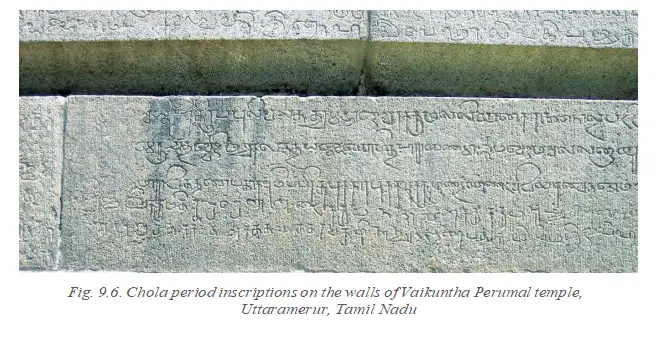
- Uttaramerur inscriptions: These 10th-century CE Chola records describe how members of the village sabhā, a local administrative body, were elected.
- Election details: They mention sealed ballot boxes, membership qualifications, duties and grounds for dismissal.
- Accountability: Members found guilty of corruption were removed immediately.
Republics in Other Regions
- Rome and Greece: Both had republics during the 5th and 4th centuries BCE.
- Unequal participation: In some Greek regions, free men could vote, but women, workers and enslaved people could not.
- Restricted rule: In other regions, only a small, privileged group could vote or make decisions.
Other Forms of Government: Monarchy
Monarchy — A form of government headed by a king or queen.
- Early mahājanapadas: Kings were guided by the sabhā or samiti and were expected to take their advice seriously.
- Growing empires: As empires expanded, kings gained great power but relied on ministers and officials to govern.
- Advice: Kings could also consult learned scholars on matters related to dharma.
- Abuse of power: Some rulers used their authority to subjugate their people.
- Absolute monarchy: In some places, kings made laws, enforced them and decided punishments; some claimed divine authority.
Rajadharma — The ideal that a raja should rule according to dharma and ensure the welfare of all people.
- Limits on power: In many parts of India, a raja’s power was not absolute or beyond question.
- Raja’s duty: The raja was expected to make decisions within rajadharma, though kings did not always live up to this ideal.
| Point | Absolute monarchy | Raja under rajadharma |
|---|---|---|
| Limits on power | The king may exercise power without effective limits. | The raja is expected to act within the limits of dharma. |
| Responsibilities | The king may control laws, enforcement and punishments. | The raja should make decisions for the welfare of all people. |
| Ideal and practice | Some rulers claimed divine authority. | Rajadharma was an ideal that kings did not always achieve. |
The Raja’s Duties in the Mahabharata
- Shanti Parva: Bhishma teaches Yudhishthira about good governance, justice and a raja’s moral responsibilities.
- People’s welfare: The welfare of the people is the ruler’s highest priority.
- Fair justice: Apply the law without bias to uphold fairness and equality.
- Self-restraint: Avoid attachment to power, which can foster ego and corruption.
- Wise counsel: Seek advice from wise people to make just, well-informed decisions.
- Bounded authority: A ruler’s authority is temporary and must remain within dharma.
- Slave
- A person forced to work for and obey another, and treated as that person’s property.
- Sabhā
- A village assembly or local administrative body.
- Subjugate
- To use force to control people or a place and make people obey.
Dates in This Lecture
- 5th–4th centuries BCERepublics existed in Rome and Greece.
- 10th century CEUttaramerur inscriptions recorded details of village sabhā elections during the Chola period.
What features of the Lichchhavi system made Vajji an early republic?
What do the Uttaramerur inscriptions reveal about village administration?
What responsibilities did the Mahabharata describe for a raja?
Quick recap
- Republics existed in at least two ancient Indian mahajanapadas; Vajji’s Lichchhavis used merit-based leadership and collective decisions.
- Uttaramerur inscriptions describe village sabhā elections and accountability for corruption.
- Rome and Greece had ancient republics, but voting rights were often restricted.
- Monarchs could wield great power, while Indian rajas were expected to follow rajadharma.
- The ideal raja prioritises welfare, justice, wise counsel and self-restraint.
A Peek into History Part-2
A King, a Cobbler and Dharma
The account in Kalhaṇa’s Rajatarangiṇi
- Story: King Chandrapiḍa wanted to build a temple, but a cobbler’s hut stood in the way.
- Consent and compensation: The king asked the cobbler respectfully for permission and paid adequate compensation when he agreed to give up his hut.
- Lesson: The account highlights humility, respect for a subject’s home and the king’s commitment to dharma, regardless of the subject’s status.
- Source: Rajatarangiṇi was written by the Kashmiri scholar Kalhaṇa in the 12th century CE.
Monarchies Today
Monarchy — A form of government ruled by a monarch, such as a king or queen.
Key features
- Monarch: A king or queen who holds the position of ruler.
- Succession: Monarchies are usually hereditary; typically, the eldest son inherits the throne.
- Types today: Absolute monarchy and constitutional monarchy.
| Point | Absolute monarchy | Constitutional monarchy |
|---|---|---|
| Monarch’s power | The monarch holds the main governing power. | The monarch is head of state but has nominal power. |
| Making and applying laws | The monarch makes laws, ensures they are followed and adjudicates disputes. | The elected parliament makes laws; the prime minister and Council of Ministers exercise executive power. |
| Example | Saudi Arabia: the king governs according to Islamic law; an advisory council assists him, but its advice is not binding. | United Kingdom: the monarch’s role is nominal; the prime minister leads the executive and parliament exercises legislative power. |
| System in practice | Power is concentrated in the monarch. | Britain is a parliamentary democracy despite having a monarch. |
Theocracy
Theocracy — A form of government in which religious rules and religious leaders govern the country.
Iran’s political system
- Combination: Iran combines elements of theocracy and democratic governance; its full official name is the Islamic Republic of Iran.
- Constitution: It is based on fundamental Islamic principles, and Islam is the country’s official religion.
- Supreme Leader: Holds ultimate authority over the legislature, executive and judiciary; a group of Islamic clerics selects the leader, whose term is for life.
- Elected institutions: An elected president and parliament handle everyday governance.
- Aim: The republic seeks to establish a society based on Islamic norms.
Other examples
- Theocracies: Afghanistan and Vatican City are also given as examples.
- Sovereign
- Independent as the source of a country’s power, without external influence.
- Adjudicating
- Judging a case or dispute.
- Nominal power
- Power held in name or title, rather than real executive authority.
- Theocracy
- Government based on religious rules and leadership.
How does an absolute monarchy differ from a constitutional monarchy?
What makes Iran’s system a combination of theocratic and democratic governance?
Quick recap
- Kalhaṇa’s 12th-century account presents Chandrapiḍa as a king who respected a subject’s consent and compensated him.
- A monarchy is ruled by a king or queen and is usually hereditary.
- Absolute monarchs hold the main governing powers; constitutional monarchs have nominal power.
- Britain is a constitutional monarchy and a parliamentary democracy.
- A theocracy is governed through religious rules and leaders.
- Iran combines religious authority with elected institutions; Afghanistan and Vatican City are other examples.
A Peek into History Part-3
Dictatorship
Dictatorship — A form of government in which one person or a small group holds absolute power, without limits imposed by a constitution or law.
Examples and effects
- Adolf Hitler: Appointed Chancellor of Germany in 1933, he passed laws giving himself full power and eliminated opposition.
- Hitler’s beliefs: He believed his people were superior and that Germany should rule the world and dominate ‘inferior races’.
- Holocaust: Hitler was responsible for the killing of at least six million Jews, as well as hundreds of thousands of Roma and people from other groups.
- Idi Amin: A military dictator in Uganda, directly responsible for the merciless killing of thousands; many Indians whose ancestors had migrated to Uganda were forced to flee.
Hitler and World War II
- 1933Hitler became Chancellor of Germany and soon established dictatorial power.
- 1939–1945World War II, for which Hitler was responsible, caused immense loss of life and property in many countries.
Hitler’s rule and its consequences
- Laws gave Hitler full power and eliminated opposition.
- His dictatorial rule promoted beliefs in racial superiority.
- Persecution and mass killings followed, including the Holocaust.
- Hitler was responsible for World War II (1939–1945), which caused widespread loss of life and property.
Caricature — A drawing that makes someone look funny or foolish by exaggerating a feature of their appearance.
The Roma
- Origins: The Roma, or Romani people, were originally nomads; scholars connect their origins to India based on linguistic and cultural characteristics.
- Migration: They first settled in parts of eastern Europe and later migrated to several countries around the world.
Government control of everyday life
- Shane’s situation in North Korea: He must perform compulsory military service for as long as the government decides.
- Personal rules: The government dictates haircuts and clothing; Shane cannot access the global internet and is unaware of the outside world.
- Surveillance: The government closely watches people’s actions and expects them to report anyone who tries to break the rules.
- Key idea: Such controls restrict personal choices, access to information and everyday freedoms.
Oligarchy
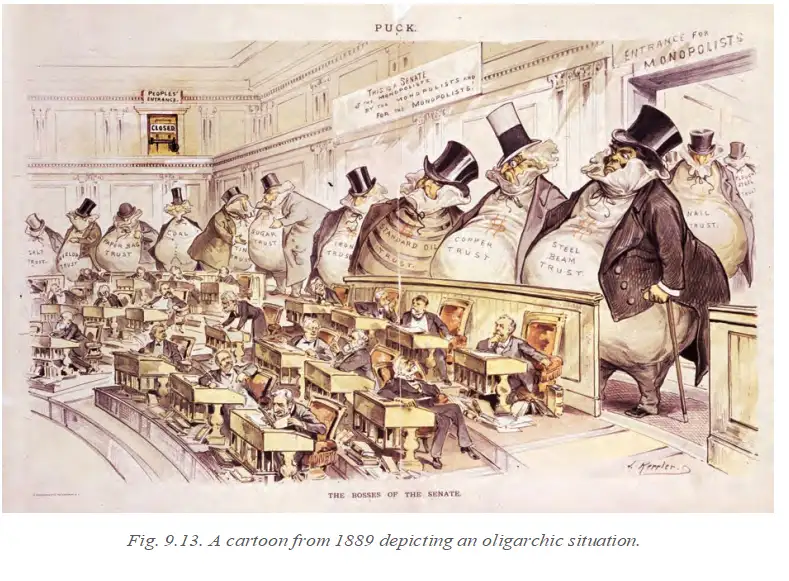
Oligarchy — A form of government in which a small, powerful group makes all the important decisions.
Meaning and examples
- Word origin: Greek *oligos* means “a few” and *arkhō* means “to rule or command”.
- Who holds power: Oligarchies are usually ruled by wealthy families or influential people.
- Ancient Greece: Aristocratic families ruled as oligarchies in some places.
- Modern democracies: Some show signs of oligarchy when a small group of politicians and wealthy businesspeople has too much influence over governance.
- Holocaust
- The mass killing of at least six million Jews under Hitler, alongside the killing of Roma and people from other groups.
- Political commentators
- People who analyse political events and share their opinions about them.
- Oligarchy
- Government in which a small, powerful group makes important decisions.
How did Hitler establish a dictatorship in Germany?
What is the difference between dictatorship and oligarchy?
Quick recap
- A dictatorship gives absolute power to one person or a small group, without constitutional or legal limits.
- Hitler’s rule involved mass killings, including the Holocaust, and he was responsible for World War II (1939–1945).
- Idi Amin’s military dictatorship in Uganda killed thousands and forced many Indians to flee.
- Shane’s story shows government control over military service, personal appearance, internet access and surveillance.
- An oligarchy is rule by a small, powerful group; aristocratic families ruled oligarchies in some parts of ancient Greece.
- A democracy may show signs of oligarchy when a few politicians and wealthy businesspeople wield excessive influence.
Why Democracy Matters?
Democracy and Other Forms of Government
Comparing Government Forms
- Democracy is not the only form of government, but many countries consider it better than other forms.
- Comparison of government forms considers people’s choices, rights and representation.
- Other comparison criteria include equality among citizens, freedom of speech, separation of powers, and the well-being and prosperity of citizens.
| Characteristic | Democracy | Dictatorship | Absolute monarchy | Oligarchy |
|---|---|---|---|---|
| Universal adult franchise | Yes | No | No | No |
Rights, Accountability and Public Well-Being
Genuine democracy — A system in which people choose their government and can exercise their rights and freedoms, provided they do not harm others’ rights.
How Democracy Works
- Everyday freedoms include choosing what to say or wear, which beliefs to follow, and how to express oneself, as long as others’ rights are respected.
- People choose their government through elections.
- Government duties include protecting people’s rights and providing their basic needs.
- Accountability is maintained because people can replace representatives through elections if the government performs poorly.
- Public well-being should guide democratic values and government policies.
Democratic Accountability
- People choose representatives through elections
- The government protects rights and provides basic needs
- People assess the government’s performance
- If it performs poorly, people can change their representatives in elections
Democracy in the World
- India is a democracy, and many democratic features are part of people’s everyday lives.
- Adoption: More than half of the world’s countries have adopted democracy or democratic forms of government.
Challenges to Democracy
Problems That Can Hinder Democratic Ideals
- Corruption and wealth disparity can prevent fair outcomes for citizens.
- Excessive control by a few over democratic institutions can weaken people’s influence.
- Erosion of judicial independence can undermine the fair functioning of the judiciary.
- Manipulation of information channels can make it harder for people to access trustworthy information.
- Vigilance by individuals and society is important to reduce these hurdles.
How do elections make a democratic government accountable?
Name four issues that can hinder the ideals of democracy.
Quick recap
- Democracy gives people a role in choosing their government and representing their choices.
- Citizens’ freedoms are protected as long as they do not harm others’ rights.
- Governments in a democracy are responsible for protecting rights and providing basic needs.
- Elections let citizens hold governments accountable and change their representatives.
- Democratic ideals can be hindered by corruption, inequality, institutional control, weakened judicial independence and manipulated information.
- Individuals and society need to remain vigilant to reduce these challenges.
Before we move on
The Role of Government
- Law and order: Government maintains peace, stability and security in society.
- Public services: It provides essential services such as education, healthcare and infrastructure.
- National affairs: It manages relations with other countries and takes care of national defence.
- Economy: It manages economic activities and works to improve people’s welfare and lives.
Quick recap
- Governments run countries, but their structures, purposes and guiding values can differ.
- Democracy is the most popular form of government in the world today.
- Democracy includes direct and representative forms.
- Representative democracy can be presidential or parliamentary; India is parliamentary.
- Monarchy, theocracy, dictatorship and oligarchy are other forms of government.
- Citizens should remain vigilant about serious challenges to democracy.
Social Science — ALL CHAPTERS
1
Geographical Diversity of India
2
Understanding the Weather
3
Climates of India
4
New Beginnings Cities and States
5
The Rise of Empires
6
The Age of Reorganisation
7
The Gupta Era: An Age of Tireless Creativity
8
How the Land Becomes Sacred
9
From the Rulers to the Ruled: Types of Governments
10
The Constitution of India - An Introduction
11
From Barter to Money
12
Understanding Markets
1
The Story of Indian Farming
2
India and Her Neighbours
3
Empires and Kingdoms: 6th to 10th Centuries
4
Turning Tides: 11th and 12th Centuries
5
India, a Home to Many
6
The State, the Government, and You
7
Infrastructure: Engine of India’s Development
8
Banks and the Magic of Finance