Class 7 . Social Science . Exploring Society India and Beyond Part II . Empires and Kingdoms 6th to 10th Centuries
Chapter 3: Empires and Kingdoms: 6th to 10th Centuries
Ch 3
Social Science
Class 7
Introduction
The Period and Its Chronology
How this period is described
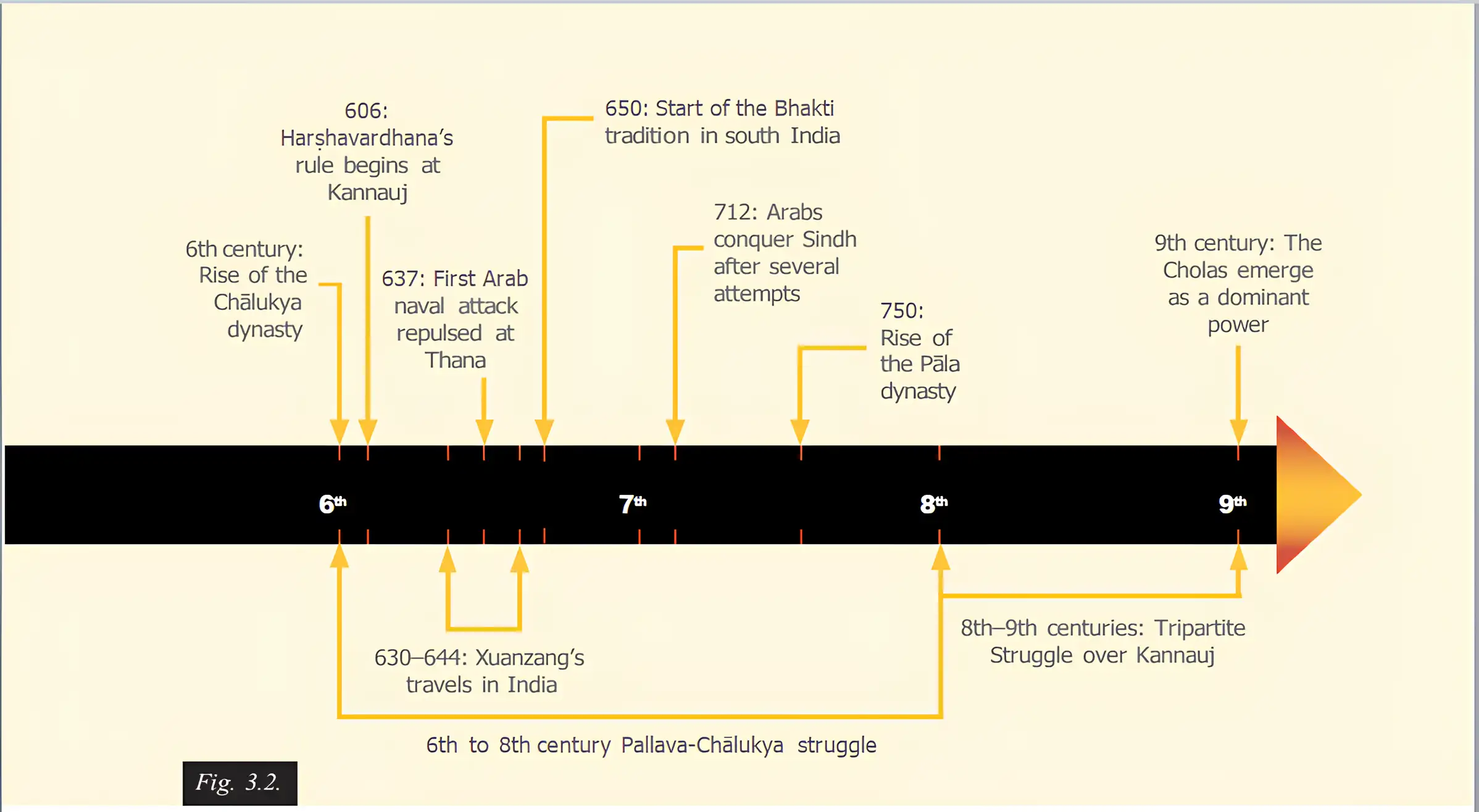
- Chronology: The chapter title refers to the 6th–10th centuries, but this chapter and the next together cover about 600–1200 CE—the 6th to 12th centuries.
- Labels: These centuries are also called the post-classical, late classical or early medieval period; the broad chronology is most important.
- Political change: Gupta dominance had weakened, and many strong regional kingdoms emerged instead of one large empire.
Broad timeline
- Around 600 CEThe Gupta era had ended and Gupta dominance had weakened.
- About 600–1200 CEThis chapter and the next survey six centuries of political and cultural change in India.
Regional Kingdoms and Cultural Centres
| Region or centre | Power or example | Significance |
|---|---|---|
| Kannauj, by the Ganga | A powerful king | Hosted poets and scholars. |
| Deccan | Chalukya kingdom | Known for magnificent temples and lively cities. |
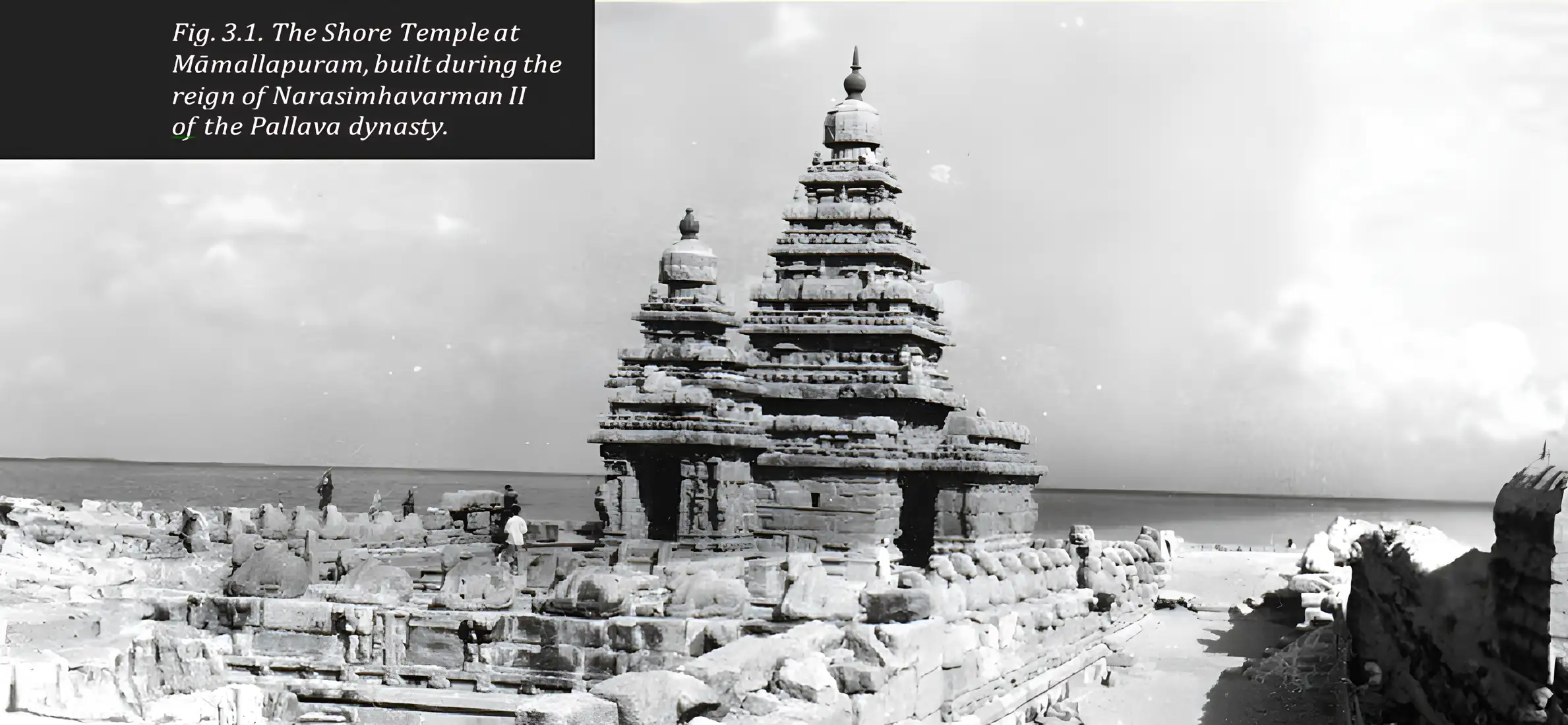
| Mamallapuram (Mahabalipuram), in the far south | Pallavas | Carved temples from rock; the Shore Temple was built under Narasimhavarman II. |
| Bengal | Pālas | Supported centres of learning, including Vikramaśhilā. |
From Gupta decline to regional variety
- Gupta dominance weakened
- Several regional powers emerged
- Regions developed distinctive political and cultural centres
- India remained dynamic, with new ideas, art and culture
Understanding the period
- Politics: The period involved rivalry among kingdoms, but it should not be seen only as an age of disorder.
- Culture: Temples, scholarship and lively cities show the growth of varied regional cultures.
- Overall: Regional diversity flourished across India.
- Regional kingdom
- A kingdom whose power was centred in a particular region rather than across a vast empire.
- Vikramaśhilā
- A major centre of learning in Bengal supported by the Pālas.
- Mamallapuram
- Also called Mahabalipuram; a Pallava centre known for rock-carved temples.
What major political change followed the decline of Gupta dominance?
Why should this period not be described only as one of disorder?
Quick recap
- The chapter title refers to the 6th–10th centuries, while this chapter and its sequel cover about 600–1200 CE.
- After Gupta dominance weakened, many regional kingdoms arose.
- The Chalukyas, Pallavas and Pālas are examples of regional powers.
- Kannauj, Mamallapuram and Vikramaśhilā were notable political, cultural or learning centres.
- Political rivalry existed alongside vibrant and diverse regional cultures.
The ‘Great King of Kings’
Harṣhavardhana and the Rise of Kannauj
Harṣhavardhana’s rule
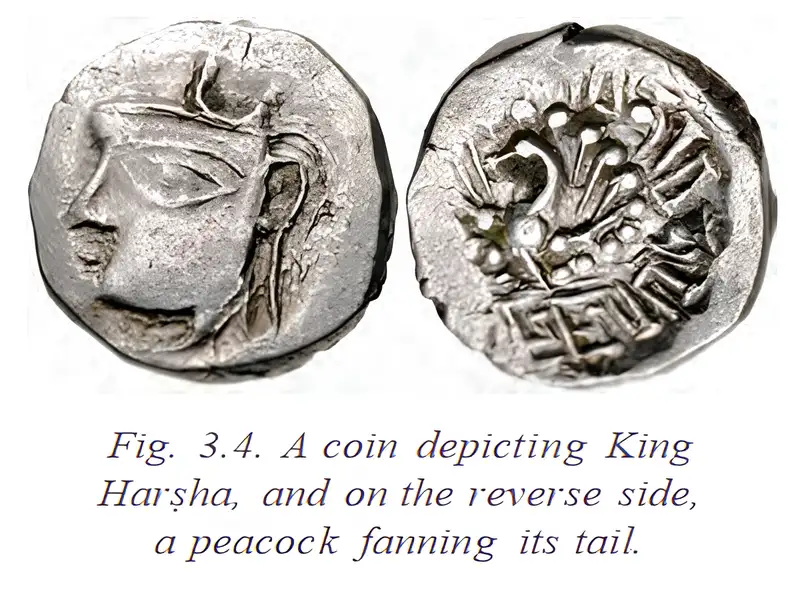
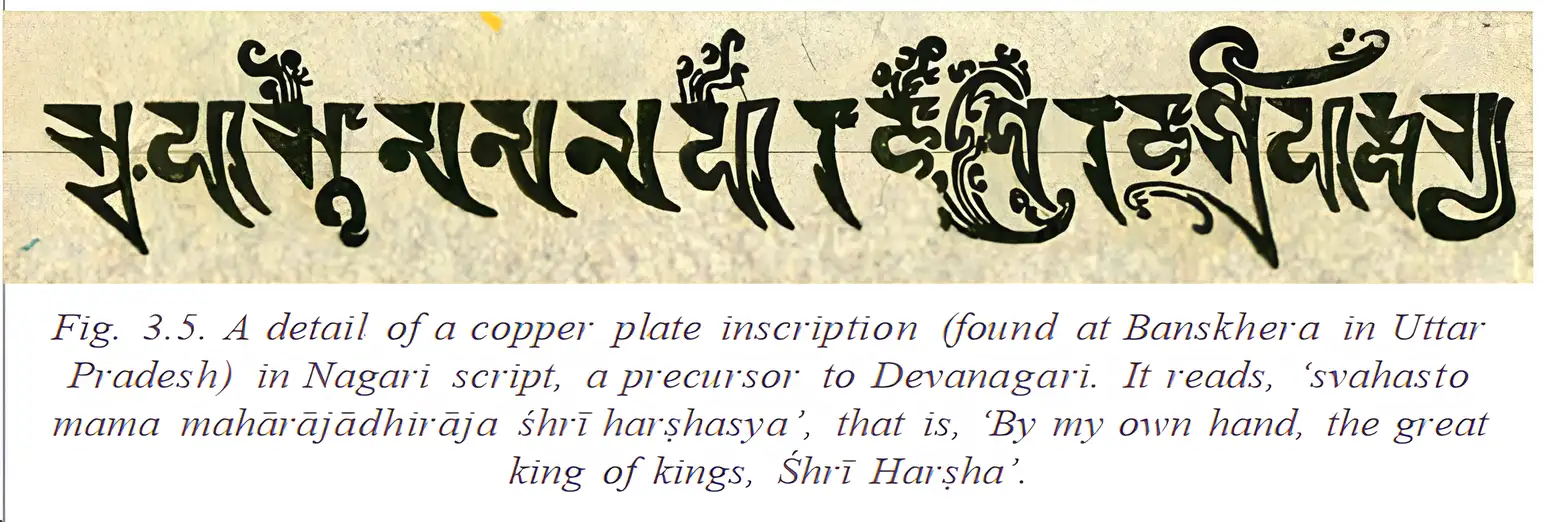
- Accession: Harṣhavardhana, also known as Harṣha, became ruler in 606 CE at Kannauj.
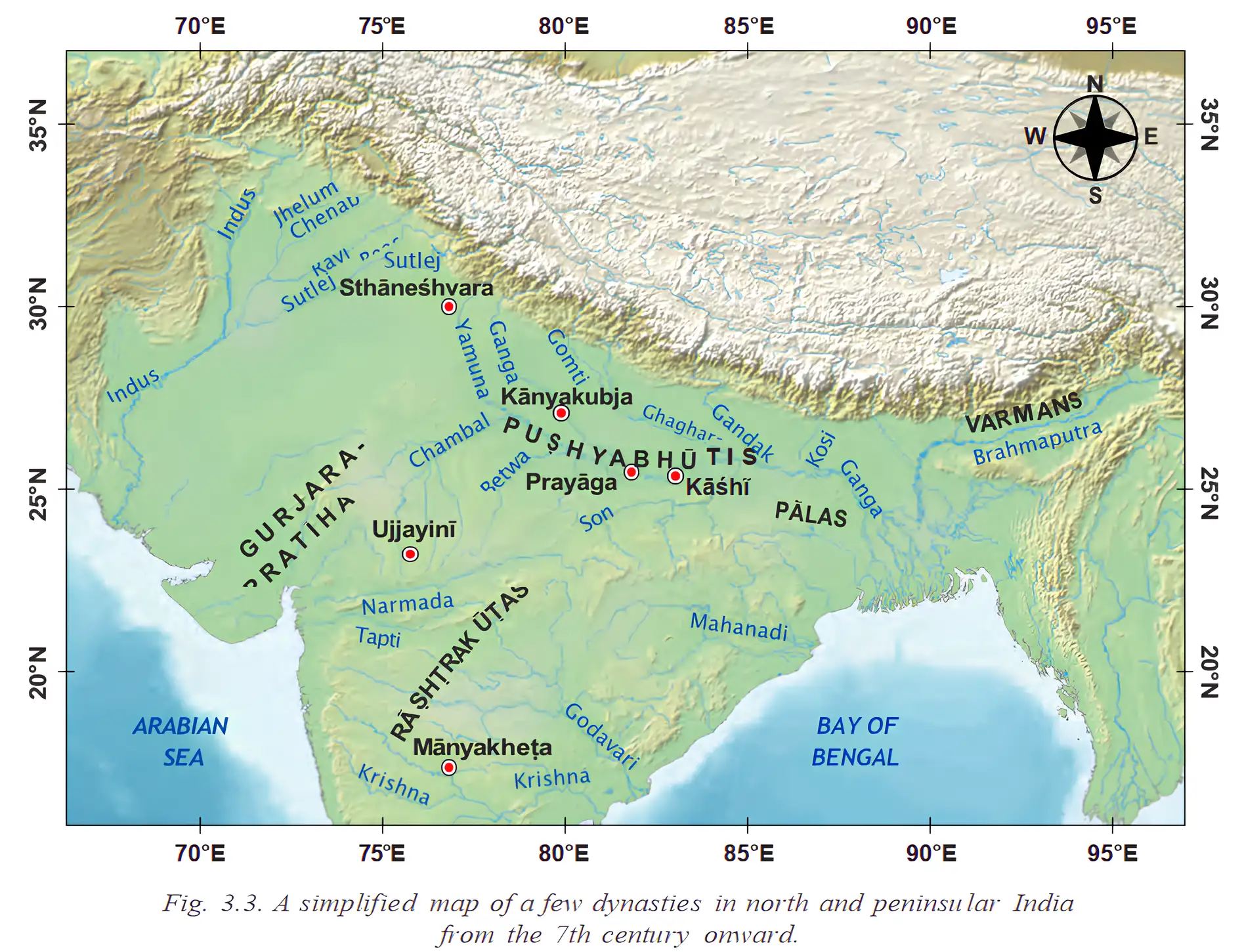
- Dynasty: He belonged to the Puṣhyabhūti, or Vardhana, dynasty; its earlier capital was Sthāneśhvara (present-day Thanesar, Haryana).
- Capital: Kannauj (also Kanauj), anciently Kānyakubja, is in present-day Uttar Pradesh.
- Empire: Harṣha extended his rule across large parts of northern and eastern India, but its exact extent is uncertain.
Literature, Religion and Historical Sources
Harṣha, Bāṇa and literary evidence
- Harṣha’s plays: He was a poet and dramatist, and is believed to have written three classical Sanskrit plays about love, courtly life, sacrifice and ethical values.
- Literature as evidence: Historians use literary works to learn about society and culture, including governance, social diversity, technology, food and clothing.
- Bāṇabhaṭṭa: Also known as Bāṇa, he wrote *Harṣhacharita*, a biography of Harṣha, and *Kādambarī*.
- Kādambarī: This 7th-century novel follows the love story of a prince from Ujjayinī and the celestial being Kādambarī across births, dreams and divine worlds.
- Its completion: Bāṇa died before completing *Kādambarī*; his son finished it. It is regarded as a masterpiece of classical Indian literature and one of the world’s first novels.
- Religious beliefs: Inscriptions describe Harṣha as a devotee of Śhiva; other sources describe his strong attachment to Buddhism and respect for different beliefs.
Xuanzang’s Travelogue
Xuanzang as a source
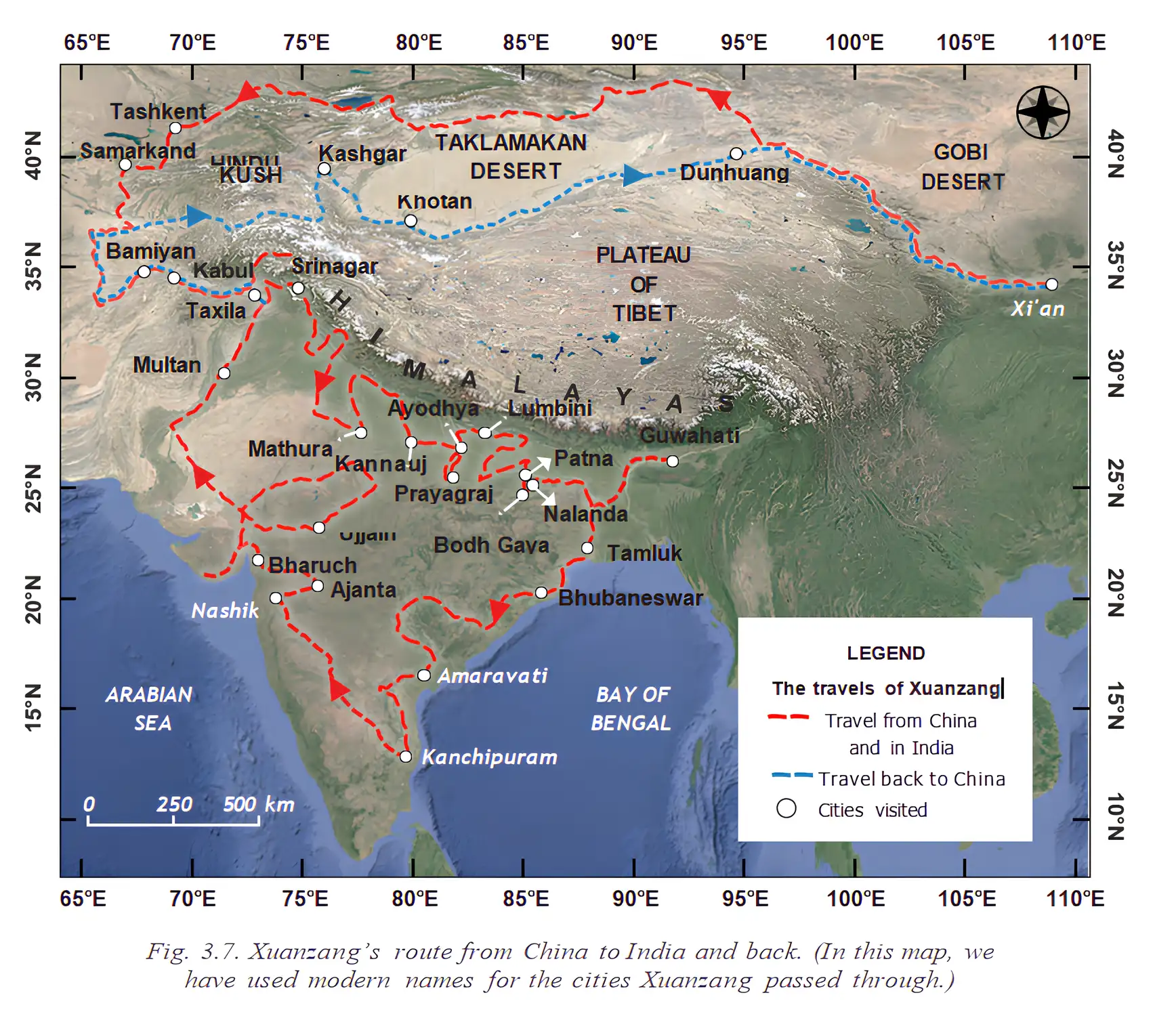
- Journey: The Chinese Buddhist pilgrim Xuanzang travelled around the subcontinent between 630 and 644 to visit sacred Buddhist sites and learn from Indian teachers.
- Manuscripts: He took more than 600 Sanskrit Buddhist manuscripts back to China, carried by 20 horses, and set about translating them into Chinese.
- Travelogue: His detailed account records the politics, diplomacy, culture and religion of the kingdoms he visited, making it a major historical source.
- Earlier pilgrim: Faxian travelled to India in the 5th century and left an important account of the Gupta era; Xuanzang’s account relates to a later period.
Harṣha’s Court, Assemblies and Campaigns
Court and religious assemblies
- Kannauj assembly: Harṣha welcomed Xuanzang and two Chinese ambassadors, and held an assembly attended by kings and leaders of many religious sects.
- Xuanzang’s account: He described Kannauj as beautiful and prosperous, and Harṣha as a just, energetic ruler with a vast army who was often engaged in military campaigns.
- Prayāga assembly: Every five years, Harṣha held an assembly at Prayāga (present-day Prayagraj), where the Ganga and Yamuna meet.
- Donations: After sacred rites at Prayāga, Harṣha gave away wealth to Buddhists, Brahmins and the poor.
Harṣha’s Campaigns and Alliances
- Harṣha attempted to expand south beyond the Narmada → Pulakeśhin II of the powerful Chālukya dynasty checked his advance.
- Harṣha sought to unite northern India → He achieved mixed success, as conflicts with neighbouring kingdoms continued.
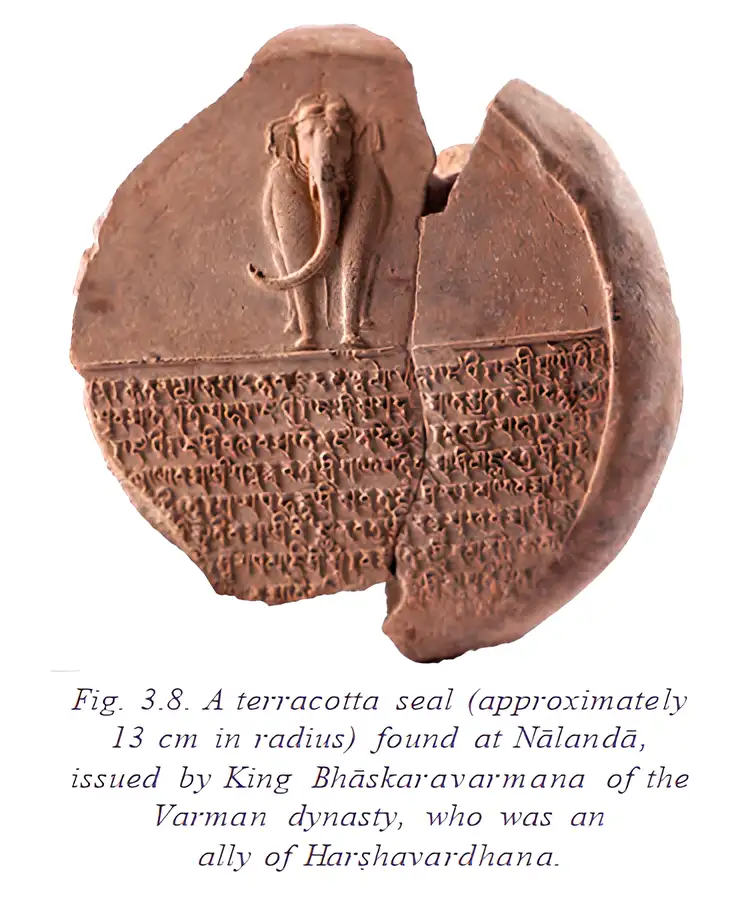
- Harṣha formed an alliance → The Varman dynasty of Kāmarūpa, in present-day Assam, became his ally.
Kāmarūpa
- Kingdom: Kāmarūpa was ruled by the Varman dynasty and lay in present-day Assam.
- Capital: Prāgjyotiṣha was near present-day Guwahati.
- Ally: Bhāskaravarmana of Kāmarūpa was an ally of Harṣhavardhana.
Key Dates
- 606 CEHarṣhavardhana became ruler at Kannauj.
- 5th centuryFaxian travelled to India and recorded information about the Gupta era.
- 7th centuryBāṇa’s *Kādambarī* was written and completed by his son.
- 630–644Xuanzang travelled around the Indian subcontinent.
- Puṣhyabhūti (Vardhana) dynasty
- The dynasty to which Harṣhavardhana belonged.
- Travelogue
- A written account of a traveller’s journey and observations.
- Prayāga
- Present-day Prayagraj, at the confluence of the Ganga and Yamuna.
- Kāmarūpa
- A kingdom in present-day Assam, ruled by the Varman dynasty.
What information does Xuanzang’s travelogue provide?
How did Harṣha try to expand his power, and what limited him?
What happened at Harṣha’s five-yearly assembly at Prayāga?
Quick recap
- Harṣhavardhana became ruler in 606 CE and governed from Kannauj.
- His power extended over large parts of northern and eastern India, though the empire’s exact extent is uncertain.
- Harṣha was associated with Sanskrit plays, supported scholars, and respected different religious traditions.
- Bāṇa wrote *Harṣhacharita* and *Kādambarī*, which his son completed.
- Xuanzang’s travelogue is an important source on the politics, diplomacy, culture and religion of 7th-century India.
- Harṣha held assemblies at Kannauj and Prayāga, making donations at Prayāga every five years.
- Pulakeśhin II checked Harṣha’s southern advance; Harṣha also allied with Kāmarūpa.
A Tripartite Struggle for Kannauj Part-1
The Tripartite Struggle
Tripartite — A situation involving three distinct parties or players.
The struggle for Kannauj
- Background: Harṣha’s death in 647 was followed by political turmoil in northern India.
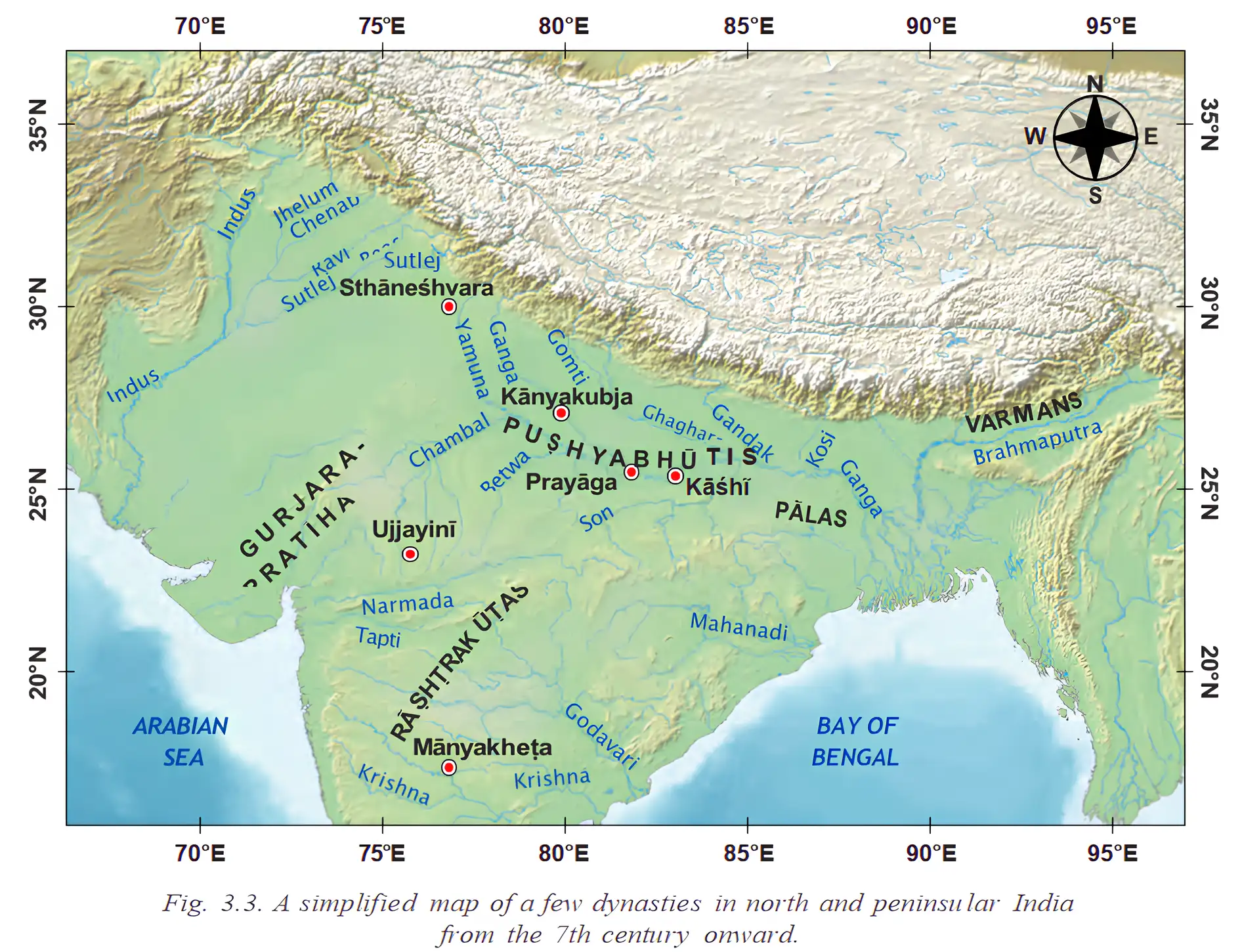
- Three powers: The Pālas from the east, Gurjara-Pratiharas from the west and Rāṣṭrakūṭas from the Deccan competed for Kannauj.
- Course and outcome: During the 8th and 9th centuries, the powers fought repeatedly; fortunes shifted, but none won a lasting victory.
Key dates and periods
- 647Harṣha died; political turmoil followed in northern India.
- 750 CEPeople in Bengal chose Gopāla to restore stability; he became the first Pāla king.
- 8th centuryDharmapāla founded Vikramaśhilā, which developed into a major centre of learning.
- 8th–9th centuriesThe Pālas, Gurjara-Pratiharas and Rāṣṭrakūṭas repeatedly fought over Kannauj.
- 12th centuryVikramaśhilā was plundered and destroyed by Bakhtiyār Khiljī.
The Pālas
Rise, rule and legacy
- Gopāla: Chosen by the people of Bengal in 750 CE to restore order, he founded the Pāla dynasty, which soon ruled much of eastern India.
- Dharmapāla: Gopāla’s successor expanded Pāla power across much of eastern and northern India.
- Learning centres: The Pālas established major monasteries, including Vikramaśhilā in present-day Bihar and Somapura in present-day Bangladesh; they also continued to patronise Nālandā.
- Trade and prosperity: The empire benefited from internal trade and active maritime trade from east-coast ports, with routes to Southeast Asia.
- Legacy: Pāla rule left a lasting legacy of strong governance and learning in parts of eastern and northern India.
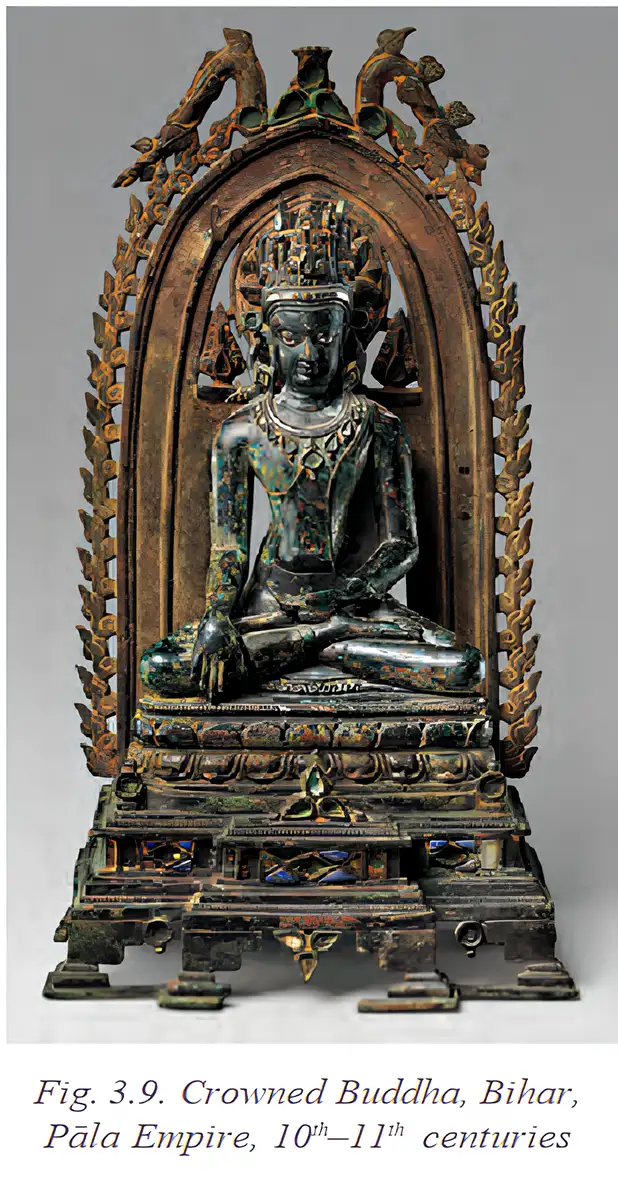
Religion and royal patronage
- Dharmapāla: Historians describe him as Buddhist; he certainly supported Mahāyāna Buddhist learning and institutions.
- Beliefs and worship: Religious identities were often more fluid than today; people could follow different practices, and Hinduism, Buddhism and Jainism were sometimes viewed as related philosophical traditions.
- Royal patronage: Rulers could support several schools of thought. Some of Dharmapāla’s successors patronised Buddhist institutions while also being described as devotees of Śiva.
Vikramaśhilā: A Major Centre of Learning
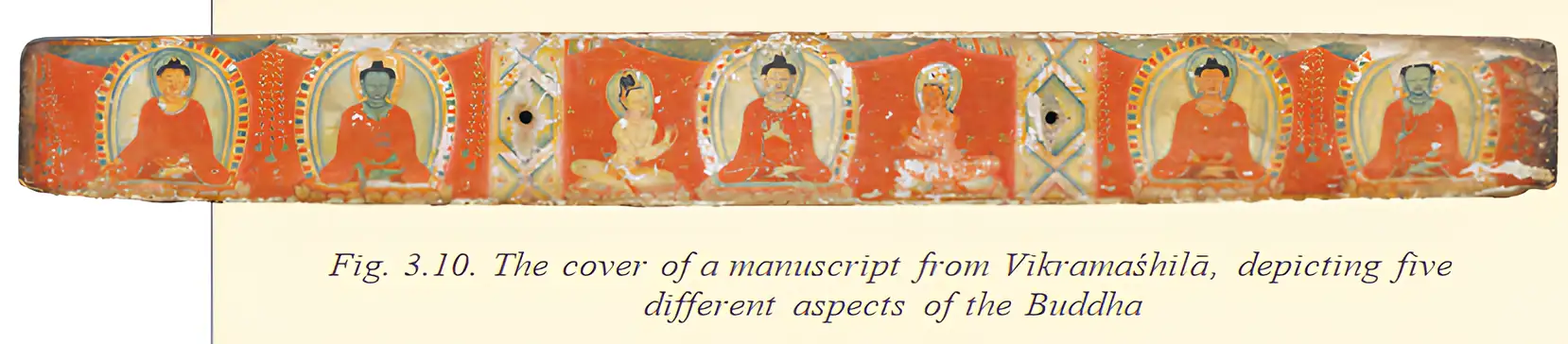
- Foundation and duration: Dharmapāla founded Vikramaśhilā in the late 8th century on the banks of the Ganga; it remained an important centre for more than four centuries.
- Facilities and study: It had six colleges, monasteries, temples, lecture halls and a large library. Nearly 3,000 scholars studied subjects including grammar, logic, Hindu and Buddhist philosophy, learning and rituals.
- Selective entry: Each college had a dvārapaṇḍita, or “scholar gatekeeper,” who tested applicants before admission.
- Ties with Tibet: Vikramaśhilā was known for its connections with Tibet. A noted teacher travelled there, translated Sanskrit works into Tibetan and helped shape Tibetan Buddhism, also called Vajrayāna Buddhism.
- Destruction: Vikramaśhilā was plundered and destroyed by Bakhtiyār Khiljī in the 12th century.
- Tripartite Struggle
- Repeated contest for Kannauj among the Pālas, Gurjara-Pratiharas and Rāṣṭrakūṭas.
- Patronage
- Support given by rulers to religious institutions, learning or schools of thought.
- Dvārapaṇḍita
- A scholar-gatekeeper who tested applicants seeking admission to a college at Vikramaśhilā.
- Vajrayāna
- A form of Tibetan Buddhism associated in the text with Vikramaśhilā’s scholarly connections.
Which powers fought in the Tripartite Struggle, and what was its outcome?
How did Vikramaśhilā select students, and what was it known for?
Quick recap
- After Harṣha’s death in 647, northern India experienced political turmoil.
- The Pālas, Gurjara-Pratiharas and Rāṣṭrakūṭas fought repeatedly over Kannauj, but none won a lasting victory.
- Chosen in 750 CE, Gopāla founded the Pāla dynasty; Dharmapāla later expanded its territory.
- The Pālas supported major centres including Vikramaśhilā, Somapura and Nālandā.
- Pāla prosperity rested partly on internal and maritime trade, including links to Southeast Asia.
- Vikramaśhilā was known for selective admission, scholarship and connections with Tibet; Bakhtiyār Khiljī destroyed it in the 12th century.
A Tripartite Struggle for Kannauj Part-2
The Gurjara-Pratiharas
Gurjara-Pratiharas — A dynasty founded by Nāgabhaṭa I in the mid-8th century CE, probably in western India.
Origins and early power
- Origin: ‘Gurjara’ referred to a region between Gujarat and Rajasthan.
- Capitals: Their early capital was Bhillamāla (modern Bhinmal, western Rajasthan); it later seems to have shifted to Ujjayini.
- Military role: The dynasty became known for pushing back Arab invasions into northwest India.
King Bhoja and the dynasty’s decline
- Empire: In the 9th century, Bhoja ruled from Punjab and Kathiawar (Saurashtra) in the west to Kannauj in the east, controlling most of north India.
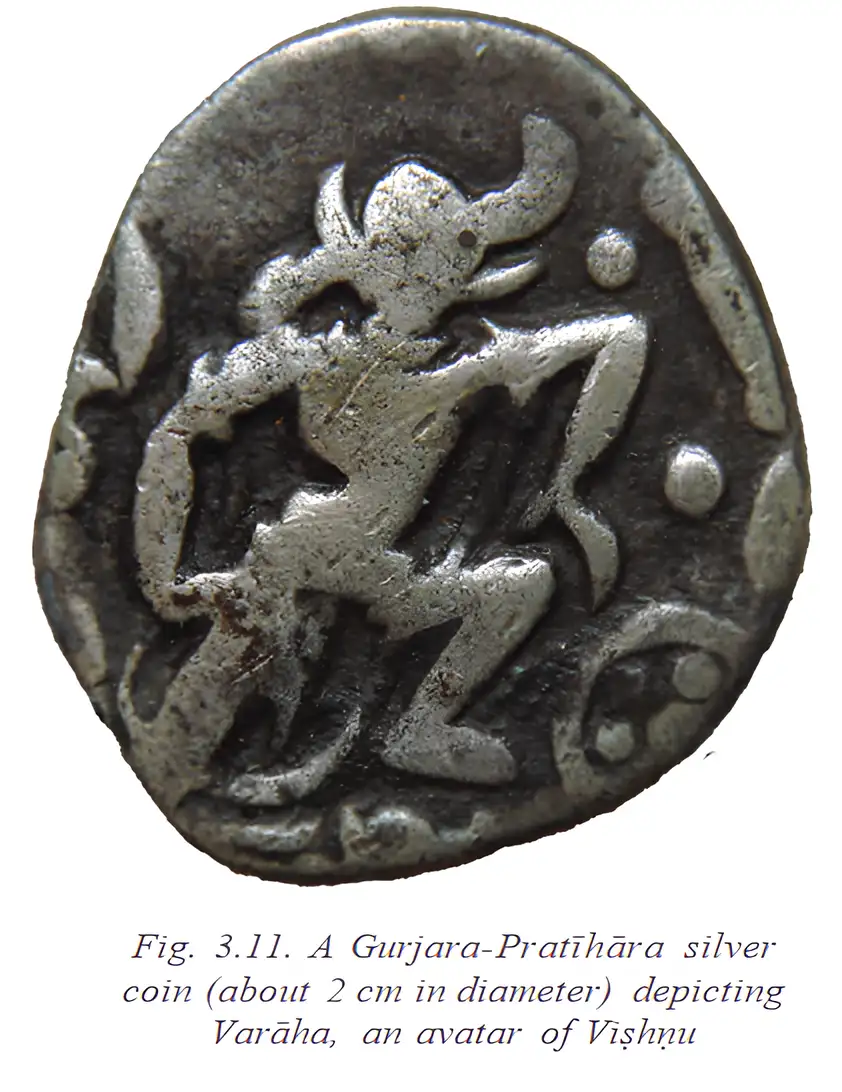
- Names and faith: Bhoja was a devotee of Vishnu and was also known as Mihira and Adi Varāha.
- Decline: About a century later, Rashtrakuta rulers destroyed Kannauj, hastening the disintegration of the Gurjara-Pratihara empire.
- End: The Ghaznavids finally eliminated the dynasty in the early 11th century.
The Rashtrakutas
Rashtrakutas — A powerful Deccan dynasty that became independent in the mid-8th century and campaigned as far as north India.
Rise and expansion
- Rise: Dantidurga became the first independent Rashtrakuta ruler after overthrowing the Chalukyas in the Deccan.
- Power centre: The dynasty shifted its centre to present-day Karnataka and established its capital at Mānyakheṭa (modern Malkheda).
- Extent and influence: For nearly two centuries, the Rashtrakutas were a dominant power whose empire spanned much of the subcontinent.
- Kannauj: Dantidurga’s successors campaigned successfully in north India and briefly occupied Kannauj.
Art, religion and learning
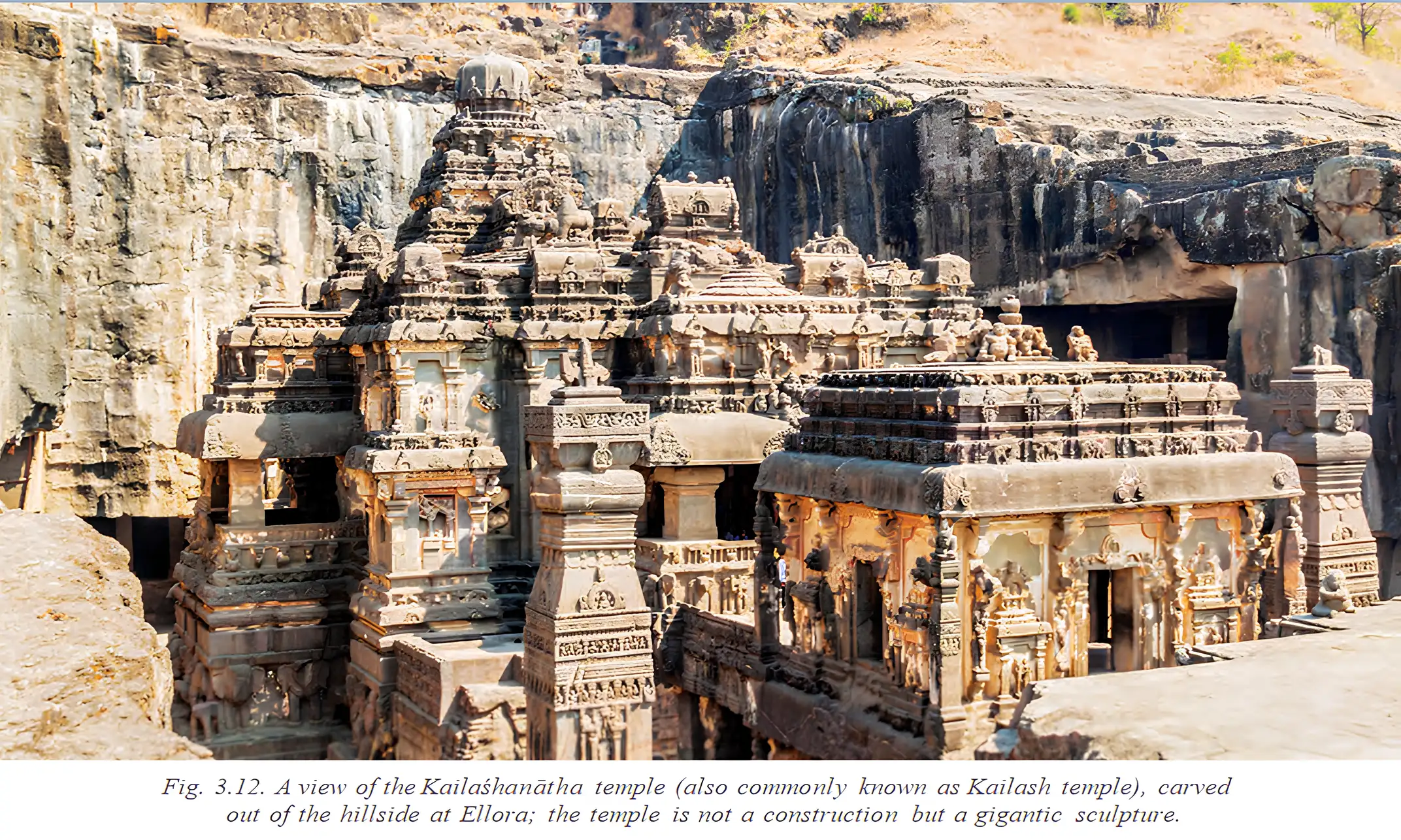
- Krishna I: He commissioned the Kailāśhanātha temple at Ellora, India’s largest rock-cut temple, carved from a hillside as a single gigantic sculpture.
- Patronage: The Rashtrakutas supported Hindu, Buddhist and Jain schools of thought.
- Learning: They encouraged literature and learning in Sanskrit, Prakrit and Kannada.
- Beyond warfare: Kings were not constantly at war; they also had the time and resources to create cultural works and monuments.
Amoghavarsha I
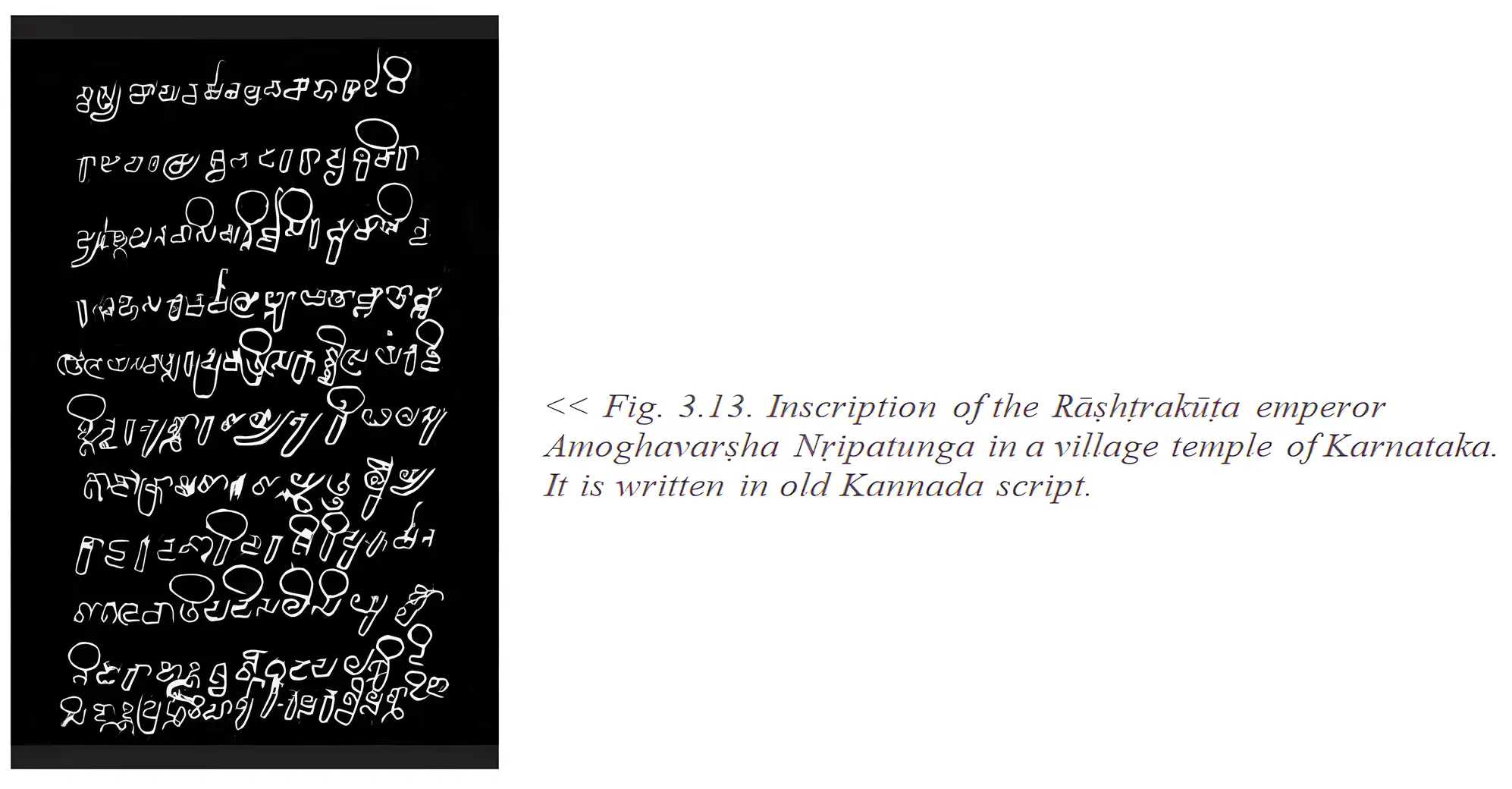
- Title: The 9th-century ruler took the title Nṛipatunga, meaning ‘peak of kings’.
- Rule: Despite frequent wars with neighbouring kingdoms, he maintained peace, prosperity and stability; his reign lasted 64 years.
- Religion: Strongly drawn to Jainism, he is sometimes called a ‘Jain king’, but he also patronised Hindu temples.
- Literature: He was a poet who composed works in Sanskrit and Kannada.
- Name remembered: Nrupatunga Road in central Bengaluru is named after him.
| Evidence | Interpretation | |
|---|---|---|
| Al-Masudi’s account | The 10th-century Arab historian and traveller said a Rashtrakuta ruler had innumerable troops and elephants, respected and protected Muslims, and provided mosques for prayer. | The account suggests Muslims could practise their religion under Rashtrakuta rule and that their religious institutions were protected. |
The wider struggle for Kannauj
- Palas, Gurjara-Pratiharas and Rashtrakutas competed for Kannauj and influence over central India and the Gangetic plains.
- Meanwhile, other powers rose and fell in different parts of India.
Key periods
- Mid-8th century CENāgabhaṭa I founded the Gurjara-Pratihara dynasty; Dantidurga became the first independent Rashtrakuta ruler.
- 9th centuryBhoja expanded Gurjara-Pratihara power; Amoghavarsha I ruled the Rashtrakutas.
- 10th centuryAl-Masudi described a Rashtrakuta ruler’s protection of Muslims.
- About a century after BhojaRashtrakuta rulers destroyed Kannauj, accelerating Gurjara-Pratihara decline.
- Early 11th centuryThe Ghaznavids eliminated the Gurjara-Pratihara dynasty.
What was the extent of King Bhoja’s empire?
Name two cultural contributions of the Rashtrakutas.
Quick recap
- Nāgabhaṭa I founded the Gurjara-Pratihara dynasty in the mid-8th century; it was probably from western India.
- King Bhoja controlled much of north India and was also known as Mihira and Adi Varāha.
- The Rashtrakutas became a dominant power for nearly two centuries, with an empire spanning much of the subcontinent.
- Dantidurga established Rashtrakuta independence; his successors briefly occupied Kannauj.
- Krishna I commissioned Ellora’s Kailāśhanātha temple; the Rashtrakutas patronised several religions and languages.
- Amoghavarsha I ruled for 64 years, supported Jainism and Hindu temples, and wrote poetry.
- Al-Masudi’s account suggests Muslims received religious protection under a Rashtrakuta ruler.
Kashmir
Kashmir’s rulers
Political change
- Kashmira: The Himalayan kingdom of Kashmira is present-day Kashmir; a new power was emerging there in the mid-8th century.
- Sources: Inscriptions and coins, alongside Kalhaṇa’s account, provide information about Kashmir’s rulers.
- Lalitāditya Muktāpīḍa: A ruler of the Karkota dynasty, described by Kalhaṇa as firm.
- Power struggles: After Lalitāditya, internal conflicts and changes of power followed; some rulers seized the throne by force.
- Queen Diddā: In the late 10th century, she strengthened her rule through alliances and, according to Kalhaṇa, eliminated rivals, including her grandsons.
- Diddā’s works: She founded towns, built temples and restored many others.
| Ruler | Dynasty / period | Key points |
|---|---|---|
| Lalitāditya Muktāpīḍa | Karkota dynasty | Remembered as a firm ruler. |
| Queen Diddā | Late 10th century | Consolidated power; founded towns and built or restored temples. |
Key periods
- Mid-8th centuryA new power was emerging in the kingdom of Kashmira.
- Late 10th centuryQueen Diddā consolidated her power and undertook town and temple building.
- 12th centuryKalhaṇa composed the Sanskrit epic Rājatarangiṇī.
Kalhaṇa and the writing of history
Rājatarangiṇī — A Sanskrit epic poem by the Kashmiri scholar and poet Kalhaṇa, composed in the 12th century; its title means “River of Kings.”
Kalhaṇa’s account and approach
- Coverage: Rājatarangiṇī narrates the history of Kashmir’s ruling dynasties from their beginnings to Kalhaṇa’s own time.
- Research: Kalhaṇa examined eleven earlier works by scholars and consulted temple-consecration records, royal grants, laudatory inscriptions and other writings.
- Purpose: He aimed to connect accounts that had become fragmentary and to address difficulties caused by errors.
- Moral lessons: He judged rulers by their conduct: oppressive rulers bring ruin to their families, while restoring order can benefit later generations.
- Impartiality: Kalhaṇa says a worthy poet should relate past facts like a judge, free from love or hatred; this reduces bias and makes an account more reliable.
- Rājatarangiṇī
- “River of Kings”; Kalhaṇa’s history of Kashmir’s ruling dynasties.
- Laudatory records
- Written records praising rulers or their achievements.
- Impartiality
- Reporting evidence without favour or hostility.
Shankaracharya and Advaita Vedanta
Teachings and centres of learning
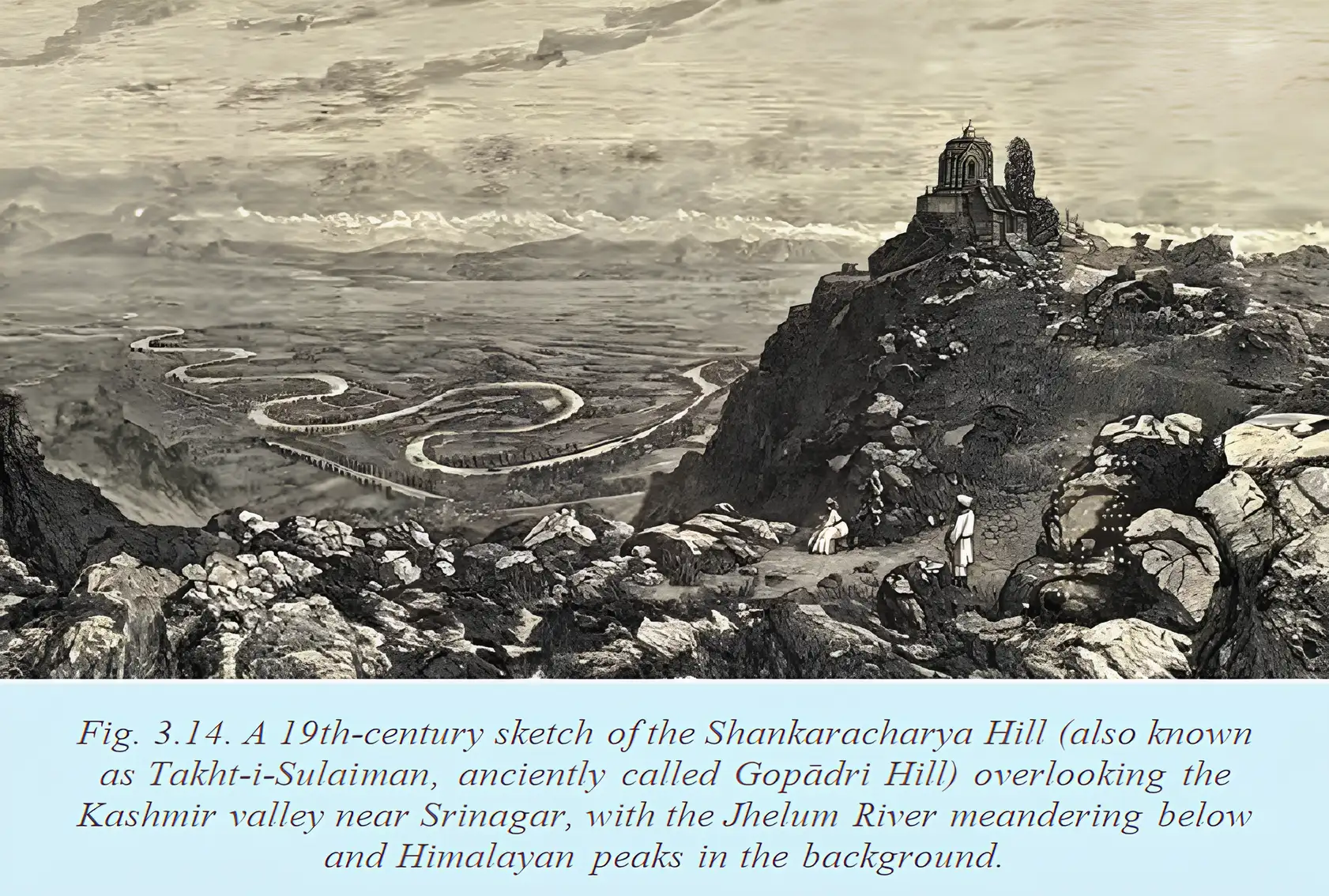
- Adi Shankaracharya: An 8th-century scholar and teacher associated with the Advaita Vedanta school; tradition says he visited the hill overlooking the Kashmir Valley.
- Advaita teaching: Brahman is ultimate reality or pure consciousness; the world as people perceive it is māyā, or illusion.
- Four maṭhas: Shankaracharya established monasteries and learning centres at Badrinath, Puri, Dwarka and Sringeri.
Kashmir’s cultural connections
Learning, scholarship and the arts
- Connections: Despite its mountainous geography, Kashmir remained linked to political and cultural developments elsewhere in India.
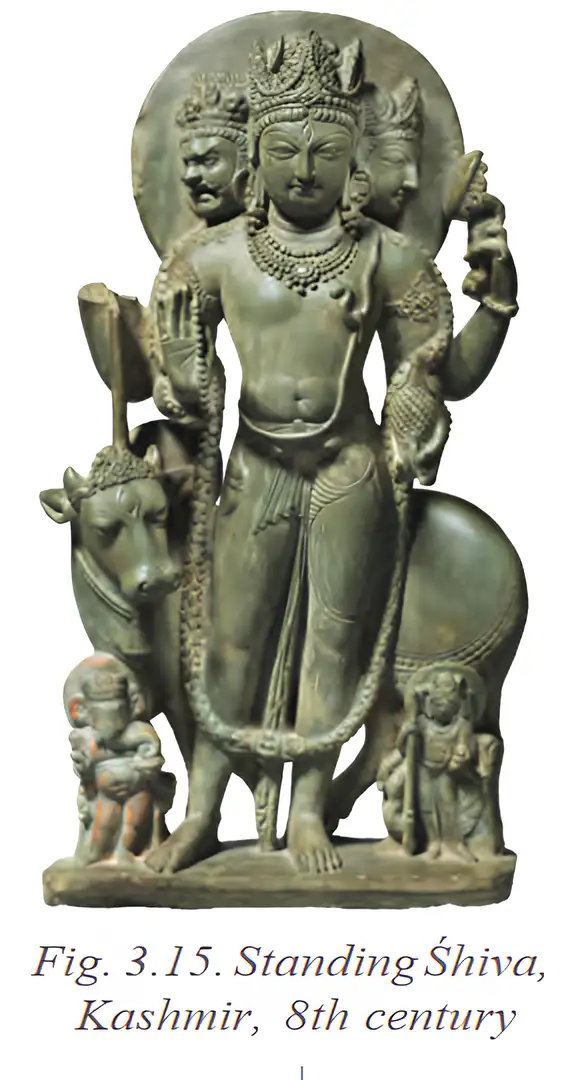
- Sanskrit learning: During this period, Kashmir was a major centre for Sanskrit learning, philosophy and the arts.
- Kashmir Śaivism: This school of thought produced important scholars, including Abhinavagupta.
- Abhinavagupta: His works on philosophy, poetry, the arts and aesthetics influenced people across India.
- Buddhist scholarship: Kashmir connected scholars, monks and texts with northern India, Tibet and Central Asia.
- Craftspeople: Kashmiri artisans, sculptors and manuscript painters were sought after in north India and beyond.
What sources did Kalhaṇa use to write Rājatarangiṇī?
State the central teaching of Advaita Vedanta given in the lecture.
Quick recap
- Kashmir’s rulers included Lalitāditya Muktāpīḍa of the Karkota dynasty and Queen Diddā of the late 10th century.
- Kalhaṇa’s 12th-century Rājatarangiṇī means “River of Kings” and traces Kashmir’s dynasties to his own time.
- Kalhaṇa used earlier chronicles and written records, and stressed evidence, impartiality and moral lessons.
- Adi Shankaracharya taught that Brahman is ultimate reality and the perceived world is māyā; he established four maṭhas.
- Kashmir’s learning, Kashmir Śaivism, Buddhist networks and artistic work connected it with regions across India and beyond.
The Deccan and Beyond Part-1
Political Changes in the Deccan
Changing kingdoms
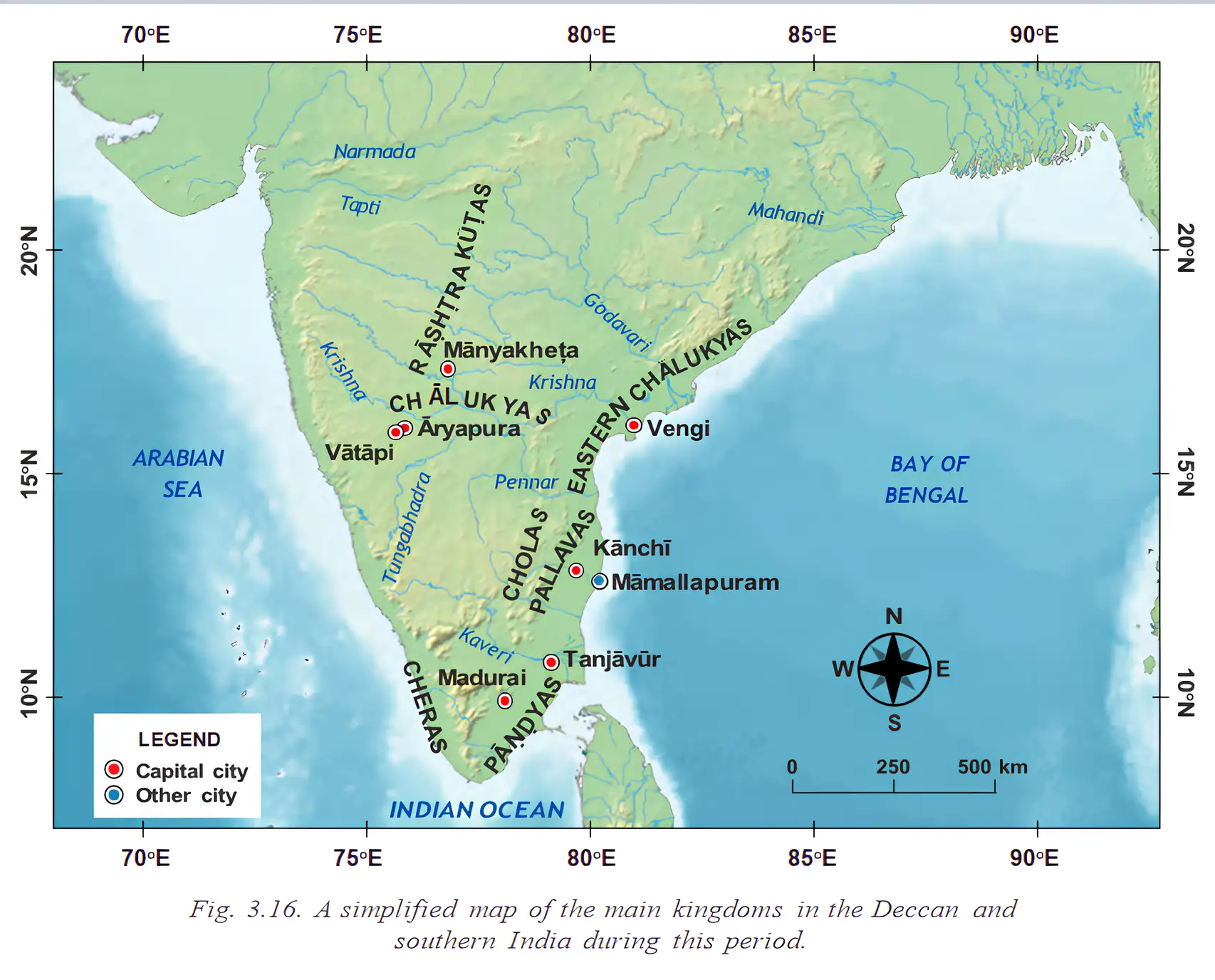
- After the Vakatakas: Several powerful kingdoms competed for supremacy in the Deccan and southern India.
- Major shift: The Chalukyas rose in the Deccan; later, the Rashtrakutas replaced them there.
The Chalukyas
Rise and centres of power
- Founder: Pulakeshin I founded the Chalukya dynasty in the mid-6th century CE.
- Pulakeshin II: His grandson expanded the kingdom and resisted Harsha’s southward ambitions.
- Capital: Vatapi (modern Badami, Karnataka) was famous for Hindu and Jain cave temples.
- Aihole: The earlier capital Aryapura, later called Ayyavole, is present-day Aihole and has over a hundred Hindu, Buddhist and Jain temples.
Meguti inscription — A lengthy Sanskrit inscription at the 7th-century Jain temple on Meguti Hill, Aihole, praising the Chalukyas, especially Pulakeshin II.
Sources about Pulakeshin II
- Ravikirti: The court poet composed the inscription, recording Pulakeshin II’s victories over Harsha and rival kingdoms in a poetic style.
- Limit of the inscription: Some claims are exaggerated and contradicted by other inscriptions.
- Xuanzang: The Chinese visitor described Pulakeshin II as a powerful ruler whose beneficial actions reached far and whose subjects obeyed him.
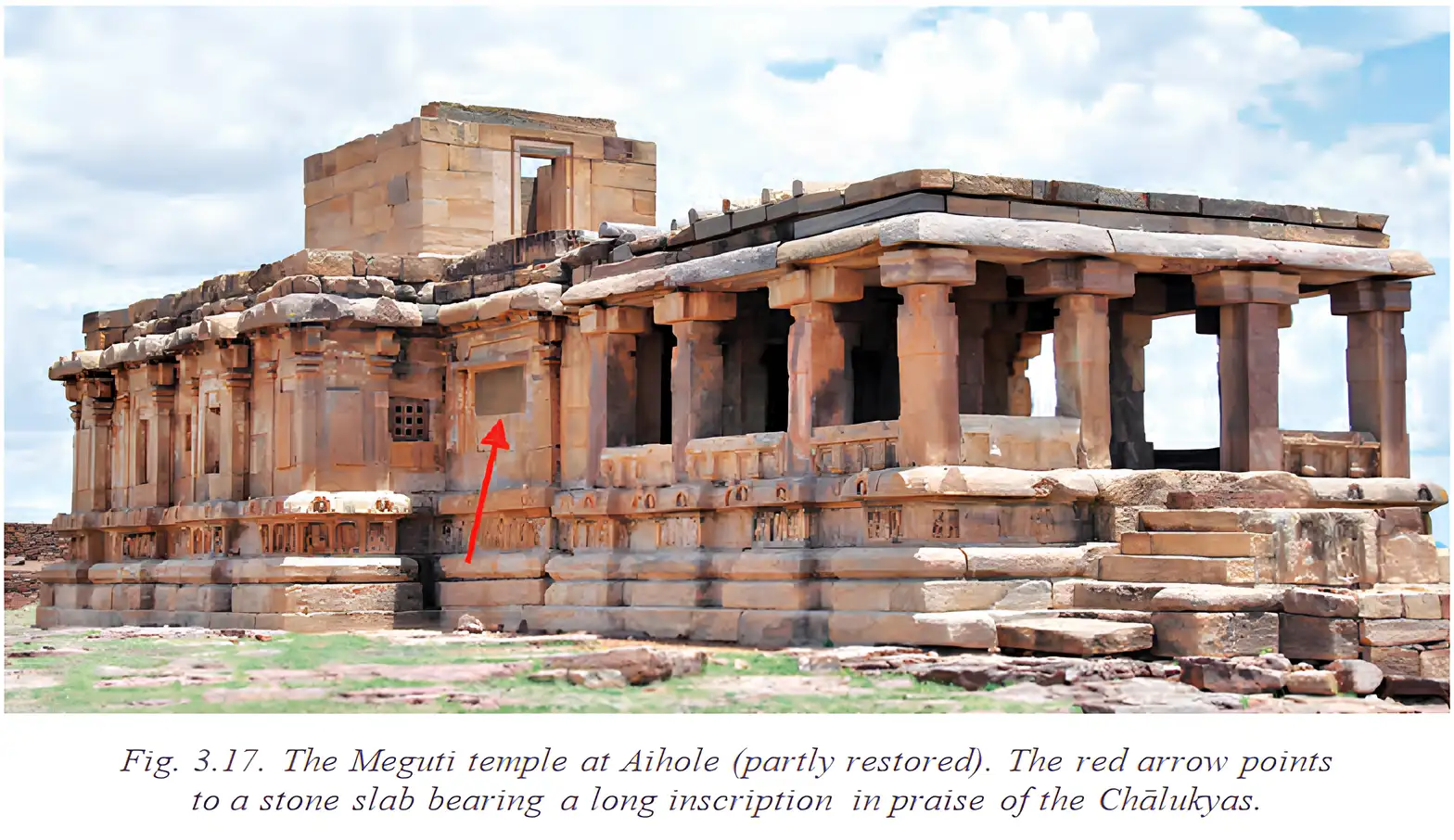
| Evidence | Interpretation | |
|---|---|---|
| Meguti inscription | Ravikirti praises Pulakeshin II’s victories. | Its poetic claims may exaggerate events and should be checked against other inscriptions. |
| Xuanzang’s account | He describes Pulakeshin II’s authority and the obedience of his subjects. | It provides another account of the king’s rule, from a visitor to the kingdom. |
Chalukya power and succession
- Early 7th century: Harsha ruled north of the Vindhyas, while Pulakeshin II held power south of them; they were the two great imperial powers of the time.
- Defeat: Pulakeshin II was eventually defeated by the Pallavas of Kanchi.
- Mid-8th century: The Rashtrakutas replaced the Chalukyas in the Deccan.
- Western Chalukyas: From the 10th century onward, the dynasty revived in the west, ruling from Kalyani (modern Basavakalyan, northern Karnataka).
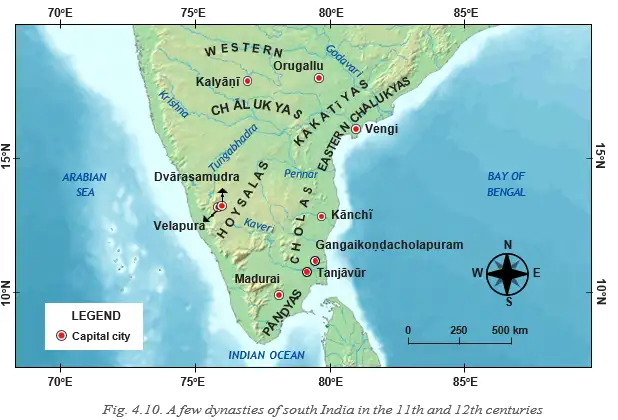
Eastern Chalukyas
Rule and influence
- Origin: As the Badami Chalukya empire declined, its eastern branch became independent and expanded in the eastern Deccan.
- Capital: The Eastern Chalukyas ruled from Vengi, in present-day Andhra Pradesh.
- Rashtrakuta relations: They experienced conflicts, victories and defeats, as well as occasional alliances with the Rashtrakutas.
- Culture and religion: They supported Hindu and Jain sects and Buddhist centres; Telugu and Kannada literature flourished under their rule.
| Branch | Region and capital | Key point |
|---|---|---|
| Badami Chalukyas | Vatapi (Badami), Deccan | Rose to power under Pulakeshin I; Pulakeshin II expanded their influence. |
| Eastern Chalukyas | Vengi, eastern Deccan | Became independent as the Badami empire declined. |
| Western Chalukyas | Kalyani, western Deccan | A later revival from the 10th century onward. |
Key Periods
- Mid-6th century CEPulakeshin I founded the Chalukya dynasty.
- Early 7th centuryHarsha and Pulakeshin II were dominant powers north and south of the Vindhyas.
- 7th centuryThe Meguti Jain temple inscription praised Pulakeshin II and the Chalukyas.
- Mid-8th centuryThe Rashtrakutas replaced the Chalukyas in the Deccan.
- 10th century onwardThe Western Chalukyas revived in the west, with Kalyani as their capital.
- Vatapi
- Capital of the Badami Chalukyas; present-day Badami in Karnataka.
- Vengi
- Capital of the Eastern Chalukyas in the eastern Deccan.
- Kalyani
- Capital of the Western Chalukyas; modern Basavakalyan in northern Karnataka.
- Ravikirti
- Chalukya court poet who composed the Meguti inscription.
What does the Meguti inscription tell us, and why should its claims be checked?
How did the Chalukya dynasties change over time?
Quick recap
- Pulakeshin I founded the Chalukya dynasty in the mid-6th century CE.
- Pulakeshin II expanded the kingdom and resisted Harsha’s southward ambitions.
- The Meguti inscription praises Pulakeshin II, but its claims must be checked against other evidence.
- The Pallavas defeated Pulakeshin II; the Rashtrakutas replaced the Chalukyas in the Deccan by the mid-8th century.
- The Eastern Chalukyas ruled from Vengi; the Western Chalukyas later revived with Kalyani as their capital.
- Eastern Chalukya rule supported multiple religious traditions and the growth of Telugu and Kannada literature.
The Deccan and Beyond Part-2
The Pallavas
Pallava power and achievements
- Capital: Kanchi, also called Kanchipura (present-day Kanchipuram), was the dynasty’s political and cultural centre.
- Peak: The Pallavas reached their height in the 7th century under Mahendravarman I and his son Narasimhavarman I.
- Mamalla: Narasimhavarman I, called Mamalla (“wrestler” or “warrior”), defeated Pulakeshin II and captured Badami, but later retreated; the Tungabhadra River became an unwritten boundary between the powers.
- Sri Lanka: Narasimhavarman I sent a naval expedition to help a Sinhalese prince regain his throne.
- Trade: Kanchi traded in spices, textiles including silk, ivory and luxury goods. Pallava ports, especially Mamallapuram, connected trade with Sri Lanka and Southeast Asia.
- Evidence of trade: Ancient Chinese, Persian and Roman coins were found at Mamallapuram.
- Religious life: Xuanzang described 100 Buddhist monasteries with 10,000 priests, 80 Hindu temples and many Jains in Kanchi; the Buddhist figures may be exaggerated.
- Learning and literature: The Pallavas supported Jain, Vaishnavite and Shaivite traditions, and promoted Sanskrit and Tamil literature. Poet Daṇḍin wrote Sanskrit poetry; Mahendravarman I wrote a satirical Sanskrit play.
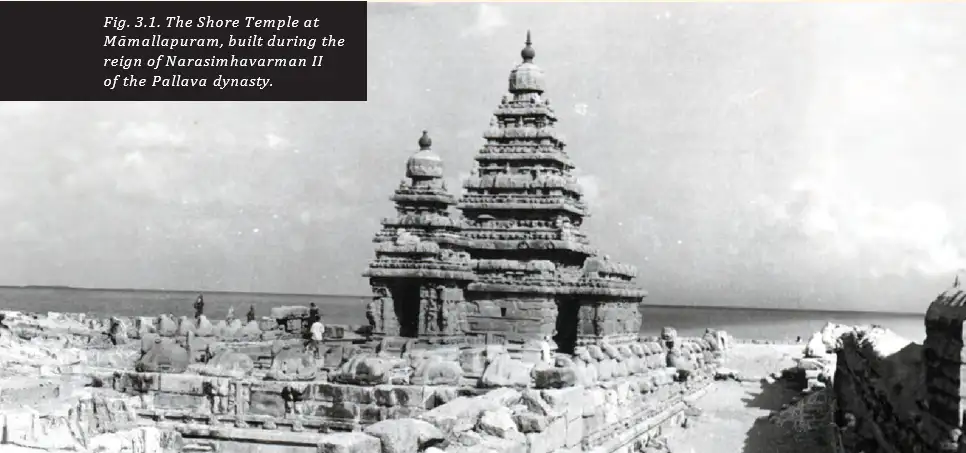
Monolithic — Made from a single piece of stone or rock.
Pallava art and architecture
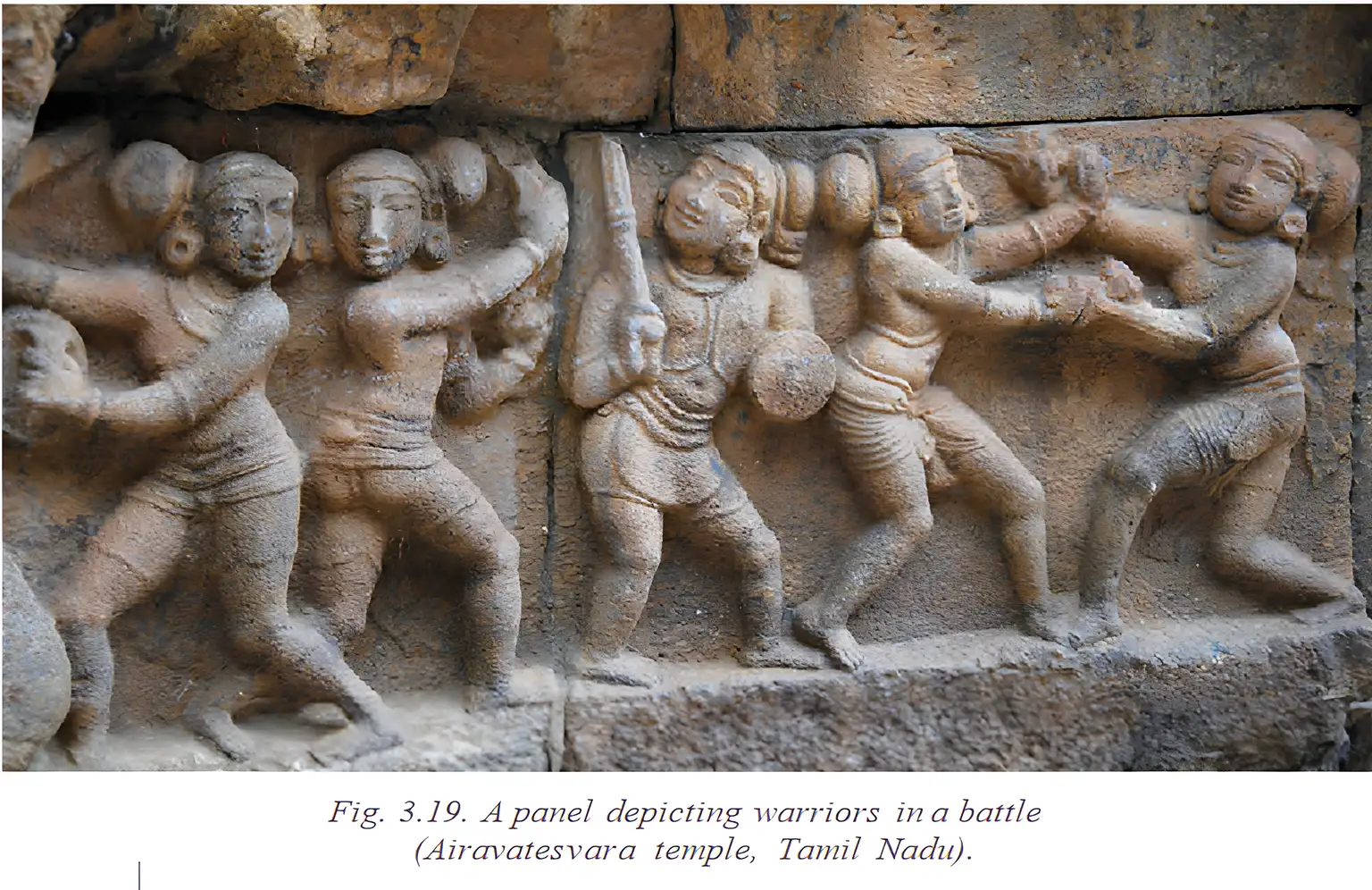
- Rock-cut art: Mamallapuram had elaborate rock-cut caves and monolithic temples carved in a distinctive style.
- Subjects: Sculptures represented deities and scenes connected with the Mahabharata.
- Pallava legacy: Temples and other structures helped make Pallava art an important part of South Indian cultural history.
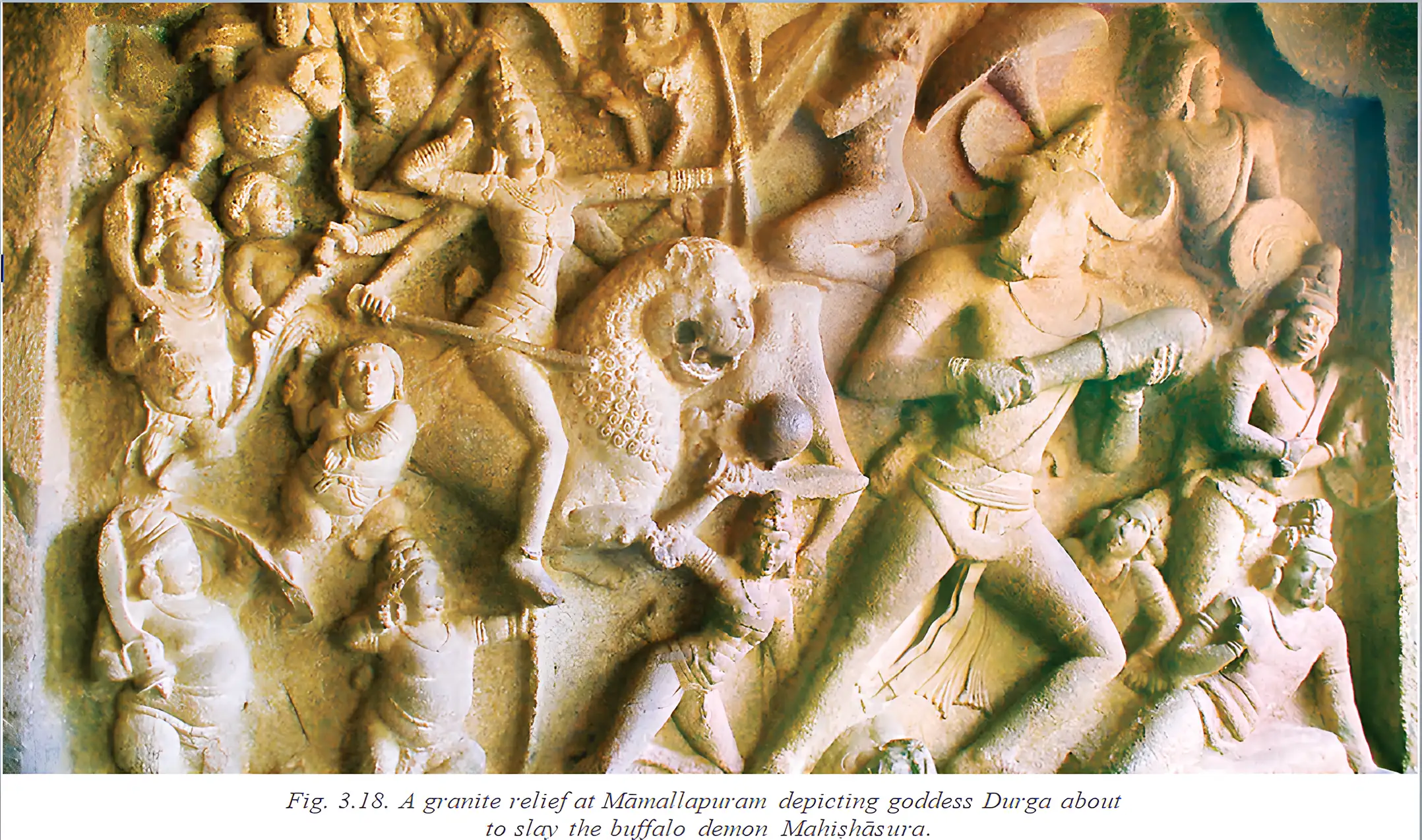
Pallava rule
- 7th centuryThe Pallavas reached their peak under Mahendravarman I and Narasimhavarman I.
- Late 9th centuryThe Chola king Aditya I overthrew the Pallavas.
Further South
Southern kingdoms re-emerge
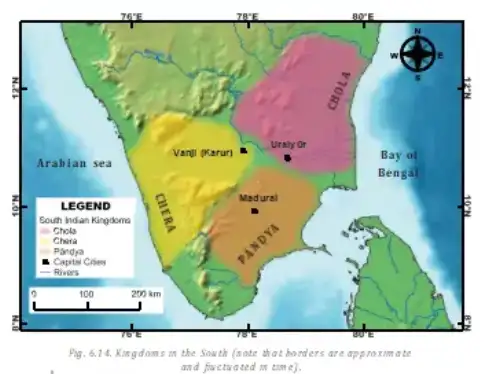
- Earlier references: The Pāṇḍya, Chola and Chera kingdoms were named as southern neighbours in an edict of Ashoka and appeared in early Tamil Sangam poetry.
- Renewed power: After a period when other powers overshadowed them, these kingdoms again shaped southern India’s politics and culture, often fighting one another.
The Pāṇḍyas and Cheras
- Pāṇḍya rise: The Pāṇḍyas rose to power by the 6th century and controlled much of southern Tamil Nadu, and briefly parts of northern Sri Lanka.
- Alliances and trade: They allied with the Chalukyas and Pallavas. Coins and inscriptions show maritime trade with Southeast Asia through ports such as Korkai.
- Madurai: The Pāṇḍya capital was a lively cultural centre. The dynasty built temples, including rock-cut temples, and patronised poets.
- Literature: A copper plate records a Pāṇḍya translation of the Mahābhārata into Tamil, but the translation has not survived.
- Decline and return: The Cholas displaced the Pāṇḍyas in the 10th century; the Pāṇḍyas re-emerged about three centuries later.
- Chera Perumals: The Cheras of the Kerala coast maintained their independence despite the military strength of neighbouring kingdoms.
The rise and achievements of the Cholas
- Vijayālaya: The Cholas regained power under Vijayālaya in the 9th century, establishing a new capital at Tanjāvūr (now Thanjavur).
- Expansion: Vijayālaya laid the foundation of a strong kingdom. His son Aditya I defeated the Pallavas and brought much of present-day Tamil Nadu and parts of southern Andhra Pradesh under Chola control.
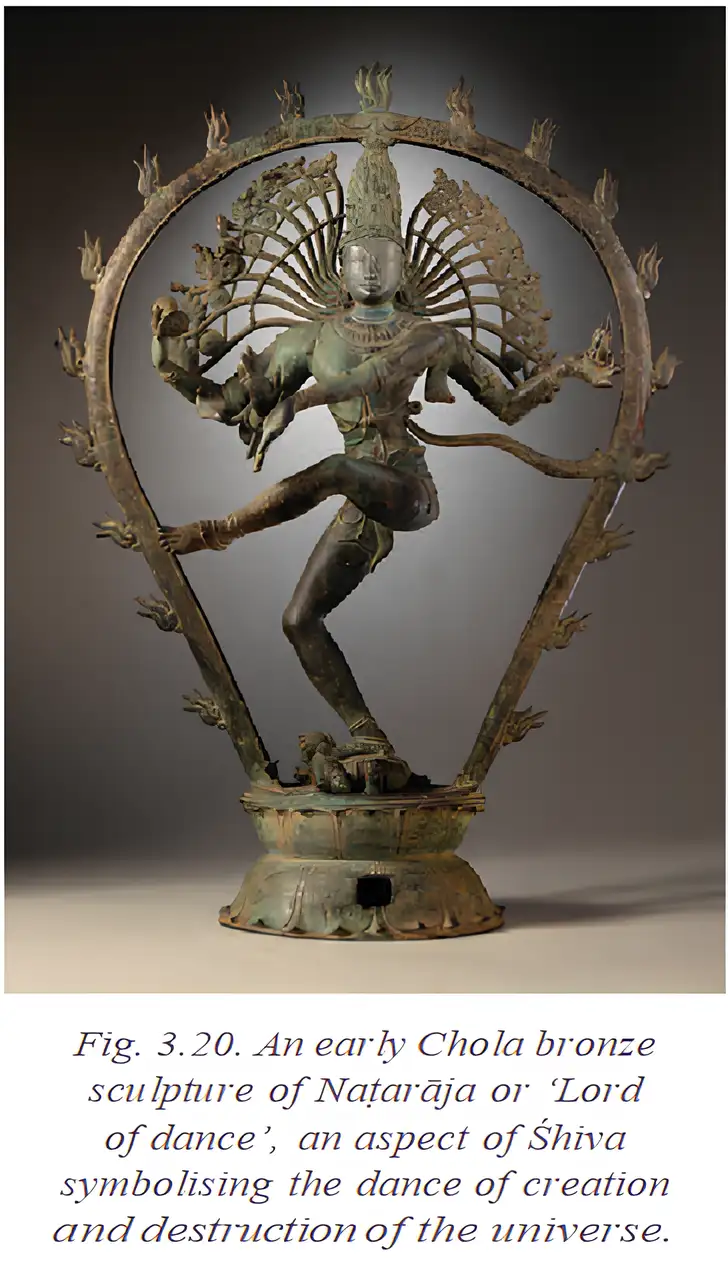
- Empire: The Cholas built one of the largest empires in South Indian history, with efficient administration, a powerful navy and grand temples.
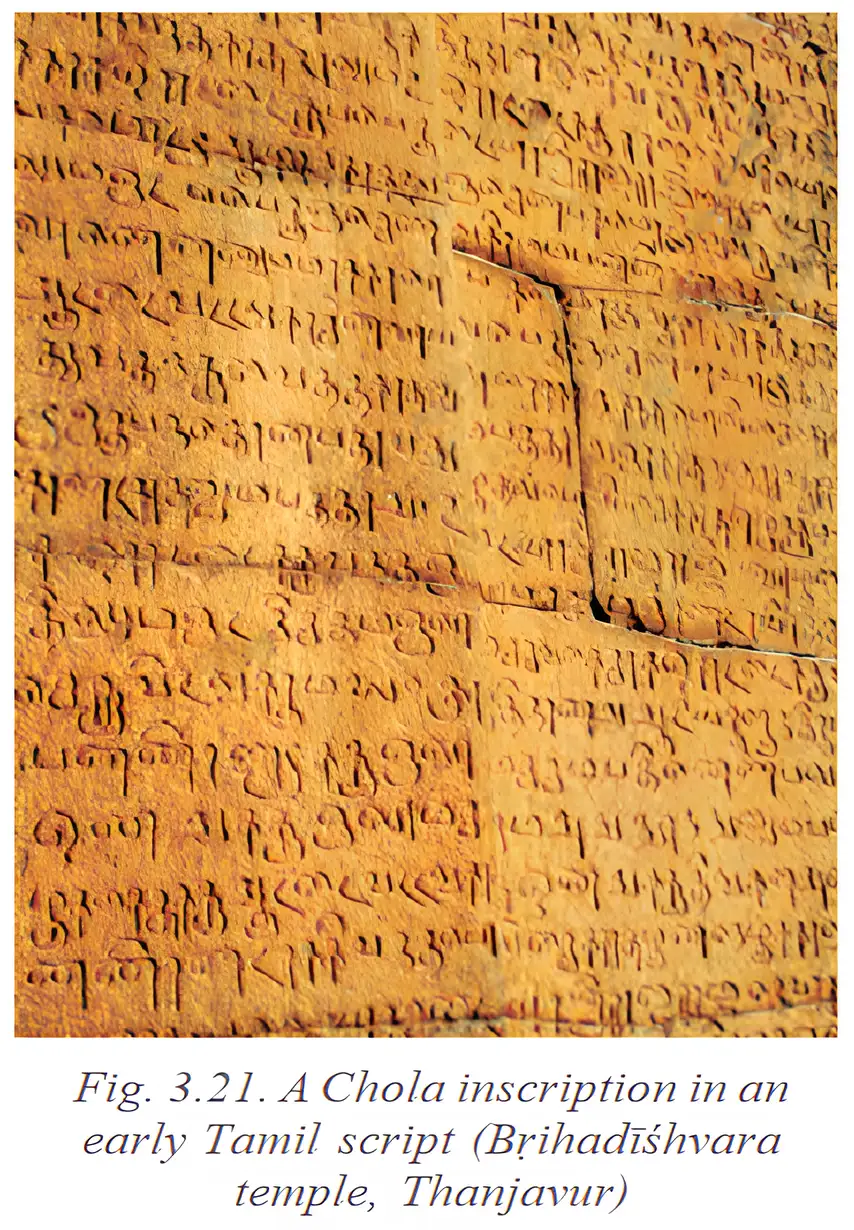
- Arts and languages: They supported sculpture, architecture, and Tamil and Sanskrit literature. Chola inscriptions used both Tamil and Sanskrit.
- Agricultural wealth: The fertile Kāveri delta and efficient irrigation ensured steady harvests and helped make the Chola heartland prosperous.
- Long rule: Chola dominance in South India lasted until the 13th century.
Sources of Chola prosperity
- Fertile Kāveri delta
- Efficient irrigation
- Steady agricultural output
- Prosperity of the Chola heartland
| Part of inscription | Sanskrit | Regional language |
|---|---|---|
| Content | Often praised the ruler and recorded dynastic history. | Recorded the practical details of the land grant. |
- Monolithic
- Carved or made from a single piece of stone.
- Sangam literature
- The earliest collections of Tamil poetry.
- Chera Perumals
- Another name for the Cheras who ruled along the Kerala coast.
- Nataraja
- Shiva as Lord of Dance, shown in Chola bronze sculpture as a symbol of creation and destruction.
How did the Pallavas contribute to culture and learning?
What helped make the Chola heartland prosperous?
Why were land-grant inscriptions written in Sanskrit and a regional language?
Quick recap
- The Pallavas reached their peak in the 7th century under Mahendravarman I and Narasimhavarman I, with Kanchi as their capital.
- Xuanzang reported 100 Buddhist monasteries, 10,000 priests and 80 Hindu temples in Kanchi; the Buddhist totals may be exaggerated.
- Pallava trade, religious patronage, literature and distinctive rock-cut architecture made the dynasty culturally influential.
- The Pāṇḍyas rose by the 6th century, while the Cheras maintained independence on the Kerala coast.
- Vijayālaya revived Chola power in the 9th century; Aditya I expanded it by defeating the Pallavas.
- The Kāveri delta and irrigation supported Chola agriculture; inscriptions used Sanskrit for praise and local languages for practical details.
Other Developments Part-1
Polity and Administration
Decentralised kingdoms
- Political change: The decline of large, unified empires gave rise to smaller, decentralised kingdoms.
- Core regions: Kings such as the Chalukyas and Rashtrakutas ruled their core territories directly.
- Subordinate regions: Other areas were governed by sāmantas, rulers similar to tributaries or vassals.
- Sāmantas’ roles: They led armies and managed local administration, but their loyalty could weaken when central power declined.
- Shift in power: The Rashtrakutas, once Chalukya sāmantas, became powerful enough to overthrow their overlords.
| Level | Administrative unit | Key details |
|---|---|---|
| Province | Bhukti or rāṣhṭra | A major administrative unit |
| District | Maṇḍala | A unit within a province |
| Village | Village | Lowest unit; headmen, accountants and local committees oversaw it |
Village assemblies
- Local self-government: Villages remained largely self-governed through local officials and committees.
- South India: Assemblies at several levels became prominent by the 9th century.
- Chola example: 10th-century inscriptions from Uttaramerur describe how members of the village sabhā were selected.
- Continuity: These assemblies were presented as evidence of democratic traditions extending back about 1,500 years to the janapadas.
Trade, Economy and Urbanisation
Land grants and agriculture
- Land grants: A system begun under the Guptas expanded greatly; kings, chiefs, royal family members and vassals granted land to individuals, communities and religious institutions.
- New landholders: Many grant-holders did not cultivate the land themselves; powerful intermediaries could exploit peasants.
- Cultivation: Many grants aimed to bring uncultivated land under cultivation, expanding agriculture and crop diversity.
- Irrigation works: Small-scale and some large state-supported projects improved water supply. Pallava-built tanks in Tamil Nadu are an example, and many still function.
- Status and production: Sponsoring wells, ponds or tanks could raise a donor’s social status. Better irrigation and agricultural growth supported cash crops, crafts and industries.
Agriculture and production
- Land grants often aimed to bring uncultivated land under cultivation.
- Cultivation expanded and crop diversity increased.
- Separately, irrigation works improved water supply and supported agricultural growth.
- Cash crops supported agro-based crafts and industries.
Trade and markets
- Trade centres: Regional markets and trade centres flourished alongside agriculture.
- Traders: Small traders handled local trade, while ship-owning merchants conducted long-distance commerce.
- West coast routes: From the 8th century, ports connected India with present-day Iran, Iraq and the east coast of Africa.
- East coast routes: India’s east coast connected with Sri Lanka, Southeast Asia and Chinese ports.
- Trading communities: Copper-plate inscriptions from the Chera east coast refer to Christian, Muslim and Jewish traders from West Asia.
| Evidence | Interpretation | |
|---|---|---|
| North India | Most older cities remained occupied and new ones emerged. Xuanzang noted decline in Kauśhāmbī and Śhrāvastī, but thriving cities such as Sthāneśhvara, Kānyakubja and Kāśhī. | Some historians suggested urban decline, but the evidence shows a complex picture rather than uniform decline. |
| South India | Cities continued as political, economic and religious centres; temples supported commerce and ports supported maritime trade. | Urban life remained active in important centres. |
Rural society and a hero stone
- Overall pattern: Indian society remained largely rural and agrarian, even as towns, markets and ports continued to function.
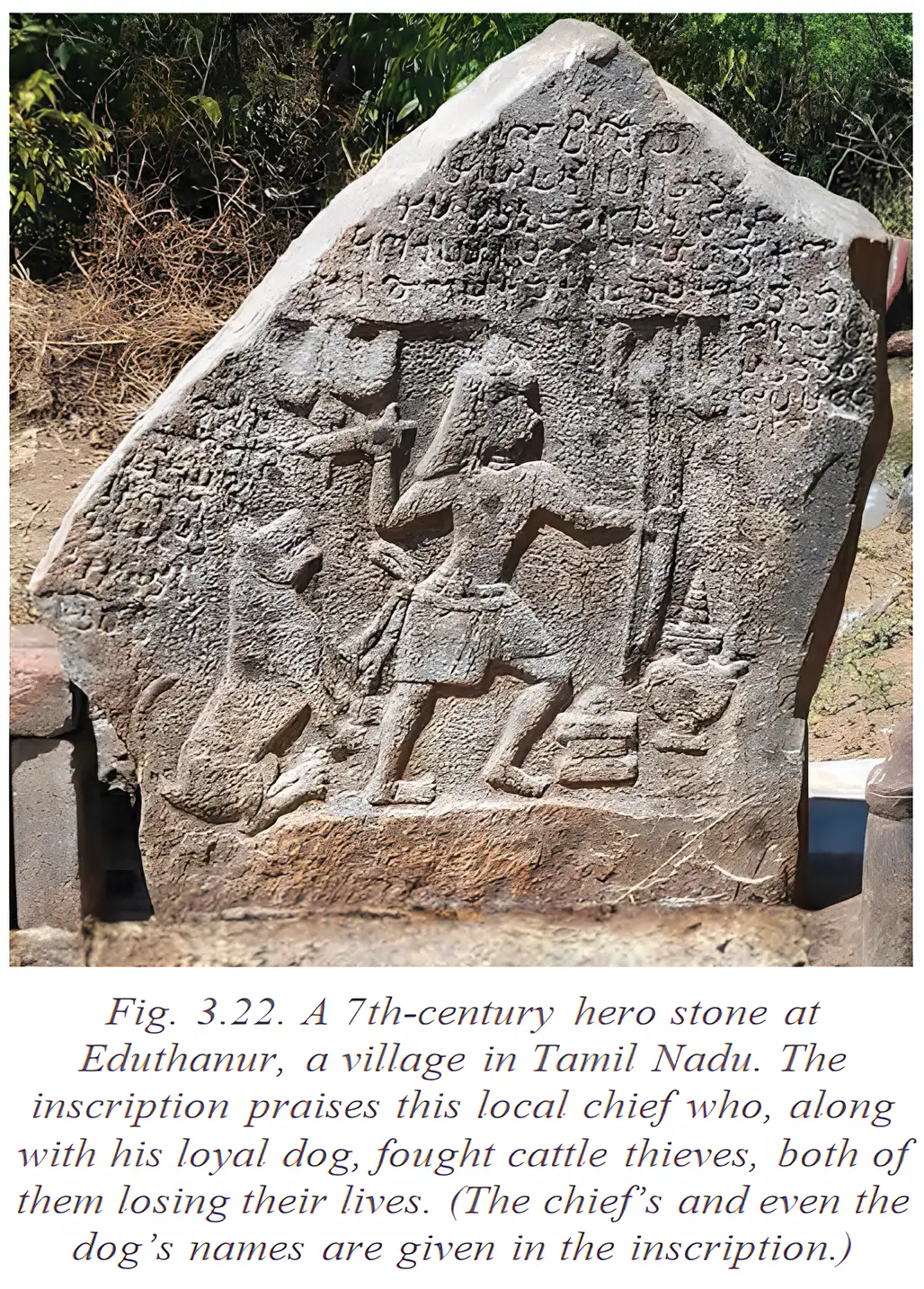
- Hero stone: A 7th-century stone at Eduthanur commemorates a local chief and his loyal dog, who died fighting cattle thieves.
Merchant Guilds
Guilds and their work
- Membership: Merchant guilds or associations included traders, artisans and moneylenders.
- Activities: They supported trade and also religious and charitable work; inscriptions record their organisation and functions.
- South Indian guilds: Two major associations were prominent: one was active in coastal and inland trade, while the other became the largest inter-regional merchant association.
| Guild described in the text | Main role |
|---|---|
| One major association | Active in coastal and inland trade |
| Another major association | Became the largest inter-regional merchant association |
- Sāmanta
- A subordinate ruler or vassal who could lead armies and manage local administration.
- Bhukti / rāṣhṭra
- A province in the administrative structure.
- Maṇḍala
- A district within a province.
- Sabhā
- A village assembly; Chola inscriptions describe how its members were selected.
- Merchant guild
- An association of traders, artisans and moneylenders involved in trade and community support.
Developments mentioned in the lecture
- 7th centuryA hero stone at Eduthanur commemorated a local chief and his loyal dog.
- From the 8th centuryWest-coast shipping with West Asia and East Africa was brisk; east-coast routes connected with Sri Lanka, Southeast Asia and China.
- By the 9th centuryAssemblies at several levels had risen in parts of south India.
- 10th centuryChola inscriptions at Uttaramerur recorded the selection process for village sabhā members.
How did sāmantas contribute to decentralised kingdoms, and why could they become a threat?
Give two effects of land grants on agriculture and society.
Why is the idea of general urban decline during this period questioned?
Quick recap
- Large empires gave way to decentralised kingdoms in which sāmantas governed subordinate regions.
- Directly ruled areas were organised into provinces, districts and villages; villages retained substantial local self-government.
- Chola inscriptions at Uttaramerur described the selection of sabhā members.
- Land grants encouraged cultivation; irrigation works separately improved water supply and supported agricultural growth.
- Trade and shipping grew, while cities remained active unevenly across regions.
- Merchant guilds included traders, artisans and moneylenders and supported trade as well as charitable and religious activities.
Other Developments Part-2
Social Life
Social groups and change
- Growing complexity: Jātis multiplied, often around occupation or region; people generally married within their own community.
- Inclusion and exclusion: Some tribes, border populations, migrants, and occupational or religious groups entered the varṇa-jāti system; some foreign traders remained outside it.
- Flexible categories: Texts and inscriptions provide incomplete evidence, and practices varied by region. Some sources say the Pālas and Kakatiyas, initially regarded as Śūdras, later came to be viewed as Kṣatriyas.
- Discrimination: A few texts used aspṛśya (‘not to be touched’) for communities considered impure. Xuanzang reported that groups such as butchers, fishers, dancers, executioners, and scavengers lived outside city walls.
- Economic cooperation: Despite social divisions, different varṇas and jātis depended on one another’s work.
Jāti formation — A professional or regional community could gradually become a distinct jāti through shared identity and marriage within the group.
The Kayasthas
- Beginning: Kayasthas were initially scribes or clerks, and the profession was open to people of different varṇas.
- Change: By the 10th century, they had become a distinct jāti.
- Bengal example: Surnames such as Vasu, Ghosha, Datta, and Dama became associated with Kayasthas, suggesting a merging of Brahmana and non-Brahmana families; the group later married mainly within itself.
Women and political power
- Regional variation: Women’s position differed across regions and social layers.
- Economic and cultural roles: Baṇabhaṭṭa’s *Harṣacharita* describes women working in agriculture and crafts, and serving in courts as entertainers, musicians, storytellers, and attendants.
- Public contributions: Inscriptions record women making temple offerings and arranging the construction of water structures.
- Female rulers: Although most dynasties preferred male heirs (yuvarajas), the Bhauma-Karas of present-day Odisha had several queens. Tribhuvana Mahadevi I strengthened the dynasty, suppressed rebellions, governed effectively, patronised Hindu and Buddhist institutions, and issued land grants.
Social developments
- 9th centuryTribhuvana Mahadevi I was a notable Bhauma-Kara queen and ruler.
- 10th centuryKayasthas had developed from a professional group into a distinct jāti.
Cultural Life
Religious traditions
- Patronage and interaction: Rulers supported Hindu, Buddhist, or Jain traditions, sometimes irrespective of their personal beliefs.
- Shared features: These traditions exchanged ideas such as dharma and karma, sacred spaces, artistic motifs, and sometimes deities.
- Coexistence: They usually existed peacefully, though rivalries occurred, including between Shaivites and Jainas in south India.
- Tantric traditions: Emerging around the 6th century, they emphasised ritual, meditation, mantras, and powerful deities, especially Shakti.
| Point | Buddhism | Jainism |
|---|---|---|
| Regional pattern | Thrived in eastern India, especially under the Palas; declined in many other regions. | Remained popular in western India and Karnataka. |
| Support and institutions | Monastic universities attracted scholars from across Asia; Tantric influence also shaped Buddhism. | Supported by rulers and wealthy merchants. |
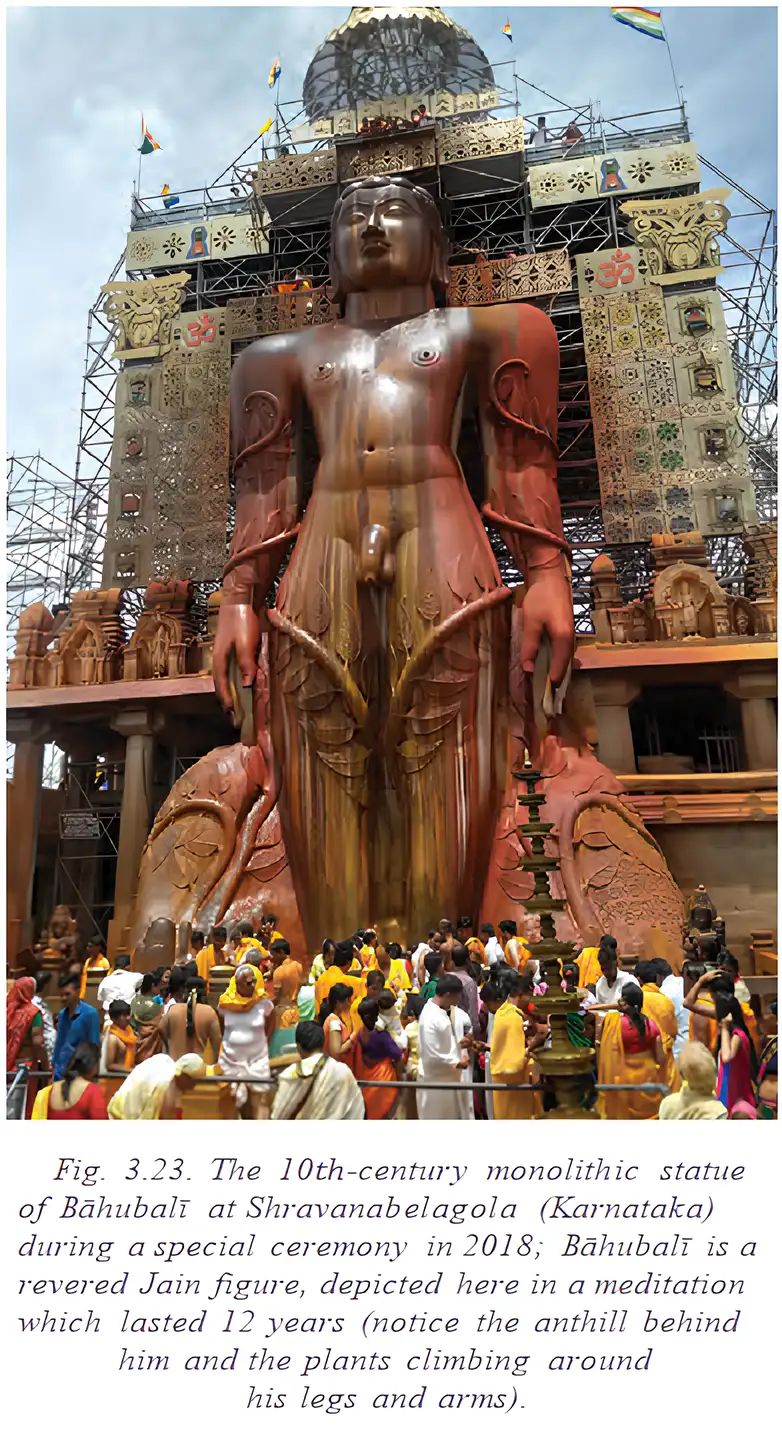
| Examples | Buddhist learning flourished in Pala-era eastern India. | Monolithic Bahubali at Shravanabelagola; Jain cave temples at Ellora and Badami. |
Puranic traditions and devotion
- Puranas: Their mythology and sacred geography brought local deities and regional stories into wider, pan-Indian traditions.
- Major cults: These traditions centred especially on Shiva, Vishnu, Krishna, and various devis.
- Temple-centred worship: Bhakti (personal devotion) gained importance over Vedic sacrifices, with temples, mathas, and pilgrimage sites as important centres.
Bhakti Movement — From the 6th century onward, bhakti spread widely across India and social groups as personal devotion to a deity; it was a broad trend, not one organised movement.
Early South Indian bhakti poets
- Alvars: Twelve Tamil poet-devotees of Vishnu; Āṇḍāḷ was a woman.
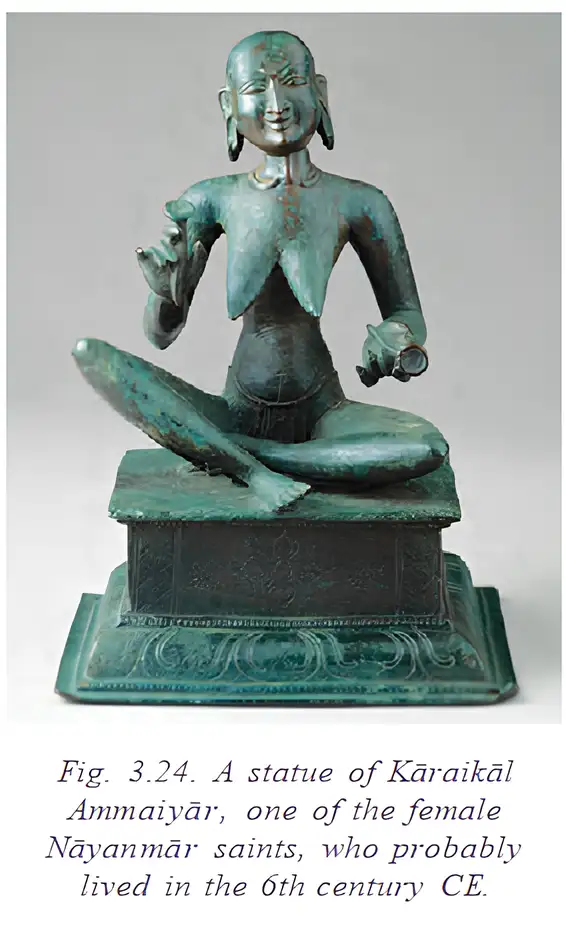
- Nayanārs (Nayanmars): Sixty-three Tamil poet-devotees of Shiva, including three women.
- Wider influence: Later saints from diverse backgrounds composed mainly in regional languages, expressing a direct relationship with the divine open to everyone.
- Social and literary impact: Bhakti crossed gender and social divisions and strongly influenced Indian society and literature.
Mathematics and Astronomy
Major scholars and contributions
- Brahmagupta: Born in 598 CE at Bhillamāla; in *Brahmasphutasiddhānta*, explained arithmetic with zero, negative numbers, and fractions, and developed techniques for solving equations, helping establish algebra.
- Brahmagupta’s influence: His works were translated into Persian and later Latin, contributing to mathematics in the Arab world and Europe.
- Bhaskara I: Made pioneering contributions to trigonometry and wrote a detailed commentary on the *Āryabhaṭīya*.
- Virahanka: First established the Virahanka–Fibonacci sequence.
- Mahavira: A Jain scholar at the court of Rashtrakuta king Amoghavarsha Nripatunga; he wrote the first mathematics work independent of astronomy.
- Astronomical calculations: Scholars refined methods for calculating planetary positions; reliable calendars and predictions of solar and lunar eclipses were important practical aims.
- Patronage: Continued advances in mathematics and astronomy depended in part on royal support.
Scholar’s date
- 598 CEBrahmagupta was born at Bhillamāla, the first capital of the Gurjara-Pratiharas.
How did a professional group become a jāti? Use the Kayasthas as an example.
State two contributions of Brahmagupta and one of Mahavira.
Quick recap
- Jātis grew in number and varied by region; social categories could change over time.
- Kayasthas developed from a scribal profession into a distinct jāti by the 10th century.
- Women participated in economic, social, religious, and sometimes political life; Tribhuvana Mahadevi I was a notable queen.
- Hindu, Buddhist, and Jain traditions interacted, while Tantric ideas and temple-based worship gained influence.
- Bhakti spread widely from the 6th century onward, with early Tamil Alvar and Nayanar poet-devotees.
- Brahmagupta, Bhaskara I, Virahanka, and Mahavira advanced mathematics and astronomy.
Foreign Invasions Part-1
Background
- Northwestern frontier: Indian rulers closely guarded this strategic region, but the subcontinent experienced many invasions.
- Earlier invaders: Greeks, Śhakas and Kuṣhaṇas had invaded India; this section focuses on the Hunas.
The Hunas’ Challenge
Hunas — A people mentioned in Indian literature, thought to have been a branch of the Central Asian Huns.
The Huns and the Hunas in India
- Huns: A nomadic people from Central Asia, known for skilled horse-riding, archery and rapid attacks.
- Conquests: The Huns overcame much of Europe; their empire disintegrated about a century later.
- Gupta Empire: The Hunas helped weaken the Guptas, but initially had limited impact in India.
Huna Power and Assimilation
- 4th centuryThe Huns originated in Central Asia.
- About a century laterThe Huns’ empire had disintegrated.
- Early 6th centuryTwo Huna leaders in succession advanced into the Ganga plains but were defeated by Aulikara kings.
- 7th centuryHunas were integrated into Indian society, serving as soldiers and local administrators.
The End of Huna Power in India
- Two successive Huna leaders pushed deep into the Ganga plains.
- Several kings resisted them strongly.
- Aulikara kings defeated the Huna leaders in succession.
- These defeats effectively ended Huna power in India.
Aulikara Victory
- Aulikaras: The dynasty’s capital was Dashapura, identified with modern-day Mandsaur in Madhya Pradesh.
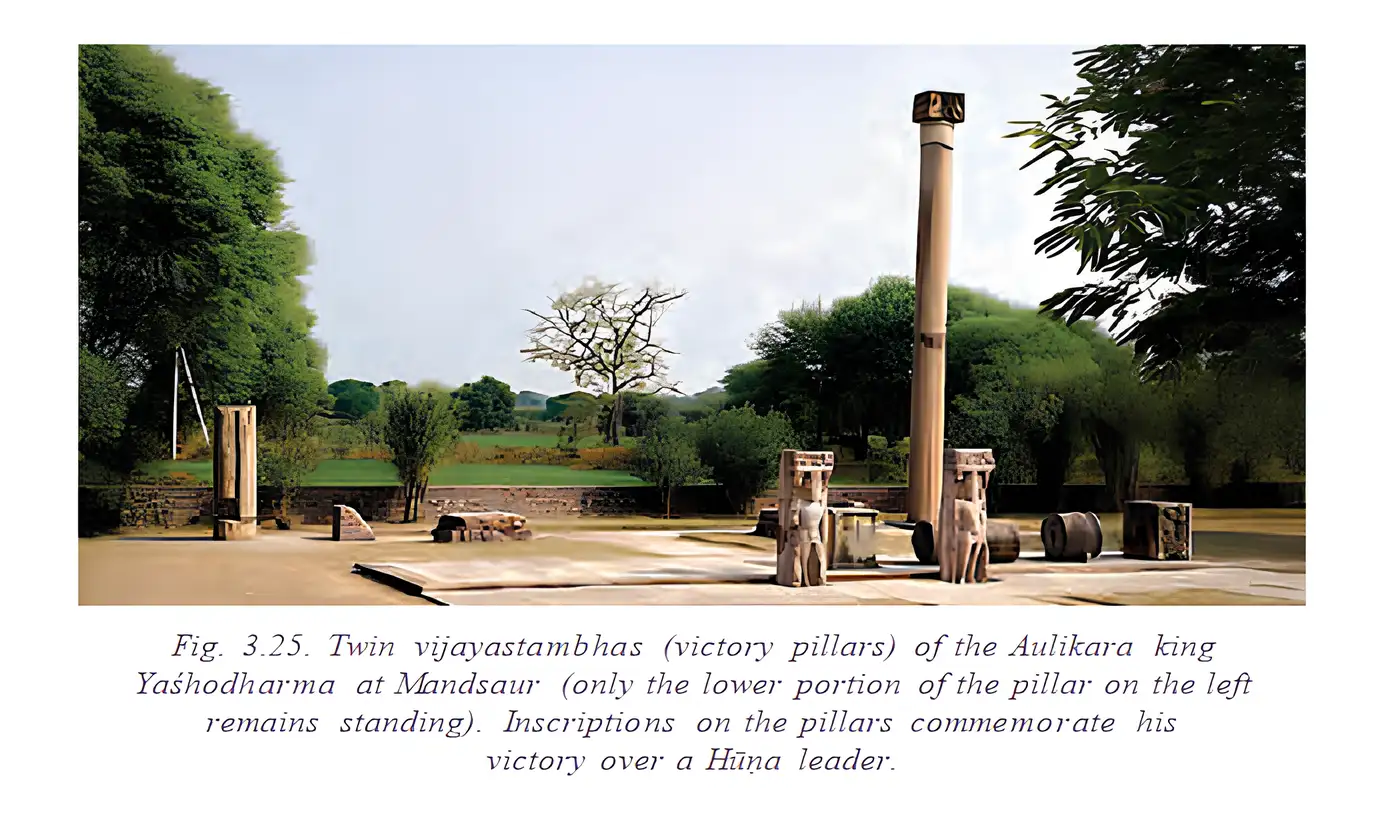
- Yashodharman: Victory pillars at Mandsaur commemorated his victory over a Huna leader.
Hunas Become Part of Indian Society
- Social and administrative roles: Hunas served as soldiers and local administrators; an inscription records one serving on a temple administration council, or goṣhṭhika.
- Languages and royal customs: They used Sanskrit and Prakrit in inscriptions and adopted Gupta-style royal titles and coin designs.
- Religious symbols: Some Huna coins displayed Lakṣhmī or attributes of Viṣhṇu and Shiva.
- Aulikaras
- A dynasty whose kings defeated the Hunas; its capital was Dashapura.
- Dashapura
- The Aulikara capital, identified with modern Mandsaur in Madhya Pradesh.
- Goṣhṭhika
- A temple administration council.
- Assimilation
- The process by which Hunas adopted local roles and cultural practices.
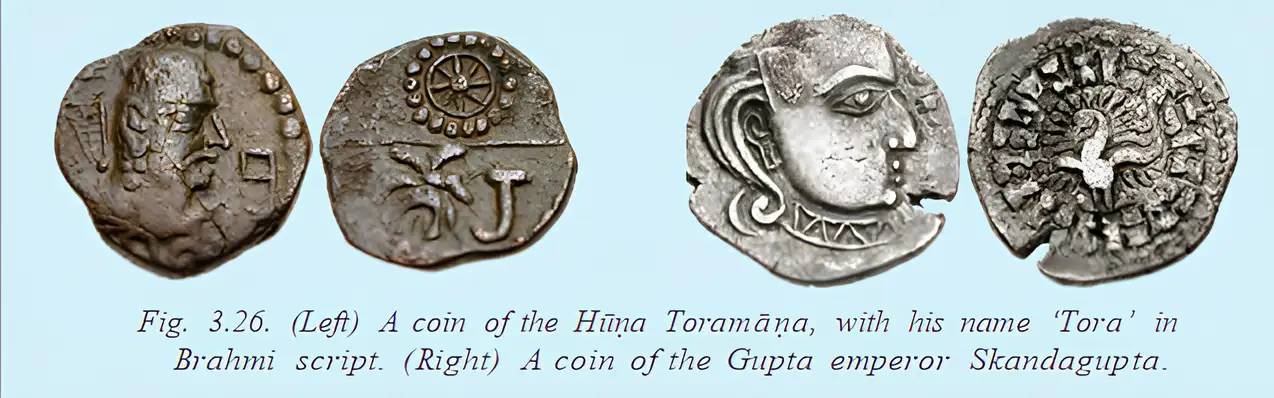
Do not treat the Huns and Indian Hunas as exactly the same group: the Hunas are thought to have been a branch of the Huns.
How did Huna power in India come to an end?
What shows that the Hunas became integrated into Indian society?
Quick recap
- The Hunas in Indian literature are thought to have been a branch of the Central Asian Huns.
- The Hunas helped weaken the Gupta Empire; two leaders later advanced into the Ganga plains.
- Aulikara kings defeated the Hunas, ending their power in India.
- Yashodharman’s victory pillars at Mandsaur commemorated victory over a Huna leader.
- By the 7th century, Hunas served in Indian military and administrative roles and had adopted local cultural practices.
Foreign Invasions Part-2
Arab Raids and the Conquest of Sindh
Early Arab advances
- Expansion: Within a few years of Muhammad’s death in 632 CE, Islam had spread widely through parts of Asia and Africa.
- Raids: In 637, Arab naval forces raided Thana (present-day Thane), Bharukachchha (Bharuch) and Debal, without lasting territorial control.
- Resistance: Early attempts to conquer Afghan kingdoms failed in the face of strong resistance.
- Sindh campaign: The governor of Iraq sent an army led by his nephew and son-in-law, Muhammad bin Qasim.
Qasim’s campaign
- Qasim’s forces captured Debal. The 9th-century historian Al-Baladhuri reported a three-day slaughter and the destruction of a major temple.
- Qasim advanced towards Aror, the capital of King Dahar. The Chachnama says Qasim presented the campaign as a religious war, claiming he was obeying a Quranic command to wage war against “infidels.”
- Dahar was killed by an arrow while riding an elephant, and his army was routed.
Idol — An image that is worshipped; the lecture prefers “image” or Indian terms such as murti and vigraha.
Infidel — In medieval Islamic usage, a non-Muslim, especially a Hindu, Buddhist or Jain.
Local resistance
- Queens’ response: The Chachnama recounts that Dahar’s widowed queen resisted and, when defeat seemed inevitable, immolated herself with other women. Another queen gave her treasure to soldiers and urged them to fight.
- Revolt: Within two years of Qasim’s death, Indian chiefs rebelled and recovered most of the conquered territory.
- Further campaigns: Arab forces entered Rajputana and Malwa, but their gains were short-lived.
- Gurjara-Pratīhāras: An inscription at Gwalior credits King Nāgabhaṭa I with crushing a large army of a Mlechchha king.
- Kashmir: According to the Rajatarangini, King Lalitaditya Muktapida defeated an Arab chief three times.
Mlechchha — A term first used for people believed to speak unclearly or not follow Vedic culture; it later came to mean foreigners.
Arab rule remained limited
- Sulaiman’s account: The 9th-century Arab merchant and traveller praised a Gurjara-Pratihara ruler’s forces and cavalry, but called him an enemy of the Muslim faith because he opposed the Arabs.
- Limited control: Geographer al-Istakhri observed that after three centuries of effort, Arab rule in India was confined to two small states in Sindh and Punjab.
- Adaptation: The Arabs gave up iconoclasm and used local Hindus and Buddhists, collectively called “Budds,” for political purposes.
- Religious policy in Sindh: Hindus and Buddhists were allowed to rebuild temples and continue worship; temple priests could retain their share of revenue. This limited impact may have reflected strategy or compulsion.
| Point | Other regions | Sindh |
|---|---|---|
| Political and religious impact | Conquests often replaced local institutions and led to mass conversions. | Impact was more limited; local institutions and religious practices continued. |
| Religious policy | Local religious institutions were often replaced. | Hindus and Buddhists could worship and rebuild temples; priests could keep their share of revenue. |
| Possible reason | Strategic reasons or local resistance | Accommodation may have resulted from strategic needs or compulsion. |
Trade and Cultural Exchange
Connections across the Arabian Sea
- Trade links: India and Arabia had trade connections long before Islam; ships crossed the Arabian Sea using monsoon winds.
- Goods and ideas: Ships carried spices and textiles as well as ideas, languages and stories.
- Word origin: “Monsoon” comes from the Arabic word mawsim, meaning “season.”
| Sanskrit | Arabic | English |
|---|---|---|
| — | sandal | sandalwood |
| tāmbūla | tanbūl | — |
| karpūra | — | camphor |
| pippalī | filfil | — |
Scientific exchange
- Translations: Especially in the 9th century, Sanskrit works on mathematics, astronomy and medicine were translated into Arabic, notably in Baghdad.
- Numerals: Arabs adopted India’s decimal numeral system, including zero and Indian numerals.
- Transmission: Arab mathematicians acknowledged the system’s Indian origin. After it reached Europe through Arab transmission, it became known as “Arabic numerals”; “Hindu-Arabic numerals” is also used.
Key dates and periods
- 632 CEMuhammad died; Islam spread widely through parts of Asia and Africa within a few years.
- 637 CEArab naval raids struck Thana, Bharukachchha and Debal.
- 9th centuryAl-Baladhuri wrote about Qasim’s campaign; Sulaiman described a Gurjara-Pratihara ruler; Sanskrit scientific works were translated into Arabic.
- 13th centuryThe Chachnama was produced as a Persian rendering of an older Arabic account.
- After three centuries of Arab effortsAccording to al-Istakhri, Arab rule in India remained limited to two small states in Sindh and Punjab.
- Iconoclasm
- The destruction of religious images.
- Chachnama
- A 13th-century Persian rendering of an older Arabic account of Sindh.
- Hindu-Arabic numerals
- The Indian decimal numeral system, including zero, transmitted to Europe through the Arabs.
How did Muhammad bin Qasim present his campaign against King Dahar?
What was the religious impact of Arab rule in Sindh?
Describe an important example of cultural exchange between India and the Arab world.
Quick recap
- Arab raids began on India’s western coast in 637, and Muhammad bin Qasim later conquered parts of Sindh.
- The Chachnama reports that Qasim framed his campaign against Dahar as a religious war.
- Indian chiefs and rulers resisted Arab advances; much conquered territory was recovered and later gains were short-lived.
- Arab rule remained limited, and Hindus and Buddhists continued religious practices in Sindh.
- Trade across the Arabian Sea carried goods, ideas, languages and stories between India and Arabia.
- Arabic translations of Sanskrit learning and the Indian numeral system spread knowledge beyond India.
Taking Stock
Political Developments
Kingdoms and Empires
- Dynasties: Many rose and fell, sometimes fighting and sometimes forming alliances.
- Empires: Some powerful kingdoms grew into empires, but rarely controlled a large part of India or lasted more than a couple of centuries.
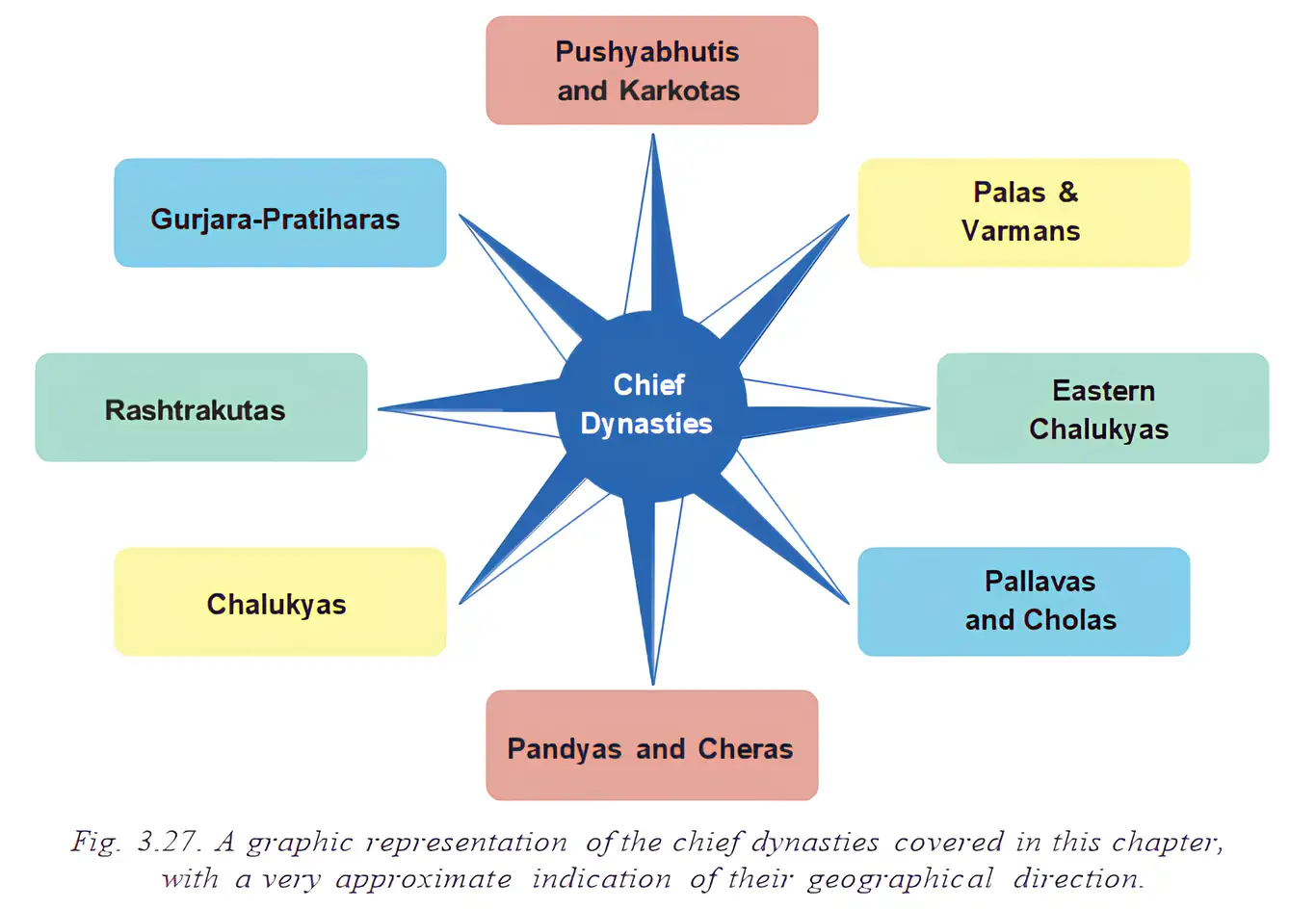
A Wide Range of Dynasties
Remembering the Period
- Many dynasties: Around 12 are discussed in the chapter, while many others also existed across India, often with several branches.
- Examples: Bhanjas, Guhilas, Kalachuris, Kadambas, Maitrakas, Tomaras and Paramaras were among the other dynasties.
- What to remember: The long list shows the depth and richness of India’s history; it is not necessary to memorise these names. The Paramaras, Chahamanas and Gangas are noted for study in the next chapter.
Transformation and Regional Consolidation
Regional consolidation — The strengthening and integration of political and social groups within different regions.
Major Changes
- Society and politics: New social and political groups became integrated into regional life.
- Literature: Sanskrit and regional-language literature flourished.
- Art and architecture: Temple architecture and sculpture advanced significantly.
- Ideas and religion: New philosophical schools and religious practices spread, redefining and enriching the subcontinent’s cultural and spiritual landscape on ancient foundations.
- Resilience: India faced foreign invasions with resilience and showed a capacity for political renewal.
- Dynasty
- A line of rulers belonging to the same family or ruling house.
- Empire
- A large political power formed when a kingdom expands its rule over territories and peoples.
- Regional consolidation
- The strengthening and integration of social and political groups within regions.
Why was this period not a historical void?
Quick recap
- Dynasties rose and fell, and could be rivals or allies.
- Powerful kingdoms sometimes became empires, but their reach and duration were often limited.
- Many dynasties existed beyond those discussed in the chapter; the full list need not be memorised.
- New social and political groups became integrated as regions consolidated.
- Literature, temple architecture, sculpture, philosophy and religious practices developed, redefining and enriching cultural and spiritual life.
- The period also showed resilience to invasions and an ability to renew political life.
Before we move on
Regional Kingdoms and Political Rivalry
- Gupta decline: The weakening of the Gupta Empire was followed by the rise of powerful regional kingdoms.
- No lasting supremacy: Rival states had comparable military strength, administrative systems and strategies, so none could dominate for long.
Foreign Invasions and the Arrival of Islam
| Earlier foreign invaders | Arab armies | |
|---|---|---|
| Cultural contact | Invaders often assimilated and adopted Indian cultural traditions. | With the advent of Islam, the situation changed. |
| Military advance | Despite successes elsewhere, Arab armies took a long time to make their first significant breach into the subcontinent. |
Religious Patronage and Bhakti
- Religious patronage: Rulers generally supported Hinduism, Buddhism and Jainism, even when their personal inclinations differed.
- Cultural pluralism: Support for several religions helped create a diverse cultural environment.
- Bhakti tradition: Bhakti emerged during this period and soon spread across India.
Cultural and Scientific Achievements
- Achievements: The period saw notable advances in language, literature, art, sciences and technologies.
Society: Jātis and the Varṇa-Jāti System
- Growing complexity: The multiplication of jātis made society more complex.
- Continuity and flexibility: Despite this complexity, the varṇa-jāti system remained flexible.
Trade and Urban Growth
Effects of Trade
- Trade linked local economies with distant markets in India and abroad.
- Broader trade connections encouraged urban growth and cultural exchange.
- These links integrated India into wider trade networks.
- Regional kingdom
- A kingdom whose power was based in a particular region.
- Cultural pluralism
- The coexistence and support of multiple religious and cultural traditions.
- Bhakti
- A devotional tradition that arose in this period and spread across India.
- Varṇa-jāti system
- A social system involving varṇas and jātis; it remained flexible despite growing complexity.
Quick recap
- The decline of the Gupta Empire led to powerful regional kingdoms, but none held lasting supremacy.
- Earlier invaders often adopted Indian cultural traditions; Arab armies took a long time to make a significant breach into the subcontinent.
- Rulers generally patronised Hinduism, Buddhism and Jainism, while the Bhakti tradition spread across India.
- The period brought advances in language, literature, art, sciences and technologies.
- More jātis made society complex, although the varṇa-jāti system remained flexible.
- Trade connected local economies to distant markets, encouraging urban growth, cultural exchange and wider integration.
Social Science — ALL CHAPTERS
1
Geographical Diversity of India
2
Understanding the Weather
3
Climates of India
4
New Beginnings Cities and States
5
The Rise of Empires
6
The Age of Reorganisation
7
The Gupta Era: An Age of Tireless Creativity
8
How the Land Becomes Sacred
9
From the Rulers to the Ruled: Types of Governments
10
The Constitution of India - An Introduction
11
From Barter to Money
12
Understanding Markets
1
The Story of Indian Farming
2
India and Her Neighbours
3
Empires and Kingdoms: 6th to 10th Centuries
4
Turning Tides: 11th and 12th Centuries
5
India, a Home to Many
6
The State, the Government, and You
7
Infrastructure: Engine of India’s Development
8
Banks and the Magic of Finance