Class 7 . Social Science . Exploring Society India and Beyond Part II . The State the Government and You
Chapter 6: The State, the Government, and You
Ch 6
Social Science
Class 7
What is a State?
The State and Its Features
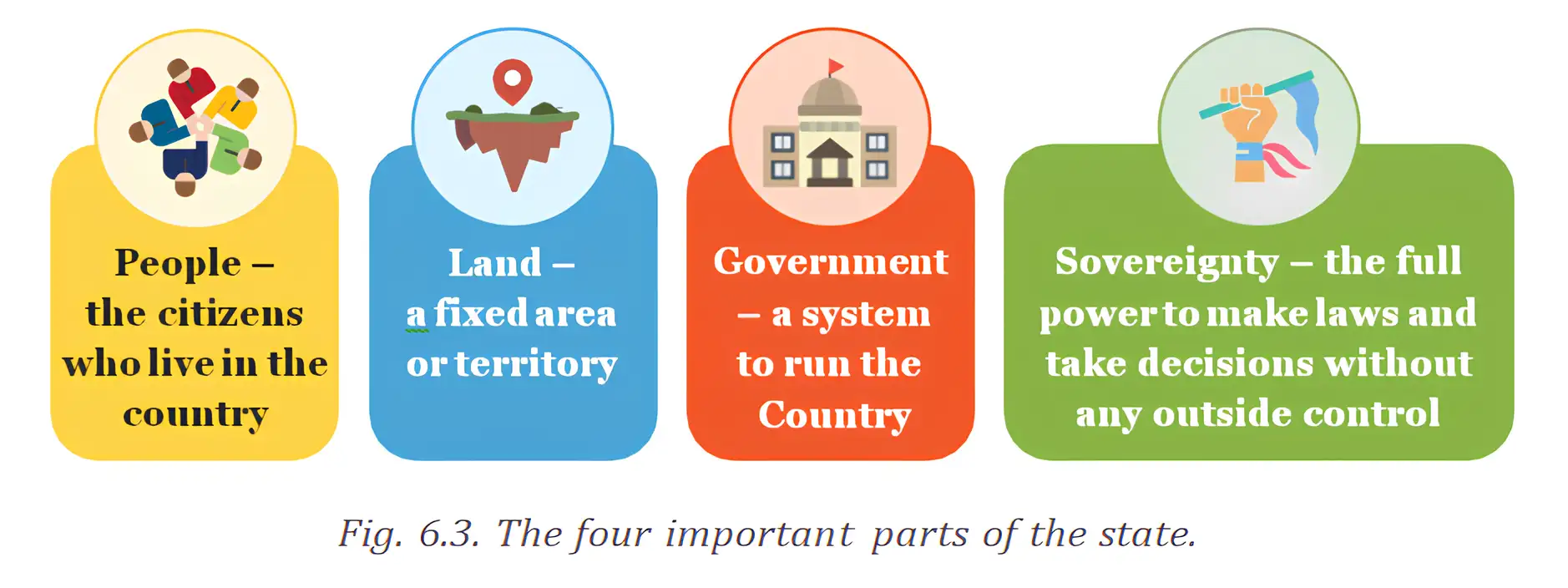
State — A state is a political organisation with authority to govern a defined territory and its population.
Four Features of a State
- People: A state has a permanent population.
- Territory: It has a defined area of land.
- Government: It has a system that runs public affairs.
- Sovereignty: It has the authority to govern its territory and population.
Using the Word “State” in India
- Indian State: “State” can mean the country as a political organisation.
- State of Kerala: In India, “state” can also mean a subnational unit, such as Kerala, Maharashtra or Tamil Nadu.
Government: One Part of the State
Government — A government is a group of people or a system that runs a country and carries out its public work.
What Government Does
- Members: Government includes leaders, ministers and officials.
- Law-making: The legislature makes laws.
- Implementation: The executive makes policies and carries out laws and policies.
- Disputes and law-following: The judiciary resolves disputes and ensures laws are followed.
| Point | State | Government |
|---|---|---|
| Meaning | The political organisation with people, territory, government and sovereignty. | The system or group that runs the country; one part of the state. |
| Continuity | Continues even when leaders change. | Can change after elections. |
| Everyday role | The larger political organisation. | Acts on behalf of the state and is the part people most often encounter. |
Why the Terms Are Often Mixed Up
- Daily work: The government runs the day-to-day affairs of the state.
- Visible contact: People usually interact with government departments and officials, rather than with the state as a whole.
- Analogy: A school remains when its principal and teachers change; similarly, the state remains when a government changes.
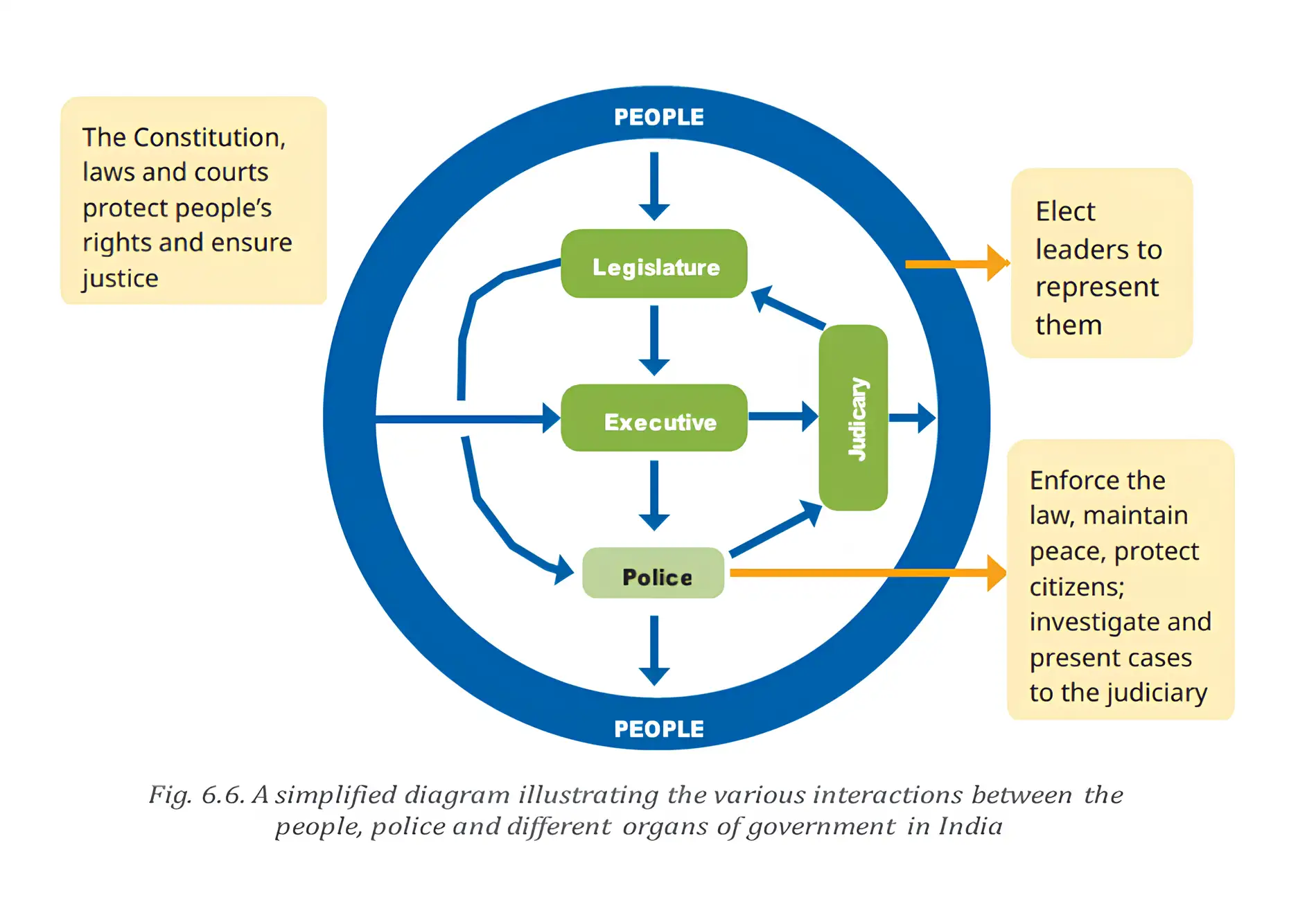
People, Police and Government
The Role of the Police
- Position: Police are part of the state government and work with communities in towns, cities and villages.
- Law and order: They help keep people safe from crime and violence and may legally use force to do so.
- Criminal justice: Police work with courts, prisons and other parts of the criminal justice system.
- Social contribution: They may run awareness programmes on road safety, drug abuse and women’s safety.
- Rights: Their actions must respect and protect rights guaranteed under the Constitution.
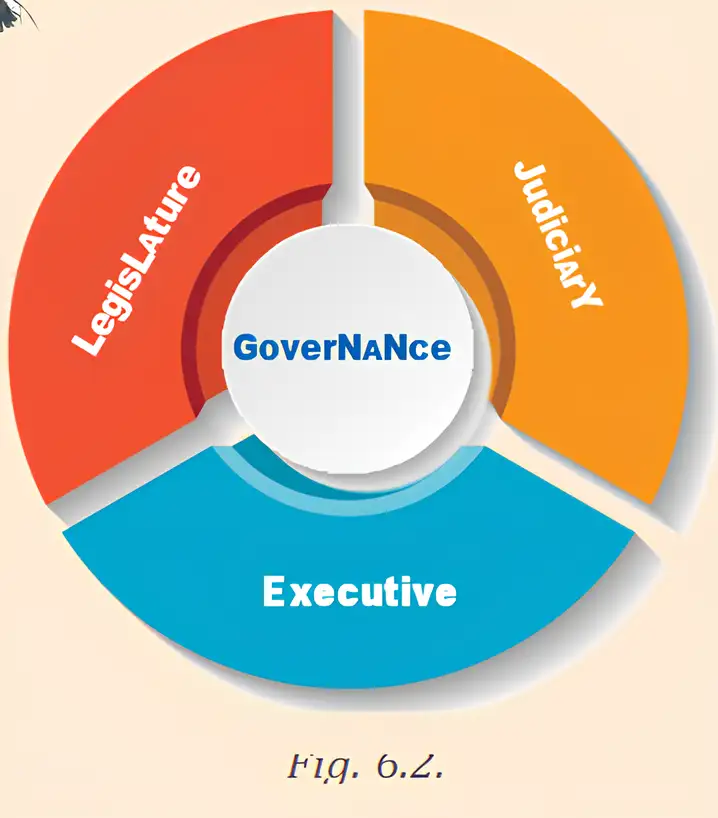
The Three Pillars of Government
| Branch | Main function |
|---|---|
| Legislature | Makes laws. |
| Executive | Makes policies and carries out laws and policies; government departments are part of the executive. |
| Judiciary | Ensures laws are followed and helps resolve disputes. |
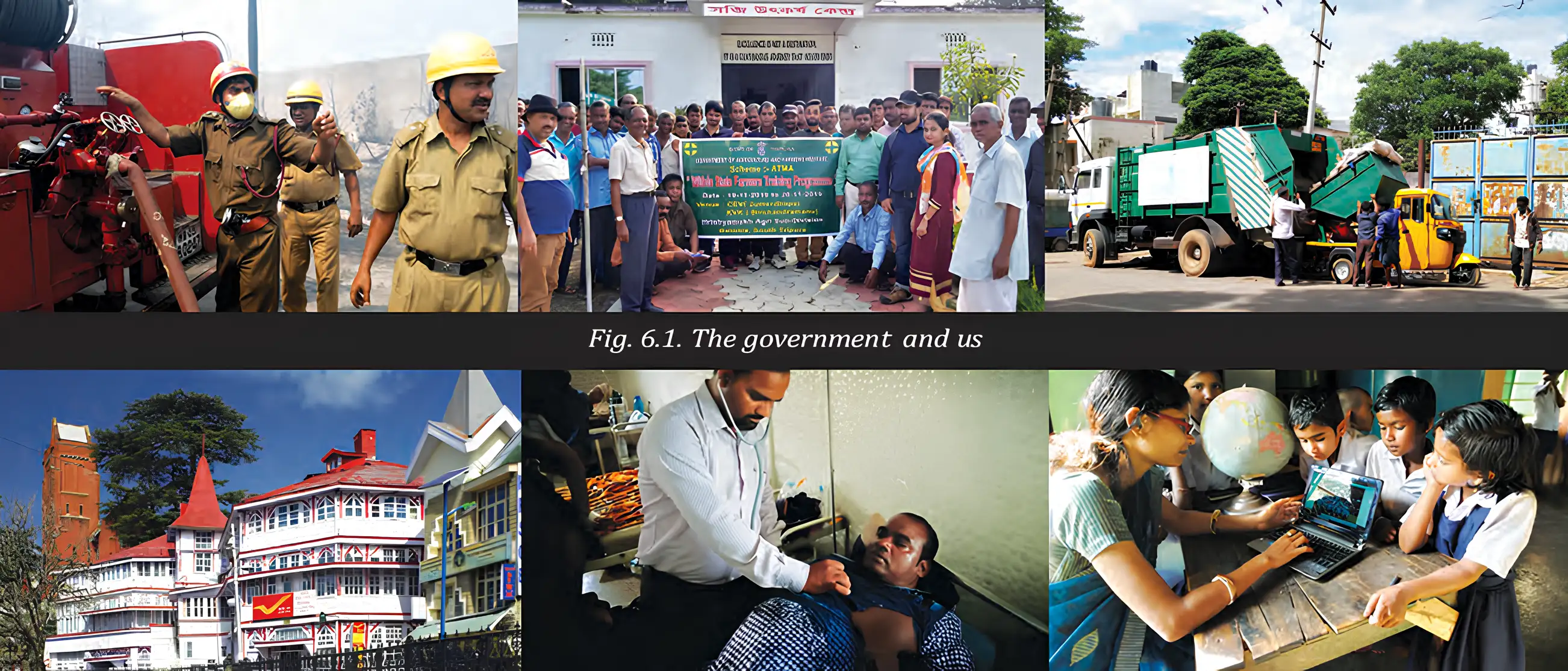
Government Departments in Daily Life
- Departments: They are part of the executive and implement laws and policies made by the legislature.
- Everyday contact: People primarily interact with government through its departments.
- Structure: The legislature, executive and judiciary are separate in some countries but may overlap in others.
Forms of Government
- Forms include: Democracy, monarchy, theocracy, dictatorship and oligarchy.
- Democracy: People have the power to choose their leaders.
- Other arrangements: In some forms of government, power may remain within one family or group.
- India: A democratic government is expected to work for everyone’s wellbeing and protect rights and freedoms.
- Sovereignty
- The authority of a state to govern its territory and population.
- Legislature
- The branch of government that makes laws.
- Executive
- The branch that makes policies and carries out laws and policies.
- Judiciary
- The branch that ensures laws are followed and resolves disputes.
What are the four features of a state?
How does a state differ from a government?
What are the three pillars of government, and what does each do?
Quick recap
- A state has a permanent population, defined territory, government and sovereignty.
- The government is one part of the state and can change while the state continues.
- People often use the terms interchangeably because the government acts on behalf of the state and runs its daily work.
- Police help maintain law and order, contribute to safety awareness and must protect constitutional rights.
- The legislature makes laws, the executive makes policies and implements them, and the judiciary ensures laws are followed.
- Democracy gives people the power to choose leaders; other forms include monarchy, theocracy, dictatorship and oligarchy.
Democracy and Republic
Democracy and Republic
Democracy — A form of government based on rule by the people, who choose their government through free and fair elections.
Republic — A form of government in which the head of state is elected, directly or indirectly, rather than inheriting the position; the ruler’s powers are limited by a constitution or laws.
| Point | Democracy | Republic |
|---|---|---|
| Main idea | People choose their government through free and fair elections. | The head of state is elected, not hereditary. |
| Key focus | How the government is chosen and made accountable. | Who holds the highest office and limits on rulers’ power. |
| Can they exist together? | Yes. A country may be both democratic and a republic. | Yes. India and the USA are examples. |
India and the United Kingdom
- Shared feature: People in both countries elect representatives, and the government is accountable to Parliament.
- United Kingdom: It is a democracy with a monarch as head of state; the position is hereditary.
- India: It is a democratic republic. The President is elected indirectly by a group of elected representatives.
- Not all democracies are republics: The UK, Canada and Sweden are democracies but have monarchs.
A Republic Protects Rights
- India’s Constitution: Describes India as a sovereign, socialist, secular, democratic republic and guarantees citizens fundamental rights.
- Preamble’s goals: Justice (social, economic and political), liberty, equality, and fraternity, which supports individual dignity and national unity and integrity.
- Limits on majority rule: Constitutional provisions and laws prevent a representative majority from violating any citizen’s fundamental rights.
- Tribal land rights: Laws protect certain tribal lands; outside purchase or leasing requires the community’s permission and due legal process.
- Example: Mining was not allowed in the sacred hills of Odisha’s Dongria Kondh community after it opposed the destruction of its revered land.
Dominance of the majority — A situation in which the majority pursues its interests in a way that harms the rights of minorities.
Majority Decisions Must Respect Rights
- RWA example: A majority-backed ban on deliveries after 9 pm overlooked the needs of sick and elderly residents.
- Rights-based change: After an elderly resident could not receive needed medicine in time, the RWA changed the rule to allow food and medicine deliveries.
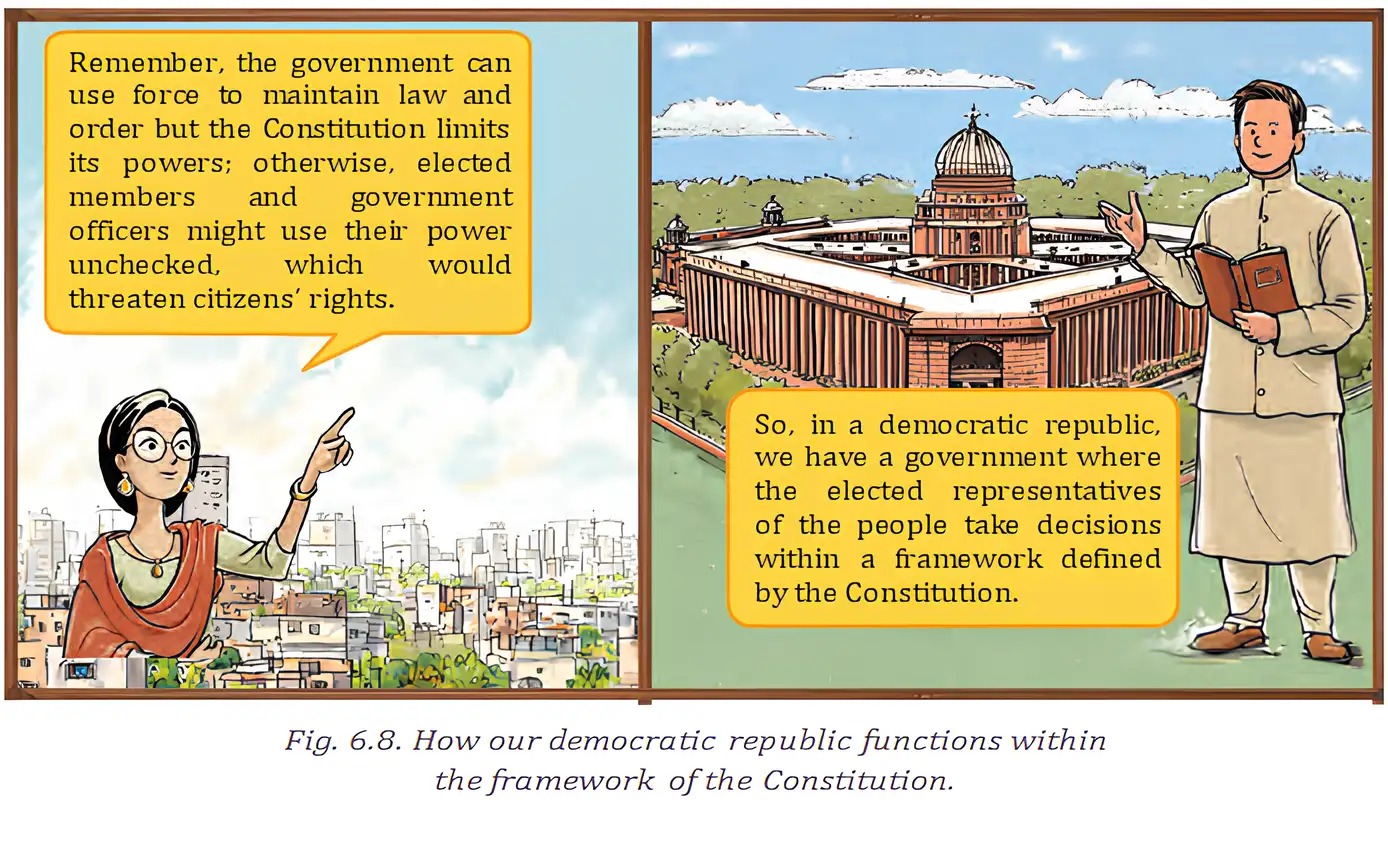
- Republican principle: The rule of law and constitutional rights can restrict what even a majority may decide.
- Protection: This prevents powerful majorities from unfairly harming smaller groups and protects rights such as freedom of speech, religion and equality before the law.
Republican Government and the State
- George Washington: In 1782, he refused a suggestion that he become king of America, arguing for government by the people under a constitution. He became the first US President in 1789.
- Kautilya’s view: In the Arthashastra, the king should follow Raja Dharma, maintain good governance and ensure law and order.
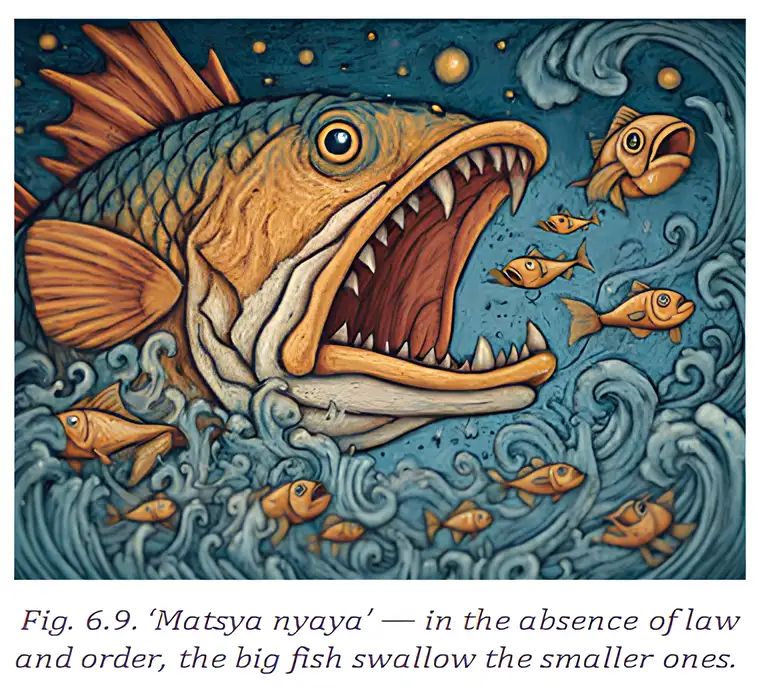
- Matsya nyaya: Without government and law, the powerful prey on the weak—the “big fish” swallow the smaller ones.
- State institutions in India: The legislature, executive and judiciary help the state function.
- Legitimate power: The state claims the lawful use of power, including through policing and taxation.
Key Dates
- 1782Washington refused a proposal to make him king of America.
- 1789Washington was chosen as the first President of the United States.
- November 26, 1949The Constituent Assembly adopted, enacted and gave India its Constitution.
- Head of state
- The highest office representing a country; in India, this is the President.
- Hereditary
- Passed down through a family, rather than filled by election.
- Raja Dharma
- The king’s duty to govern properly and uphold law and order, as described by Kautilya.
- Matsya nyaya
- The condition in which the strong prey on the weak when law and order are absent.
How does a republic differ from a democracy?
How does India’s Constitution guard against dominance of the majority?
Quick recap
- Democracy means rule by the people through free and fair elections.
- A republic has an elected, non-hereditary head of state, with rulers’ powers limited by law.
- India is both a democracy and a republic; some democracies, such as the UK, Canada and Sweden, have monarchs.
- The Constitution protects fundamental rights and prevents majority rule from harming minorities.
- Tribal land protections show how law can safeguard community rights.
- The state works through the legislature, executive and judiciary and uses legitimate powers such as policing and taxation.
Legislature: The Lawmaking Body
The Legislature
Legislature — The branch of government that makes laws and represents the people in a democracy.
Purpose and scope
- Purpose: Laws set clear rules for everyone, helping governance avoid personal wishes and arbitrary decisions.
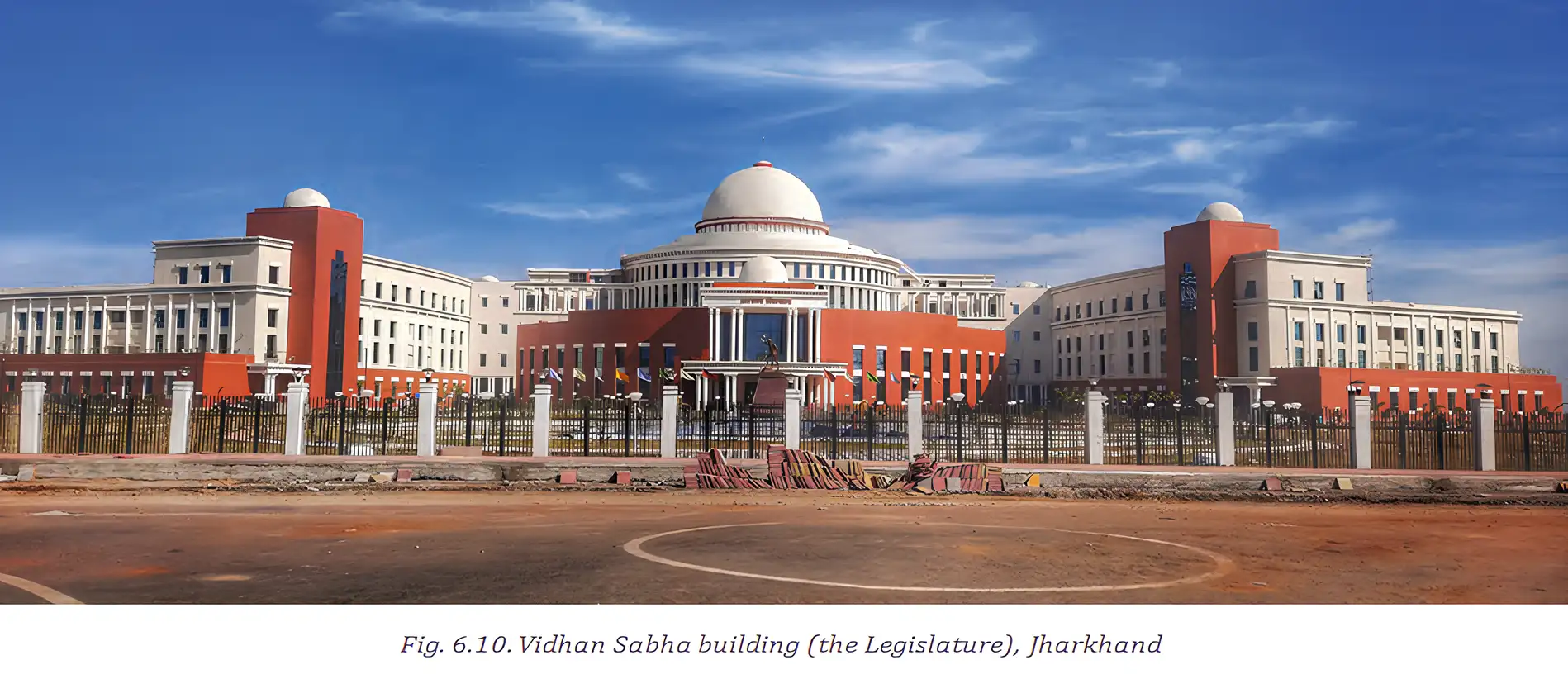
- State legislatures: Each state has its own legislature, which makes laws for that state.
The Executive
Executive — The branch of government that implements laws, makes policy decisions and manages day-to-day administration.
Policy — A set of ideas or actions chosen by an institution or government.
Political and Permanent Executives
How the two parts fit together
- Two parts: The executive comprises a political executive and a permanent executive, which work together.
- Constitutional context: The Constitution does not explicitly define these terms; the distinction is inherent in India’s parliamentary system and derives from constitutional principles and conventions.
| Point | Political executive | Permanent executive |
|---|---|---|
| Who they are | Political leaders, including prime ministers, chief ministers and ministers; presidents and governors mostly have formal or symbolic roles. | Government officers, also called bureaucrats or civil servants. |
| How they enter office | Chosen through elections; their authority depends on public trust and support. | Selected through examinations, including those conducted by the Union Public Service Commission (UPSC). |
| Main responsibilities | Make major decisions, introduce laws, set goals and represent India abroad. | Offer expert advice, implement policies and manage public services. |
| Continuity | Usually serve for a fixed term, generally five years, unless re-elected or dismissed by the president. | Are not normally replaced after every election; keep government work running. |
The Bureaucracy
Bureaucracy — The organised system of permanent government officials who carry out administration and public services.
Functions and organisation
- Implementing programmes: Put laws, policies and schemes passed by political leaders into practice.
- Connecting people and government: Departments and field offices deliver services and help address public grievances.
- Keeping records: Maintain records of government work, decisions and procedures.
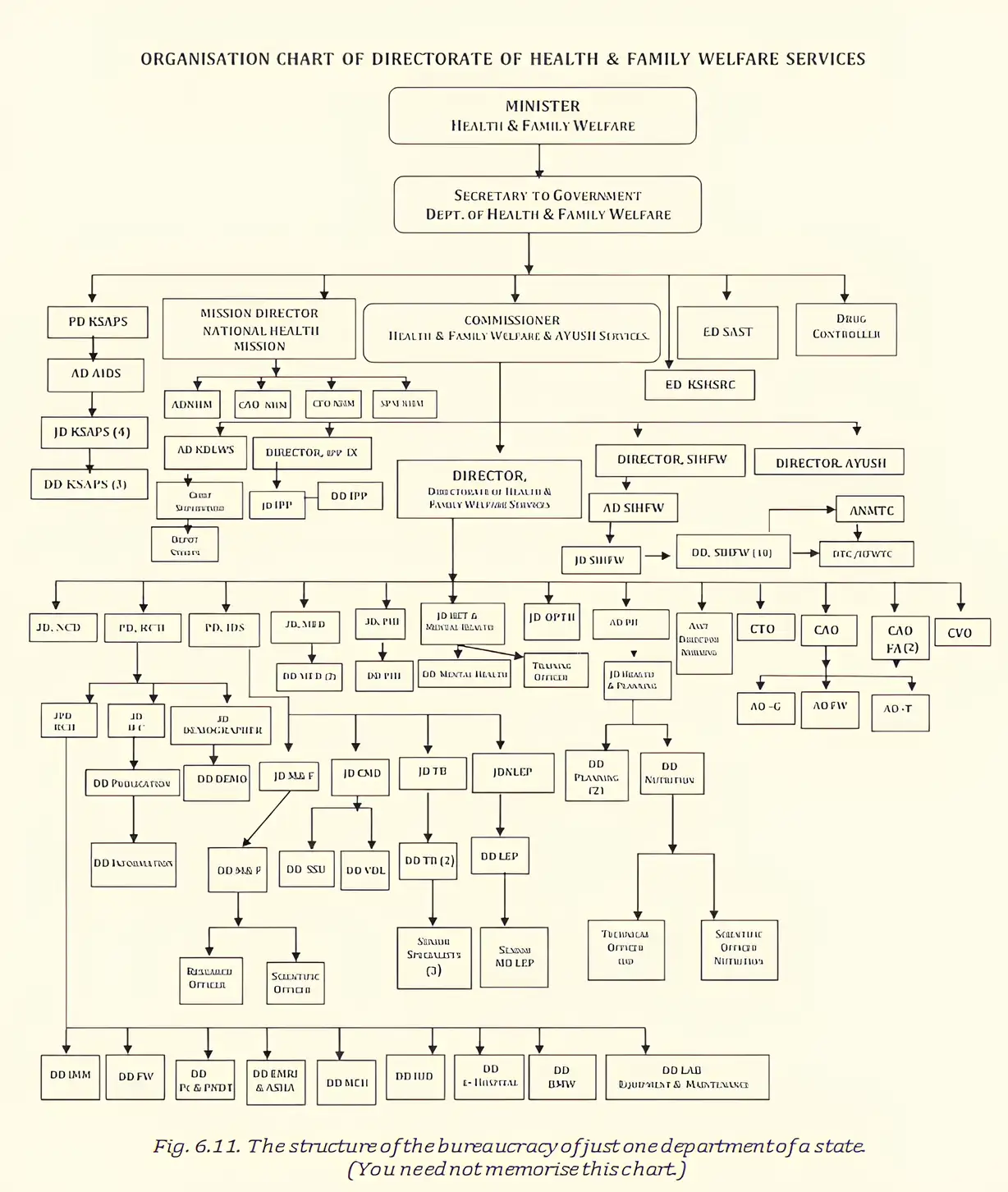
- Hierarchy: Officials work through levels of authority, including at state, district and block levels.
Services and everyday examples
- Major services: Indian Administrative Service (IAS), Indian Police Service (IPS), Indian Foreign Service (IFS), Indian Revenue Service (IRS) and Indian Forest Service (IFoS).
- Grassroots officials: Government school teachers, anganwadi workers, health workers, water and sanitation workers, and bus conductors are among the officials people may encounter.
- Large programmes: Bureaucracies help run the census, national elections, disaster relief and welfare schemes.
- Examples: The Mahatma Gandhi National Rural Employment Guarantee Scheme (MGNREGS) and the COVID-19 vaccination drive require large-scale administration.
C.B. Muthamma and Equality in Public Service
- C.B. Muthamma (1924–2009): Born in Karnataka, she became the first woman to clear the public services examination in 1948 and joined the Indian Foreign Service in 1949 as its first woman officer.
- Discrimination: Women were required to agree to resign if they married. Muthamma went on to serve as India’s first woman ambassador in several countries.
- Legal challenge: After being denied promotion, she approached the Supreme Court. A bench led by Justice V.R. Krishna Iyer struck down gender-biased provisions as unconstitutional and criticised discrimination in the Ministry of External Affairs.
- Significance: Her struggle became an important milestone in the pursuit of gender equality in Indian public service.
- Views on democracy: Muthamma argued that the freedom of thought and belief in Indian religions was the single most important factor making democracy possible in India.
C.B. Muthamma
- 1924C.B. Muthamma was born in Karnataka.
- 1948She became the first woman to clear the examination for public services.
- 1949She became the first woman to join the Indian Foreign Service.
- 2009C.B. Muthamma died.
- Legislature
- The government branch that makes laws.
- Executive
- The government branch that implements laws and makes policy decisions.
- Policy
- A set of ideas or actions chosen by a government or institution.
- Bureaucracy
- The organised system of permanent government officers.
How are the political and permanent executives different?
State three important functions of the bureaucracy.
Why is C.B. Muthamma significant in the history of Indian public service?
Quick recap
- The legislature makes laws and represents people; state legislatures make laws for their states.
- The executive implements laws, makes policy decisions and manages administration.
- The political executive makes major decisions; the permanent executive provides continuity, expertise and implementation.
- Bureaucrats deliver services, keep records and run large programmes through a hierarchy.
- C.B. Muthamma’s legal challenge helped advance gender equality in public service.
- Muthamma saw freedom of thought and belief in Indian religions as essential to democracy in India.
The Government and You Part-1
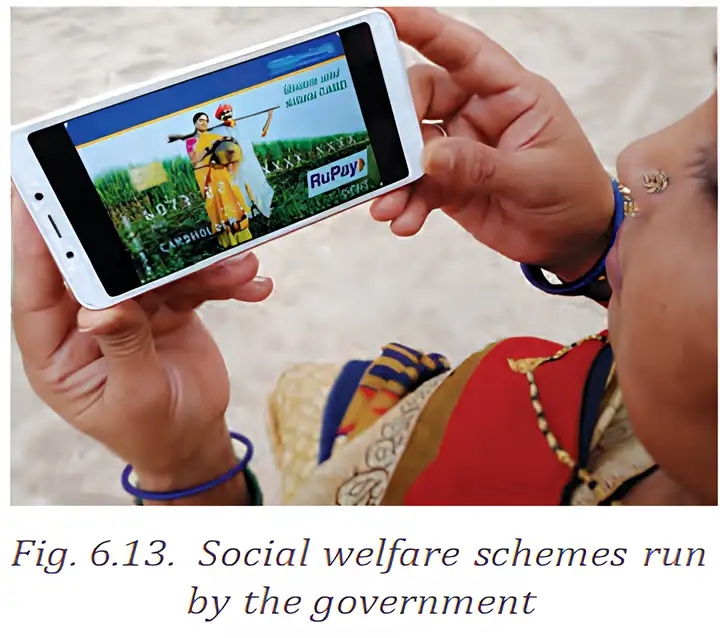
The Government’s Roles
Government — The government protects people, provides public services and infrastructure, and regulates economic activity and social justice.
| Role | What it involves | Examples |
|---|---|---|
| Protector | Maintaining safety, law and order, and national defence | Police forces protect people and maintain law and order. |
| Provider | Delivering public welfare and infrastructure | Providing free education for children by building schools and hiring teachers; constructing roads, bridges, railways and airports. |
| Regulator | Overseeing economic activity and promoting social justice | Taking initiatives to ensure food safety. |
How these roles are carried out
- Framework: The Constitution, thousands of laws, elected representatives at different levels, the bureaucracy and the judiciary support government work.
- Ongoing challenges: Bribery and corruption, difficult socio-economic conditions, limited access to good education and healthcare, poor-quality infrastructure, and inadequate access to schemes remain concerns.
Ways Citizens Can Make the Government Responsive
1. Seek grievance redressal
- Department offices: Citizens can file grievances with the relevant government department’s grievance redressal office.
- Corruption complaints: Vigilance commissions investigate corruption; citizens can approach them with cases.
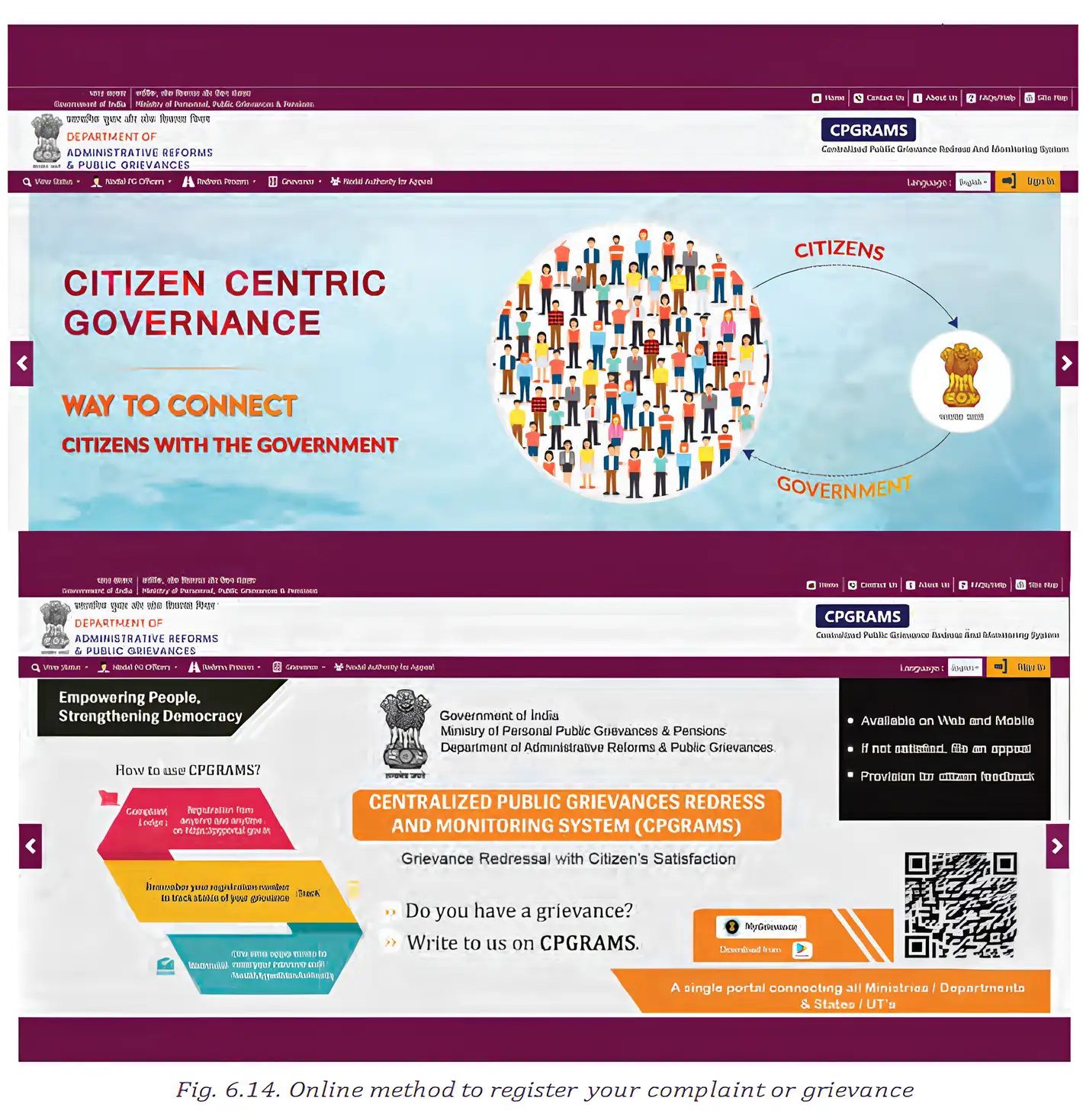
- Online complaints: The Public Grievances Portal (CPGRAMS) accepts complaints, and the concerned department must respond within a specified time. Several states also have portals.
2. Ask for information through the RTI Act
- Right to Information Act (RTI): It allows citizens to request information about government actions that are of public interest.
- Possible requests: Public spending on local roads, beneficiaries of schemes such as merit scholarships, or the status of infrastructure projects such as a metro line.
- Effect: Officials are required to provide information under the Act; access to it promotes transparency and accountability.
- Transparency
- Citizens’ open access to information about government policies, actions and public spending.
- Accountability
- The duty of people in power to take responsibility for their decisions and actions and answer to the public and other stakeholders.
- RTI
- A law through which citizens can seek information about government actions of public interest.
The Bagepalli Roadwork Example
- Officials planned double roads and streetlights in Bagepalli, near Bengaluru.
- Poorly carried-out work made traffic movement difficult and caused many accidents.
- A citizen used RTI to obtain information about the funds allocated for the work.
- Citizens used the information to confront officials.
- Officials then ensured the roadwork was completed to the satisfaction of those concerned.
3. Use the media
- Print and electronic media: Publicise an issue that the government can act on.
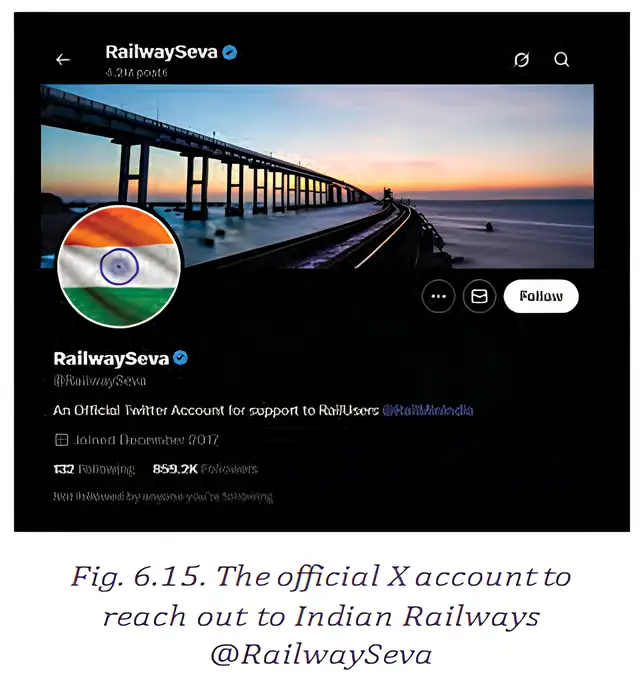
- Social media: Share concerns on platforms such as YouTube, X, Facebook or Instagram; tag relevant officials, many of whom are active online.
4. Engage through civil society organisations
- Civil society: Citizen groups, including NGOs, work on issues such as education, health, the environment, livelihoods and women’s empowerment.
- Participation: Citizens can join or create an organisation to encourage the government to address an issue they care about.
The Silent Valley Campaign
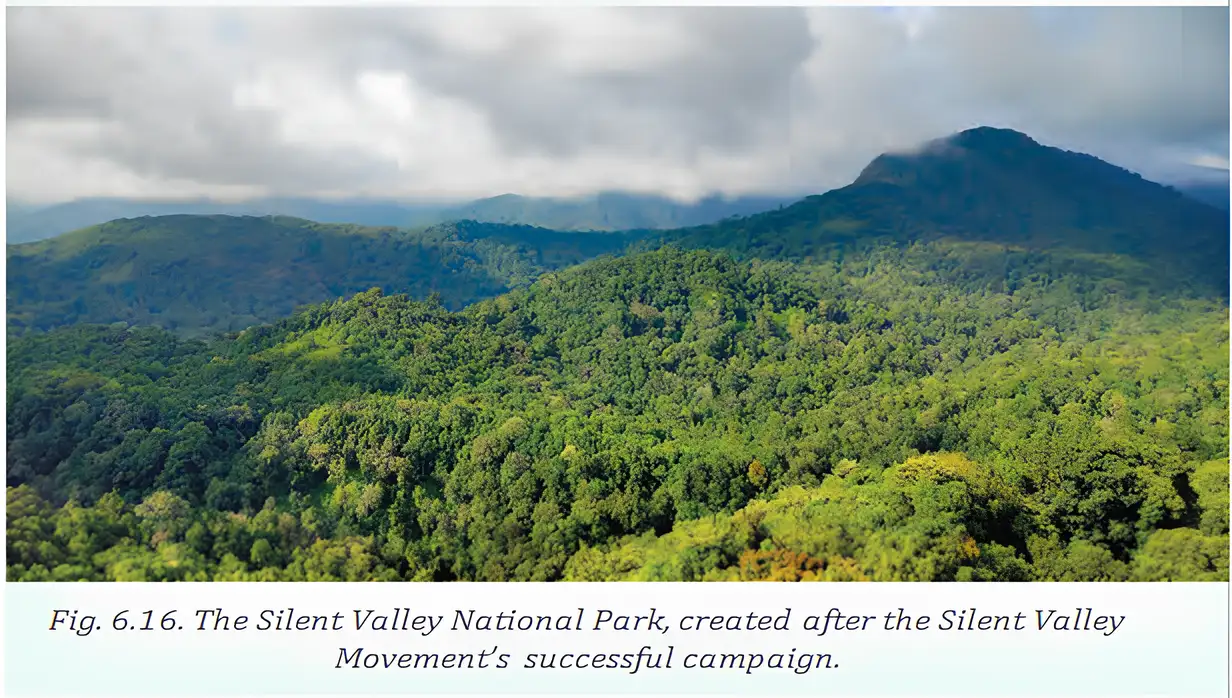
- 1970The Kerala Government planned a hydroelectric project in Silent Valley that threatened evergreen forests and their biodiversity.
- 1983After public mobilisation by NGOs and supporters including scientists, environmentalists, writers, teachers and villagers, the Central Government cancelled the project.
- 1985Silent Valley was declared a National Park, giving lasting protection to the area.
5. Write to political representatives
- Direct contact: Write to local representatives, ministers or parliamentarians to request action on a particular issue.
6. Vote in elections
- Participation: When eligible to vote, take part in local, state and national elections.
- Choice: Voting helps elect leaders who care about citizens’ concerns and have suitable plans to address them.
How does the RTI Act help citizens?
Name four ways citizens can influence government action.
Quick recap
- The government acts as protector, provider and regulator.
- The Constitution, laws, elected representatives, bureaucracy and judiciary support government work.
- Citizens can report grievances through offices, vigilance commissions and online portals.
- The RTI Act gives access to public-interest information and promotes transparency and accountability.
- Media, civil society organisations and letters to representatives can help bring issues to government attention.
- Voting helps citizens choose leaders and influence government priorities.
- Public action helped stop the Silent Valley project and secure National Park protection.
The Government and You Part-2
The Judiciary: The Watchdog
Judiciary — The judiciary is the part of government that applies and interprets laws, settles disputes, protects rights, and checks whether laws and government actions are constitutional and fair.
What the Judiciary Does
- Enforces laws: Makes sure laws are followed properly.
- Interprets laws: Explains the meaning of laws when wording is complex or disputed.
- Protects rights: Citizens can approach courts when their constitutional fundamental rights are violated.
- Safeguards the Constitution: Through judicial review, courts check whether government actions or laws violate the Constitution.
- Judicial review
- The judiciary’s power to examine whether laws or government actions violate the Constitution.
- Rule of law
- The principle that everyone, including the government, must follow the law.
- Independent judiciary
- A judiciary that is not controlled by the government or politicians, helping it deliver fair and equal justice.
Why the Judiciary Is Important
- Checks unfair actions: It ensures that the government and others are held to the law.
- Protects people: It prevents laws from harming people’s rights and freedoms.
- Resolves conflicts peacefully: Courts settle disputes according to law.
- Supports democracy: A strong, fair judiciary is essential for democracy to survive.
Why must the judiciary be independent?
How does the judiciary safeguard citizens’ rights and the Constitution?
Quick recap
- The judiciary applies and interprets laws and settles disputes.
- It protects citizens’ rights and freedoms, including fundamental rights.
- Judicial review lets courts check laws and government actions against the Constitution.
- The judiciary’s independence helps ensure fair and equal justice.
- The rule of law means that everyone, including the government, must obey the law.
- A strong judiciary checks unfair actions and helps democracy survive.
Tiers of Government Part-1
Why India Has Multiple Tiers
A large and diverse country
- Scale: India has over 1.4 billion people, thousands of towns and villages, and many languages and cultures.
- Federal structure: India has 28 states and 8 Union Territories.
- Need for decentralisation: A single central government cannot address every local need, so governance is organised at multiple levels.
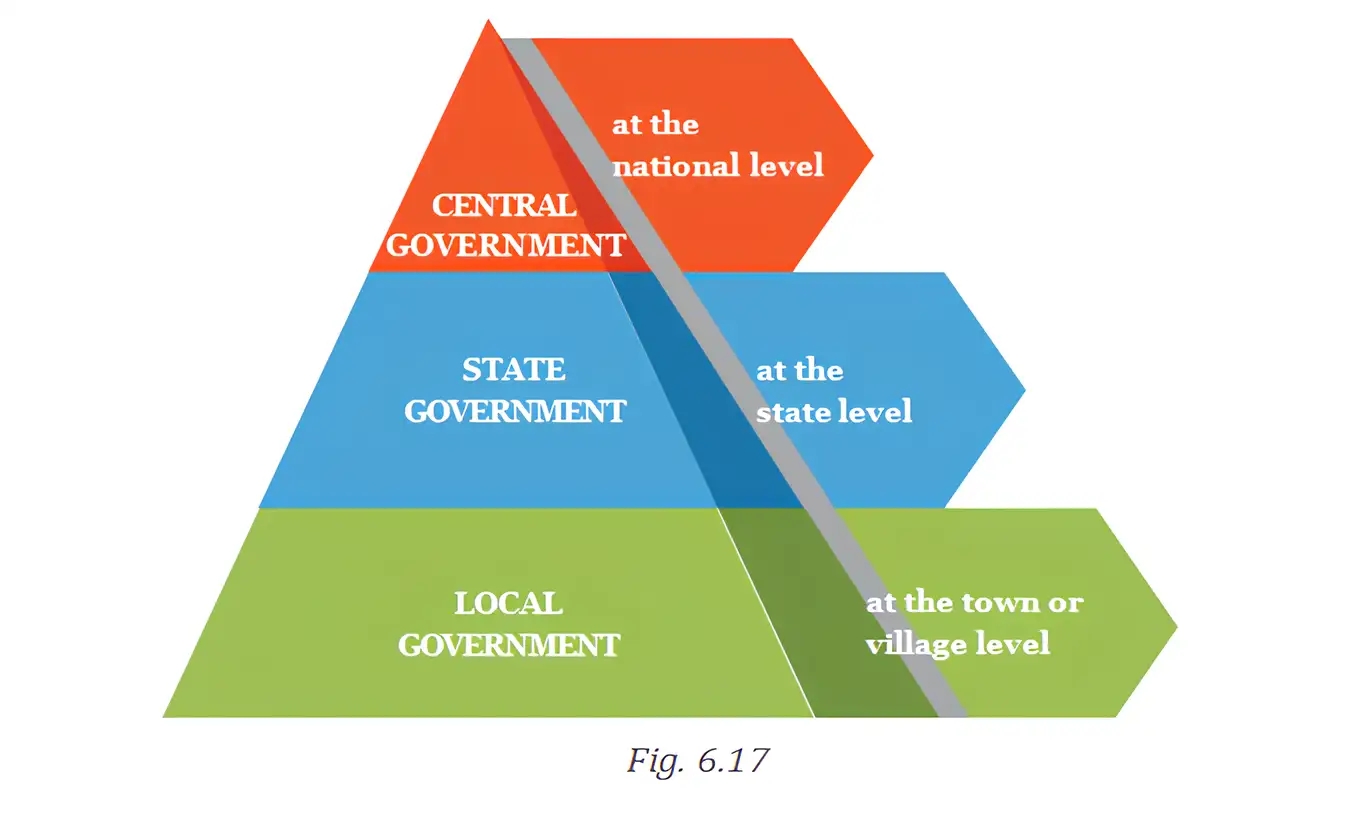
The Three Tiers and Local Government
| Point | Originally | After the amendments |
|---|---|---|
| Constitutional tiers | Two: Union Government and state governments | Three: Union, state, and local governments |
| Local government | Panchayats and municipalities were not separate constitutional tiers; they came under the State List. | Panchayati raj and municipalities became the third tier. |
| Decision-making | State governments could decide how local governments worked. | Local government was strengthened to support grassroots democracy and direct participation. |
Decentralisation — The distribution of governing responsibilities across different levels so decisions can respond to people’s needs at different scales.
Constitutional basis and purpose
- Directive Principle: The Constitution directed the State to organise village panchayats and give them the powers needed to function as units of self-government.
- Early 1990s: Constitutional amendments established the panchayati raj system and municipalities for towns and cities.
- Purpose: These changes strengthened democracy at the grassroots and enabled people to participate directly in decision-making.
Development of Local Government
- OriginallyThe Constitution provided for Union and state governments as its two tiers; local bodies were under the State List.
- Early 1990sConstitutional amendments established panchayati raj and municipalities as the third tier.
- Union Government
- The central government responsible for the entire country.
- Panchayati raj
- The system of local self-government in villages.
- Municipality
- A local government for a town or city.
- State List
- The constitutional list under which state governments could decide how local governments worked originally.
Why does India need multiple tiers of government?
Why were local governments made the third tier?
Quick recap
- India’s size and diversity make decentralised, multi-level governance necessary.
- Originally, the Constitution had Union and state governments as its two tiers.
- Panchayats and municipalities were initially under the State List, not separate constitutional tiers.
- The Constitution called for village panchayats to have powers for self-government.
- Early-1990s amendments established panchayati raj and municipalities as the third tier.
- Local government supports grassroots democracy and direct public participation.
Tiers of Government Part-2
Decentralisation
Gandhi’s View
- Mahatma Gandhi: Supported decentralisation and the idea of largely self-sufficient village governments, called gram swaraj.
- Gram swaraj: Villages should manage their vital needs themselves while remaining connected to others when interdependence is necessary.
Responsibilities of the Three Levels of Government
| Level | Main responsibilities | Examples |
|---|---|---|
| Central (Union) Government | Matters concerning the whole country | Defence, foreign affairs, currency; concurrent subjects such as education and marriage |
| State governments | Needs and services within each state | Police, land, health, agriculture and education in the state |
| Local governments | Local concerns in villages, towns and cities | Water, drainage, streetlamps, parks, land and agriculture |
Do not assume every issue belongs to only one level: education is listed as a concurrent subject as well as a responsibility of state governments.
Government and School Education
- Shared effort: Schools are not managed by a single person or office; different parts of government have connected roles.
- Aim: The different roles work together to help every child receive the right to education.
- Institutions involved: The legislature, executive and judiciary each contribute to the education system.
Progress and Continuing Challenges
- Progress: Since India became a republic, literacy has increased and roads, trains, airports and communication systems have improved.
- Continuing work: The country still has challenges to address.
- Decentralisation
- Sharing decision-making among different levels of government.
- Gram swaraj
- Gandhi’s idea of largely self-sufficient village government.
- Concurrent subject
- A subject, such as education or marriage, listed as a responsibility involving the Central Government and also addressed by states.
What is decentralisation, and why is it useful?
Name one responsibility of each of the three levels of government.
How do different institutions contribute to school education?
Quick recap
- Decentralisation spreads decision-making among different levels of government.
- Local concerns are generally best handled close to the people affected.
- The Central Government, state governments and local governments have different responsibilities.
- Gandhi supported self-sufficient village governments, or gram swaraj.
- The legislature, executive and judiciary have connected roles in school education.
- India has made progress in literacy, infrastructure and communication, but challenges remain.
Before we move on
The State and the Government
- State: A political organisation with a defined territory, permanent population, government, and sovereignty.
- Government: The people and system that run the state by making and enforcing laws; governments may change while the state continues.
Republic
- Republic: A country whose head of state is elected, directly or indirectly, rather than inheriting office as a monarch.
- India: India is a democratic republic, and its Constitution limits the power of rulers and protects citizens’ fundamental rights.
Three Organs of Government
- Legislature: Makes laws that represent the people and govern the country.
- Executive: Implements laws, makes policy decisions, and manages government administration.
- Judiciary: Interprets laws, resolves disputes, protects rights, and checks that laws are followed.
Three Levels of Government in India
- Union government: Handles matters concerning the whole country, such as defence and foreign affairs.
- State governments: Address the needs of people in each state, including areas such as police, health, and agriculture.
- Local governments: Panchayats and municipalities address local concerns in villages, towns, and cities.
The Constitution and Checks and Balances
- Constitution: Provides the basic framework for the structure and functioning of government.
- Checks and balances: The Constitution prevents any one organ of government from becoming too powerful and helps the three levels work together for the people.
Media and Civil Society
- Media: Keeps citizens informed and provides a platform for discussion and debate in a democracy.
- Civil society organisations: Raise public concerns and work with the government to address issues such as education, health, and the environment.
The Permanent Executive
- Sovereignty
- The state’s independence to make laws without outside control.
- Republic
- A form of government with an elected head of state whose powers are limited by law or the constitution.
- Checks and balances
- Arrangements that limit the power of each organ of government.
- Civil society organisation
- An organisation, such as an NGO, that raises issues and may work with government to solve them.
- Permanent executive
- Civil servants or bureaucrats who implement government laws and policies.
How are the state and the government different?
What makes a country a republic?
How do media and NGOs contribute to democracy?
Quick recap
- The state includes citizens and territory, is sovereign, and has a government.
- A republic has an elected head of state whose powers are limited by law or the constitution.
- The three organs of government are the legislature, executive and judiciary.
- India’s government has Union, state and local levels.
- The Constitution sets the government’s framework and supports checks, balances and cooperation across levels.
- Media informs citizens; NGOs raise issues and may help solve them with government.
- Civil servants form the permanent executive and implement government laws and policies.
Social Science — ALL CHAPTERS
1
Geographical Diversity of India
2
Understanding the Weather
3
Climates of India
4
New Beginnings Cities and States
5
The Rise of Empires
6
The Age of Reorganisation
7
The Gupta Era: An Age of Tireless Creativity
8
How the Land Becomes Sacred
9
From the Rulers to the Ruled: Types of Governments
10
The Constitution of India - An Introduction
11
From Barter to Money
12
Understanding Markets
1
The Story of Indian Farming
2
India and Her Neighbours
3
Empires and Kingdoms: 6th to 10th Centuries
4
Turning Tides: 11th and 12th Centuries
5
India, a Home to Many
6
The State, the Government, and You
7
Infrastructure: Engine of India’s Development
8
Banks and the Magic of Finance